in Thoreau’s Journal:
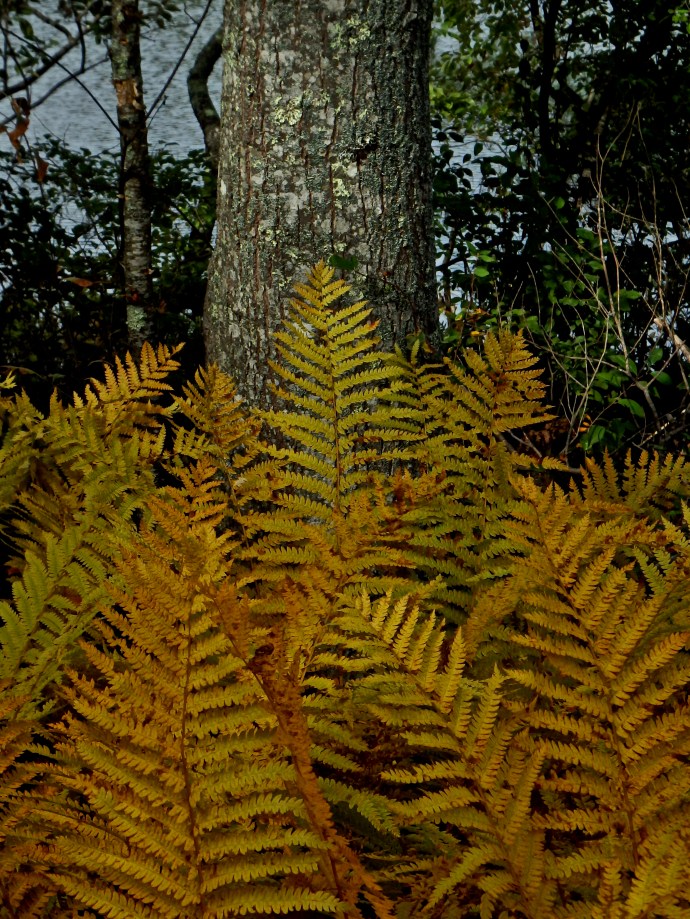
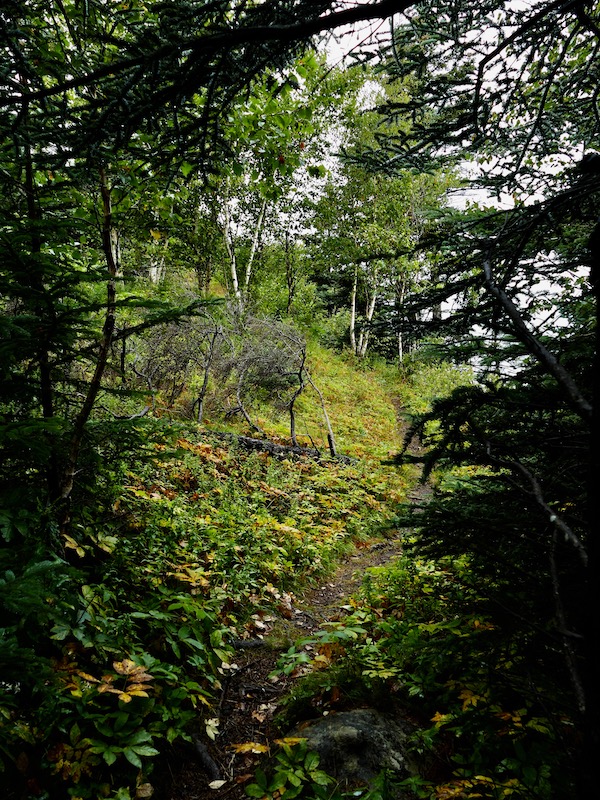
As I go through the woods I see the the ferns have turned brown & give the woods an autumnal look––
in Thoreau’s Journal:
As I go through the woods I see the the ferns have turned brown & give the woods an autumnal look––
in Thoreau’s Journal:
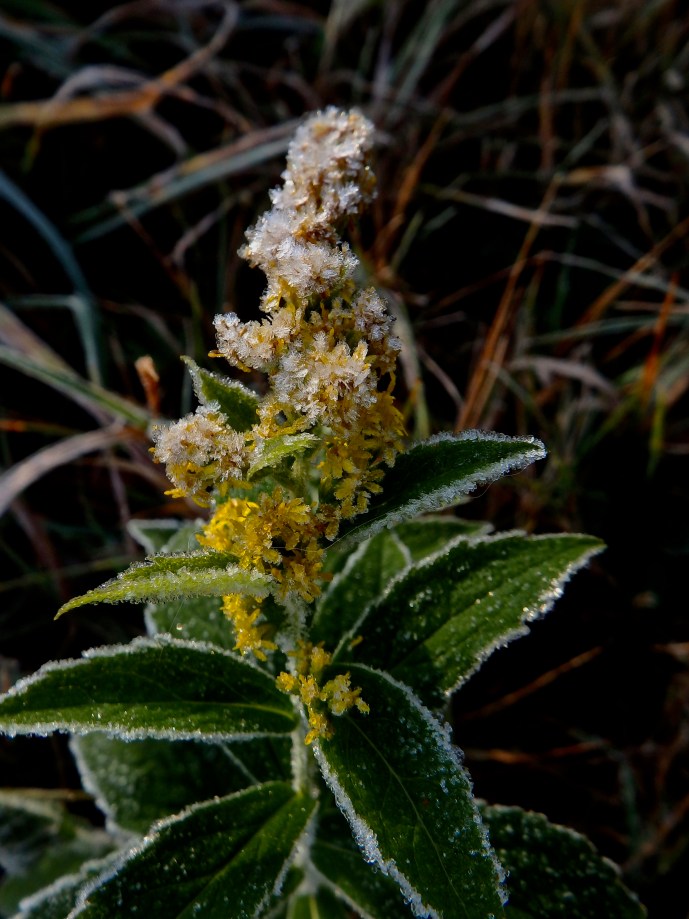
It is a great change produced in one frosty night.

What a sudden period put to the reign of summer!
in Thoreau’s Journal:
Perhaps a history of the year would be a history of the grass, or of a leaf, regarding the grass-blades as leaves, for it is equally true that the leaves soon lose their freshness and soundness, and become the prey of insects and of drought…
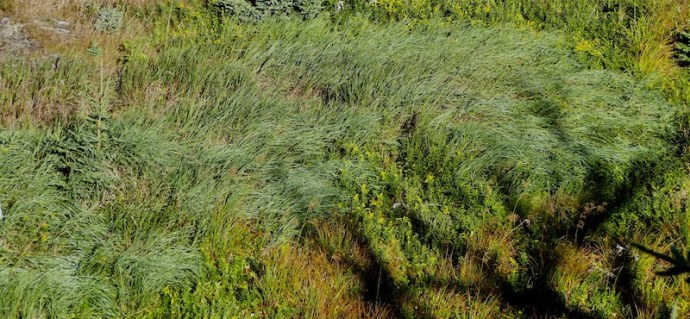
The period of youth is past. The year may be in its summer, in its manhood, but it is no longer in the flower of its age. It is a season of withering, of dust and heat, a season of small fruits and trivial experiences.

But there is an aftermath in early autumn, and some spring flowers bloom again, followed by an Indian summer of finer atmosphere and of a pensive beauty. May my life be not destitute of its Indian summer, a season of fine and clear, mild weather…

in Thoreau’s Journal:
Our ecstatic states, which appear to yield so little fruit, have this value at least: though in the seasons when our genius reigns we may be powerless for expression, yet, in calmer seasons, when our talent is active, the memory of those rarer moods come to color our picture, and is the permanent paint-pot, as it were in which we dip our brush.
The stars are dimly reflected in the water. The path of water-bugs in the moon’s rays is like ripples of light. It is only when you stand fronting the sun or moon that you see their light reflected in the water. I hear no frogs these nights––bullfrogs or others––as in the spring. It is not the season of sound.

It is remarkably still at this hour and season. No sound of bird or beast for the most part. This has none of the reputed noxious qualities of night.
in Thoreau’s Journal:
The sarsaparilla leaves, green or reddish, are spotted with yellow eyes centered with reddish, or dull-reddish eyes with yellow iris. They have a very pretty effect held over the forest floor, beautiful in their decay.


in Thoreau’s Journal:
China-like berries of cornel along the river now abundant, some cymes wholly white; also the panicled there and in swamps, though its little red (?) fingers stems are oftenest bare, but are pretty enough, perhaps, to take the place of the berries. The black choke-berries, as also choke-cherries, are stale. The two-leaved Solomon’s-seal has just begun to redden; so the largest one. The creeping juniper berries are now a hoary green but full-grown. The scarlet thorn is in many places quite edible and now a deep scarlet. Polygonum and medulla now. Green-briar only begins to turn. Viburnum nudum rather stale. Clintonia probably about gone. Carrion-flower in prime. Maple viburnum fully ripe, like the dentatum. Aralia hispida getting old. Feverwort now. Rose hips generally beginning; and two primroses beginning. Elder in prime and cranberry. Smooth sumach stale.


in Thoreau’s Journal:
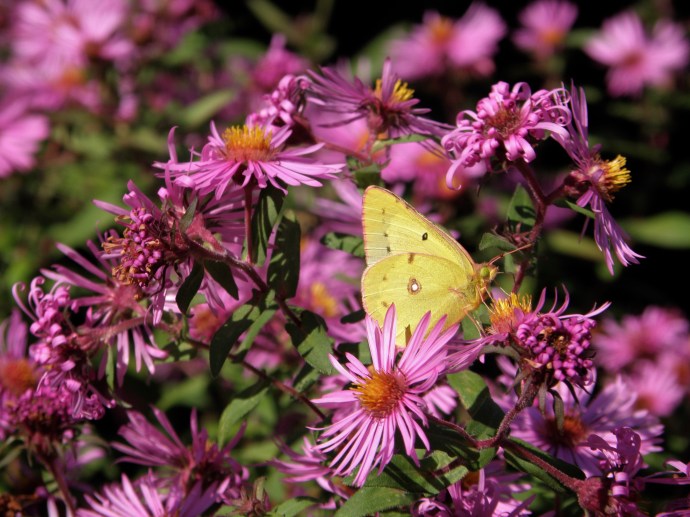
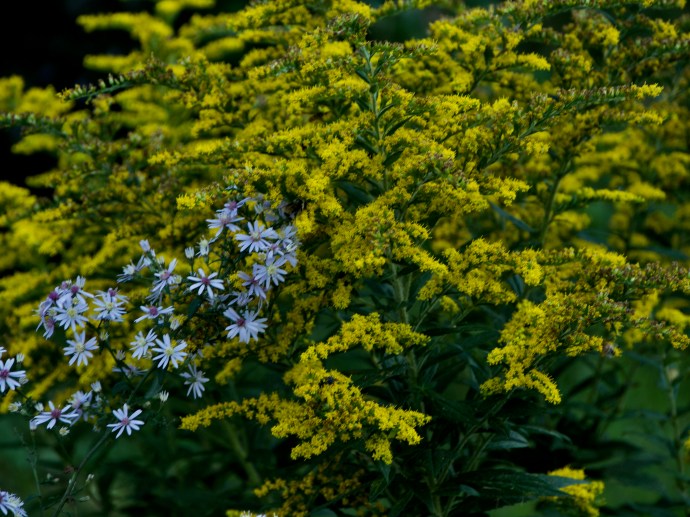
Would it not be worth the while to devote one day each year to collecting with pains the different kinds of asters––perhaps about this time––and another to the goldenrods?

in Thoreau’s Journal:
The goldenrods and asters impress me not like individuals but great families covering a thousand hills and having a season to themselves.
in Thoreau’s Journal:
To Walden
The seringo, too, has long been silent like other birds. The red prinos berries ripe in sunny places. Rose hips begin to be handsome. Small flocks of pigeons are seen these days. Distinguished from doves by their sharper wings and bodies. August has been a month of berries and melons, small fruits. First in the descent from summer’s culminating-point. There is a stillness in nature for want of singing birds, commenced a month or more ago; only the crickets’ louder creak to supply their place. I have not heard a bullfrog this long time. The small cornel, or bunch-berry, is in bloom now (!!) near the pond. What great tuft-like masses the cow-wheat makes now in sprout-lands!


As I look over the pond now from the eastern shore, I am obliged to employ both my hands to defend my eyes against the reflected as well as the true sun, for they appear equally bright; and between my hands I look over the smooth and glassy surface of the lake. The skaters make the finest imaginable sparkle. Otherwise it is literally as smooth as glass, except where a fish leaps into the air or a swallow dips beneath its surface. Sometimes a fish describes an arc of three or four feet in the air, and there is a bright flash where it emerges and another where it strikes the water. A slight haze at this season makes the shore-line so much more indistinct. Looking across the pond from the Peak toward Fair Haven, which I seem to see, all the earth beyond appears insulated and floated, even by this small sheet of water, the heavens being seen reflected, as it were beneath it, so that it looks thin.

The scenery of this small pond is humble though very beautiful, and does not approach to grandeur, nor can it much concern one who has not long frequented it, or lived by its shore.
in Thoreau’s Journal:
Great is the beauty of a wooded shore seen from the water, for the trees have ample room to expand on that side, and each puts forth its most vigorous bough to fringe and adorn the pond. It is rare that you see so natural an edge to the forest. Hence a pond like this, surrounded by hills wooded down to the edge of the water, is the best place to observe the tints of the autumnal foliage. Moreover, such as stand in or near to the water change earlier than elsewhere….

How rich and autumnal the haze which blues the distant hills and fills the valleys. The lakes look better in this haze, which confines our view more to their reflected heavens and makes the shore-line more indistinct. Viewed from the hilltop, it reflects the color of the sky….Beyond the deep reflecting surface, near the shore, where the bottom is seen, it is a vivid green. I see two or three small maples already scarlet, across the pond, beneath where the white stems of three birches diverge next the water….They cannot fatally injure Walden with an axe, for they have done their worst and failed. We see things in the reflection which we do not see in the substance. In the reflected woods of Pine Hill there is a vista through which I see the sky, but I am indebted to the water for this advantage, for from this point the actual wood affords no such vista.
 allandibiase.com
You must be logged in to post a comment.