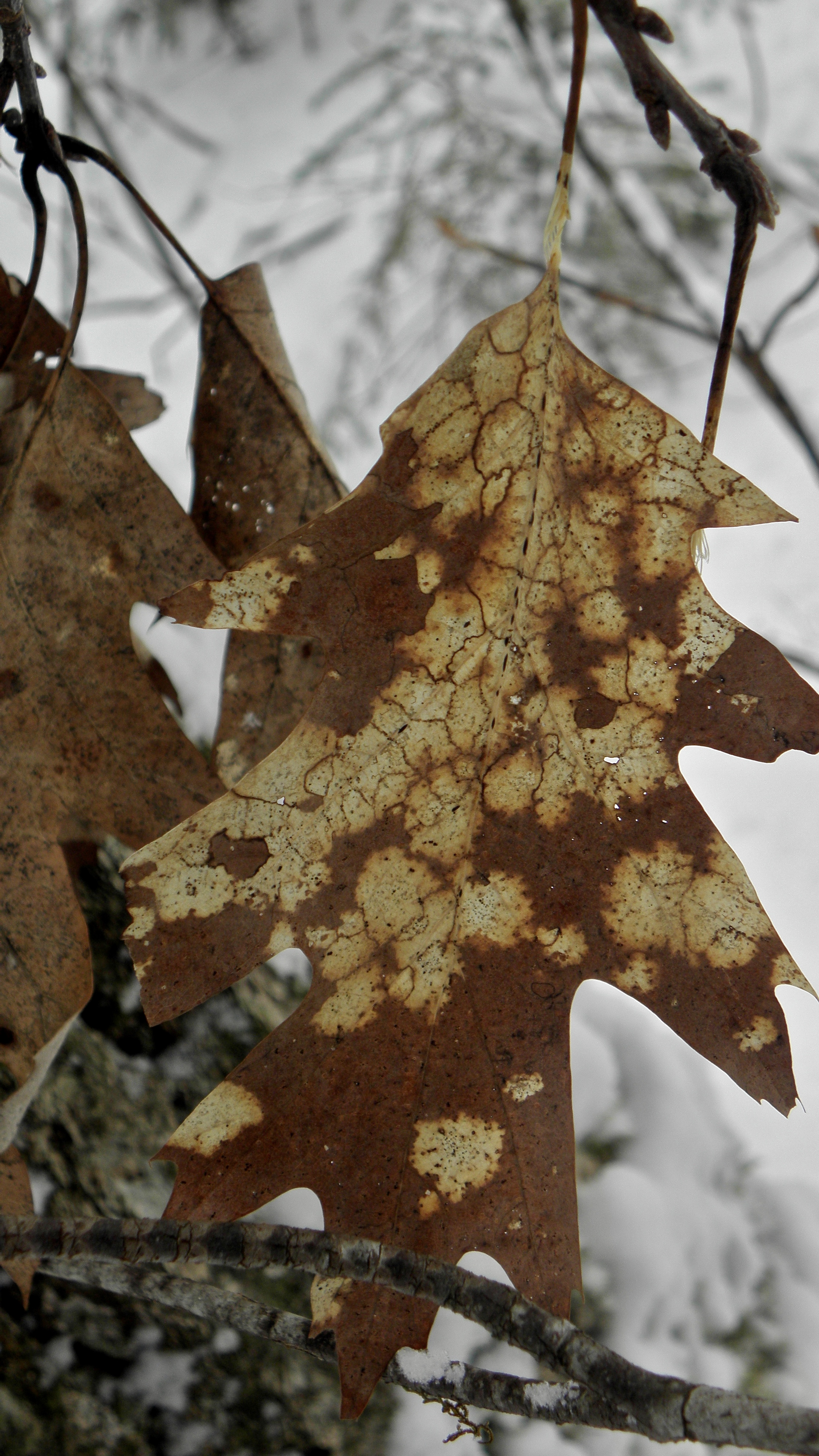
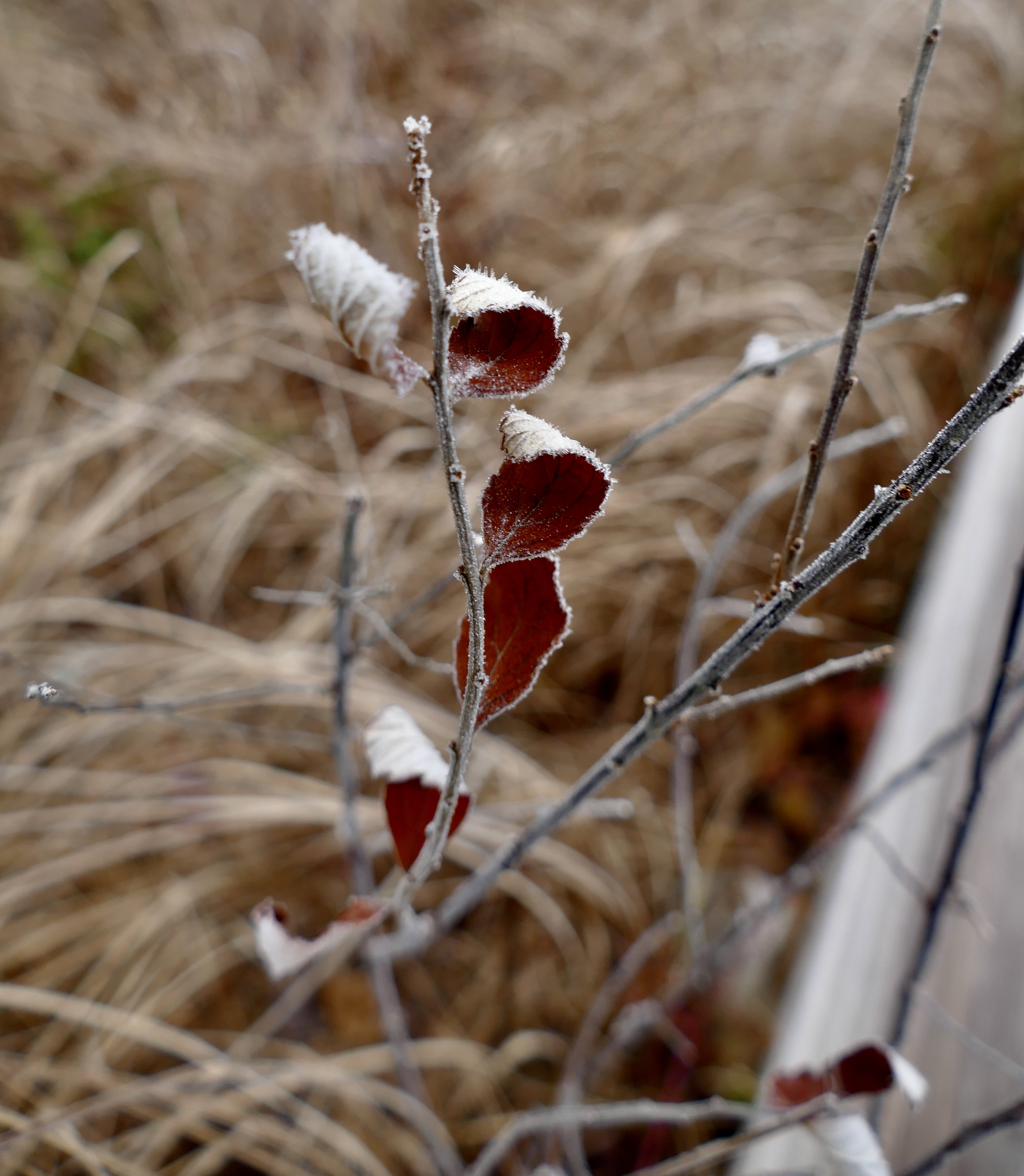
How much warmer our woodlands look and are for these withered leaves that still hang on! Without them the woods would be dreary, bleak, and wintry indeed. Here is a manifest provision for the necessities of man and the brutes. The leaves remain to keep us warm and to keep the earth warm about their roots.
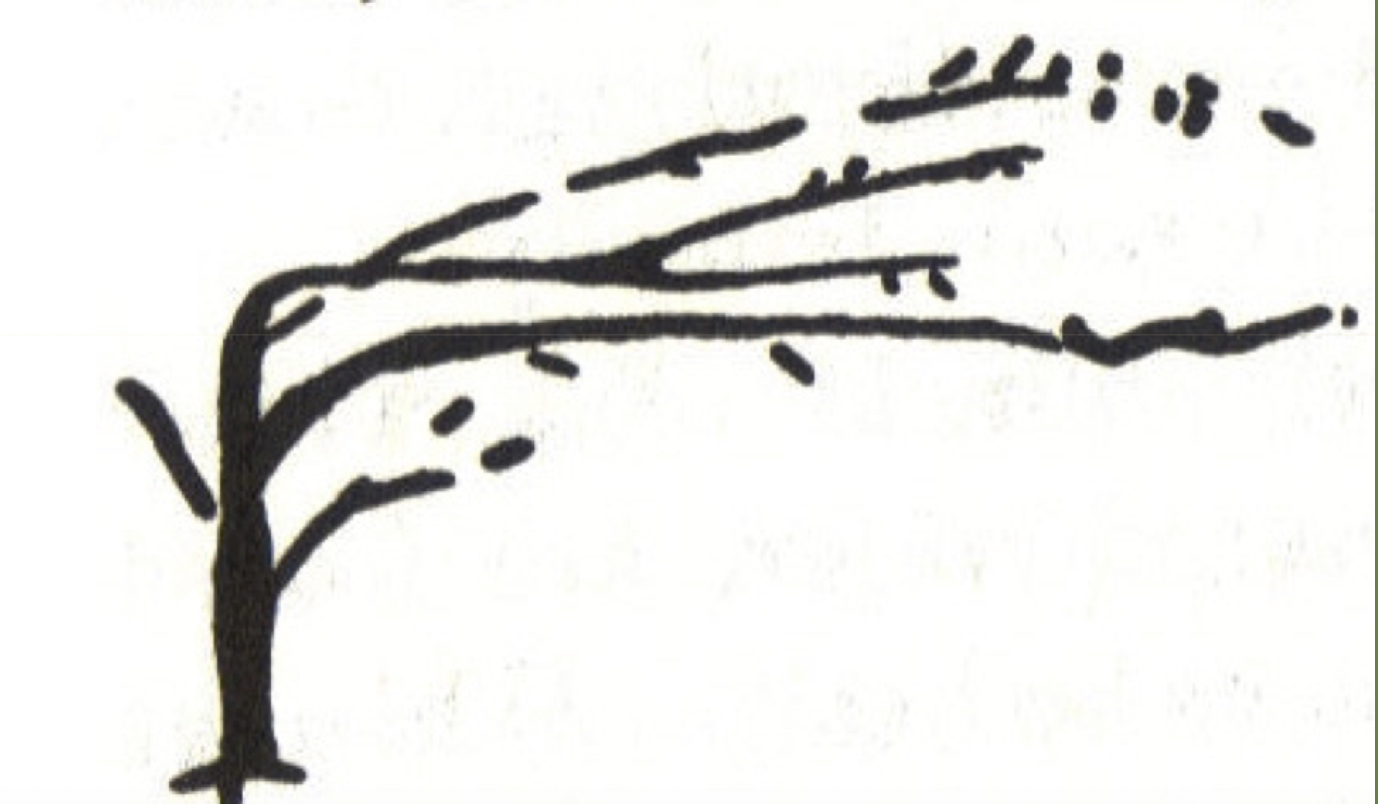
It is remarkable how suggestive the slightest drawing is as memento of things seen. For a few years past I have been accustomed to make a rude sketch in my journal, of plants, ice, and various natural phenomena, and though the fullest accompanying description may fail to recall my experience, these rude outline drawings do not fail to carry me back to that time and scene. It is as if I saw the same things again, and I may again attempt to describe it in words if I choose.
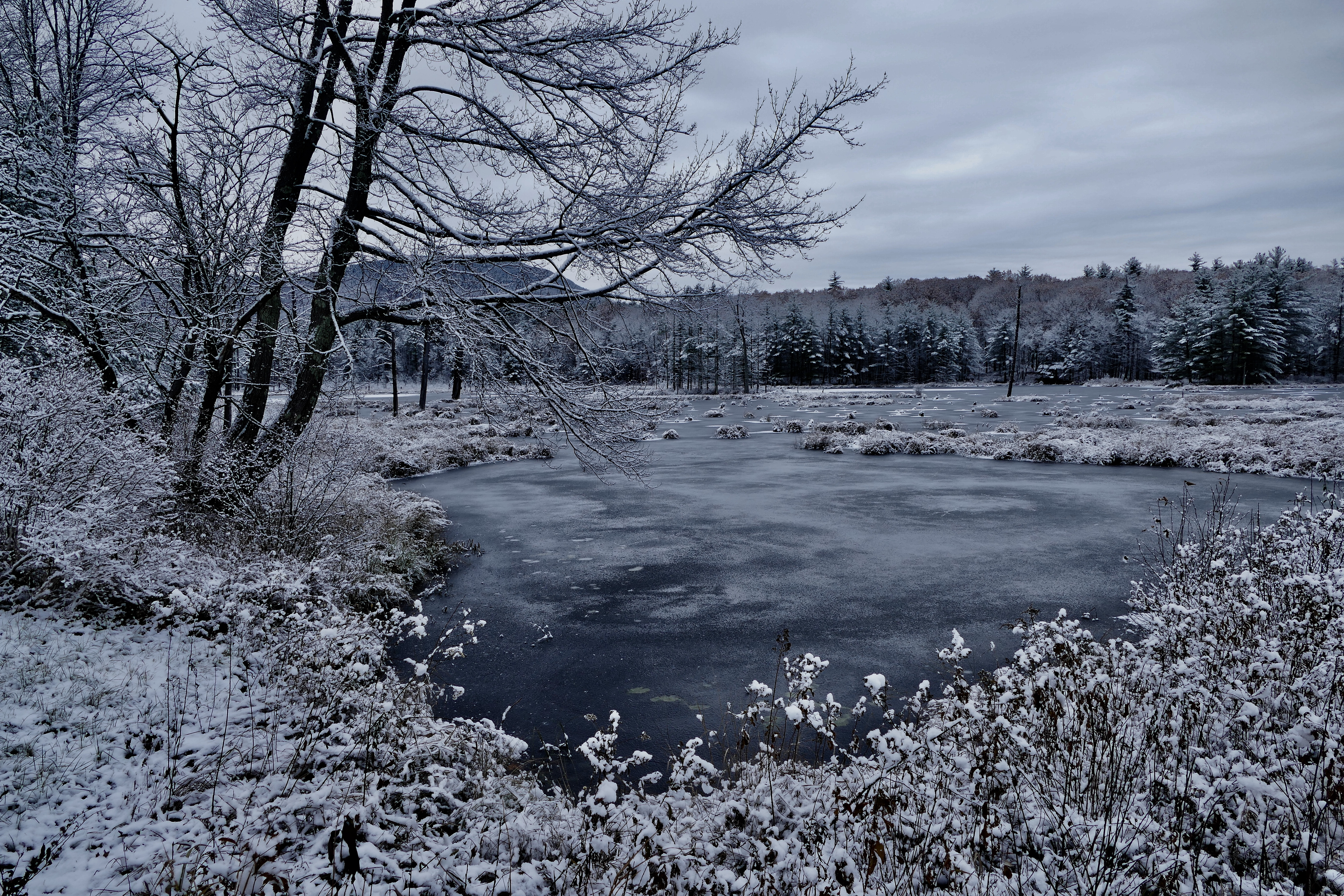
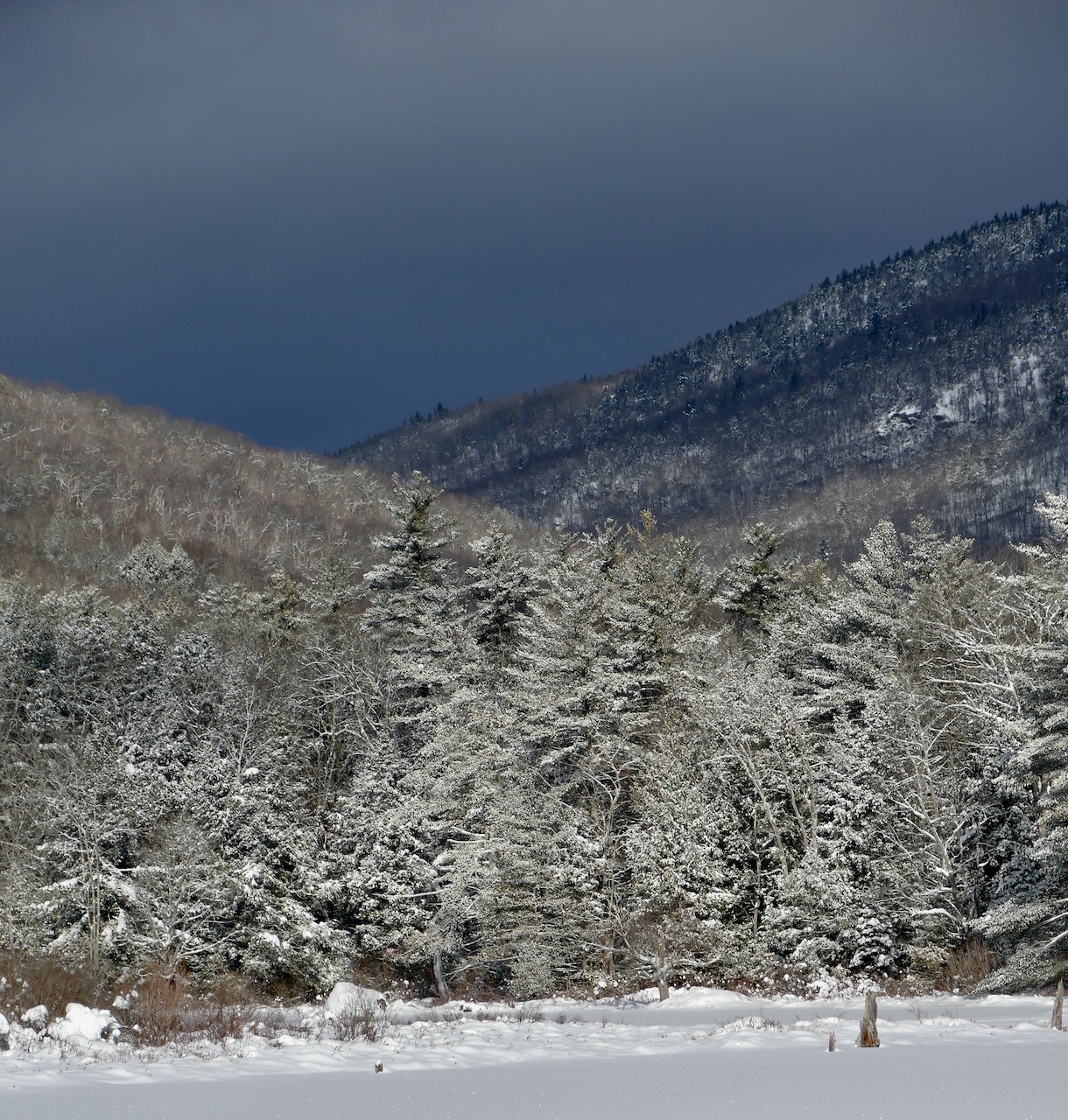
A still, completely gray, overcast, chilly morning. At 8:30 a fine snow begins to fall, increasing very gradually, perfectly straight down, till in fifteen minutes the ground is white, the smooth places first, and thus the winter landscape is ushered in.
And now it is falling thus all the land over, sifting down through the tree-tops in woods, and on the meadowand pastures, where the dry grass and weeds conceal it at first, and on the river and ponds, in which it is dissolved. But in a few minutes it turns to rain, and so the wintry landscape is postponed for the present.
How is it that what is actually present and transpiring is commonly perceived by the common sense and understanding only, is bare and bald, without halo, or the blue enamel of intervening air? But let it be past or to come, and it is at once idealized.
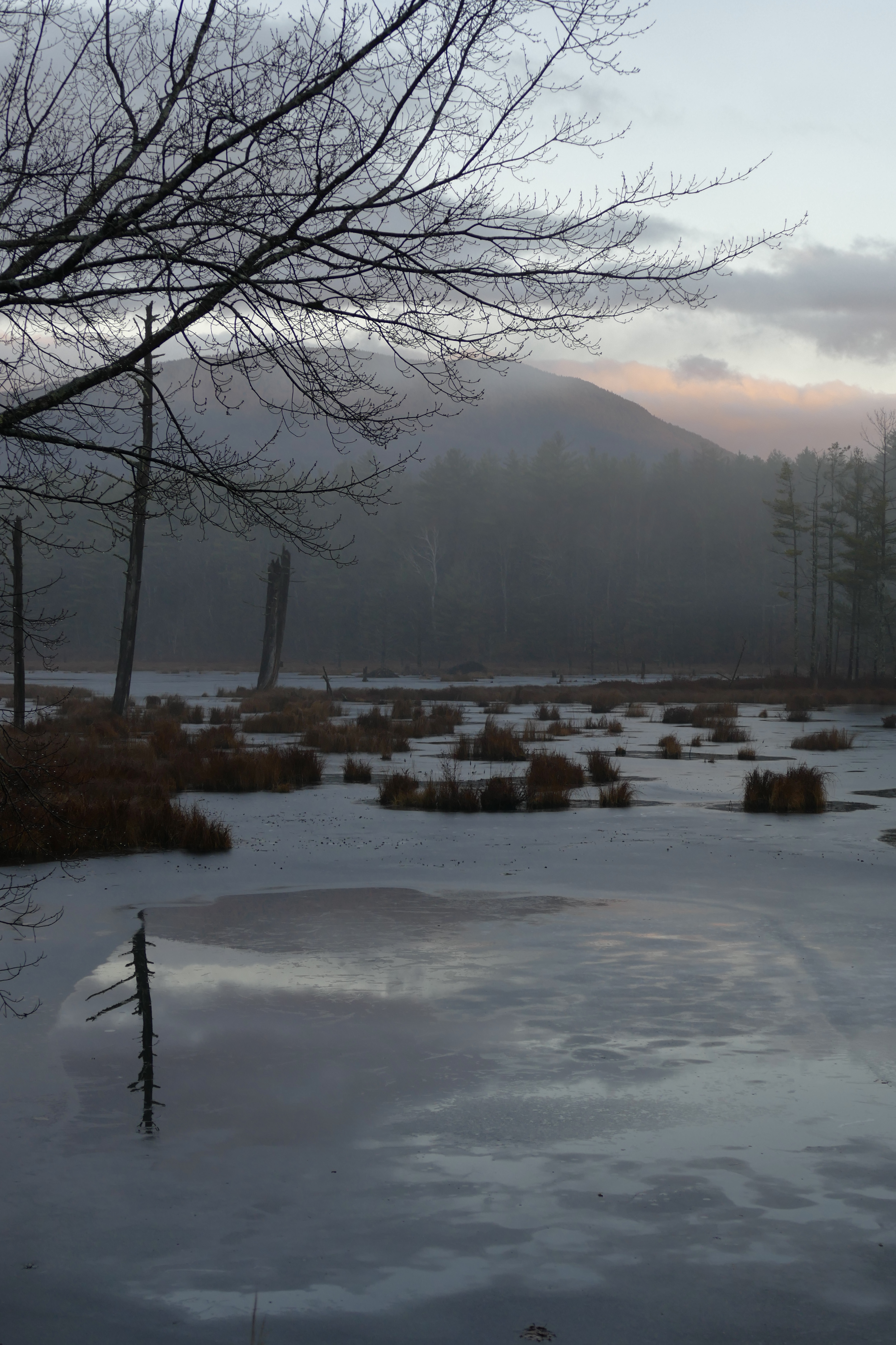
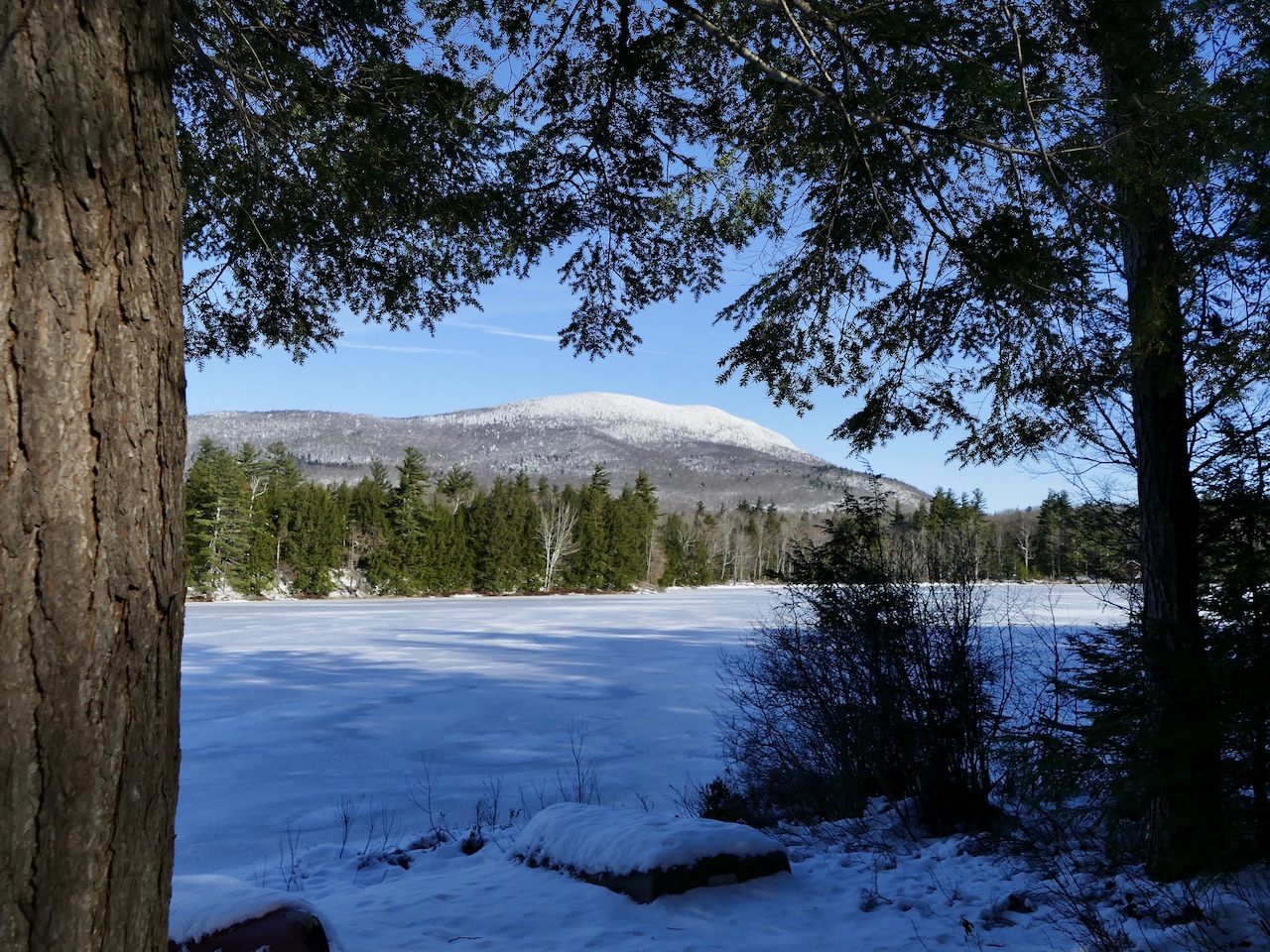
That grand old poem called Winter is round again without any connivance of mine. As I sit under Lee’s Cliff, where the snow is melted, amid sere pennyroyal and frost-bitten catnep, I look over my shoulder upon an arctic scene. I see with surprise the pond a dumb white surface of ice speckled with snow, just as so many winters before, where so lately were lapsing waves or smooth reflecting water. I see the holes which the pickerel-fisher has made, and I see him, too, retreating over the hills, drawing his sled behind him. The water is already skimmed over again there. I hear, too, the familiar belching voice of the pond. It seemed as if winter had come without any interval since midsummer, and I was prepared to see it flit away by the time I again looked over my shoulder. It was as if I had dreamed it. But I see that the farmers have had time to gather their harvests as usual, and the seasons have revolved as slowly as in the first autumn of my life. The winters come now as fast as snowflakes. It is wonderful that old men do not lose their reckoning. It was summer, and now again it is winter. Nature loves this rhyme so well that she never tires of repeating it. So sweet and wholesome is the winter, so simple and moderate, so satisfactory and perfect, that her children will never weary of it. What a poem! an epic in blank verse, enriched with a million tinkling rhymes. It is solid beauty. It has been subjected to the vicissitudes of millions of years of the gods, and not a single superfluous ornament remains. The severest and coldest of the immortal critics have shot their arrows at and pruned it till it cannot be amended.
P. M. – To Walden and Baker Bridge, in the shallow snow and mizzling rain.
It is somewhat of a lichen day. The bright-yellow sulphur lichens on the walls of the Walden road look novel, as if I had not seen them for a long time.
Do they not require cold as much as moisture to enliven them? What surprising forms and colors! Designed on every natural surface of rock or tree. Even stones of smaller size which make the walls are so finished, and piled up for what use? How naturally they adorn our works of art! See where the farmer has set up his post-and-rail fences along the road. The sulphur lichen has, as it were, at once leaped to occupy the northern side of each post, as in towns handbills are pasted on all bare surfaces, and the rails are more or less gilded with them as if it had rained gilt. The handbill which nature affixes to the north side of posts and trees and other surfaces. And there are the various shades of green and gray beside.
Clear cold winter weather—what a contrast between this week & last when I talked of setting out apple trees!
My themes shall not be far fetched—I will tell of homely everyday phenomena & adventures— Friends—! society—! It seems to me that I have an abundance of it— there is so much that I rejoice & sympathize with—& men too that I never speak to but only know & think of. What you call bareness & poverty—is to me simplicity: God could not be unkind to me if he should try. I love the winter with its imprisonment & its cold—for it compels the prisoner to try new fields & resources—
I love to have the river closed up for a season & a pause put to my boating —to be obliged to get my boat in— I shall launch it again in the spring with so much more pleasure— This is an advantage in point of abstinence and moderation compared with the sea-side boating—where the boat ever lies on the shore. —
I love best to have each thing in its season only—& and enjoy doing without it at all other times. It is the greatest of all advantages to enjoy no advantage at all. I find it invariably true the poorer I am the richer I am.
I love the few homely colors of nature at this season, her strong, wholesome browns, her sober and primeval grays, her celestial blue, her vivacious green, her pure cold snowy white.
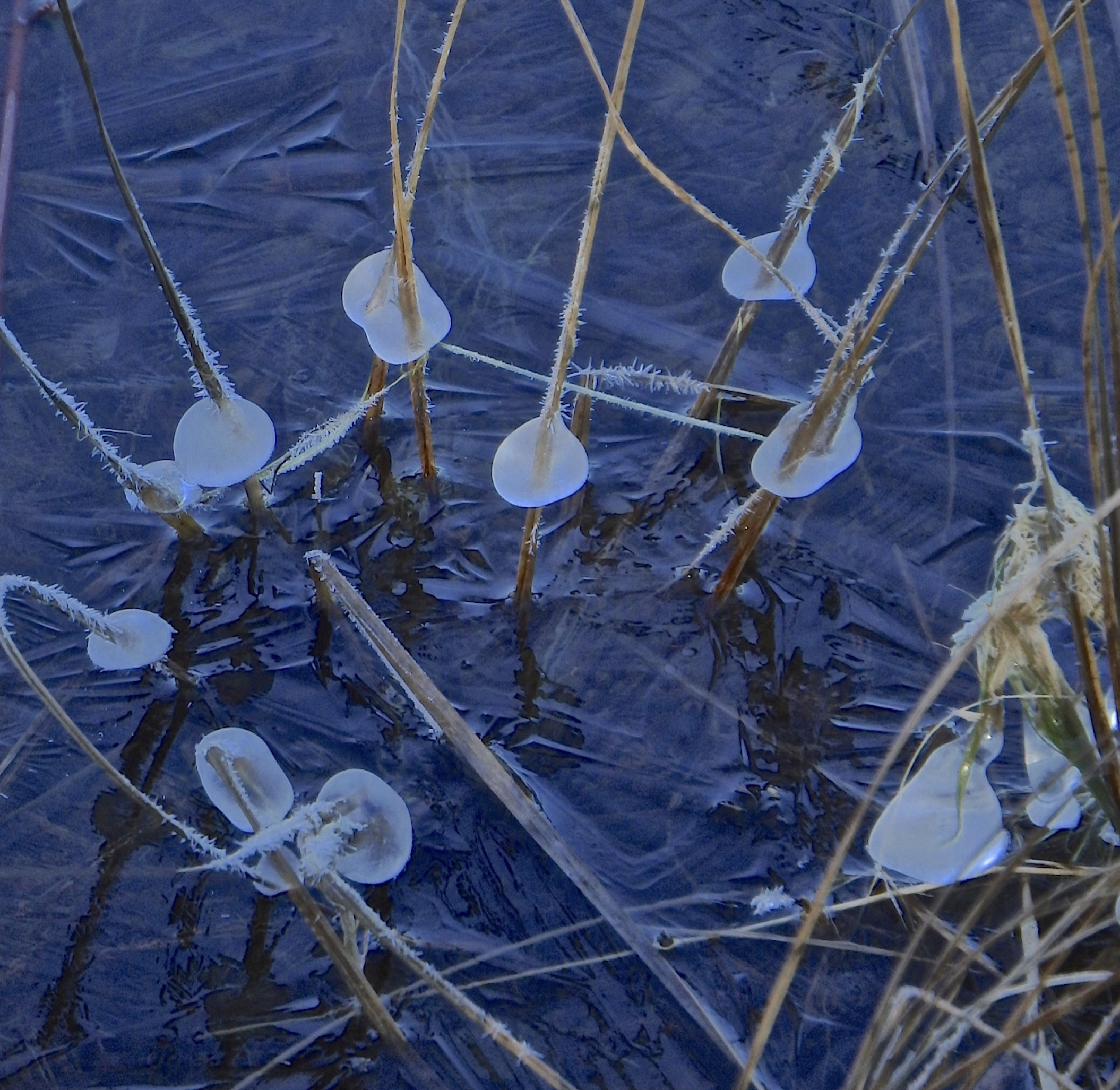
I see along the sides of the river 2 to 4 inches above the surface—but all at one level clear drop shaped crystals of ice—either held up by some twig—or hanging by a dead vine of climbing mikania— They are the remains of a thin sheet of ice, which melted as the river went down & in drops formed around & ran down these cores—& again froze & being thicker than the surrounding ice have outlasted it.
A rare landscape immediately suggests a suitable inhabitant, whose breath shall be its wind, whose moods its seasons, and to whom it will always to be fair.
OLYMPUS DIGITAL CAMERA
To be chafed and worried, and not as serene as nature, does not become one whose nature is as steadfast….
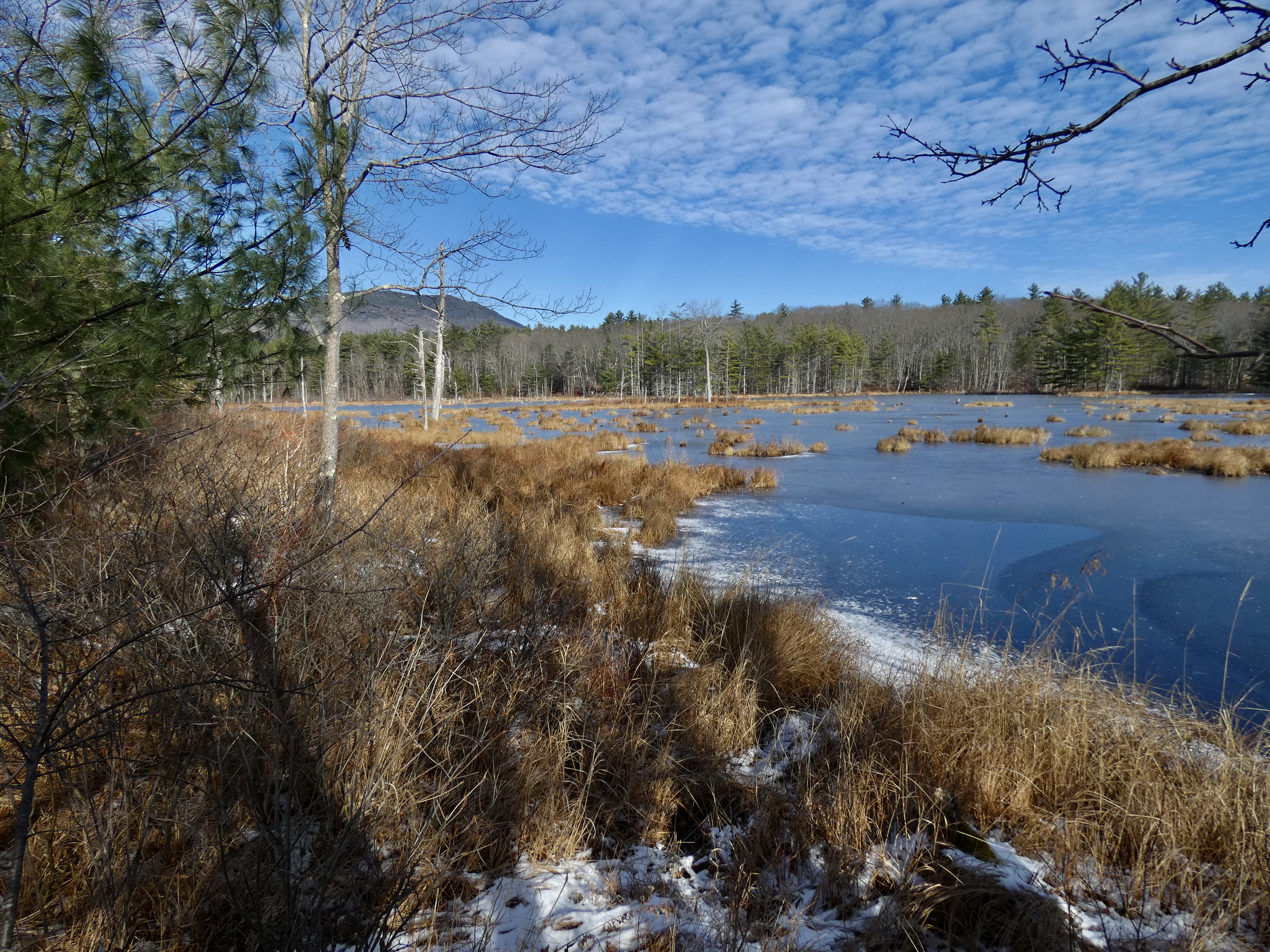
We may infer that every withered culm of grass or sedge—or weed that still stands in the fields—answers some purpose by standing— Those trees & shrubs which retain their withered leaves through the winter—shrub oaks—& young white red & black oaks—the lower branches of larger trees of the last mentioned species—horn-beam &c & young hickories seem to form an intermediate class between deciduous & evergreen trees— They may almost be called the ever-reds.
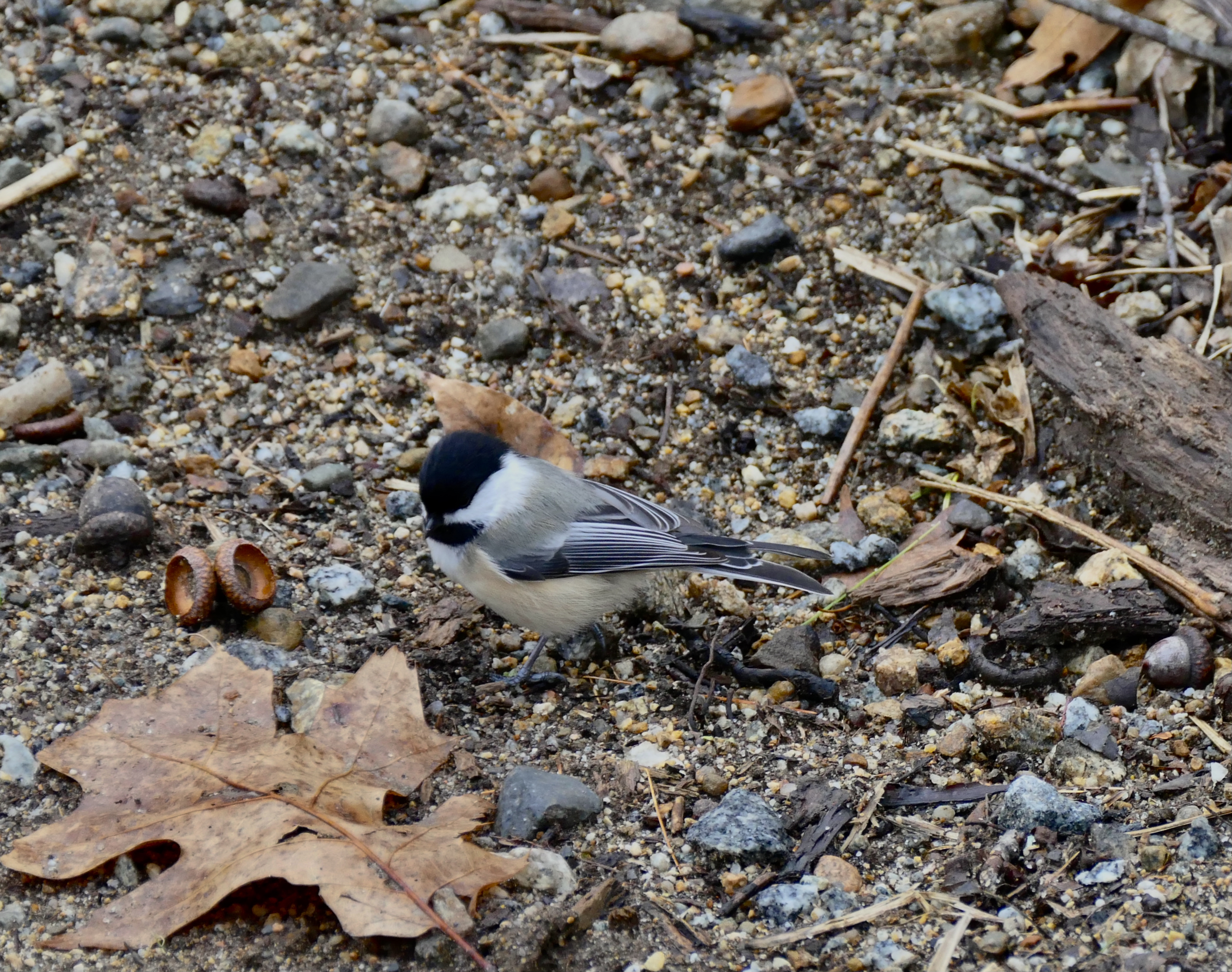
Their leaves which are falling all winter long serve as a shelter to rabbits & partridges & other winter quadrupeds & birds—even the little chickadees love to skulk amid them & peep out from behind them. I hear their faint silvery lisping notes‚ like tinkling glass—& occasionally a sprightly day-day-day—as they inquisitively hop nearer & nearer to me. They are our most honest & innocent little bird—drawing yet nearer to us as the winter advances—& deserve best of any of the walker.






 allandibiase.com
You must be logged in to post a comment.