I wish so to live ever as to derive my satisfaction and inspirations from the commonest events, every-day phenomena, so that what my senses hourly perceive in my daily walk, the conversations of my neighbors, may inspire me and I may dream of no heaven but that which lies about me.
Every blade in the field—Every leaf in the forest—lays down its life in its season as beautifully as it was taken up. — Thoreau, correspondence to Emerson, March 11, 1842
There is a fine effluence surrounding the wood, as if the sap had begun to stir and you could detect it a mile off. Such is the difference between an object seen through a warm, moist, and soft air and a cold, dry, hard one. Such is the genialness of nature that the trees appear to have put out feelers by which our senses apprehend them more tenderly. I do not know that the woods are ever more beautiful, or affect me more.
I feel it to be a greater success as a lecturer to affect uncultivated natures than to affect the most refined, for all cultivation is necessarily superficial, and its roots may not even be directed toward the centre of the being.
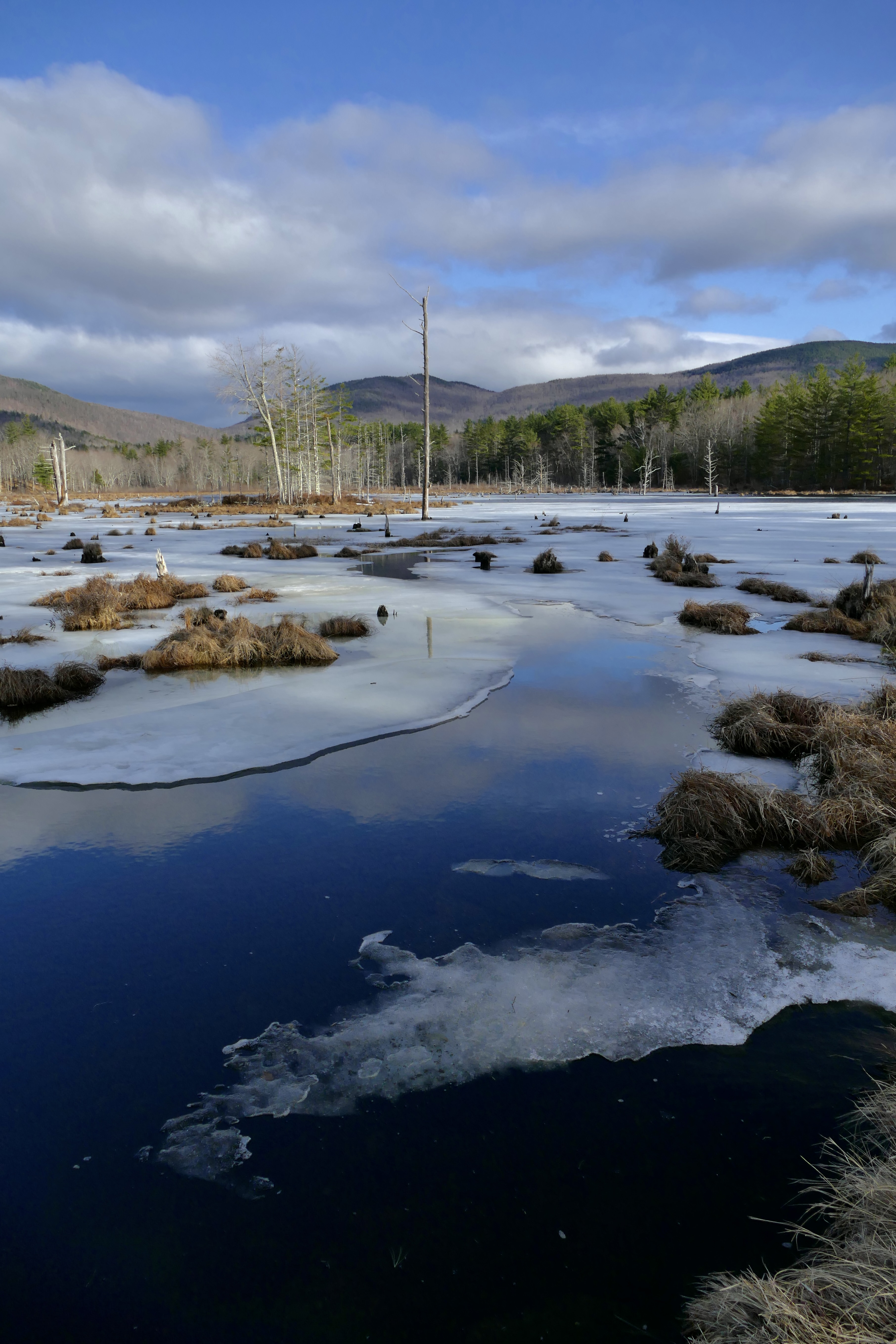
Rivers, too, like the walker, unbutton their icy coats, and we see the dark bosoms of their channels in the midst of the ice. Again, in pools of melted snow, or where the river has risen, I look into clear, placid water, and see the russet grassy bottom in the sun….
As we sit in this wonderful air, many sounds — that of woodchopping, for one — come to our ears agreeably blunted or muffled, even like the drumming of a partridge, not sharp and rending as in winter and recently. If a partridge should drum in winter, probably it would not reverberate so softly through the wood and sound indefinitely far. Our voices, even, sound differently and betray the spring. We speak as in a house, in a warm apartment still, with relaxed muscles and softened voices. The voice, like a woodchuck in his burrow, is met and lapped in and encouraged by all genial and sunny influences. There may be heard now, perhaps, under south hillsides and the south sides of houses, a slight murmur of conversation, as of insects, out of doors.
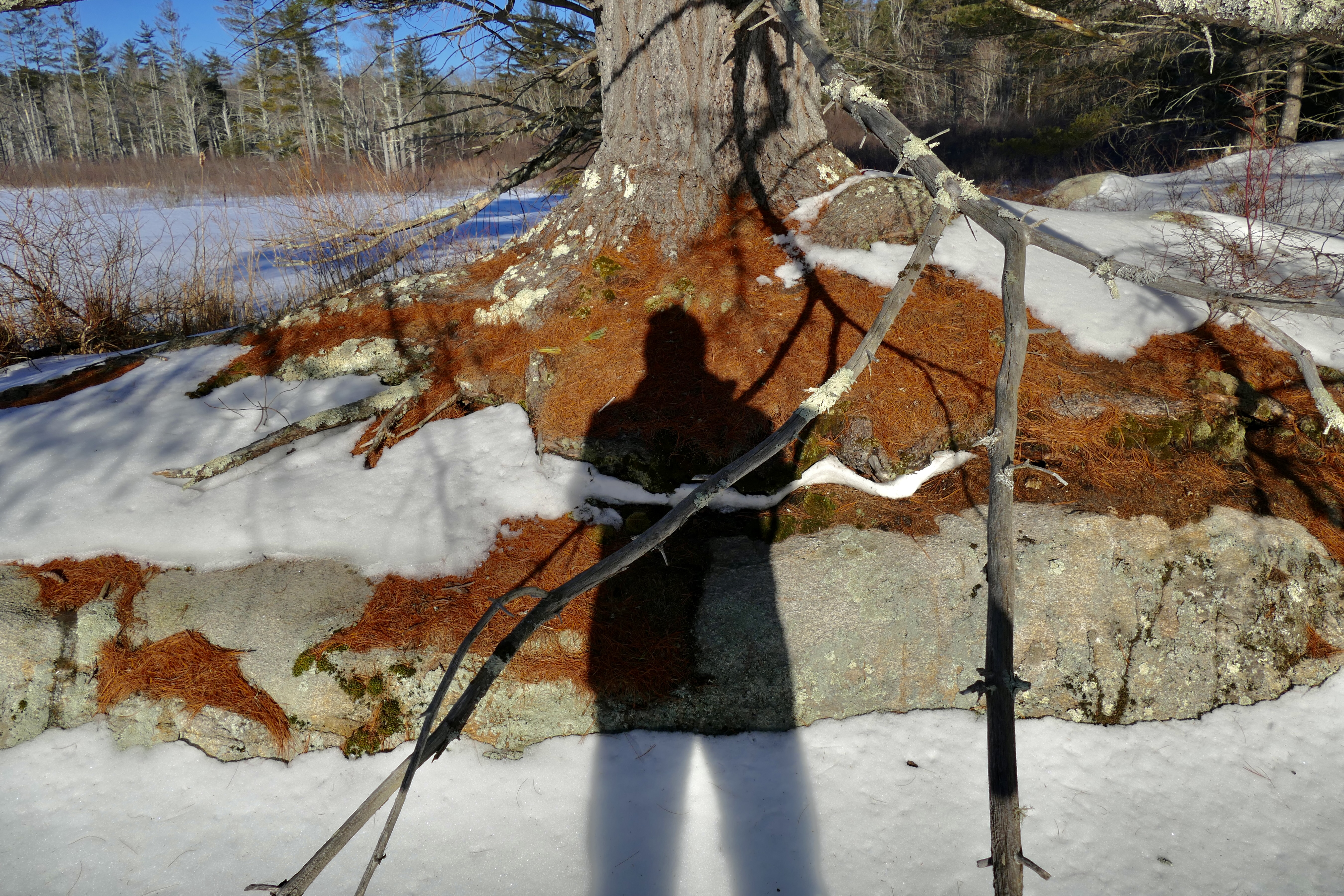
These earliest spring days are peculiarly pleasant. We shall have no more of them for a year. I am apt to forget that we may have raw and blustering days a month hence. The combination of this delicious air, which you do not want to be warmer or softer, with the presence of ice and snow, you sitting on the bare russet portions, the south hillsides, of the earth, this is the charm of these days. It is the summer beginning to show itself like an old friend in the midst of winter. You ramble from one drier russet patch to another. These are your stages. You have the air and sun of summer, over snow and ice, and in some places even the rustling of dry leaves under your feet, as in Indian-summer days.
As I recall it, February began cold, with some dry and fine driving snow, making those shell-shaped drifts behind walls, and some days after were some wild but low drifts on the meadow ice. I walked admiring the winter sky and clouds.
After the first week, methinks, it was much milder, and I noticed that some sounds, like the tinkling of railroad rails, etc., were springlike. Indeed, the rest of the month was earine, river breaking up a part and closing again, and but little snow.
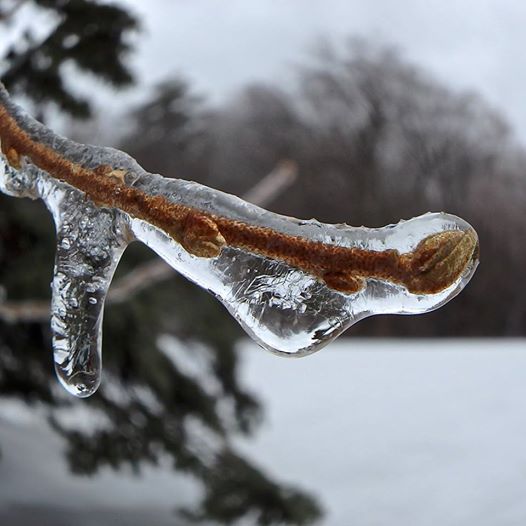
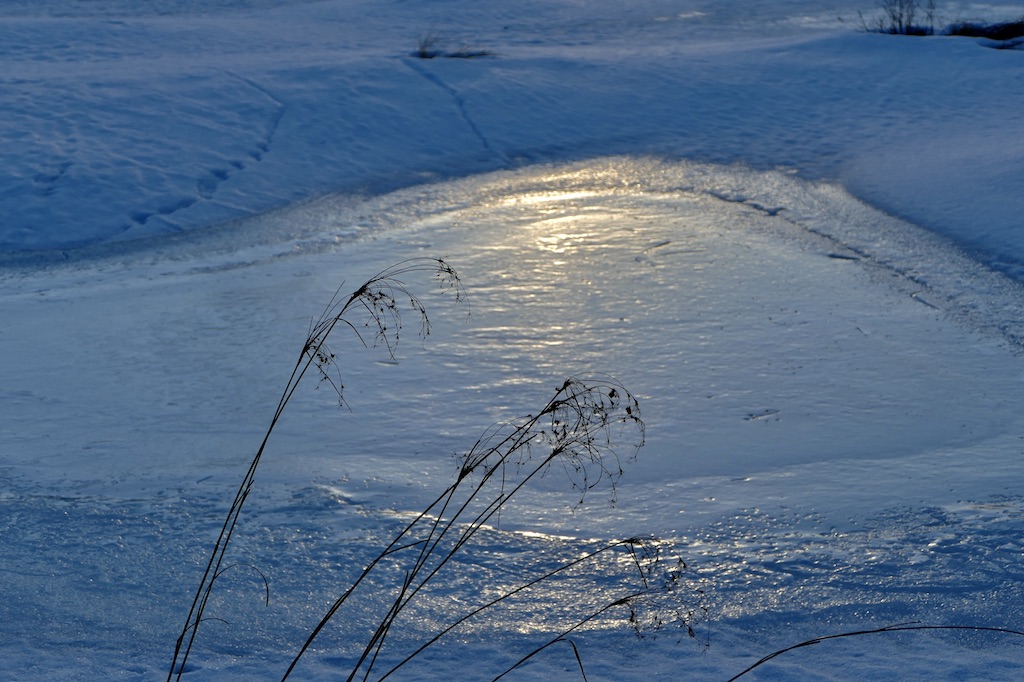
About 8th and 12th, the beauty of the ice on the meadows, partly or slightly rotted, was noticeable, with the curious figures in it, and, in the coolest evenings, the green ice and rosy isles of flat drifts.
About the 9th, noticed the very black water of some open reaches, in a high wind and cold.
About the middle of the month was a moist, lodging snow, and the 18th a fine granular one, making about a foot, ––the last. Then sudden warm weather and rain come and dissolve it all at once, and the ruts, flowing with melted snow, shone in the sun, and the little sleighing was all gone. And from the 25th to 27th the river generally broke up.
March began warm, and I admired the ripples made by the gusts on the dark-blue meadow flood, and the light-tawny color of the earth, and was on the alert for several days to hear the first birds. For a few days past it has been generally colder and rawer, and the ground has been whitened with snow two or three times, but it has all been windy.
You incline to walk now along the south side of hills which will shelter you from the blustering northwest and north winds. The sidewalks are wet in the morning from the frost coming out.
[“earine” is derived from the Greek word for “spring.”]
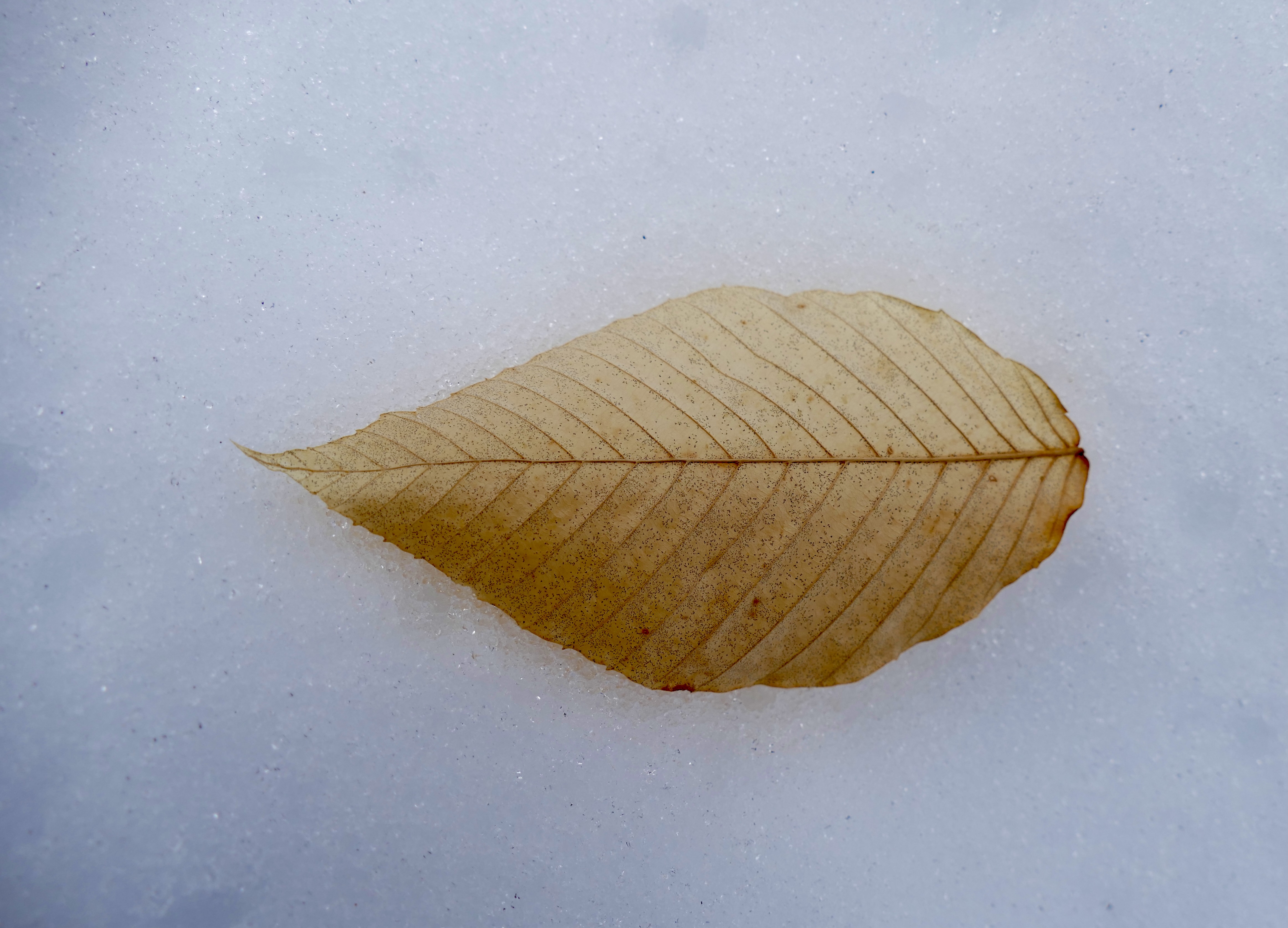
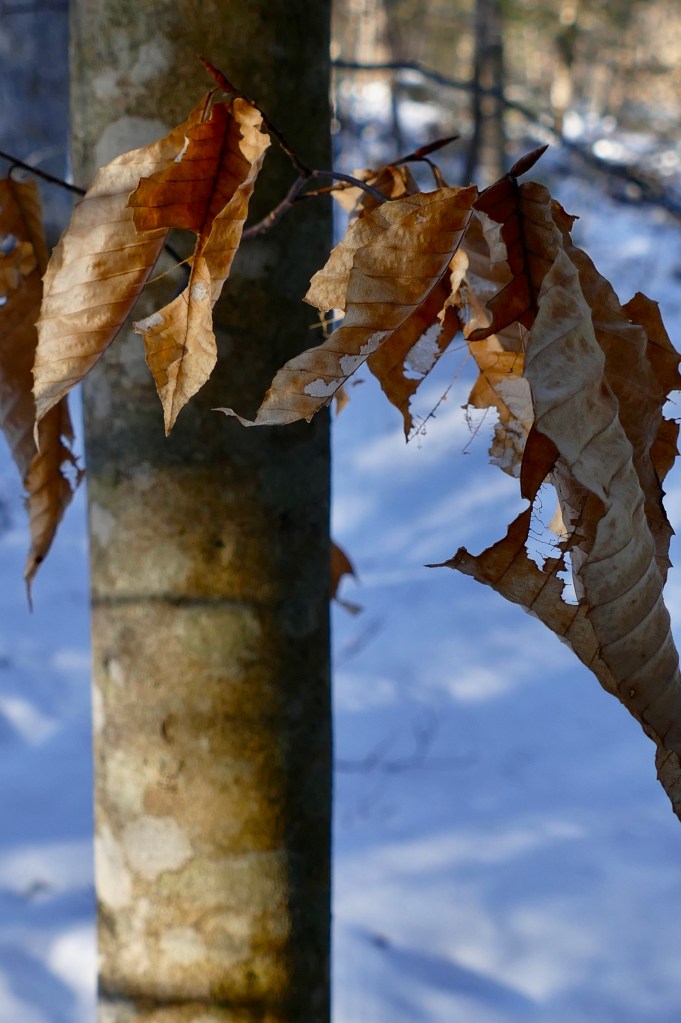
There is no ripeness which is not, so to speak, something ultimate in itself, and not merely a perfected means to a higher end. In order to be ripe it must serve a transcendent use. The ripness of a leaf, being perfected, leaves the tree at that point and never returns to it. It has nothing to do with any other fruit which the tree may bear, and only genius can pluck it. The fruit of a tree is neither in the seed nor in the full-grown tree, but it is simply the highest use to which it can be put.
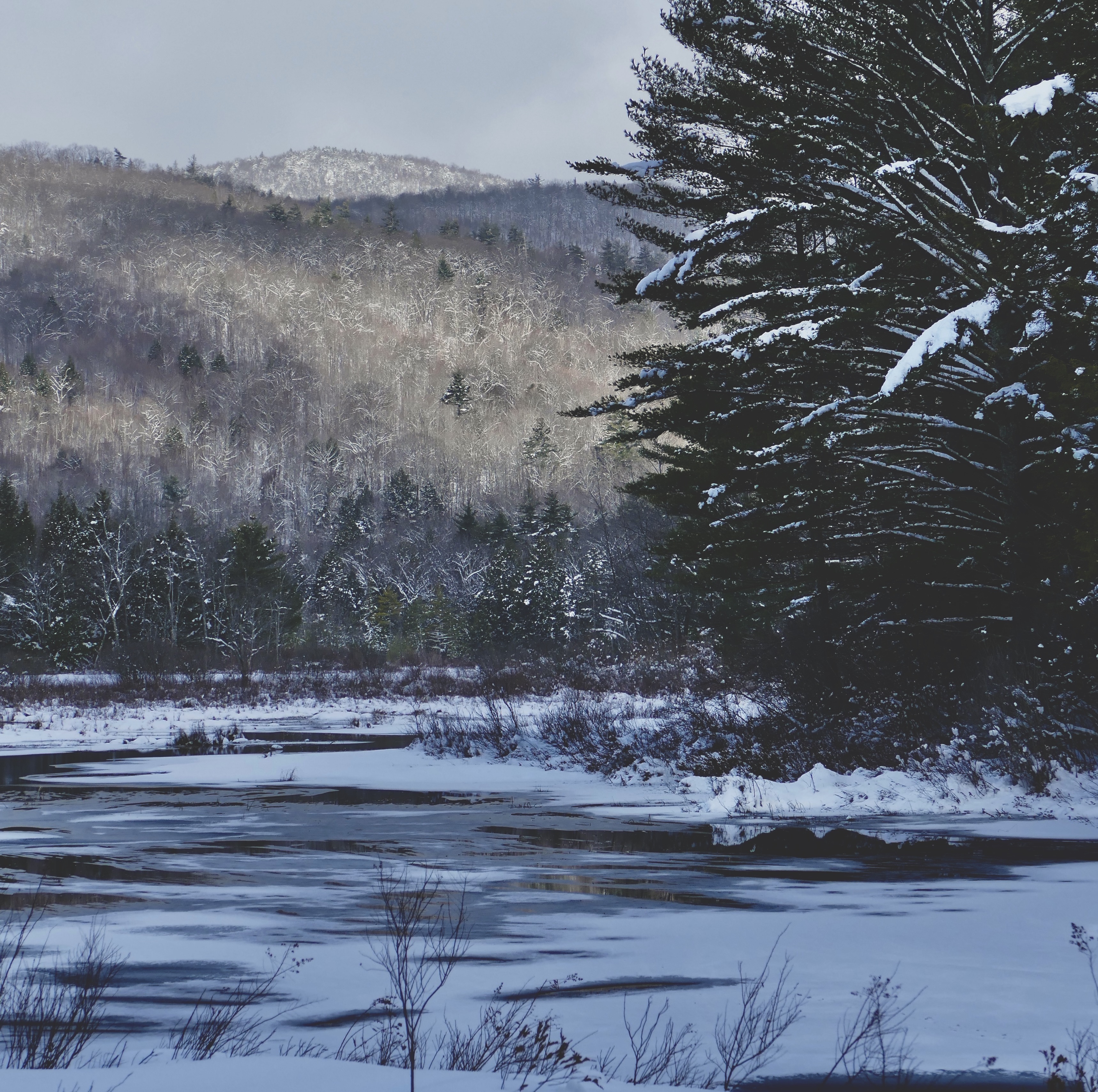
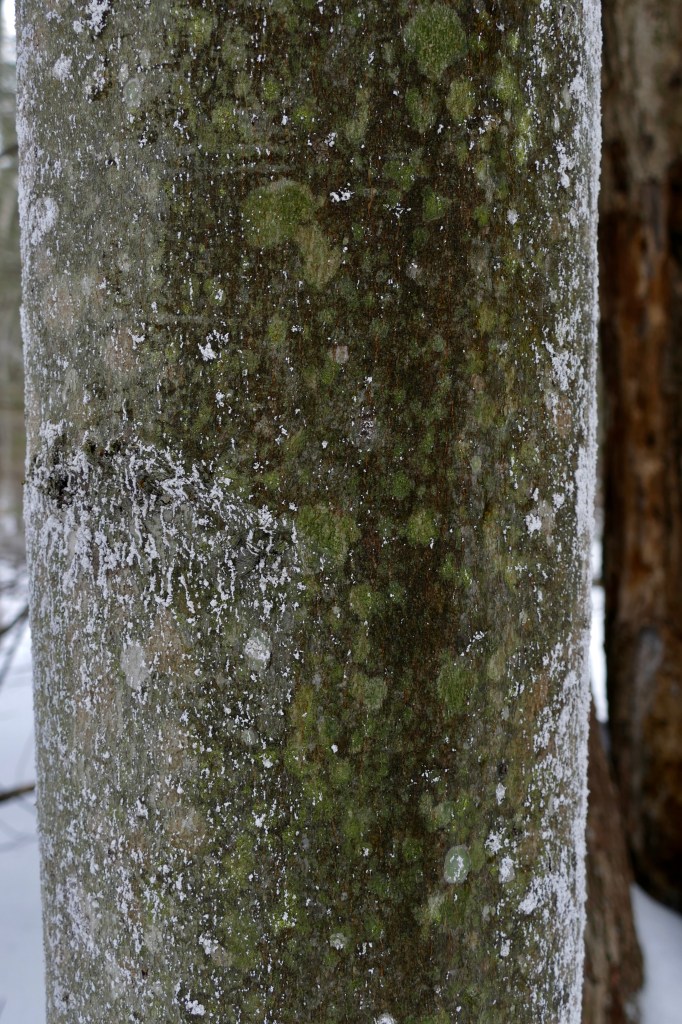
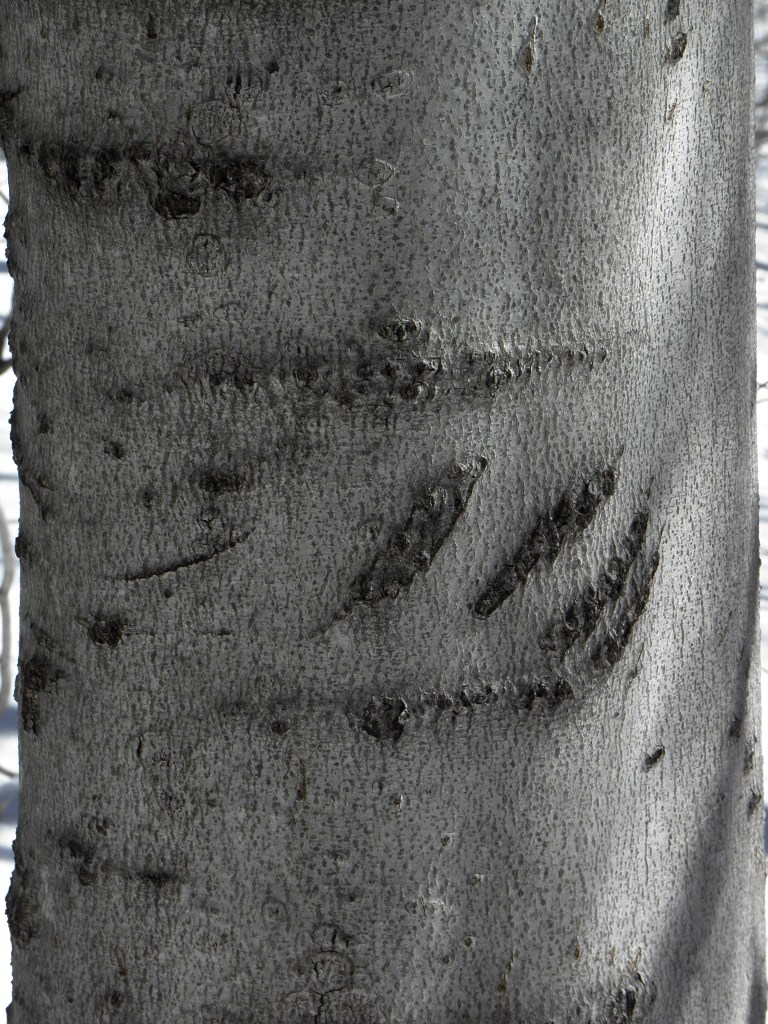
To the Beeches. A misty afternoon, but warm, threatening rain. Standing on Walden, whose eastern shore is laid waste, men walking on the hillside a quarter of a mile off are singularly interesting objects, seen through the mist, which has the effect of a mirage. The persons of the walkers are black on the snowy ground, and the limited horizon makes them the more important in the scene. This kind of weather is very favorable to our landscape. I must not forget the lichen-painted boles of the beeches.
I find that the ice of Walden has melted or softened so much that I sink an inch or more at every step and hardly any where can I cut out a small cake the water collects so fast in hole.
But at last in a harder & dryer place I succeeded— It was now 15 1/2 inches thick….
The red maple sap, which I first noticed the 21st of February, is now frozen up in the auger holes, and thence down the trunk to the ground, except in one place where the hole was made on the south side of the tree, where it is melted and is flowing a little. Generally, then, when the thermometer is thus low, say below freezing point, it does not thaw in the auger holes. There is no expanding of buds of any kind, nor are early birds to be seen. Nature was, thus, premature, anticipated her own revolutions with respect to the sap of trees, the buds (spiraea, at least), and birds. The warm spell ended with February 26th.
We talk about spring as at hand before the end of February, and yet it will be two good months, one sixth part of the whole year, before we can go a-Maying. There may be a whole month of solid and uninterrupted winter yet, plenty of ice and good sleighing.
We may not even see the bare ground, and hardly any water; and yet we sit down and warm our spirits annual with the distant prospect of spring.
I have thoughts, as I walk, on some subject that is running in my head, but all their pertinence seems gone before I can get home to set them down.
The most valuable thoughts which I entertain are anything but what I thought. Nature abhors a vacuum, and if I can only walk with sufficient carelessness I am sure to be filled.



 allandibiase.com
You must be logged in to post a comment.