June 10, 1853

in Thoreau’s Journal:

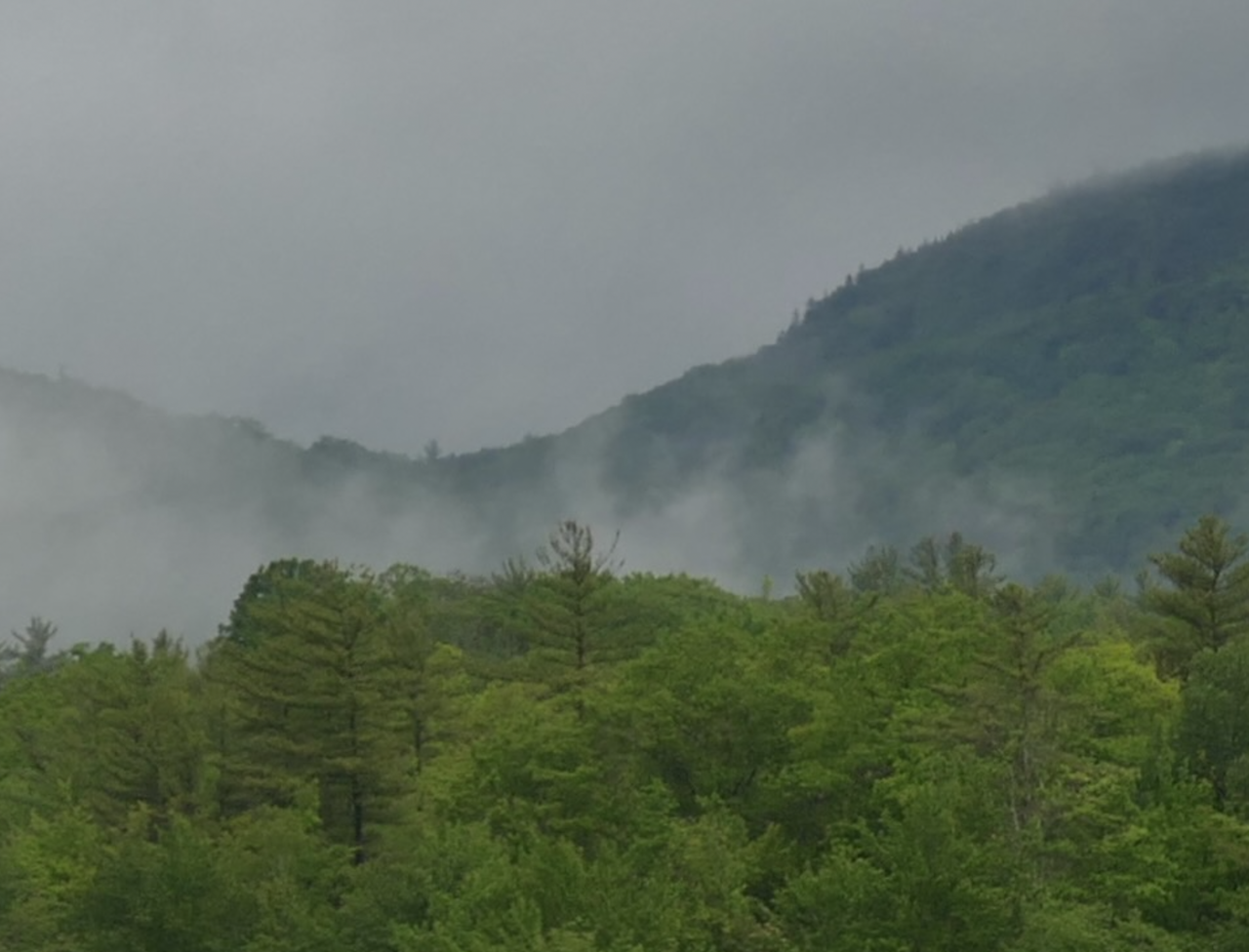
Another great fog this morning. 

P. M. — To Mason’s pasture in Carlisle— Haying commencing in front yards. 

Cool but agreeable easterly wind. Streets now beautiful with verdure and shade of elms—under which you look, through an air clear for summer, to the woods in the horizon—  By the way, I amused myself yesterday Pm with looking from my window, through a spyglass, at the tops of the woods in the horizon—  It was pleasant to bring them so near and individualize the trees—to examine in detail the tree tops which before you had beheld only in the mass as the woods in the horizon— It was an exceedingly rich border, seen thus against—and the imperfections in a particular tree top more than two miles off were quite apparent— I could easily have seen a hawk sailing over the top of the wood, and possibly his nest in some higher tree— Thus to contemplate from my attic in the village, the hawks circling about their nests above some dense forest or swamp miles away—almost as if they were flies on my own premises. I actually distinguished a taller white pine with which I am well acquainted—with a double top rising high above the surrounding woods—between 2 & 3 miles distant—which with the naked eye, I had confounded with the nearer woods.—
June 9, 1852

in Thoreau’s Journal:

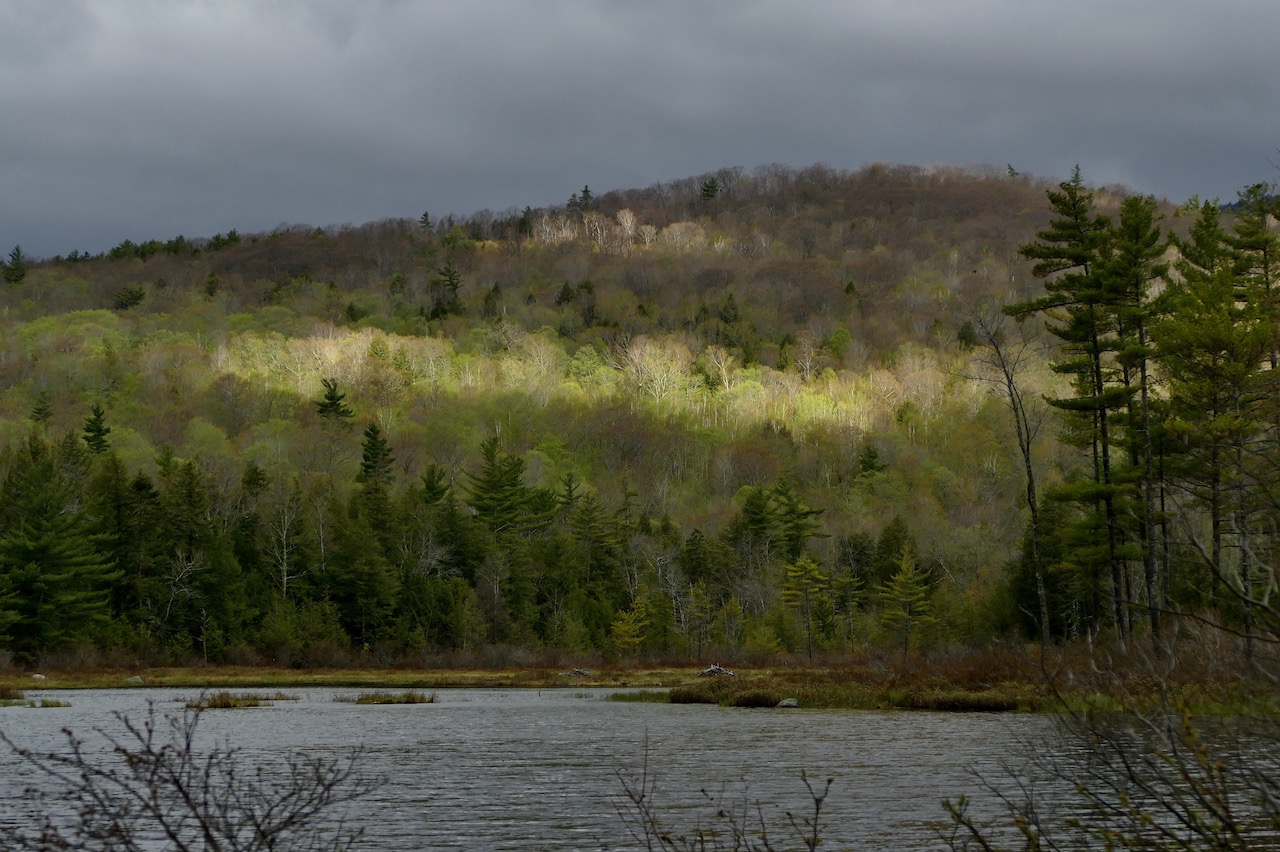
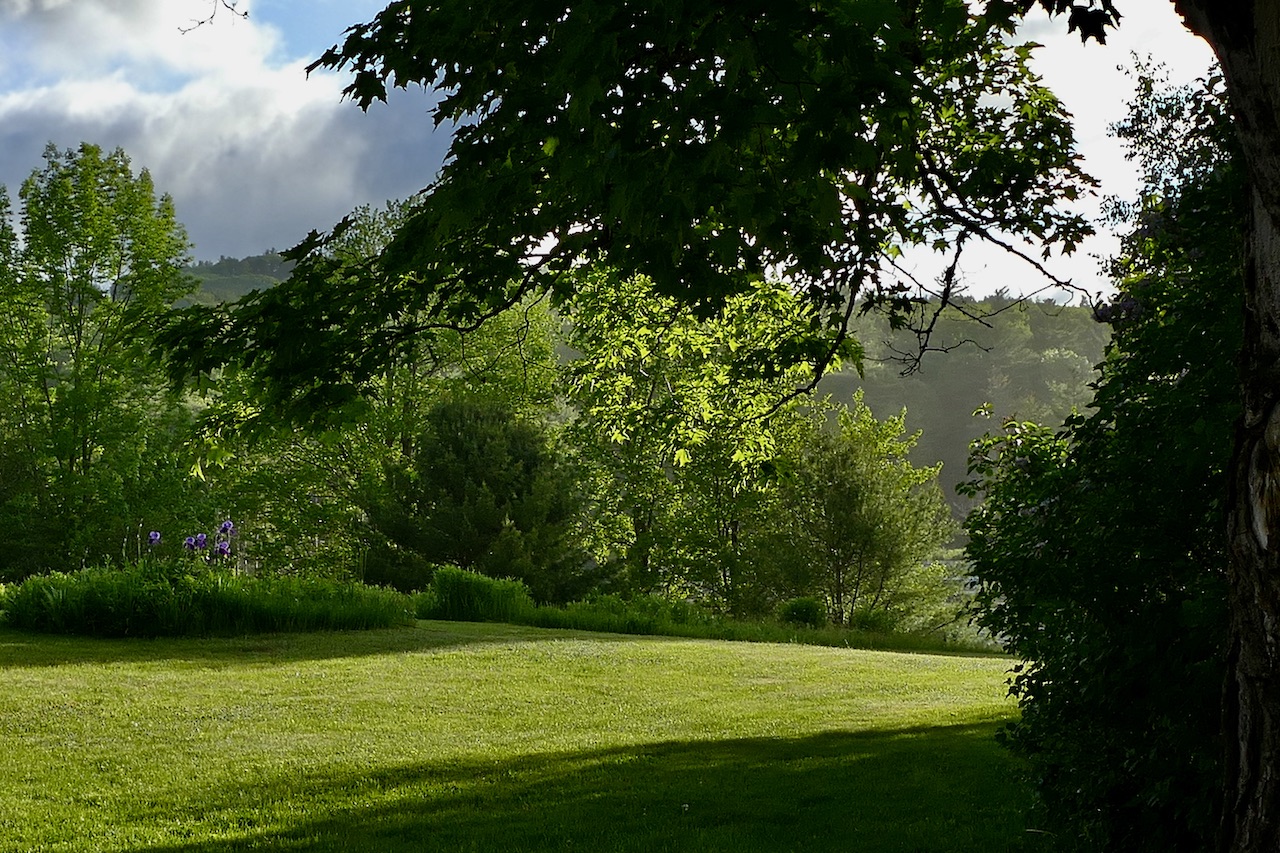
For a week past we have had washing days. The grass waving, and trees having leaved out, their boughs wave and feel the effect of the breeze. Thus new life and motion is imparted to the trees. The season of waving boughs; and the lighter under sides of the new leaves are exposed. This is the first half of June. Already the grass is not so fresh and liquid-velvety a green, having much of it blossom[ed] and some even gone to seed, and it is mixed with reddish ferns and other plants, but the general leafiness, shadiness, and waving of grass and boughs in the breeze characterize the season. The wind is not quite agreeable, because it prevents your hearing the birds sing. Meanwhile the crickets are strengthening their quire. The weather is very clear, and the sky bright. The river shines like silver. Methinks this is a traveller’s month. The locust in bloom. The waving, undulating rye. The deciduous trees have filled up the intervals between the evergreens, and the woods are bosky now.

June 8, 1860

in Thoreau’s Journal:

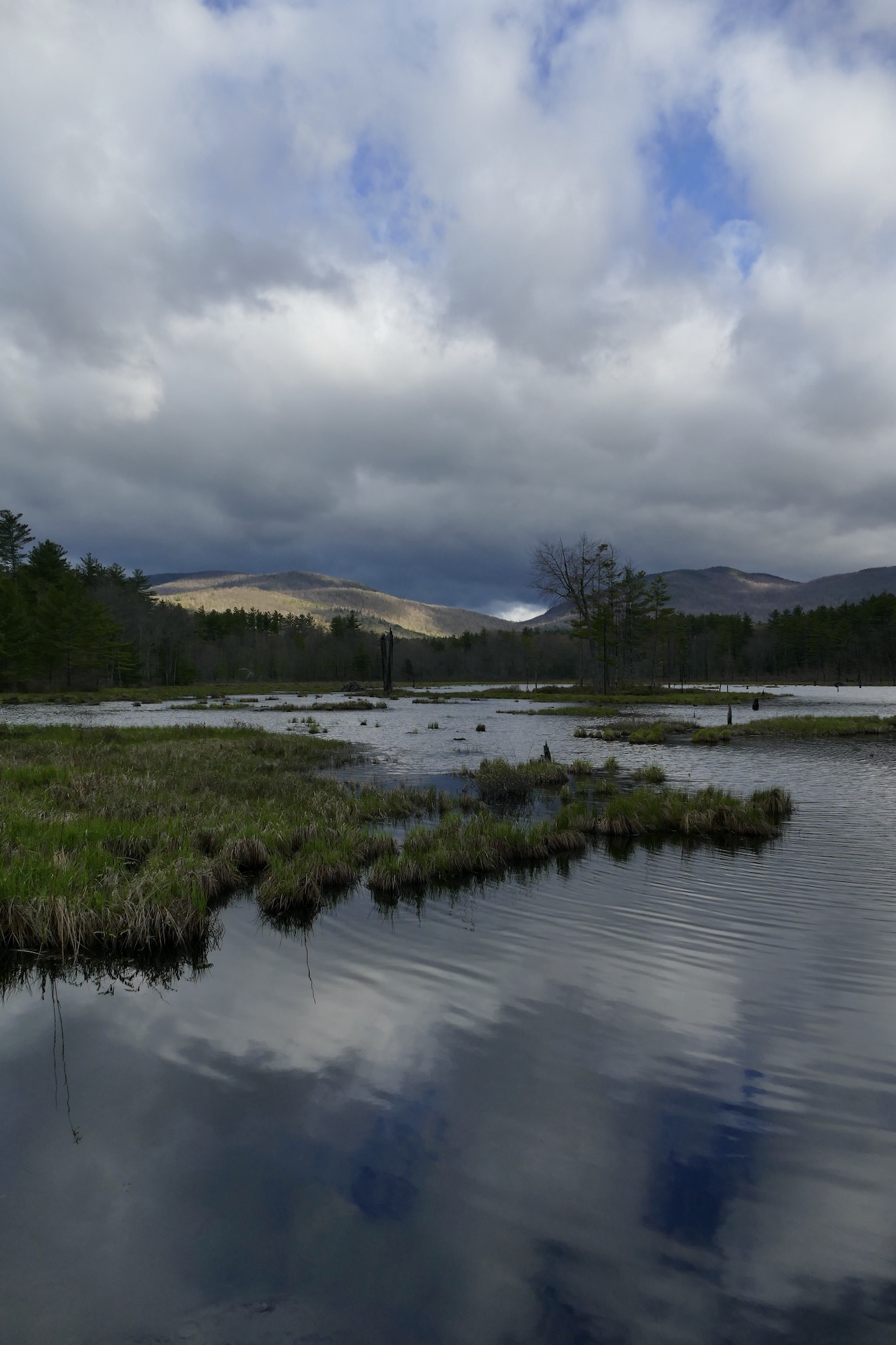
Within a day or two has begun that season of summer when you see afternoon showers, maybe with thunder, or the threat of them, dark in the horizon, and are uncertain whether to venture far away or without an umbrella. I noticed the very first such cloud on the 25th of May, —the dark iris of June. When you go forth to walk at 2 p. m. you see perhaps, in the southwest or west or maybe east horizon, a dark and threatening mass of cloud showing itself just over the woods, its base horizontal and dark, with lighter edges where it is rolled up to the light, while all beneath is the kind of dark slate of falling rain. These are summer showers, come with the heats of summer.

June 7, 1851

in Thoreau’s Journal:

It is a certain faery land where we live––you may walk out in any direction over the earth’s surface––lifting your horizon––and everywhere your path––climbing the convexity of the globe leads you between heaven and earth–– ––not away from the light of the sun and stars––& the habitations of men. I wonder that I ever get 5 miles on my way––the walk is so crowded with events––& phenomena. How many questions there are which I have not put to the inhabitants!

June 6, 1853

in Thoreau’s Journal:  

Begin to observe and to admire the forms of trees with shining foliage and each its shadow on the hillside. This morning I hear the note of young bluebirds in the air, which have recently taken wing, and the old birds keep up such a warbling and twittering as remind me of spring.

June 5, 1853

in Thoreau’s Journal:

The world now full of verdure & fragrance and the air comparatively clear (not yet the constant haze of the dog days) through which the distant fields are seen reddened with sorrel & the meadows wet green full of fresh grass & the trees in their first beautiful bright untarnished & unspotted green.

May is the bursting into leaf––and early flowering with much coolness & wet and a few decidedly warm days ushering in summer  –– June verdure & growth––but agreeable, heat–

June 4, 1860

in Thoreau’s Journal:

The clear brightness of June was well represented yesterday by the buttercups— (R. bilbosa) along the roadside— Their yellow so glossy & varnished within, but not without. Surely there is no reason why the new butter should not be yellow now—

June 3, 1859

in Thoreau’s Journal:

A large yellow butterfly (somewhat Harris Papilio Asterias like but not black-winged) three and a half to four inches in expanse. Pale-yellow, the front wings crossed by three or four black bars ; rear, or outer edge, of all wings widely bordered with black, and some yellow behind it; a short black tail to each hind one, with two blue spots in front of two red-brown ones on the tail. 

June 1, 1853

in Thoreau’s Journal:

Summer begins now about a week past—with the expanded leaves—the shade & warm weather….

what a variety of colors we are entertained––yet most colors are rare or in small doses presented us as a condiment or spice ––– Much of green-blue-black & white but of yellow & the different shades of red far less. The eyes feast on the different shades of flowers as on tit-bits—-they are its spices. How much lupine is now in full bloom…