in Thoreau’s Journal:

It is a great change produced in one frosty night. What a sudden period put to the reign of summer!
in Thoreau’s Journal:
It is a great change produced in one frosty night. What a sudden period put to the reign of summer!
in Thoreau’s Journal:
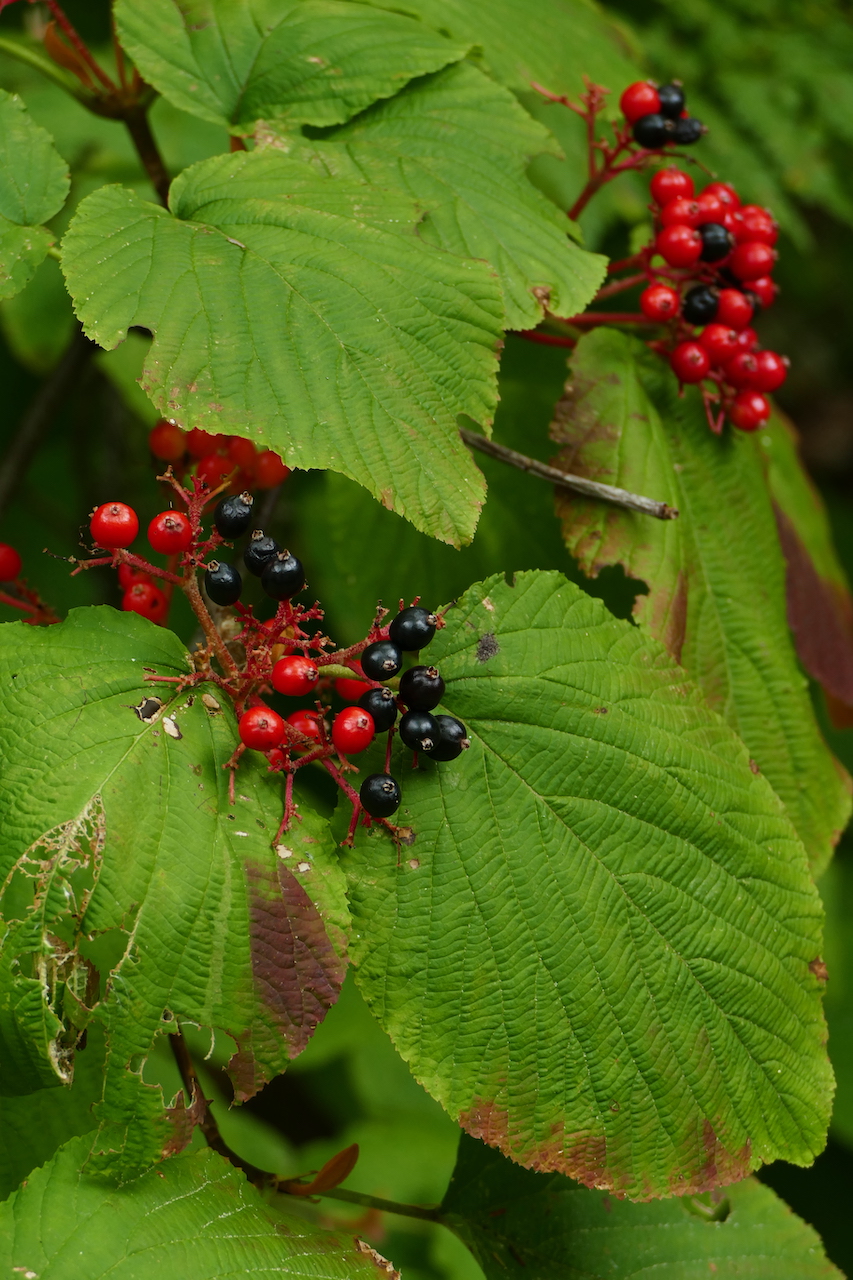

There is the hobble-bush with its berries and large roundish leaves, now beginning to turn a deep dull crimson red.
in Thoreau’s Journal:
I turn Anthony’s corner. It is an early September afternoon, melting warm and sunny; the thousands of grasshoppers leaping before you reflect gleams of light; a little distance off the field is yellowed with a Xerxean army of Solidago nemoralis between me and the sun; the earth-song of the cricket comes up through all; and ever and anon the hot z-ing of the locust is heard. (Poultry is now fattening on grasshoppers.)
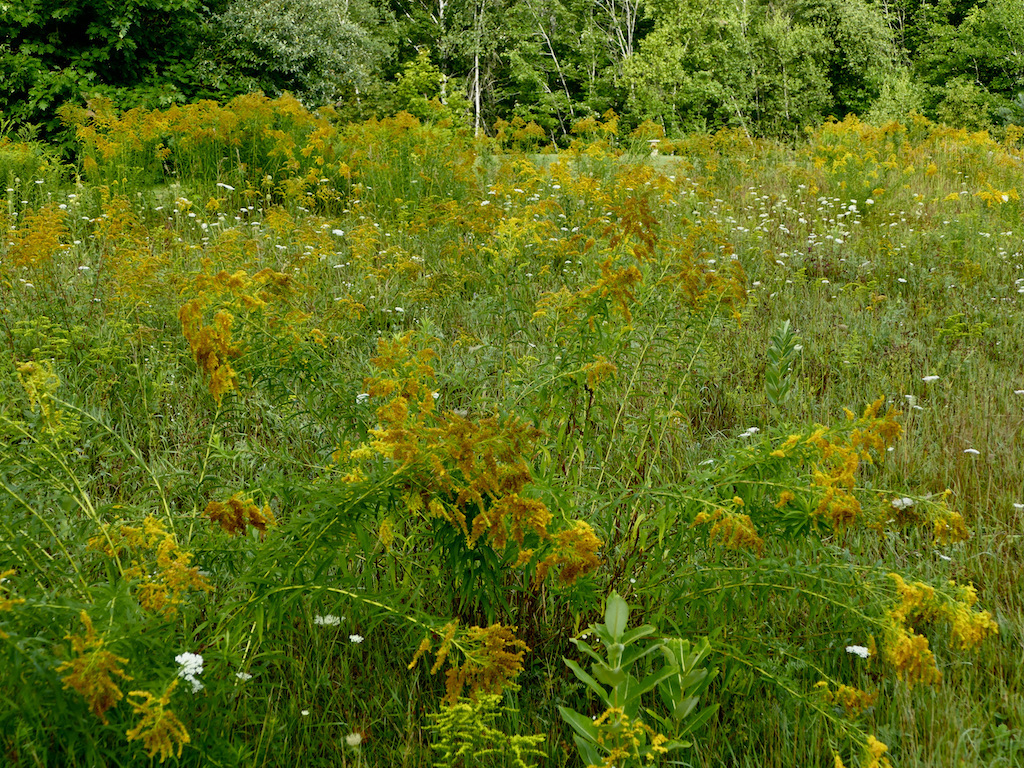
The dry deserted fields are one mass of yellow, like a color shoved to one side on Nature’s palette. You literally wade in yellow flowers knee-deep, and now the moist banks and low hollows are beginning to be abundantly sugared with Aster Tradescanti.
in Thoreau’s Journal:
The sarsaparilla leaves, green or reddish, are spotted with yellow eyes centered with reddish, or dull-reddish eyes with yellow iris. They have a very pretty effect held over the forest floor, beautiful in their decay.

in Thoreau’s Journal:
Through the fogs of this distant vale we look back and upward to the source of song, whose crystal stream still ripples and gleams in the clear atmosphere of the mountain’s side.
in Thoreau’s Journal:
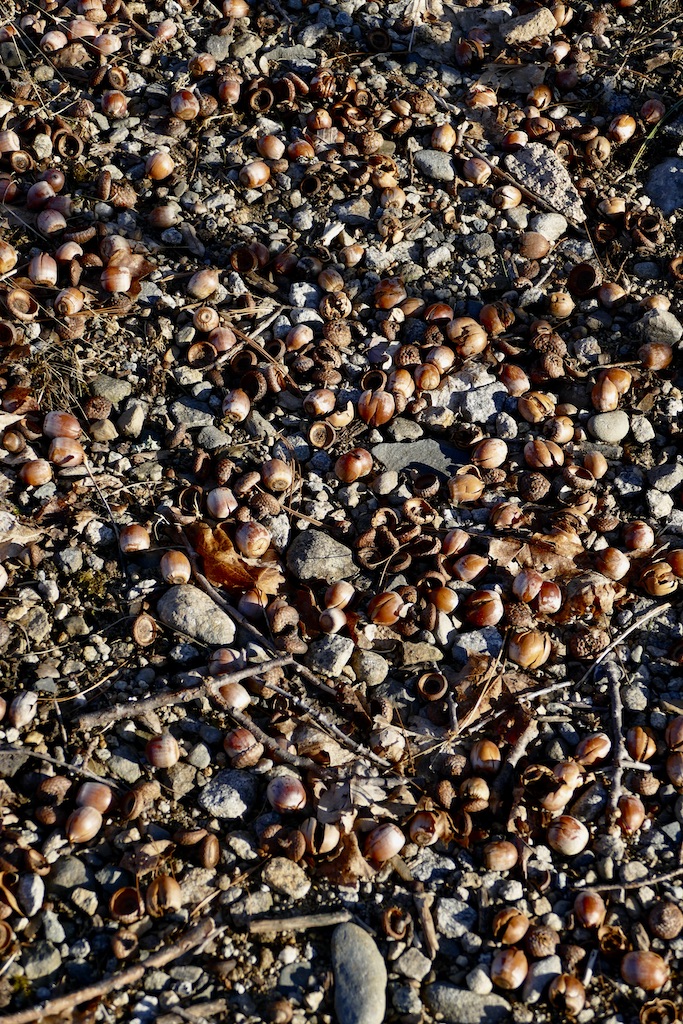
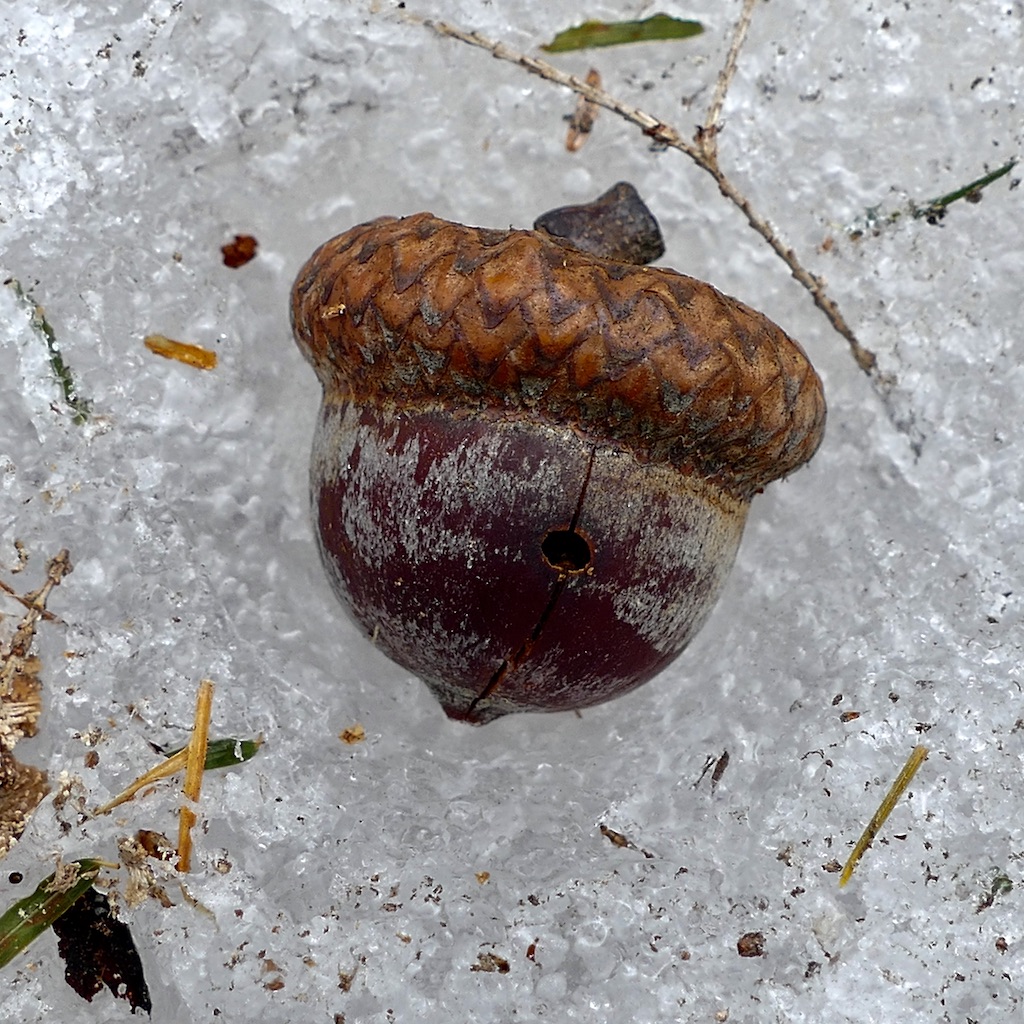
It is wise to write on many subjects, to try many themes, that so you may find the right and inspiring one. Be greedy of occasions to express your thought. Improve the opportunity to draw analogies. There are innumerable avenues to a perception of the truth. Improve the suggestion of each object however humble, however slight and transient the provocation. What else is there to be improved ? Who knows what opportunities he may neglect? It is not in vain that the mind turns aside this way or that: follow its leading; apply it whither it inclines to go. Probe the universe in a myriad points. Be avaricious of these impulses. You must try a thousand themes before you find the right one, as nature makes a thousand acorns to get one oak. He is a wise man and experienced who has taken many views; to whom stones and plants and animals and a myriad objects have each suggested something, contributed something.
in Thoreau’s Journal:
Why was there never a poem on the cricket? Its creak seems to me to be one of the most prominent and obvious facts in the world, and the least heeded. In the report of a man’s contemplations I look to see somewhat answering to this sound.
The Cricket
By William Cowper (1731-1800)
Little inmate, full of mirth,
Chirping on my kitchen hearth,
Whereso’er be thine abode,
Always harbinger of good,
Pay me for thy warm retreat
With a song more soft and sweet;
In return thou shall receive
Such a strain as I can give.
Thus thy praise shall be express’d,
Inoffensive, welcome guest!
While the rat is on the scout,
And the mouse with curious snout,
With what vermin else infest
Every dish, and spoil the best;
Frisking thus before the fire,
Thou hast all thine heart’s desire.
Though in voice and shape they be
Form’d as if akin to thee,
Thou surpassest, happier far,
Happiest grasshoppers that are;
Theirs is but a summer’s song,
Thine endures the winter long,
Unimpaired, and shrill, and clear,
Melody throughout the year.
Neither night nor dawn of day
Puts a period to thy play:
Sing, then — and extend thy span
Far beyond the date of man.
Wretched man, whose years are spent
In repining discontent,
Lives not, aged though he be,
Half a span, compared with thee.
in Thoreau’s Journal:
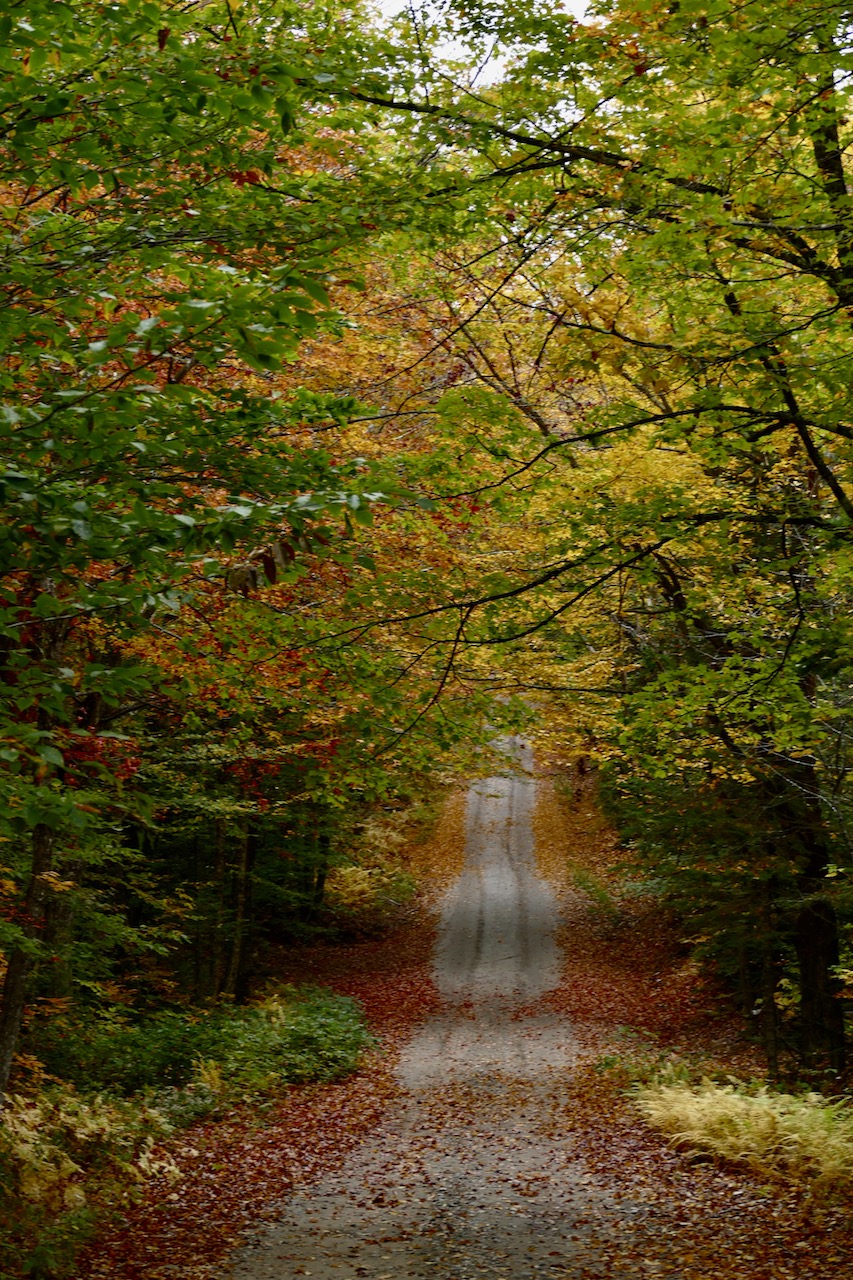
Sometimes my thought rustles in midsummer as if ripe for the fall— I anticipate the russet hues and the dry scent of autumn, as the feverish man dreams of balm and sage.
in Thoreau’s Journal:
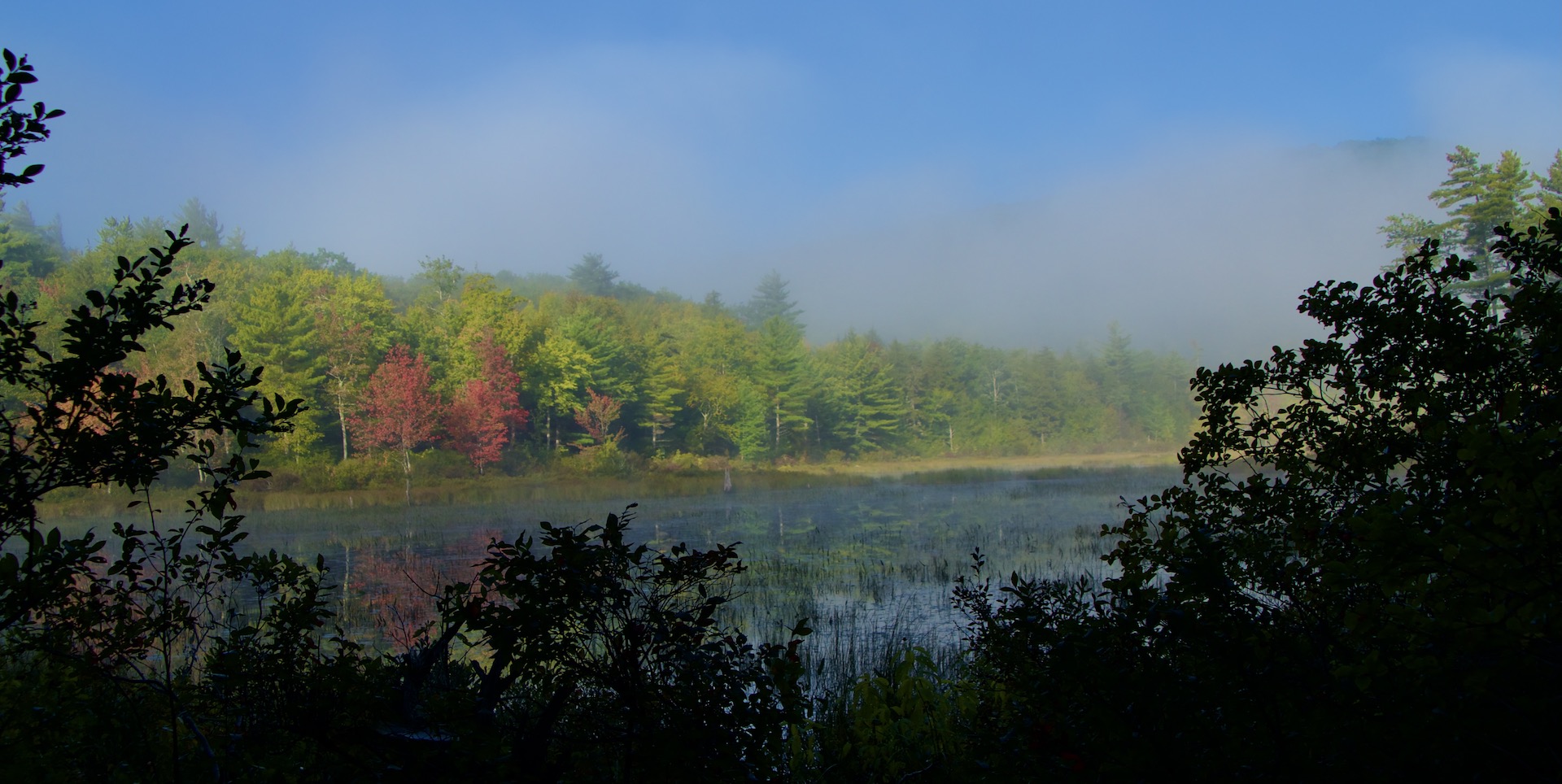
Great is the beauty of a wooded shore seen from the water, for the trees have ample room to expand on that side, and each puts forth its most vigorous bough to fringe and adorn the pond. It is rare that you see so natural an edge to the forest. Hence a pond like this, surrounded by hills wooded down to the edge of the water, is the best place to observe the tints of the autumnal foliage. Moreover, such as stand in or near to the water change earlier than elsewhere….How rich and autumnal the haze which blues the distant hills and fills the valleys. The lakes look better in this haze, which confines our view more to their reflected heavens and makes the shore-line more indistinct. Viewed from the hilltop, it reflects the color of the sky….Beyond the deep reflecting surface, near the shore, where the bottom is seen, it is a vivid green. I see two or three small maples already scarlet, across the pond, beneath where the white stems of three birches diverge next the water….They cannot fatally injure Walden with an axe, for they have done their worst and failed. We see things in the reflection which we do not see in the substance. In the reflected woods of Pine Hill there is a vista through which I see the sky, but I am indebted to the water for this advantage, for from this point the actual wood affords no such vista.
 allandibiase.com
You must be logged in to post a comment.