January 11, 1857

in Thoreau’s Journal:

I was describing, the other day, my success in solitary and distant woodland walking outside the town. I do not go there to get my dinner, but to get that sustenance which dinners only preserve me to enjoy, without which dinners are a vain repetition. But how little men can help me in this, only by having a kindred experience. Of what use to tell them of my happiness. Thus, if ever we have anything important to say, it might be introduced with the remark, it is nothing to you, in particular. It is none of your business, I know. That is what might be called going into good society.   

January 10, 1851

in Thoreau’s Journal:

I have met with but one or two persons in the course of my life who understood the art of taking walks daily, —not [to] exercise the legs or body merely, nor barely to recruit the spirits, but positively to exercise both body and spirit, and to succeed to the highest and worthiest ends by the abandonment of all specific ends…The chivalric and heroic spirit, which once belonged to the chevalier or rider only, seems now to reside in the walker. To represent the chivalric spirit we have no longer a knight, but a walker, errant. I speak not of pedestrianism, or of walking a thousand miles in a thousand successive hours. The Adam who daily takes a turn in his garden. Methinks I would not accept of the gift of life, if I were required to spend as large a portion of it sitting foot up or with my legs crossed, as the shoemakers and tailors do. As well be tied neck and heels together and cast into the sea.

January 9, 1858

in Thoreau’s Journal:

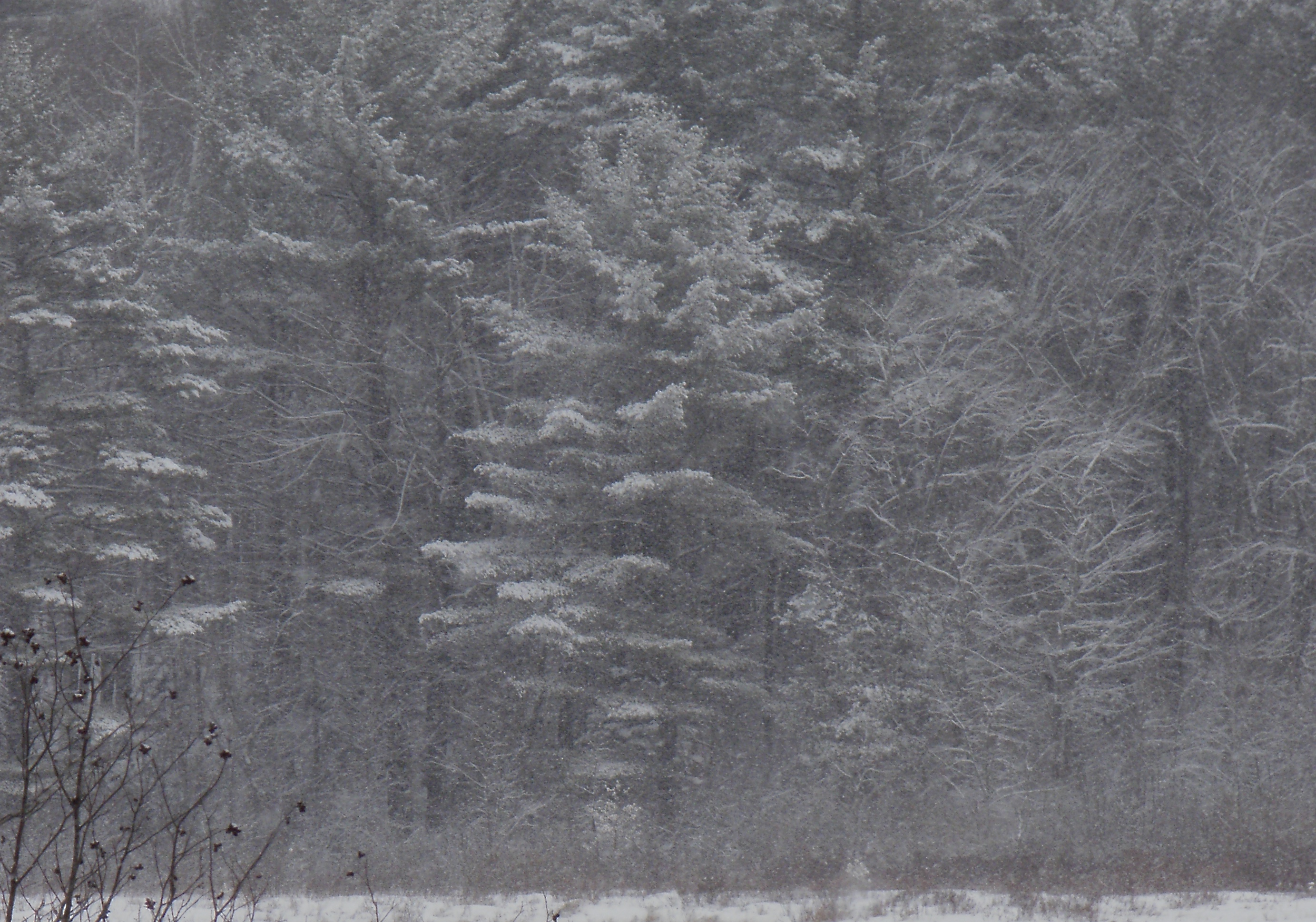
Snows again….The snow is very moist, with large flakes. Looking toward Trilllium wood, the nearer flakes appear to move quite swiftly, often making the impression of a continuous white line. They are also seen to move directly, and nearly horizontally. But the more distant flakes appear to loiter in the air, as if uncertain how they will approach the earth, or even to cross the course of the former, and are always seen as simple and distinct flakes. I think that this difference is simply owing to the fact that the former pass quickly over the field of view, while the latter are much longer in it.

January 8, 1854

in Thoreau’s Journal:

We love not so well the landscape represented as in broad noon, but in a morning or evening twilight, those seasons when the imagination is most active, the more hopeful or pensive seasons of the day. 

January 7, 1842

in Thoreau’s Journal:

The moods of man should unfold and alternate as gradually and placidly as those of nature. The sun shines for aye! The sudden revolutions of these times and this generation have acquired a very exaggerated importance. They do not interest me much, for they are not in harmony with the longer periods of nature.

January 6, 1857

in Thoreau’s Journal:

A man asked me the other night whether such and such persons were not as happy as anybody, being conscious, as I perceived, of much unhappiness himself and not aspiring to much more than an animal content. “Why!”, said I… “the stones are happy, Concord River is happy, and I am happy too… The most brutish and inanimate objects that are made suggest an everlasting and thorough satisfaction; they are the homes of content. Wood, earth, mould, etc., exist for joy. Do you think that Concord River would have continued to flow these millions of years…if it had not been happy…?”  When I look up a fragment of a walnut shell this morning, I saw by its grain and composition, its form and color, etc., that is was made for happiness. The most brutish and inanimate objects that are made suggest an everlasting and thorough satisfaction. They are the homes of content. Wood, earth, mould, etc., exist for joy.

January 5, 1852

in Thoreau’s Journal:

To-day the trees are white with snow—I mean their stems & branches and have the true wintry look—on the storm-side—not till this has the winter come to the forest. They look like the small frost work in the path & on the windows now—.  Especially the oak woods at a distance, & you see better the form which their branches take. That is a picture of winter & now you may put a cottage under them and roof it with snowdrifts.— & let the smoke curl up amid the boughs in the morning.

January 4, 1851

in Thoreau’s Journal:  

The longest silence is the most pertinent question most pertinently put. 

Emphatically silent. The most important question, whose answers concern us more than any, are never put in any other way.  

January 3, 1853

in Thoreau’s Journal

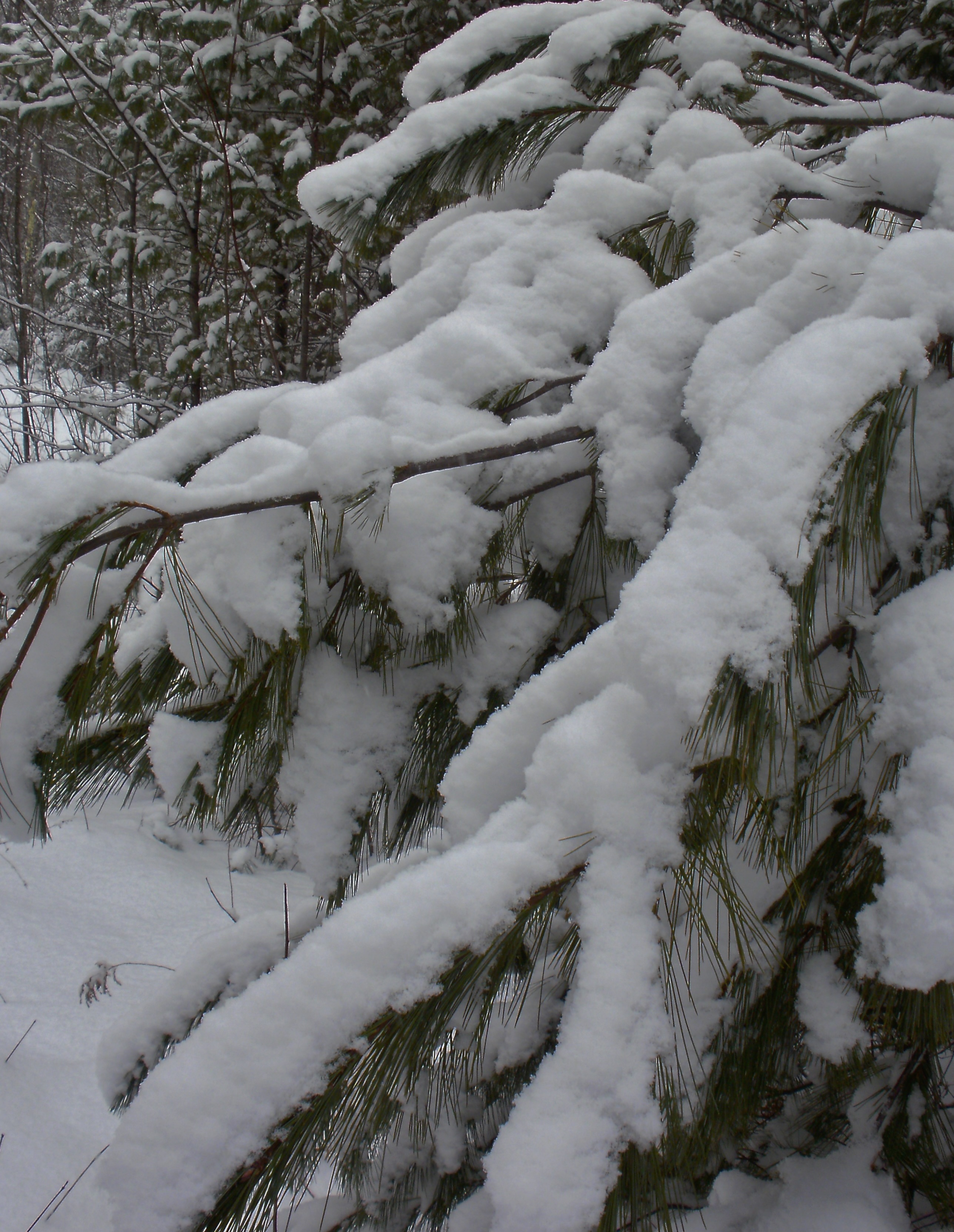
The air is thick and darkened with falling snow, and the woods are being draped with it in white wreaths. This is winter. They are putting on their white greatcoats.

January 2, 1853

in Thoreau’s Journal:  

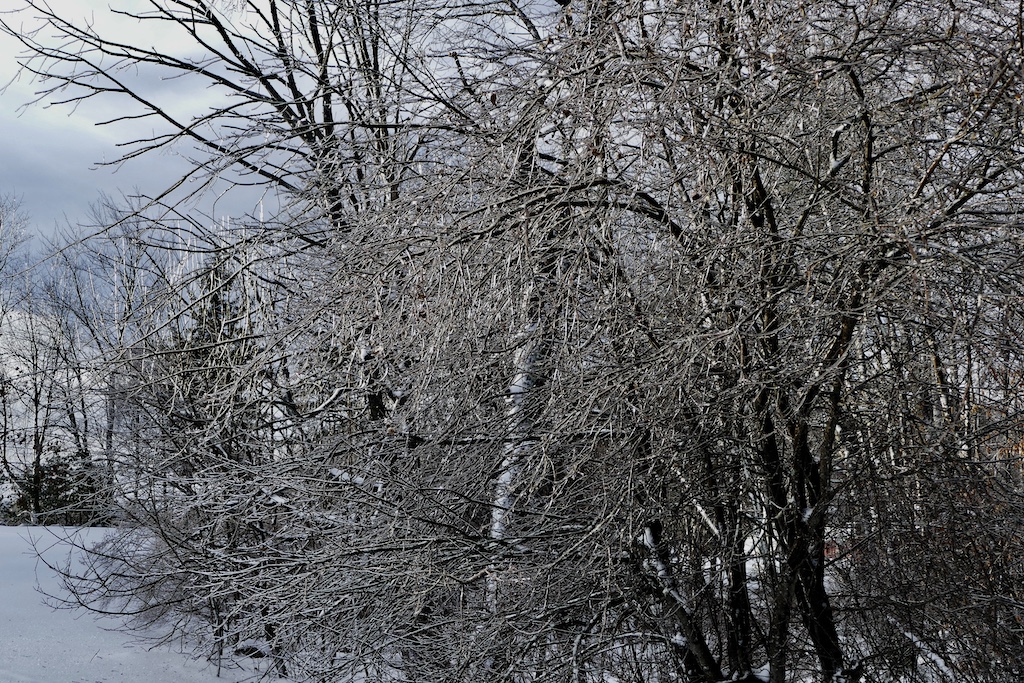
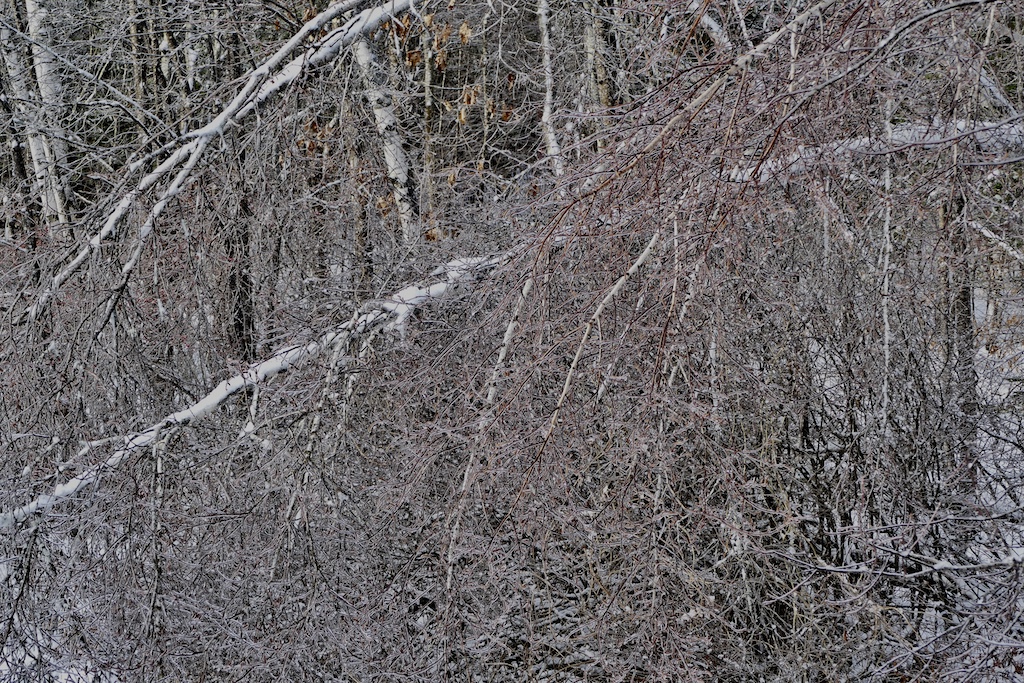
In this clear air and bright sunlight, the ice covered trees have a new beauty, especially the birches along under the edge of Warren’s wood….bent quite to the ground in every kind of curve….The birch is remarkable, perhaps, from the feathery form of the tree, whose numerous small branches sustain so great a weight, bending it to the ground; and, moreover, because, from the color of the bark, the core is less observable….The birches droop over in all directions, like ostrich feathers.

January 1, 1854

in Thoreau’s Journal: 

 ….As the hunters are forward to take the field as soon as the first snow has fallen, so he who would make the most of his life for discipline must be abroad early and late, in spite of cold and wet, in pursuit of nobler game, whose traces there are most distinct, —a life which we seek not to destroy, but to make our own.