
in Thoreau’s Journal:
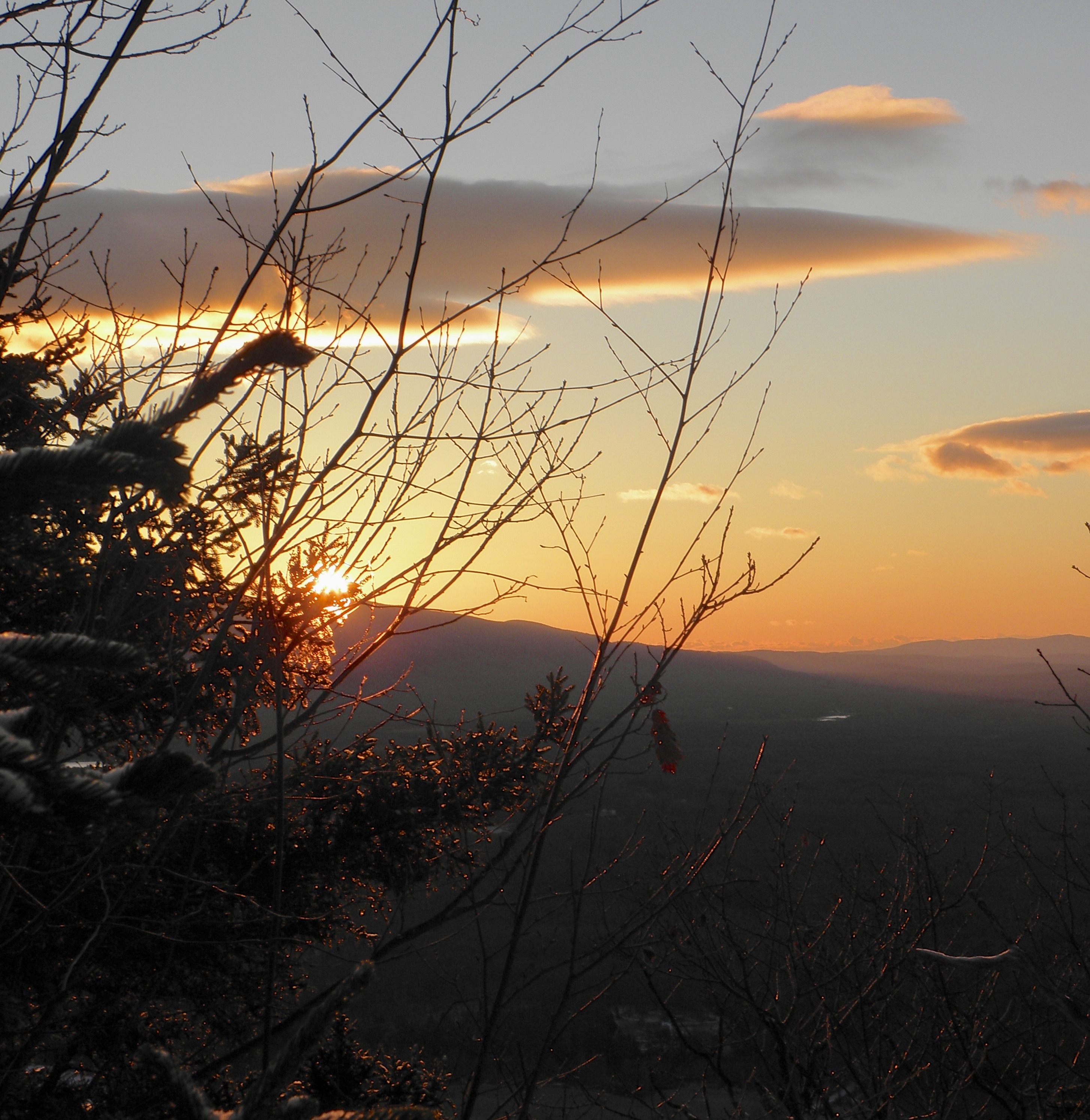
There is an early redness in the east which I was not prepared for, changing to amber or saffron, with clouds beneath in the horizon and also above this clear streak.
The birds utter a few languid and yawning notes, as if they had not left their perches, so sensible to light to wake so soon, —a faint peeping sound from I know not what kind, a slight, innocent, half-awake sound, like the sounds which a quiet housewife makes in the earliest dawn. Nature preserves her innocence like a beautiful child. I hear a wood thrush even now, long before sunrise, as in the heat of the day. And the pewee and the catbird and the vireo, red-eyed? I do not hear —or do not mind, perchance—the crickets now. Now whip-poor-wills commence to sing in earnest, considerably after the wood thrush. The wood thrush, that beautiful singer, inviting the day once more to enter his pine woods. (So you may hear the wood thrush and whip-poor-will at the same time.) Now go by two whip-poor-wills, in haste seeking some coverts from the eye of day. And the bats are flying about on the edge of the wood, improving the last moments of their day in catching insects. The moon appears at length, not yet as a cloud, but with a frozen light, ominous of her fate. The early cars sound like a wind in the woods. The chewinks make a business now of waking each other up with their low yorrick in the neighboring low copse. The sun would have shown before but for the cloud. Now, on his rising, not the clear sky, but the cheeks of the clouds high and wide, are tinged with red, which, like the sky before, turns gradually to saffron and then to the white light of day.
 allandibiase.com
You must be logged in to post a comment.