
in Thoreau’s Journal:

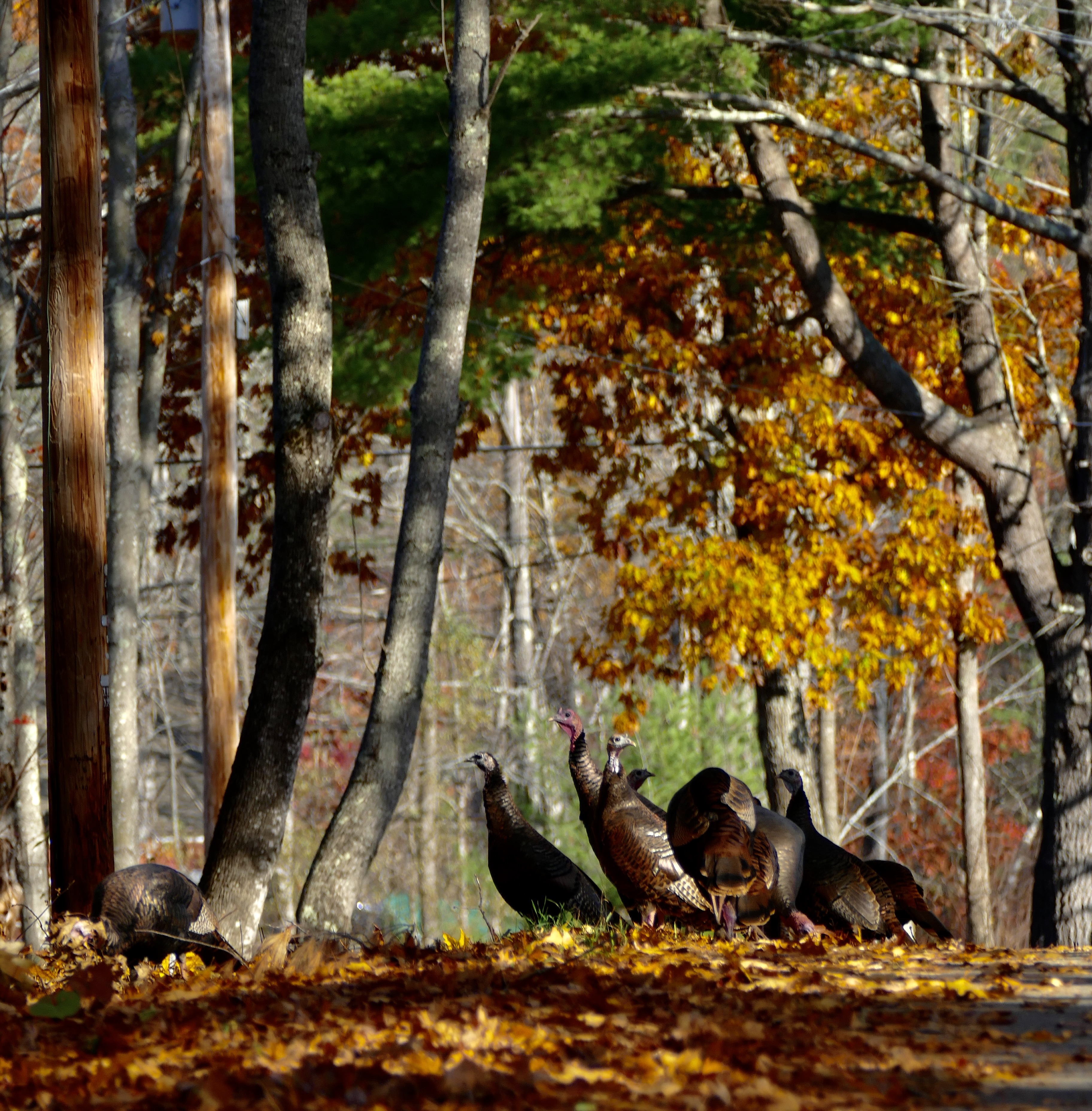
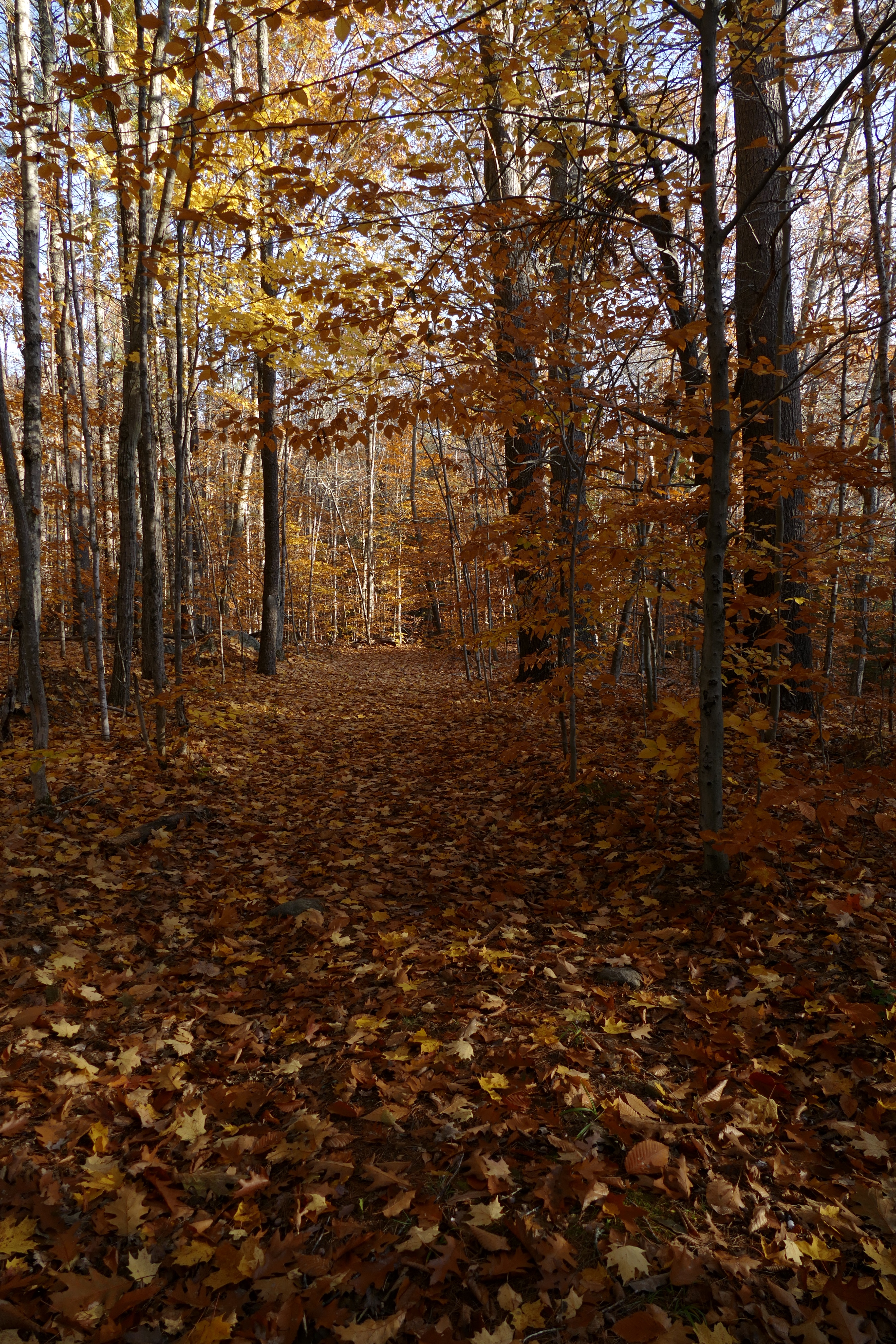
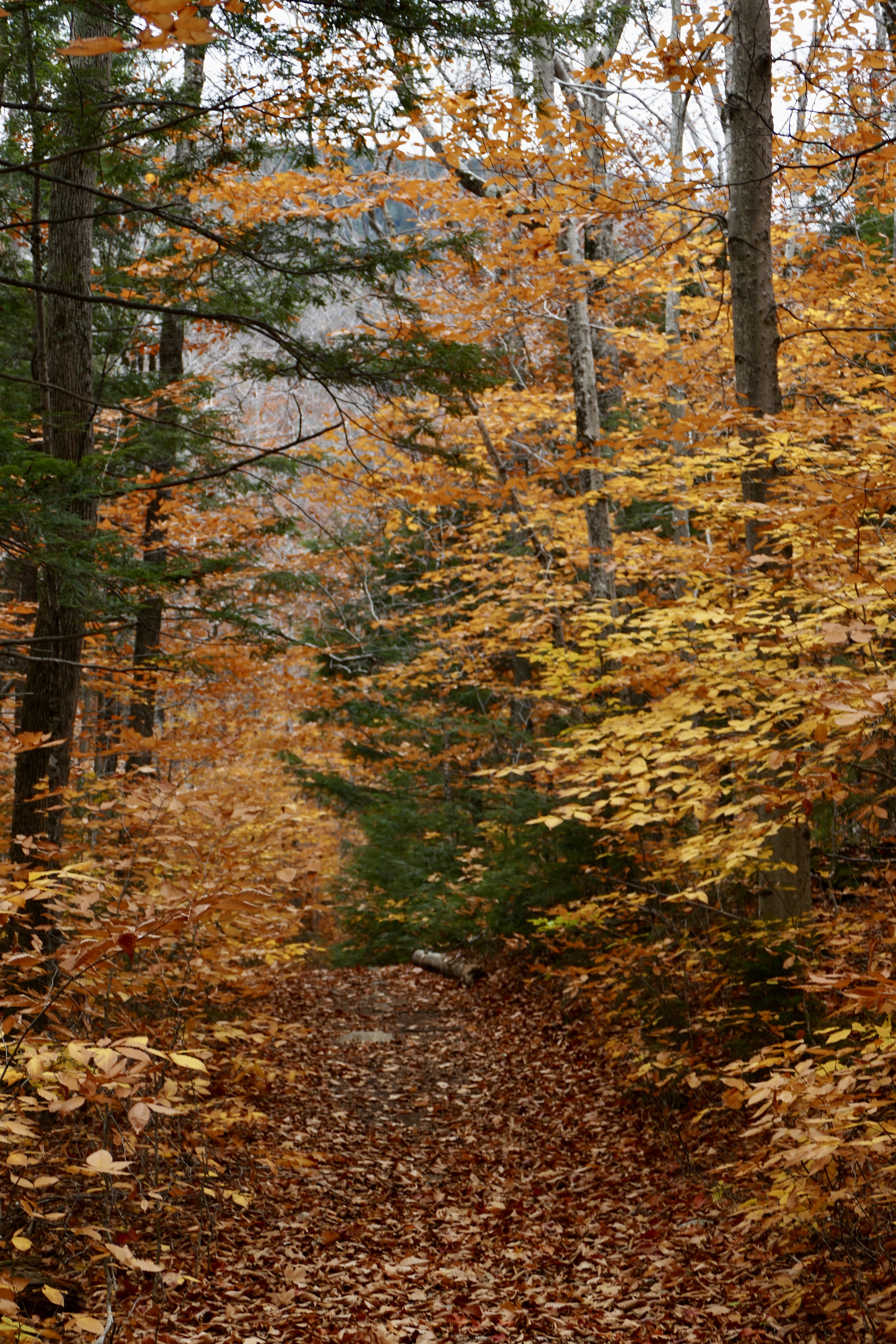
This year, on account of the very severe frosts, the trees change and fall early, or fall before fairly changing. The willows have the bleached look of November. Consider how many leaves there are to fall each year and how much they must add to the soil. Coultas (in What may be Learned from a Tree) finds that a single beech twig twenty-seven inches and three lines long and six years old was ” the leaf-labor of one hundred and fifty-five leaves,” and quotes from Asa Gray’s ” First Lessons in Botany ” that ” the Washington Elm at Cambridge —a tree of no extraordinary size—was some years ago estimated to produce a crop of seven millions of leaves, exposing a surface of 200,000 square feet, or about five acres, of foliage.” Supposing this to be true, and that the horizontal spread of this (like other the largest elms) is one hundred feet, then, if all its leaves should be spread evenly on the ground directly under it, there would be about twenty-five thicknesses. An ordinary forest would probably cover the ground as thickly as this tree would. Supposing a leaf to be of the same thickness with an ordinary sheet of letter-paper, and that the mass is compressed as much as paper packed in a ream, the twenty-five would be about one sixteenth of an inch thick. This is a rude calculation.
We have had a remarkably fertile year. Let us see now if we have a cold winter after it.
 allandibiase.com
You must be logged in to post a comment.