in Thoreau’s Journal:

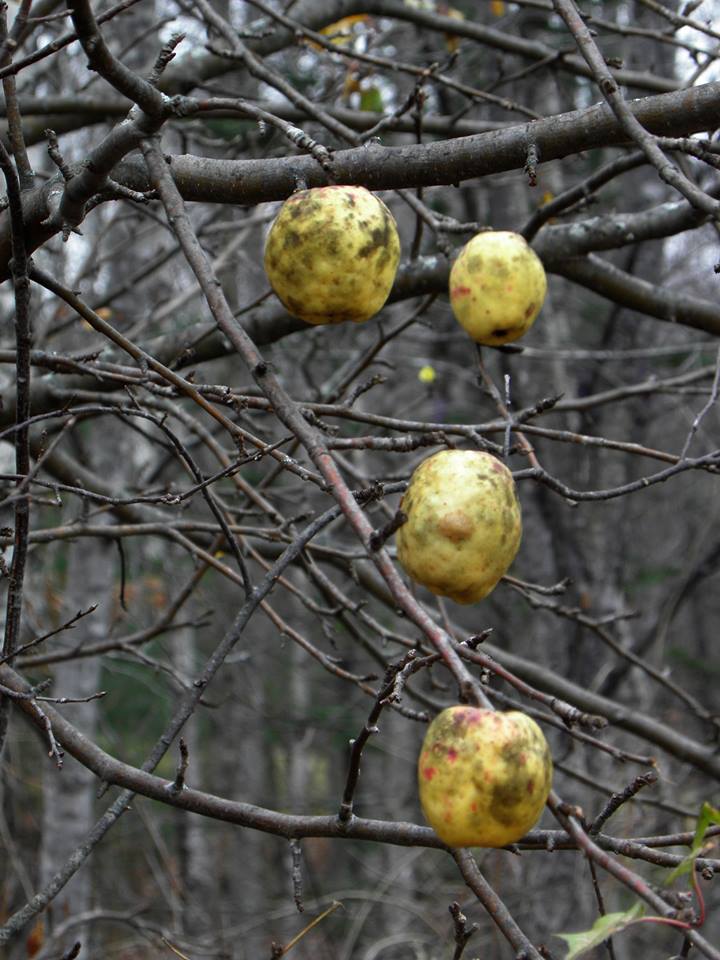
I try one of the wild apples in my desk. It is remarkable that the wild apples which I praise as so spirited and racy when eaten in the fields and woods, when brought into the house have a harsh and crabbed taste. As shells and pebbles must be beheld on the seashore, so these October fruits must be tasted in a bracing walk amid the somewhat bracing airs of late October. To appreciate their wild and sharp flavors, it seems necessary that you be breathing the sharp October or November air. The outdoor air and exercise which the walker gets give a different tone to his palate, and he craves a fruit which the sedentary would call harsh and crabbed even.—The palate rejects a wild apple eaten in the house —so of haws and acorns —and demands a tamed one, for here you miss that October air which is the wine it is eaten with. I frequently pluck wild apples of so rich and spicy a flavor that I wonder all orchardists do not get a scion from them, but when I have brought home my pockets full, and taste them in the house, they are unexpectedly harsh, crude things. They must be eaten in the flelds, when your system is all aglow with exercise, the frosty weather nips your fingers (in November), the wind rattles the bare boughs and rustles the leaves, and the jay is heard screaming around.

So there is one thought for the field, another for the house. I would have my thoughts, like wild apples, to be food for walkers, and will not warrant them to be palatable if tasted in the house.
To appreciate the flavor of those wild apples requires vigorous and healthy senses, papillae firm and erect on the tongue and palate, not easily tamed and flattened. Some of those apples might be labelled,“To be eaten in the wind.”

 allandibiase.com
You must be logged in to post a comment.