October 11, 1857

in Thoreau’s Journal:

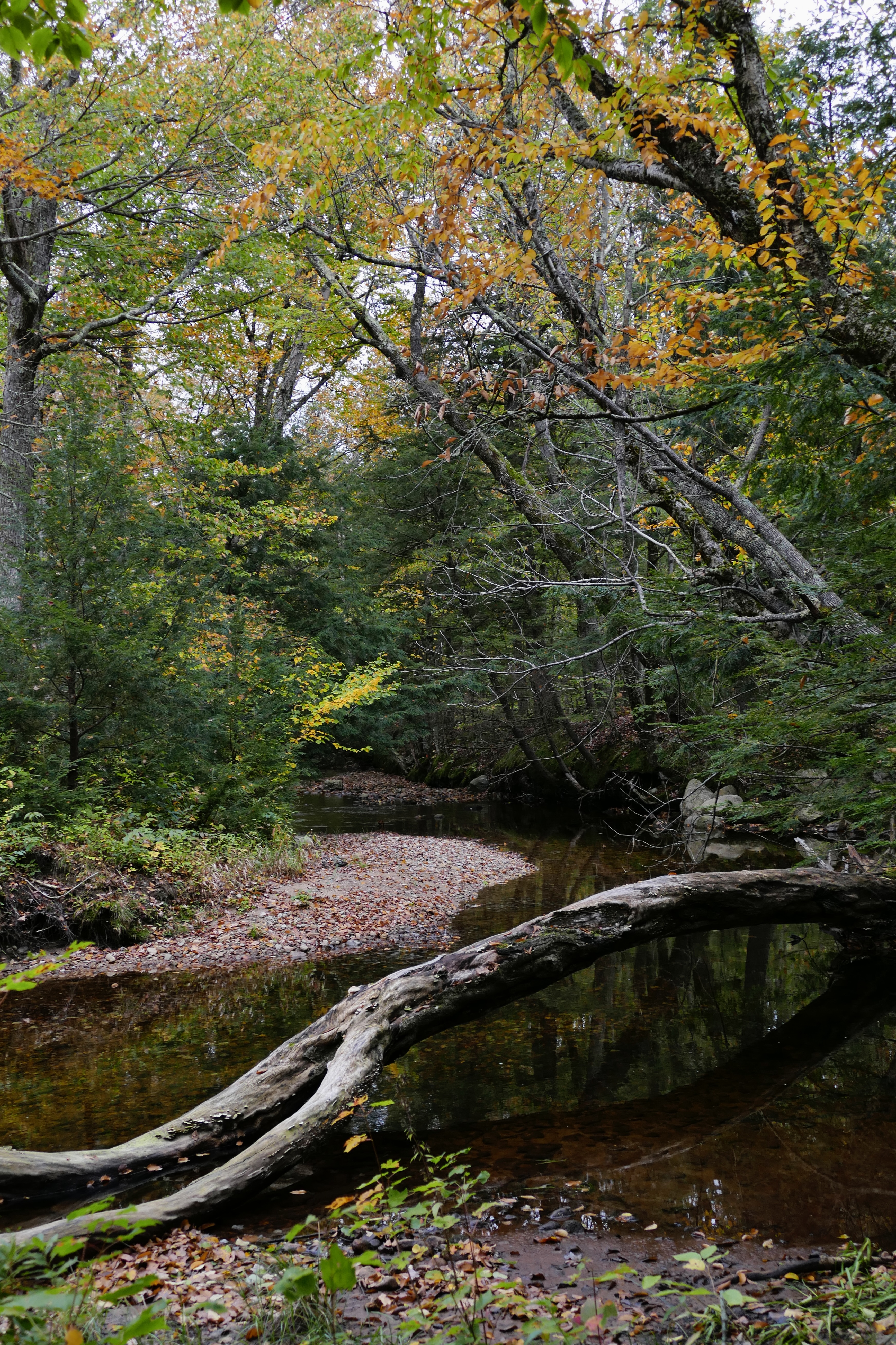
It is remarkable how many trees —maple and swamp white [oak], etc.—which stand on the bank of the river, being undermined by the water or broken off by the ice or other cause, fall into the stream and finally sink to the bottom and are half buried there for many years. A great deal of wood, especially of the kinds named, is thus lost. They last longer there probably than in favorable localities out of water. I see still the timber foundation of an old dam just above Spencer Brook, extending across the river on the bottom, though there has been nothing above water within my recollection. The large black oaks in front of Prescott Barrett’s are one by one falling into the river, and there are none to succeed them. They were probably left to skirt the stream when the other wood was cut, and now, when they are undermined, there are none behind to supply their places.

October 10, 1857

in Thoreau’s Journal:

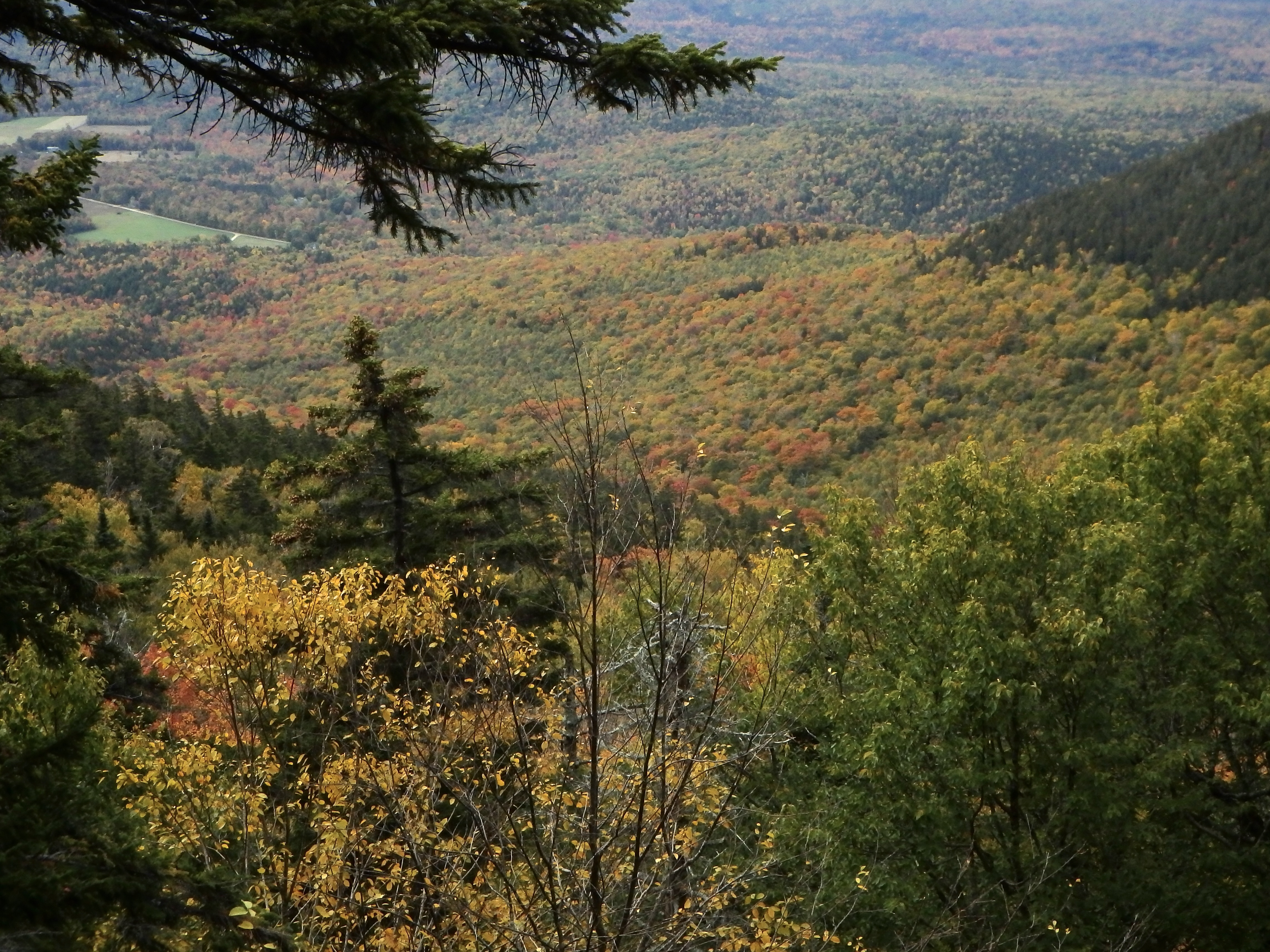
Generally speaking, the autumnal tints affect the color of the landscape for only two or three miles, but I distinguish maples by their color half a mile north of Brooks Clark’s, or some three miles distant, from this hill, —one further east very bright. Also I see them in the northeast, or on or near, apparently, a road between Bedford and Billerica, at least four or five miles distant ! ! This is the furthest I can see them.

October 9, 1860

October 9, 1860 in Thoreau’s Journal:

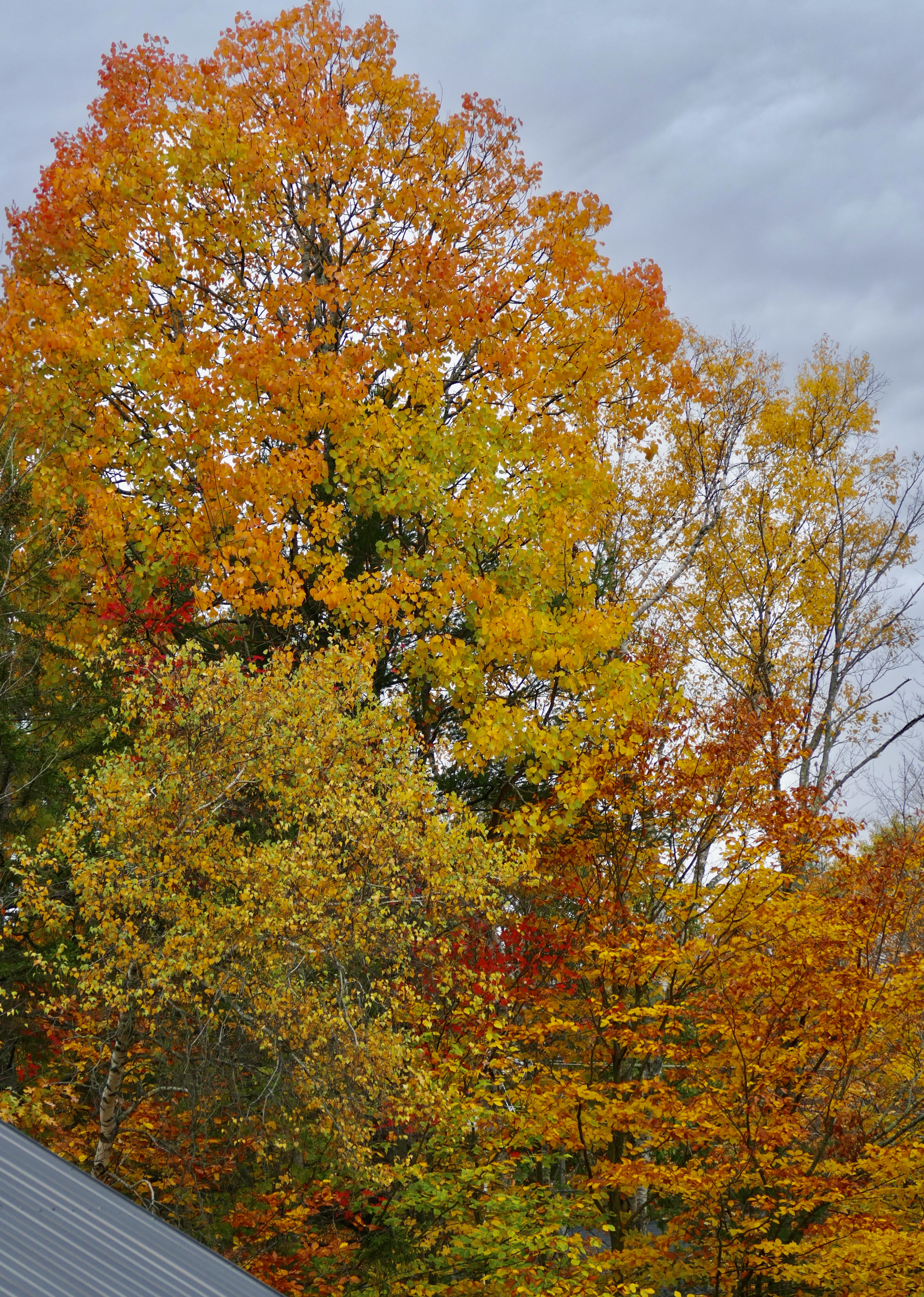
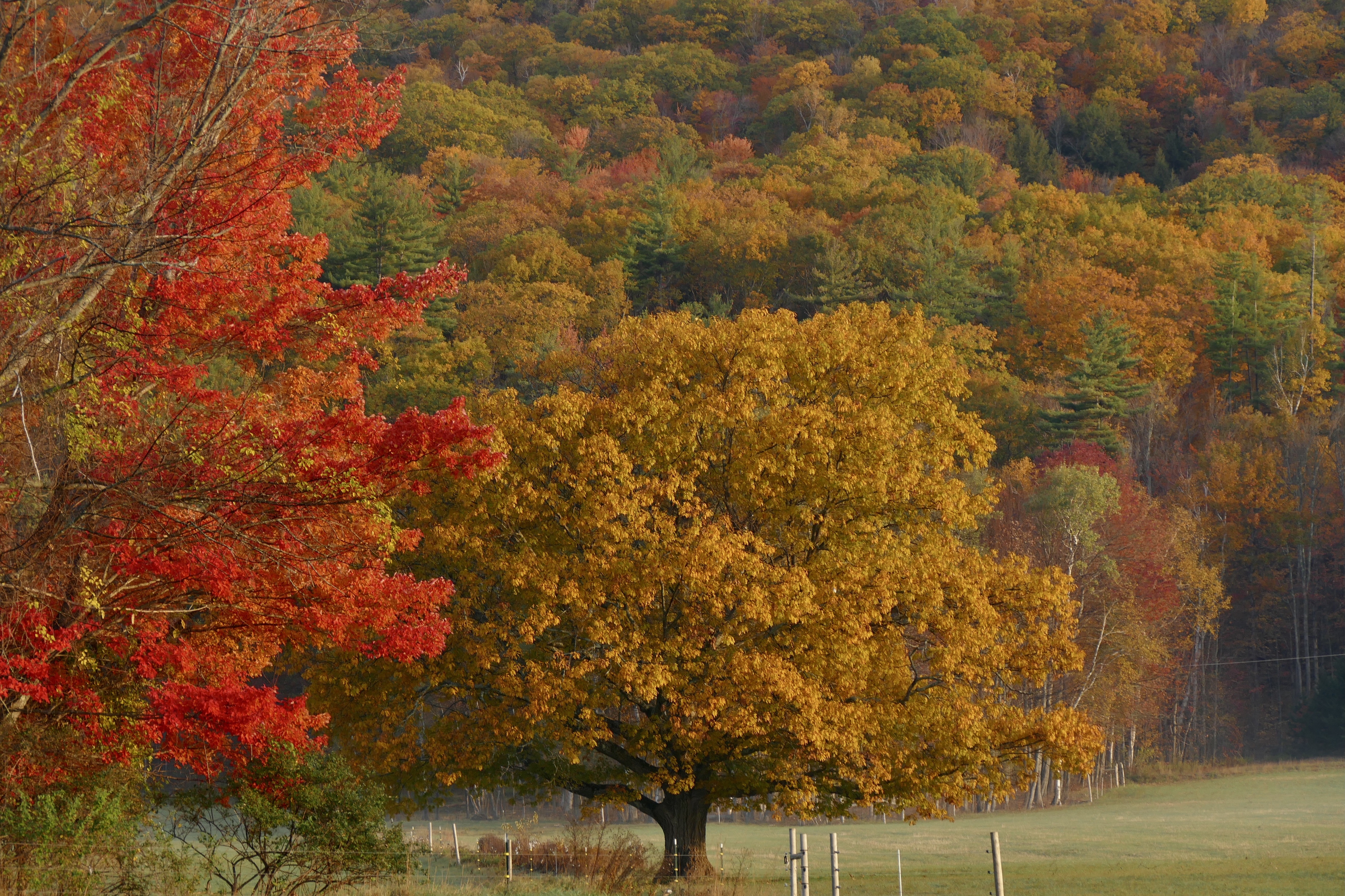
Though the red maples have not their common brilliancy on account of the very severe frost about the end of September, some are very interesting. You cannot judge a tree by seeing it from one side only. As you go round or away from it, it may overcome you with its mass of glowing scarlet or yellow light. You need to stand where the greatest number of leaves will transmit or reflect to you most favorably.

The tree which looked comparatively lifeless, cold, and merely parti-colored, seen in a more favorable light as you are floating away from it, may affect you wonderfully as a warm, glowing drapery. I now see one small red maple which is all a pure yellow within and a bright red scarlet on its outer surface and prominences. It is a remarkably distinct painting of scarlet on a yellow ground. It is an indescribably beautiful contrast of scarlet and yellow. Another is yellow and green where this was scarlet and yellow, and in this case the bright and liquid green, now getting to be rare, is by contrast as charming a color as the scarlet.

October 8, 1851

in Thoreau’s Journal:

This warm day is a godsend to the wasps. I see them buzzing about the broken windows of deserted buildings, as Jenny Dugan’s, —the yellow-knotted. I smell the dry leaves like hay from the woods. Some elms are already bare. The basswood here is quite sere. The pines are still shedding their leaves. This brook by Jenny’s is always a pleasant sight and sound to me. In the spring I saw the sucker here. It is remarkable through what narrow and shallow brooks a sucker will be seen to dart, and a trout. I perceive that some white oaks are quitered. The black oaks are yellowish. I know not surely whether the brighter red and more divided leaf is that of the red or the scarlet oak. 

October 7, 1852

in Thoreau’s Journal:

Perhaps the autumnal tints are as bright & interesting now as they will be—now is the time to behold the maple swamps—one mass of red & yellow—all on fire as it were.   These and the blood red huckleberries are the most conspicuous—and then in the village the warm brownish yellow elms—& there and elsewhere the dark red ashes.  The green pines springing out of huckleberries on the hillsides look as if surrounded by red or vermillion paint….

I sit on Poplar Hill.  It is a warm Indian summerish afternoon. The sun comes out of clouds & lights up & warms the whole scene— It is perfect autumn….It is the mellowing year.  The sunshine harmonizes with the imbrowned & fiery foliage.

October 5, 1857

in Thoreau’s Journal:

The mulberry was perhaps the first tree that was conspicuously turned after the maples. Many maples are still quite green; so that their gala-day will be prolonged.

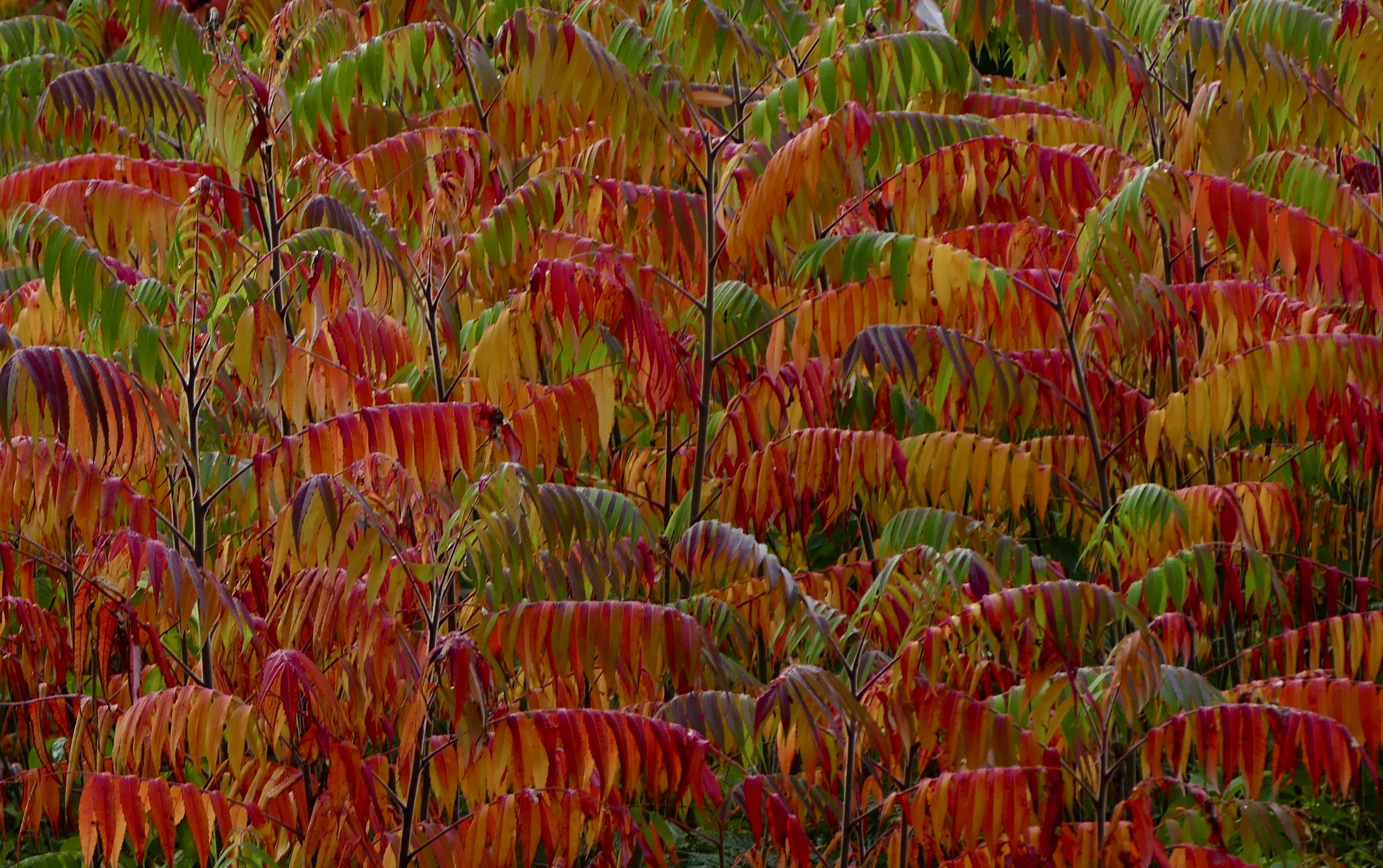
I see some hickories now a crisped mass of imbrowned yellow, green in the recesses, sere brown on the prominences, though the eye does not commonly thus discriminate. The smooth sumach is very important for its mass of clear red or crimson. Some of it is now a very dark crimson.

October 4, 1853

in Thoreau’s Journal:

The maples are reddening, and birches yellowing. The mouse-ear in the shade in the middle of the day, so hoary, looks as if the frost still lay on it. Well it wears the frost. Bumblebees are on the Aster undulatus, and gnats are dancing in the air.

October 3, 1858

in Thoreau’s Journal:

The maples about Walden are quite handsome now. Standing on the railroad, I look across the pond to Pine Hill, where the outside trees and the shrubs scattered generally through the wood glow through the green, yellow, and scarlet, like fires just kindled at the base of the trees, – a general conflagration just fairly under way, soon to envelop every tree. The hillside forest is all aglow along its edge and in all its cracks and fissures, and soon the flames will leap upward to the tops of the tallest trees. About the pond I see maples of all their tints, and black birches (on the southwest side) clear pale yellow; and on the peak young chestnut clumps and walnuts are considerably yellowed.

October 2, 1856

in Thoreau’s Journal:

The prinos berries are in their prime––seven sixteenths of an inch in diameter.

They are scarlet––somewhat lighter than the arum berries. They are now very fresh and bright and what adds to their effect is the perfect freshness and greenness of the leaves amid which they are seen.

October 1, 1851

in Thoreau’s Journal:

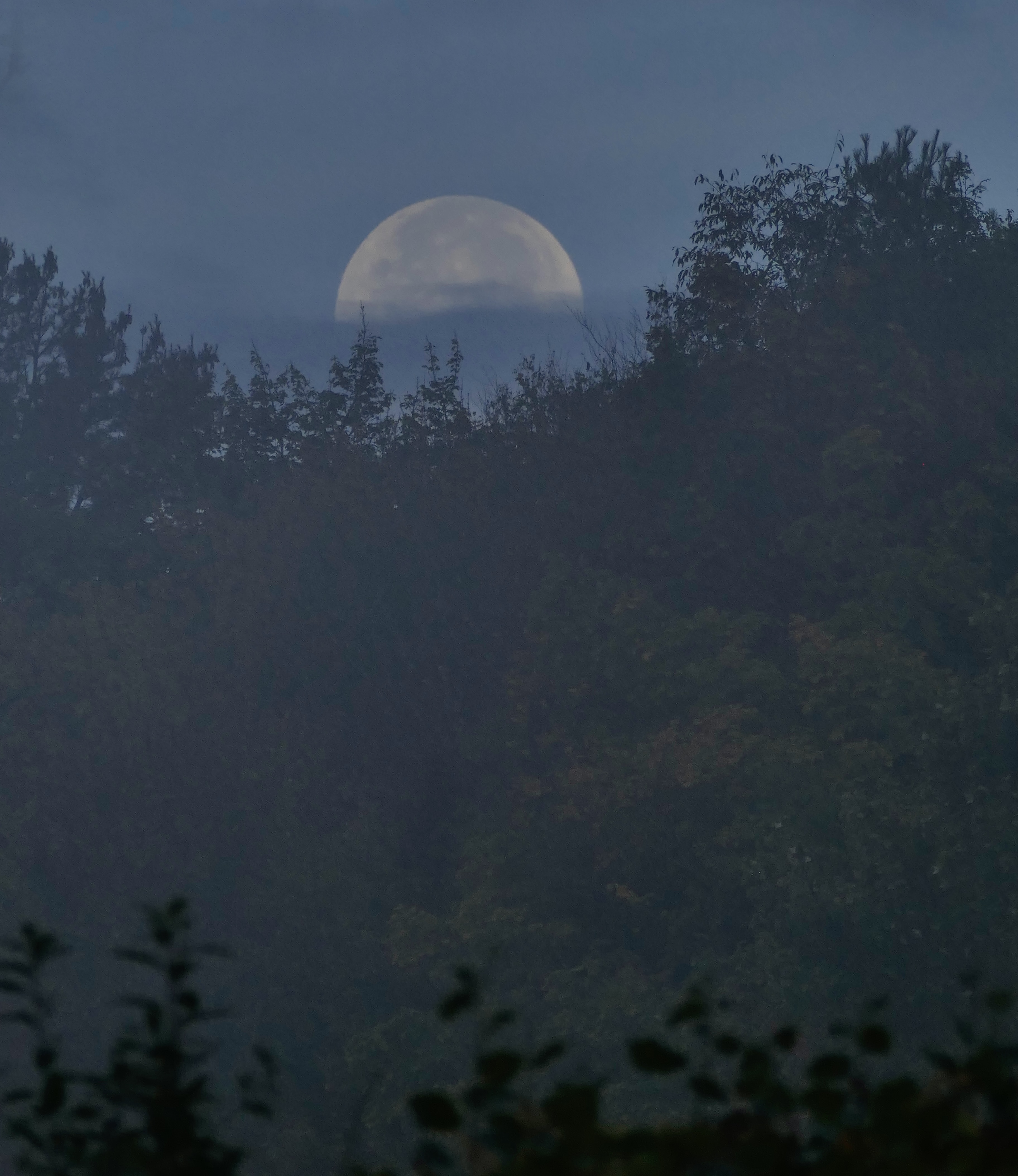
The air is cool, and the ground also feels cold under my feet, as if the grass were wet with dew, which is not yet the case. I go through Wheeler’s corn-field in the twilight, where the stalks are bleached almost white, and his tops are still stacked along the edge of the field. The moon is not far up above the southwestern horizon.

Looking west at this hour, the earth is an unvaried, undistinguishable black in contrast with the twilight sky. It is as if you were walking in night up to your chin. There is no wind stirring. An oak tree in Hubbard’s pasture stands absolutely motionless and dark against the sky. The crickets sound farther off or fainter at this season, as if they had gone deeper into the sod to avoid the cold. There are no crickets heard on the alders on the causeway.