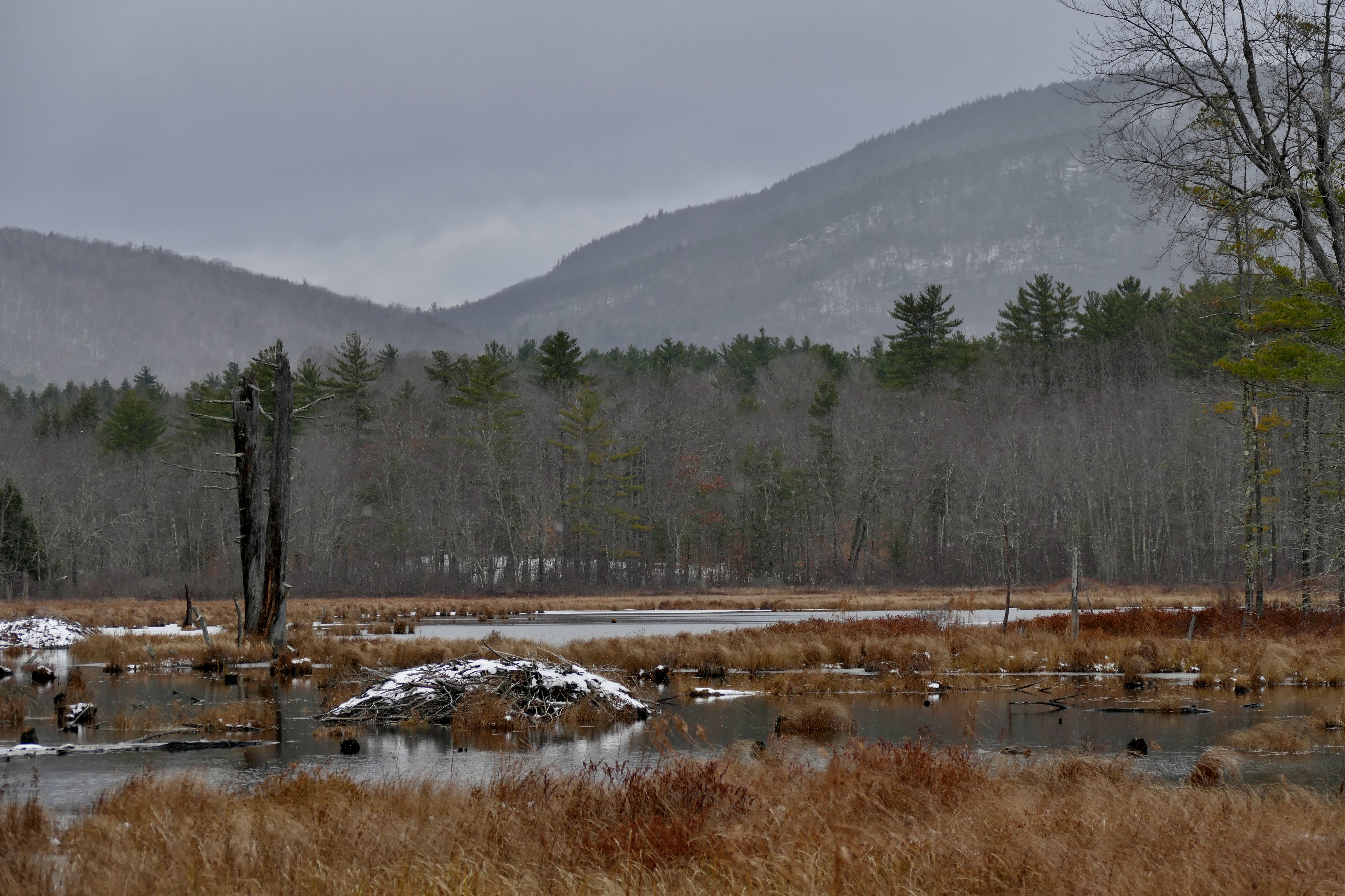
The brilliancy of the scarlet oak being generally dulled, the season of brilliant leaves may be considered over, ––say about the 10th; and now a new season begins, the pure November season of the russet earth and withered leaf and bare twigs and hoary withered goldenrods, etc.
Pitch pine cones very beautiful—not only the fresh leather colored ones but especially the dead grey ones—covered with lichens— The scales so regular & close—like an impenetrable coat of mail. These are very handsome to my eye— Also those which have long since opened regularly & shed their seeds
An abundance of the rattlesnake Plantain in the woods by Brown’s Pond….
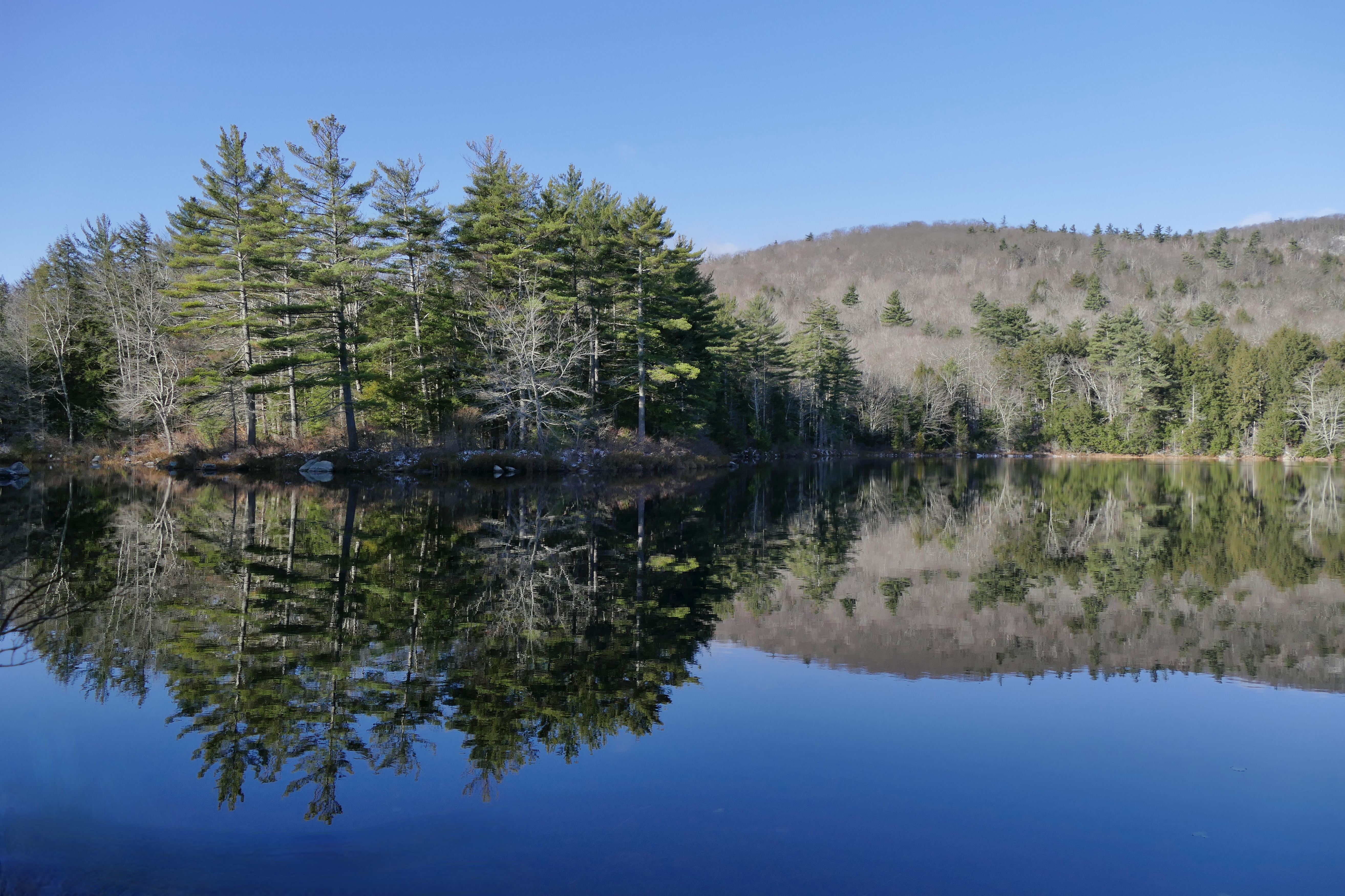
Nature has many scenes to exhibit, and constantly draws a curtain over this part or that. She is constantly repainting the landscape and all surfaces, dressing up some scene for our entertainment. Lately we had a leafy wilderness, now bare twigs begin to prevail, and soon she will surprise us with a mantle of snow. Some green she thinks so good for our eyes, like blue, that she never banishes it entirely, but has created evergreens.
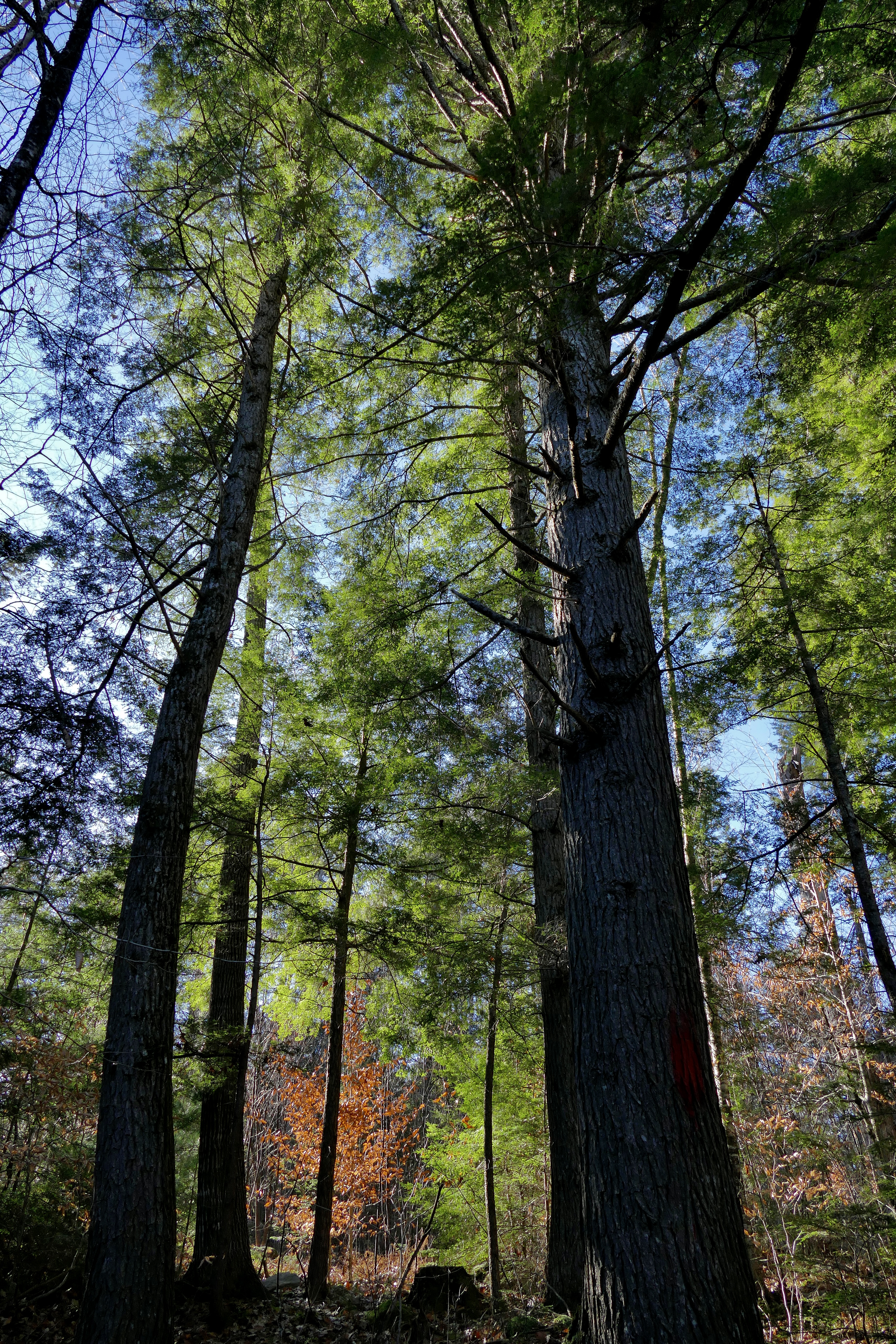
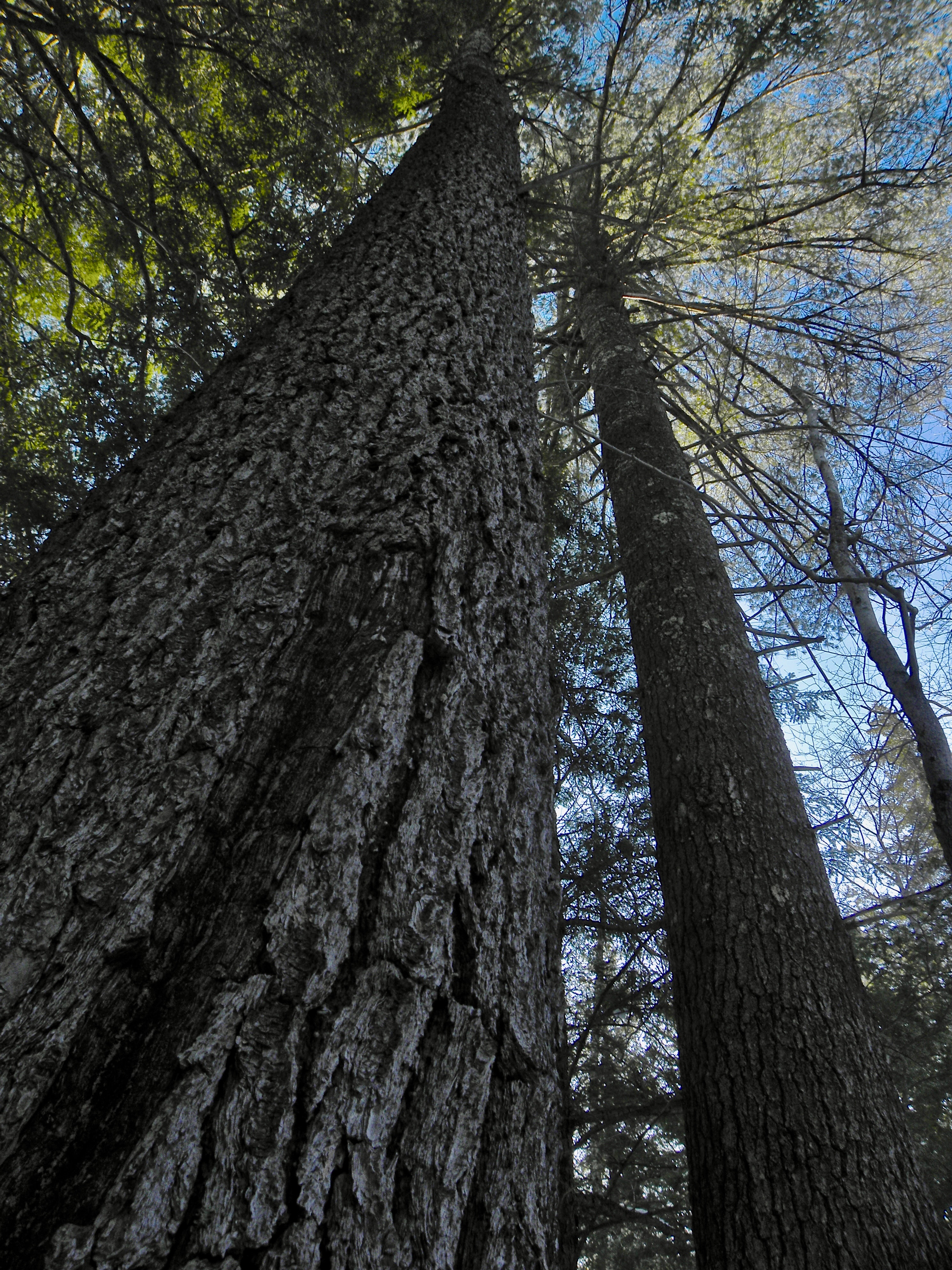
It cleared up this forenoon. I leave my boat opposite the Hemlocks. I see the cold sunlight from some glade between the clouds falling on distant oak woods, now nearly bare, and as I glance up the hill between them seeing the bare but bright hillside beyond, I think, Now we are left to the hemlocks and pines with their silvery light, to the bare trees and withered grass.
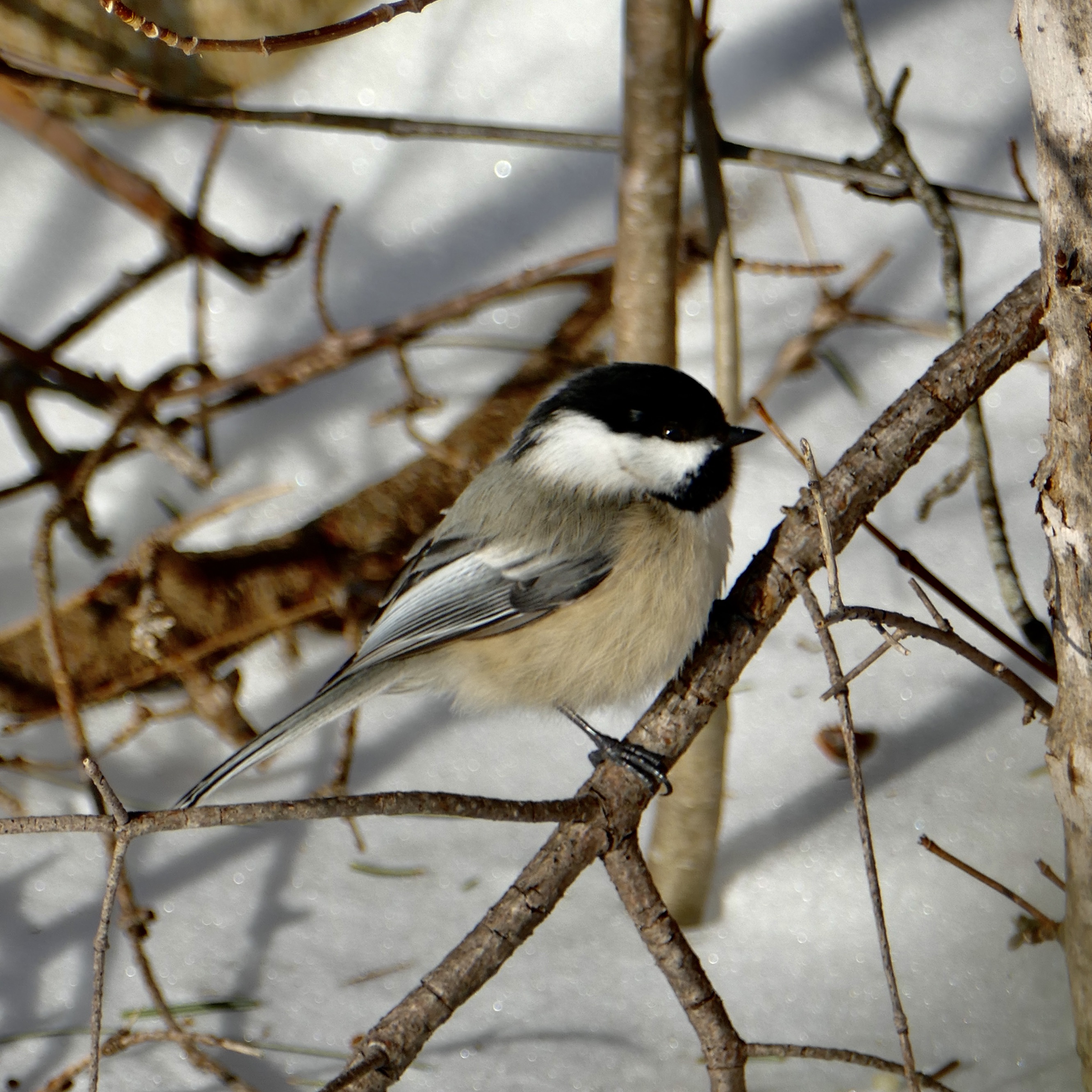
The very rocks and stones in the rocky roads (that beyond Farmer’s) look white in the clear November light, especially after the rain. We are left to the chickadee’s familiar notes, and the jay for trumpeter. What struck me was a certain emptiness beyond, between the hemlocks and the hill, in the cool, washed air, as if I appreciated even here the absence of insects from it. It suggested agreeably to me a mere space in which to walk briskly. The fields are bleak, and they are, as it were, vacated. The very earth is like a house shut up for the winter, and I go knocking about it in vain. But just then I heard a chickadee on a hemlock, and was inexpressibly cheered to find that an old acquaintance was yet stirring about the premises, and was, I was assured, to be there all winter. All that is evergreen in me revived at once.
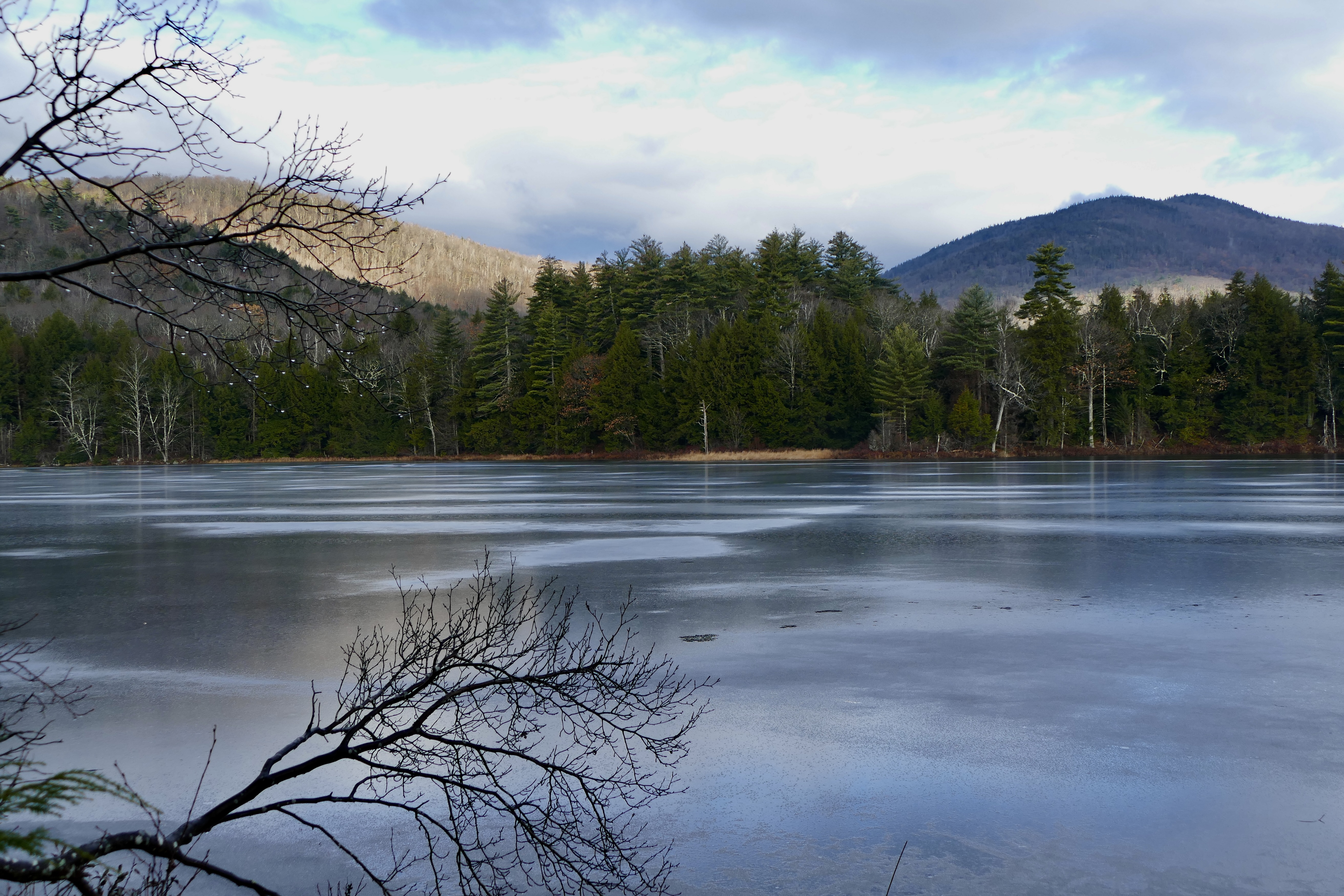
Surveying on Colburn Place — It is suddenly cold. Pools frozen so as to bear–& ground frozen so that it is difficult if not impossible to force down a stake in plowed ground.
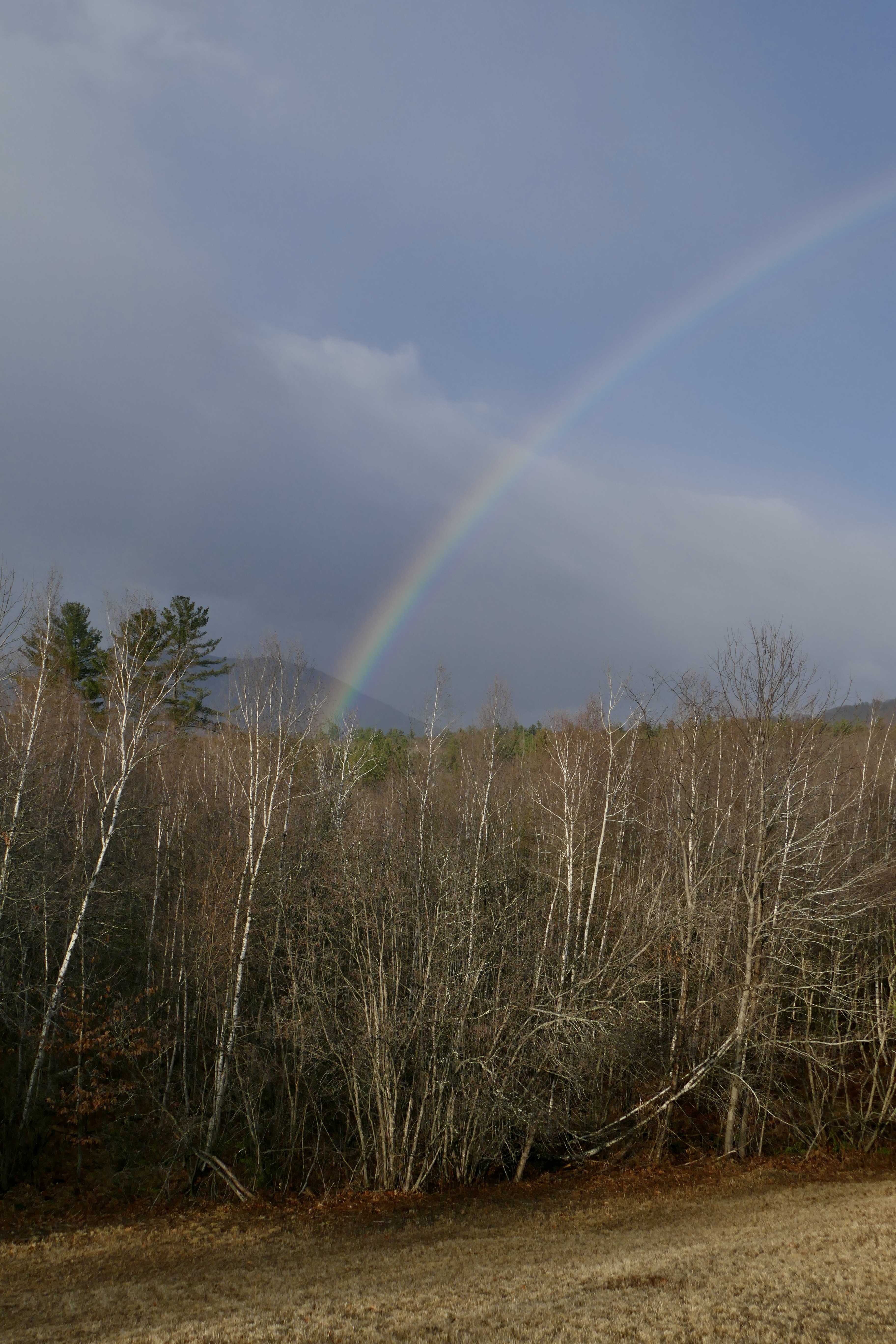
I think that the man of science makes this mistake, and the mass of mankind along with him: that you should coolly give your chief attention to the phenomenon which excites you as something independent on you, and not as it is related to you. The important fact is its effect on me. He thinks that I have no business to see anything else but just what he defines the rainbow to be, but I care not whether my vision of truth is a waking thought or dream remembered, whether it is seen in the light or in the dark. It is the subject of the vision, the truth alone, that concerns me.
The philosopher for whom rainbows, etc., can be explained away never saw them. With regard to such objects, I find that it is not they themselves (with which the men of science deal) that concern me; the point of interest is somewhere between me and them (i. e. the objects). . . .
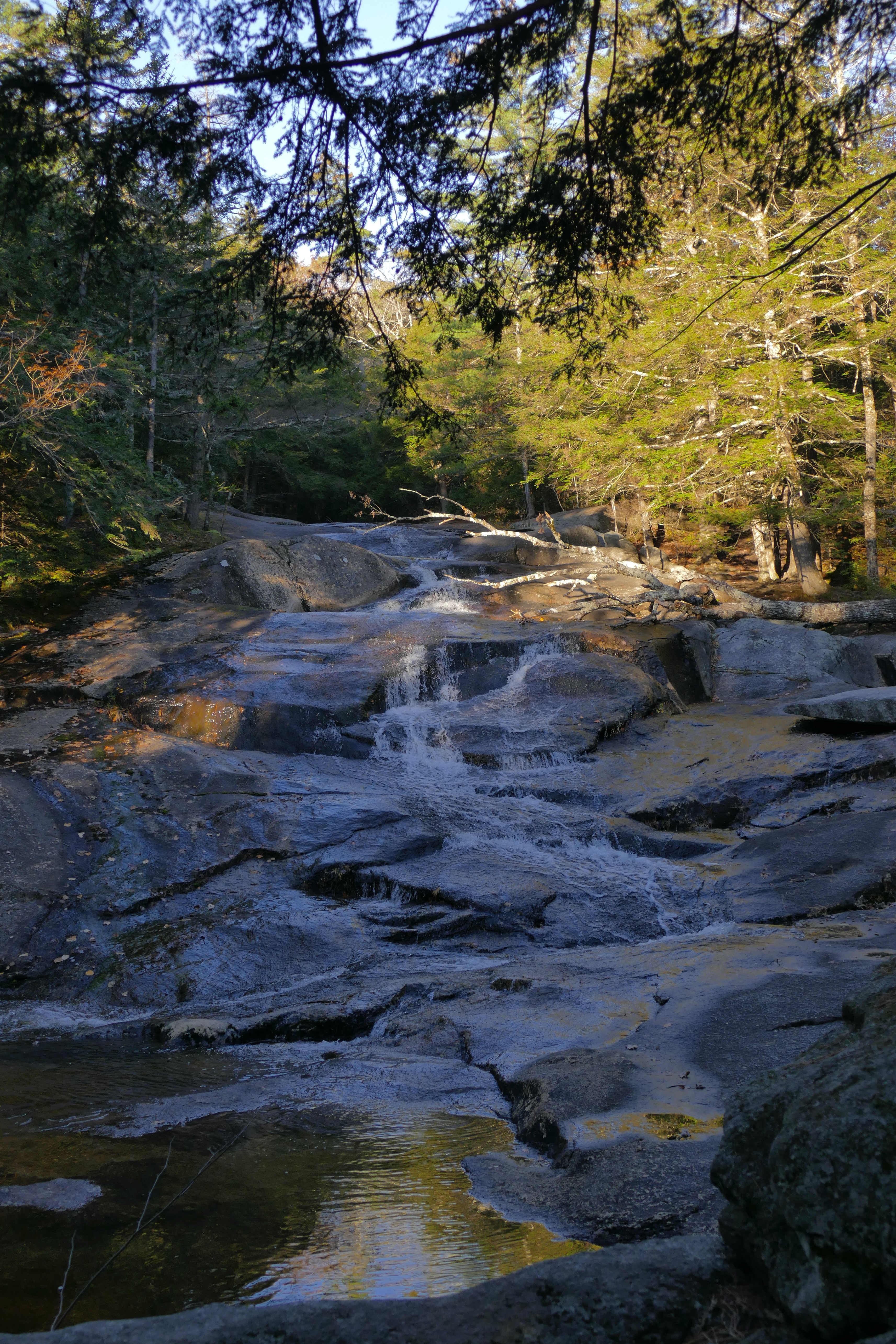
It was quite a discovery when I first came upon this brawling mountain stream in Concord woods. Rising out of an obscure meadow in the woods, for some fifty or sixty rods of its course it is a brawling mountain stream in our quiet Concord woods, as much obstructed by rocks – rocks out of all proportion to its tiny stream – as a brook can well be. And the rocks are bared throughout the wood on either side, as if a torrent had anciently swept through here; so unlike the after character of the stream. Who would have thought that, on tracing it up from where it empties into the larger Mill Brook in the open peat meadows, it would conduct him to such a headlong and impetuous youth. Perchance it should be called a “force”. It suggests what various moods may attach to the same character.
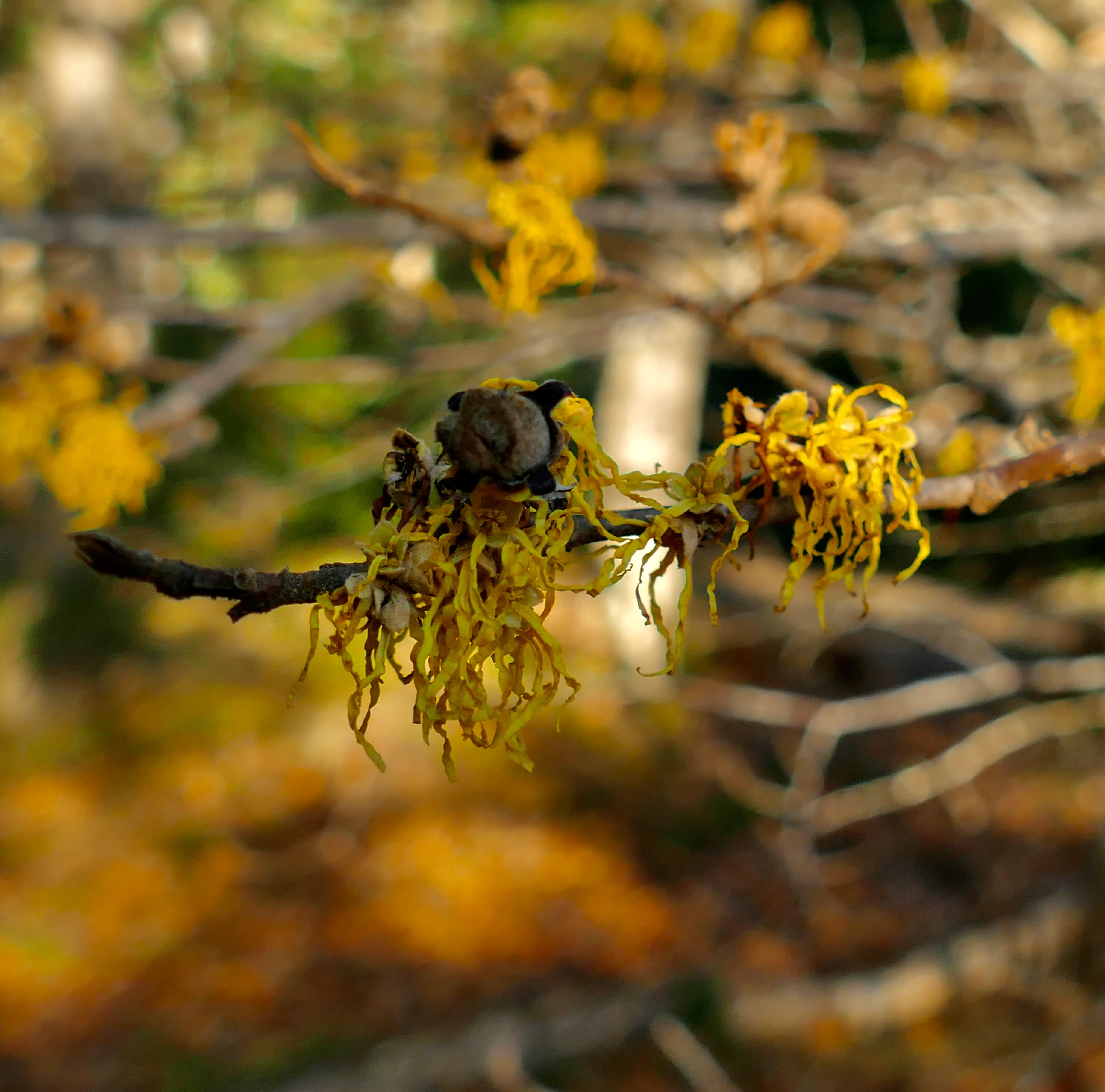
Ah, if I but knew that some minds which flow so muddily in the lowland portion of their course, when they cross the highways, tumbled thus impetuously and musically, mixed themselves with the air in foam, but a little way back in the woods! that these dark and muddy pools, where only the pout and the leech are to be found, issued from pure trout streams higher up! that the man’s thoughts ever flowed as sparkling mountain water, that trout there loved to glance through his dimples, where the witch-hazel hangs over his stream!
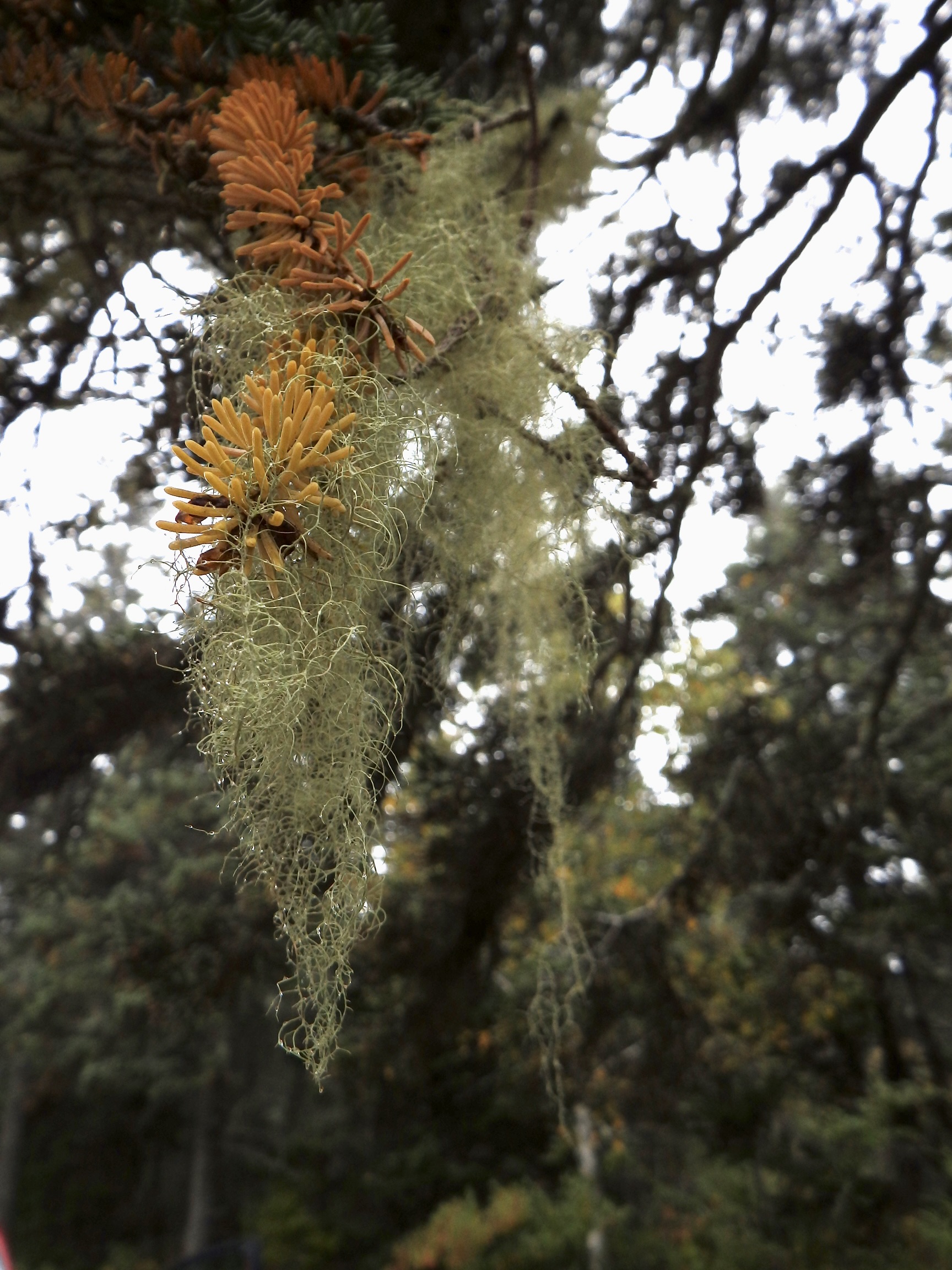
I love to see a man occasionally from whom the usnea will hang as naturally as from a spruce. Cultivation exterminates the pine, but preserves the elm. Our front yard evergreens are puny and trimmed up.
Heard a bluebird about a week ago.
There are very few phenomena which can be described indifferently as occurring at different seasons of the year, for they will occur with some essential difference.
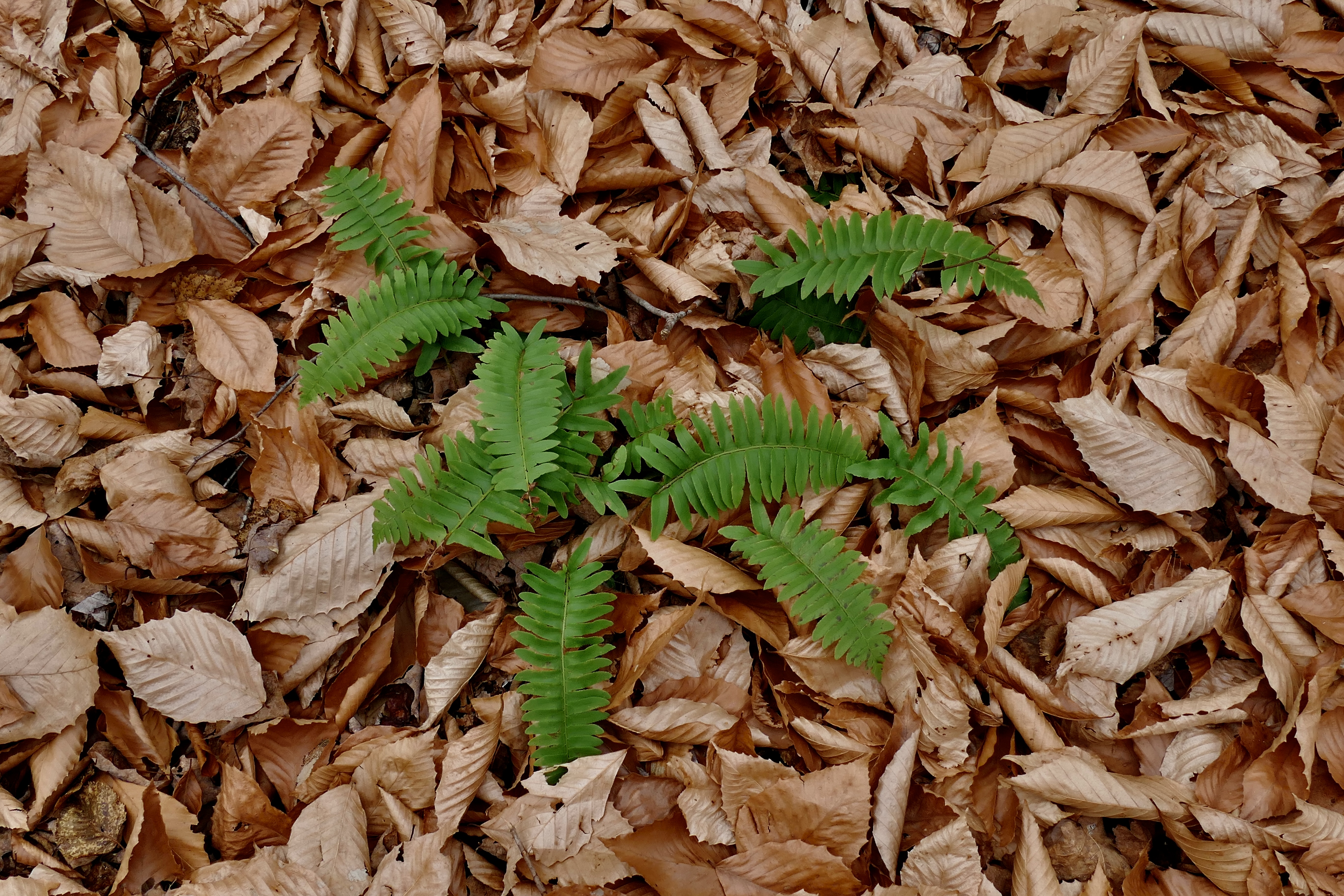
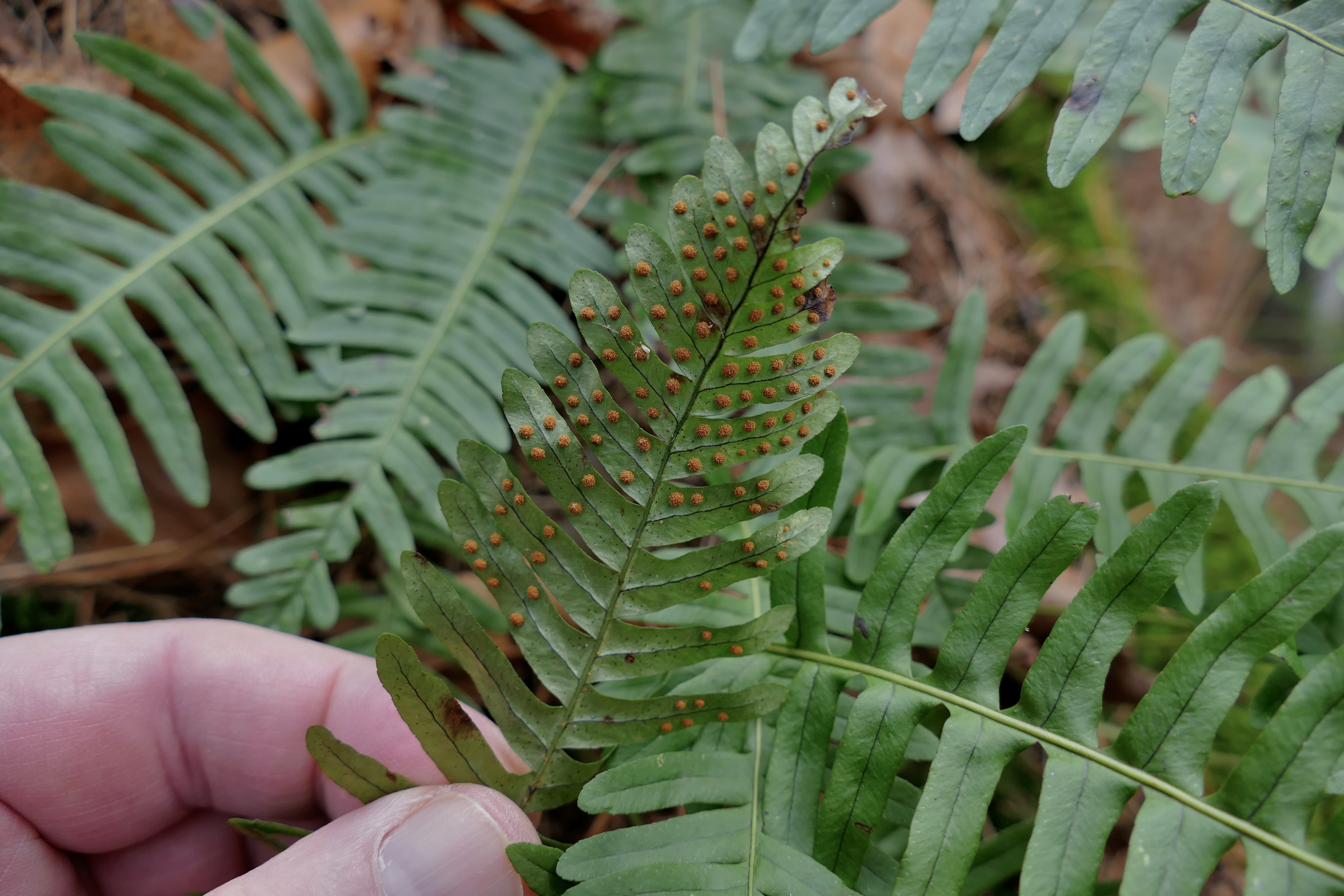
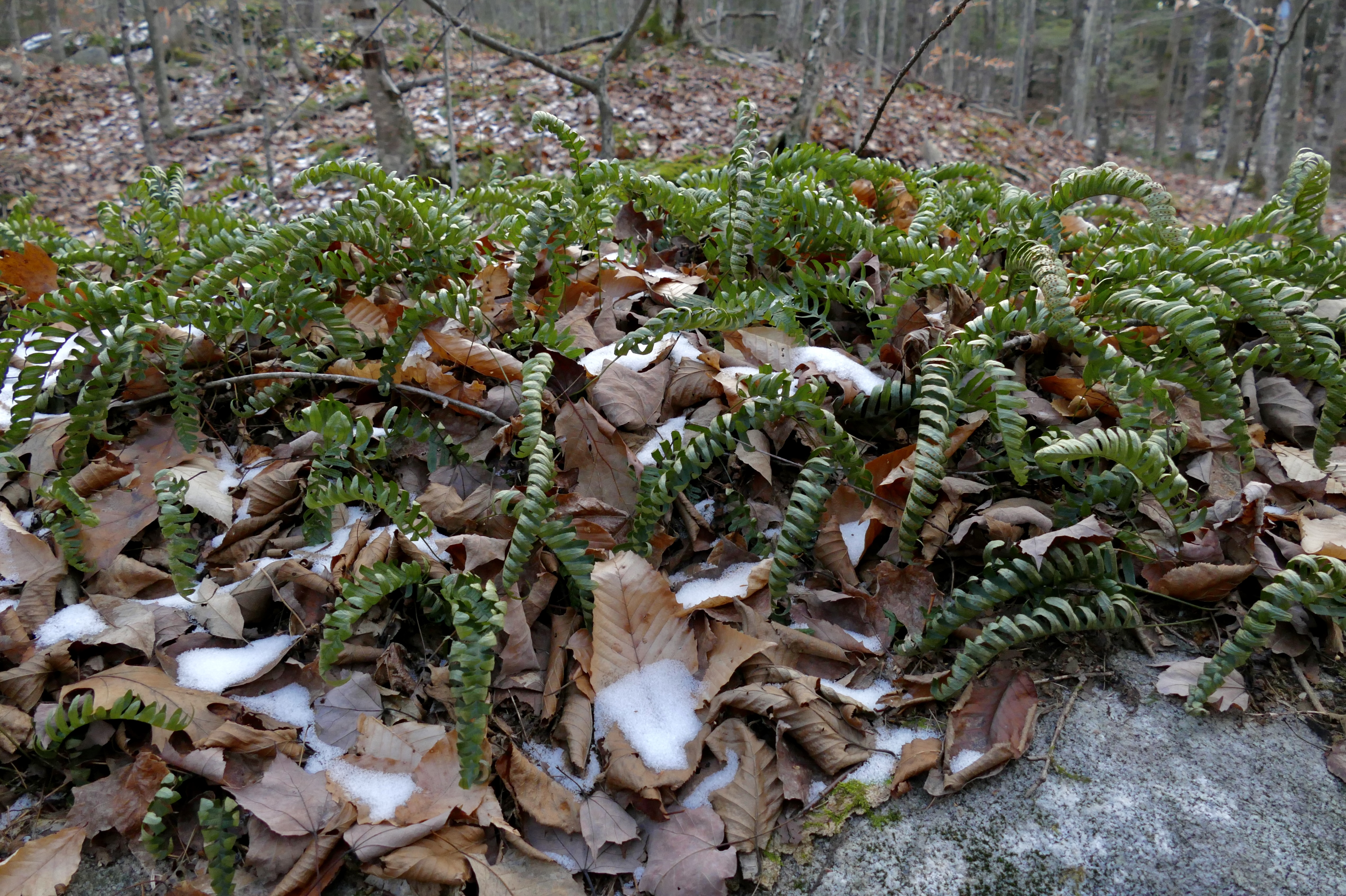
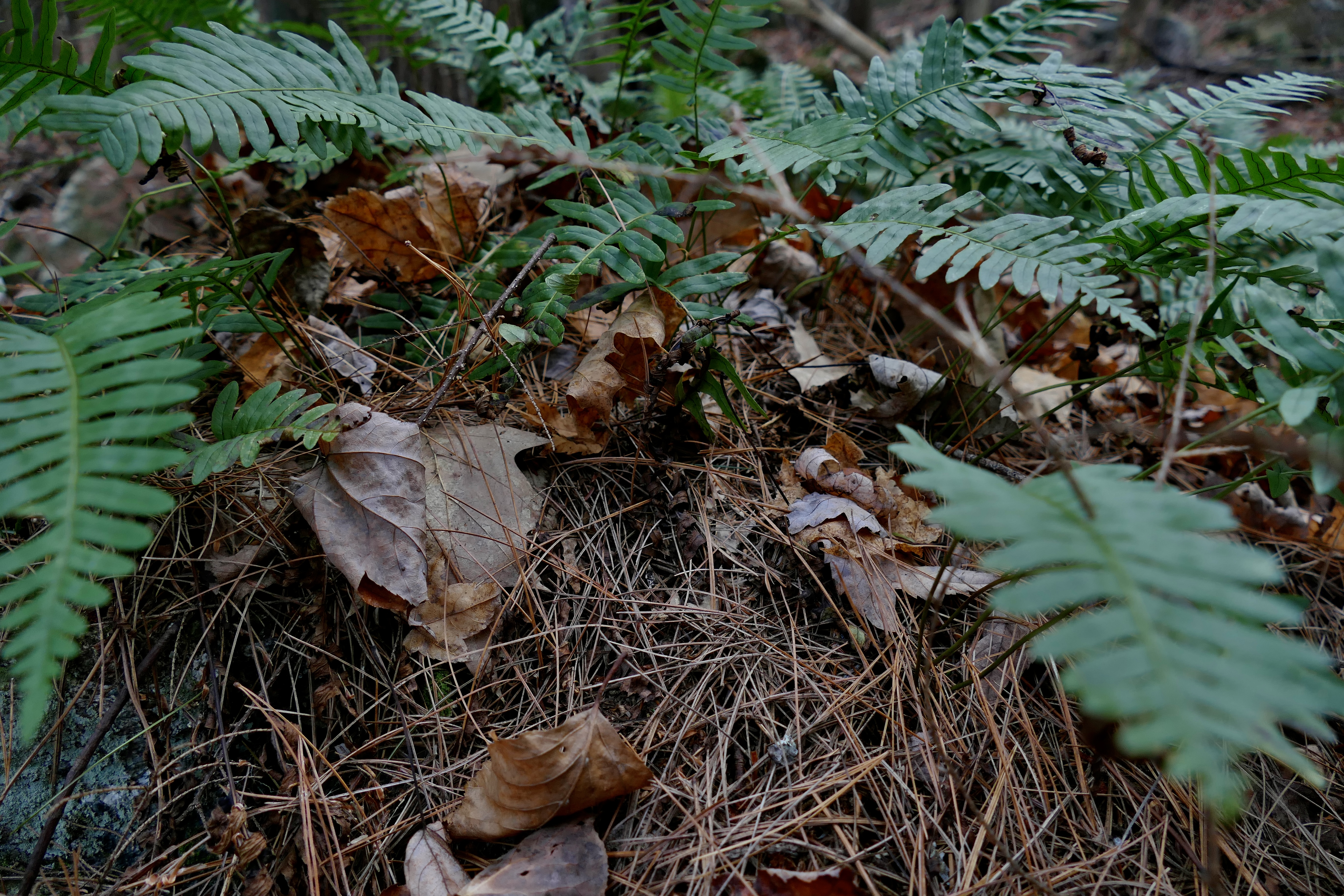
It is very pleasant & cheerful now days—when the brown & withered leaves strew the ground—& almost every plant is fallen or withered—to come upon a patch of polypody (as in abundance on hill side between Calla swamp & Bateman’s P.) on some rocky and still more (same) hillside E of the Callas hill side in the woods— When in the midst of dry & rustling leaves defying frost it stands so freshly green & full of life—The mere green which was not remarkable in the summer—is positively interesting now— My thoughts are with the poly-pody a long time after my body has passed. The brakes—the sarsaparilla—the Solomons seals—the ladies slippers—the osmundas—have long since withered & fallen. — The huckleberries & blueberries too have lost their leaves— The forest floor is covered with a thick coat of moist brown leaves, but what is that perennial & spring like verdure that clothes the rocks—of small green plumes pointing various ways— It is the cheerful community of the polypody. It survives at least as the type of vegetation to remind us of the spring which shall not fail. These are the green pastures where I browse now— Why is not this form copied by our sculptors instead of the foreign acanthus leaves & bays?
The sight of this unwithering green leaf excites me like red at some seasons. Are not wood frogs the philosophers who walk in these groves? —Methinks I imbibe a cool composed frog-like philosophy when I behold them. I don’t care for acanthus leaves— They are far fetched— I do love this form however— & would like to see it whether on your marble or my butter painted or sculptured — How fit for a tuft about the base of a column….
The evergreen ferns & lycopodiums— now have their day—now is the flower of their age—& their greenness is appreciated. They are much the clearest & most liquid green in the woods—more yellow & brown specked in the open places— The form of the polypody is strangely interesting—it is even outlandish. Some forms though common in our midst are thus perennially foreign as the growths of other latitudes—there being a greater interval between us & their kind than usual. We all feel the ferns to be further from us essentially—& sympathetically—than the phaenogamous plants—the roses & weeds for instance— It needs no geology nor botany to assure us of that—we feel it—& told them of it first. The bare outline of the polypody—thrills me strangely—it is a strange type which I cannot read—It only piques me— Simple as it is, it is as strange as an oriental character. It is quite independent of my race & of the Indian— & all mankind. It is a fabulous mythological form—such as prevailed when the earth & air & water were inhabited by those extinct fossil creatures—that we find. It is contemporary with them and affects as the sight of them.







 allandibiase.com
You must be logged in to post a comment.