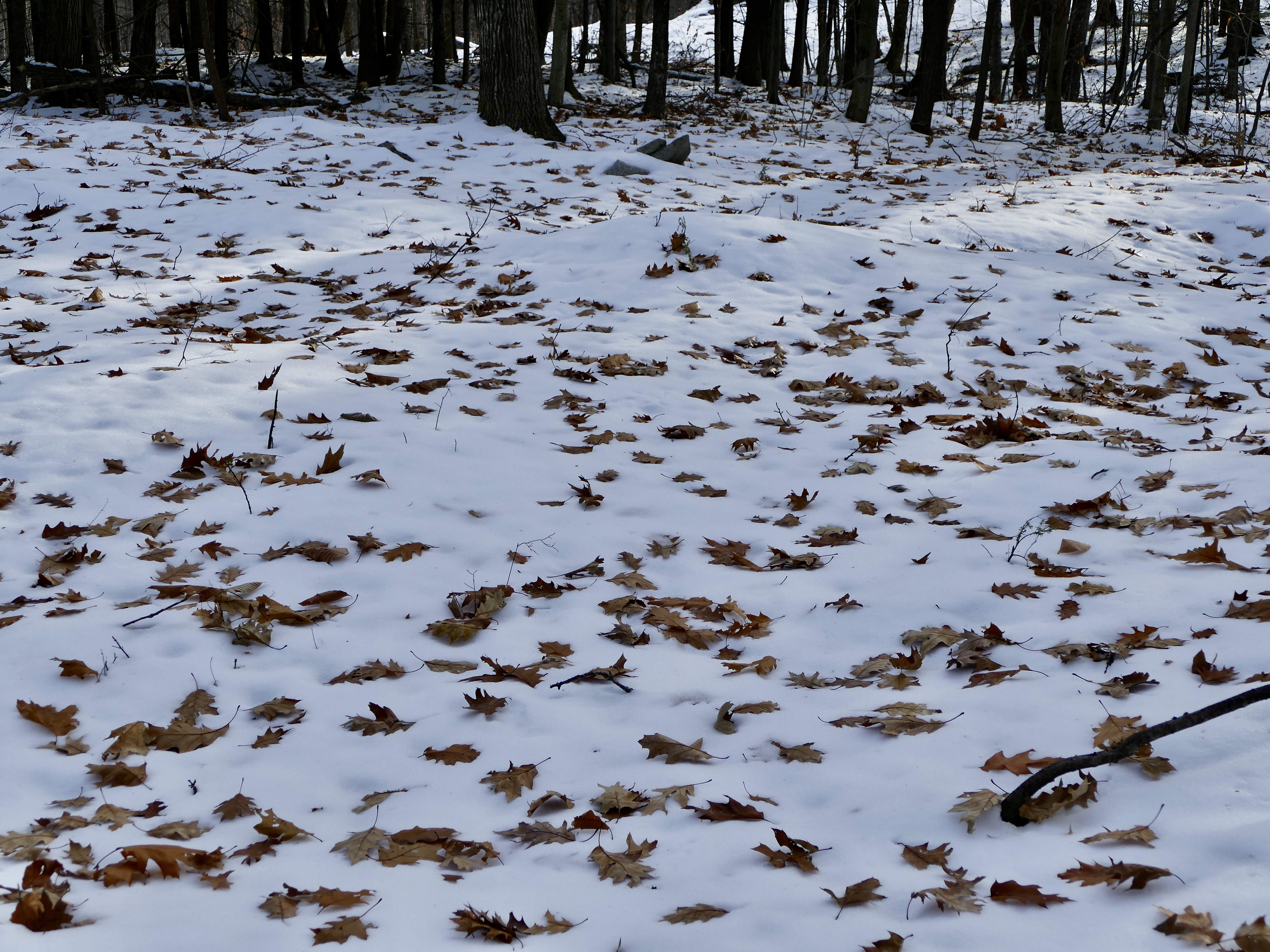
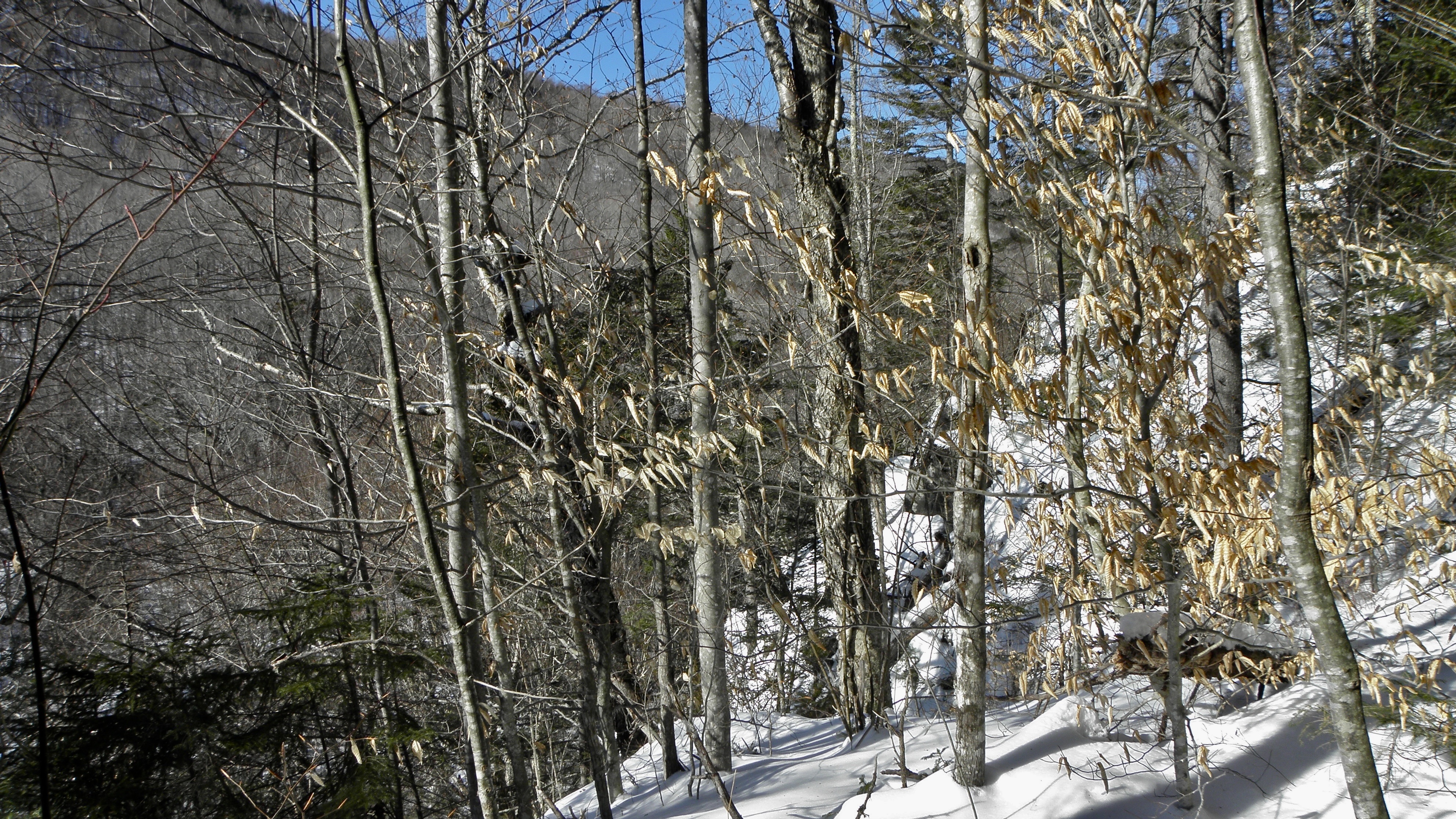
The high wind takes off the oak leaves. I see them scrambling up the slopes of the Deep Cut, hurry-scurry over the slippery snow-crust, like a flock of squirrels. The ice on Walden is of a dull white as I look directly down on it, but not half a dozen rods distant on every side it is a light-blue color.
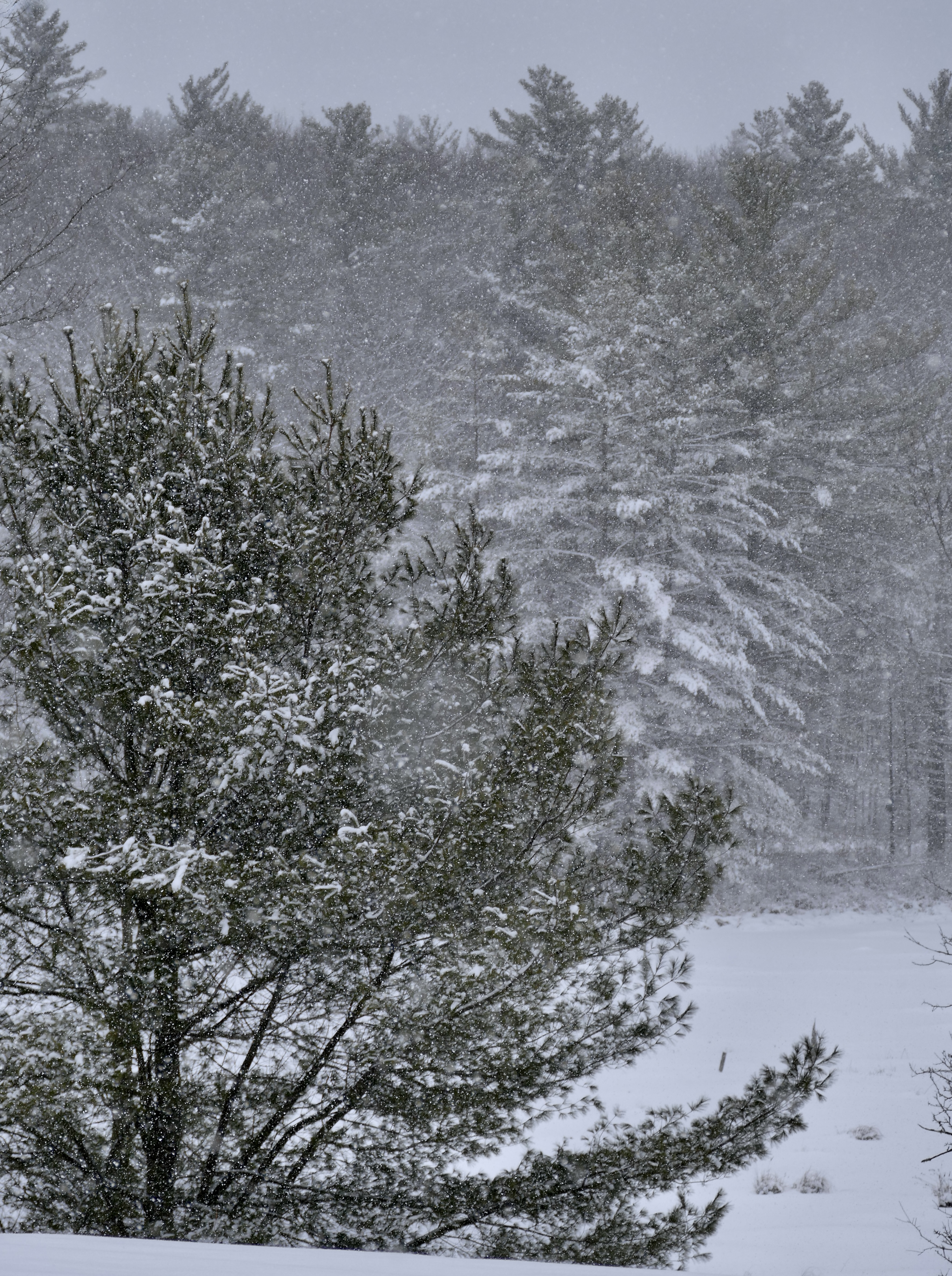
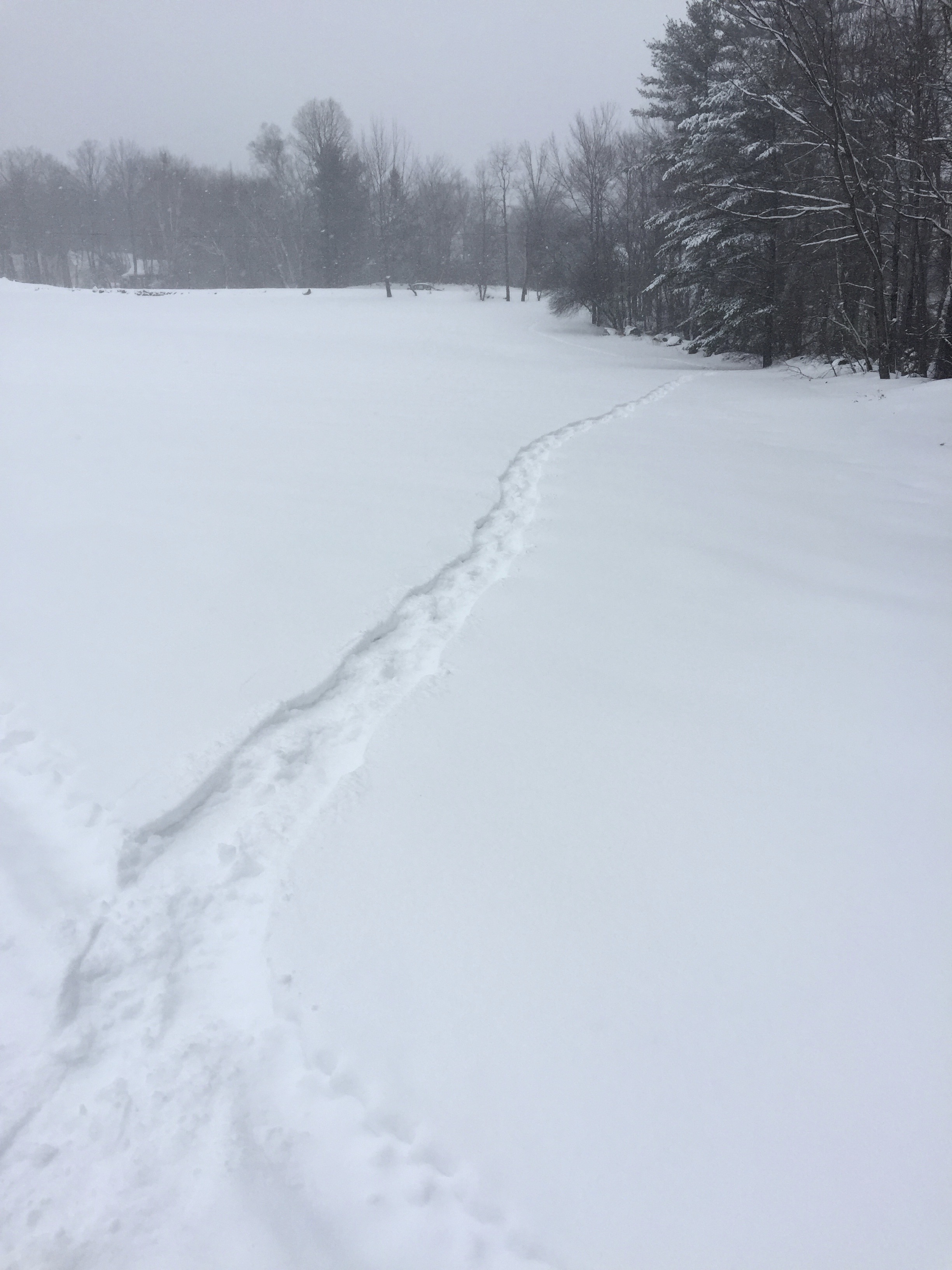
To-day it snows again, covering the ground. To get the value of the storm, we must be out a long time and travel far in it, so that it may fairly penetrate our skin, and we be, as it were, turned inside out to it, and there be no part in us but is wet or weather-beaten, so that we become storm men instead of fair-weather men.
A sharp cutting air— This is a pretty good winter morning however— Not one of the rarer. There are from time to time mornings—both in summer & winter when especially the world seems to begin anew—beyond which memory need not go—for not behind them is yesterday and our past life—when as in the morning of a hoar frost there are visible the effects of a certain creative energy—the world has visibly been recreated in the night—mornings of creation I call them.
Clear, but very cold and windy for the season. Northerly wind; smokes blown southerly. Ground frozen harder still; but probably now and hereafter what ground freezes at night will in great part melt by middle of day.
However, it is so cold this afternoon that there is no melting of the ground throughout the day.
A still warmer day— The snow is so solid that it still bears me—though we have had several warm suns on it. It is melting gradually under the sun. In the morning I make but little impression in it. As it melts it acquires a rough but regularly waved surface. It is inspiriting to feel the increased heat of the sun reflected from the snow— There is a slight mist above the fields—through which the crowing of cocks sounds spring-like.
I sit by a maple on a maple— It wears a shaggy coat of lichens summer & winter.
Why should we live with such hurry & bustle—let us spend one day as deliberately as nature— Let us rise early & fast or break fast gently and without noise—
What if the milk-man does not come in season, white wash our coffee—let us murmur an inward prayer that we may be sustained under this trial & forget him. Let company come & let company go determined to make a day of it. Let the bells ring & the children cry, why should we knock under—& go with the stream.
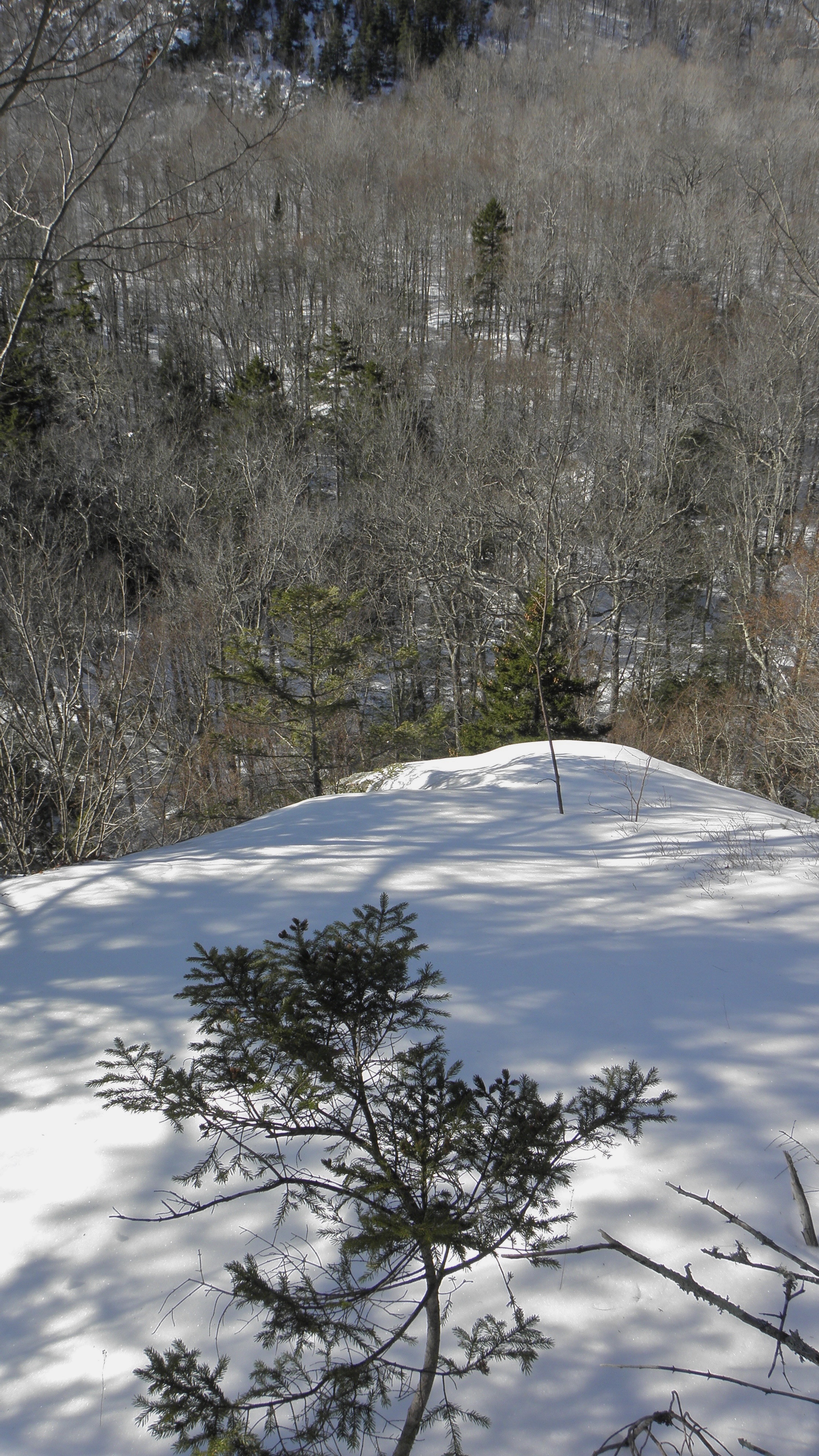
We now notice the snow on the mountains….I think there can be no more arctic scene than these mountains, on the edge of the horizon, completely crusted over with snow, the sun shining on them….the snow has a singular smooth and crusty appearance, and by contrast you see even single evergreens rising here and there above it….
Made a fire on the south side of the pond. Using—canoe birch bark & oak leaves for kindlings…
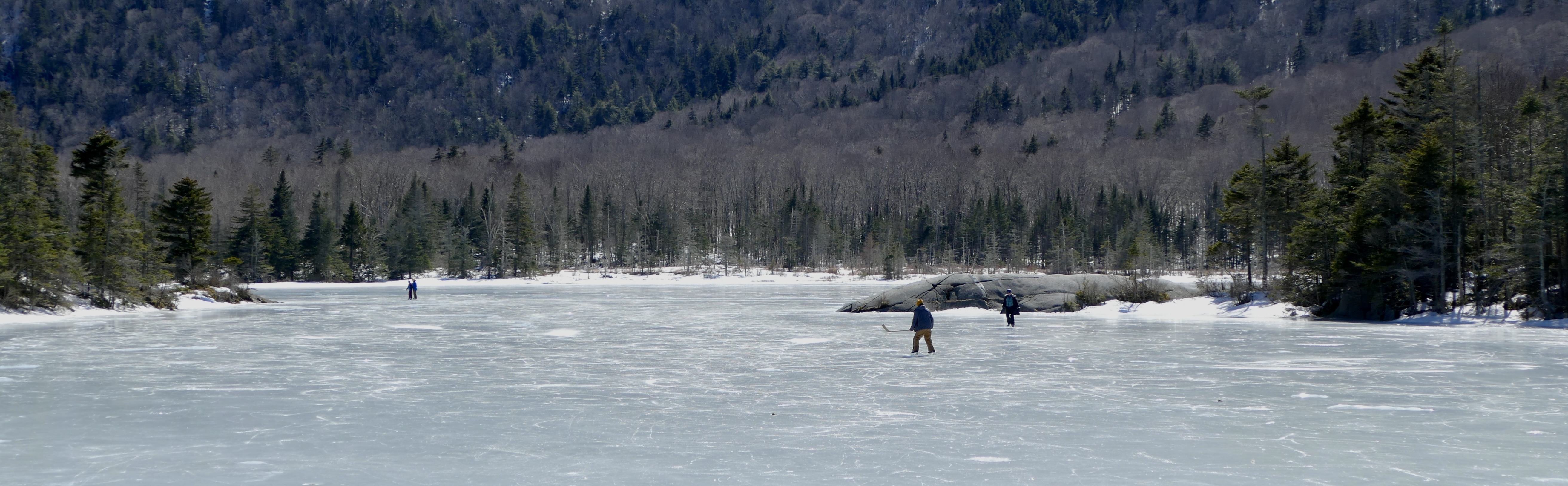
We skated home in the dark—with an odor of smoke in our clothes. It was pleasant to dash over the ice—feeling the inequalities which we could not see—now rising over considerable hillocks for it had settled on the meadows—now descending into corresponding hollows.
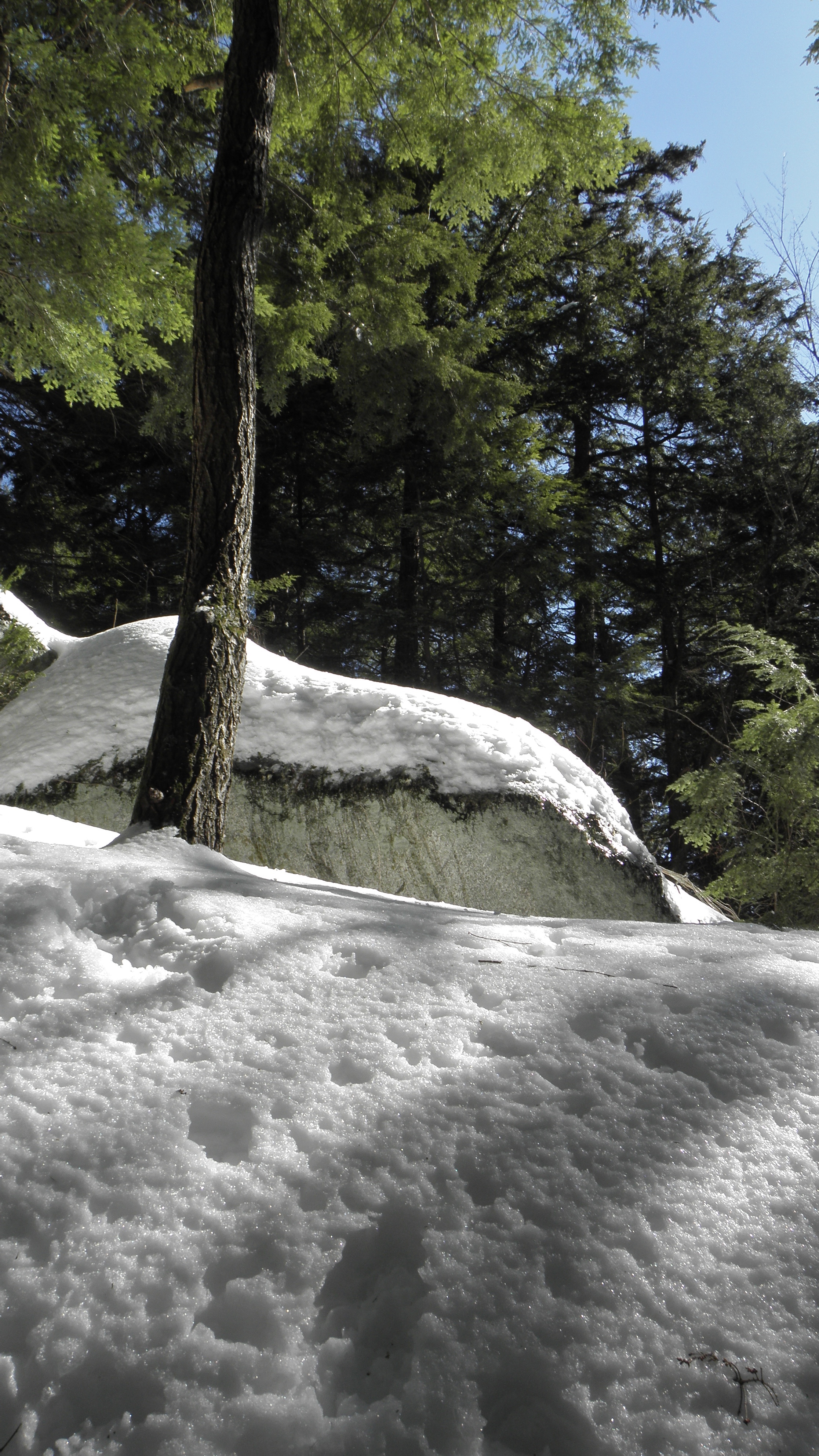
Everywhere snow—gathered into sloping drifts about the walls & fences—& beneath the snow the frozen ground—and men are compelled to deposit the summer’s provision in burrows in the earth like the ground-squirrel. Many creatures daunted by the prospect migrated in the fall, but man remains and walks over the frozen snow crust—and over the stiffened rivers & ponds. & draws now upon his summer stores.
Life is reduced to its lowest terms. There is no home for you now—in this freezing wind but in that shelter which you prepared in the summer— You steer straight across the fields to that in season. I can with difficulty tell when I am over the river. There is a similar crust over my heart. Where I rambled in the summer—& gathered flowers and rested on the grass by the brookside in the shade—now no grass nor flowers—nor brook nor shade—but cold unvaried snow stretching mile after mile and no place to sit.
The snow is fine and drives low; is composed of granulated masses one sixteenth to one twentieth of an inch in diameter. Not in flakes at all. I think it is not those large-flaked snow-storms that are the worst for the traveller, or the deepest.
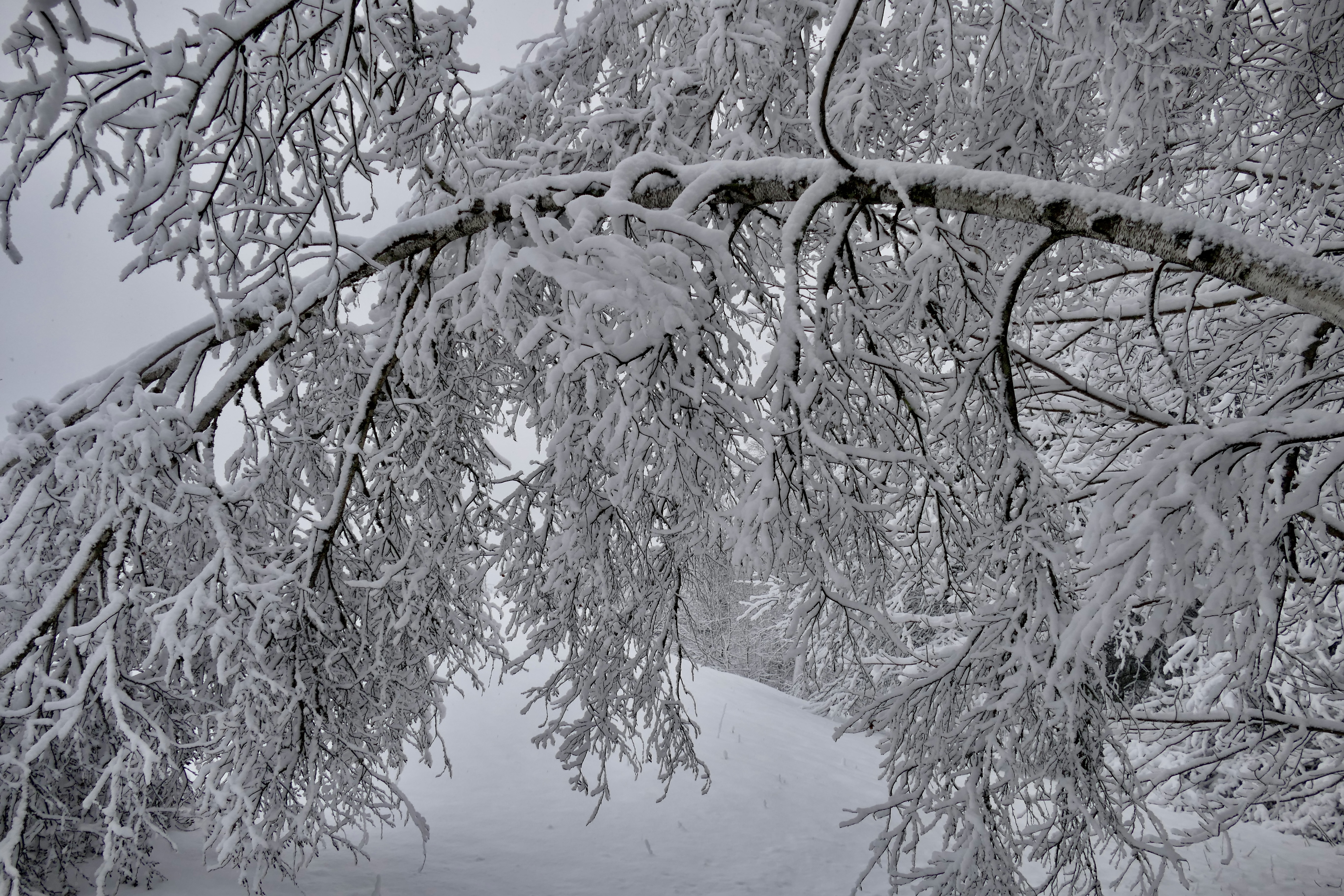
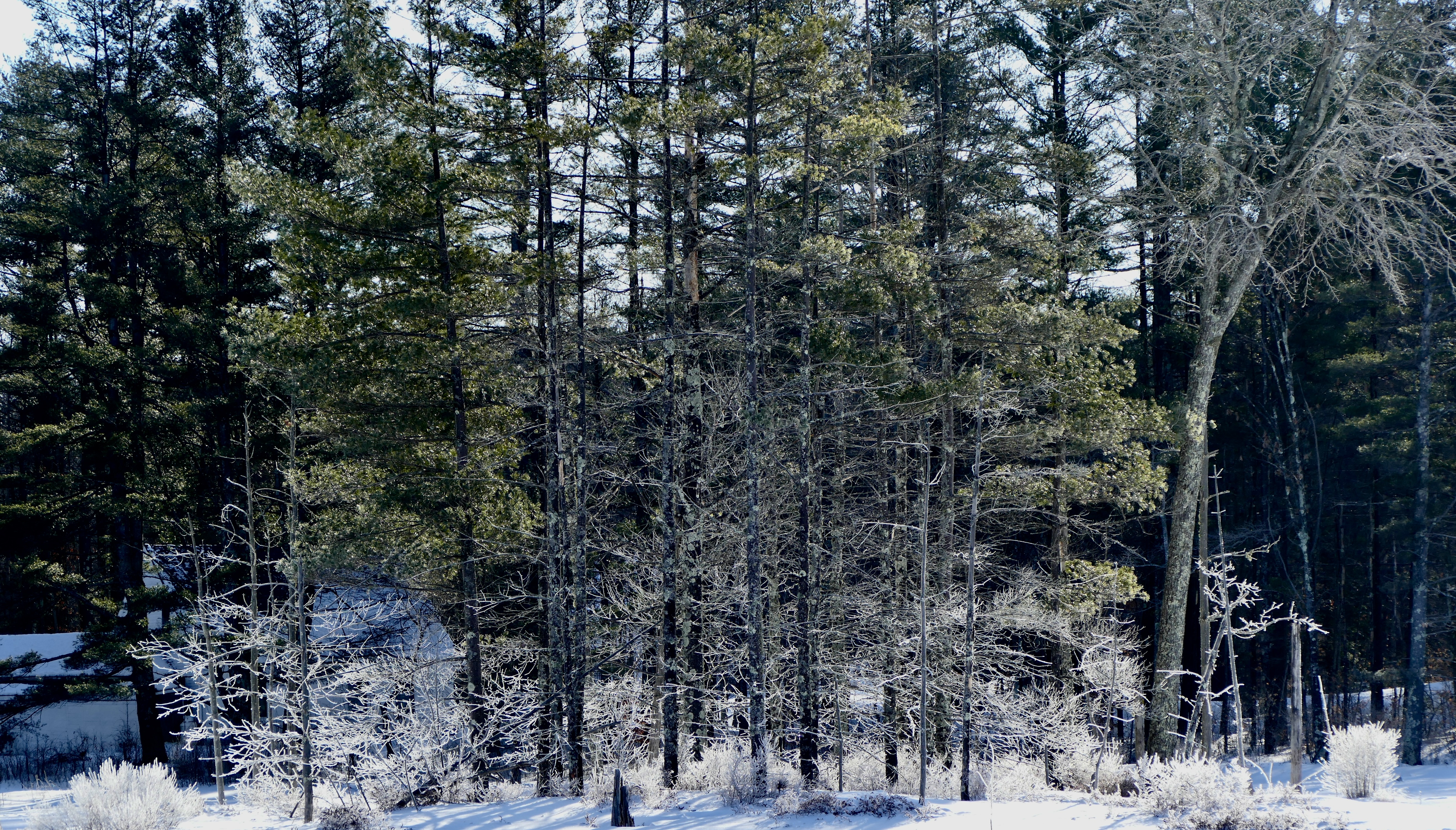
It is a moist & starry snow–lodging on trees–leaf bough & trunk. The pines are well laden with it. How handsome, though wintry the side of a high pine wood–well greyed with the snow that has lodged on it– & the smaller pitch pines converted into marble or alabaster–with their lowered plumes–like rams-heads’ drawings.
The character of the wood paths is wholly changed by the new fallen snow–- not only all tracks are concealed–but the pines drooping over it–& half concealing or filling it, it is merely a long chink or winding open space between the trees–
I have just been reading the account of Dr. Ball’s sufferings on the White Mountains. Of course, I do not wonder that he was lost. I should say: Never undertake to ascend a mountain or thread a wilderness where there is any danger of being lost, without taking thick clothing, partly india-rubber, if not a tent or material for one; the best map to be had and a compass; salt pork and hard-bread and salt; fish-hooks and lines; a good jack-knife, at least, if not a hatchet, and perhaps a gun; matches in a vial stopped water-tight; some strings and paper. Do not take a dozen steps which you could not with tolerable accuracy protract on a chart. I never do otherwise. Indeed, youmust have been living all your life in some such methodical and assured fashion, though in the midst of cities, else you will be lost in spite of all this preparation.
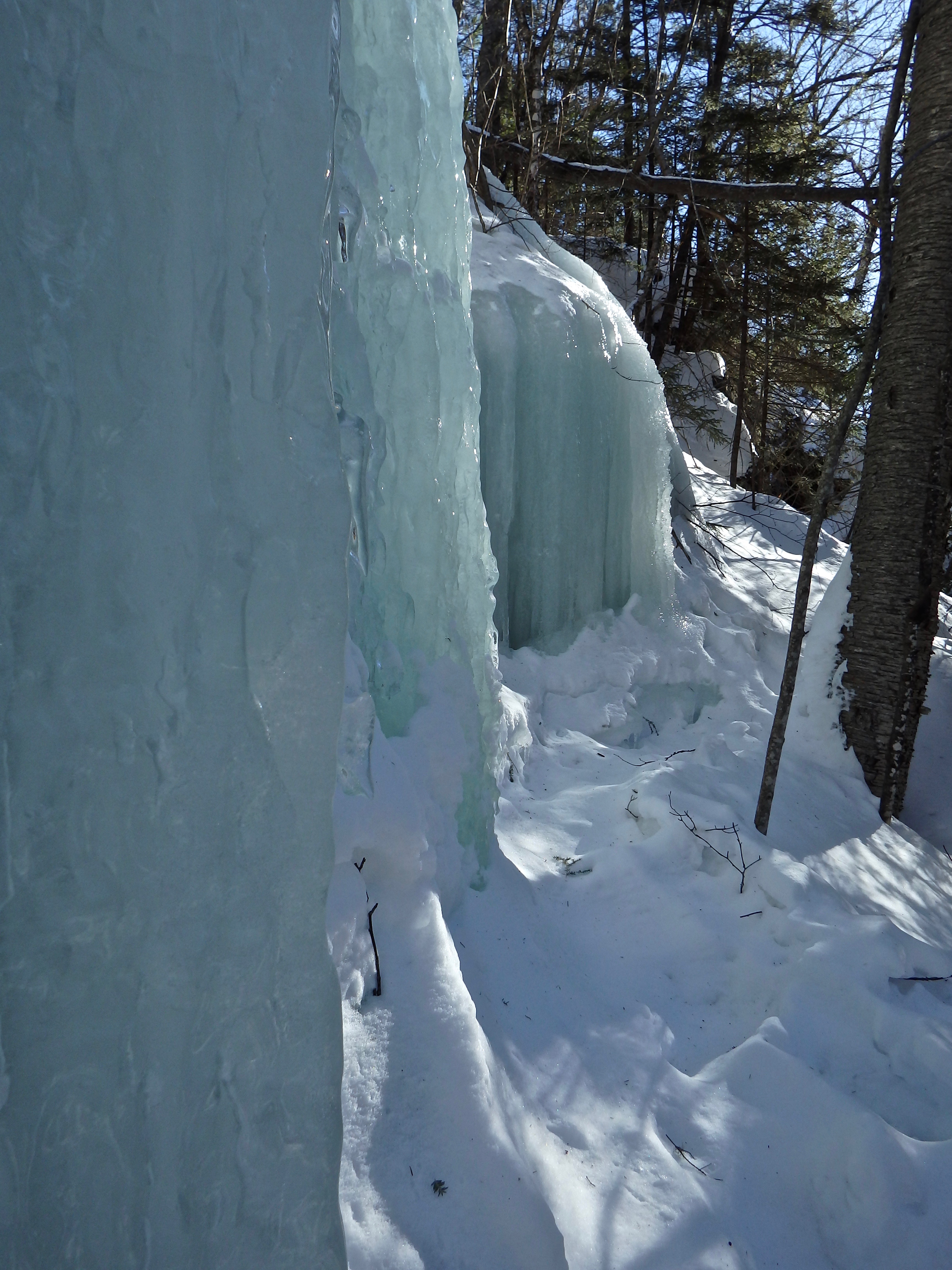
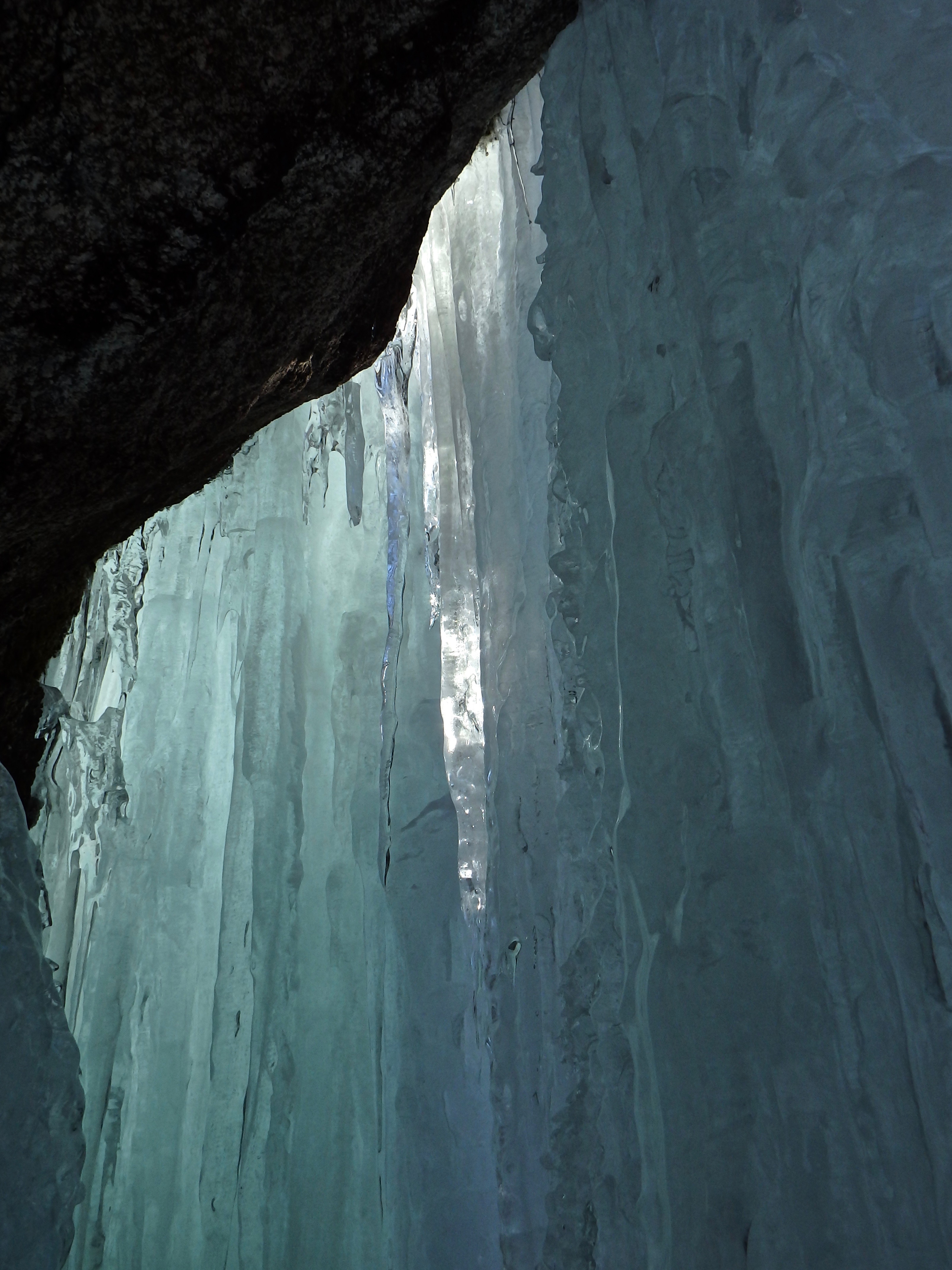
At the Cliffs the rocks are in some places covered with ice. And the least inclination beyond a perpendicular in their faces is betrayed by the formation of icicles at once which hang perpendicularly—like organ pipes—in front of the rock—They are now conducting downward the melting ice and snow which drips from their points with a slight clinking & lapsing sound—but when the sun has set will freeze there and add to the icicles’ length. Where the icicles have reached the ground & are like thick pillars they have a sort of annular appearance somewhat like the successive swells on the legs of tables and bed-posts— There is perhaps a harmony between the turner’s taste & the law of nature in this instance. The shadow of the water flowing or pulsating behind the transparent icy crust or these stalactites—in the sun imparts a semblance of life to the whole.
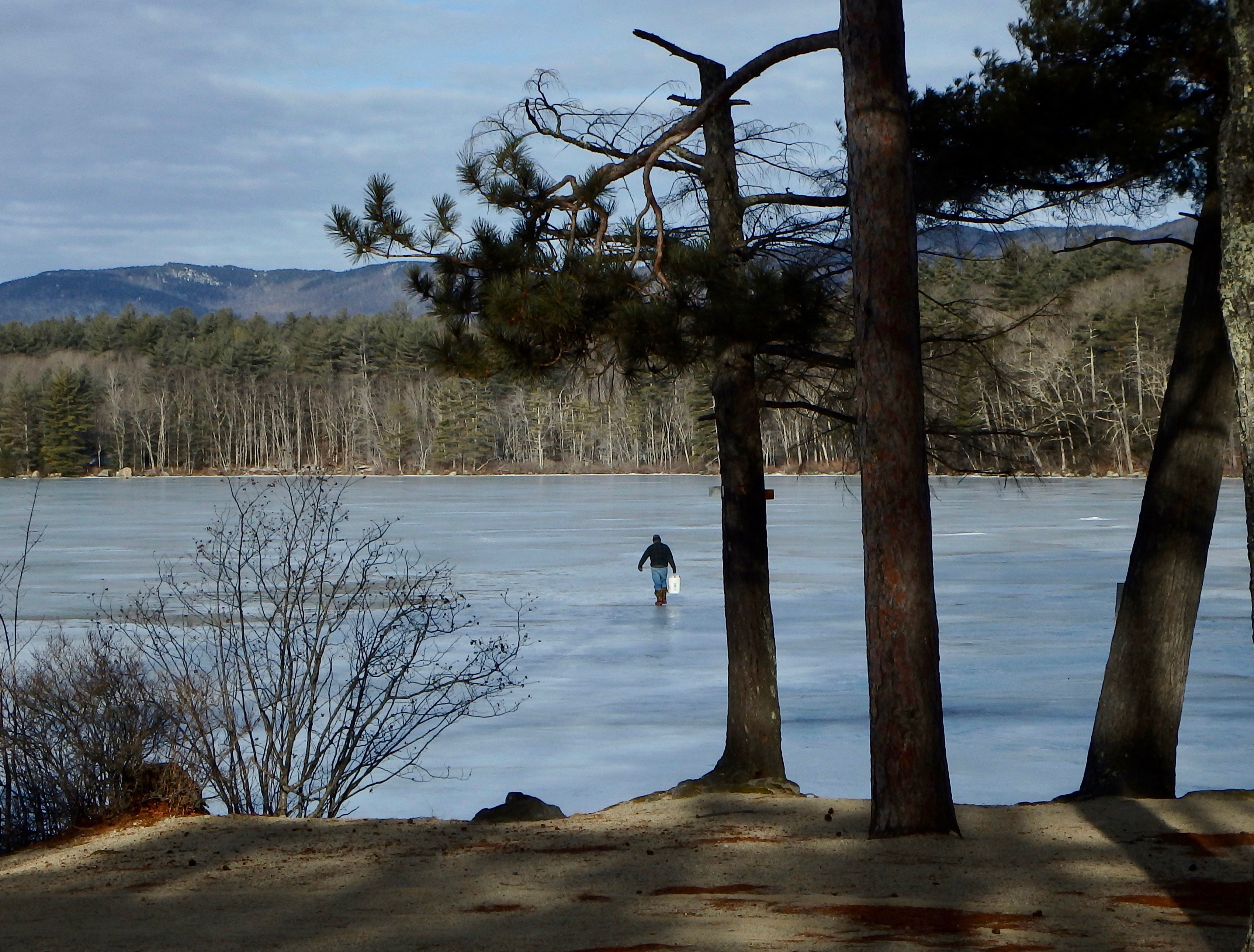
Yesterday there was no skating, unless you swept the snow from the ice; but to-day, though there has been no rain nor thaw, there is pretty good skating. Yesterday the water which had flowed, and was flowing, back over the ice on each side of the river and the meadows, a rod or two in width, was merely skimmed over, but last night it froze so that there is good skating there. Also the wind will generally lay bare some portion of the ice, unless the snow is very deep.
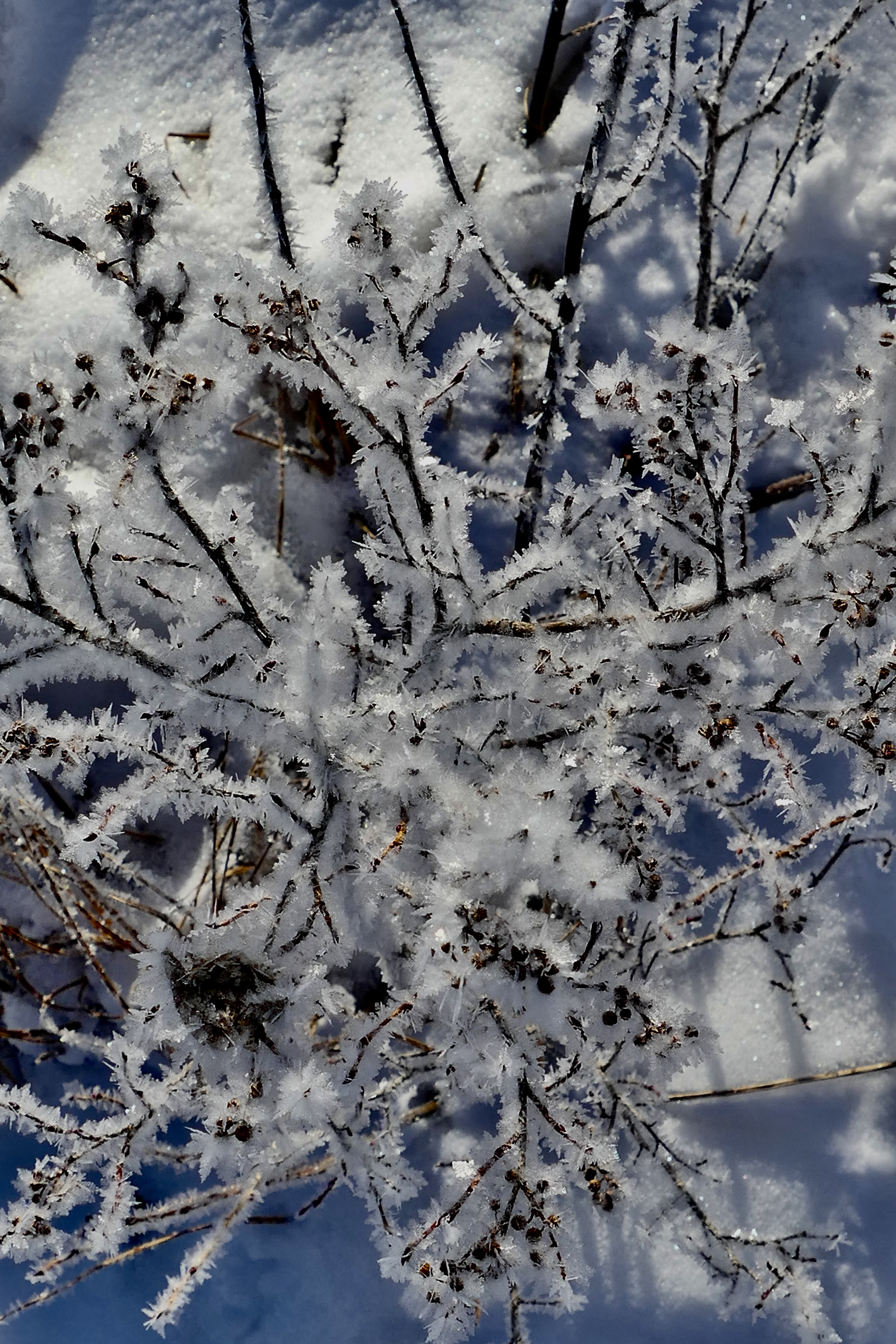
This yellowish ice which froze yesterday and last night is thickly and evenly strewn with fibrous frost- crystals very much like bits of asbestos, an inch or more long, sometimes arranged like a star or rosette, one for every inch or two; but where I broke in yesterday, and apparently wherever the water overflowed the thin ice late in the day, there are none. I think that this is the vapor from the water which found its way up through the ice and froze in the night. It is sprinkled like some kind of grain, and is in certain places much more thickly strewn, as where a little snow shows itself above the ice.
The old ice is covered with a dry, powdery snow about one inch deep, from which, as I walk toward the sun, this perfectly clear, bright afternoon, at 3.30 o’clock, the colors of the rainbow are reflected from a myriad fine facets. It is as if the dust of diamonds and other precious stones were spread all around. The blue and red predominate. Though I distinguish these colors everywhere toward the sun, they are so much more abundantly reflected to me from two particular directions that I see two distant rays, or arms, so to call them, of this rainbow-like dust, one on each side of the sun, stretching away from me and about half a dozen feet wide, the two arms including an angle of about sixty degrees. When I look from the sun, I see merely dazzling white points. I can easily see some of these dazzling grains fifteen or twenty rods distant on any side, though the facet which reflects this light cannot be more than a tenth or twelfth of an inch at most. Yet I might easily, and commonly do, overlook all this.
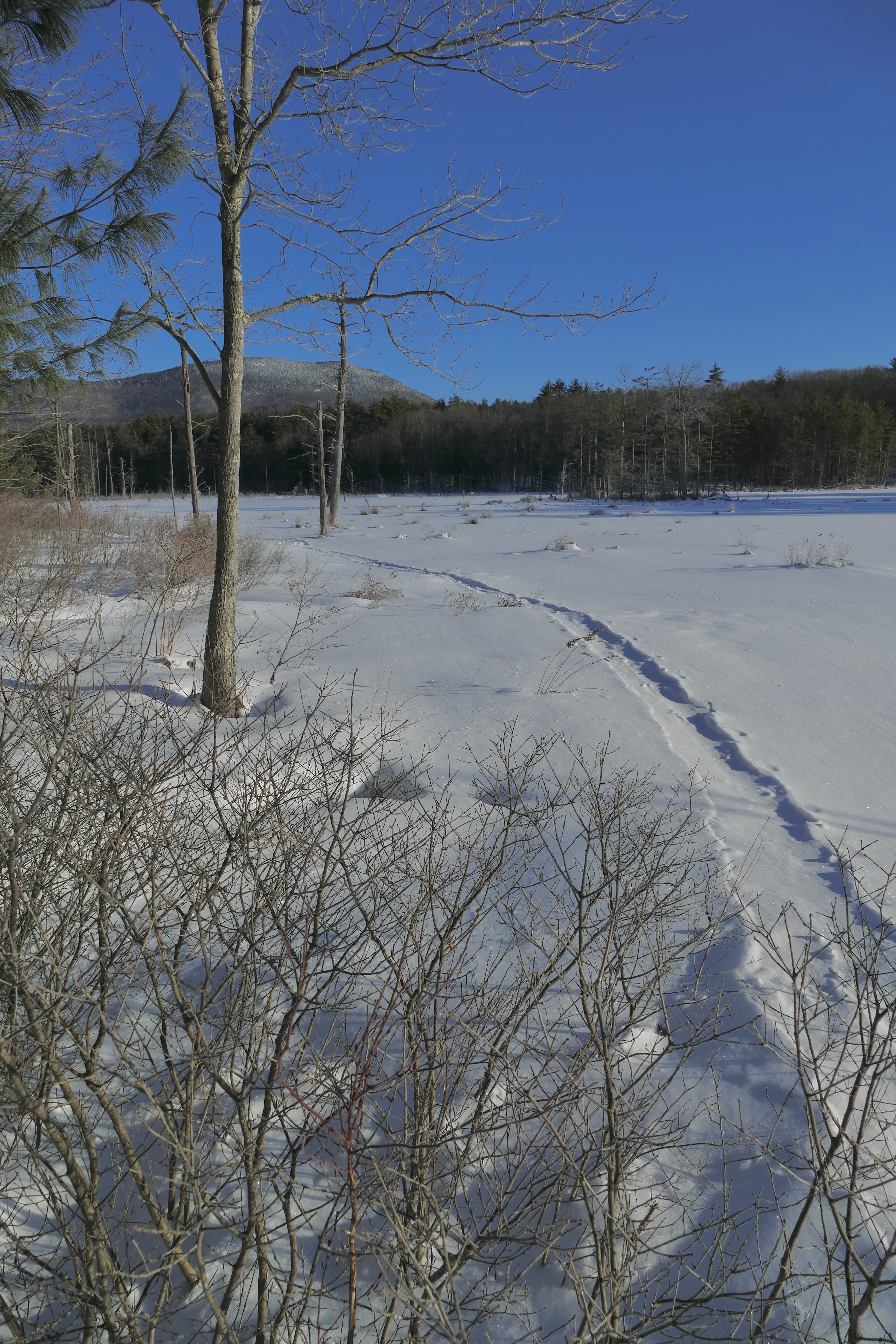
Winter comes to make walking possible where there was no walking in summer. Not till winter do we take possession of the whole of our territory. I have three great highways raying out from one centre, which is near my door. I may walk down the main river or up either of its two branches. Could any avenues be contrived more convenient ? With this river I am not compelled to walk in the tracks of horses.
To make a perfect winter day like this, you must have a clear, sparkling air, with a sheen from the snow, sufficient cold, little or no wind; and the warmth must come directly from the sun. It must not be a thawing warmth. The tension of nature must not be relaxed.
The earth must be resonant if bare, and you hear the lisping tinkle of chickadees from time to time and the unrelenting steel-cold scream of a jay, unmelted, that never flows into a song, a sort of wintry trumpet, screaming cold; hard, tense, frozen music, like the winter sky itself in the blue livery of winter’s band. It is like a flourish of trumpets to the winter sky. There is no hint of incubation in the jay’s scream. Like the creak of a cart-wheel. There is no cushion for sounds now. They tear our ears.
Perhaps the best evidence of an amelioration of the climate – at least that the snows are less deep than formerly – is the snow-shoes which still lie about in so many garrets, now useless, though the population of this town has not essentially increased for seventy-five years past, and the travelling within the limits of the town accordingly not much facilitated. No man ever uses them now, yet the old men used them in their youth.
In the cold, clear, rough air from the northwest we walk amid what simple surroundings! Surrounded by our thoughts or imaginary objects, living in our ideas, not one in a million even sees the objects which are actually around him.








 allandibiase.com
You must be logged in to post a comment.