August 11, 1853

in Thoreau’s Journal:

What shall we name this season–– This very late afternoon––or very early evening?  This severe & placid season of the day most favorable for reflection––after the insufferable heats and the bustle of the day are over––& before the dampness & twilight of the evening! The serene hour––the Muses’ hour––the season of reflection.––  It is commonly desecrated by being made tea-time. It begins perhaps with the very earliest condensation of moisture in the air––when the shadows of hills are first observed.––  & the breezes begin to go down––& birds begin again to sing. The pensive season. It is earlier than the “chaste Eve” of the poet. Bats have not come forth–– It is not twilight–– There is no dew yet on the grass––& still less any early star in the heavens. It is the turning point between afternoon & evening.
The few sounds now heard far or near––are delicious. It is not more dusky & obscure, but clearer than before–– The clearing of the air by condensation of mists more than balances the increase of shadows. Chaste Eve is merely preparing with “dewy fingers” to draw o’re all “the gradual dusky veil.” Not yet “The ploughman homeward plods his weary way” nor owls nor beetles are abroad. It is a season somewhat earlier than is celebrated by the poets–– There is not such a sense of lateness & approaching night as they describe. I mean when the first emissaries of Evening come to smooth the lakes and streams. The poet arouses himself and collects his thoughts. He postpones tea indefinitely. Thought has taken his siesta. 
August 8, 1854

in Thoreau’s Journal:

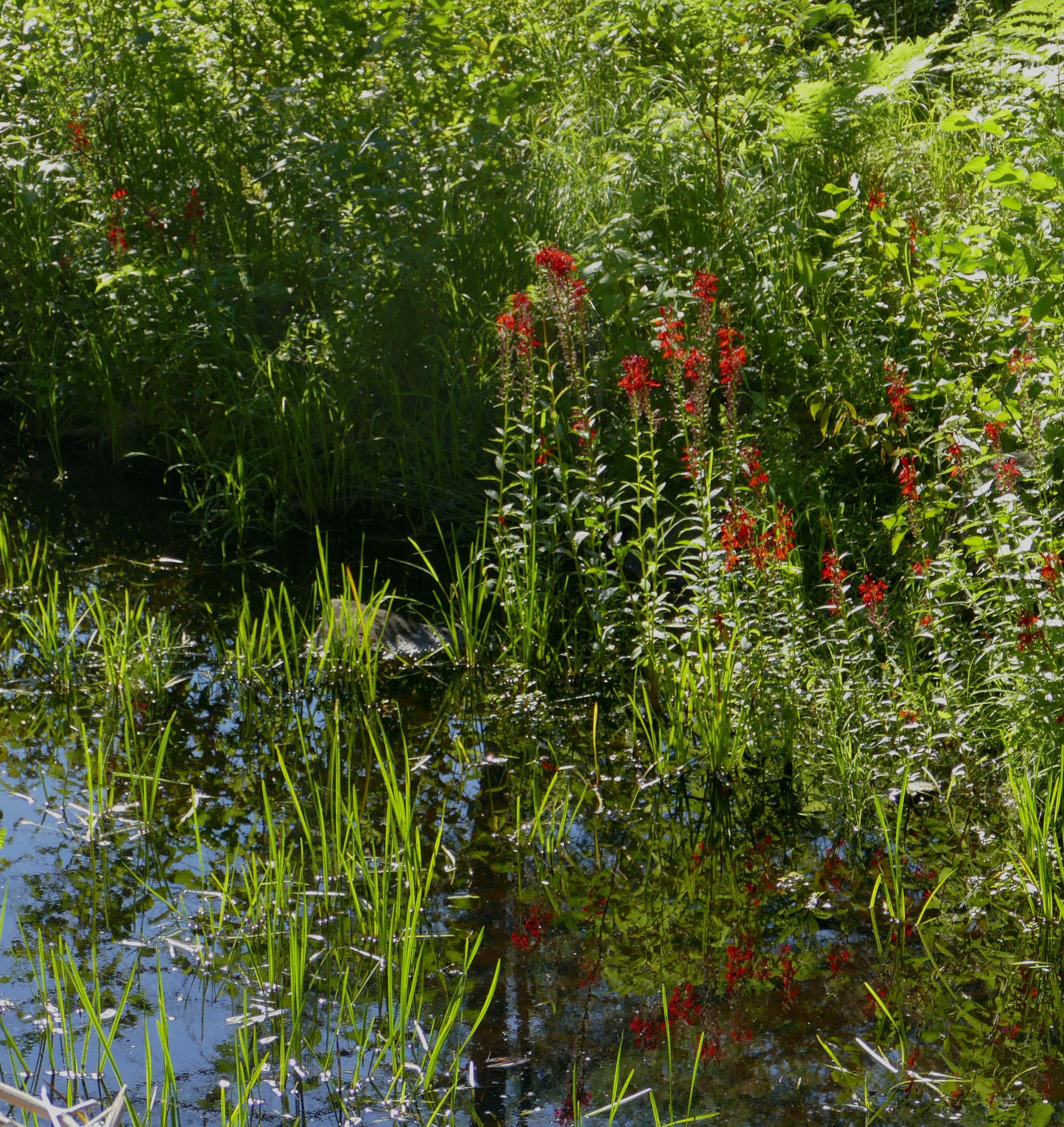
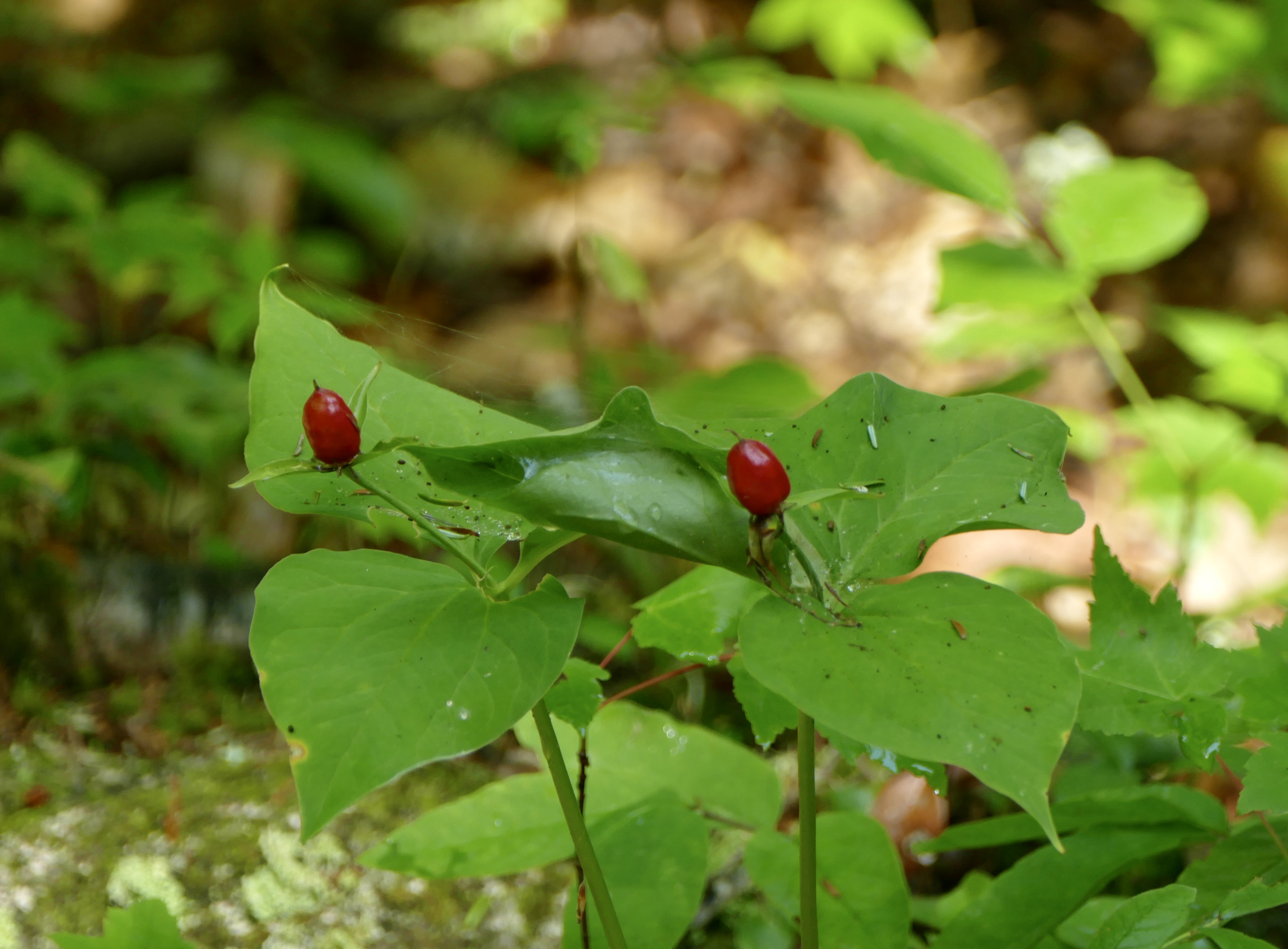
This is a day of sunny water. As I walk along the bank of the river I look down a rod & see distinctly the fishes and the bottom. The cardinals are in perfection—standing in dark recesses of the green shore, or in the open meadow.

They are fluviatile & stand along some river or brook—like myself.

August 7, 1854

in Thoreau’s Journal:

Do you not feel the fruit of your spring and summer begin to ripen, to harden its seed within you? Do not your thoughts begin to acquire consistency as well as flavor and ripeness? How can we expect a harvest of thought who have not had a seed-time of character? Already some of my small thoughts — fruit of my spring life — are ripe, like the berries which feed the first broods of birds; and other some are prematurely ripe and bright, like the lower leaves of the herbs which have felt the summer’s drought—

Seasons when our mind is like the strings of a harp which is swept—& we stand and listen. A man may hear strains in his thought far surpassing any oratorio—

How can we expect a harvest of thought who have not had a seedtime of character?

August 6, 1851

August 6, 1851 in Thoreau’s Journal:

A man must generally get away some hundreds or thousands of miles from home before he can be said to begin his travels.

Why not begin his travels at home?  …. It takes a man of genius to travel in his own country, in his native village; to make any progress between his door and his gate.

——————

Traveling at Home

Even in a country that you know by heart

it’s hard to go the same way twice.

The life of the going changes.

The chances change and make a new way.

Any tree or stone or bird

can be the bud of a new direction. 

The natural correction is to make intent of accident. 

To get back before dark is the art of going.

—Wendell Berry

August 5, 1851

in Thoreau’s Journal:

Ah, what a poor, dry compilation is the “Annual of Scientific Discovery! ” I trust that observations are made during the year which are not chronicled there, — that some mortal may have caught a glimpse of Nature in some corner of the earth during the year 1851. One sentence of perennial poetry would make me forget, would atone for, volumes of mere science. The astronomer is as blind to the significant phenomena, or the significance of phenomena, as the wood-sawyer who wears glasses to defend his eyes from sawdust. The question is not what you look at, but what you see.

August 4, 1852

in Thoreau’s Journal:  

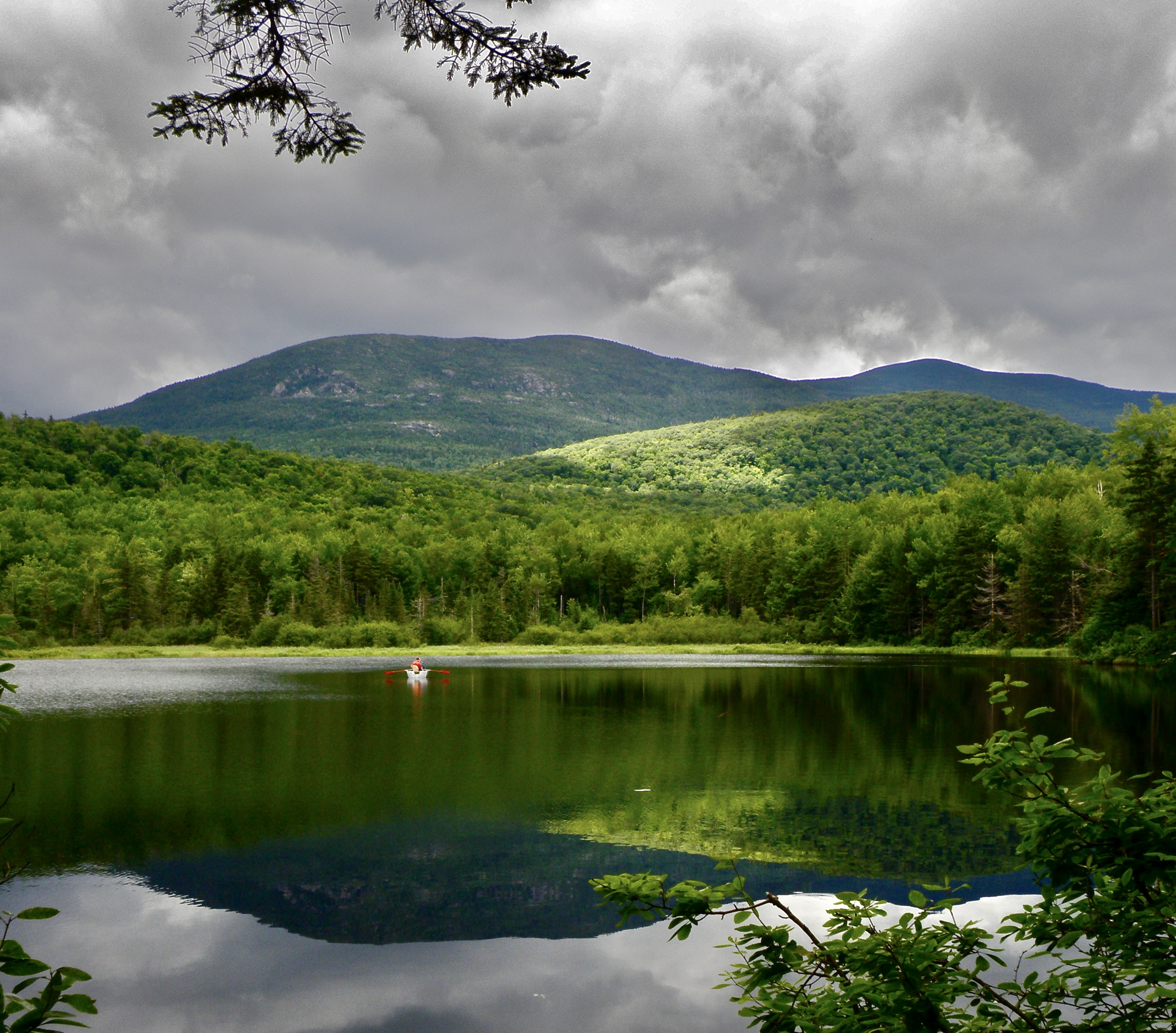
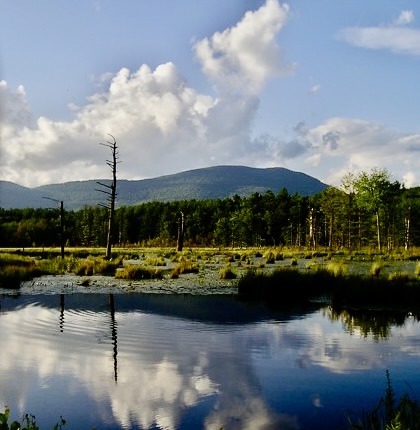
A pleasant time to behold a small lake in the woods is in the intervals of a gentle rain-storm at this season, when the air and water are perfectly still, but the sky- still overcast; first, because the lake is very smooth at such a time, second, as the atmosphere is so shallow and contracted, being low-roofed with clouds, the lake as a lower heaven is much larger in proportion to it. With its glassy reflecting surface, it is somewhat more heavenly and more full of light than the regions of the air above it. There is a pleasing vista southward over and through a wide indentation in the hills which form its shore, where their opposite sides slope to each other so as to suggest a stream flowing from it in that direction through a wooded valley, toward some distant blue hills in Sudbury and Framingham, Goodman’s and Nobscot; that is, you look over and between the low near and green hills to the distant, which are tinged with blue, the heavenly color. Such is what is fair to mortal eyes. In the meanwhile the wood thrush sings in the woods around the lake.

August 2, 1852

in Thoreau’s Journal:

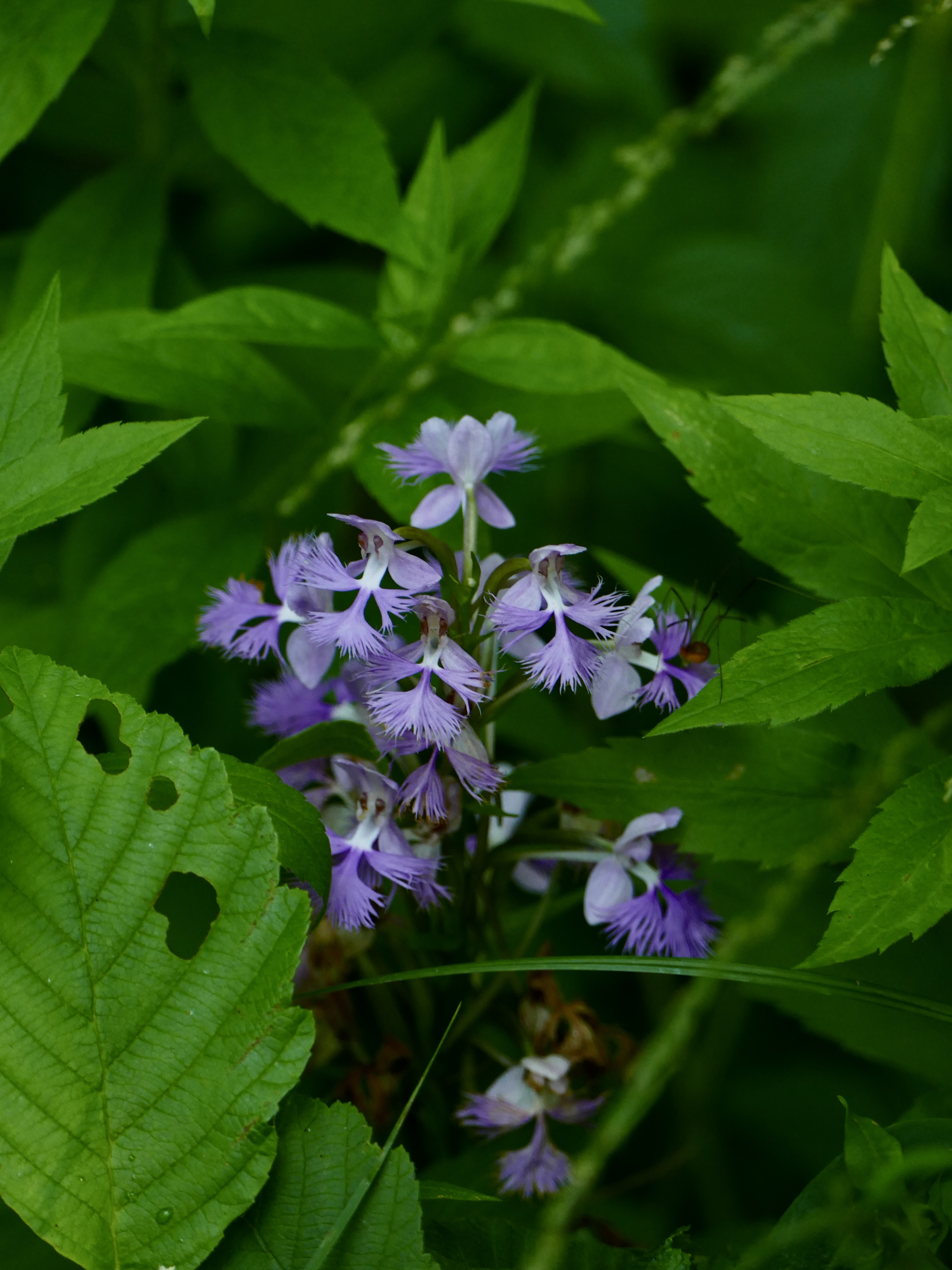
It is a new era with the flowers when the small purple fringed orchis as now is found in shady swamps standing along the brooks. (It appears to be alone of its class— Not to be overlooked it has so much flower though not so high colored as the Arethusa).

August 1, 1856

in Thoreau’s Journal:

Since July 30th, inclusive, we have had perfect dog-days without interruption. The earth has suddenly [become] invested with a thick musty mist. The sky has become a mere fungus. A thick blue musty veil of mist is drawn before the sun. The sun has not been visible, except for a moment or two once or twice a day, all this time, nor the stars by night. Moisture reigns. You can not dry a napkin at the window, nor press flowers without their mildewing. You imbibe so much moisture from the atmosphere that you are not so thirsty, nor is bathing so grateful as a week ago. The burning heat is tempered, but as you lose sight of the sky and imbibe the musty, misty air, you exist as a vegetable, a fungus. Unfortunate those who have not got their hay. I see them wading in overflowed meadows and pitching the black and mouldy swaths about in vain that they may dry. In the meanwhile, vegetation is becoming rank, vines of all kinds are rampant. Squashes and melons are said to grow a foot in a night. But weeds grow as fast. The corn unrolls. Berries abound and attain their full size. Once or twice in the day there is an imperfect gleam of yellow sunlight for a moment through some thinner part of the veil, reminding us that we have not seen the sun so long, but no blue sky is revealed. The earth is completely invested with cloud-like wreaths of vapor (yet fear no rain and need no veil), beneath which flies buzz hollowly and torment, and mosquitoes hum and sting as if they were born of such an air. The drooping spirits of mosquitoes revive, and they whet their stings anew. Legions of buzzing flies blacken the furniture. (For a week at least have heard that snapping sound under pads.) We have a dense fog every night, which lifts itself but a short distance during the day. At sundown I see it curling up from the river and meadows. However, I love this moisture in its season. I believe it is good to breathe, wholesome as a vapor bath. Toadstools shoot up in the yards and paths.