September 30, 1852

in Thoreau’s Journal:

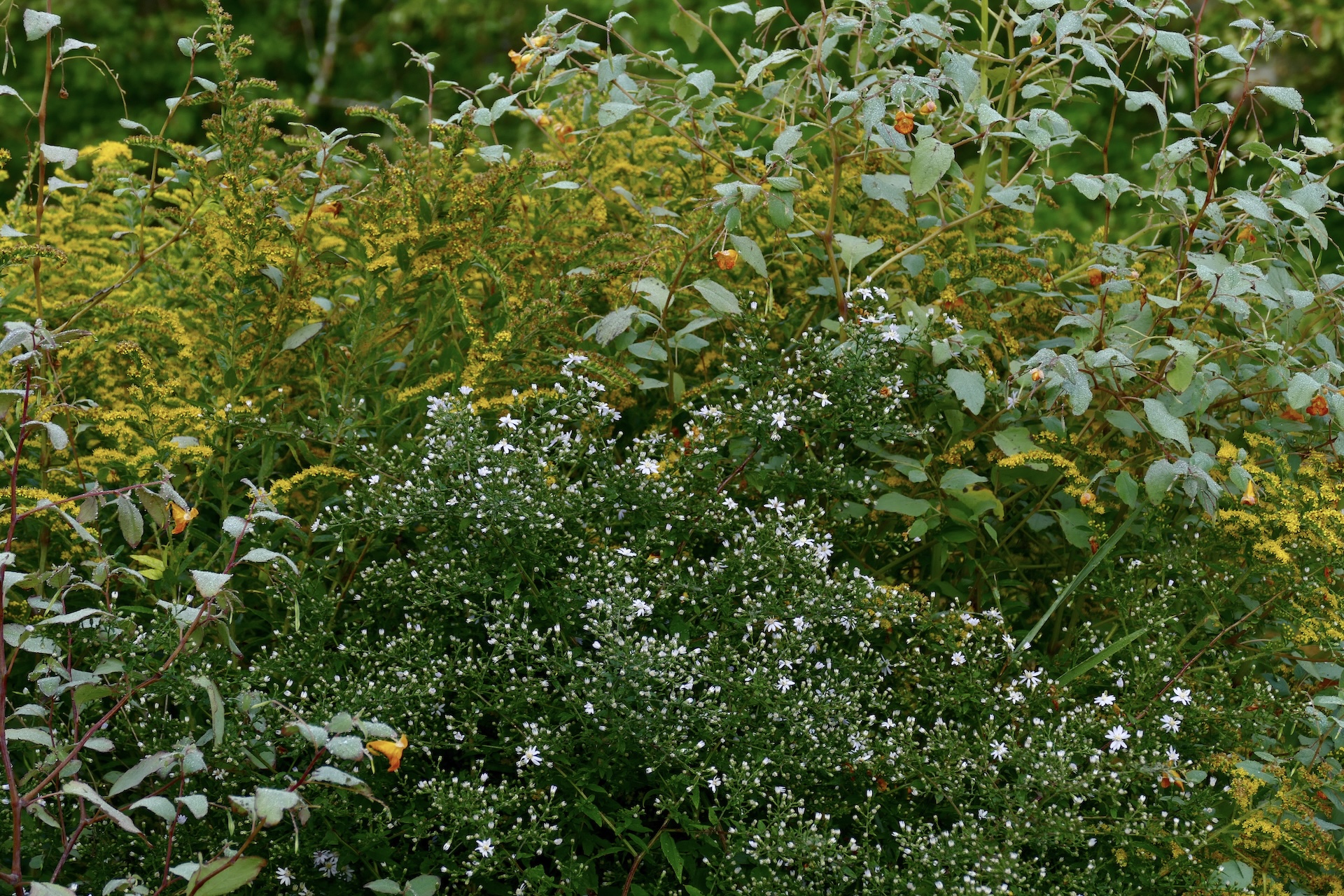
The rambler in the most remote woods and pastures little thinks that the bees which are humming so industriously on the rare wild flowers he is plucking for his herbarium, in some out-of-the-way nook, are, like himself, ramblers from the village, perhaps from his own yard, come to get their honey for his hives. All the honey-bees we saw were on the blue-stemmed goldenrod (Solidago caesia), which is late, lasts long, which emitted a sweet agreeable fragrance, not on the asters. I felt the richer for this experience. It taught me that even the insects in my path are not loafers, but have their special errands. Not merely and vaguely in this world, but in this hour, each is about its business….

It is not in vain that the flowers bloom, and bloom late too, in favored spots. To us they are a culture and a luxury, but to bees meat and drink. The tiny bee which we thought lived far away there in a flower-bell in that remote vale, he is a great voyager, and anon he rises over the top of the wood and sets sail with his sweet cargo straight for his distant haven. How well they know the woods and fields and haunt of every flower! The flowers, perchance, are widely dispersed, because the sweet which they collect from the atmosphere is rare but also widely dispersed, and the bees are enabled to travel far to find it. A precious burthen, like their color and fragrance, a crop which the heavens bear and deposit on the earth.
September 29, 1840

in Thoreau’s Journal:

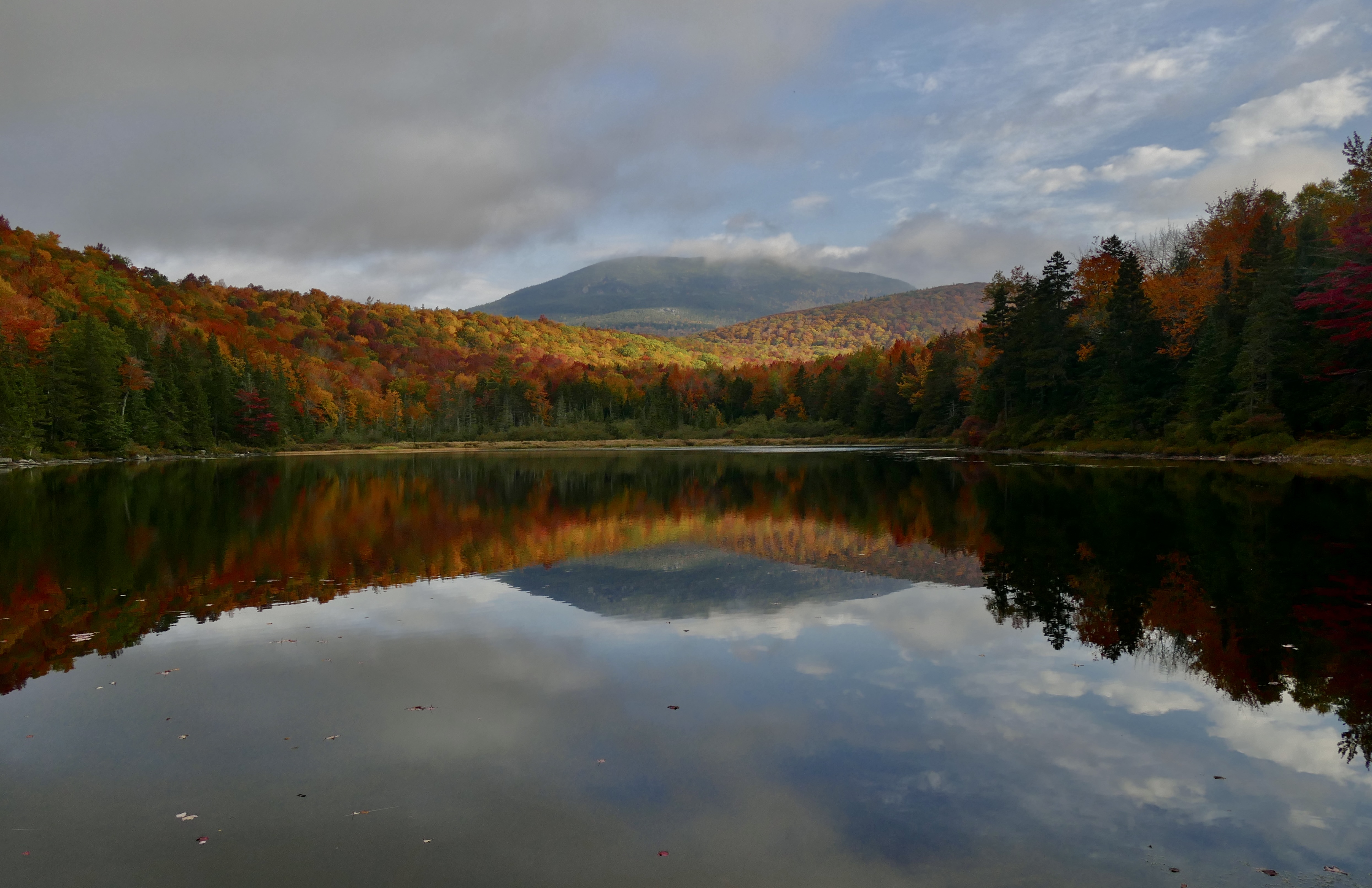
All fair action in man is the product of enthusiasm –– There is enthusiasm in the sunset. The shell on the shore takes new layers and new tints from year to year with such rapture as the bard writes his poem. There is a thrill in the spring, when it buds and blossoms––there is happiness in the summer––a contentedness in the autumn––a patient repose in the winter. 

Nature does nothing in the prose mood, though sometimes grimly with poetic fury, as in earthquakes &c and at other times humorously.

September 28, 1854

in Thoreau’s Journal:

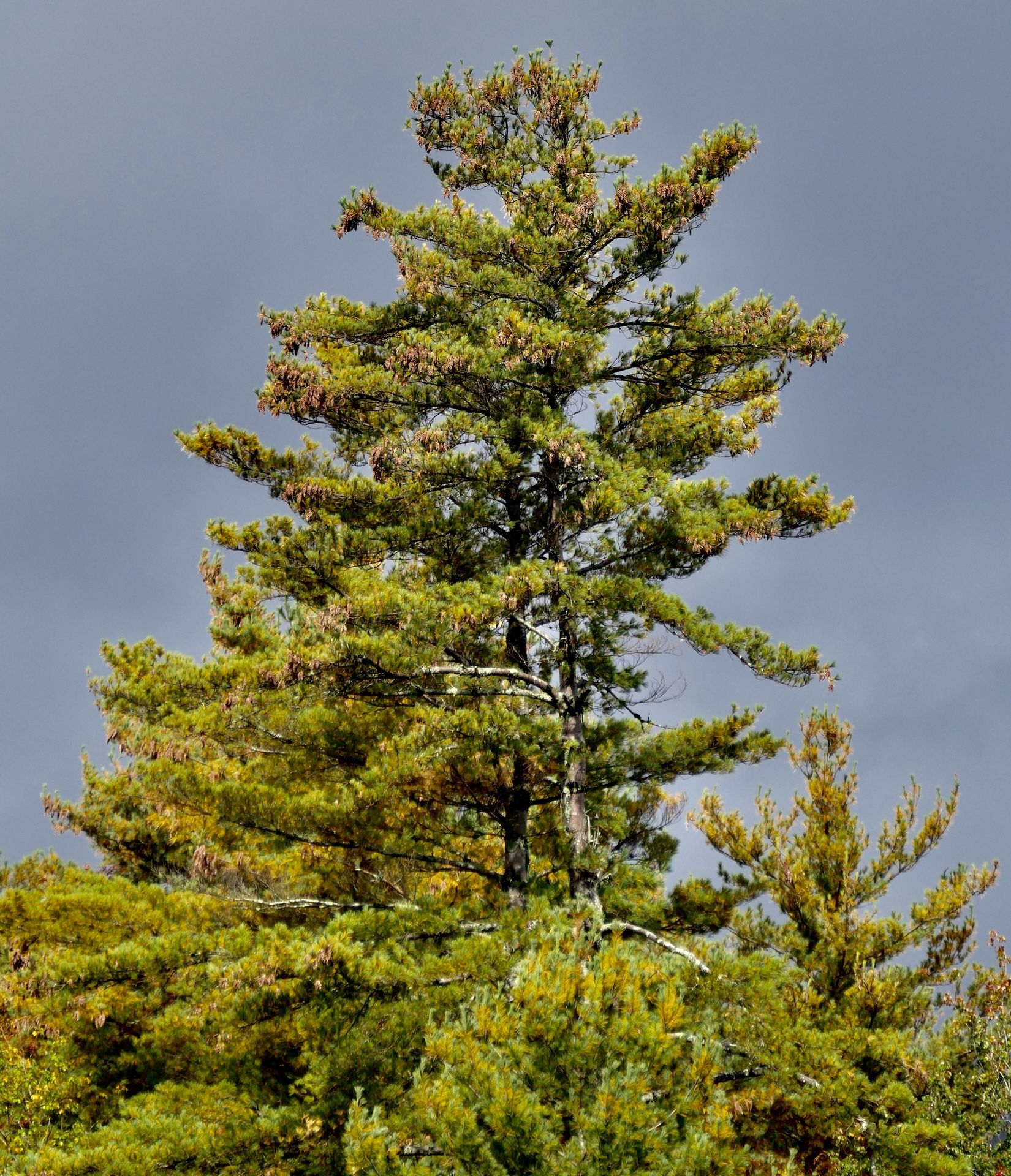
R. W. E.’s pines are parti-colored, preparing to fall, some of them.

The sassafras trees on the hill are now wholly a bright orange scarlet as seen from my window, and the small ones elsewhere are also changed. Sweet-briar hips ripe.

September 27, 1857

in Thoreau’s Journal:

A small red maple has grown, perchance, far away on some moist hillside, a mile from any road, unobserved. It has faithfully discharged the duties of a maple there, all winter and summer, neglected none of its economies, added to its stature in the virtue which belongs to a maple, by a steady growth all summer, and is nearer heaven than it was in the spring, never having gone gadding abroad; and now, in this month of September, when men are turned travellers, hastening to the seaside, or the mountains, or the lakes — in this month of travelling — this modest maple, having ripened its seeds, still without budging an inch, travels on its reputation, runs up its scarlet flag on that hillside, to show that it has finished its summer’s work before all other trees, and withdraws from the contest.

Thus that modest worth which no scrutiny could have detected when it was most industrious, is, by the very tint of its maturity, by its very blushes, revealed at last to the careless and distant observer. It rejoices in its existence; its reflections are unalloyed. It is the day of thanksgiving with it. At last, its labors for the year being fully consummated and every leaf ripened to its full, it flashes out conspicuous to the eye of the most casual observer, with all the virtue and beauty of a maple — Acer rubrum. In its hue is no regret nor pining. Its leaves have been asking their parent from time to time in a whisper, “When shall we redden?” It has faithfully husbanded its sap, and builded without babbling nearer and nearer to heaven. Long since it committed its seeds to the winds and has the satisfaction of knowing perhaps that a thousand little well-behaved maples are already established in business somewhere. It deserves well of Mapledom. It has afforded a shelter to the wandering bird. Its autumnal tint shows how it has spent its summer; it is the hue of its virtue.

September 26, 1854

in Thoreau’s Journal:

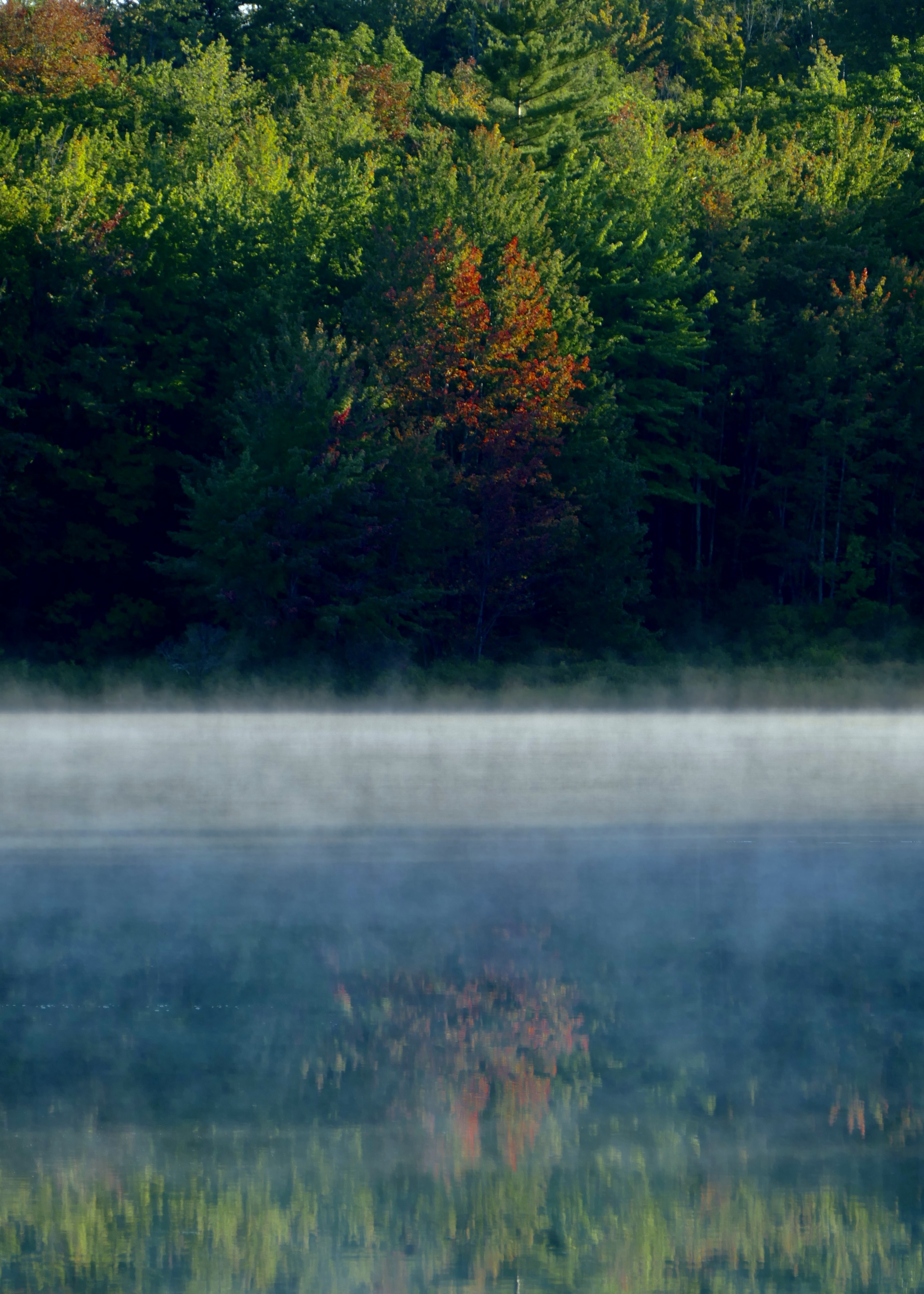
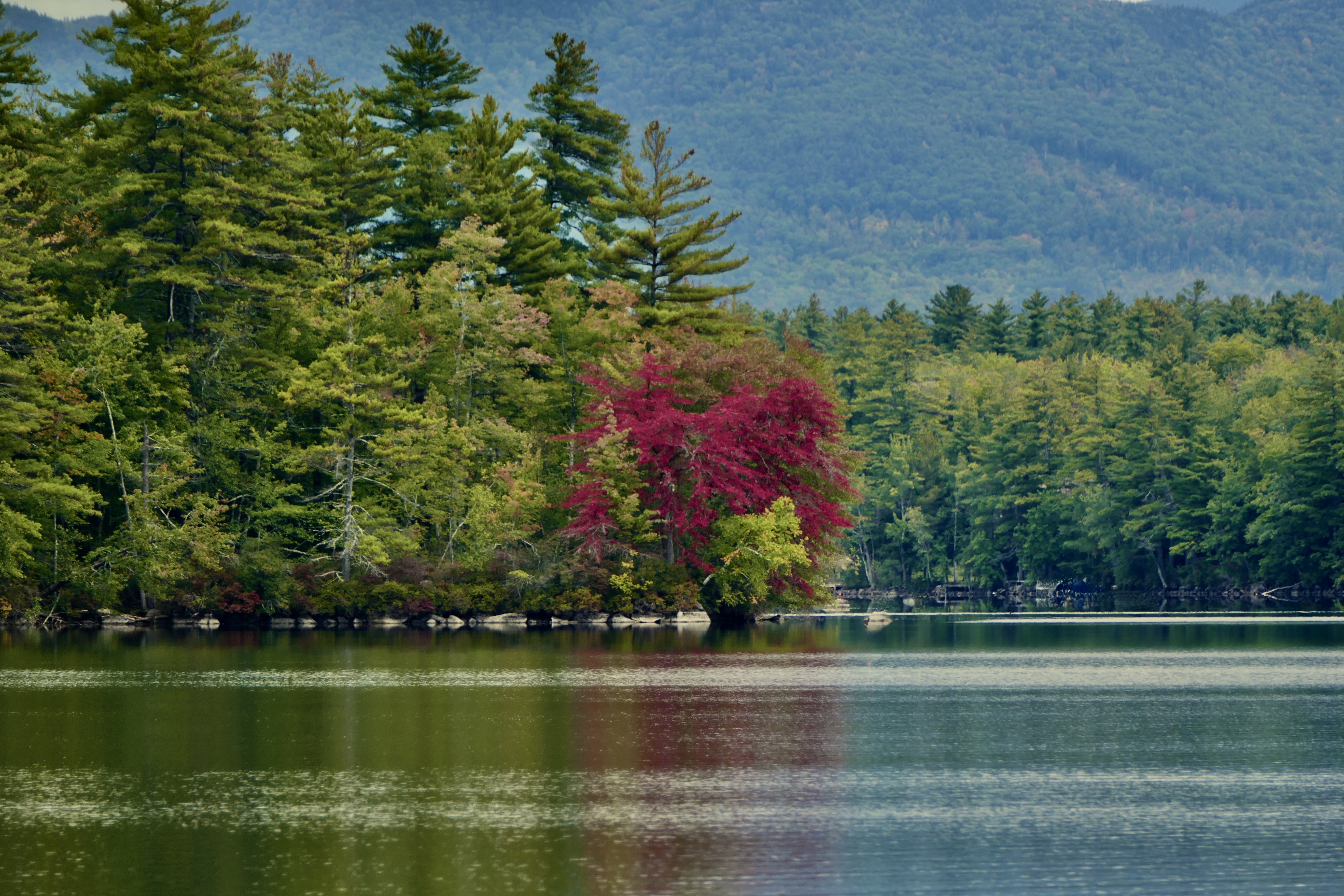
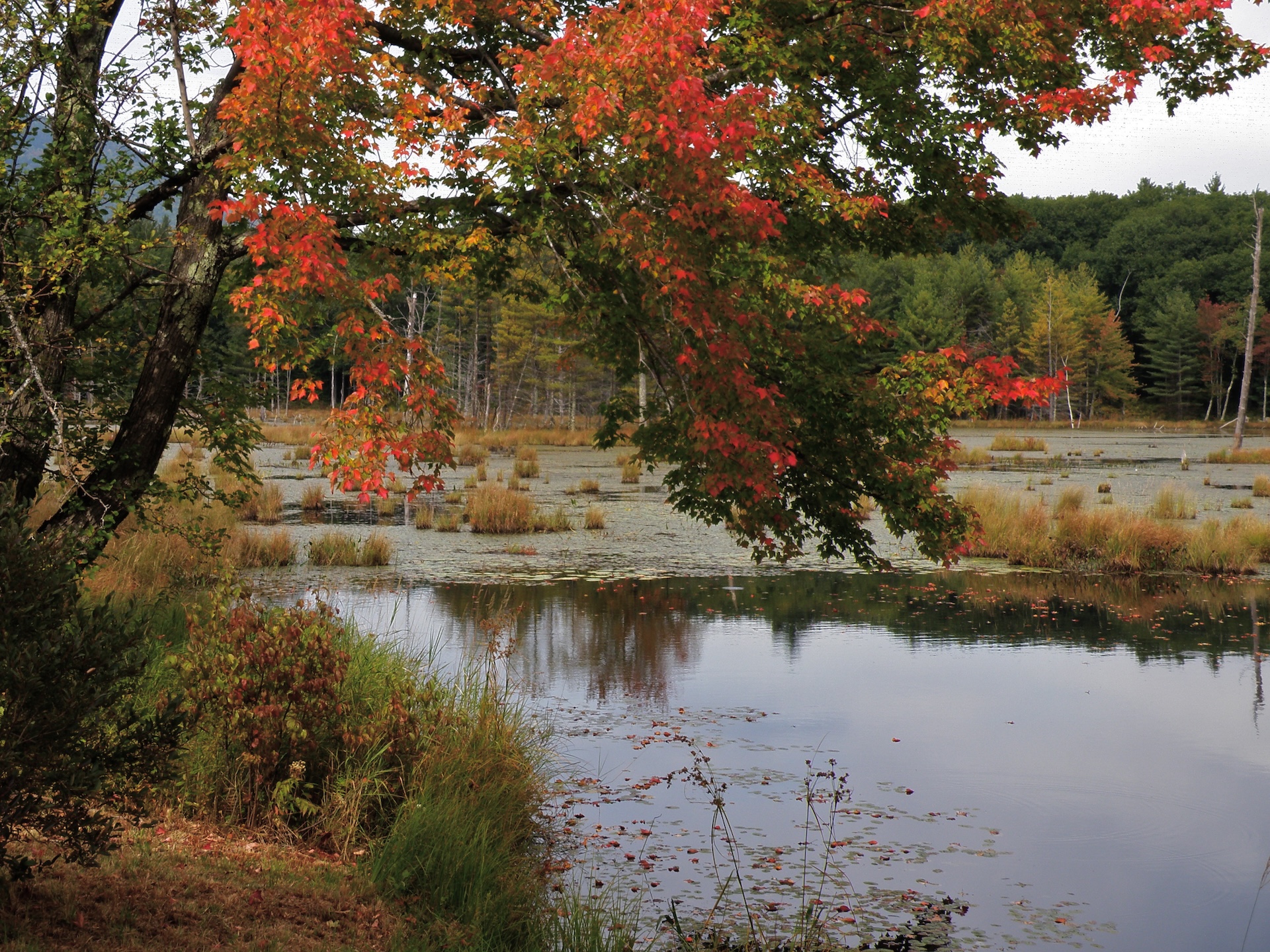
Some single red maples are very splendid now––the whole tree bright scarlet––against the cold green pines––now when very few trees are changed a most remarkable object in the landscape.

Seen a mile off. It is too fair to be believed––especially seen against the light–– Some are a reddish or else greenish yellow––others with red or yellow cheeks–– I suspect that the yellow maples had not scarlet blossoms.

September 25, 1859

in Thoreau’s Journal:

The red maple has fairly begun to blush in some places by the river. I see one, by the canal behind Barrett’s mill, all aglow against the sun. These first trees that change are the most interesting, since they are seen against others still freshly green — such brilliant red on green. I go half a mile out of my way to examine such a red banner. A single tree becomes the crowning beauty of some meadowy vale and attracts the attention of the traveller from afar. At the eleventh hour of the year, some tree which has stood mute and inglorious in some distant vale thus proclaims its character as effectually as if it stood by the highway-side, and it leads our thoughts away from the dusty road into those brave solitudes which it inhabits. The whole tree, thus ripening in advance of its fellows, attains a singular preeminence. I am thrilled at the sight of it, bearing aloft its scarlet standard for its regiment of green-clad foresters around. The forest is the more spirited.

September 24, 1858

in Thoreau’s Journal:

A man must attend to nature closely for many years to know when, as well as where, to look for his objects, since he must always anticipate her a little….

I would know when in the year to expect certain thoughts and moods….

September 23, 1838

in Thoreau’s Journal:

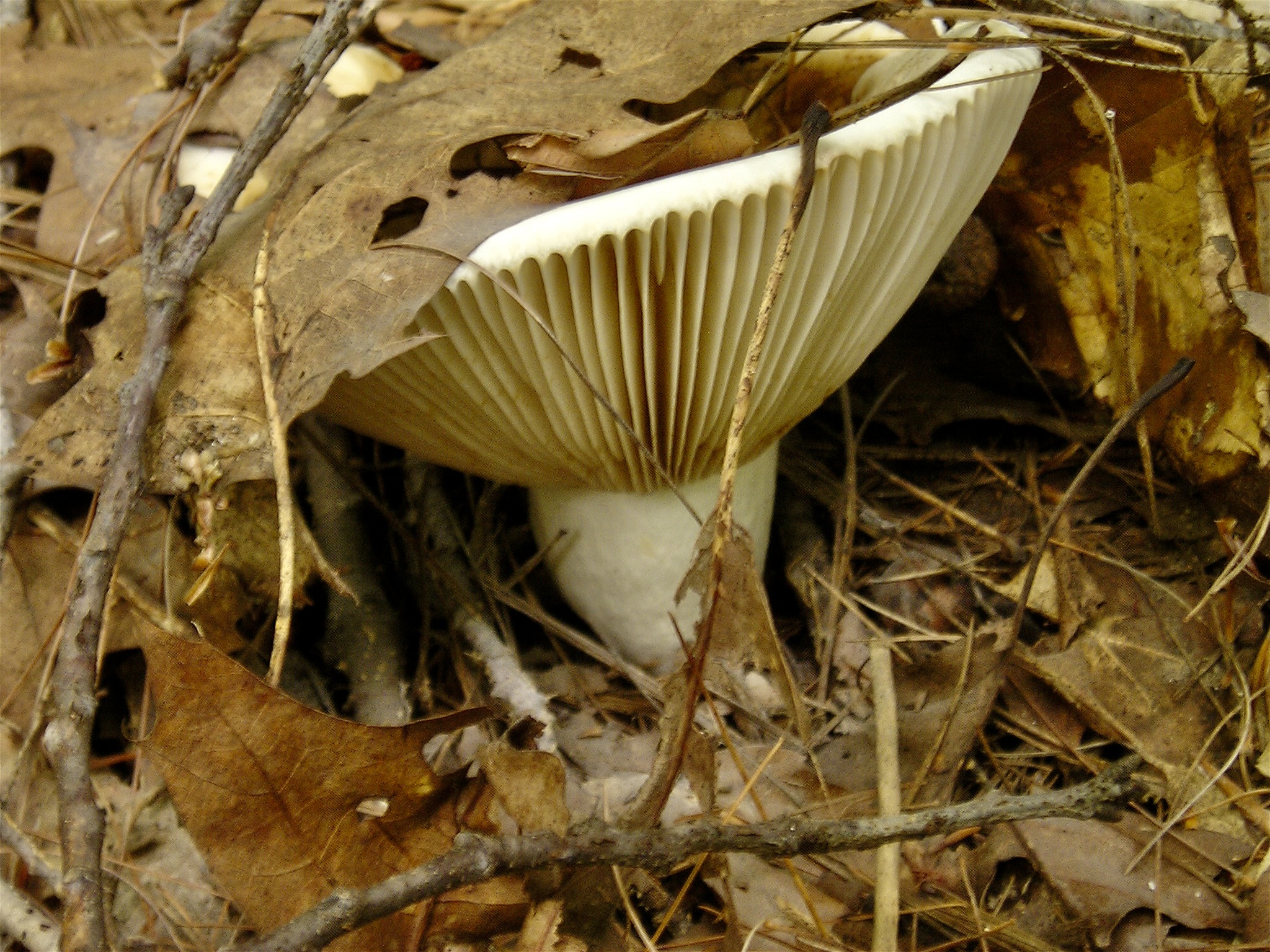
If we will be quiet and ready enough, we shall find compensation in every disappointment. If a shower drives us for shelter to the maple grove or the trailing branches of the pine, yet in their recesses with microscopic eye we discover some new wonder in the bark, or the leaves, or the fungi at our feet.  We are interested by some new resource of insect economy, or, the chickadee is more than usually familiar.

We can study Nature’s nooks and corners then.

September 22, 1852

in Thoreau’s Journal:

It is a beautifully clear and bracing air with just enough coolness full of the memory of frosty morning––through which all things are distinctly seen & the fields look as smooth as velvet–– The fragrance of grapes is on the breeze & the red drooping barberries sparkle amid the leaves…the forests have a singularly rounded & bowery look clothing the hills quite down to the water’s edge & leaving no shore; the Ponds are like drops of dew amid and partly covering the leaves. So the great globe is luxuriously crowded without margin.

September 21, 1854

in Thoreau’s Journal:

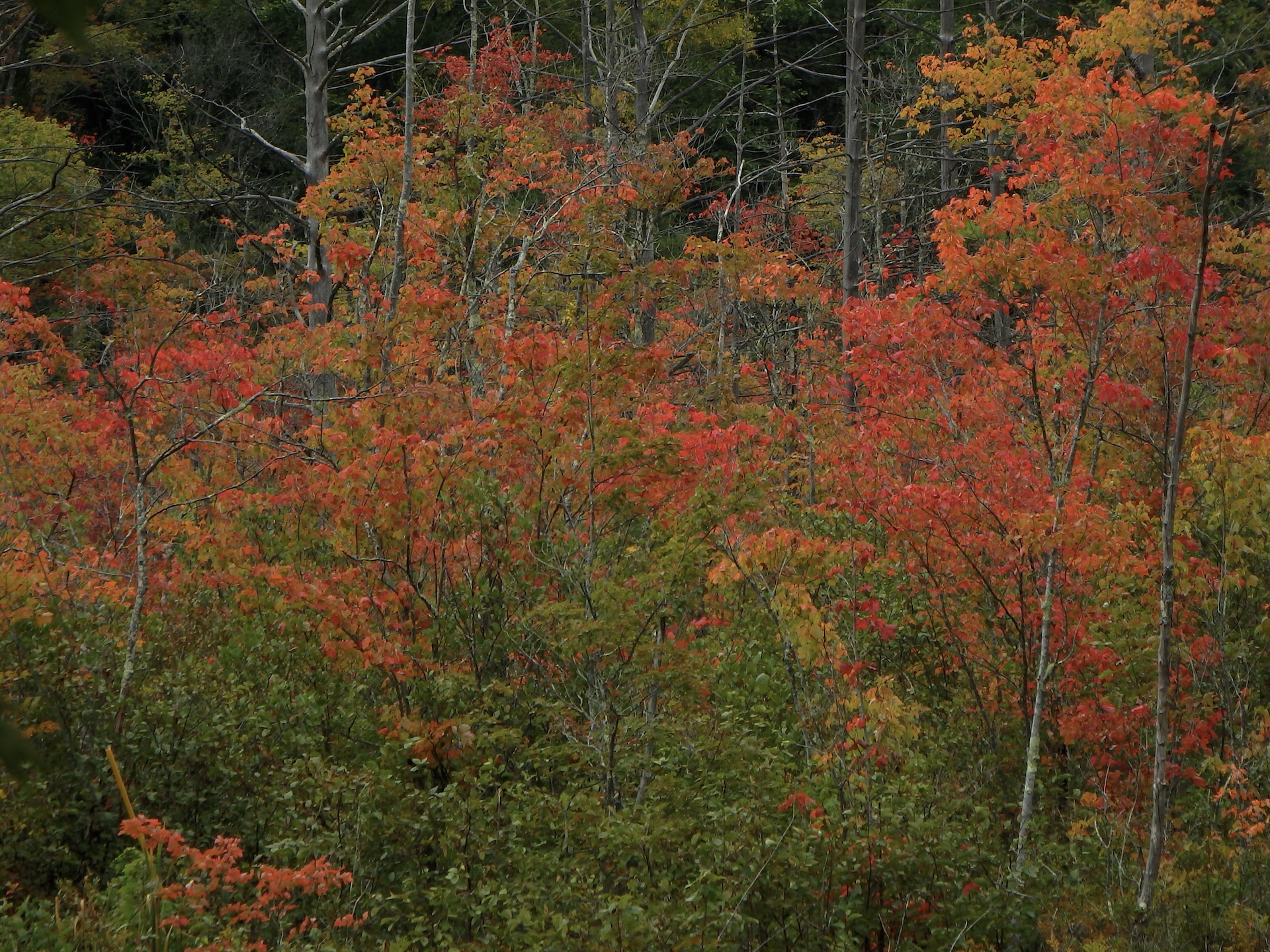
The woods generally may now be said to be fairly beginning to turn (this with the first noticeable frost). The red maples, especially at a distance, begin to light their fires, some turning yellow, and within the woods many oak, e. g. scarlet and black and chestnut, and other leaves begin to show their colors. Those leaves of the young white oaks which have changed dull-salmon, crimson, scarlet (many incline to crimson) are mostly within the tree and partially concealed by the green leaves. They are handsomest looking up from below, the light through them.

September 19, 1852

in Thoreau’s Journal:

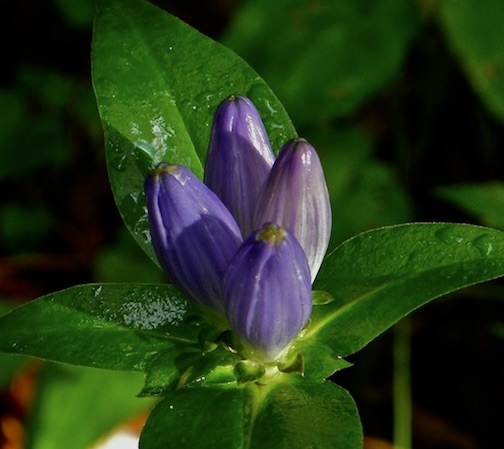
The soapwort gentian cheers & surprises with solid bulbs of blue from the shore—the stale grown purplish. It abounds along the river—after so much has been mown.

September 16, 1852

in Thoreau’s Journal:

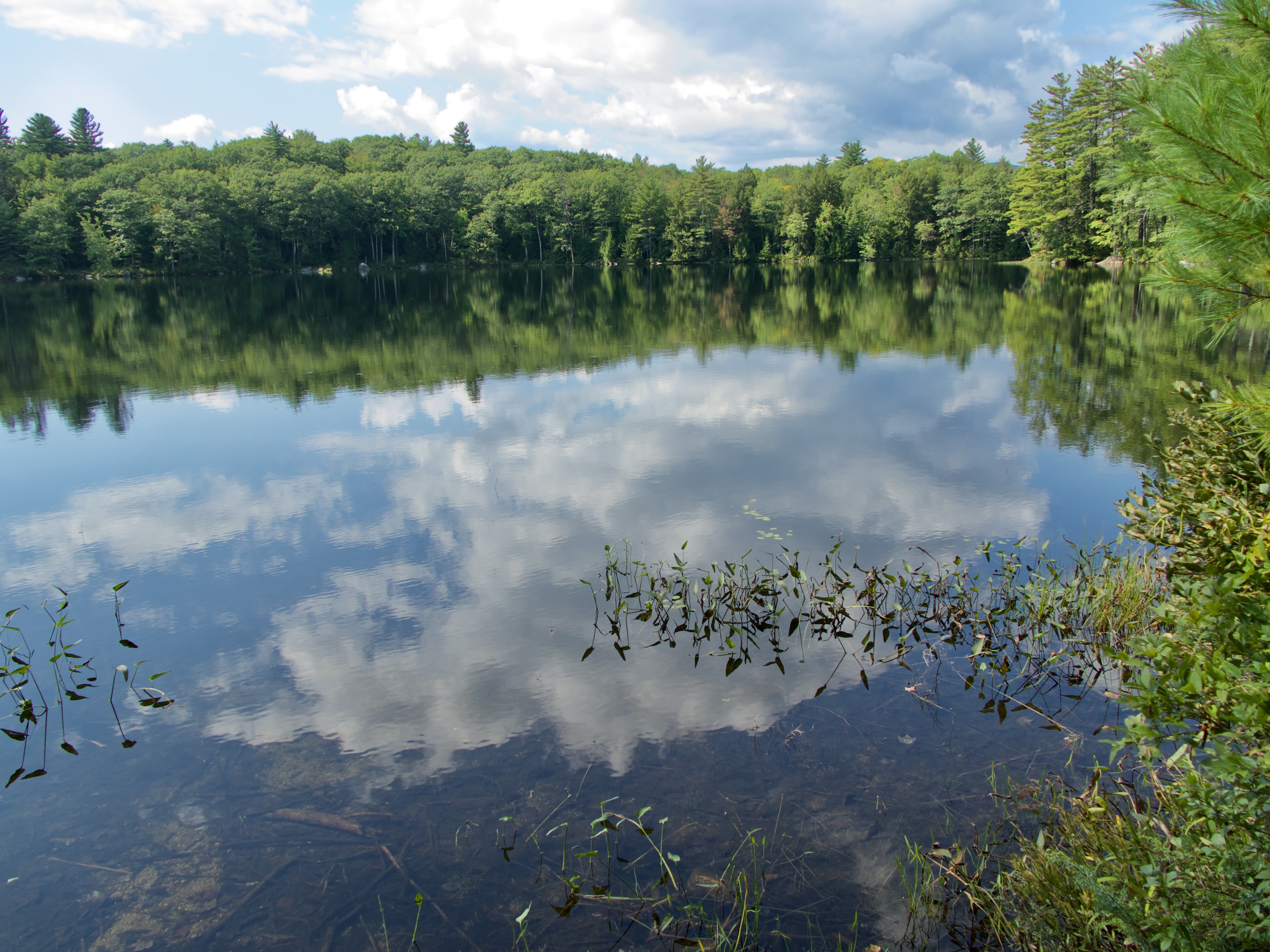
The rippled blue surface of Fair Haven from the Cliffs—with its smooth white border where weeds preserve the surface smooth––a placid sliver plated rim–– 

The pond is like the sky with a border of whitish clouds in the horizon.  

September 14, 1856 

in Thoreau’s Journal:

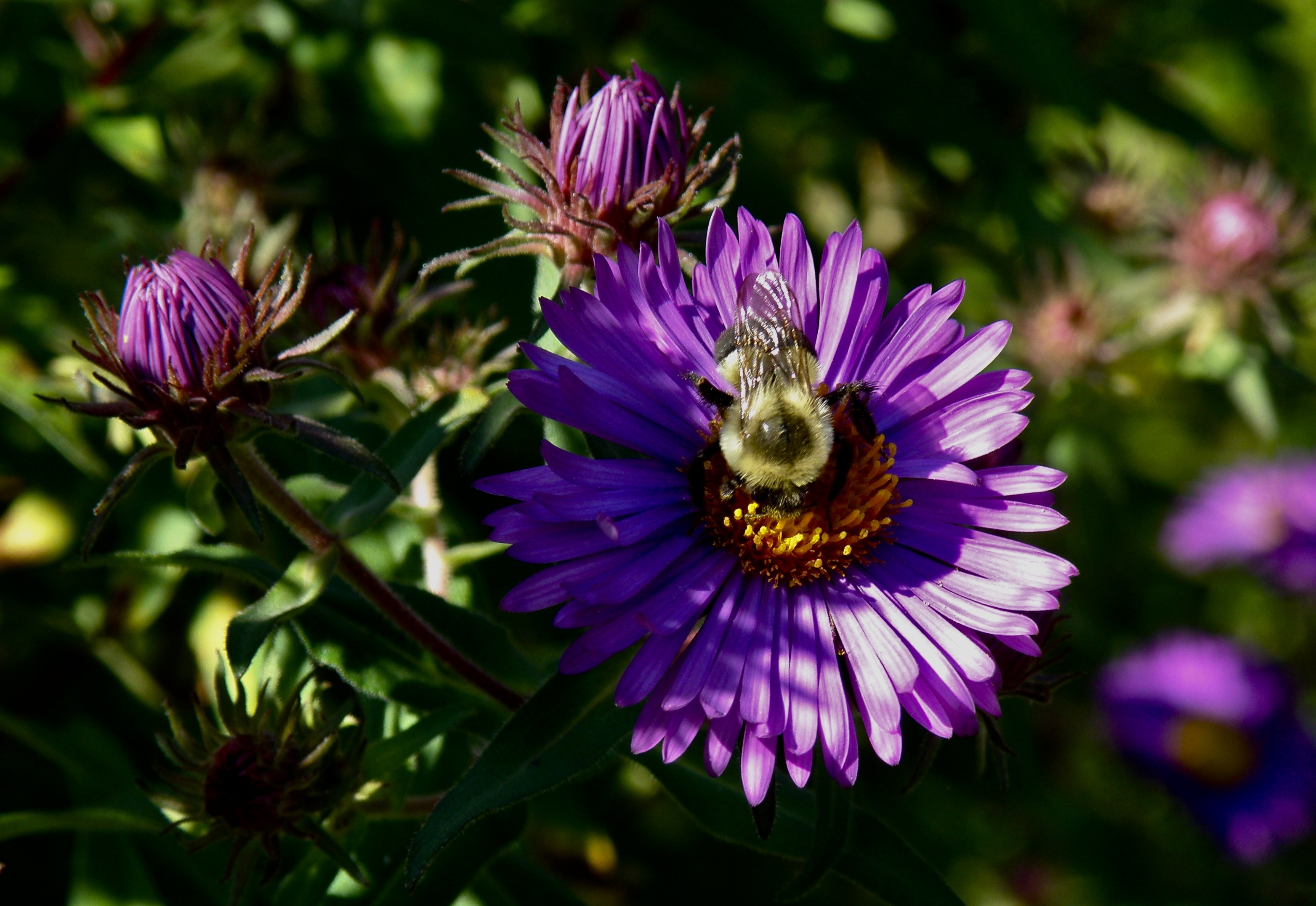
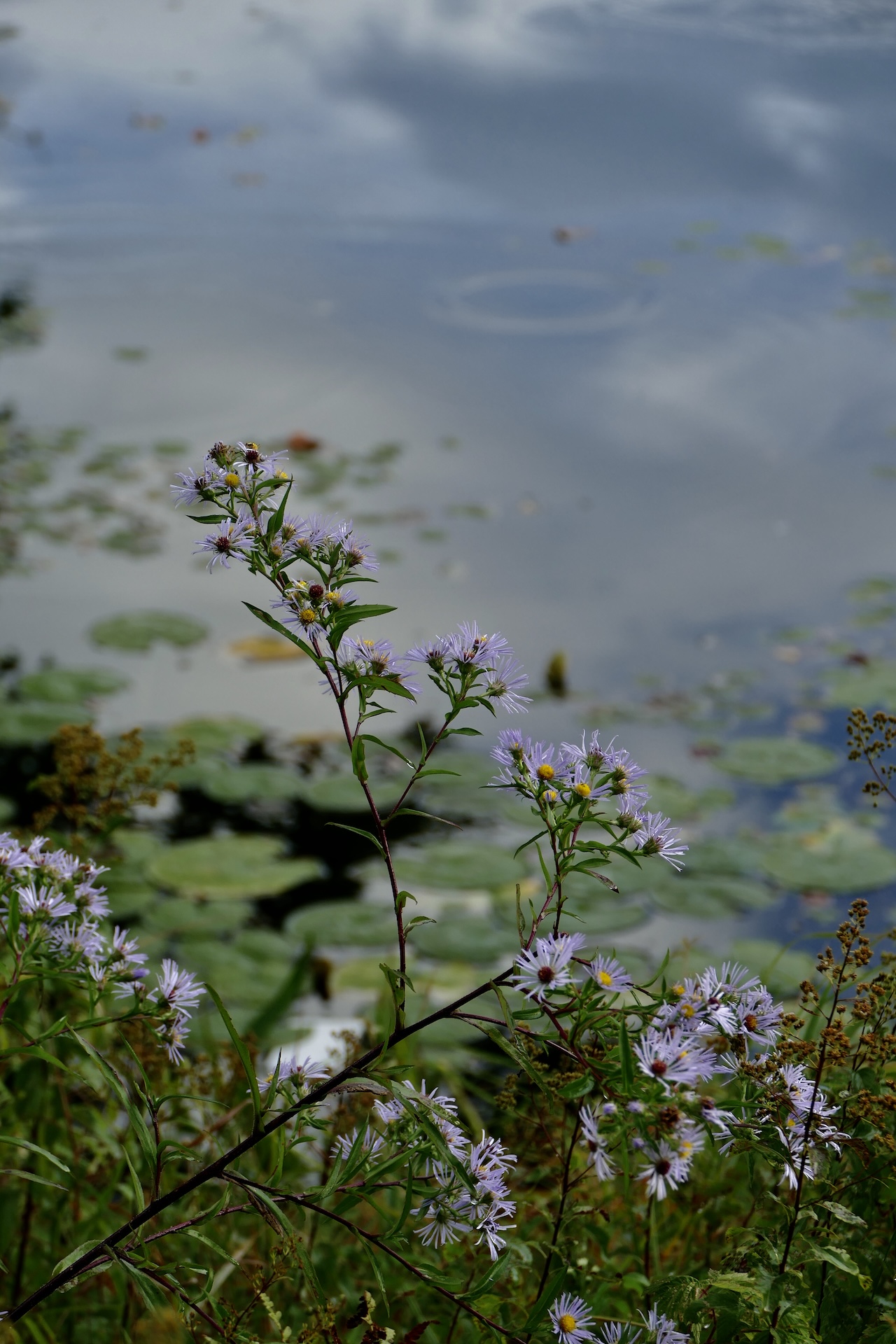
Now for the Aster Tradescanti along low roads, like the Turnpike, swarming with butterflies and bees. Some of them are pink. However unexpected are these later flowers! You thought that Nature had about wound up her affairs. You had seen what she could do this year, and had not noticed a few weeds by the roadside, or mistook them for the remains of summer flowers now hastening to their fall; you thought you knew every twig and leaf by the roadside, and nothing more was to be looked for there; and now, to your surprise, these ditches are crowded with millions of little stars. They suddenly spring up and face you, with their legions on each side the way, as if they had lain in ambuscade there. The flowering of the ditches. Call them travellers’ thoughts, numerous though small, worth a penny at least, which, sown in spring and summer, in the fall spring up unobserved at first, successively dusted and washed, mingled with nettles and beggar-ticks as a highway harvest. A starry meteoric shower, a milky way, in the flowery kingdom in whose aisles we travel. Let the traveller bethink himself, elevate and expand his thoughts somewhat, that his successors may oftener hereafter be cheered by the sight of an Aster Novae-Angliae or spectabilis here and there, to remind him that a poet or philosopher has passed this way. The gardener with all his assiduity does not raise such a variety, nor so many successive crops on the same space, as Nature in the very roadside ditches. There they have stood, begrimed with dust and the wash of the road so long, and made acquaintance with passing sheep and cattle and swine, gathering a trivial experience, and now at last the fall rains have come to wash off some of that dust, and even they exhibit these dense flowery panicles as the result of all that experience, as pure for an hour as if they grew by some wild brook-side.

September 13, 1852

in Thoreau’s Journal:

Asters various shades of blue and especially the smaller kinds of dense flowering white ones are more than ever—by the roadsides….The golden glow of autumn concentrated—more golden than the sun….

The earth wears different colors or liveries at different seasons.  If I come by at this season a golden blaze will salute me here from a thousand suns.  How earnestly & rapidly each creature—each flower is fulfilling its part while its day lasts!  Nature never lost a day—nor a moment — As the planet in its orbit & around its axis—so do the seasons— —so does time revolve with a rapidity inconceivable.  

September 11, 1853

in Thoreau’s Journal:

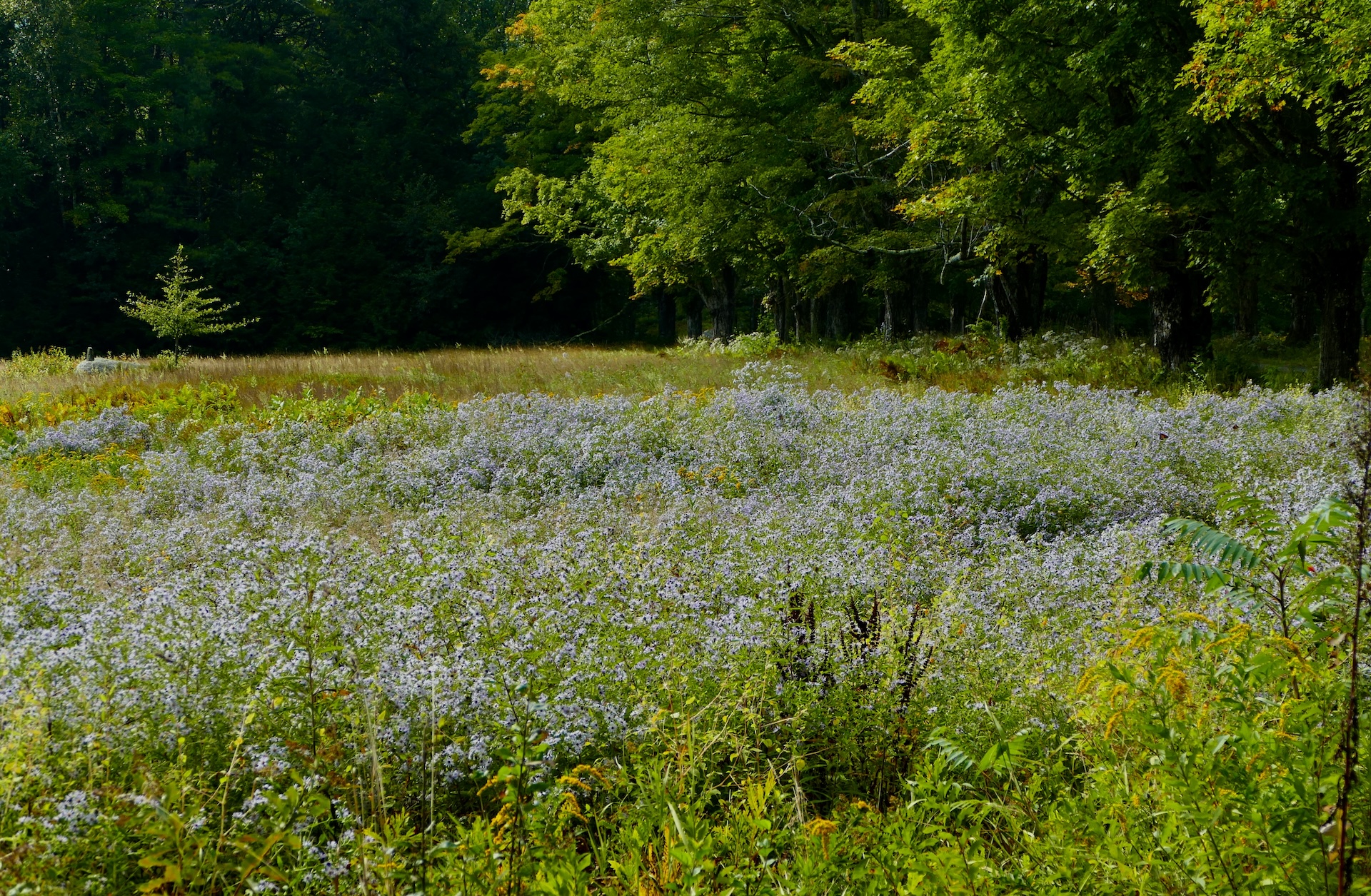
The conspicuous & handsome bluish masses of A puniceus erect or fallen stretch in endless rows along the brook — often as high as your head— Sometimes make islands in the meadows.