October 31, 1851

in Thoreau’s Journal:

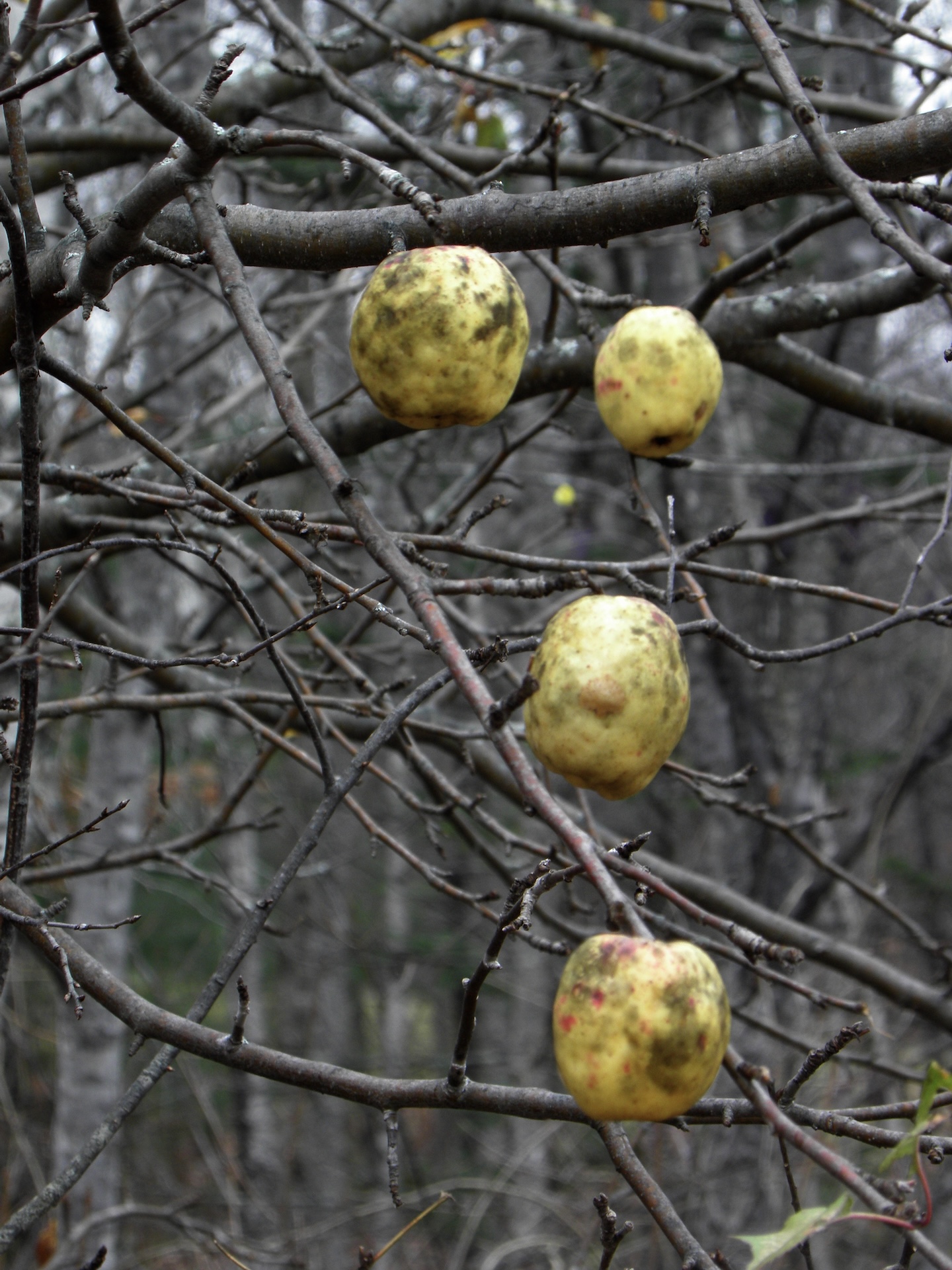
The wild apples are now getting palatable. I find a few left on distant trees—which the farmer thinks it not worth his while to gather—he thinks that he has better in his barrels, but he is mistaken unless he has a walker’s appetite & imagination—neither of which can he have. These apples cannot be too gnurly & rusty & crabbed (to look at)— The gnurliest will have some redeeming traits even to the eyes— You will discover some evening redness dashed or sprinkled—on some protuberance or in some cavity— It is rare that the summer lets an apple go without streaking or spotting it on some part of its sphere—though perchance one side may only seem to betray that it has once fallen in a brick yard—and the other have been bespattered from a roily ink bottle.
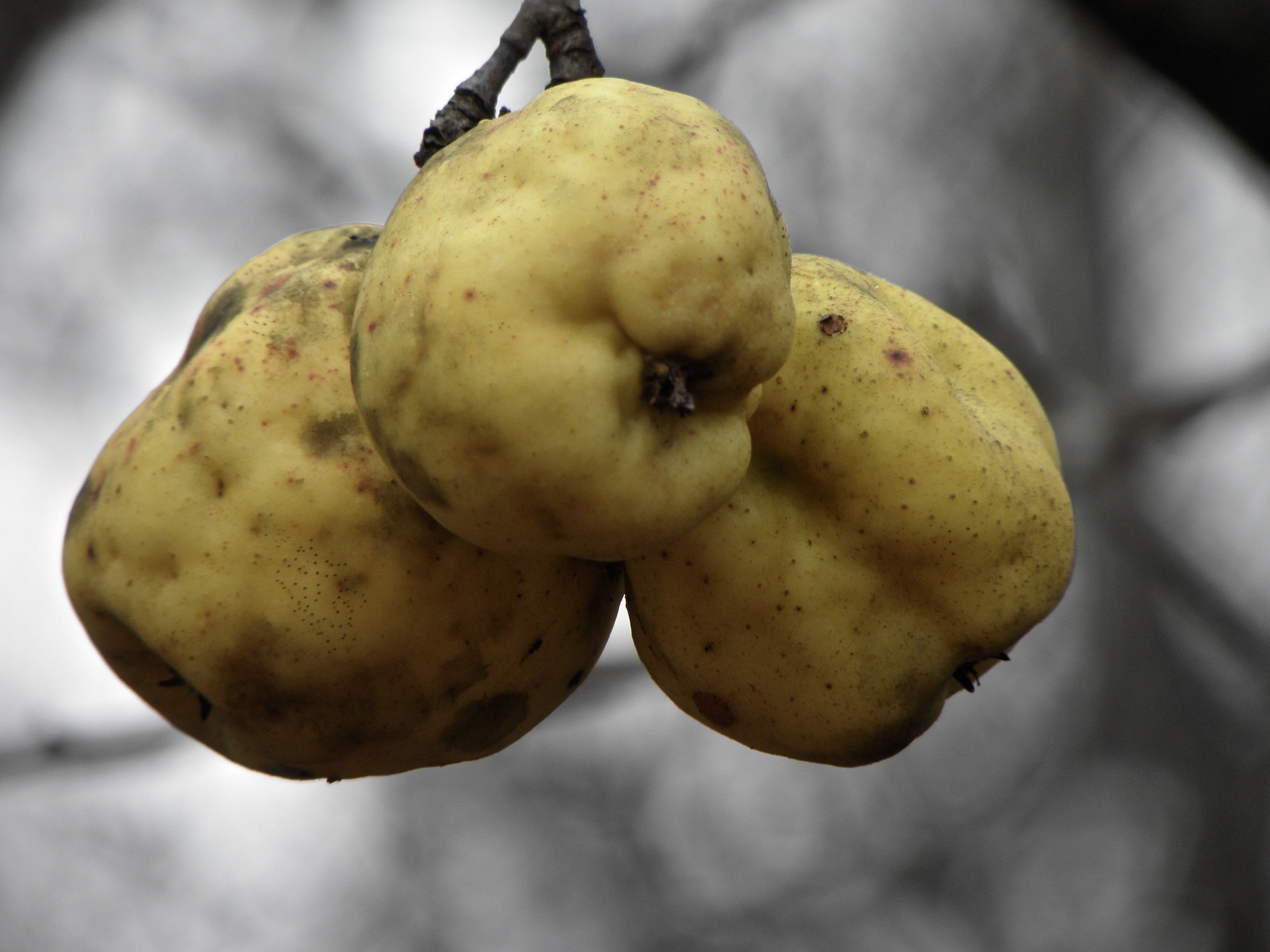
The saunterer’s apple, not even the saunterer can eat in the house.— Some red stains it will have commemorating the mornings & evenings it has witnessed—some dark & rusty blotches in memory of the clouds, & foggy mildewy days that have passed over it—and a spacious field of green reflecting the general face of nature—green even as the fields— Or yellow its ground if it has a sunny flavor—yellow as the harvests—or russet as the hills. The noblest of fruits is the apple. Let the most beautiful or swiftest have it.
October 30, 1853

in Thoreau’s Journal:

A white frost this morning, lasting late into the day. This has settled the accounts of many plants which lingered still.

What with the rains & frosts & winds the leaves have fairly fallen now— You may say the fall has ended. Those which still hang on the trees are withered & dry —  I am surprised at the change since last Sunday — Looking at the distant woods I perceive that there is no yellow nor scarlet there now— They are (except the evergreens) a mere dull dry red— The autumnal tints are gone.   What life remains is merely at the foot of the leafstalk.  The woods have for the most part acquired their winter aspect— And coarse rustling light colored withered grasses skirt the river & the woodside— 

October 29, 1855

in Thoreau’s Journal:

When the leaves fall, the whole earth is a cemetery pleasant to walk in. I love to wander and muse over them in their graves, returning to dust again. Here are no lying or vain epitaphs. The scent of their decay is pleasant to me. I buy no lot in the cemetery which my townsmen have just consecrated with a poem and an auction, paying so much for a choice. Here is room enough for me.

After October 28, 1849

in Thoreau’s Journal:

Some afternoons when the lower strata of the atmosphere is filled with a haze like mist the hills in the horizon seem from an eminence are visibly divided into distinct ranges—& it is easy to refer each to its own chain to tops of the chain rising above the mists which fill the vallies.

October 27, 1851

in Thoreau’s Journal:

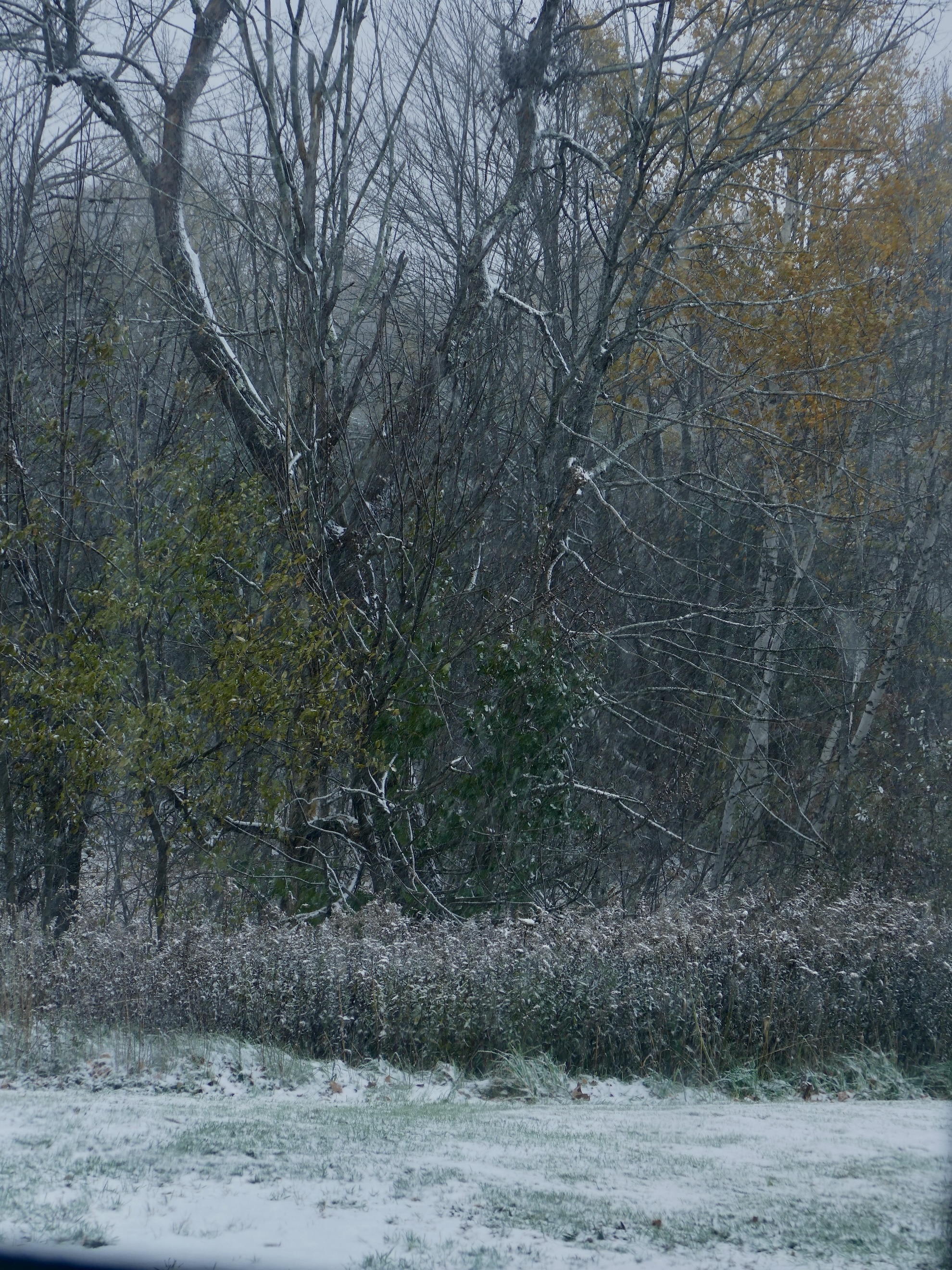
This morning I awoke and found it snowing and the ground covered with snow….

Winter, with its inwardness, is upon us. A man is constrained to sit down, and to think.

October 26, 1860

in Thoreau’s Journal:

This is the season of the fall when the leaves are whirled through the air like flocks of birds,

the season of birch spangles,

when you see afar a few clear-yellow leaves left on the tops of the birches.

October 25, 1852

in Thoreau’s Journal:

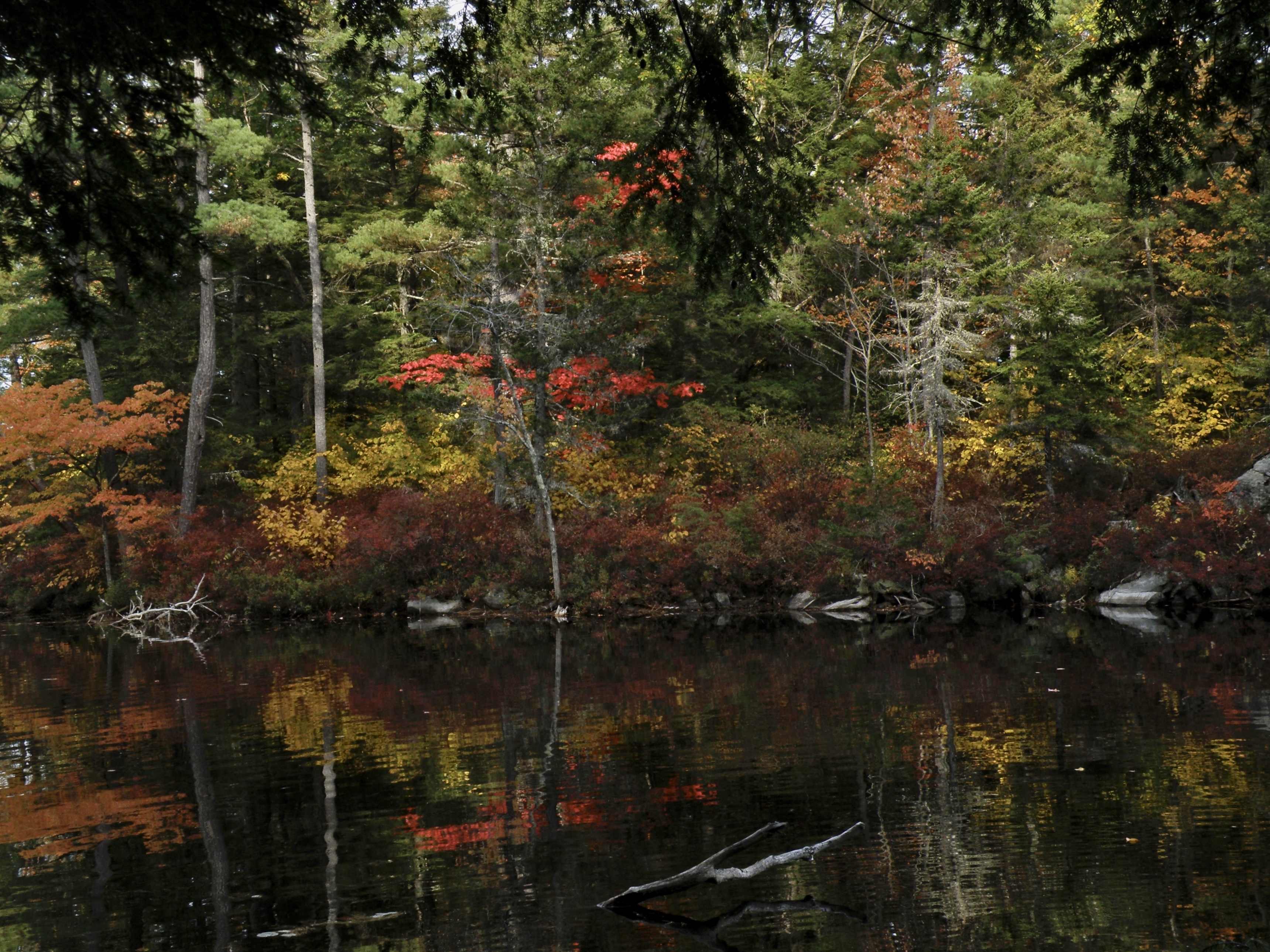
The autumnal tints grow gradually darker & duller— They are doing to a crisp.  But not less rich to my eye  —  And now a hill side near the river exhibits the darkest crispy reds and browns of every hue all agreeably blended—  At the foot next the meadow stands a front rank of smoke like maples bare of leaves—intermixed with yellow birches. Higher up red oaks of various shades of dull red—with yellowish perhaps black oaks intermixed—and walnuts now brown—& near the hill top or rising above the rest perhaps a still yellowed oak….

October 24, 1852

in Thoreau’s Journal:

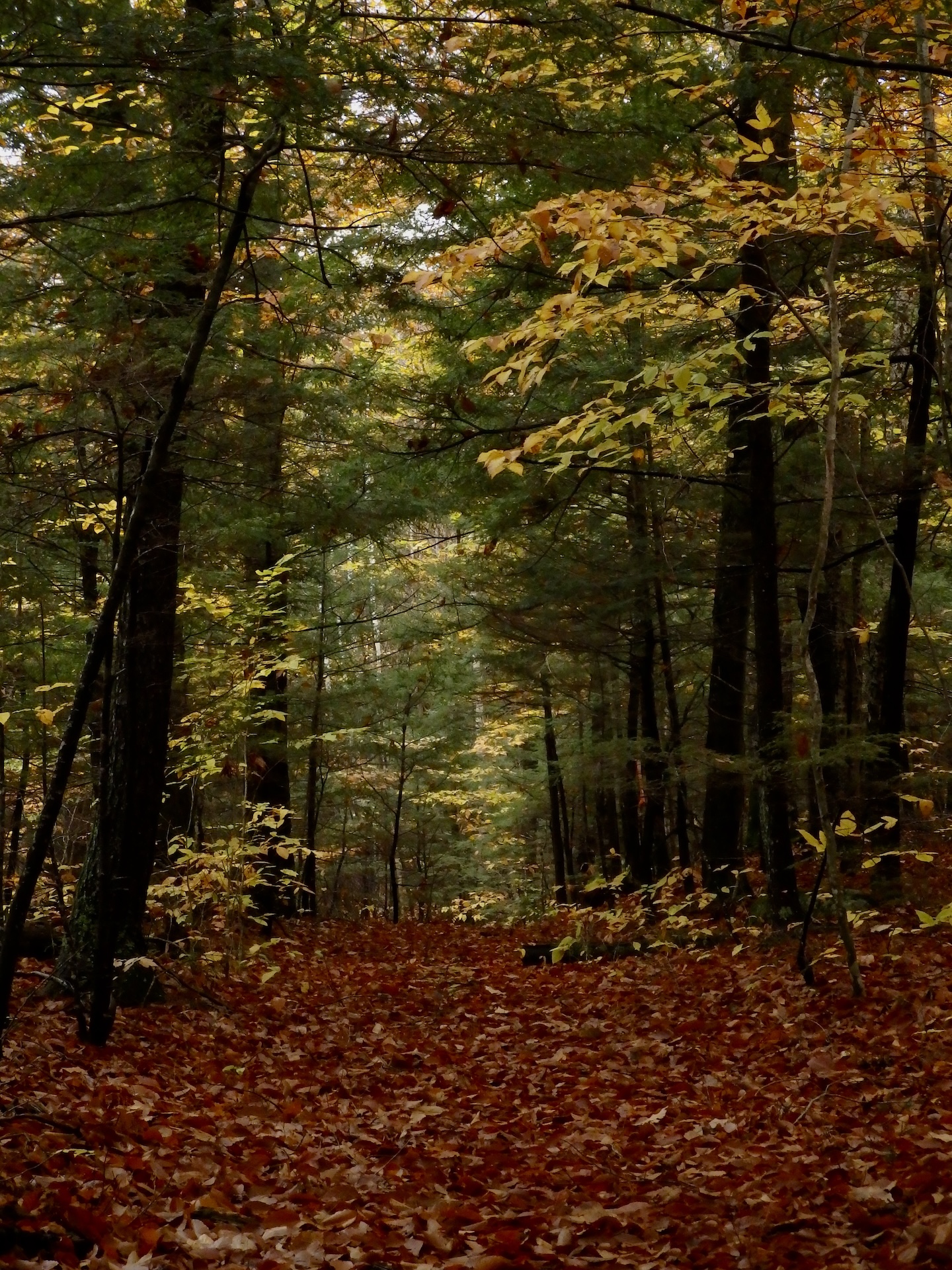
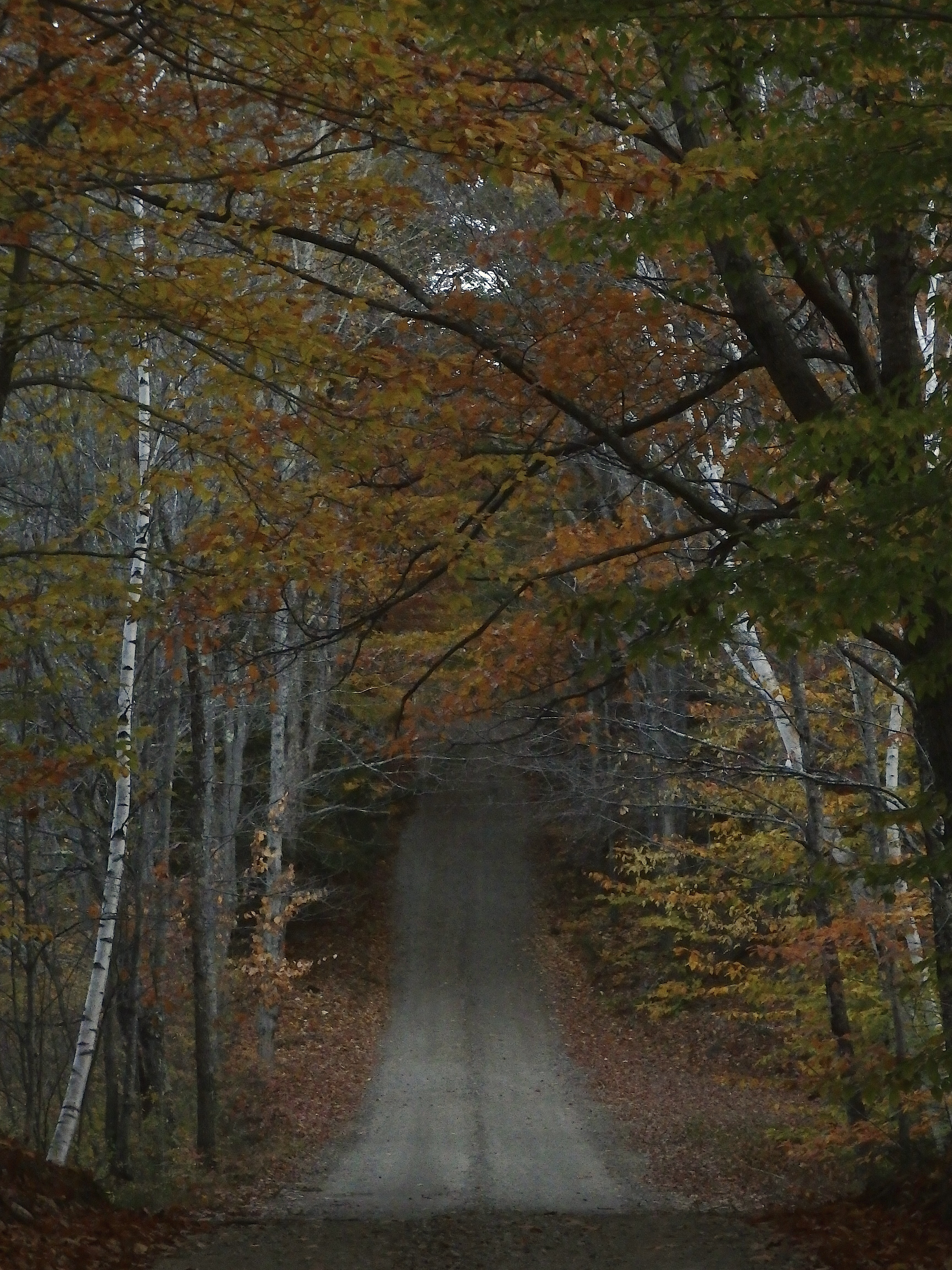
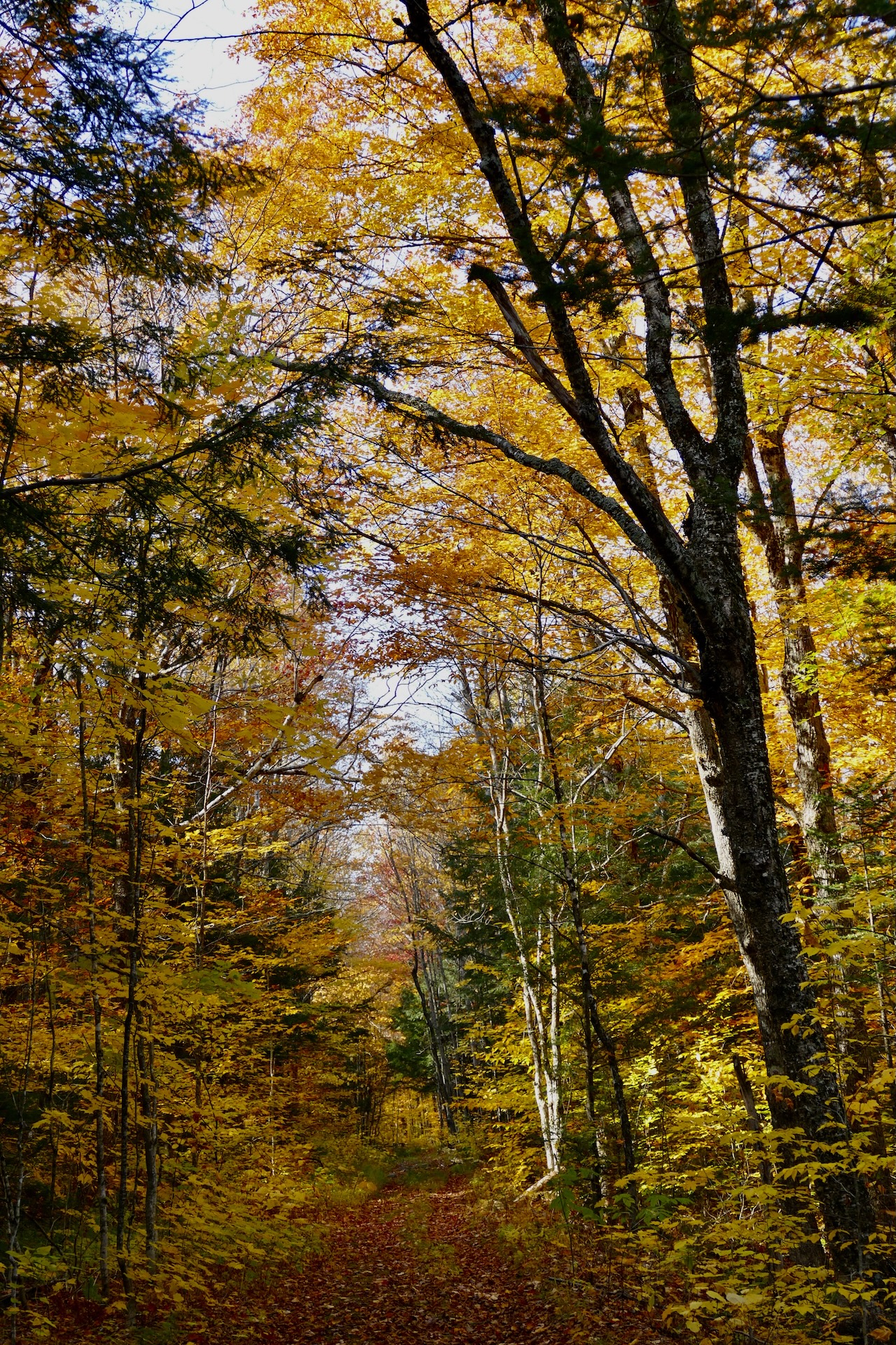
The road through the woods this side the powder mill was very gorgeous with the sun shining endwise through it—& the red tints of the deciduous trees now somewhat imbrowned—mingled with the liquid green of the pines.

October 23, 1852

in Thoreau’s Journal:

October has been the month of Aut. tints. The 1st of the month the tints began to be more general—at which time the frosts began. Though there were scattered brights tints long before—but not till then did the forest begin to be painted.

By the end of the month the leaves will either have fallen or be sered & turned brown by the frosts—for the most part….

October 21, 1858

in Thoreau’s Journal:

Most leaves now on the water. They fell yesterday—white & red maple—swamp white oak—white birch—black and red oak—hemlock (which has begun to fall), hop-hornbeam, &c &c—

October 20, 1858

in Thoreau’s Journal:

Green leaves are doubtless handsome in their season, but now that we behold these ripe ones, we are inclined to think that the former are handsome somewhat as green fruits are, as green apples and melons….At this season each leaf becomes a laboratory in which the fairest and brightest colors are compounded.

October 18, 1857

in Thoreau’s Journal:

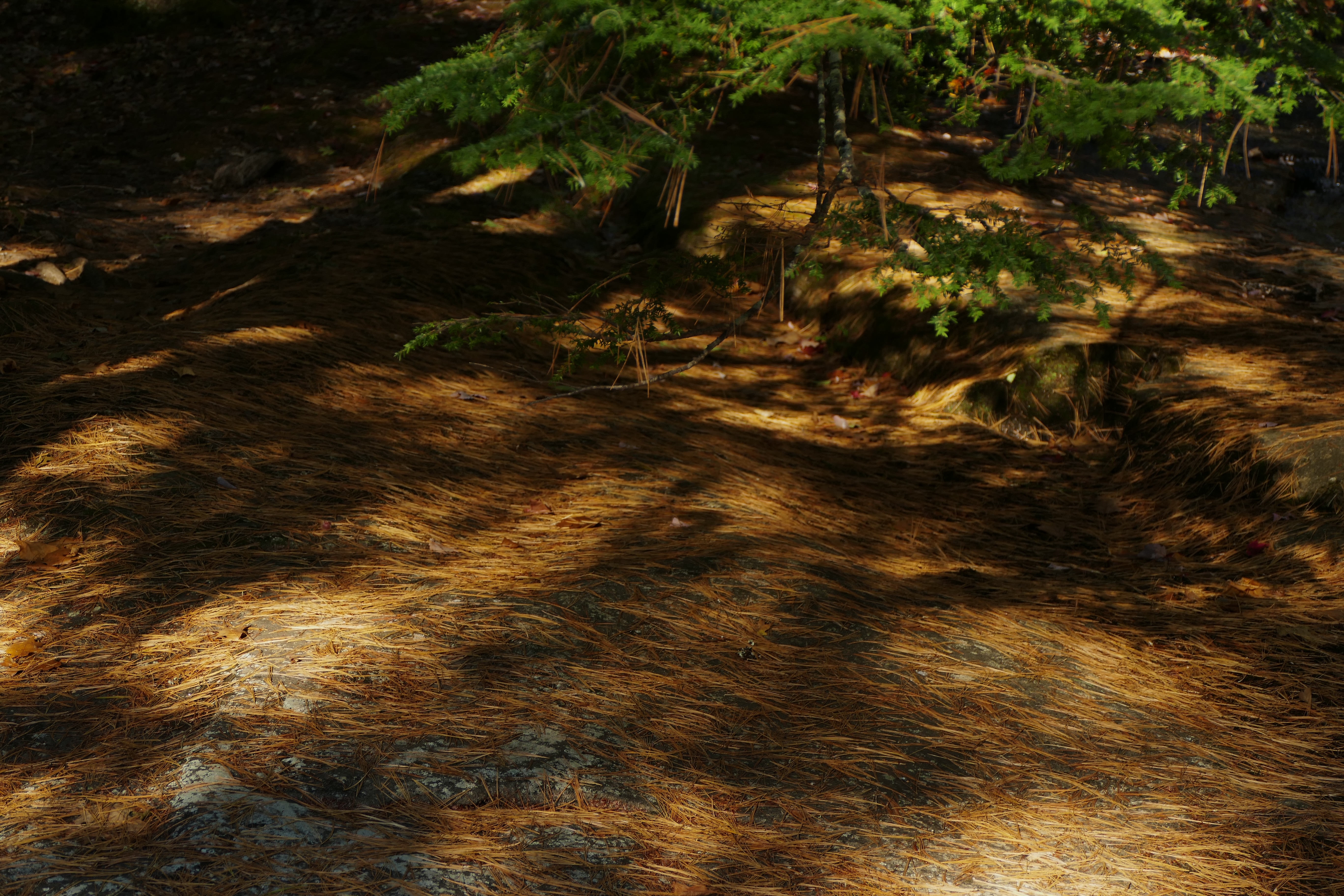
In Lee’s Wood, white pine leaves are now fairly fallen (not pitch pine yet), —a pleasant, soft, but slippery carpet to walk on. They sometimes spread leafy twigs on floors. Would not these be better? Where the pines stand far apart on grassy pasture hillsides, these tawny patches under each tree contrast singularly with the green around. I see them under one such tree completely and evenly covering and concealing the grass, and more than an inch deep, as they lie lightly.

These leaves, like other, broader ones, pass through various hues (or shades) from green to brown, —first yellow, giving the tree that parti-colored look, then pale brown when they fall, then reddish brown after lying on the ground, and then darker and darker brown when decaying.

October 17, 1857

in Thoreau’s Journal:

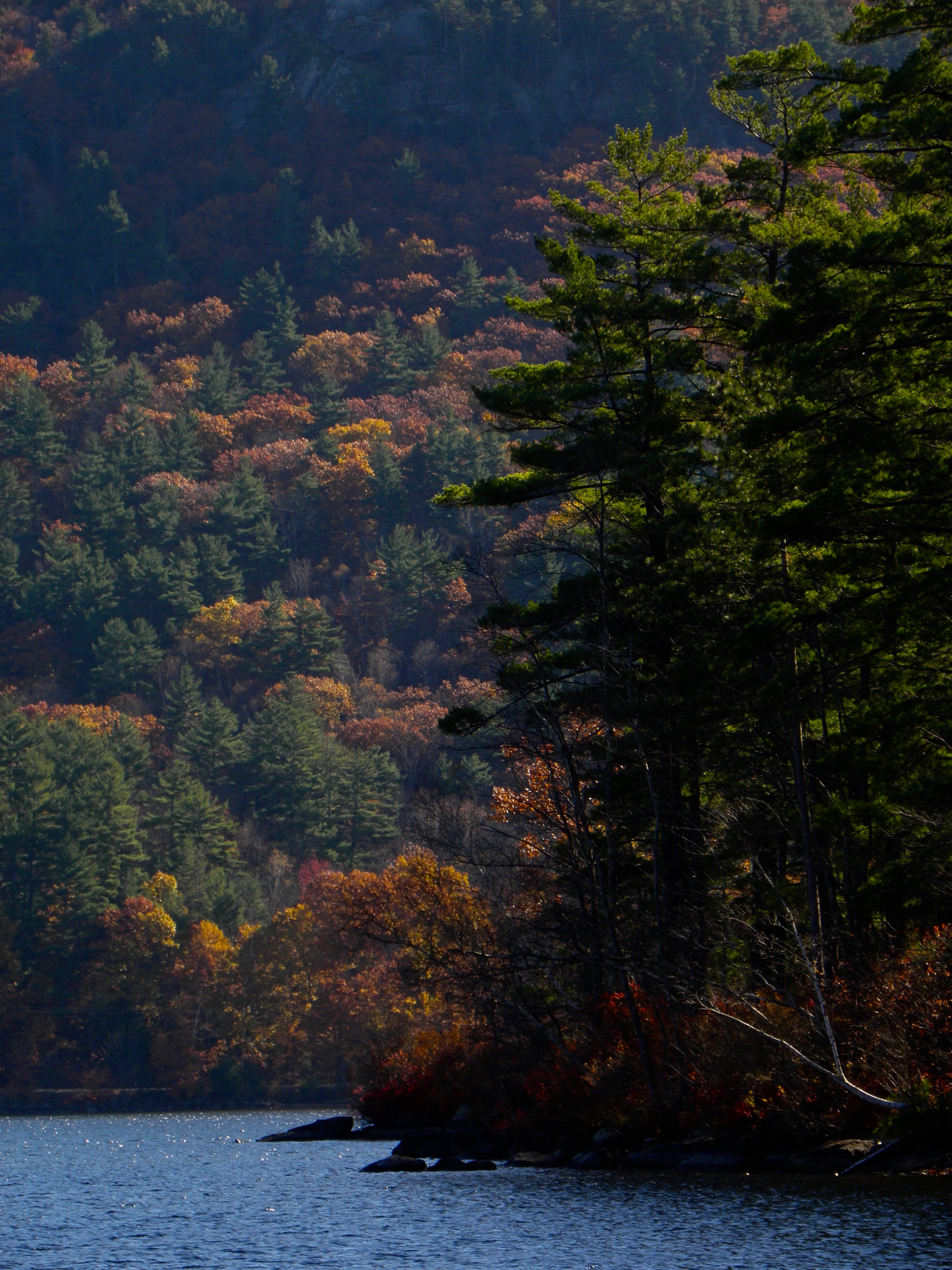
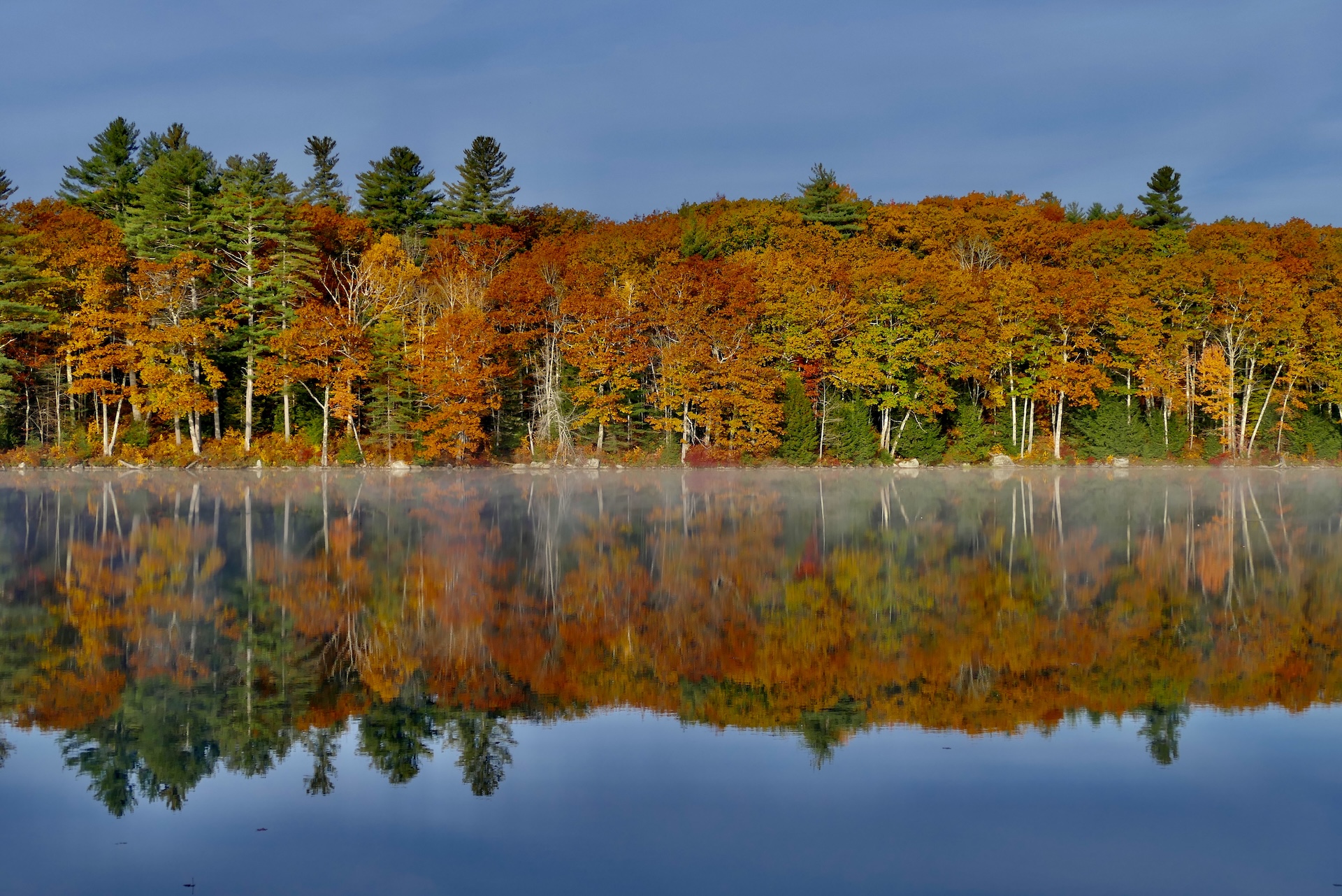
What a new beauty the blue of the river acquires, seen at a distance in the midst of the various-tinted woods, great masses of red and yellow, etc. !

It appears as color, which ordinarily it does not, —elysian.

October 16, 1859

in Thoreau’s Journal: 

This clear, cold, Novemberish light is inspiriting. Some twigs which are bare, and weeds, begin to glitter with the hoary light. The very edge or outline of a tawny or russet hill has this hoary light on it. Your thoughts sparkle like the water surface and the downy twigs. From the shore you look back on the silver-plated river.

The weeds are dressed in their frost jackets, naked down to their close-fitting downy or flannel shirts. Like athletes they challenge the winter, these bare twigs. This cold refines and condenses us. Our spirits are strong, like that pint of cider in the middle of a frozen barrel.

October 14, 1857

in Thoreau’s Journal:

To White Pond. Another, the tenth or eleventh of these memorable days. I am glad to reach the shade of Hubbard’s Grove. The coolness is refreshing. It is indeed a golden autumn….

Let your capital be simplicity and contentment…..I take all these walks to every point of the compass, and it is always harvest-time with me. I am always gathering my crop from these woods and fields and waters, and no man is in my way or interferes with me. My crop is not their crop. To-day I see them gathering in their beans and corn, and they are a spectacle to me, but are soon out of my sight. I am not gathering beans and corn. Do they think there are no fruits but such as these? I am a reaper; I am not a gleaner. I go reaping, cutting as broad a swath as I can, and bundling and stacking up and carrying it off from field to field, and no man knows nor cares. My crop is not sorghum nor Davis seedlings. There are other crops than these, whose seed is not distributed by the Patent Office. I go abroad over the land each day to get the best I can find, and that is never carted off even to the last day of November, and I do not go as a gleaner.

October 12, 1851

in Thoreau’s Journal:  

I seem to be more constantly merged in nature; my intellectual life is more obedient to nature than formerly, but perchance less obedient to spirit. I have less memorable seasons. 

October 11, 1852

in Thoreau’s Journal:

Most leaves are already somewhat faded and withered. Their tints are not so bright. The chestnut leaves already rustle with a great noise as you walk through the woods, as they lie light, firm, and crisp. Now the chestnuts are rattling out. The burs are gaping and showing the plump nuts. They fill the ruts in the road, and are abundant amid the fallen leaves in the midst of the wood. The jays scream, and the red squirrels scold, while you are clubbing and shaking the trees.  Now it is true autumn—all things are crisp & ripe.