December 11, 1855

in Thoreau’s Journal:

Beauty and music are not mere traits and exceptions. They are the rule and character. It is the exception that we see and hear. Then I try to discover what it was in the vision that charmed and translated me. What if we could daguerreotype our thoughts and feelings! for I am surprised and enchanted often by some quality which I cannot detect. I have seen an attribute of another world and condition of things. It is a wonderful fact that I should be affected, and thus deeply and powerfully, more than by aught else in my experience — that this fruit should be borne in me, sprung from a seed finer than the spores of fungi, floated from other atmospheres! finer than the dust caught in the sails of vessels a thousand miles from land! Here the invisible seeds settle, and spring, and bear flowers and fruits of immortal beauty.

December 10, 1840

in Thoreau’s Journal:

I discover a strange track in the snow, and learn that some migrating otter has made across from the river to the wood, by my yard and the smith’s shop, in the silence of the night. I cannot but smile at my own wealth when I am thus reminded that every chink and cranny of nature is full to overflowing. Such an incident as this startles me with the assurance that the primeval nature is still working, and makes tracks in the snow. It is my own fault that he must thus skulk across my premises by night. Now I yearn toward him, and heaven to me consists in a complete communion with the otter nature. He travels a more wooded path by watercourses and hedgerows, I by the highways, but though his tracks are now crosswise to mine, our courses are not divergent, but we shall meet at last.

December 8, 1850

in Thoreau’s Journal:

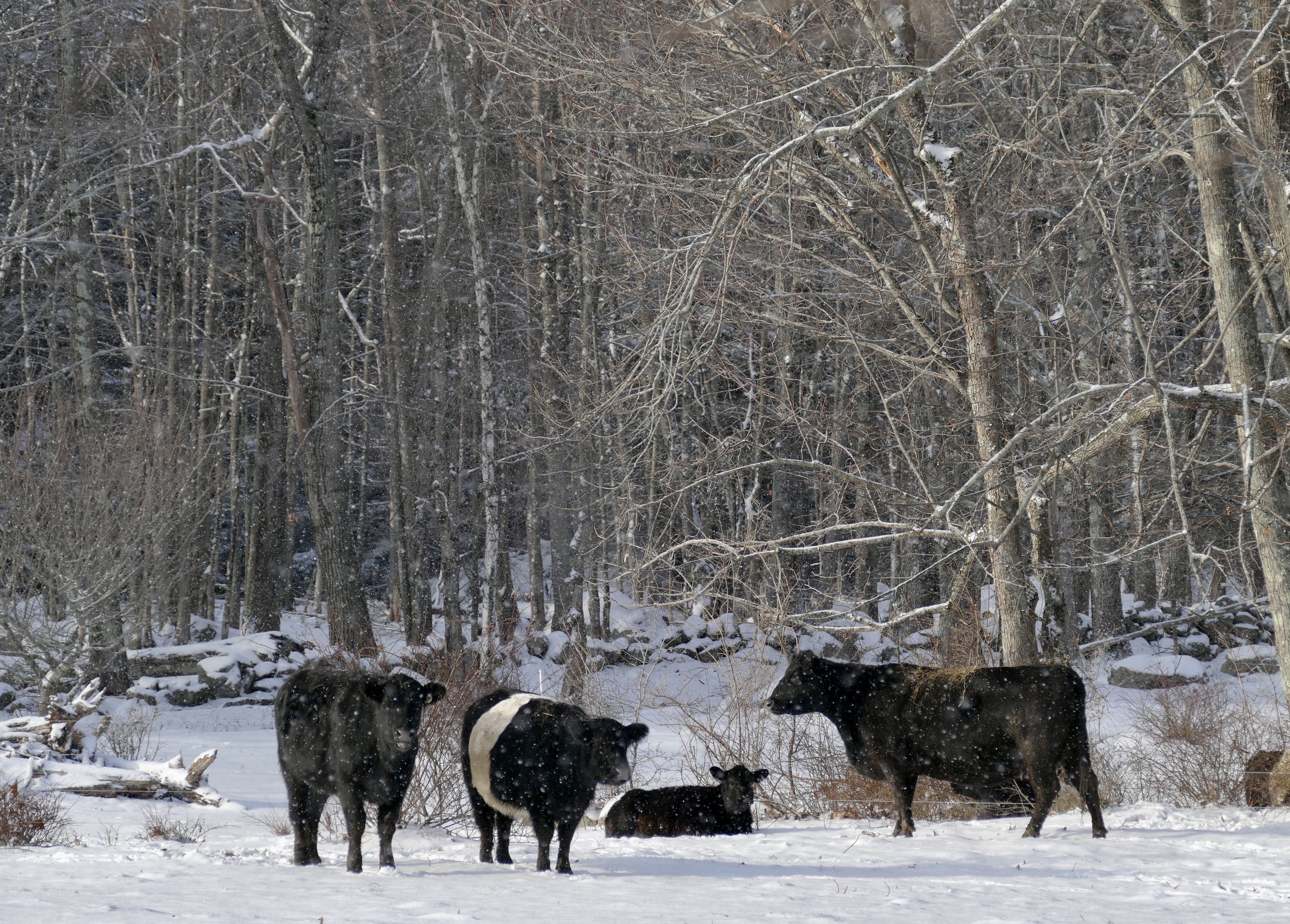
It snowed in the night of the 6th and the ground is now covered.  our first snow 2 inches deep  A week ago I saw cows being driven home from pasture—  Now they are kept at home. Here’s an end to their grazing. The farmer improves this first light snow to accomplish some pressing jobs—to move some particular rocks on a drag, or the like—  I perceive how quickly he has seized the opportunity.  I see no tracks now of cows or men or boys beyond the edge of the wood—suddenly they are shut up—the remote pastures & hills beyond the woods are now closed to cows & cowherds aye & to cowards.

  I am struck by this sudden solitude & remoteness which these places have acquired.  The dear privacy & retirement & solitude which winter makes possible—carpeting the earth with snow, furnishing more than woolen feet to all walkers, cronching the snow only.  From Fair Haven I see the hills & fields aye & the icy woods in the Corner shine gleam with the dear old wintery sheen.  Those are not surely the cottages I have seen all summer. They are some cottages which I have in my mind.

December 7, 1838

in Thoreau’s Journal:

Never do we live a quite free life, like Adam’s, but are enveloped in an invisible network of speculations. Our progress is from one such speculation to another, and only at rare intervals do we perceive that it is no progress.

Could we for moment drop this by-play, and simply wonder without reference or inference!

December 6, 1858

in Thoreau’s Journal:

Go out at 9 AM to see the glaze. It is already half fallen, melting off. The dripping trees and wet falling ice will wet you through like rain in the woods. It is a lively sound, a busy tinkling, the incessant brattling and from time to time rushing, crashing sound of this falling ice, and trees suddenly erecting themselves when relieved of their loads.

It is now perfect only on the north sides of woods which the sun has not touched or affected. Looking at a dripping tree between you and the sun, you may see here or there one or another rainbow color, a small brilliant point of light.

December 5, 1856

in Thoreau’s Journal:

My themes shall not be far fetched—I will tell of homely everyday phenomena & adventures— Friends—! society—!  It seems to me that I have an abundance of it— there is so much that I rejoice & sympathize with—& men too that I never speak to but only know & think of.  What you call bareness & poverty—is to me simplicity: God could not be unkind to me if he should try. I love the winter with its imprisonment & its cold—for it compels the prisoner to try new fields & resources— I love to have the river closed up for a season & a pause put to my boating —to be obliged to get my boat in—

I shall launch it again in the spring with so much more pleasure— This is an advantage in point of abstinence and moderation compared with the sea-side boating—where the boat ever lies on the shore. — I love best to have each thing in its season only—& and enjoy doing without it at all other times. It is the greatest of all advantages to enjoy no advantage at all.  I find it invariably true the poorer I am the richer I am.

December 3, 1853

in Thoreau’s Journal:

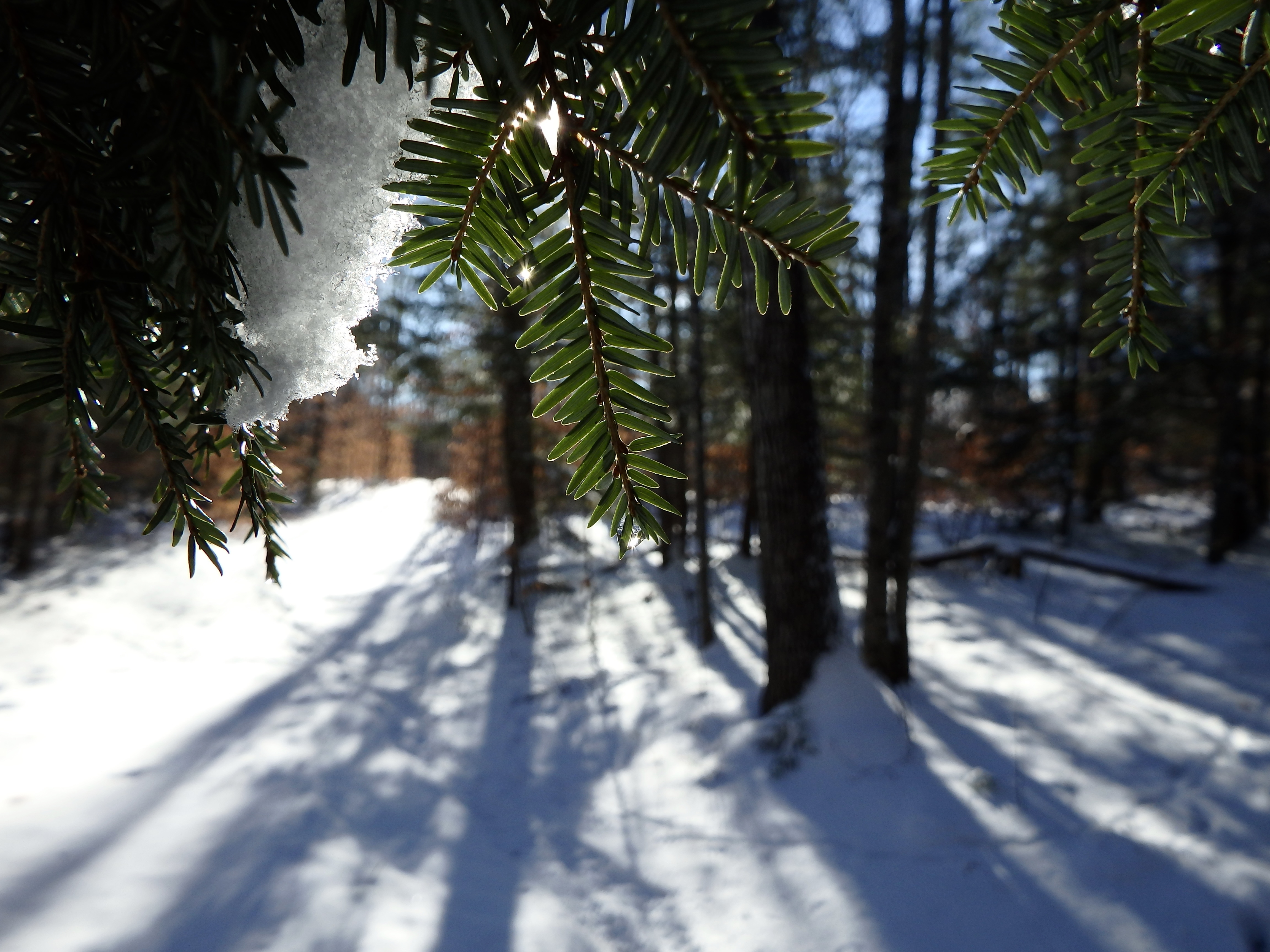
But even in winter we maintain a temperate cheer —& a serene inner life—not destitute of warmth & melody—

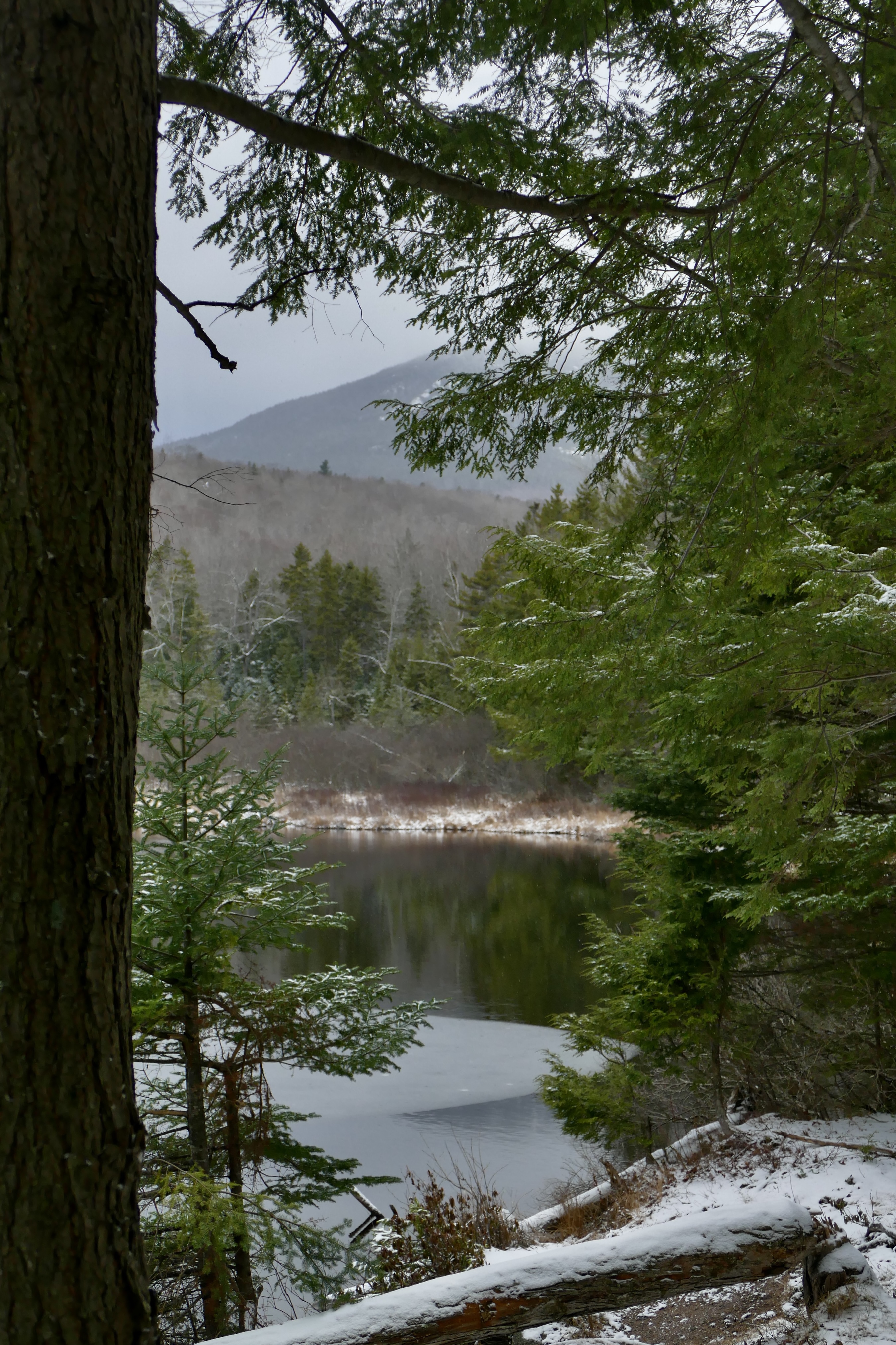
Only the cold evergreens wear the aspect of summer now and shelter the winter birds.