in Thoreau’s Journal:

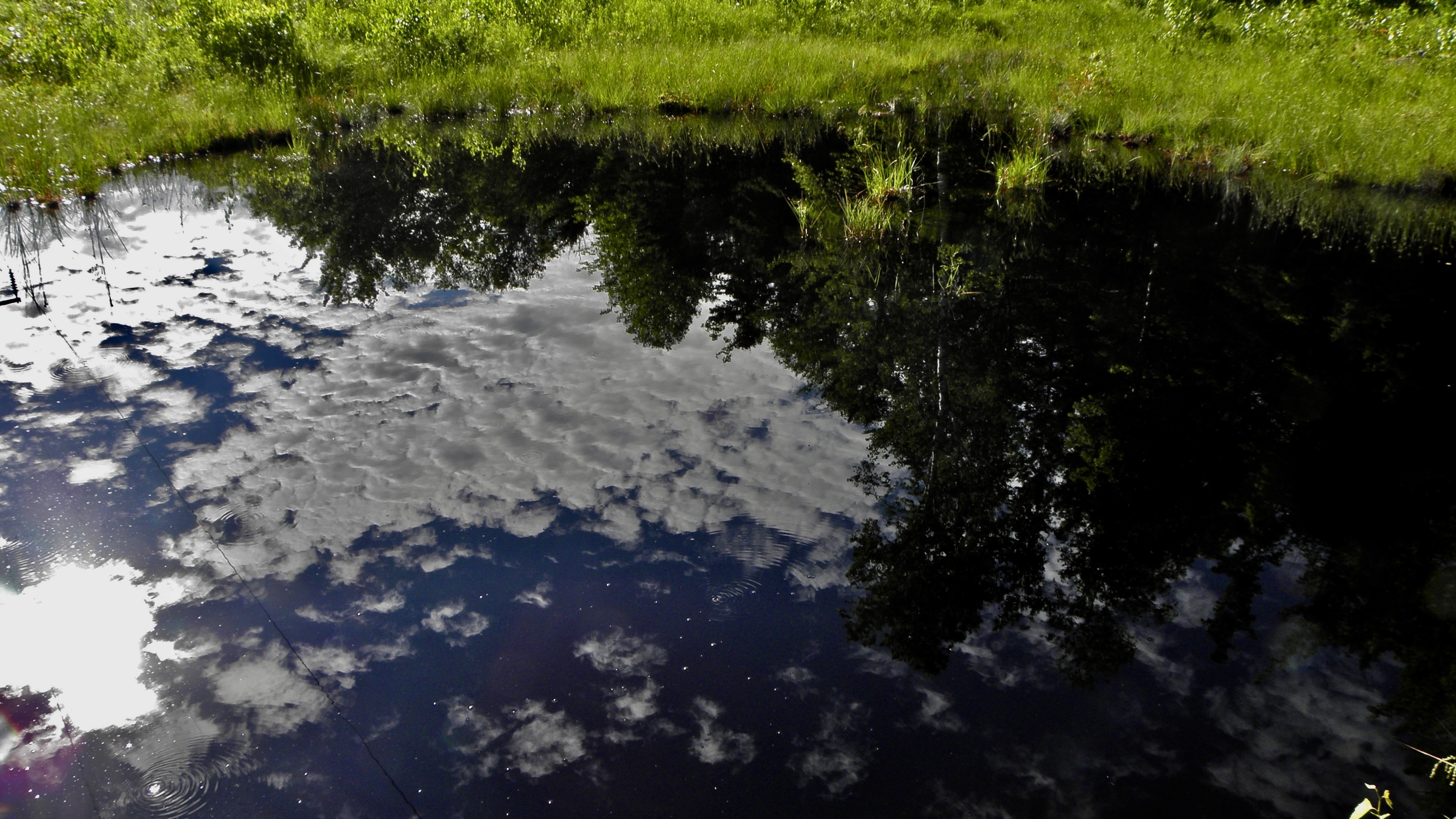
Some fiat has gone forth & stilled the ripples of the lake—each sound & sight has acquired ineffable beauty.

in Thoreau’s Journal:
Some fiat has gone forth & stilled the ripples of the lake—each sound & sight has acquired ineffable beauty.
in Thoreau’s Journal:

The trillium fruit––(varnished & stained cherry wood) now ripe.
in Thoreau’s Journal:
How fatally the season is advanced toward the fall! I am not surprised now to see the small rough sunflower –– There is much yellow beside now in the fields. How beautiful now the early golden rods–– S. stricta rising above the wiry grass of the Great Fields in front of Peters where I sit (which is not worth cutting) not solid yellow like the sunflower––but little pyramidal or sheaf like golden clouds or mists supported by almost invisible leafy columns––which wave in the wind––like this elms which run up very tall & slender without a branch & fall over like a sheaf on every side.
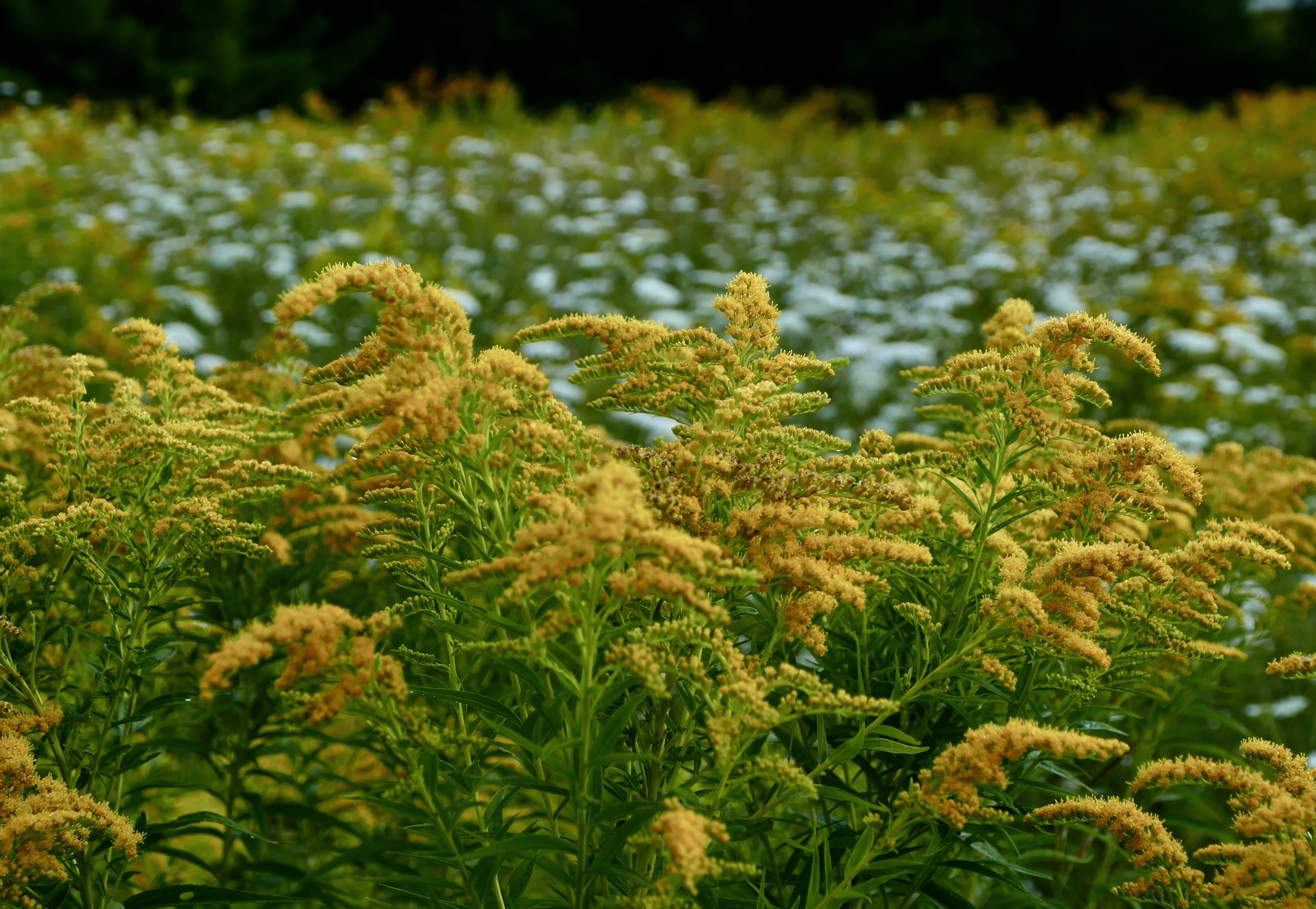
They give a very indefinite but rich mellow & golden aspect to the fields–– They are the agreeable for the indistinctness of their outline these pillars of fire, clouds which glow only on one side.
in Thoreau’s Journal:
This is a day of sunny water. As I walk along the bank of the river I look down a rod & see distinctly the fishes and the bottom.
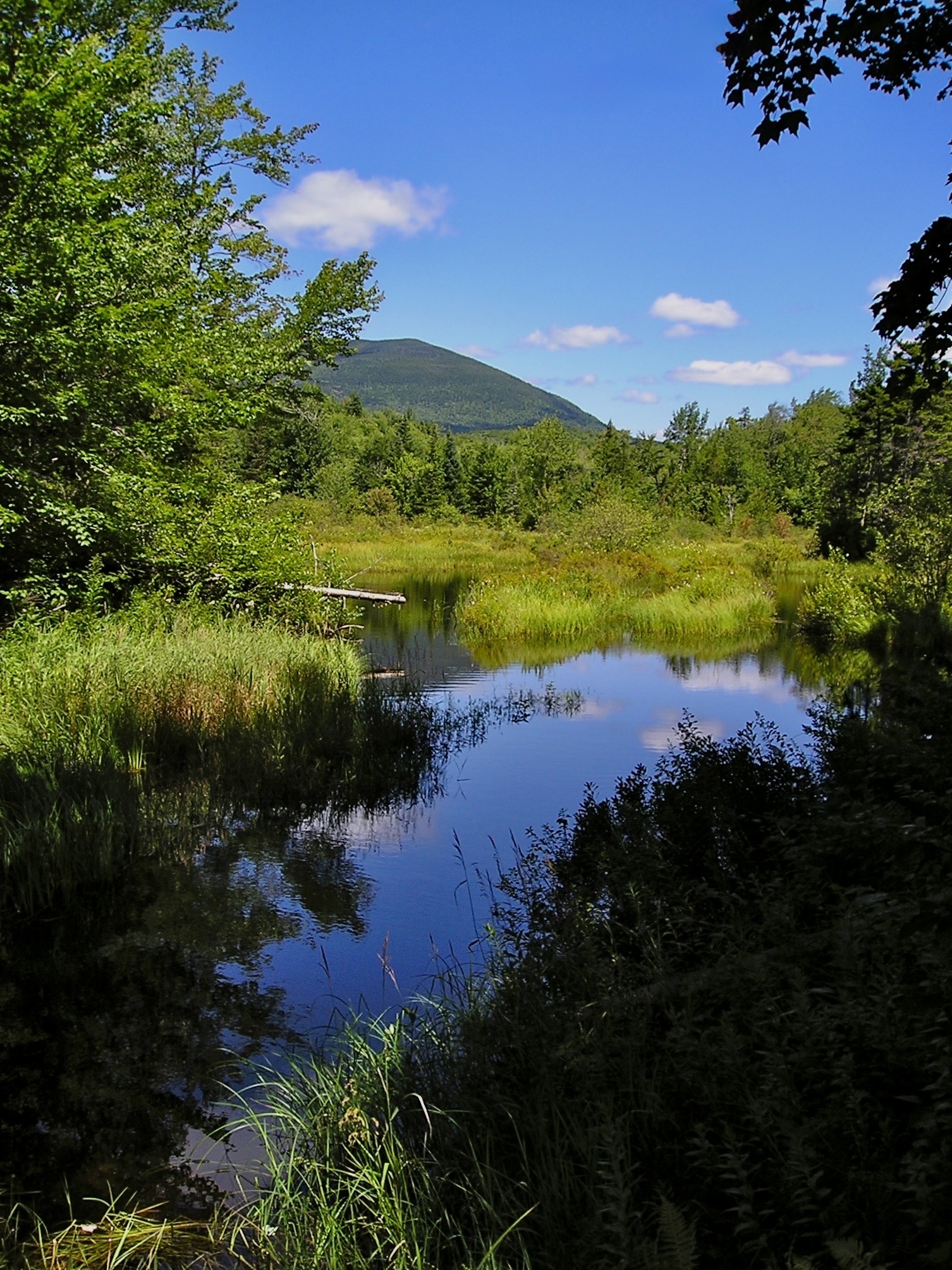
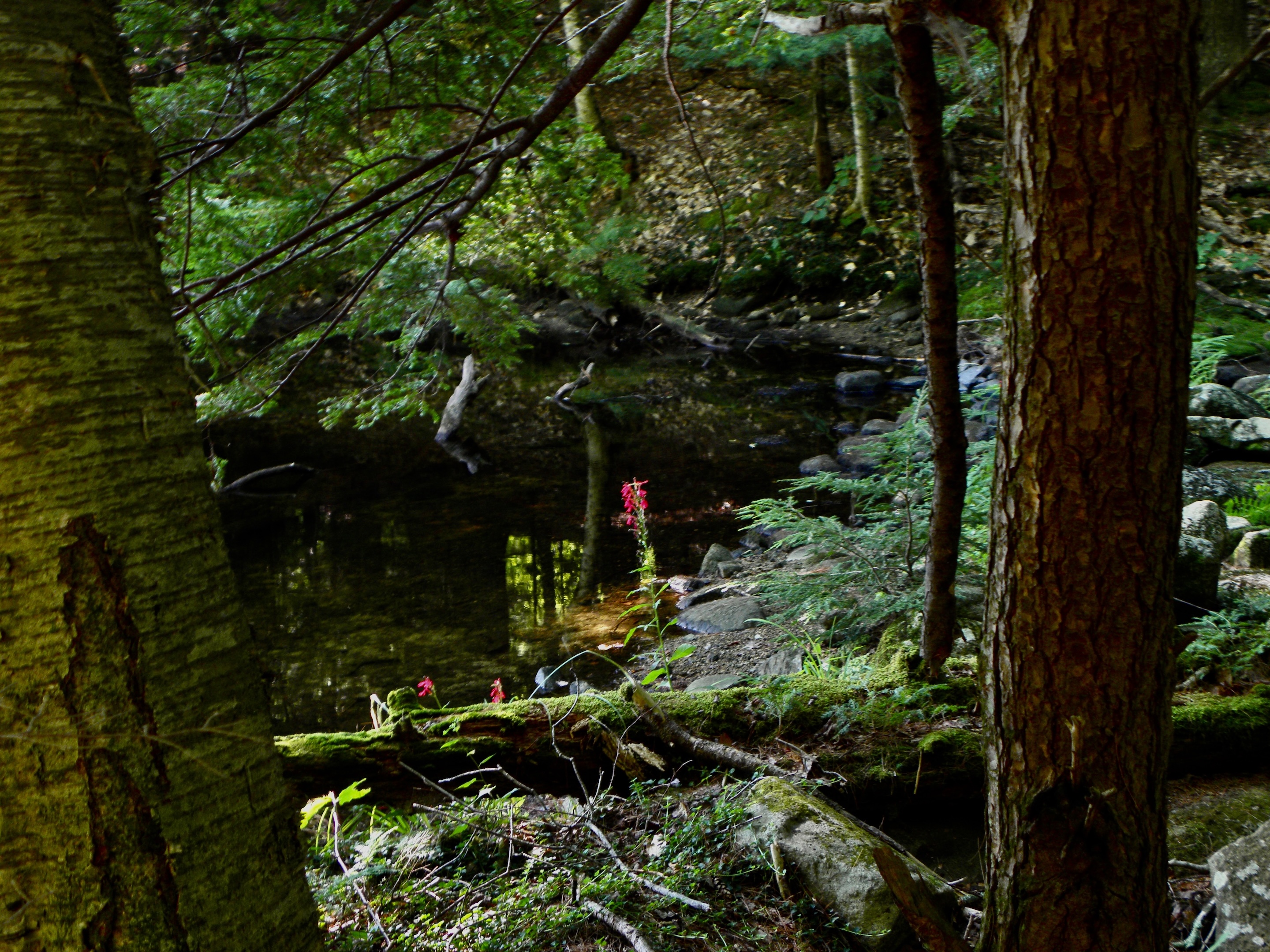
The cardinals are in perfection—standing in dark recesses of the green shore, or in the open meadow. They are fluviatile & stand along some river or brook—like myself.
in Thoreau’s Journal:
….Still autumnal–breezy with a cool vein in the wind––so that passing from the cool & breezy into the sunny & warm places you begin to love the heat of Summer–– It is the contrast of the cool wind with the warm sun.

I walk over the pin-weed field. It is just cool enough––in my thin clothes–– There is a light on the earth & leaves as if they were burnished–– It is the glistening autumnal side of Summer–– I feel a cool vein in the breeze––which braces my thought––& I pass with pleasure over sheltered & sunny portions of the sand where the summers heat is undiminished––& I realize what a friend I am losing….This off side of summer glistens like a burnished shield. The waters now are some degrees cooler––winds show the undersides of the leaves–– The cool nocturnal creak of the crickets is heard in the mid-afternoon–– Tansy is ap. now in its prime & the early golden-rods have acquired a brighter yellow––
in Thoreau’s Journal:

We pass haymakers in every meadow who may think we are idlers. But Nature takes care that every nook and crevice is explored by someone. While they look after the open meadows we farm the tract between the river banks and behold the shores from that side.
We too are harvesting an annual crop with our eyes, and think you Nature is not glad to display her beauty to us?
in Thoreau’s Journal:

The question is not what you look at, but what you see.
in Thoreau’s Journal:
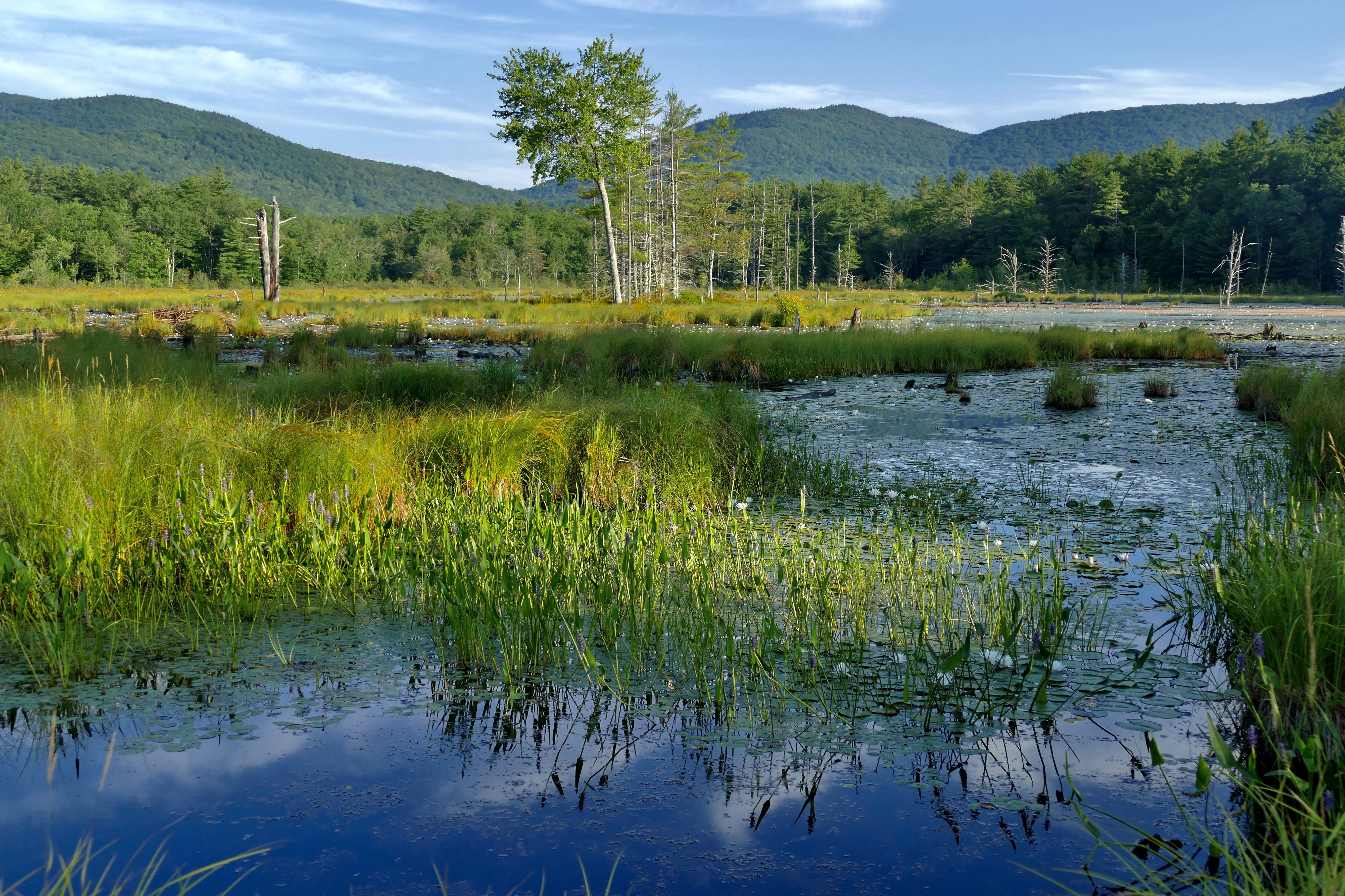
This is such fresh and flowing weather, as if the waves of the morning had subsided over the day.
in Thoreau’s Journal:

As I wade through the middle of the meadows in sedge up to my middle and look afar over the waving and rustling bent tops of the sedge (all are bent northeast by the southwest wind) toward the distant mainland, I feel a little as if caught by a rising tide on flats far from the shore. I am, as it were, cast away in the midst of the sea. It is a level sea of waving and rustling sedge about me. The grassy sea. You feel somewhat as you would if you were standing in water at an equal distance from the shore. To-day I can walk dry over the greater part of the meadows, but not over the lower parts, where pipes, etc., grow; yet many think it has not been so dry for ten years!
in Thoreau’s Journal:
5 p. m. —To Conantum on foot.
My attic chamber has compelled me to sit below with the family at evening for a month. I feel the necessity of deepening the stream of my life; I must cultivate privacy. It is very dissipating to be with people too much. As C. says, it takes the edge off a man’s thoughts to have been much in society. I cannot spare my moonlight and my mountains for the best of man I am likely to get in exchange––
I am inclined now for a pensive evening walk
Methinks we think of spring mornings and autumn evenings. I go via Hubbard Path. Chelone say two days X at Conants meadow beyond Wheelers. July has been to me a trivial month. It began hot and continued drying, then rained some toward the middle, bringing anticipations of the fall, and then was hot again about the 20th. It has been a month of haying, heat, low water, and weeds. Birds have grown up and flown more or less in small flocks, though I notice a new sparrow’s nest and eggs and perhaps a catbird’s eggs lately. The woodland quire has steadily diminished in volume.
At the bass I now find that that memorable hum has ceased and the green berries are formed. Now blueberries, huckleberries, and low blackberries are in their prime. The fever-bush berries will not be ripe for two or three weeks.
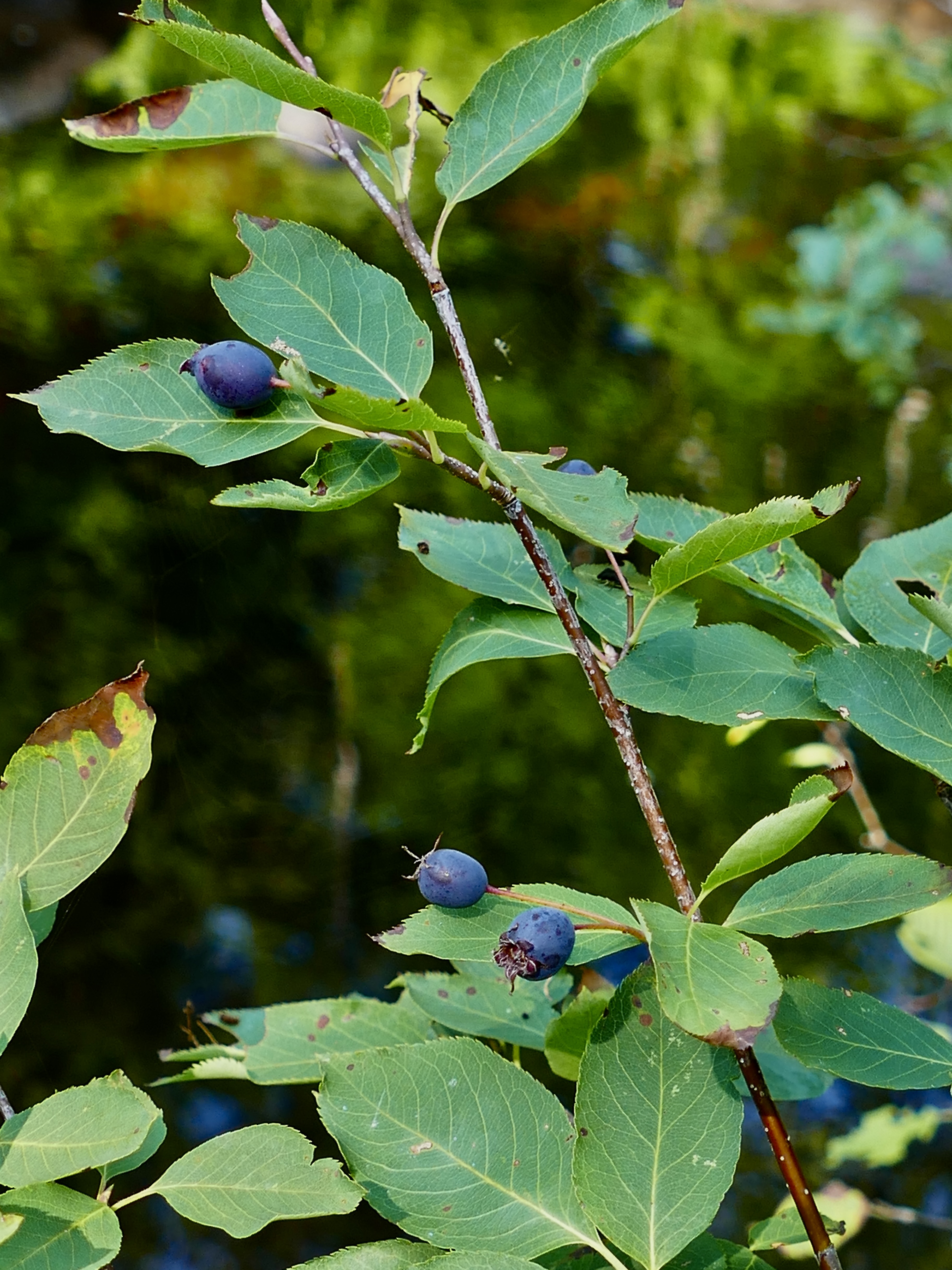
At Bittern Cliff the Gerardia quercifolia (?), apparently four or five days at least. How interesting the small alternate cornel trees, with often a flat top, a peculiar ribbed and green leaf, and pretty red stems supporting its harmless blue berries inclined to drop off ! The sweet viburnum, not yet turning. I see apparently a thistle-down over the river at Bittern Cliff; it is borne toward me, but when it reaches the rock some influence raises it high above the rock out of my reach. What a fall-like look the decayed and yellow leaves of the large Solomon’s-seal have in the thickets now! These, with skunk-cabbage and hellebore, suggest that the early ripeness of leaves, etc., has somewhat normal in it,— there is a fall already begun. Eupatorium sessilifolium, one or two stamens apparently for two days; its smooth leaf distinguishes it by the touch from the sunflower.
I sat on the Bittern Cliff as the still eve drew on. There was a man on Fair Haven furling his sail and bathing from his boat. A boat on a river whose waters are smoothed, and a man disporting in it! How it harmonizes with the stillness and placidity of the evening! Who knows but he is a poet in his yet obscure but golden youth? Few else go alone into retired scenes without gun or fishing-rod. He bathes in the middle of the pond while his boat slowly drifts away. As I go up the hill, surrounded by its shadow, while the sun is setting, I am soothed by the delicious stillness of the evening, save that on the hills the wind blows. I was surprised by the sound of my own voice. It is an atmosphere burdensome with thought. For the first time for a month, at least, I am reminded that thought is possible. The din of trivialness is silenced. I float over or through the deeps of silence. It is the first silence I have heard for a month. My life had been a River Platte, tinkling over its sands but useless for all great navigation, but now it suddenly became a fathomless ocean. It shelved off to unimagined depths.
I sit on rock on the hill top––warm with the heat of the departed sun, in my thin summer clothes. Here are the seeds of some berries in the droppings of some bird on the rock. The sun has been set fifteen minutes, and a long cloudy finger, stretched along the northern horizon, is held over the point where it disappeared. I see dark shadows formed on the south side of the woods east of the river. The creaking of the crickets becomes clear and loud and shrill, —a sharp tinkling, like rills bubbling up from the ground. After a little while the western sky is suddenly suffused with a pure white light, against which the hickories further east on the hill show black with beautiful distinctness. Day does not furnish so interesting a ground. A few sparrows sing as in the morning and the spring; also a peawai and a chewink. Meanwhile the moon in her first quarter is burnishing her disk. Now suddenly the cloudy finger and the few scattered clouds glow with the parting salute of the sun; the rays of the sun, which has so long sunk below the convex earth, are reflected from each cloudy promontory with more incomparable brilliancy than ever.
The hardhack leaves stand up so around the stem that now, at first starlight, I see only their light undersides a rod off. Do they as much by day? The surface of the forest on the east of the river presents a singularly cool and wild appearance, —cool as a pot of green paint, ––stretches of green light and shade, reminding me of some lonely mt side. The nighthawk flies low-skimming over the ground now. How handsome lie the oats which have been cradled in long rows in the field, a quarter of a mile uninterruptedly!
The thick stub ends, so evenly laid, are almost as rich a sight to me as the graceful tops. A few fireflies in the meadows. I am uncertain whether that so large and bright and high was a fire-fly or a shooting star. Shooting stars are but fireflies of the firmament. The crickets on the causeway make a steady creak, on the dry pasture-tops an interrupted one. I was compelled to stand to write where a soft, faint light from the western sky came in between two willows.
Fields today sends me a specimen copy of my “Walden” It is to be published on the 12 inst.
in Thoreau’s Journal:
Occasionally we rise above the necessity of virtue into an unchangeable morning light, in which we have not to choose in a dilemma between right and wrong, but simply to live right on and breathe the circumambient air.

There is no name for this life unless it be the very vitality of vita.
 allandibiase.com
You must be logged in to post a comment.