in Thoreau’s Journal:
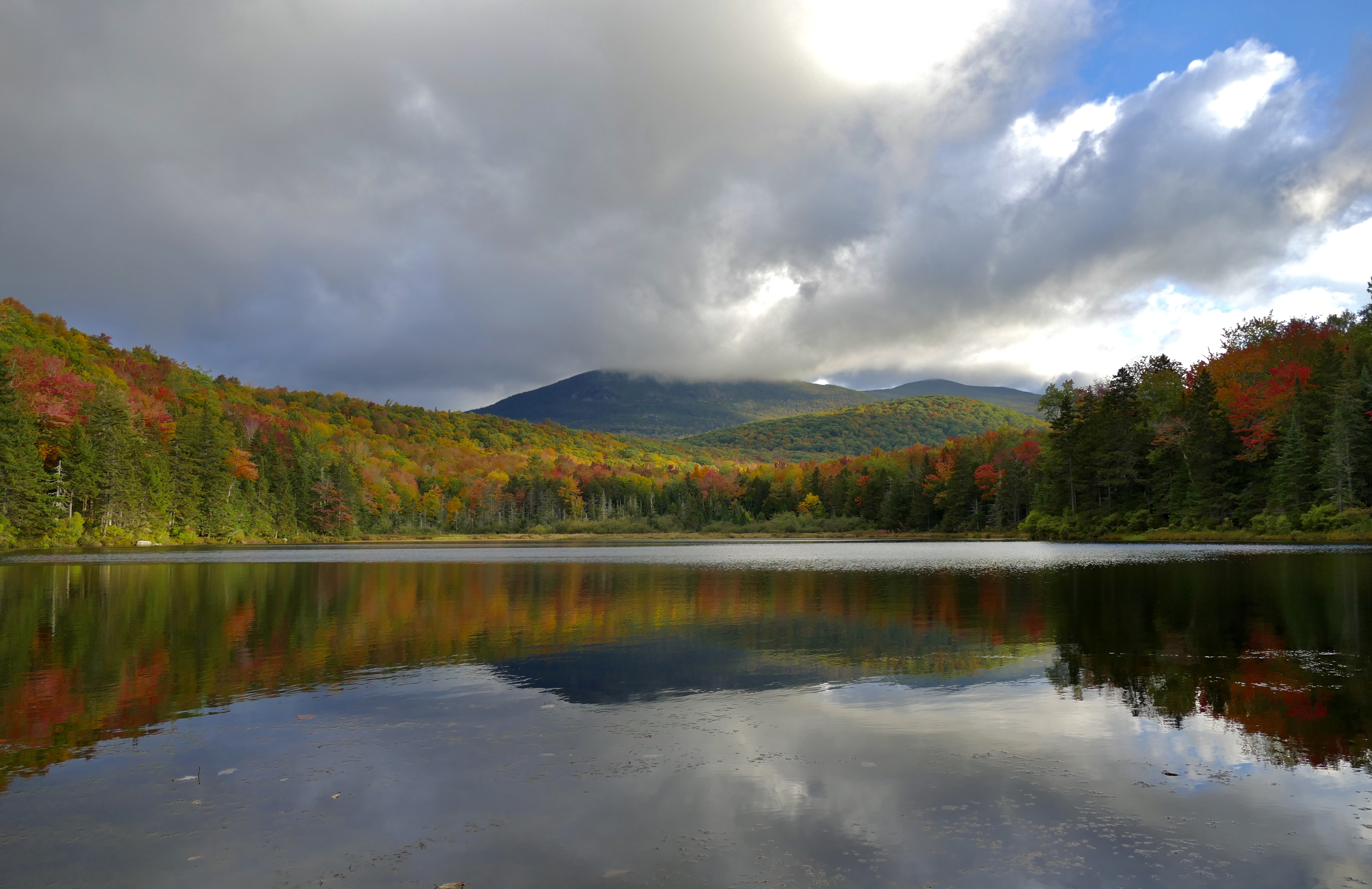
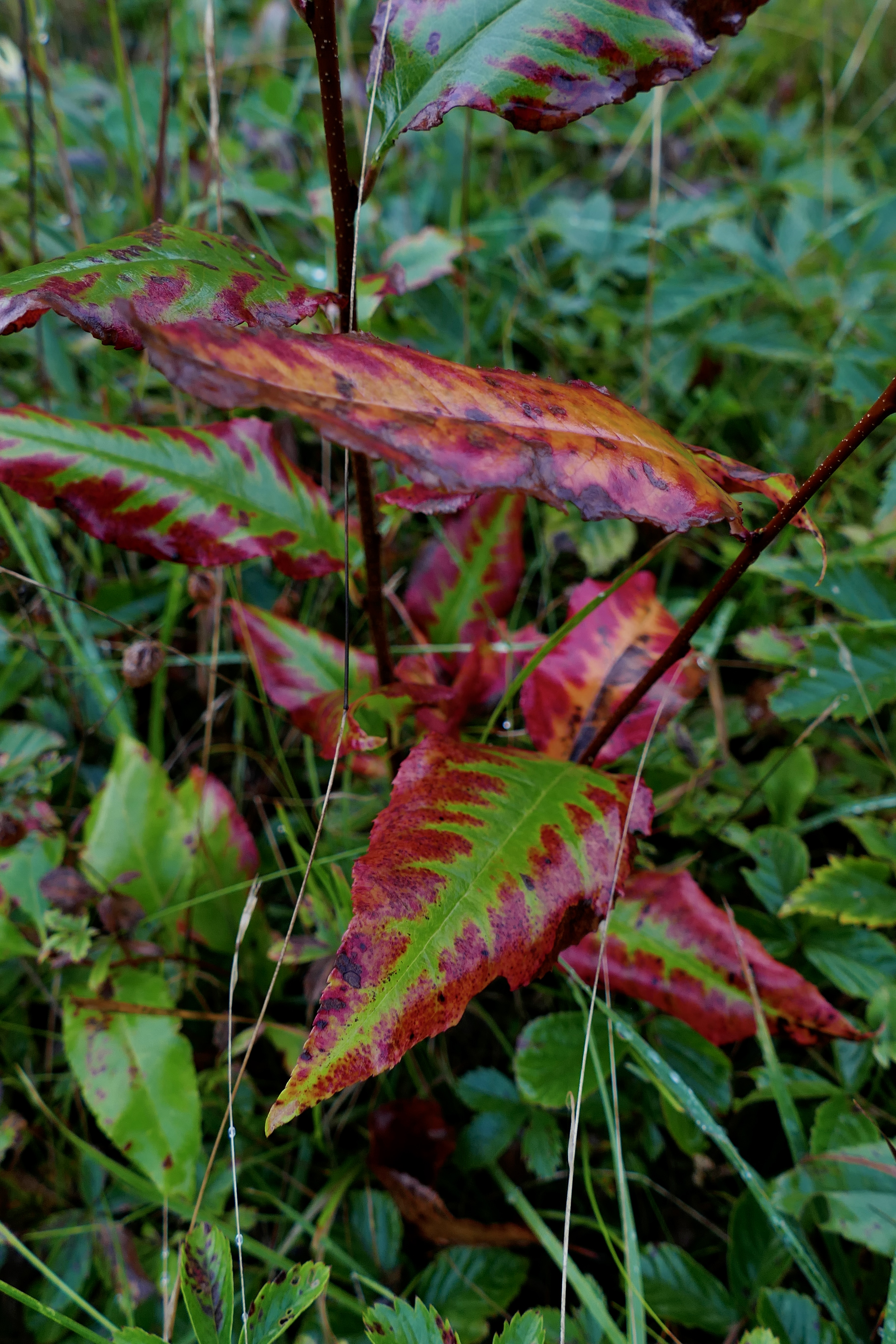
It is with leaves as with fruits and woods, animals and men; when they are mature their different characters appear.
in Thoreau’s Journal:
It is with leaves as with fruits and woods, animals and men; when they are mature their different characters appear.
in Thoreau’s Journal:
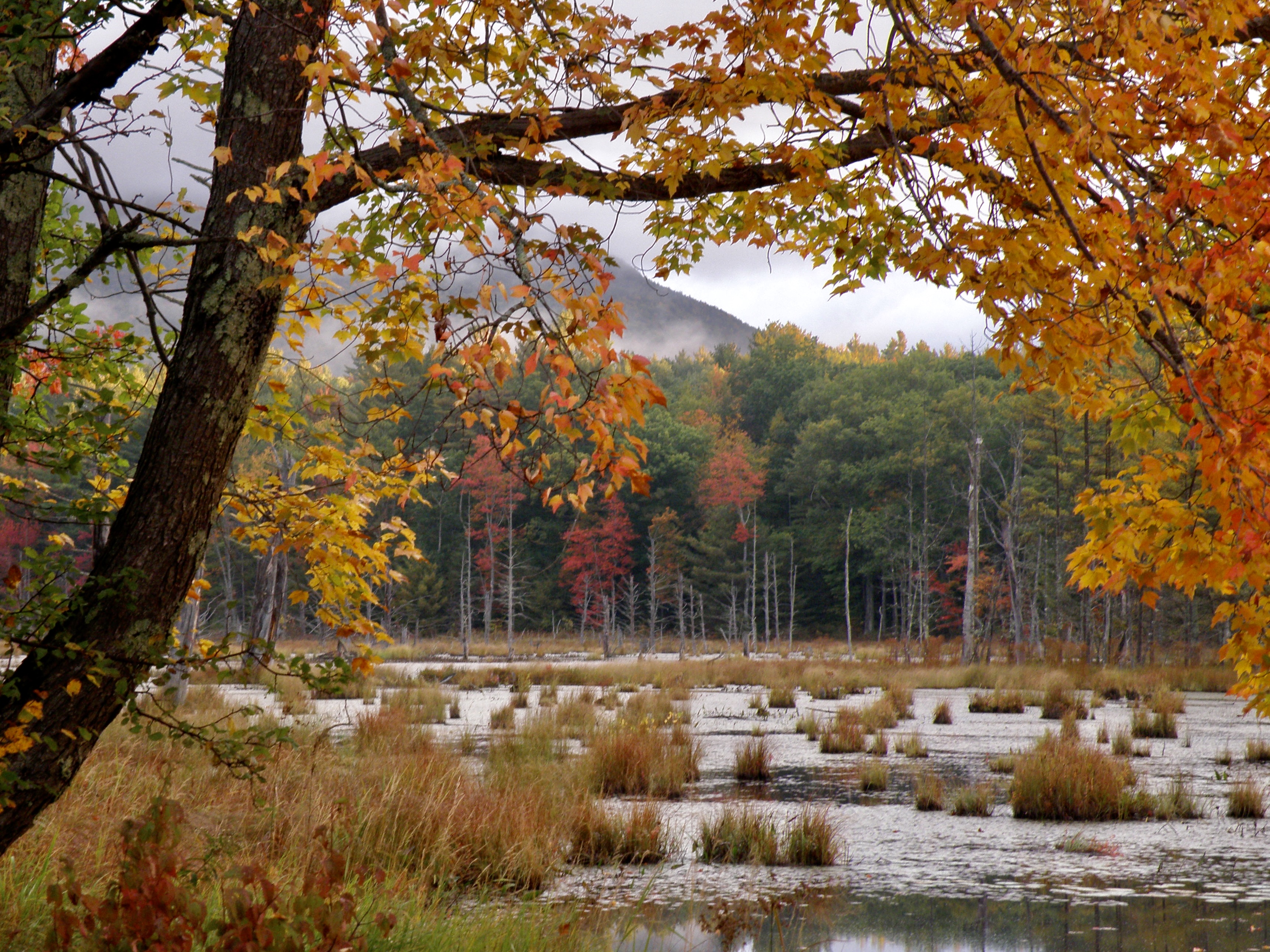
The intense brilliancy of the red-ripe maples scattered here and there in the midst of the green oaks & hickories on its hilly shore is quite charming. They are unexpectedly & incredibly brilliant –especially on the western shore & close to the waters edge, where alternating with yellow birches & poplars & green oaks—they remind me of a line of soldiers red coats & riflemen in green mixed together.
in Thoreau’s Journal:
P. M. – To old mill-site behind Ponkawtasset. Poke berries in the sprout-land east of the red huckleberry still fresh and abundant, perhaps a little past prime. I never saw so many. The plants stand close together, and their drooping racemes three to five inches long, of black or purplish-black berries (ending in red and less [an indecipherable word]), almost crowd one another, hanging around the bright-purple, now for the most part bare, stems. I hear some birds about, but see none feeding on the berries. I could soon gather bushels there. The arum berries are still fresh and abundant, perhaps in their prime. A large cluster is two and a half inches long by two wide and rather flattish. One, which has ripened prematurely, the stalk being withered and drooping, resembles a very short thick ear of scarlet corn. This might well enough be called snake-corn. These singular vermilion-colored berries, about a hundred of them, surmount a purple bag on a peduncle six or eight inches long. It is one of the most remarkable and dazzling, if not the handsomest, fruits we have. These were by violet wood-sorrel wall. How many fruits are scarlet now!

— barberries, prinos, etc. A flock of vireo-like, somewhat yellowish birds, very neat, white beneath and olive above, in garden.
in Thoreau’s Journal:
It is a very fine afternoon to be on the water, somewhat Indian-summer-like. I do not know what constitutes the peculiarity and charm of this weather; the broad water so smooth, notwithstanding the slight wind, as if, owing to some oiliness, the wind slid over without ruffling it. There is a slight coolness in the air, yet the sun is occasionally very warm. I am tempted to say that the air is singularly clear, yet I see it is quite hazy. Perhaps it is that transparency it is said to possess when full of moisture and before or after rain.
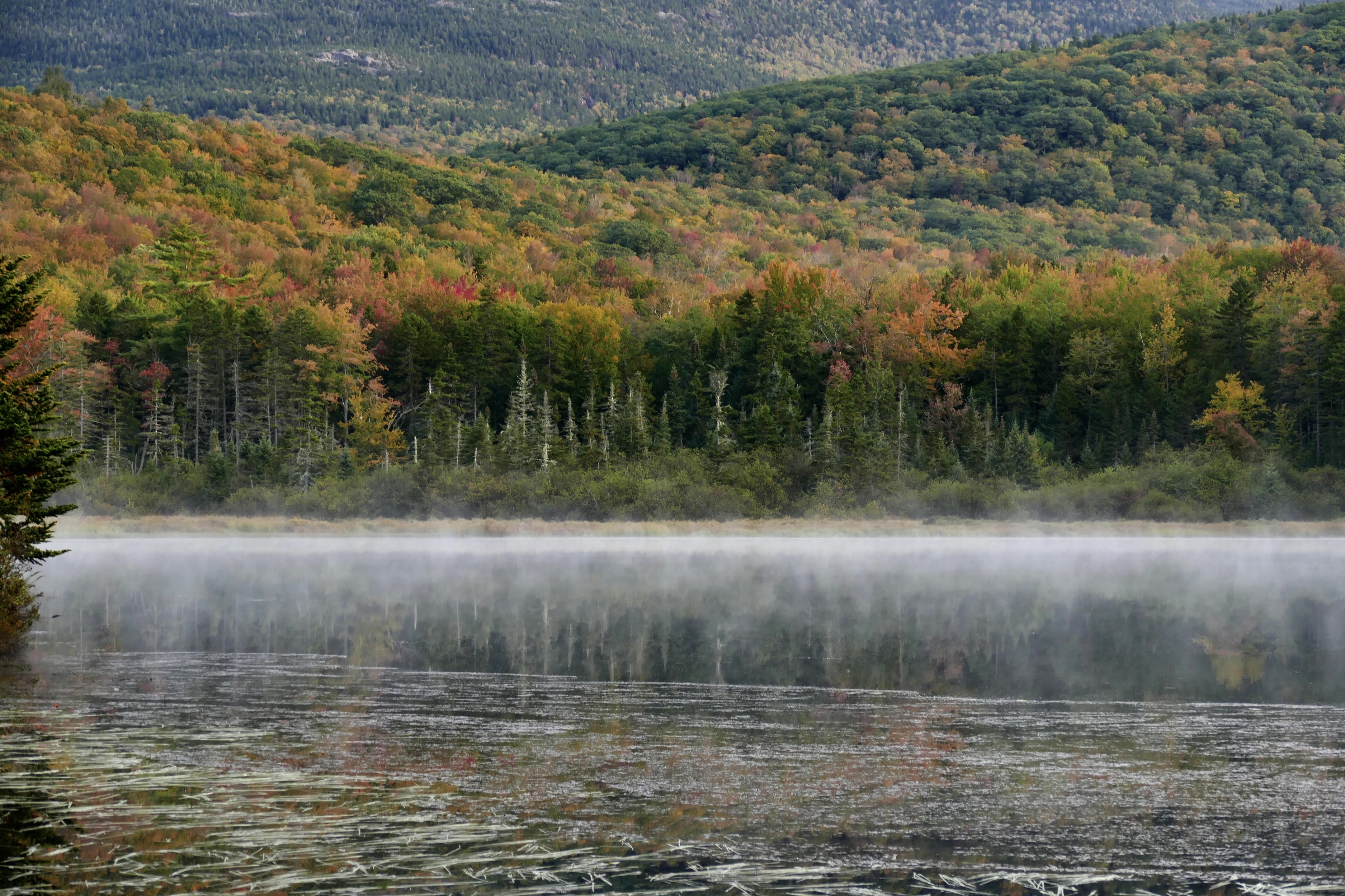
Through this I see the colors of trees and shrubs beginning to put on their October dress, and the creak of the mole cricket sounds late along the shore.
in Thoreau’s Journal:
The increasing scarlet & yellow tints around the meadows & river remind me of the opening of a vast flower bud—they are the petals of its corolla—which is of the width of the valleys—
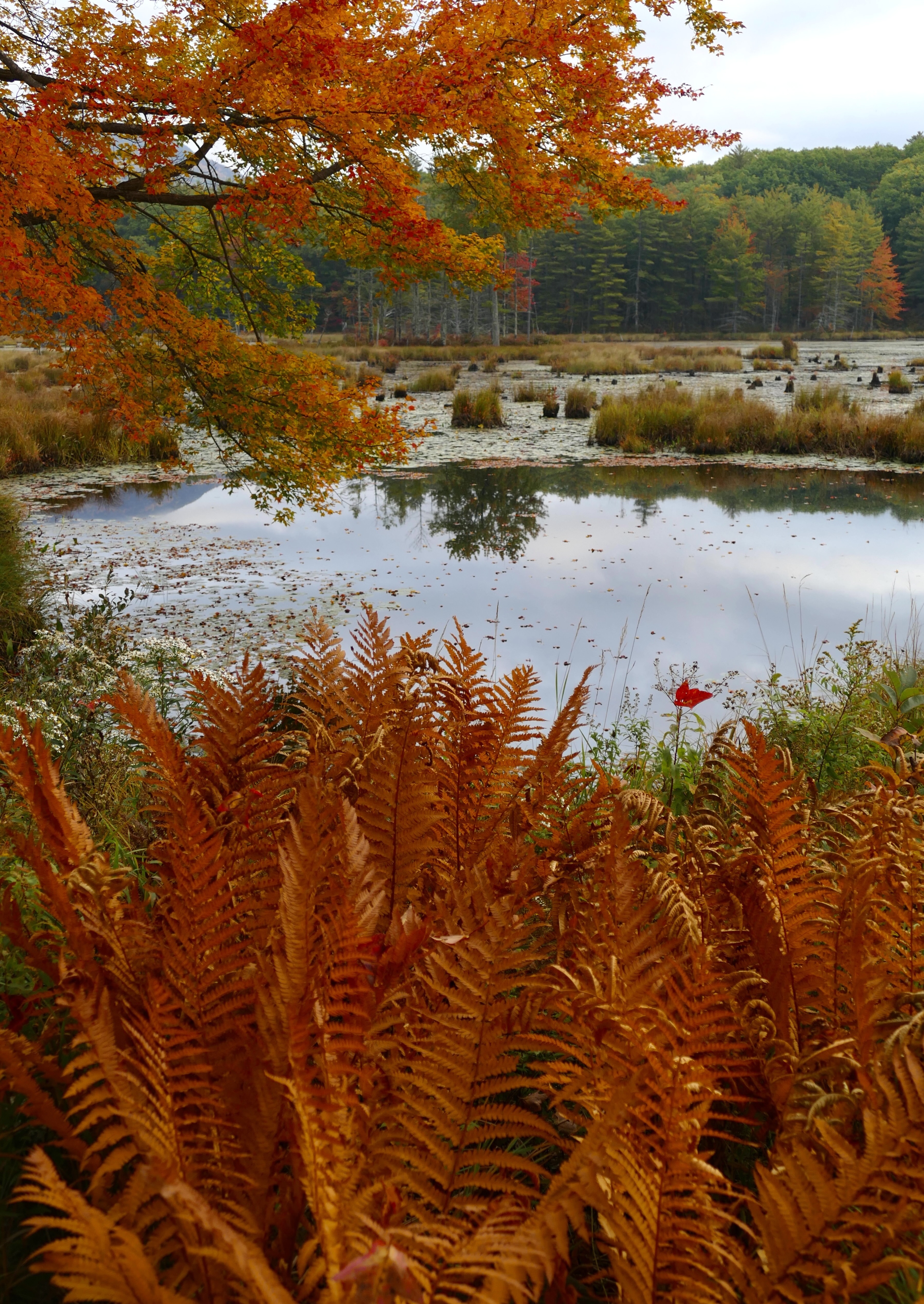
It is the flower of autumn whose expanding bud just begins to blush. As yet however in the forest there are very few changes of foliage.
in Thoreau’s Journal:
The red maple has fairly begun to blush in some places by the river. I see one, by the canal behind Barrett’s mill, all aglow against the sun. These first trees that change are the most interesting, since they are seen against others still freshly green — such brilliant red on green. I go half a mile out of my way to examine such a red banner. A single tree becomes the crowning beauty of some meadowy vale and attracts the attention of the traveller from afar. At the eleventh hour of the year, some tree which has stood mute and inglorious in some distant vale thus proclaims its character as effectually as if it stood by the highway-side, and it leads our thoughts away from the dusty road into those brave solitudes which it inhabits.
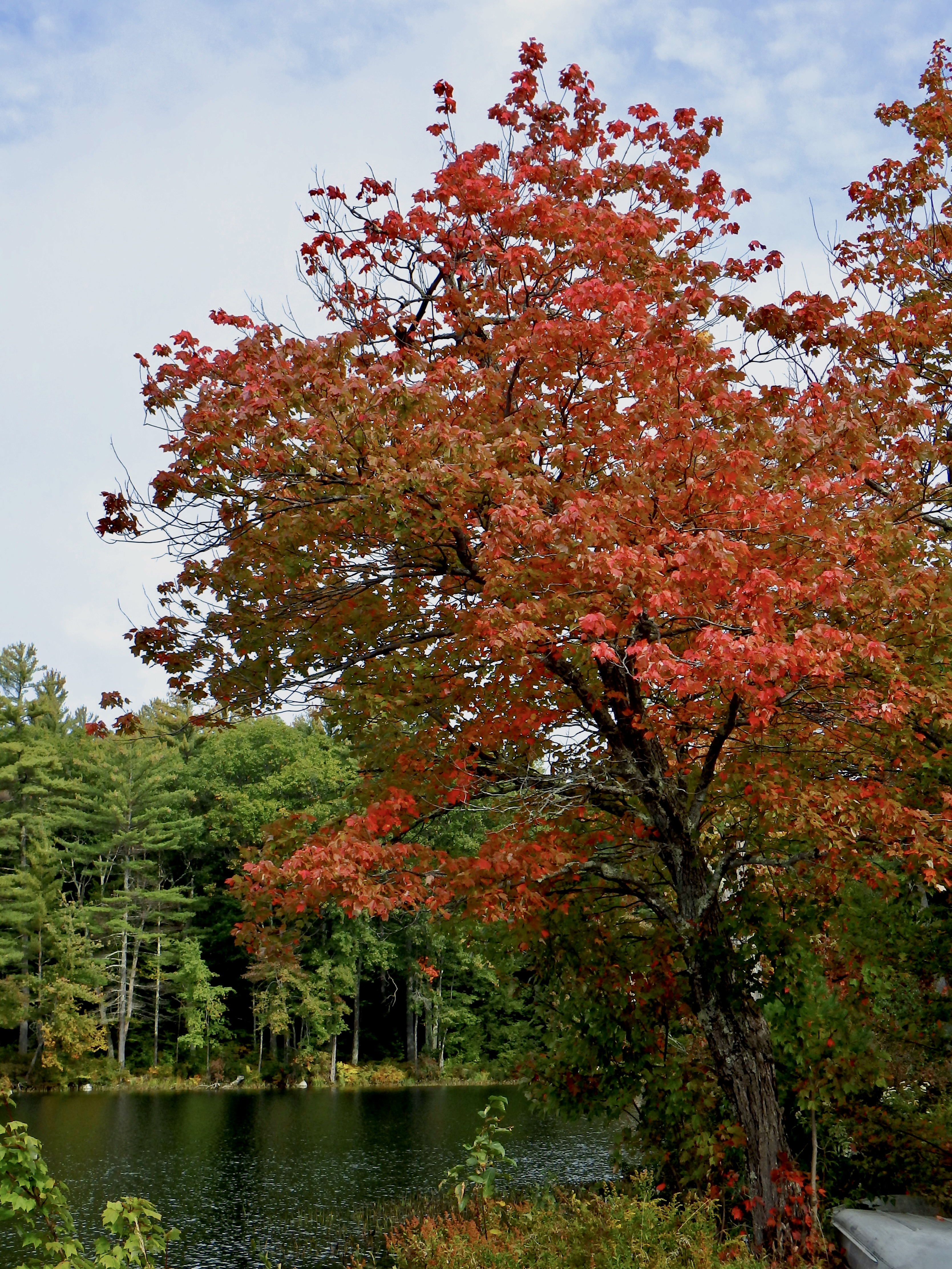
The whole tree, thus ripening in advance of its fellows, attains a singular preeminence. I am thrilled at the sight of it, bearing aloft its scarlet standard for its regiment of green-clad foresters around. The forest is the more spirited.
in Thoreau’s Journal:
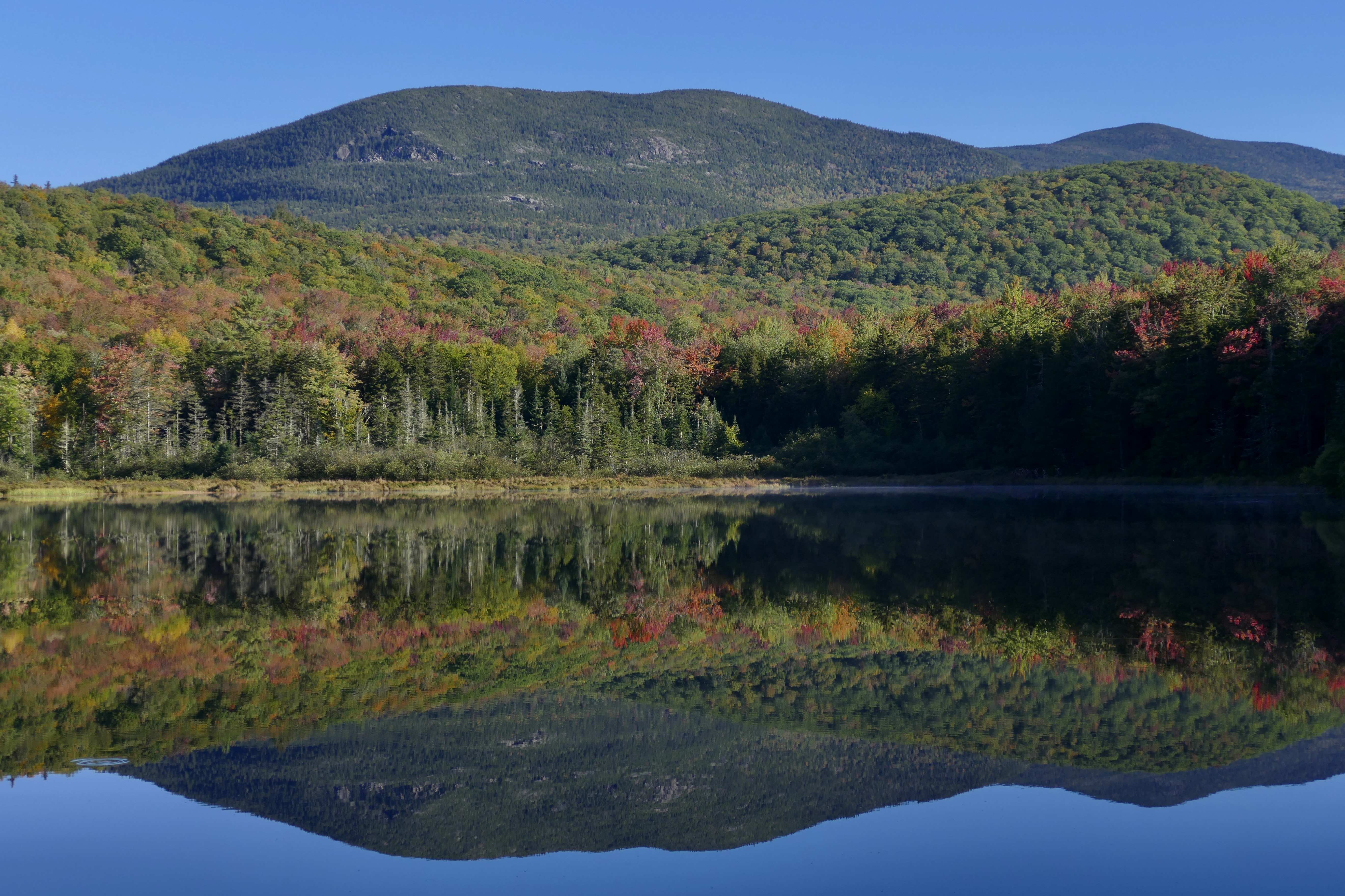
Great works of art have endless leisure for a background, as the universe has space. Time stands still while they are created. The artist cannot be in hurry. The earth moves round the sun with inconceivable rapidity, and yet the surface of the lake is not ruffled by it.
It is not by a compromise, it is not by a timid and feeble repentance, that a man will save his soul and live, at last.
in Thoreau’s Journal:
Now look out for redness on the face of the earth–
such as is seen on the cheek of the sweet viburnum–
or as frosty morning walk imparts to a man’s face–
Very brilliant & remarkable now are the prinos berries–
when so brilliant & pert–
when most things
flowers & berries
have withered.

I gather pretty good wild pears near the New Road–
now in prime.
The C. sericea bushes along the edge of the great meadows–
are now turned mulberry–
& here is an end of its berries then.
The hard frosts of the 21st & 22nd have put an end
to several kinds of plants & prob. berries for this year–
This is the crisis
when many kinds
conclude their summer.
in Thoreau’s Journal:
As I look off from the hilltop, I wonder if there are any finer days in the year than these the air is so fine and bracing.

The landscape has acquired some fresh verdure withal. The frosts come to ripen the days like fruits, persimmons.
in Thoreau’s Journal:
The small scull cap & cress & the mullein still in bloom. I see pigeon woodpeckers oftener now with their light rears. Birches & elms begin to turn yellow—& ferns are quite yellow or brown in many places. I see many tall clustered bluish asters by the brooks like the A undulatus. The blue stemmed golden rod is abundant bright & in its prime. The maples begin to be ripe. How beautiful when a whole maple on the edge of a swamp is like one great scarlet fruit—full of ripe juices— A sign of the ripening—every leaf from lowest limb to topmost spire— is a-glow. The woodbine is red too & its berries are blueing. The flattened black berries of the cucumber root—with the triangular bases of its leaves tinged red beneath as a sort of cup for them. My red ball fungus blossoms in the path in the midst of its jelly. As I was walking through the maple swamp by the Corner spring I was surprised to see apples on the ground—and at first supposed that some body had dropped them, but looking up I detected a wild apple tree, as tall and slender as the young maples and not more than 5 inches in diameter at the ground. This had blossomed & borne fruit this year—

The apples were quite mellow & of a very agreeable flavor—they they had a rusty scraperish look—and I filled my pockets with them. The squirrels had found them out before me. It is an agreeable surprise to find in the midst of a swamp so large and edible a fruit as an apple. Of late we have much cloudy weather without rain. Are not liable to showers as in summer—but may have a storm. The lentago berries appear to drop off before or as soon as they turn. There are few left on the bushes. Many that I bring home will turn in a single night. The sassafras leaves are red. The huckleberry bushes begin to redden. The white actaea berries still hang on—or their red pedicels remain.
in Thoreau’s Journal:
3 P. M. – To Cliffs via Bear Hill.
As I go through the fields, endeavoring to recover my tone and sanity and to perceive things truly and simply again, after having been perambulating the bounds of the town all the week, and dealing with the most commonplace and worldly-minded men, and emphatically trivial things, I feel as if I had committed suicide in a sense. I am again forcibly struck with the truth of the fable of Apollo serving King Admetus, its universal applicability. A fatal coarseness is the result of mixing in the trivial affairs of men. Though I have been associating even with the select men of this and the surrounding towns, I feel inexpressibly begrimed. My Pegasus has lost his wings; he has turned a reptile and gone on his belly. Such things are compatible only with a cheap and superficial life. The poet must keep himself unstained and aloof. Let him perambulate the bounds of imagination’s provinces, the realms of faery, and not the insignificant boundaries of towns.
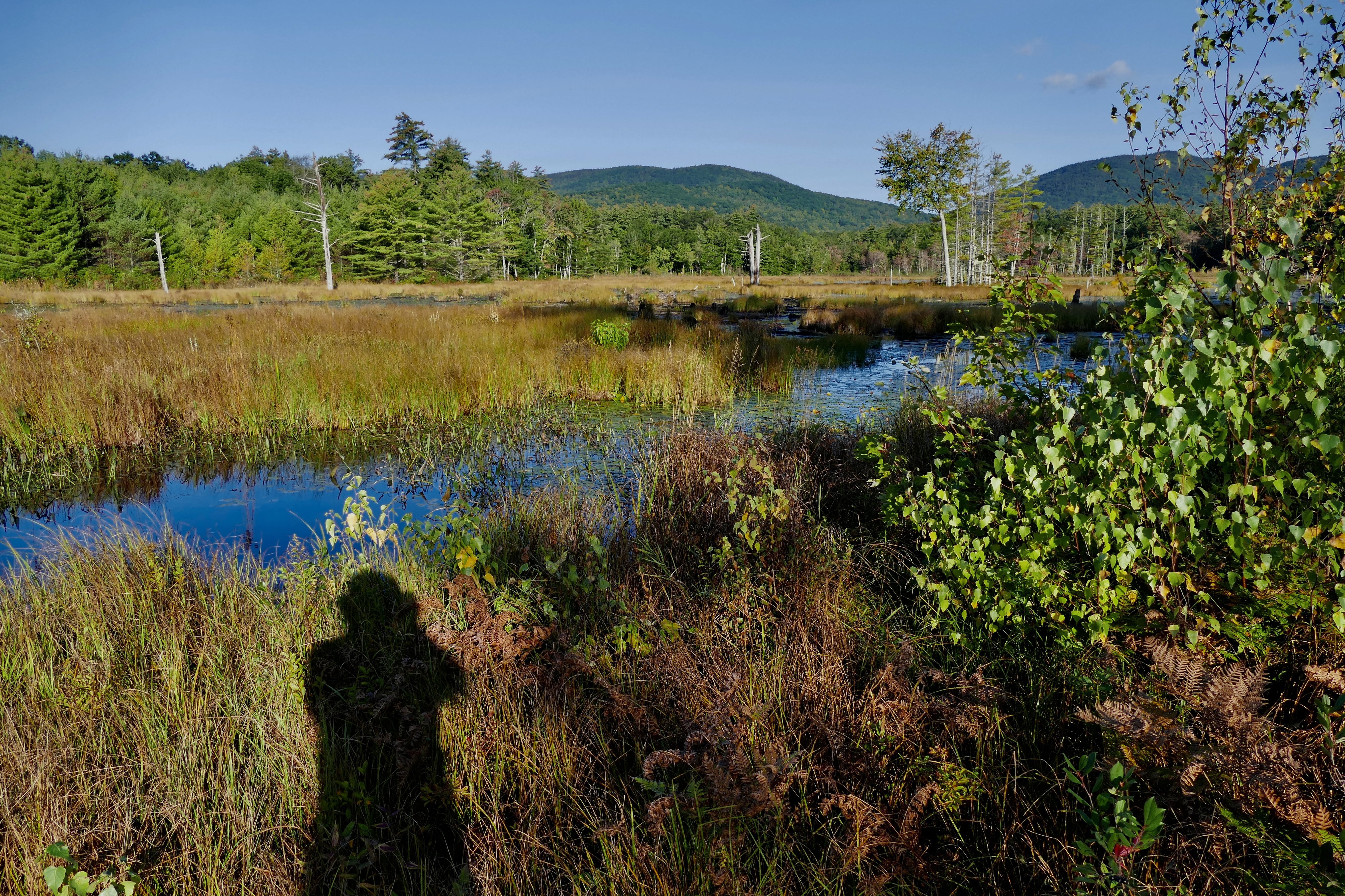
The excursions of the imagination are so boundless, the limits of towns are so petty.
in Thoreau’s Journal:
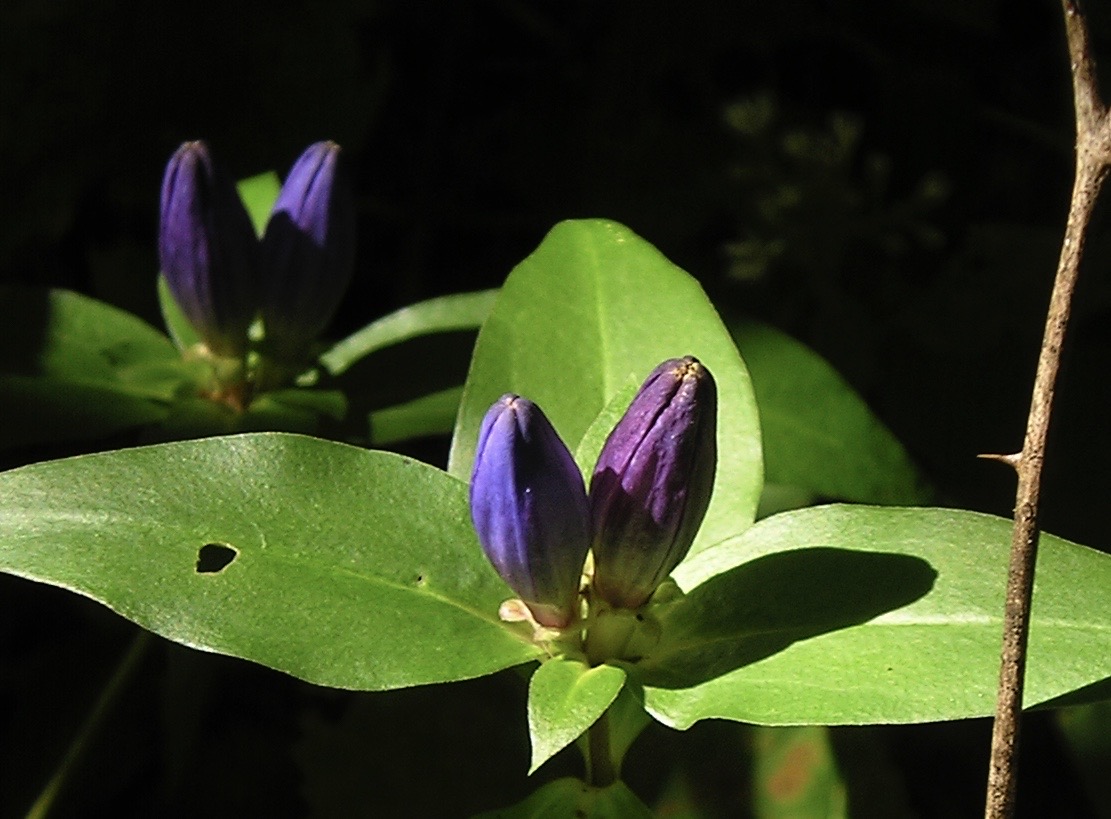
The soapwort gentian cheers & surprises with solid bulbs of blue from the shore—the stale grown purplish. It abounds along the river—after so much has been mown.
in Thoreau’s Journal:
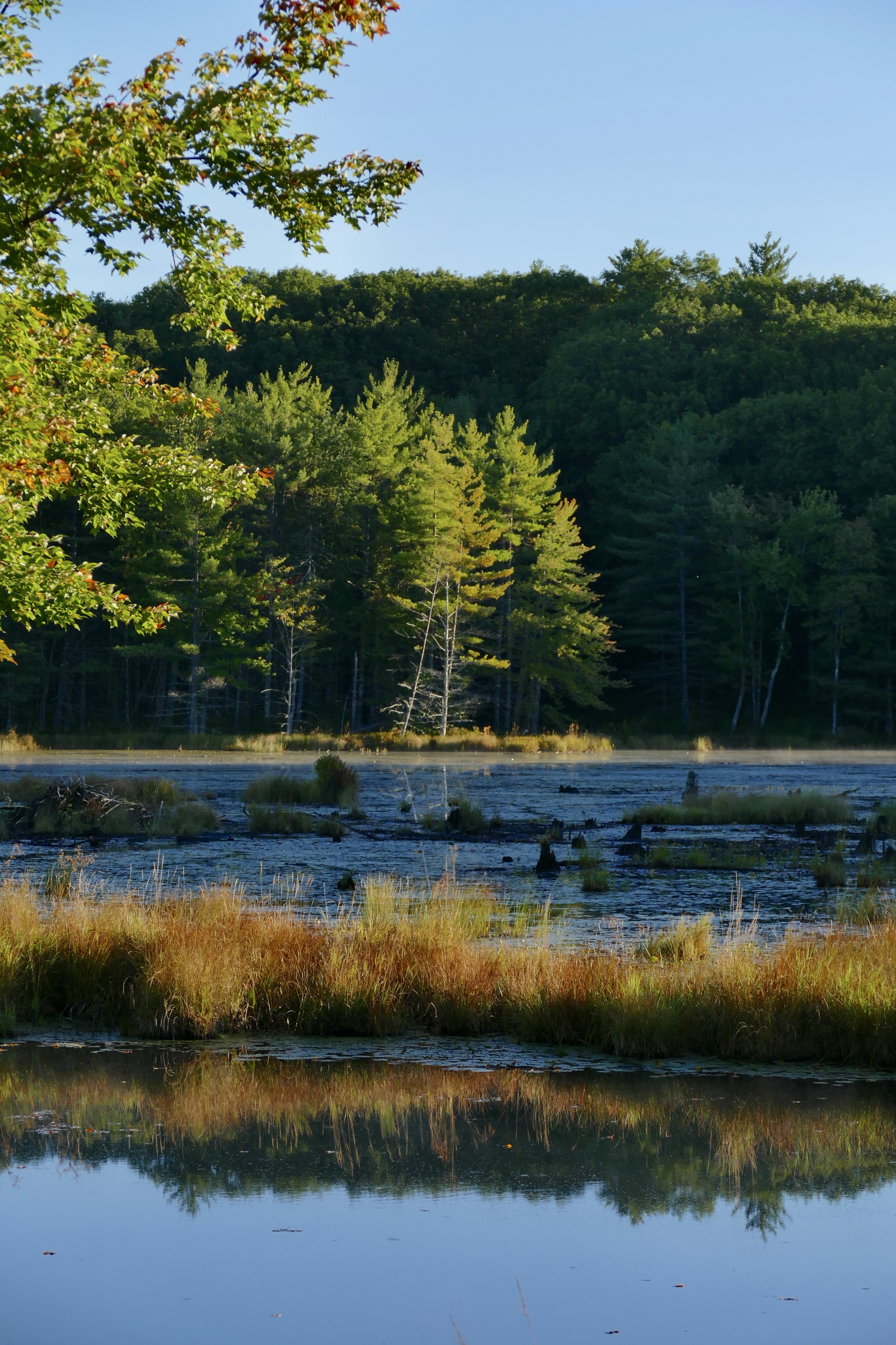
As we paddle westward, toward College Meadow, I perceive that a new season has come. The air is incredibly clear.
in Thoreau’s Journal:
The goldenrods have generally lost their brightness. A-barberrying to Flint’s Pond.
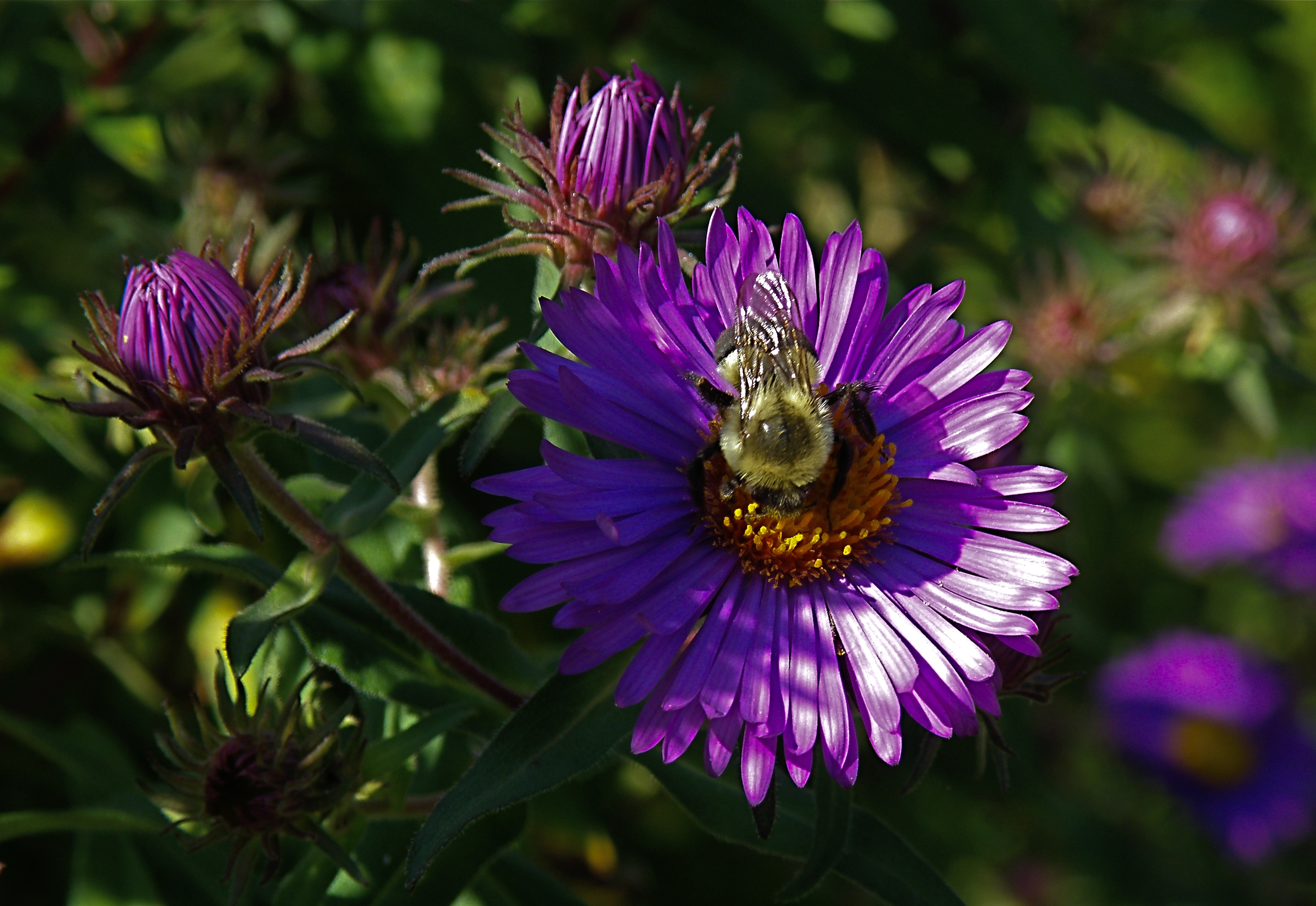
Methinks the asters were in their prime four or five days ago.
in Thoreau’s Journal:
The rippled blue surface of Fair Haven from the Cliffs—with its smooth white border where weeds preserve the surface smooth––a placid sliver plated rim––

The pond is like the sky with a border of whitish clouds in the horizon.
in Thoreau’s Journal:

Yesterday was very cold, with northwest wind, and this morning the first frost in the garden, killing some of our vines.
in Thoreau’s Journal:
Like the fruits, when cooler weather and frosts arrive, we too are braced and ripened. When we shift from the shady to the sunny side of the house, and sit there in an extra coat for warmth,

our green and leafy and pulpy thoughts acquire color and flavor, and perchance a sweet nuttiness at last, worth your cracking.
in Thoreau’s Journal:
I must walk more with free senses–– It is as bad to study stars & clouds as flowers & stones–– I must let my senses wander as my thoughts––my eyes see without looking. Carlyle said that how to observe was to look––but I say that is rather to see––& the more you look the less you will observe––
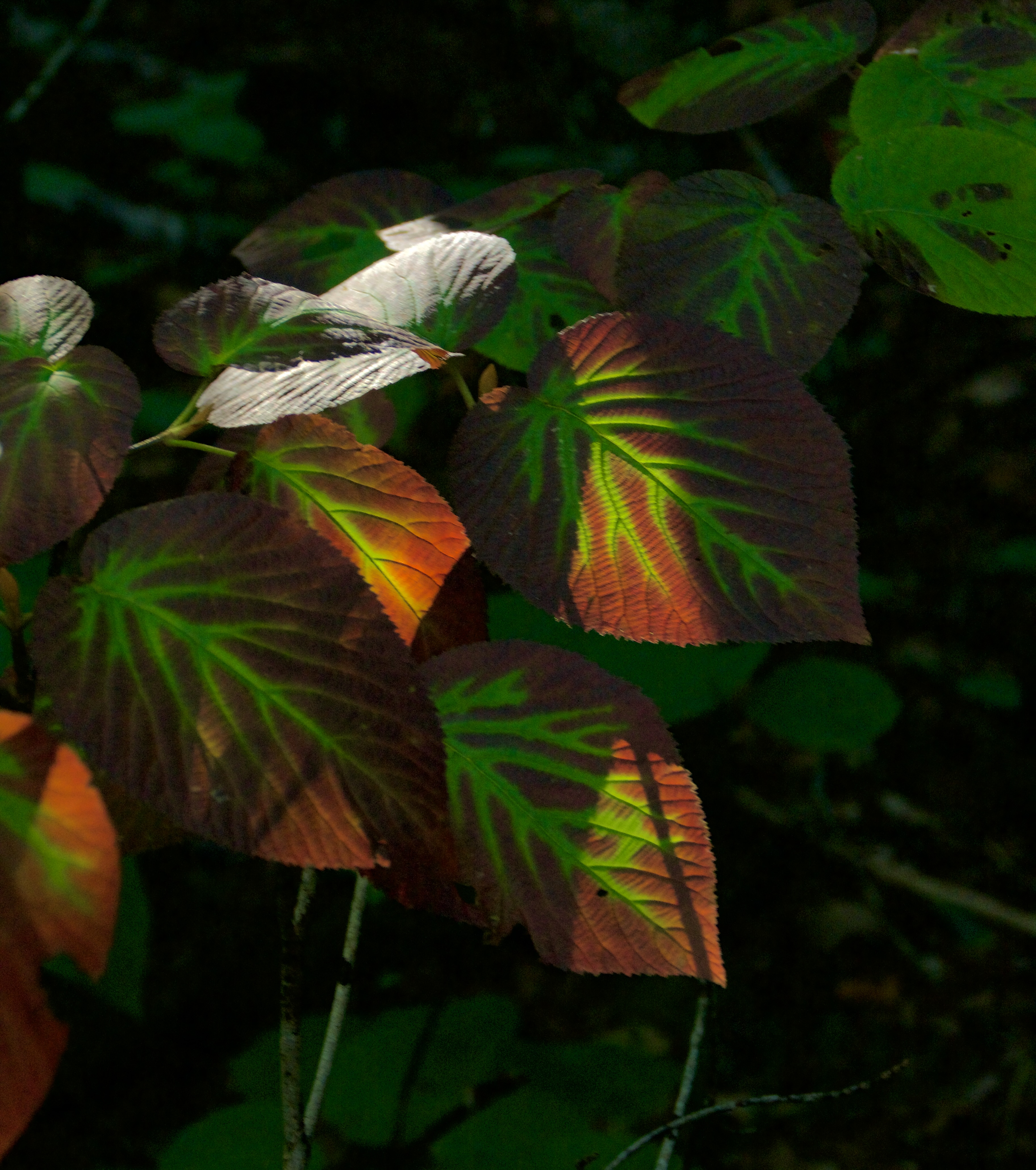
I have the habit of attention to such excess that my senses get no rest––but suffer from a constant strain. Be not preoccupied with looking. Go not to the object. Let it come to you….What I need is not to look at all––but a true sauntering of the eye.
in Thoreau’s Journal:
The prinos berries are pretty red. Any redness like cardinal-flowers, or poke, or the evening sky, or Cheronaea, excites us as a red flag does cows and turkeys.
in Thoreau’s Journal:
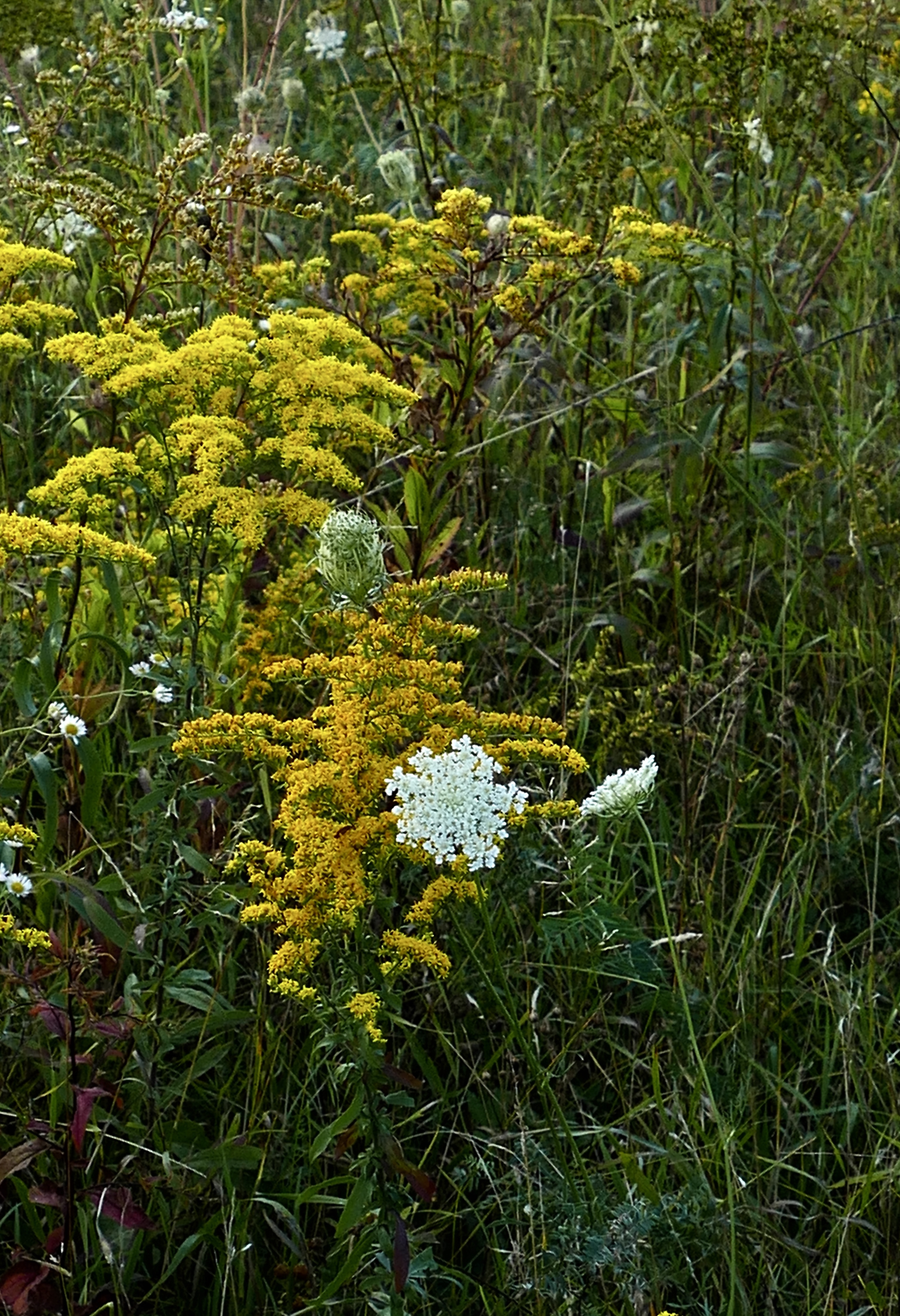
This is the season when the prevalence of the goldenrod gives such a ripe and teeming look to the dry fields and to the swamp
 allandibiase.com
You must be logged in to post a comment.