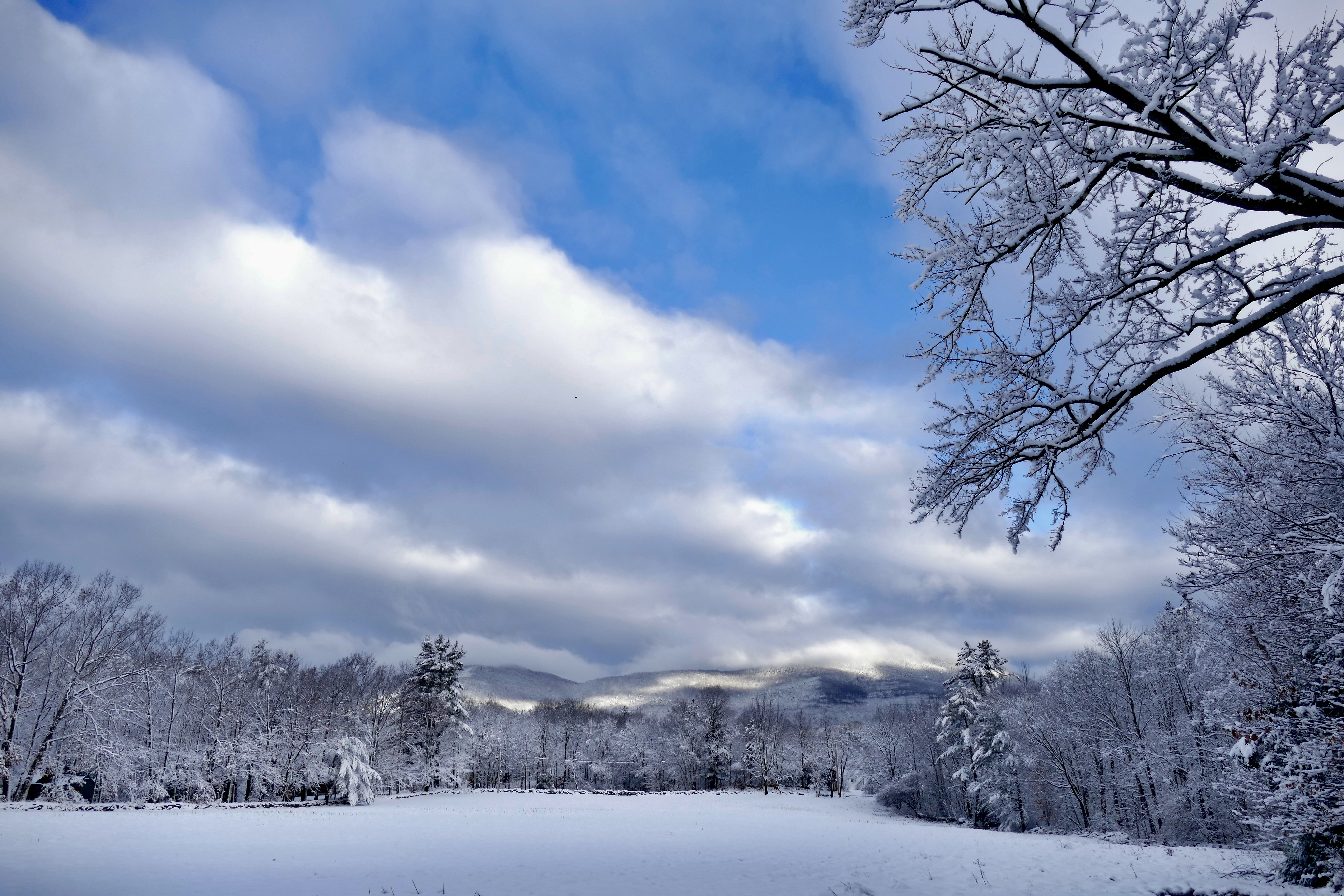
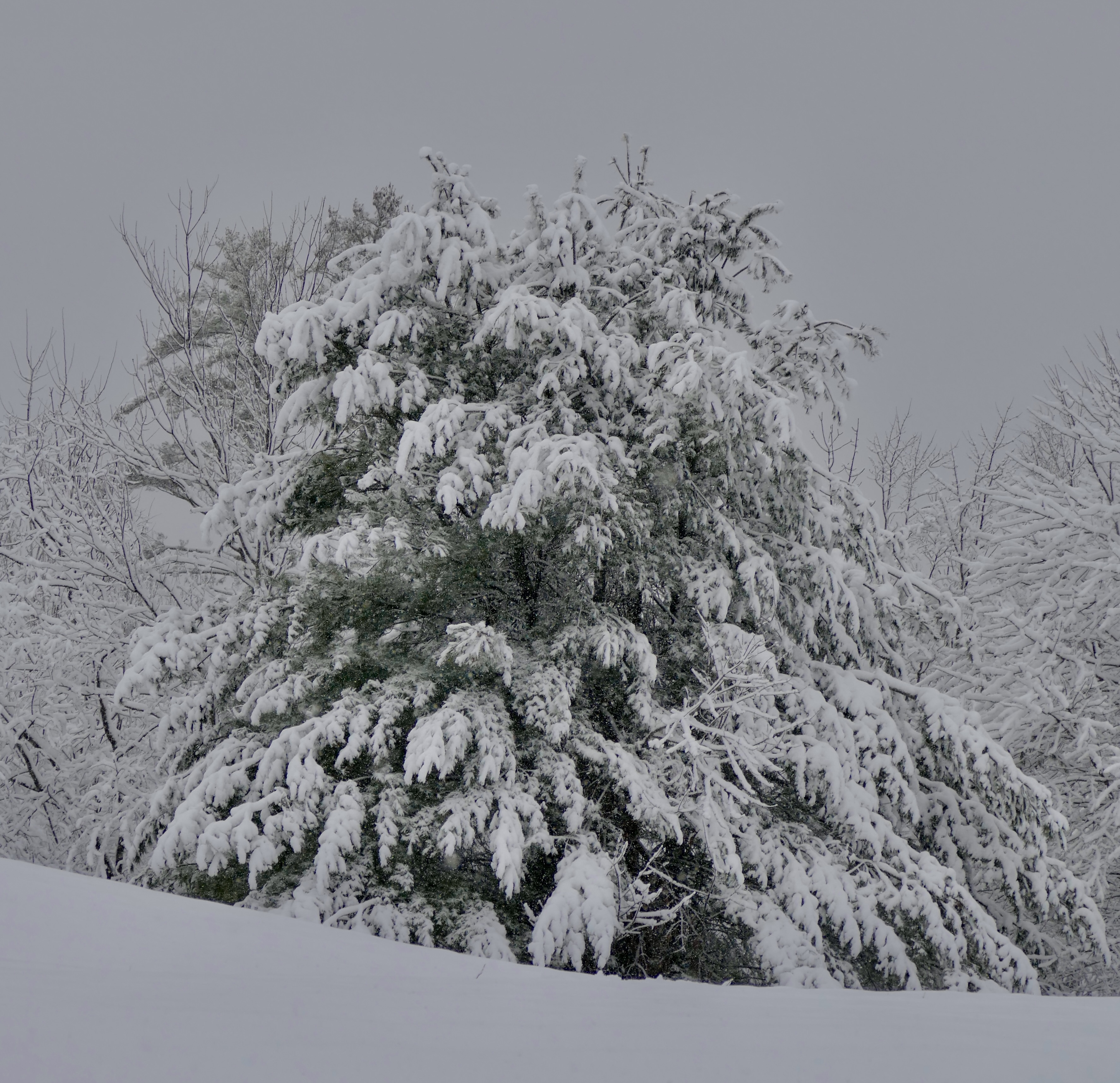
The winter with its snow and ice is not an evil to be corrected…..To perceive freshly, with fresh senses, is to be inspired. Great winter itself looked like a precious gem reflecting rainbow colors from one angle.
My body is all sentient. As I go here or there, I am tickled by this or that I come into contact with, as if I touched the wires of a battery. I can generally recall, have fresh in my mind, several scratches last received. These I continually recall to mind, reimpress and harp upon. The age of miracles is each moment thus returned; now it is wild apples, now river reflections, now a flock of lesser red-polls. In winter, too, resides immortal youth and perennial summer….What if we could daguerreotype our thoughts and feelings !
7 A. M. – How can we spare to be abroad in the morning red, to see the forms of the leafless eastern trees against the dun sky and hear the cocks crow, when a thin low mist hangs over the ice and frost in meadows?
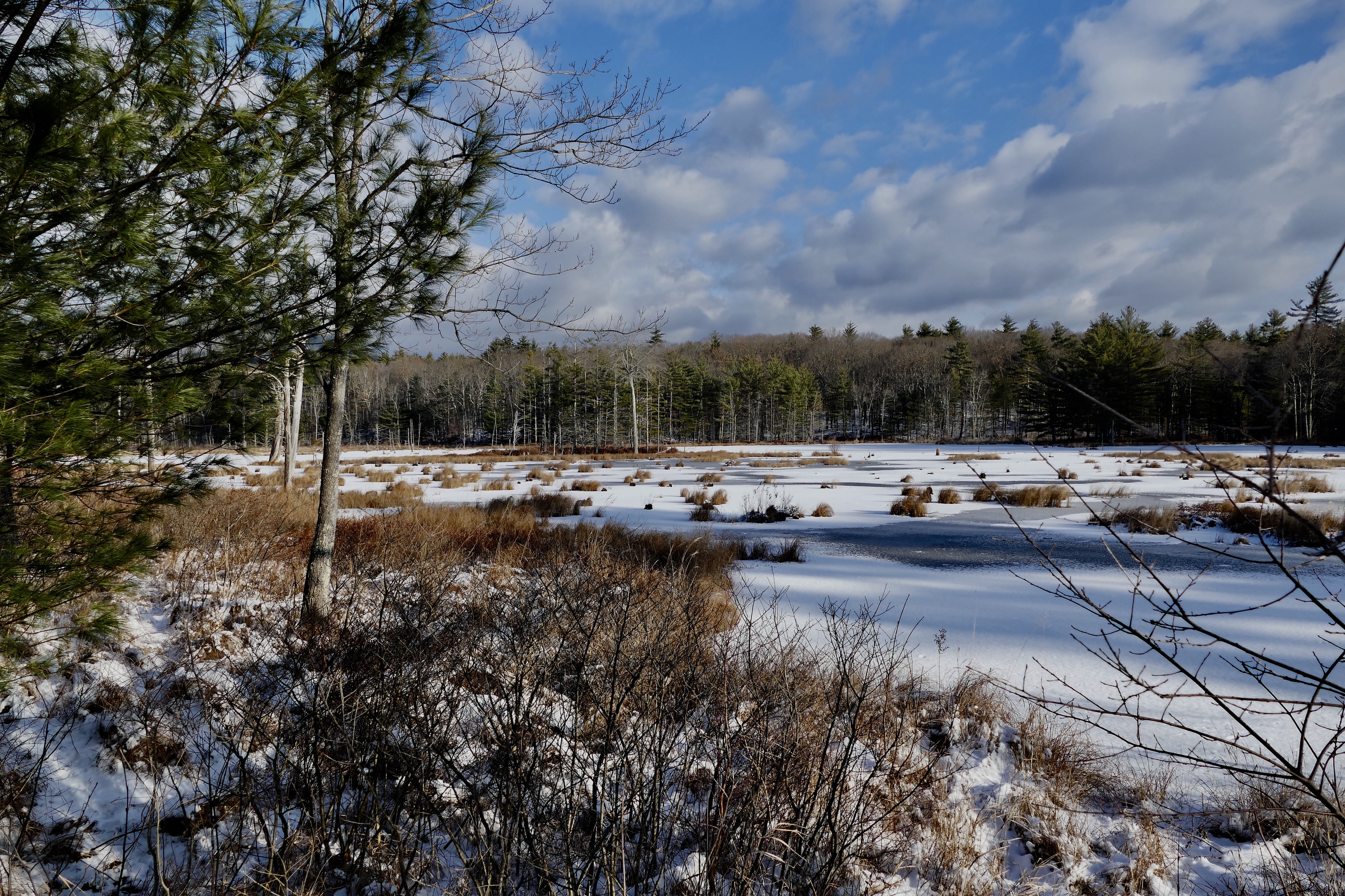
That grand old poem called Winter is round again without any connivance of mine. As I sit under Lee’s Cliff, where the snow is melted, amid sere pennyroyal and frost-bitten catnep, I look over my shoulder upon an arctic scene. I see with surprise the pond a dumb white surface of ice speckled with snow, just as so many winters before, where so lately were lapsing waves or smooth reflecting water.
I see the holes which the pickerel-fisher has made, and I see him, too, retreating over the hills, drawing his sled behind him. The water is already skimmed over again there. I hear, too, the familiar belching voice of the pond. It seemed as if winter had come without any interval since midsummer, and I was prepared to see it flit away by the time I again looked over my shoulder. It was as if I had dreamed it. But I see that the farmers have had time to gather their harvests as usual, and the seasons have revolved as slowly as in the first autumn of my life. The winters come now as fast as snowflakes. It is wonderful that old men do not lose their reckoning. It was summer, and now again it is winter. Nature loves this rhyme so well that she never tires of repeating it. So sweet and wholesome is the winter, so simple and moderate, so satisfactory and perfect, that her children will never weary of it. What a poem! an epic in blank verse, enriched with a million tinkling rhymes. It is solid beauty. It has been subjected to the vicissitudes of millions of years of the gods, and not a single superfluous ornament remains. The severest and coldest of the immortal critics have shot their arrows at and pruned it till it cannot be amended.
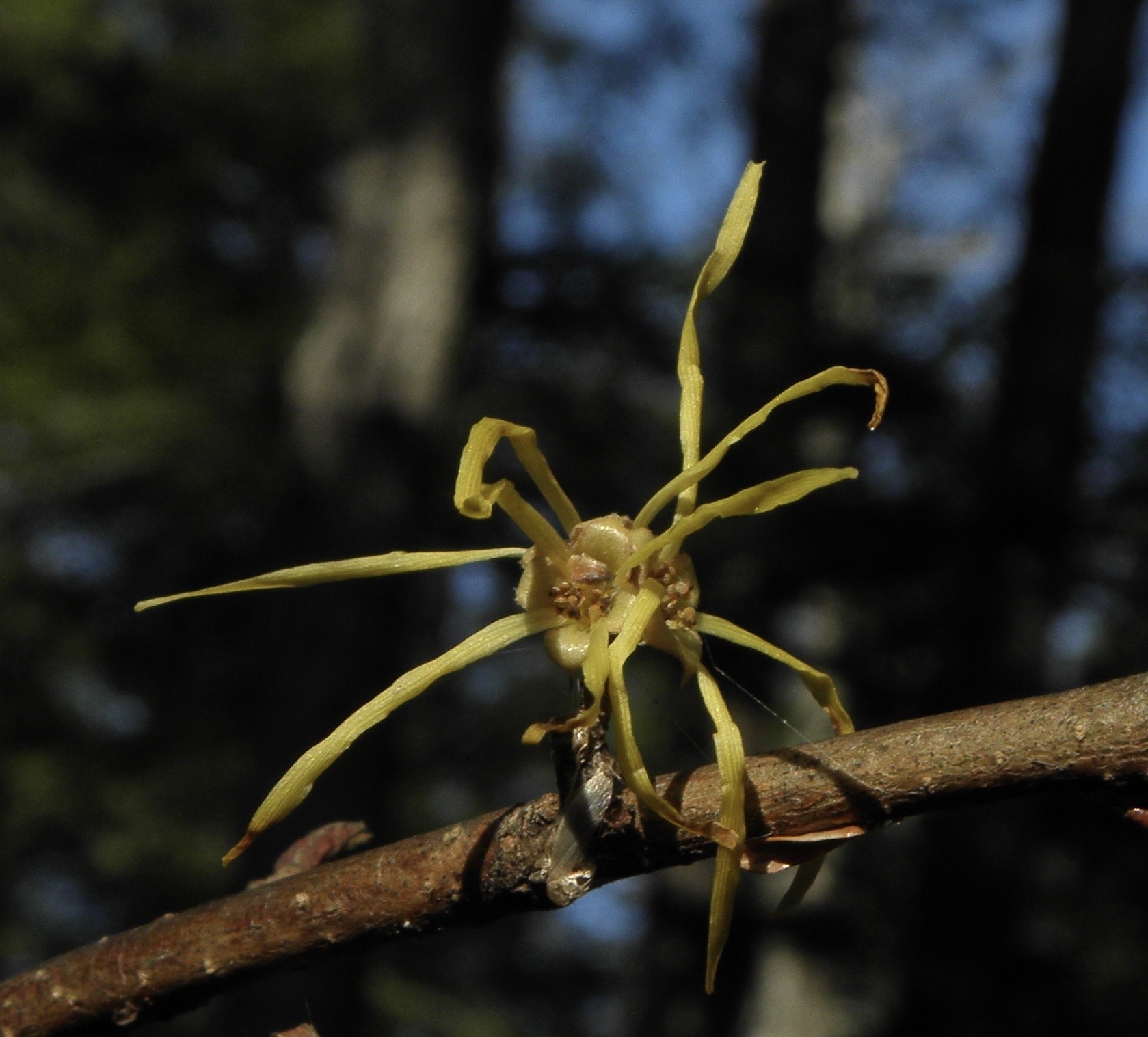
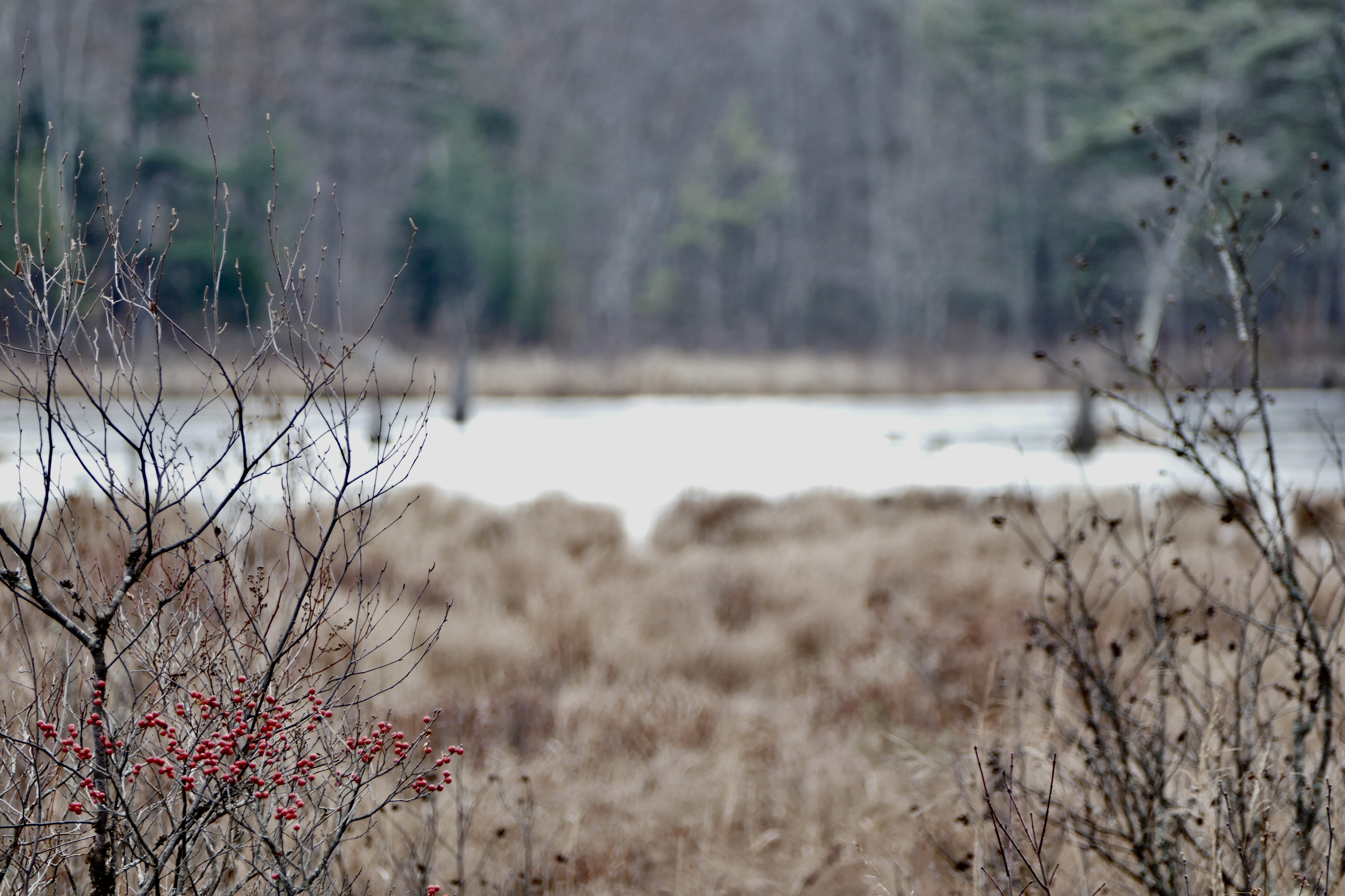
On all sides in swamps and about their edges, and in the woods, the bare shrubs are sprinkled with buds more or less noticeable and pretty, their little gemmae or gems their most vital and attractive parts now, almost all the greenness and color left, greens and salads for the birds and rabbits.
Our eyes go searching along the stem for what is most vivacious and characteristic, the concentrated summer gone into winter quarters. For we are hunters pursuing the summer on snow-shoes and skates all winter long, and there is really but one season in our hearts.
We may infer that every withered culm of grass or sedge—or weed that still stands in the fields—answers some purpose by standing— Those trees & shrubs which retain their withered leaves through the winter—shrub oaks—& young white red & black oaks—the lower branches of larger trees of the last mentioned species—horn-beam &c & young hickories seem to form an intermediate class between deciduous & evergreen trees— They may almost be called the ever-reds. Their leaves which are falling all winter long serve as a shelter to rabbits & partridges & other winter quadrupeds & birds—even the little chickadees love to skulk amid them & peep out from behind them. I hear their faint silvery lisping notes‚ like tinkling glass—& occasionally a sprightly day-day-day—as they inquisitively hop nearer & nearer to me.
They are our most honest & innocent little bird—drawing yet nearer to us as the winter advances—& deserve best of any of the walker.





 allandibiase.com
You must be logged in to post a comment.