When you think that your walk is profitless and a failure, and you can hardly persuade yourself not to return, it is on the point of being a success, for then you are in that subdued and knocking mood to which Nature never fails to open.
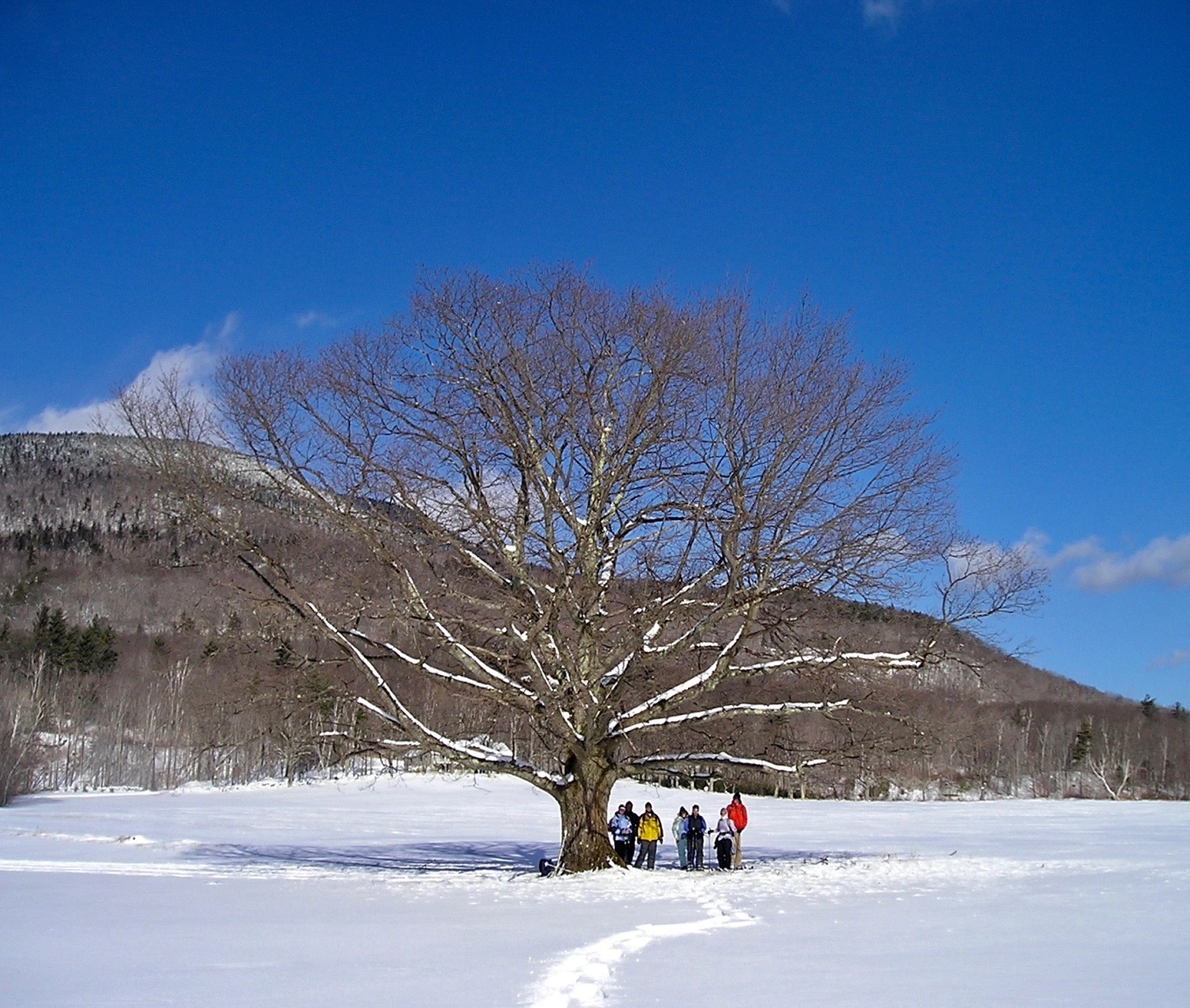
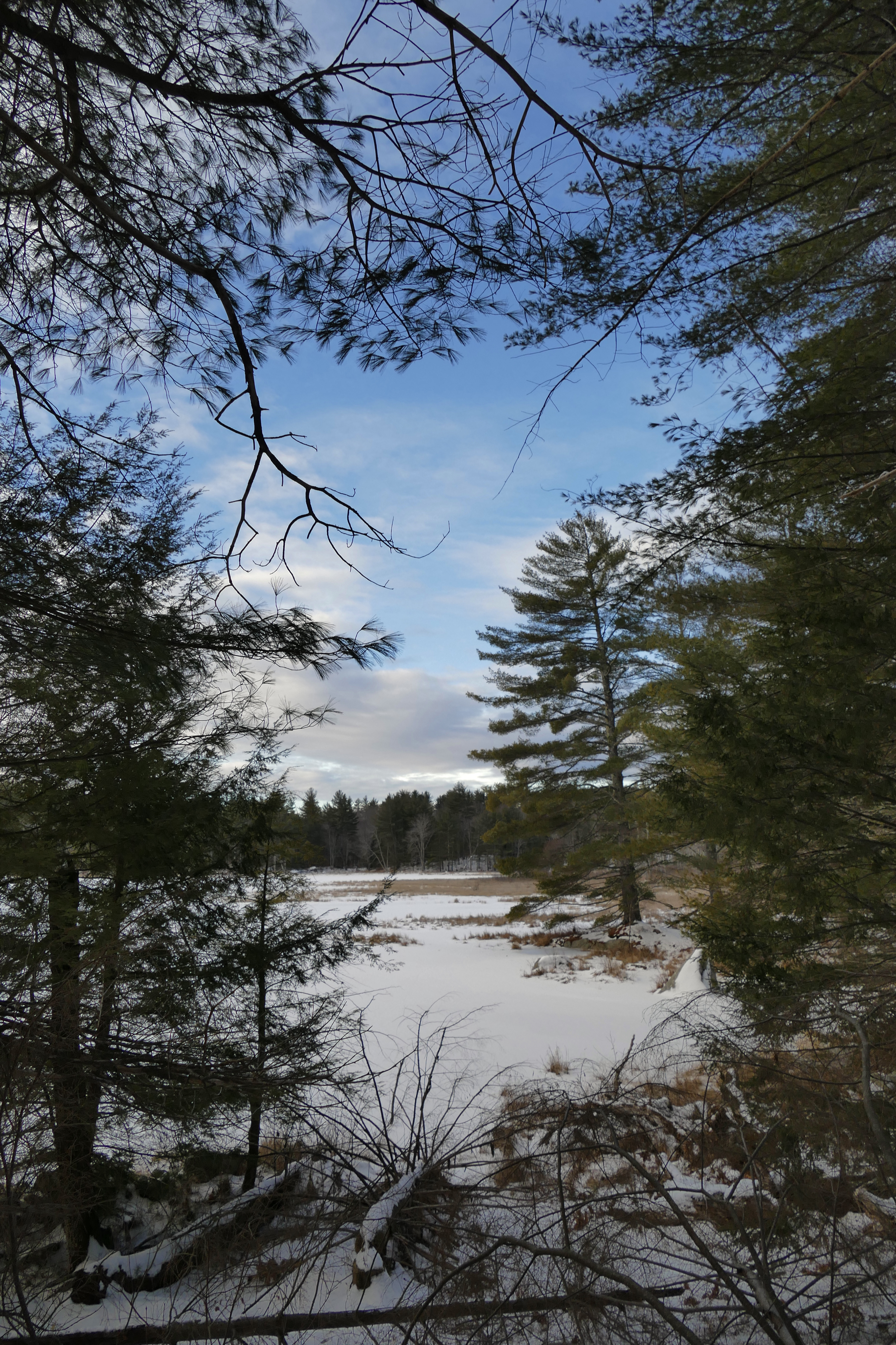
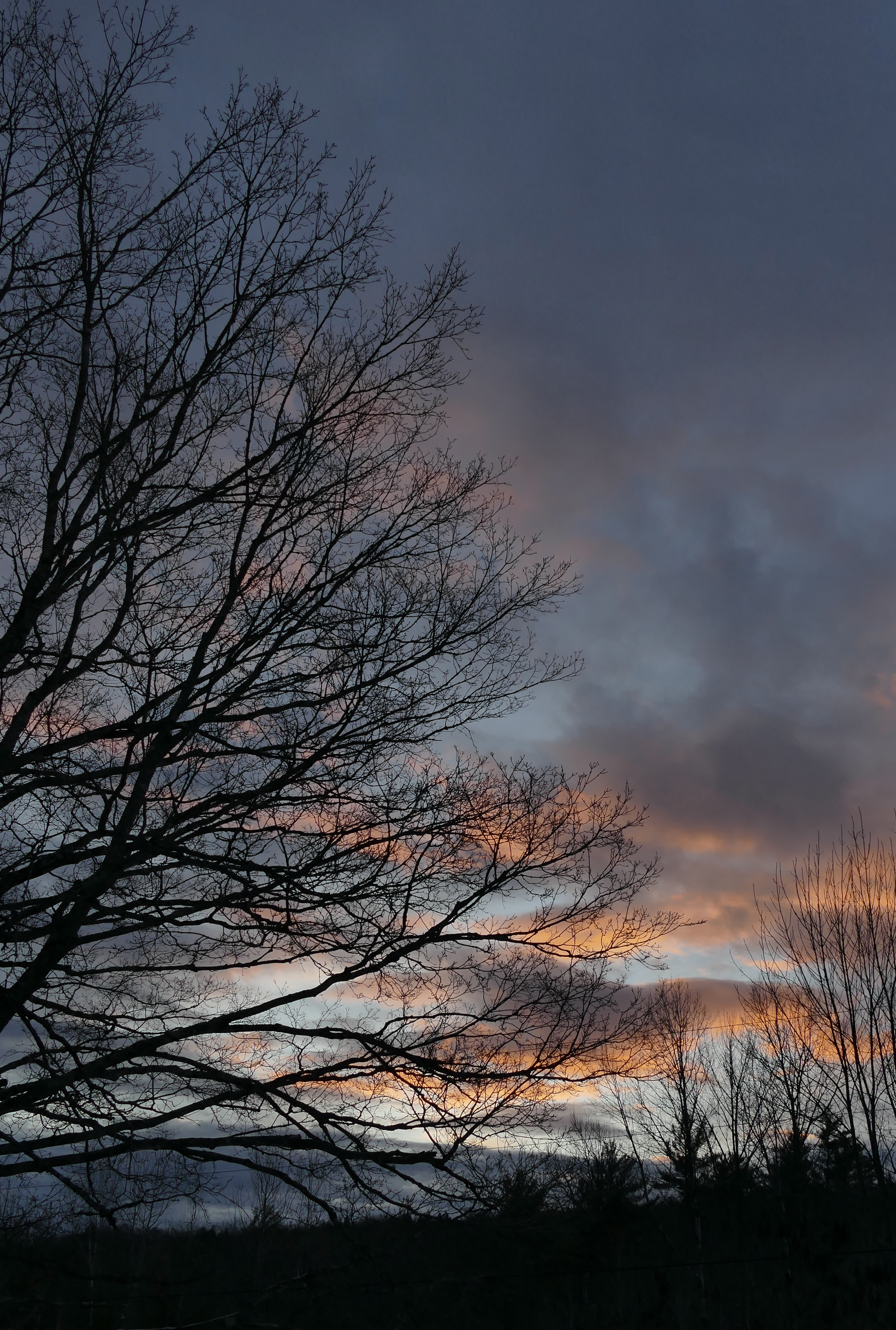
A tree seen against other trees is a mere dark mass, but against the sky it has parts, has symmetry and expansion…
The thousand fine points & tops of the trees delight me—they are the plumes & standards & bayonets of a host that march to victory over the earth. The trees are handsome towards the heavens—as well as up their boles—they are good for other things than boards & shingles…
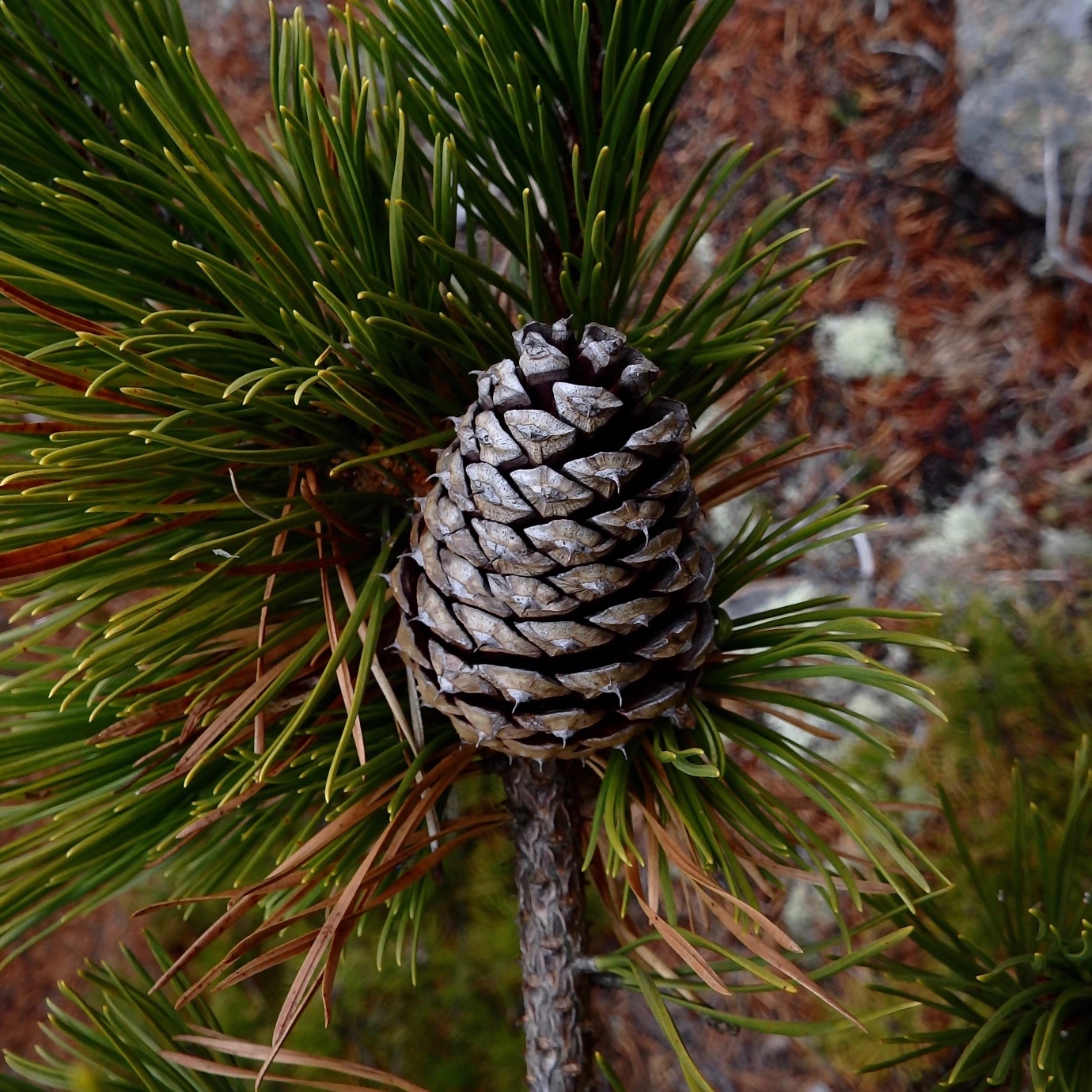
A closed pitch pine cone, gathered January 22nd, opened last night in my chamber. If you would be convinced how differently armed the squirrel is naturally for dealing with pitch pine cones, just try to get one open with your teeth. He who extracts the seeds from a single closed cone, with the aid of a knife, will be constrained to confess that the squirrel earns his dinner. He has the key to this conical and spiny chest of many apartments. He sits on a post vibrating his tail, and twirls it as a plaything.
So is a man commonly a locked-up chest to us, to open whom, unless we have the key of sympathy, will make our hearts bleed.
By spells seriousness will be forced to cut capers, and drink a deep and refreshing draught of silliness; to turn this sedate day of Lucifer’s and Apollo’s, into an all fools’ day for Harlequin and Cornwallis. The sun does not grudge his rays to either, but they are alike patronized by the gods. Like overtasked schoolboys, all my members and nerves and sinews petition Thought for a recess, and my very thigh-bones itch to slip away from under me, and run and join the melee. I exult in stark inanity, leering on nature and the soul. We think the gods reveal themselves only to sedate and musing gentlemen. But not so; the buffoon in the midst of his antics catches unobserved glimpses, which he treasures for the lonely hour. When I have been playing tomfool, I have been driven to exchange the old for a more liberal and catholic philosophy.
To insure health a man’s relation to nature—must come very near to a personal one—he must be conscious of a friendliness in her—when human friends part or die she must stand in the gap to him. I cannot conceive of any life which deserves the name, unless there is a certain tender relation to nature— This it is which makes winter warm—& supplies society in the desert & wilderness— Unless nature sympathizes with & speaks to us, as it were, the most fertile & blossoming regions are barren & dreary…
I do not see that I can live tolerably without affection for Nature. If I feel no softening toward the rocks, what do they signify?
I do not think much of that chemistry that can extract corn and potatoes out of a barren [soil], but rather of that chemistry that can extract thoughts and sentiments out of the life of a man on any soil. It is in vain to write on the seasons unless you have the seasons in you.
Nature provides shelter for her creatures in various ways. If the musquash, etc., has no longer extensive fields of weed and grass to crawl in, what an extensive range it has under the ice of the meadows and riversides! for, the water settling directly after freezing, an icy roof of indefinite extent is thus provided for it, and it passes almost its whole winter under shelter, out of the wind and invisible to men.
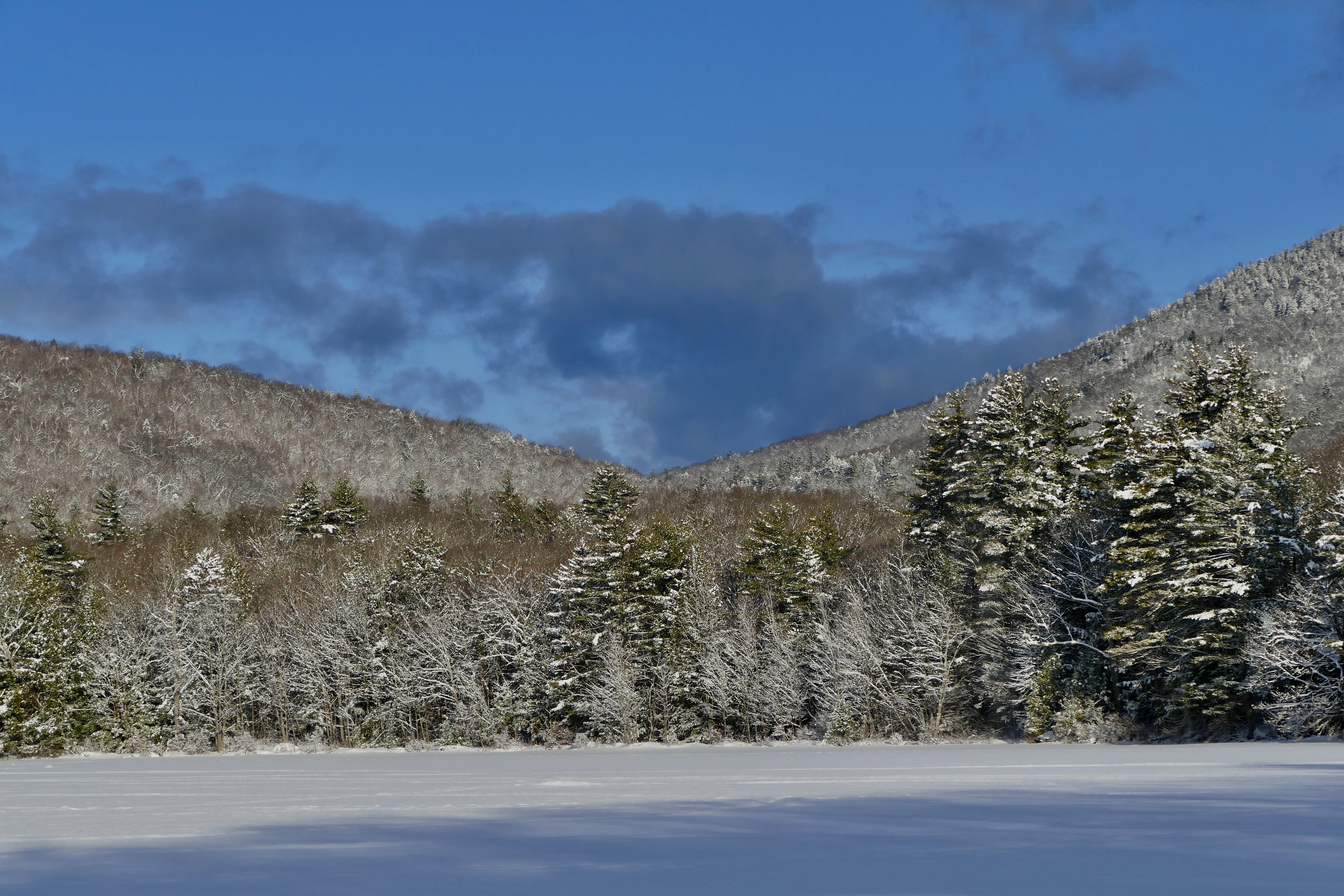
…..I am disturbed by the sound of my steps on the frozen ground. I wish to hear the silence of the night. I cannot walk with my ears covered, for the silence is something positive and to be heard….When I enter the woods, I am fed by the variety, the forms of the trees above against the blue, with the stars seen through the pines, like the lamps hung on them in an illumination, the somewhat indistinct and misty fineness of the pine tops, the finely divided spray of the oaks, etc., and the shadow of all these on the snow.
I do not know but it is too much to read one newspaper in a week, for I now take the weekly Tribune, and for a few days past, it seems to me, I have not dwelt in Concord; the sun, the clouds, the snow, the trees say not so much to me. You cannot serve two masters. It requires more than a day’s devotion to know and to possess the wealth of a day. To read of things distant and sounding betrays us into slighting these which are then apparently near and small. We learn to look abroad for our mind and spirit’s daily nutriment, and what is this dull town to me? what are these plain fields and the aspects of this earth and these skies? All summer and far into the fall I unconsciously went by the newspapers and the news, and now I find it was because the morning and the evening were full of news to me. My walks were full of incidents. I attended not to the affairs of Europe, but to my own affairs in Concord fields.
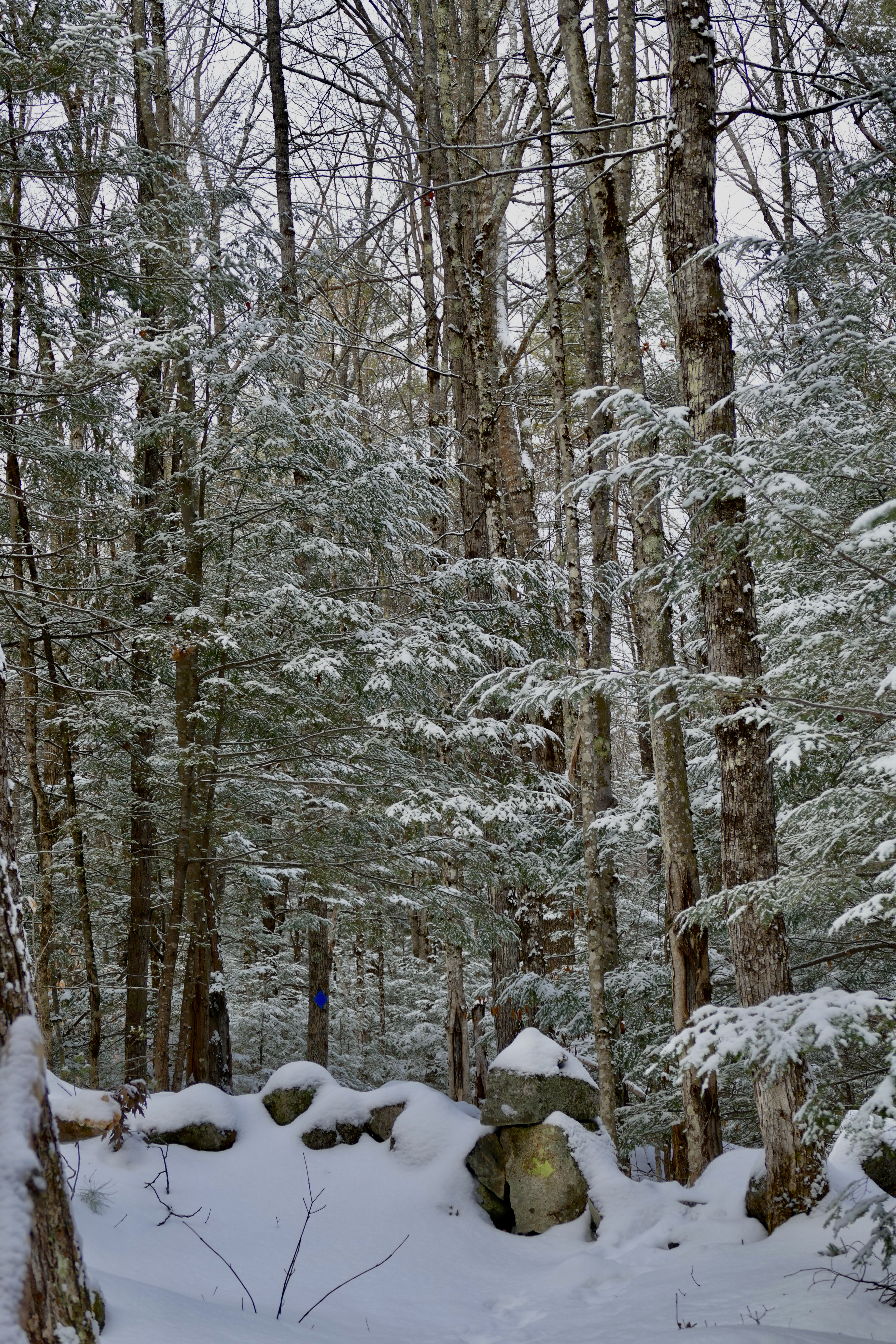
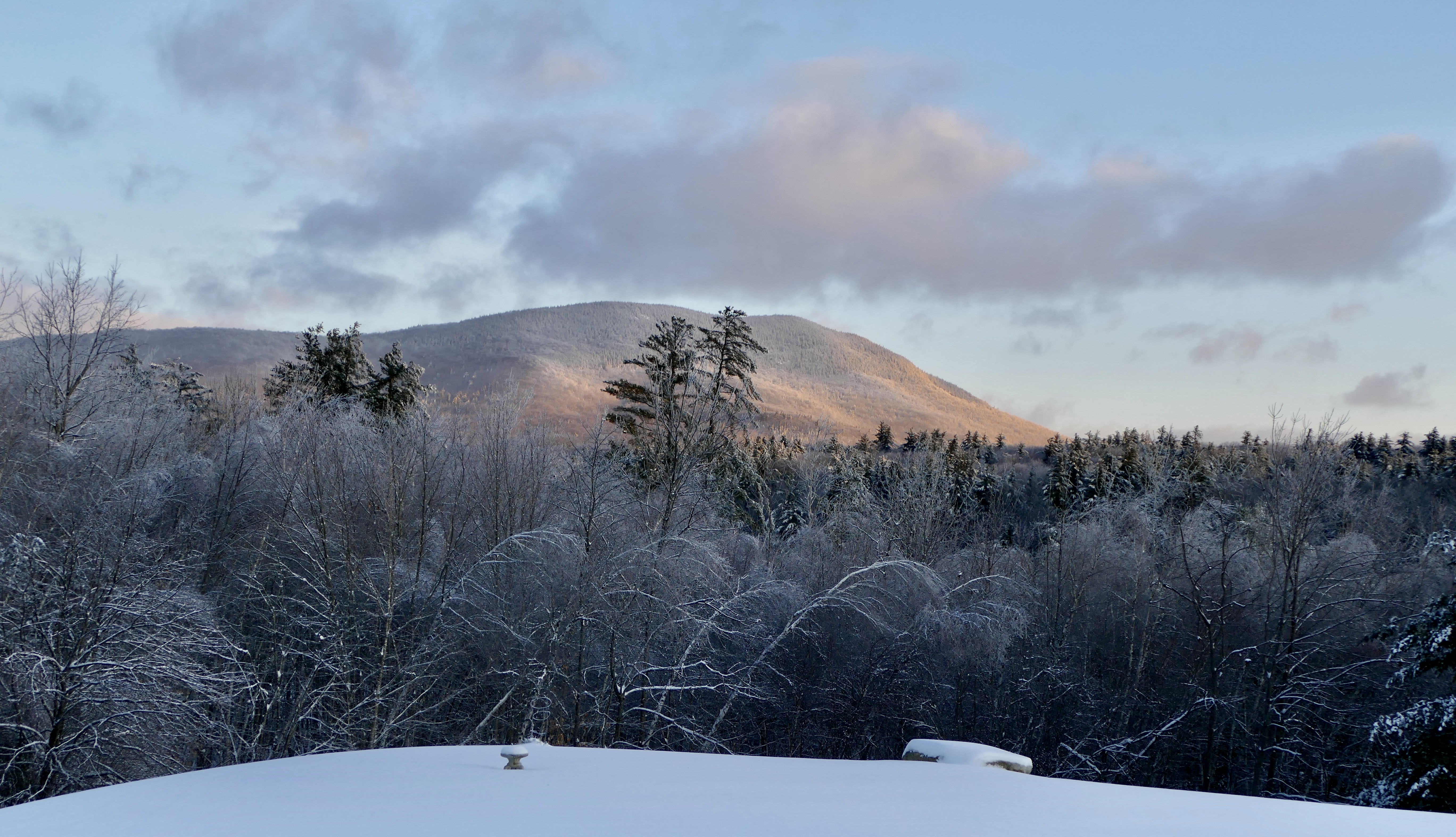
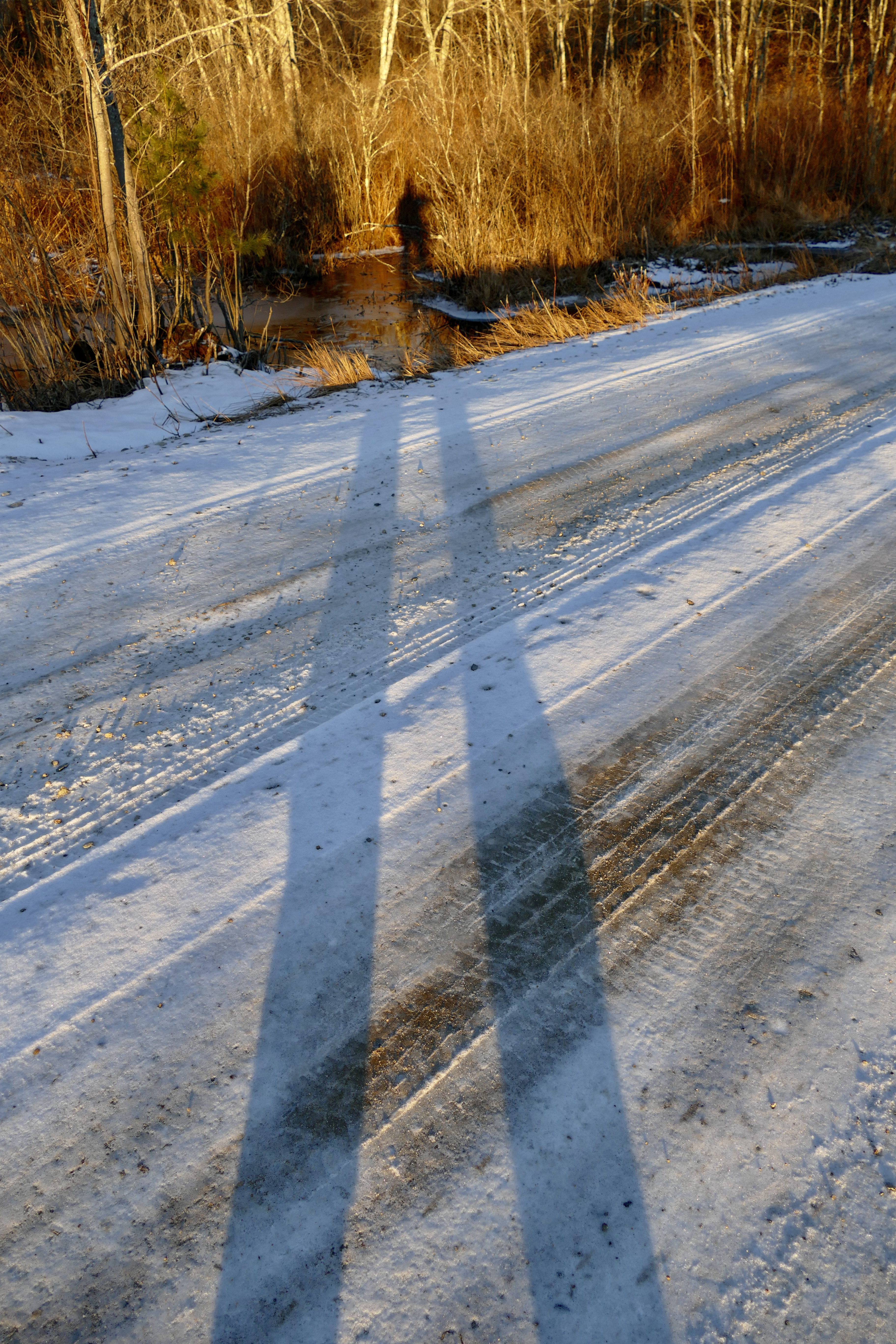
The snow, which has drifted badly, ceasing about 2 o’clock, I went forth by way of Walden road, whither no sleigh or sled had passed this day, the fine, dry snow blowing and drifting still. It was pleasant to make the first tracks in this road through the woods, where all the road, except a faint depression, two long slight valleys, marking the ruts, was obliterated, — a smooth, white plain between the bordering woods, which only a few dry oak leaves coursed over. I sank into the snow for long distances more than three feet at each step.
OLYMPUS DIGITAL CAMERA
From Bare Hill I looked into the west, the sun still fifteen minutes high. The snow blowing far off in the sun, high as a house, looked like the mist that rises from rivers in the morning. I came across lots through the dry white powder from Britton’s camp. Very cold on the causeway and on the hilltops.
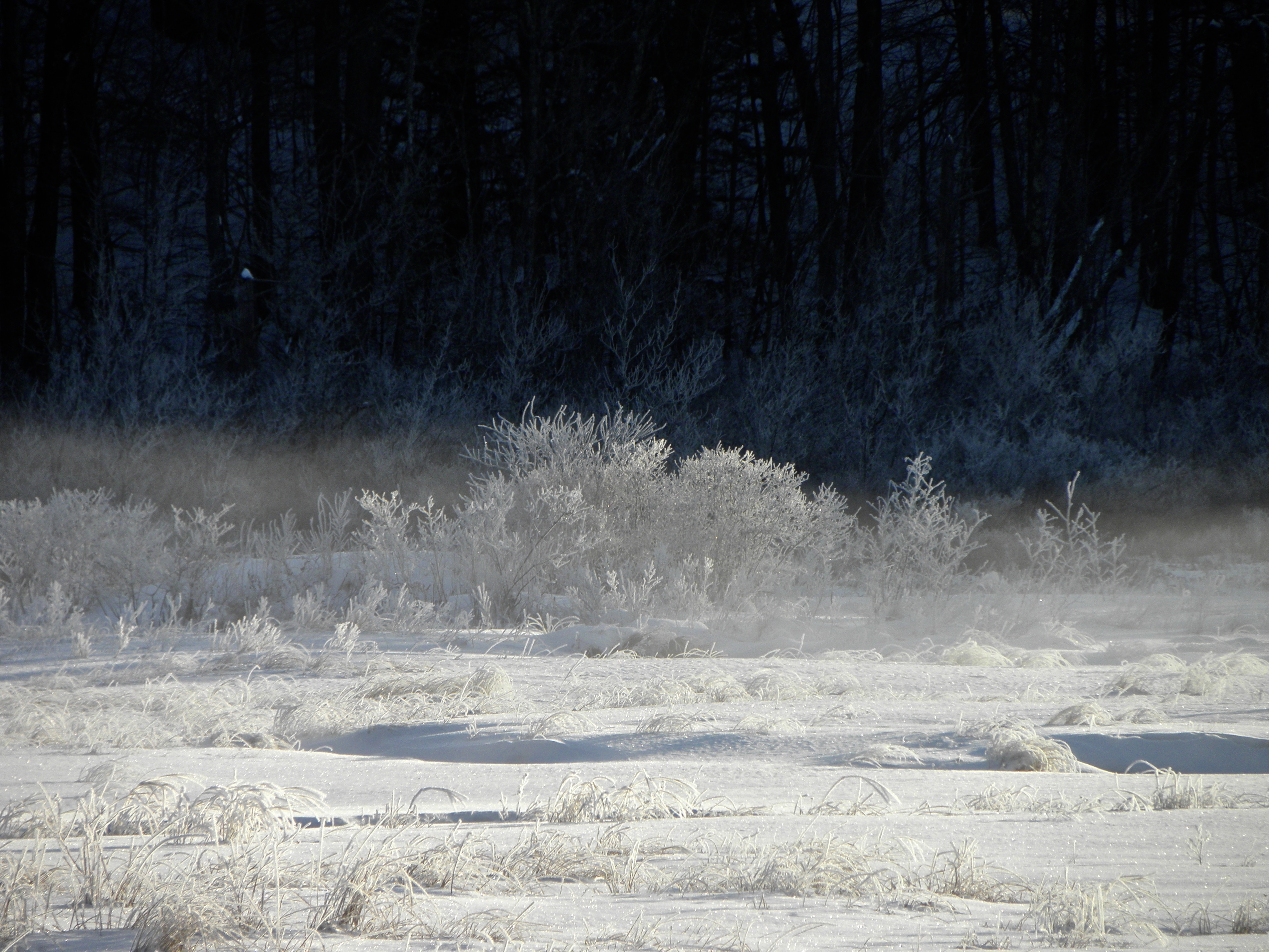
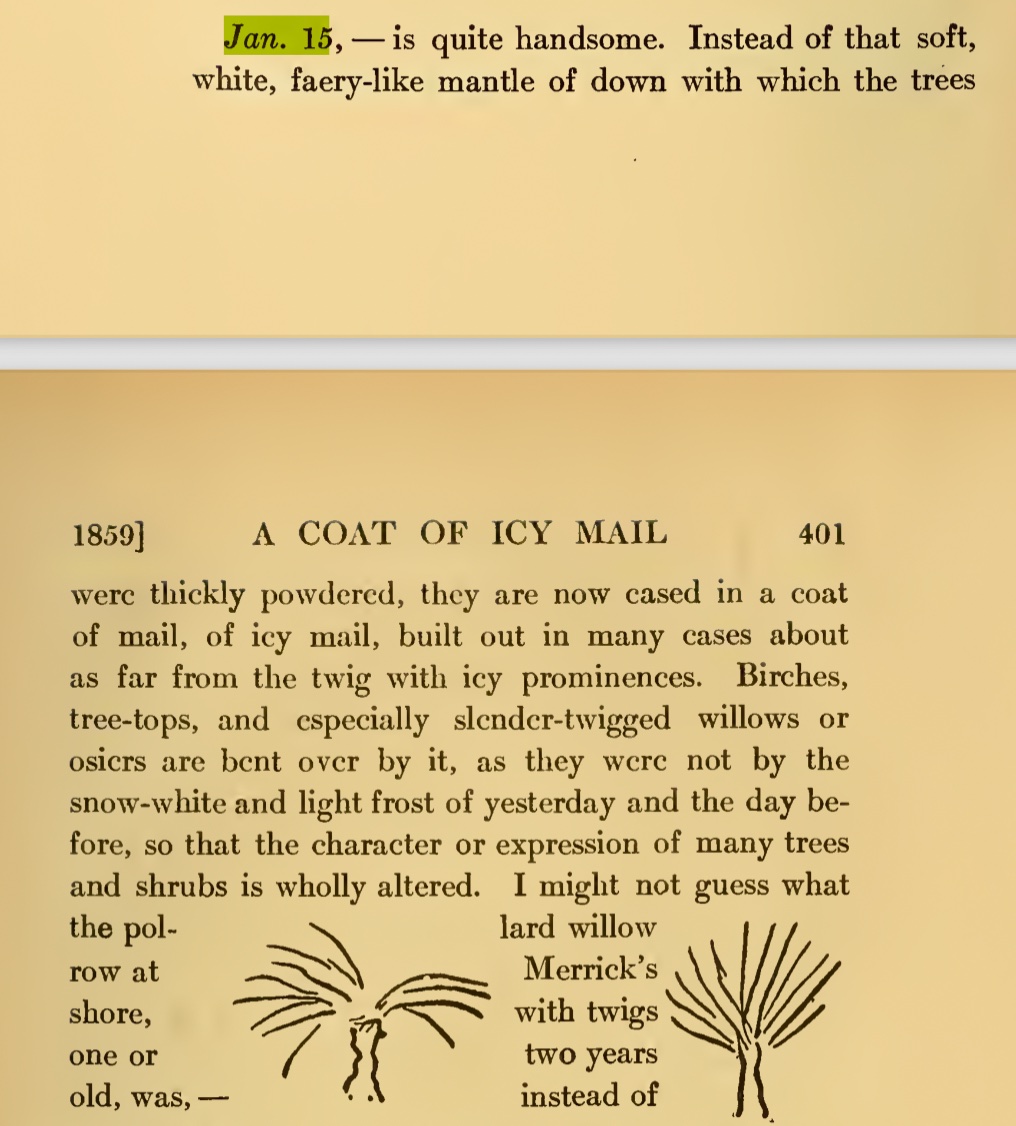
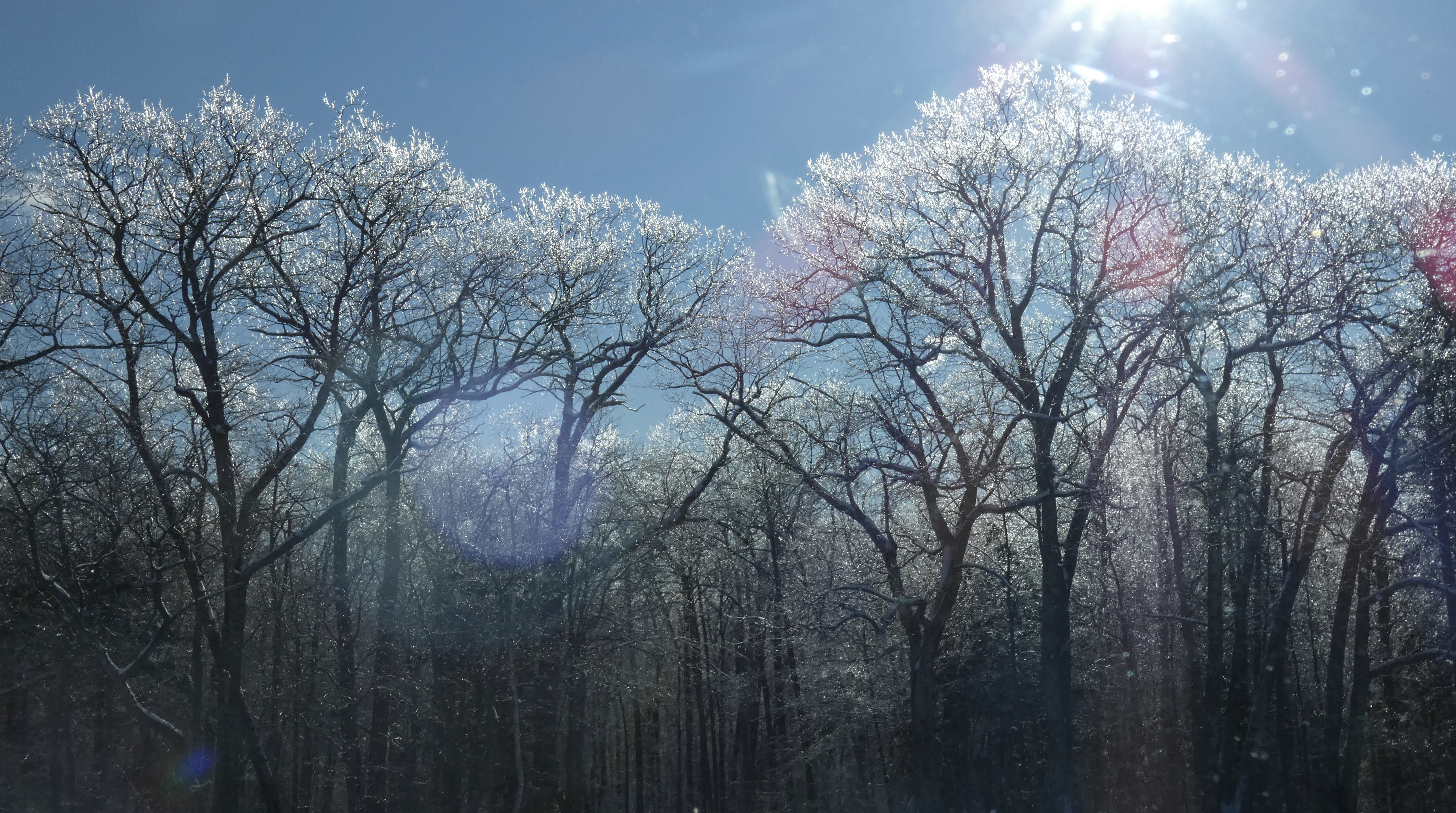
That wonderful frostwork of the 13th and 14th was too rare to be neglected, —succeeded as it was, also, by two days of glaze, —but, having company, I lost half the advantage of it. It was remarkable to have a fog for four days in midwinter without wind. We had just had sudden severe cold weather, and I suspect that the fog was occasioned by a warmer air, probably from the sea, coming into contact with our cold ice-and-snow-clad earth. The hoar frost formed of the fog was such a one as I do not remember on such a scale. Apparently as the fog was coarser and far more abundant, it was whiter, less delicate to examine, and of far greater depth than a frostwork formed of dew. We did not have an opportunity to see how it would look in the sun, but seen against the mist or fog it was too fair to be remembered. The trees were the ghosts of trees appearing in their winding-sheets, an intenser white against the comparatively dusky ground of thef og. I rode to Acton in the afternoon of the 13th, and I remember the wonderful avenue of these faery trees which everywhere over-arched my road. The elms, from their form and size, were particularly beautiful. As far as I observed, the frostwork was deepest in the low grounds, especially on the Salix alba there. I learn from the papers that this phenomenon prevailed all over this part of the country and attracted the admiration of all. The trees on Boston Common were clad in the same snow-white livery with our Musketaquid trees.
Perhaps the most unusual thing about this phenomenon was its duration. The air seemed almost perfectly still the first day, and I did not perceive that the frosting lost anything; nay, it evidently grew during the first half of the day at least, for it was cold at the same time that it was foggy.
Every one, no doubt, has looked with delight, holding his face low, at that beautiful frostwork which so frequently in winter mornings is seen bristling about the throat of every breathing-hole in the earth’s surface. In this case the fog, the earth’s breath made visible, was in such abundance that it invested all our vales and hills, and the frostwork, accordingly, instead of being confined to the chinks and crannies of the earth, covered the mightiest trees, so that we, walking beneath them, had the same wonderful prospect and environment that an insect would have in the former case. We, going along our roads, had such a prospect as an insect would have making its way through a chink in the earth which was bristling with hoar frost.
That glaze! I know what it was by my own experience; it was the frozen breath of the earth upon its beard.
But to remember still that frostwork, I do not know why it should build out northward alone, while the twig
is perfectly bare on the south side. Is not the phenomenon electrical ? You might have guided yourself night or day by observing on which side the twigs it was. Closely examined, it is a coarse aggregation of thin flakes or leafets.
Standing a little east or west of an evergreen, you saw considerable of its greenness, especially the second day, when much had fallen; but in each case successively you were agreeably disappointed when you arrived exactly north of the tree and saw it to best advantage.
Take the most rigid tree, the whole effect is peculiarly soft and spirit-like, for there is no marked edge or outline. How could you draw the outline of these snowy fingers seen against the fog, without exaggeration? There is no more a boundary-line or circumference that can be drawn, than a diameter. Hardly could the New England farmer drive to market under these trees without feeling that his sense of beauty was addressed. He would be aware that the phenomenon called beauty was become visible, if one were at leisure or had had the right culture to appreciate it. A miller with whom I rode actually remarked on the beauty of the trees; and a farmer told me in all sincerity that, having occasion to go into Walden Woods in his sleigh, he thought he never saw anything so beautiful in all his life, and if there had been men there who knew how to write about it, it would have been a great occasion for them.
Many times I thought that if the particular tree, commonly an elm, under which I was walking or riding were the only one like it in the country, it would [be] worth a journey across the continent to see it. Indeed, I have no doubt that such journeys would be undertaken on hearing a true account of it. But, instead of being confined to a single tree, this wonder was as cheap and common as the air itself. Every man’s wood-lot was a miracle and surprise to him, and for those who could not go so far there were the trees in the street and the weeds in the yard. It was much like (in effect) that snow that lodges on the fine dead twigs on the lower part of a pine wood, resting there in the twilight commonly only till it has done snowing and the wind arises. But in this case it did not rest on the twig, but grew out from it horizontally, and it was not confined to the lowest twigs, but covered the whole forest and every surface.
Looking down the street, you might say that the scene differed from the ordinary one as frosted cake differs from plain bread. In some moods you might suspect that it was the work of enchantment. Some magician had put your village into a crucible and it had crystallized thus. The weeping willow, with its thickened twigs, seemed more precise and regularly curved than ever, and as still as if it were carved of alabaster. The maples, with their few long shoots, were rather set and still. It was remarkable that when the fog was a little thinner, so that you could see the pine woods a mile or more off, they were a distinct dark blue. If any tree is set and stiff, it was now more stiff, if airy and graceful, it was now more graceful. The birches especially were a great ornament. As usual in the winter, where a rock rises above the ice it was a mere hillock covered with a white counterpane, and often where one end, perhaps the higher, of the rock was bare on one side it looked like a seal or walrus slowly lifting itself above the surface, or resting there. One suggested a bonfire under the elms in the street at night.
P. M. — Up Assabet to bridge.
Two or more inches of snow fell last night. In the expanse this side Mantatuket Rock I see the tracks of a crow or crows in and about the button-bushes and willows. They have trampled and pecked much in some spots under the button-bushes where these seeds are still left and dibbled into the snow by them. It would seem, then, that they eat them. The only other seeds there can be there are those of the mikania, for I look for them. You will see a crow’s track beginning in the middle of the river, where one alighted. I notice such a track as this, where one alighted, and apparently struck its spread tail into the snow at the same time with its feet.
I see afterward where a wing’s quills have marked the snow much like a partridge’s. The snow is very light, so that the tracks are rarely distinct, and as they often advance by hops some might mistake it for a squirrel’s or mink’s track.
I suspect that they came here yesterday after minnows when the fishermen were gone, and that has brought them here to-day in spite of the snow. They evidently look out sharp for a morsel of fish. I see where, by the red maple above Pinxter Swamp, they have picked over the fine dark-greenish moss from button-bush, and the leaves which had formed a
squirrel’s nest, knocking it down on to the river and there treading about and pecking a small piece, apparently for some worms or insects that were in it, as if they were hard pushed.
I am pretty sure to find tracks under the last-named bank, in the edge of the low swamp white oak wood, either of rabbits or mice, crows or fox. The two former generally keep close under the bank, as the safest beat for them, but sometimes I see where they hopped across the river several times last night, and I can imagine how shyly they looked back from the opposite side. The mice occasionally hop out a rod and back, making a semicircle; more rarely quite across.
In my walk of the 16th, I noticed that almost all the way after leaving the railroad till I reached the highway near Hubbard’s Bridge I was on the track of a fox. My beat was nearly identical with its (or there may have been several), — lengthwise through the Cassandra Ponds and Hollows by the lowest and most open path, along the narrow grown-up hillside path to Pleasant Meadow, and just along the edge of the button-bushes, visiting every musquash-house, and crossing the river from time to time.
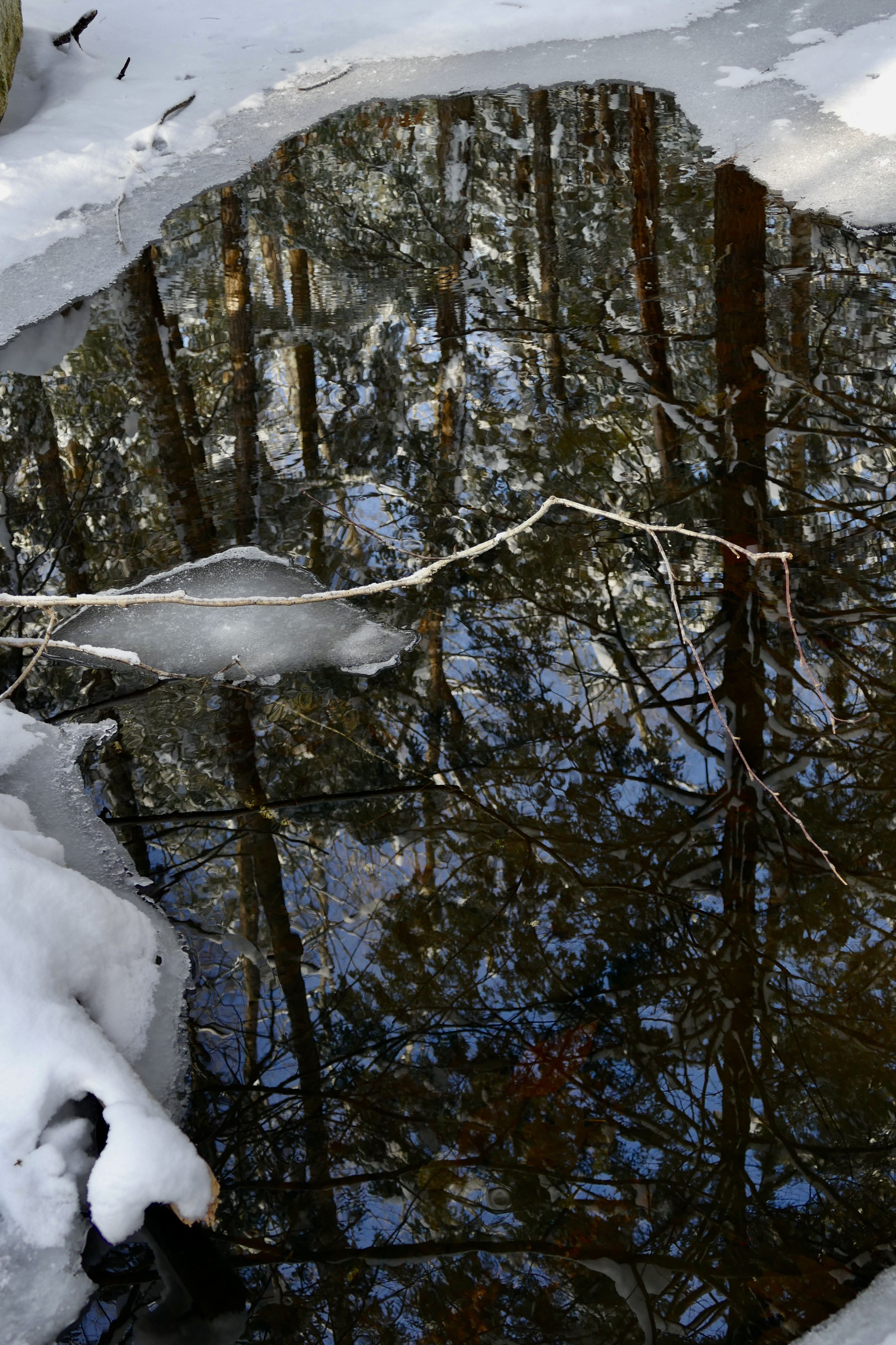
I notice in midstream, opposite the cooper’s shore, where an opening has been made for ice, some eighteen feet square, and has not frozen over again, but the water is seen passing with a swift current and disappearing quickly under the thin edge of the newly formed ice. I notice one of those fine unaccountable cobweb-like lines, nearly straight though undulating, stretched from side to side of this opening, about eight inches from the edge of the ice on the lower side. It looked at first as if the water, compared with the ice, was higher, in fact heaped up at that point on account of the obstruction which the lower side offered, and that it then suddenly descended and passed under the thin edge of the newly formed ice! The ridge of the watery dam was a narrow light line, and there were on the upper side, parallel with it, eight or ten other light lines or ripples alternating with dark within the breadth of three or four inches, growing less and less distinct; and on the lower side there was a sudden slope (apparently to the level of the water below) about one inch wide.
It was remarkable that the current and all that it carried with it passed incessantly through and over these lines without in the least disturbing them, or rather breaking them, only producing that slight undulation. I describe it as it appears.
Of the large black oaks on the north bank near Prescott Barrett’s, some are quite bare, others have about as many leaves on their lower parts as a white oak. The swamp white oaks opposite are all bare. I notice in two places where a musquash has been out on the snow-covered ice, and has travelled about a rod or less, leaving the sharp mark of its tail.
To-day, an average winter day, I notice no vapor over the open part of the river below the Island, as I did the very cold afternoon of the 10th. The air and water are probably now too nearly of the same temperature. That, then, in the winter, is a phenomenon of very cold weather.
….a dead lapse, where Time’s stream seems settling into a pool, a stillness not as if Nature’s breath were held, but expired. Let me know that such hours as this are wealthiest in Time’s gift. It is the insufficiency of the hour which, if we but feel and understand, we shall reassert our independence then.
Why so much (five and one half inches) more now in the woods than on the 12th, as compared with open fields ? Was the driving snow caught in a small wood, or did it settle less in the rain there, or since the snow on account of bushes ?
With this snow the fences are scarcely an obstruction to the traveller; he easily steps over them. Often they are buried. I suspect it is two and a half feet deep in Andromeda Swamps now. The snow is much deeper in yards, roads, and all small inclosures than in broad fields.
Pliny says, “In minimis Natura praestat” (Nature excels in the least things). The Wellingtonia gigantea, [now classified as Sequoiadendron giganteum] the famous California tree, is a great thing; the seed from which it sprang, a little thing; and so are all seeds or origins of things.
I hear one thrumming a guitar below stairs. It reminds me of moments that I have lived. What a comment upon our life is the least strain of music! It lifts me above the mire and dust of the universe. I soar or hover with clean skirts over a field of my life. It is ever life within life, in concentric spheres. The field wherein I toil or rust at any time is at the same time the field for such different kinds of life! The farmer’s boy or hired man has an instinct which tells him as much indistinctly, and hence his dreams and his restlessness; hence, even, it is that he wants money to realize his dreams with. The identical field where I am leading my humdrum life, let but a strain of music be heard there, is seen to be the field of some unrecorded crusade or tournament the thought of which excites in us an ecstasy of joy. The way in which I am affected by this faint thrumming advertises me that there is still some health and immortality in the springs of me. What an elixir is sound! I, who but lately came and went and lived under a dish cover, live now under the heavens. It releases me; it bursts my bonds. Almost all, perhaps all, our life is, speaking comparatively, a stereotyped despair; i.e., we never at any time realize the full grandeur of our destiny. We forever and ever and habitually underrate our fate.
Perhaps what most moves us in winter is some reminiscence of far-off summer. How we leap by the side of the open brooks! What beauty in the running brooks! What life! What society!
The cold is merely superficial; it is summer still at the core, far, far within. It is in the cawing of the crow, the crowing of the cock, the warmth of the sun on our backs. I hear faintly the cawing of a crow far, far away, echoing from some unseen wood-side, as if deadened by the springlike vapor which the sun is drawing from the ground. It mingles with the slight murmur of the village, the sound of children at play, as one stream empties gently into another, and the wild and tame are one.
I was describing, the other day, my success in solitary and distant woodland walking outside the town. I do not go there to get my dinner, but to get that sustenance which dinners only preserve me to enjoy, without which dinners are a vain repetition. But how little men can help me in this, only by having a kindred experience. Of what use to tell them of my happiness. Thus, if ever we have anything important to say, it might be introduced with the remark, it is nothing to you, in particular. It is none of your business, I know. That is what might be called going into good society.
I never chanced to meet with any man so cheering and elevating and encouraging, so infinitely suggestive as the stillness and solitude of the Well Meadow field.
I have met with but one or two persons in the course of my life who understood the art of taking walks daily, —not [to] exercise the legs or body merely, nor barely to recruit the spirits, but positively to exercise both body and spirit, and to succeed to the highest and worthiest ends by the abandonment of all specific ends…
The chivalric and heroic spirit, which once belonged to the chevalier or rider only, seems now to reside in the walker. To represent the chivalric spirit we have no longer a knight, but a walker, errant. I speak not of pedestrianism, or of walking a thousand miles in a thousand successive hours. The Adam who daily takes a turn in his garden. Methinks I would not accept of the gift of life, if I were required to spend as large a portion of it sitting foot up or with my legs crossed, as the shoemakers and tailors do. As well be tied neck and heels together and cast into the sea.
Snows again….The snow is very moist, with large flakes. Looking toward Trilllium wood, the nearer flakes appear to move quite swiftly, often making the impression of a continuous white line. They are also seen to move directly, and nearly horizontally. But the more distant flakes appear to loiter in the air, as if uncertain how they will approach the earth, or even to cross the course of the former, and are always seen as simple and distinct flakes. I think that this difference is simply owing to the fact that the former pass quickly over the field of view, while the latter are much longer in it.
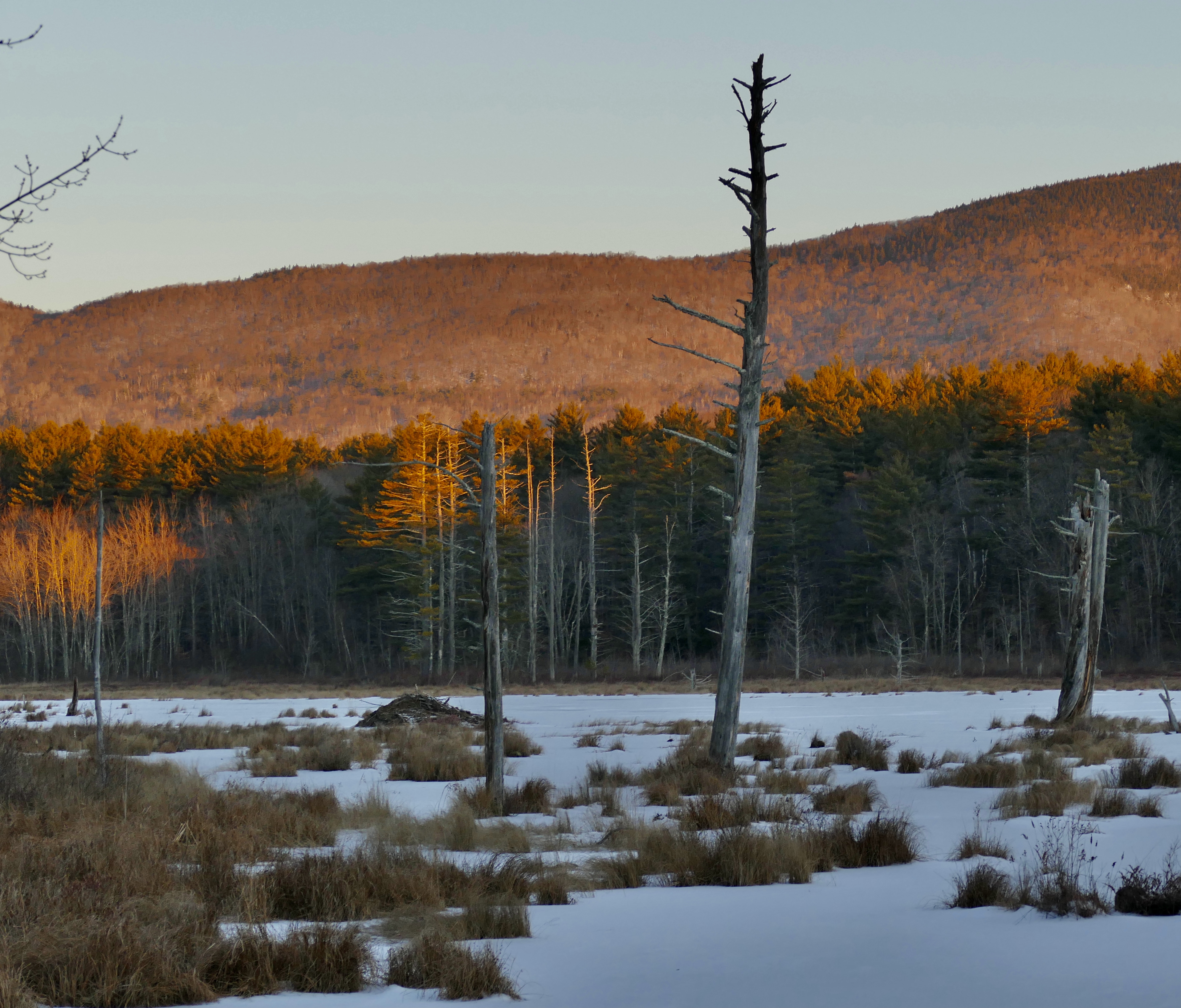
We love not so well the landscape represented as in broad noon, but in a morning or evening twilight, those seasons when the imagination is most active, the more hopeful or pensive seasons of the day.












You must be logged in to post a comment.