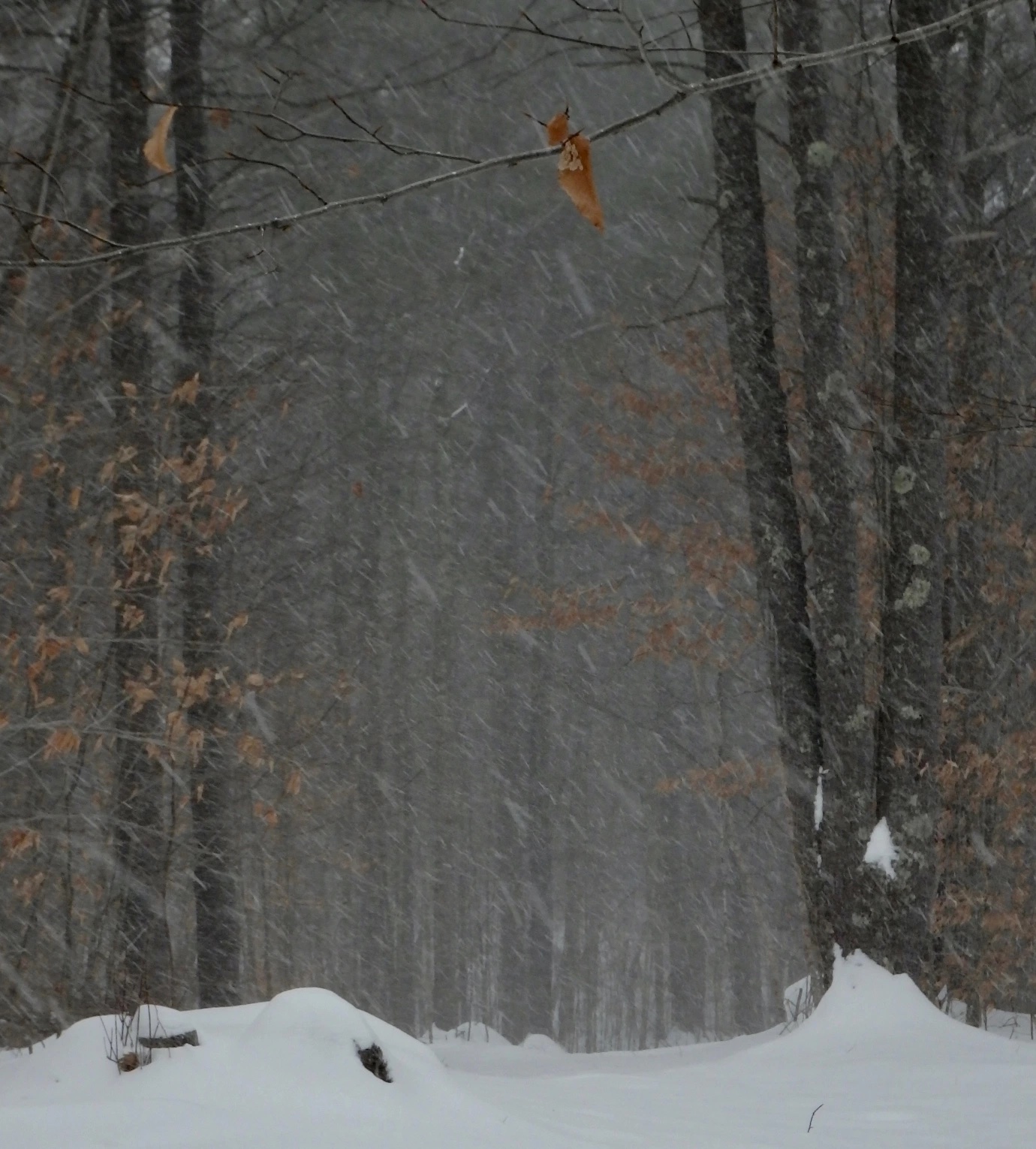
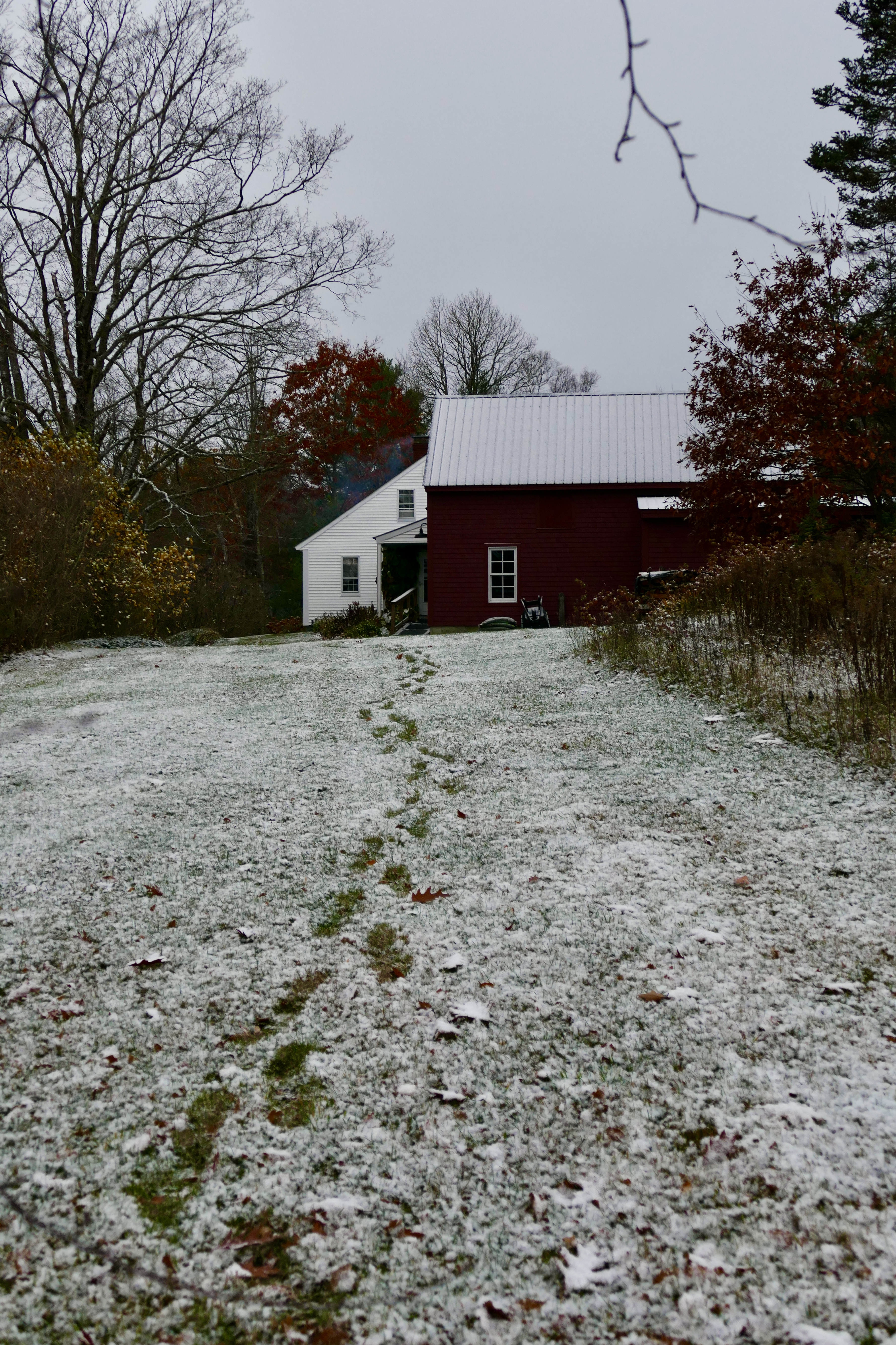
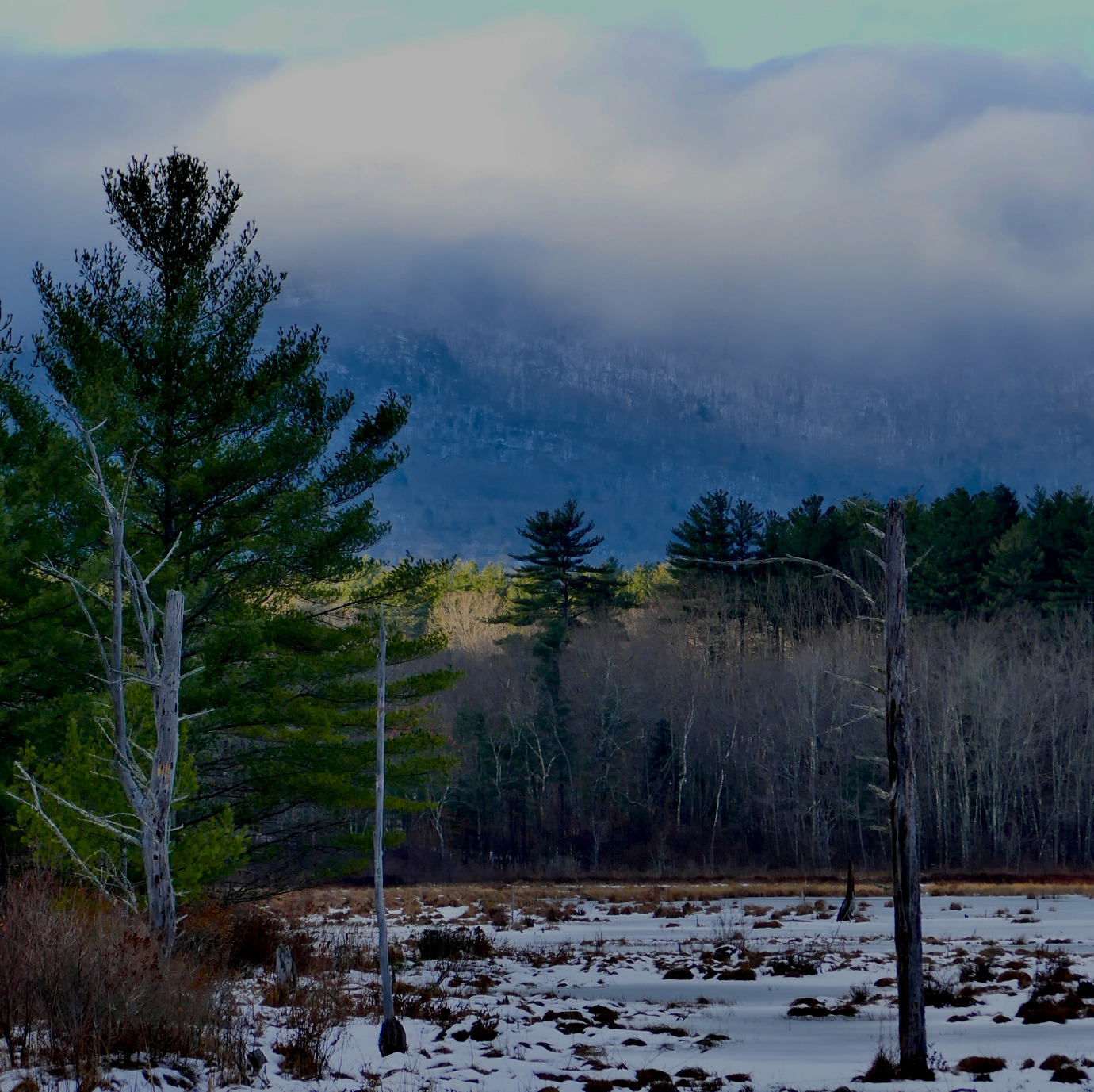
A gray, overcast, still day, and more small birds, tree sparrows and chickadees, than usual about the house. There have been a very few fine snowflakes falling for many hours, and now, by 2 P.M., a regular snowstorm has commenced, fine flakes falling steadily, and rapidly whitening all the landscape.
In half an hour the russet landscape is painted white, even to the horizon. Do we know of any other so silent and sudden a change?
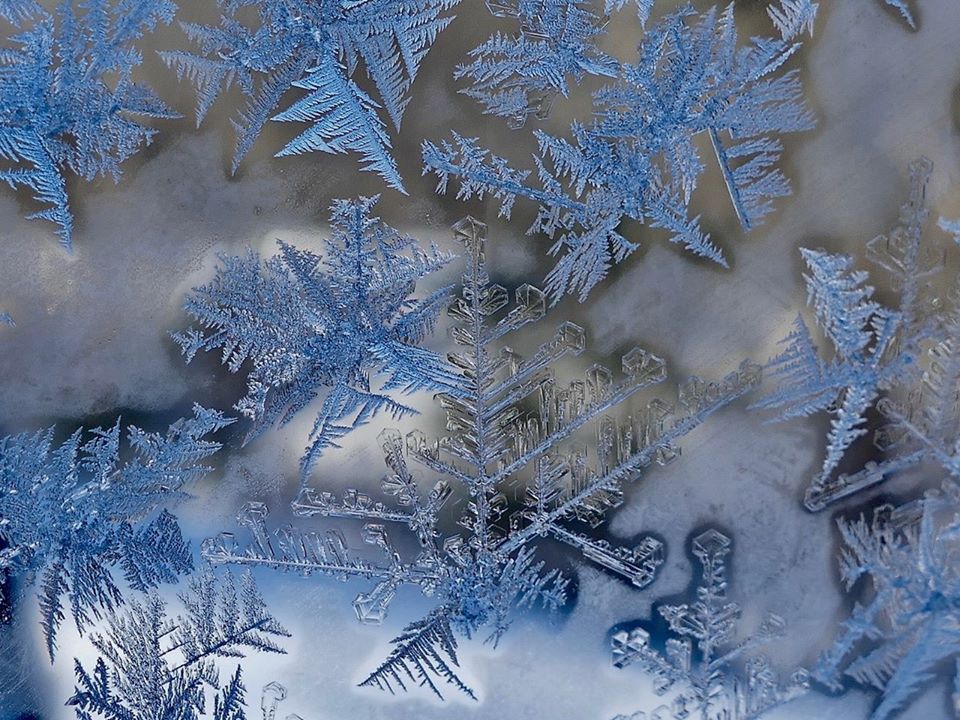
Standing before Stacy’s large glass windows this morning, I saw that they were gloriously ground by the frost. I never saw such beautiful feather and fir-like frosting. His windows are filled with fancy articles and toys for Christmas and New-year’s presents, but this delicate and graceful outside frosting surpassed them all infinitely. I saw countless feathers with very distinct midribs and fine pinnæ. the half of a trunk seemed to rise in each case up along the sash, and these feathers branched off from it all the way, sometimes nearly horizontally. Other crystals looked like pine plumes the size of life. If glass could be ground to look like this, how glorious it would be!
The value of these wild fruits is not in the mere possession or eating of them, but in the sight or enjoyment of them. The very derivation of the word “fruit” would suggest this. It is from the Latin fructus, meaning that which is used or enjoyed. If it were not so, then going a-berrying and going to market would be nearly synonymous expressions. Of course it is the spirit in which you do a thing which makes it interesting, whether it is sweeping a room or pulling turnips. Peaches are unquestionably a very beautiful and palatable fruit, but the gathering of them for the market is not nearly so interesting as the gathering of huckleberries for your own use.
A man fits out a ship at a great expense and sends it to the West Indies with a crew of men and boys, and after six months or a year it comes back with a load of pineapples. Now, if no more gets accomplished than the speculator commonly aims at — if it simply turns out what is called a successful venture — I am less interested in this expedition than in some child’s first excursion a-huckleberrying, in which it is introduced into a new world, experiences a new development, though it brings home only a gill of huckleberries in its basket. I know that the newspapers and the politicians declare otherwise, but they do not alter the fact. Then, I think that the fruit of the latter expedition was finer than that of the former. It was a more fruitful expedition. The value of any experience is measured, of course, not by the amount of money, but the amount of development we get out of it. If a New England boy’s dealings with oranges and pineapples have had more to do with his development than picking huckleberries or pulling turnips have, then he rightly and naturally thinks more of the former; otherwise not.
This afternoon the air was indescribably clear and exhilarating, and though the thermometer would have shown it to be cold, I thought that there was a finer and purer warmth than in summer; a wholesome, intellectual warmth, in which the body was warmed by the mind’s contentment. The warmth was hardly sensuous, but rather the satisfaction of existence.
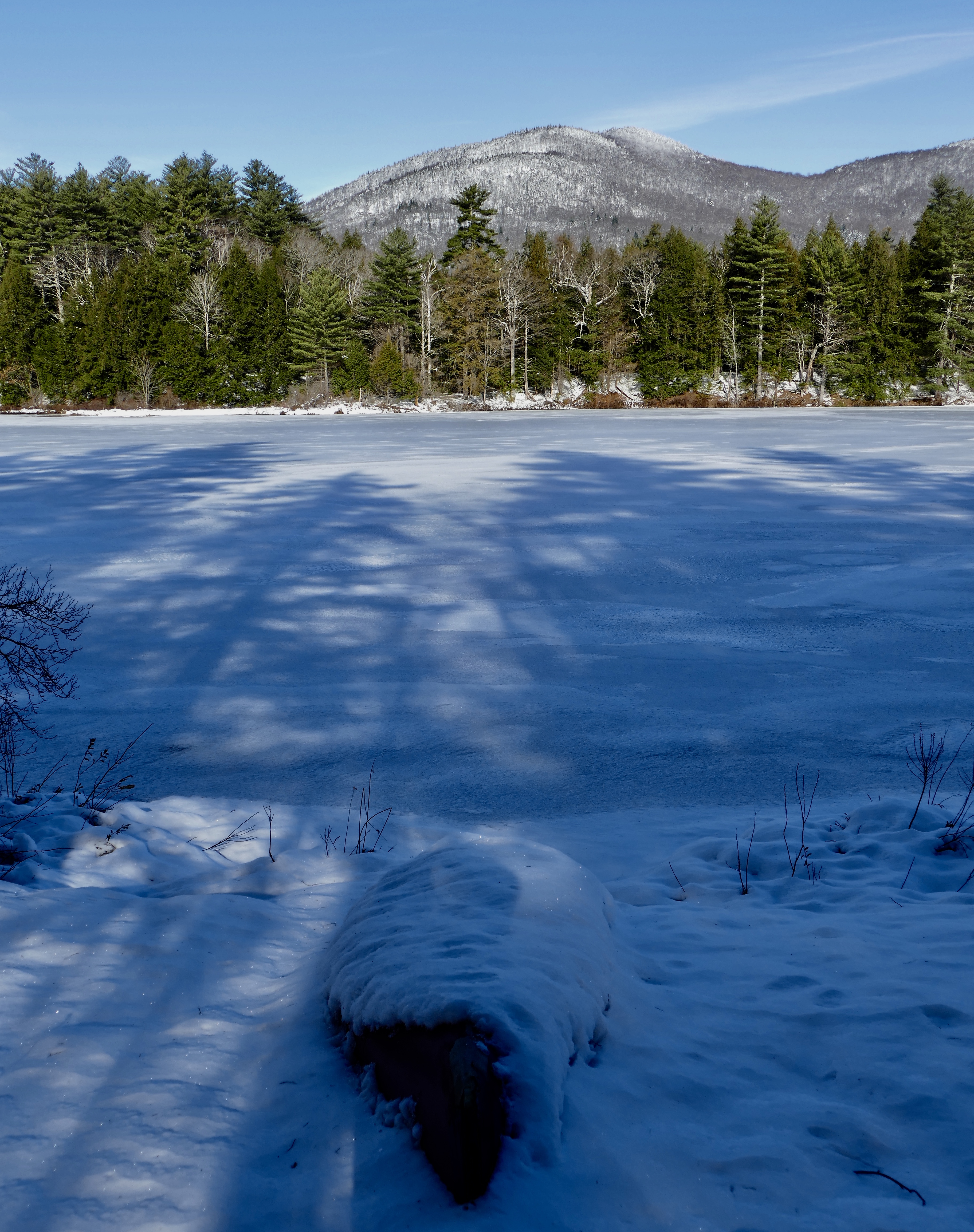
When I looked out this morning, the landscape presented a very pretty wintry sight, little snow as there was.
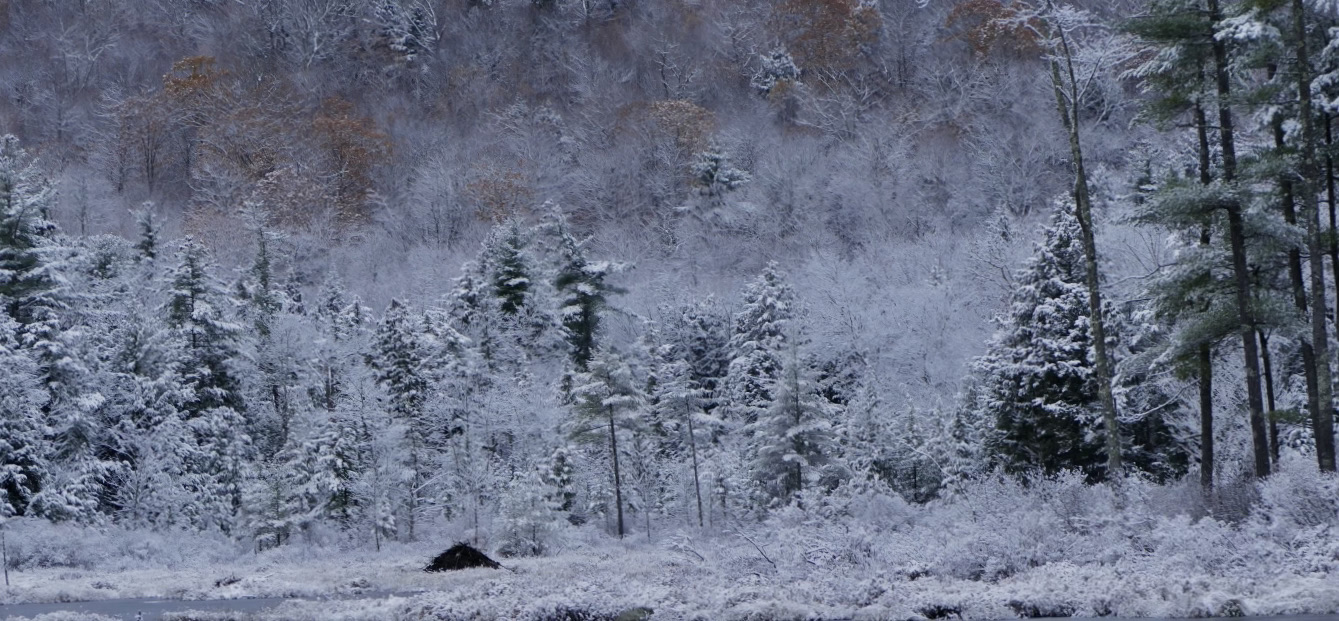
Being very moist, it had lodged on every twig, and every one had its counterpart in a light, downy, white one, twice or thrice its own depth, resting on it.
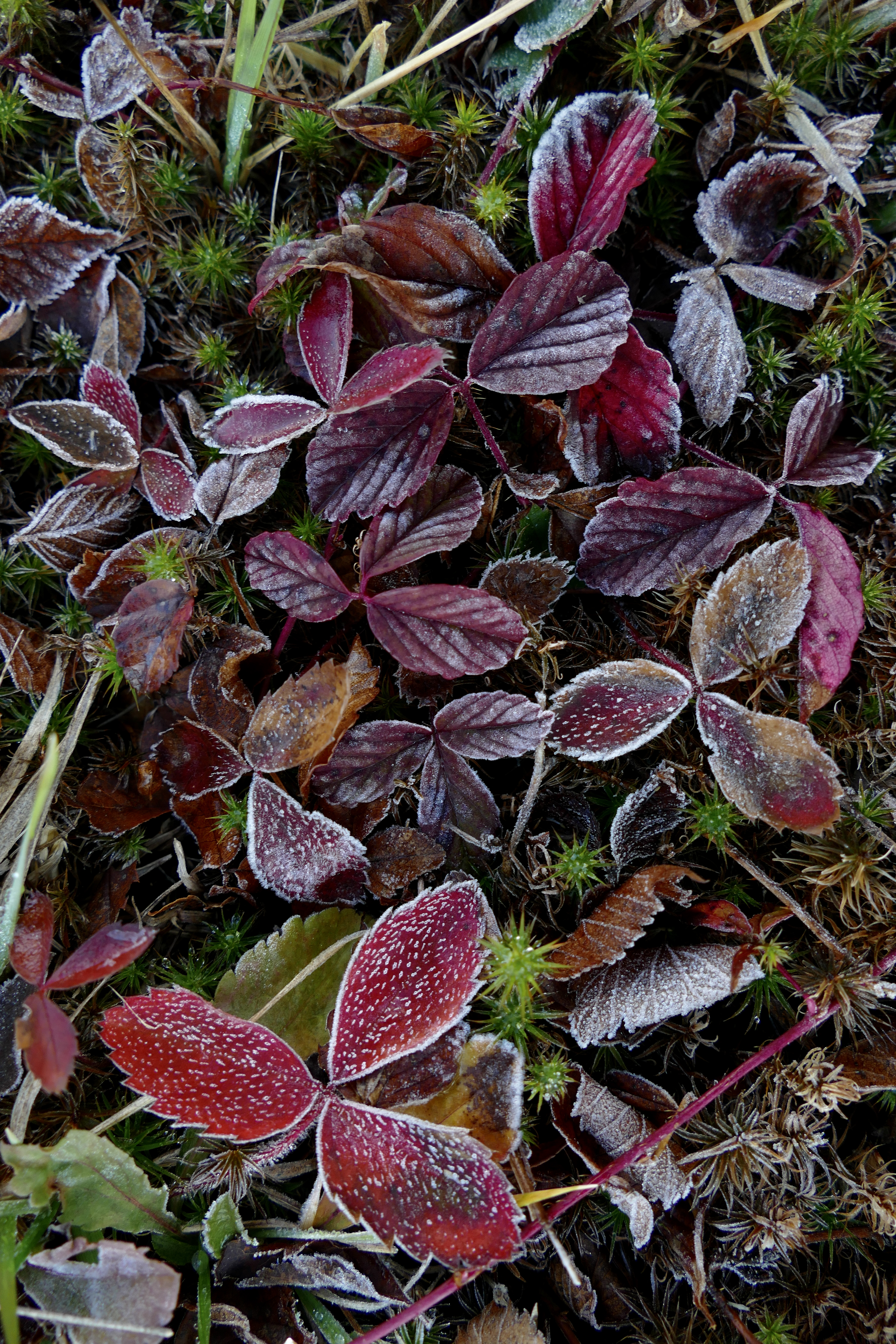
You must go forth early to see the snow on the twigs. The twigs and leaves are all bare now, and the snow half melted on the ground; where the trees are thick it has not reached the ground at all, except in the shape of water in the course of the day. But early this morning the woods presented a very different scene. The beauty and purity of new-fallen snow, lying just as it fell, on the twigs and leaves all the country over, afforded endless delight to the walker. It was a delicate and fairylike scene. But a few hours later the woods were comparatively lumpish and dirty. So, too, you must go forth very early to see a hoar frost, which is rare here; these crisped curls adorn only the forehead of the day.
The air is full of low, heavy mist, almost rain. The pines, in this atmosphere and contrasted with the snow, are suddenly many degrees darker, and the oaks redder. But still the tops of the dead grass rise above the snow in the fields, and give the country a yellow or russet look. The wetter meadows are quite russet. I am surprised to see Fair Haven entirely skimmed over.
Though you are finger-cold toward night, and you cast a stone on your first ice, and see the unmelted crystals under every bank, it is glorious November weather and only November fruits are out— On some hickories you see a thousand black nuts against the sky—
There is quite a white cedar swamp behind the old tavern S of Maynards— You walk fast and far, and every apple left out is grateful to your invigorated taste.
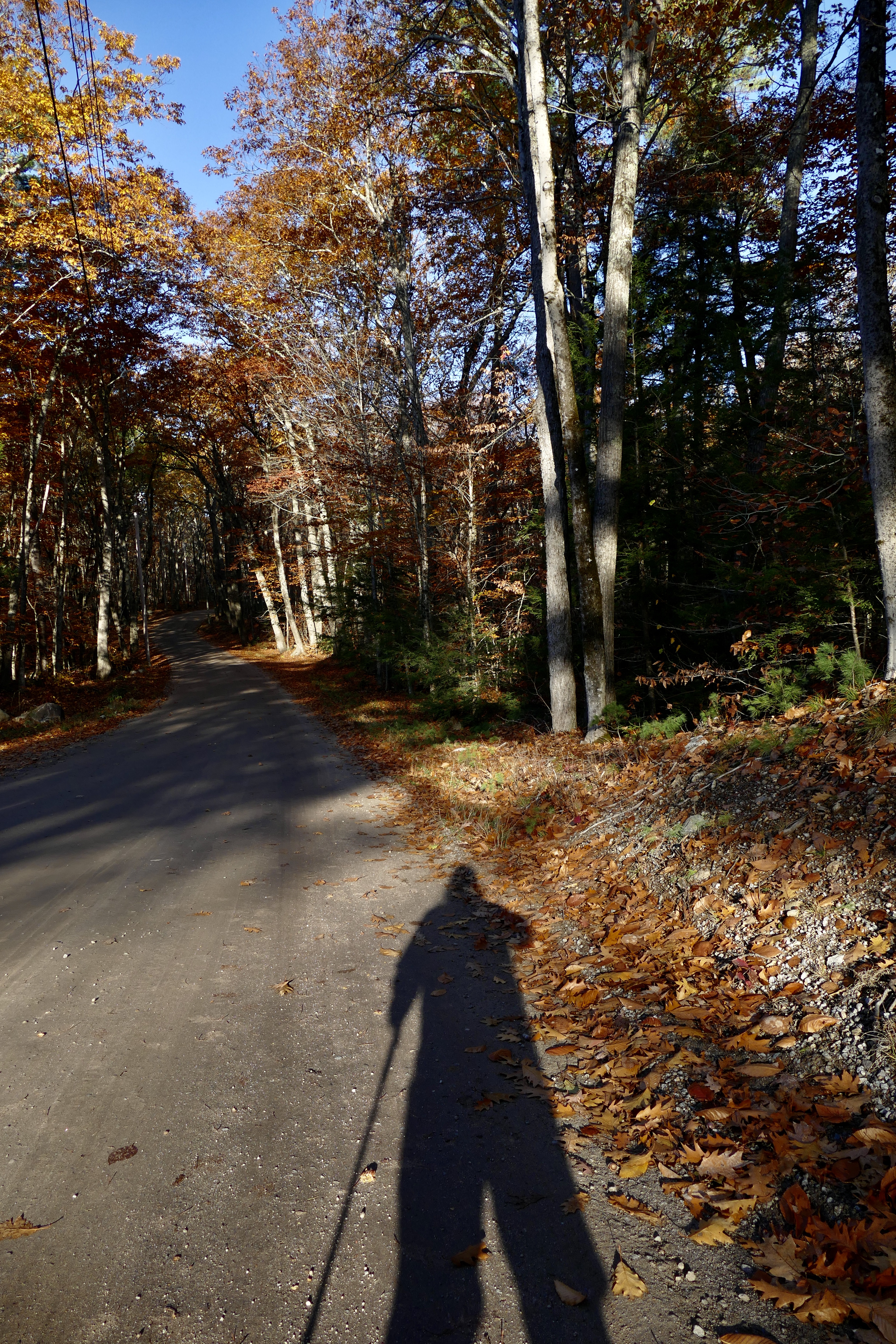
You enjoy not only the bracing coolness, but all the heat and sunlight that there is, reflected back to you from the earth. The sandy road itself, lit by the November sun, is beautiful.
Shrub oaks and young oaks generally, and hazel bushes and other hardy shrubs, now more or less bare, are your companions, as if it were an iron age, yet in simplicity, innocence, and strength a golden one.
(Day before yesterday the rustling of the withered oak leaves in the wind reminded me of the similar sound produced by snow falling on them.)
It is glorious to consider how independent man is of all enervating luxuries–& the poorer he is in respect to them the richer he is– Summer is gone with all its infinite wealth–& still nature is genial to man—though he no longer bathers in the stream or reclines under the bank–or plucks berries on the hills–still he beholds the same inaccessible beauty around him….
Simply to see to a distant horizon thro’ a clean air—the firm outline of a distant hill—of a blue mt top through some new vista—this is wealth enough for one, [pm].
The rare wholesome and permanent beauty of withered oak leaves of various hues of brown mottling a hillside, especially seen when the sun is low—Quaker colors, sober ornaments, beauty that quite satisfies the eye.
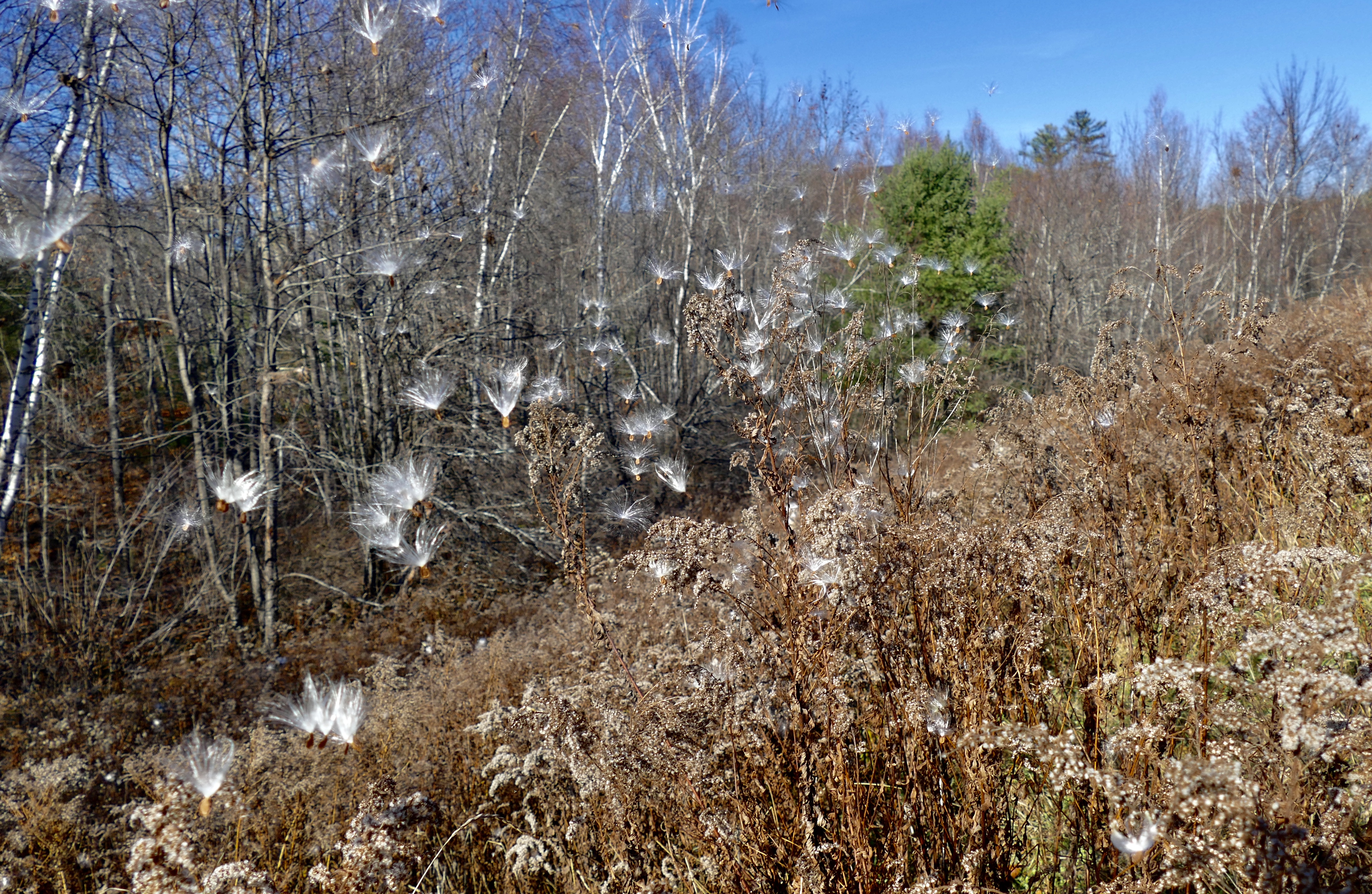
The common milkweed (Asclepias Cornuti) and some thistles still for counting.
I go across the great Tony Wheeler pasture. It is a cool but pleasant November afternoon. The glory of November is in its silvery, sparkling lights. I think it is peculiar among the months for the amount [of] sparkling white light reflected from a myriad of surfaces. The air is so clear, and there are so many bare, polished, bleached or hoary surfaces to reflect the light. Few things are more exhilarating, if it is only moderately cold, then to walk over bare pastures and see the abundant sheeny light like a universal halo, reflected from the russet and bleached earth. The earth shines perhaps more than in spring, for the reflecting surfaces are less dimmed now. It is not a red but a white light. In the woods and about swamps, as Ministerial, also, there are several kinds of twigs, this year’s shoots of shrubs, which have a slight down or hairiness, hardly perceptible in ordinary lights though held in the hand, but which, seen toward the sun, reflect a shiningll silvery light. Such are not only the sweet-fern, but the hazel in a less degree, alder twigs, and even the short huckleberry twigs, also lespedeza stems. It is as if they were covered with a myriad fine spiculse which reflect a dazzling white light, exceedingly warming to the spirits and imagination. This gives a character of snug warmth and cheerfulness to the swamp, as if it were a place where the sun consorted with rabbits and partridges. Each individual hair on every such shoot above the swamp is bathed in glowing sunlight and is directly conversant with the day god.
The cinnamon-brown of withered pinweeds (how long?) colors whole fields. It may be put with the now paler brown of hardhack heads and the now darker brown of the dicksonia fern by walls.
I notice this afternoon that the pasture white oaks have commonly a few leaves left on the lower limbs and also next the trunk.
Winter-rye is another conspicuous green amid the withered grass fields.
The rubuses are particularly hardy to retain their leaves. Not only low blackberry and high blackberry leaves linger still fresh, but the Rubus hispidus leaves last all winter like an evergreen.
The great round-leaved pyrola, dwarf cornel, checkerberry, and lambkill have a lake or purplish tinge on the under side at present, and these last two are red or purplish above. It is singular that a blush should suffuse the under side of the thick-leaved pyrola while it is still quite green above.
When walnut husks have fairly opened, showing the white shells within, — the trees being either quite bare or with a few withered leaves at present, — a slight jar with the foot on the limbs causes them to rattle down in a perfect shower, and on bare, grass-grown pasture ground it is very easy picking them up.
As I returned over Conantum summit yesterday, just before sunset, and was admiring the various rich browns of the shrub oak plain across the river, which seemed to me more wholesome and remarkable, as more permanent, than their late brilliant colors, I was surprised to see a broad halo travelling with me and always opposite the sun to me, at least a quarter of a mile off and some three rods wide, on the shrub oaks.
The rare wholesome and permanent beauty of withered oak leaves of various hues of brown mottling a hillside, especially seen when the sun is low, — Quaker colors, sober ornaments, beauty that quite satisfies the eye. The richness and variety are the same as before, the colors different, more incorruptible and lasting.
The first really cold day. I find, on breaking off a shrub oak leaf, a little life at the foot of the leafstalk, so that a part of the green comes off. It has not died quite down to the point of separation, as it will do, I suppose, before spring. Most of the oaks have lost their leaves except on the lower branches, as if they were less exposed and less mature there, and felt the changes of the seasons less. The leaves have either fallen or withered long since, yet I found this afternoon, cold as it is, – and there has been snow in the neighborhood, – some sprouts which had come up this year from the stump of a young black-looking oak, covered still with handsome fresh red and green leaves, very large and unwithered and unwilted. It was on the south side of Fair Haven in a warm angle, where the wood was cut last winter and the exposed edge of the still standing wood running north and south met the cliff at right angles and served for a fence to keep off the wind. There were one or two stumps here whose sprouts had fresh leaves which transported me back to October. Yet the surrounding shrub oak leaves were as dry and dead as usual. There were also some minute birches only a year old, their leaves still freshly yellow, and some young wild apple trees apparently still growing, their leaves as green and tender as in summer. The goldenrods, one or more species of the white and some yellow ones, were many of them still quite fresh, though elsewhere they are all whitish and dry. I saw one whose top rose above the edge of a rock, and so much of it was turned white and dry; but the lower part of its raceme was still yellow. Some of the white species seemed to have started again as if for another spring. They had sprung up freshly a foot or more, and were budded to blossom, fresh and green. And sometimes on the same stem were old and dry and white downy flowers, and fresh green blossom-buds, not yet expanded. I saw there some pale blue asters still bright, and the mullein leaves still large and green, one green to its top. And I discovered that when I put my hand on the mullein leaves they felt decidedly warm, but the radical leaves of the goldenrods felt cold and clammy. There was also the columbine, its leaves still alive and green; and I was pleased to smell the pennyroyal which I had bruised, though this dried up long ago. Each season is thus drawn out and lingers in certain localities, as the birds and insects know very well. If you penetrate to some warm recess under a cliff in the woods, you will be astonished at the amount of summer life that still flourishes there. No doubt more of the summer’s life than we are aware thus slips by and outmanoeuvres the winter, gliding from fence to fence. I have no doubt that a diligent search in proper places would discover many more of our summer flowers thus lingering till the snow came, than we suspect. It is as if the plant made no preparation for winter.
About an inch of snow fell last night—but the ground was not at all frozen or prepared for it—a little greener grass & stubble here & there seems to burn its way through it this forenoon—
The snow is the great track-revealer—I come across the tracks of persons who at different hour from myself have crossed—& perhaps often cross some remote field on their errands—where I had not suspected a predecessor—& the track of the dog or staff are seen too. The latter have tracked their whole pasture over. —as if there had been a thousand.
I have thus silent but unerring evidence of any who have crossed the fields since last night– It is pleasant to see tracks leading towards the woods to be reminded that any have engagements there. Yet for the most part the snow is quite untrodden– Most fields have no tracks of man in them– I only see where a squirrel has leaped from the wall…
I was so warmed in spirit in getting my wood that the heat it finally yielded when burnt was coldness in comparison. The first is a warmth which you cannot buy.
I have been so absorbed of late in Capt. Brown’s fate–as to be surprised whenever I detected the old routine running still–met persons going about their affairs indifferent– It appeared strange to me that the little dipper should be still diving in the river as of yore. & this suggested that this grebe might be diving here when Concord shall be no more.
Any affecting human event may blind our eyes to natural objects.
The obvious falling of leaves–(i.e not to include the fall of the P pines–& larches–& the complete fall of the birches, white willows &c) ended about the 1st of November. A very few bright colored leaves on small shrubs–such as oak sprouts–black cherry–blueberry &c–have lingered up to this time in favorable places–
By the 1st of November–or at most a few days later–the trees generally wear on the whole–(or in the main) their winter aspect–their leaves gradually falling until spring.
I climb Anursnack—under this strong wind—more dry oak leaves are rattling down—all winter is their fall— A distinction is to be made between those trees whose leaves fall as soon as the bright autumnal tints are gone and they are withered—& those whose leaves are rustling & falling all winter even into spring. October is the month of painted leaves—of ripe leaves—when all the earth—not merely flowers—but fruits & leaves are ripe— With respect to its colors & its season it is the sunset month of the year—when the earth is painted like the sunset sky— This rich glow flashes round the world— This light fades into the clear white leafless twilight of November—and whatever more glowing sunset—or Indian summer we have then is the after-glow of the year— In October the man is ripe even to his stalk & leaves—he is pervaded by his genius—When all the forest is a universal harvest —Whether he possess the enduring color of the pines which it takes 2 years to ripen & wither—or the brilliant color of the deciduous trees which fade the first fall.
From this hill I am struck with the smoothness & washed appearance of the landscape—all these russet fields & swells look as if the withered grass had been combed by the flowing water- -not merely the sandy roads but the fields are swept— All waters, the river—& ponds—& swolen brooks—and many new ones are now seen through the leafless trees—are blue as indigo—reservoirs of dark indigo amid the general russet—& reddish brown & grey— October answers to the period in the life of man—when he is no longer dependent on his transient moods—when all his experience ripens into wisdom—but every root branch leaf of him glows with maturity— What he has been & done in his spring & summer appears— He bears his fruit—
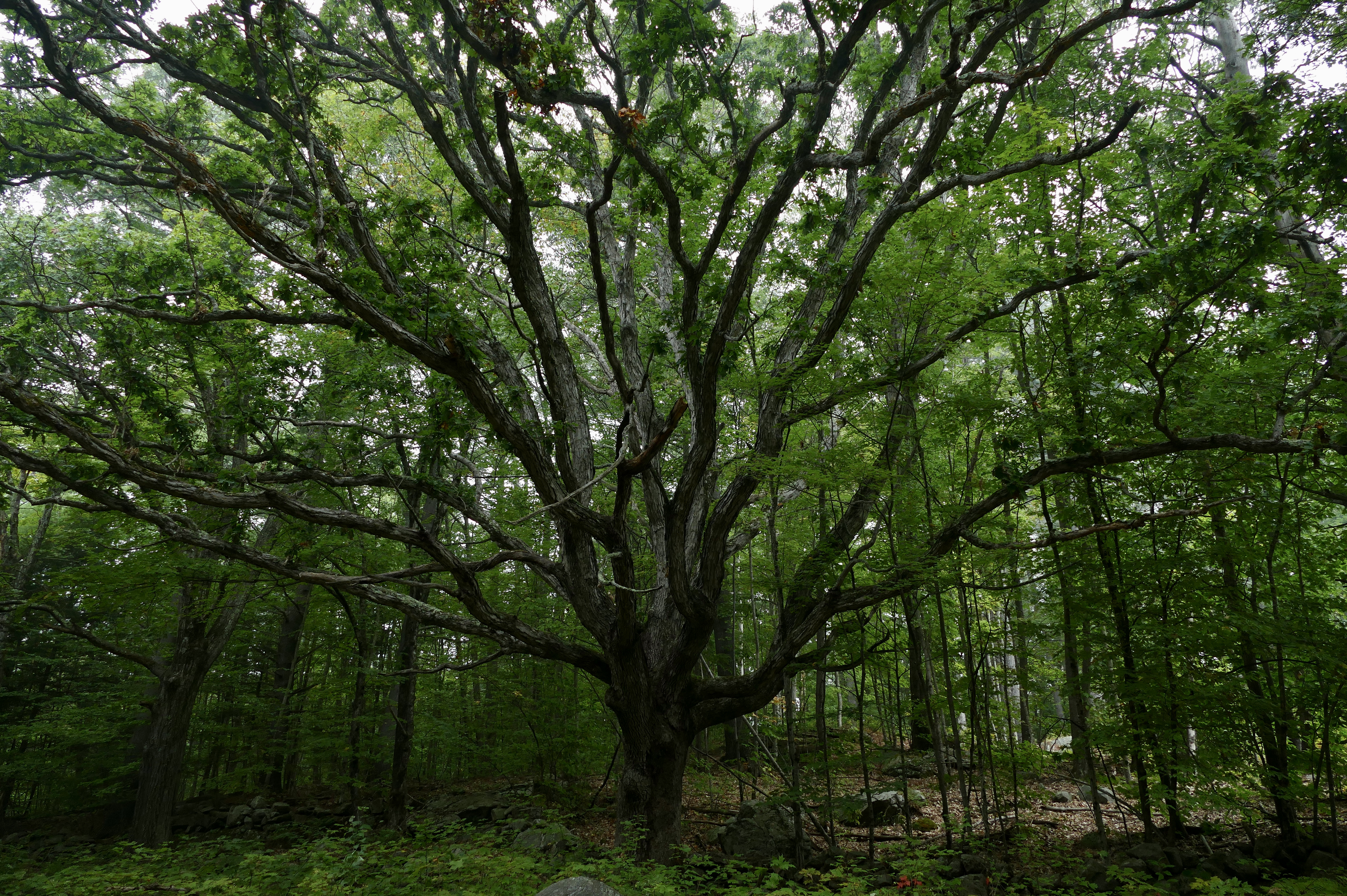
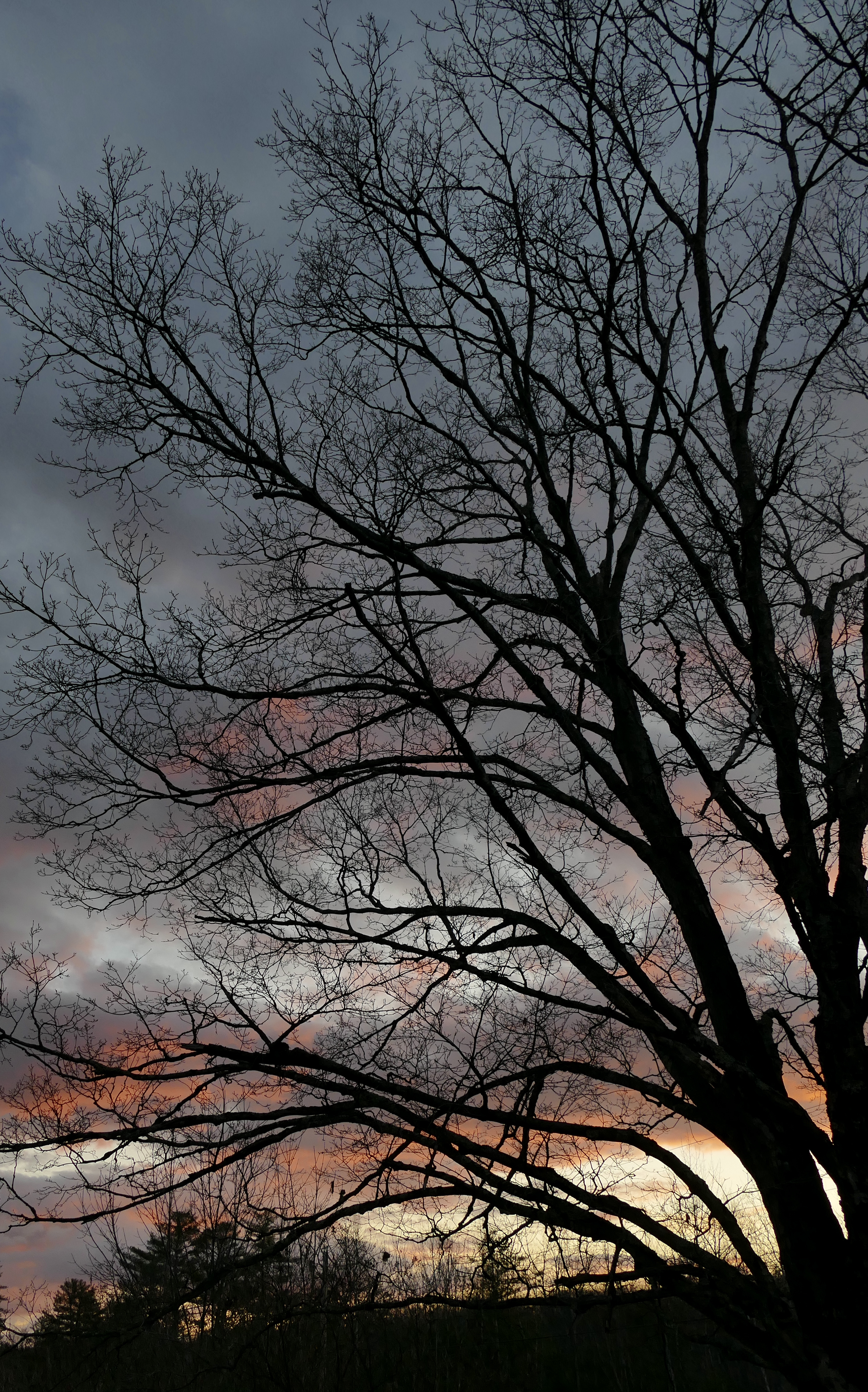
Now for the bare branches of the oak woods—where hawks have nested & owls perched—the sinews of the trees—& the brattling (?) of the wind in their midst — For now their leaves are off they’ve bared their arms thrown off their coats & in the attitude of fencers await the onset of the wind—to box or wrestle with it— Such high winds would have done much harm 6 weeks ago.
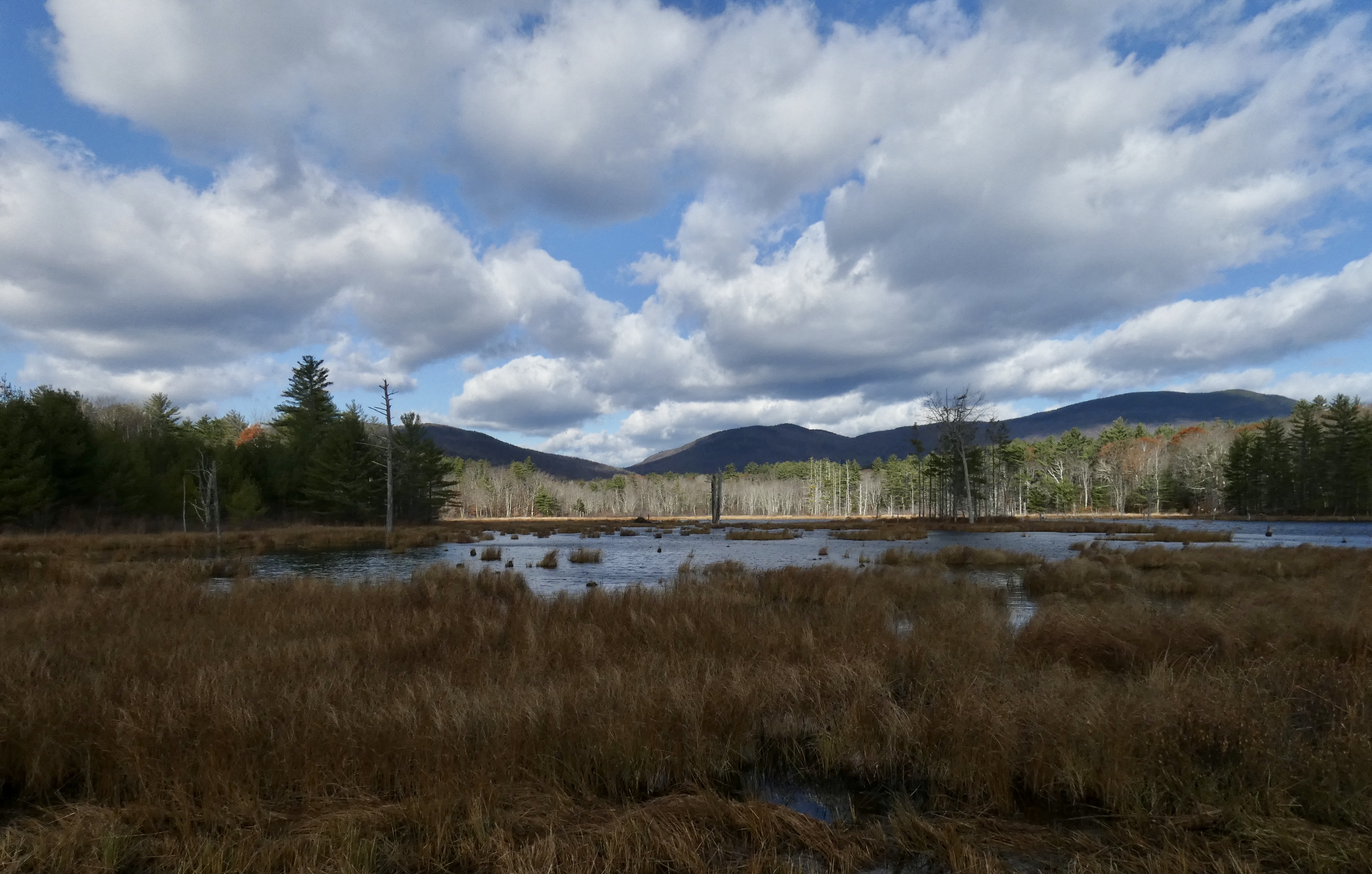
A fine clear afternoon after the misty morning and heavy rain of the night. Even after all this rain I see the streaming lines of gossamer from trees and fences. From Fair Haven Hill the air is clear and fine-grained, and now it is a perfect russet November landscape, – including the reddish brown of the oaks, excepting where the winter-rye fields and some low meadows show their green, the former quite bright, and also the evergreen patches of pines, edged in the northwest by the blue mountain ridges.
I think that the change to some higher color in a leaf is an evidence that it has arrived at a perfect and final maturity, answering to the maturity of fruits, and not to that of green leaves, etc., etc., which merely serve a purpose. The word “ripe” is thought by some to be derived from the verb “to reap,” according to which that is ripe which is ready to be reaped. The fall of the leaf is preceded by a ripe old age.
The scarlet oak leaf! What a graceful & pleasing outline! a combination of graceful curves & angles– These deep bays in the leaf are agreeable to us as the thought of deep & smooth & secure havens to the mariner– But both your love of repose & your spirit of adventure is addressed–for both bays & headlands are represented. Sharp-pointed rocks, capes–& rounded bays with smooth strands. To the sailor’s eye it is a much indented shore–& in his casual glance he thinks that if he doubles its sharp capes he will find a haven in its deep rounded bays. If I were a drawing master I would set my pupils to copying these leaves–that they might learn to draw firmly & gracefully– It is a shore to the arial ocean–on which the windy surf beats– How different from the white oak leaf with its rounded long headlands–on which no light house need be…Some white oak leaves retain a smothered inward crimson fire long after they have fallen very pure & complete & are more interesting to me than their fresher glow–because more indestructible–an evening glow–
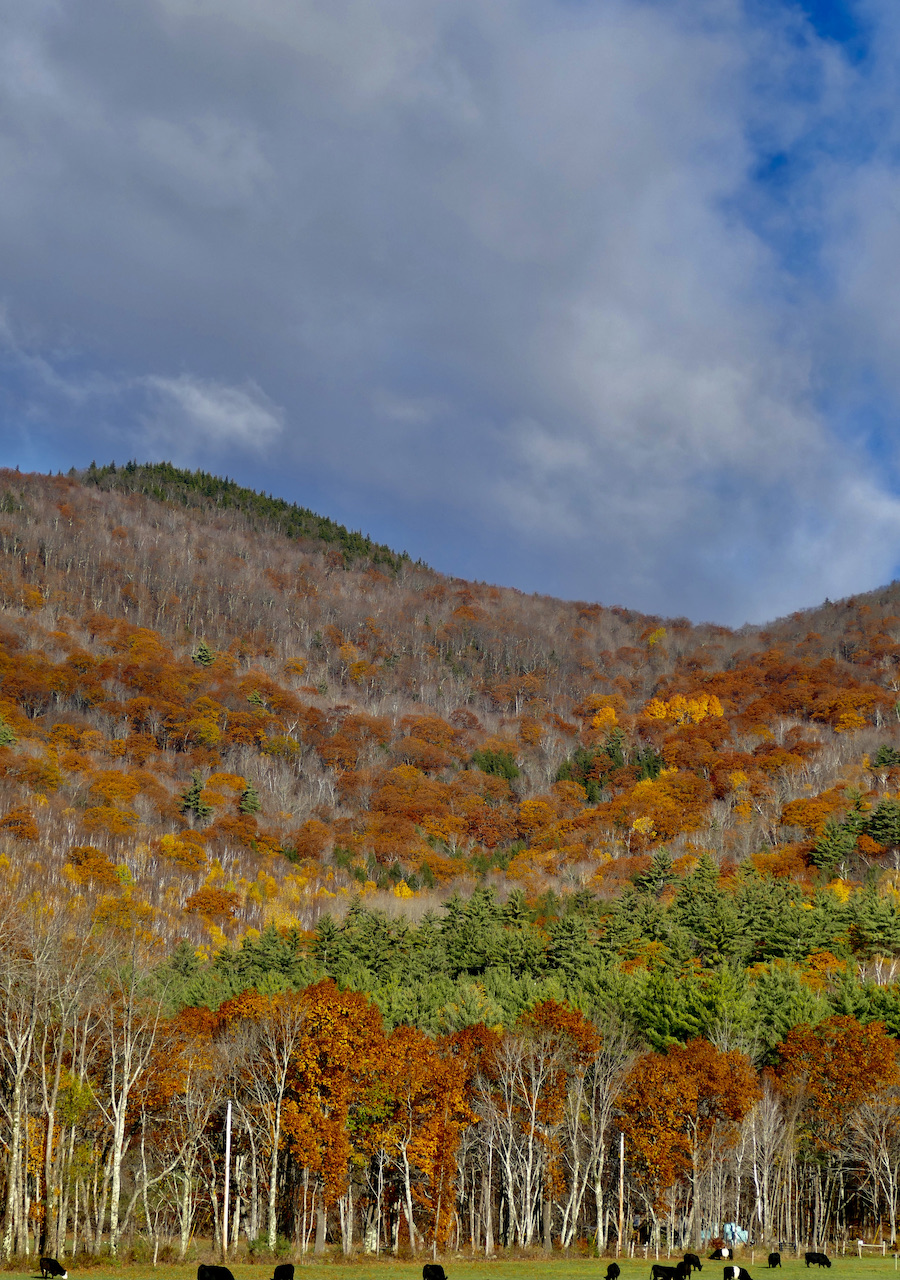
The brilliancy of the scarlet oak being generally dulled, the season of brilliant leaves may be considered over, ––say about the 10th; and now a new season begins, the pure November season of the russet earth and withered leaf and bare twigs and hoary withered goldenrods, etc.
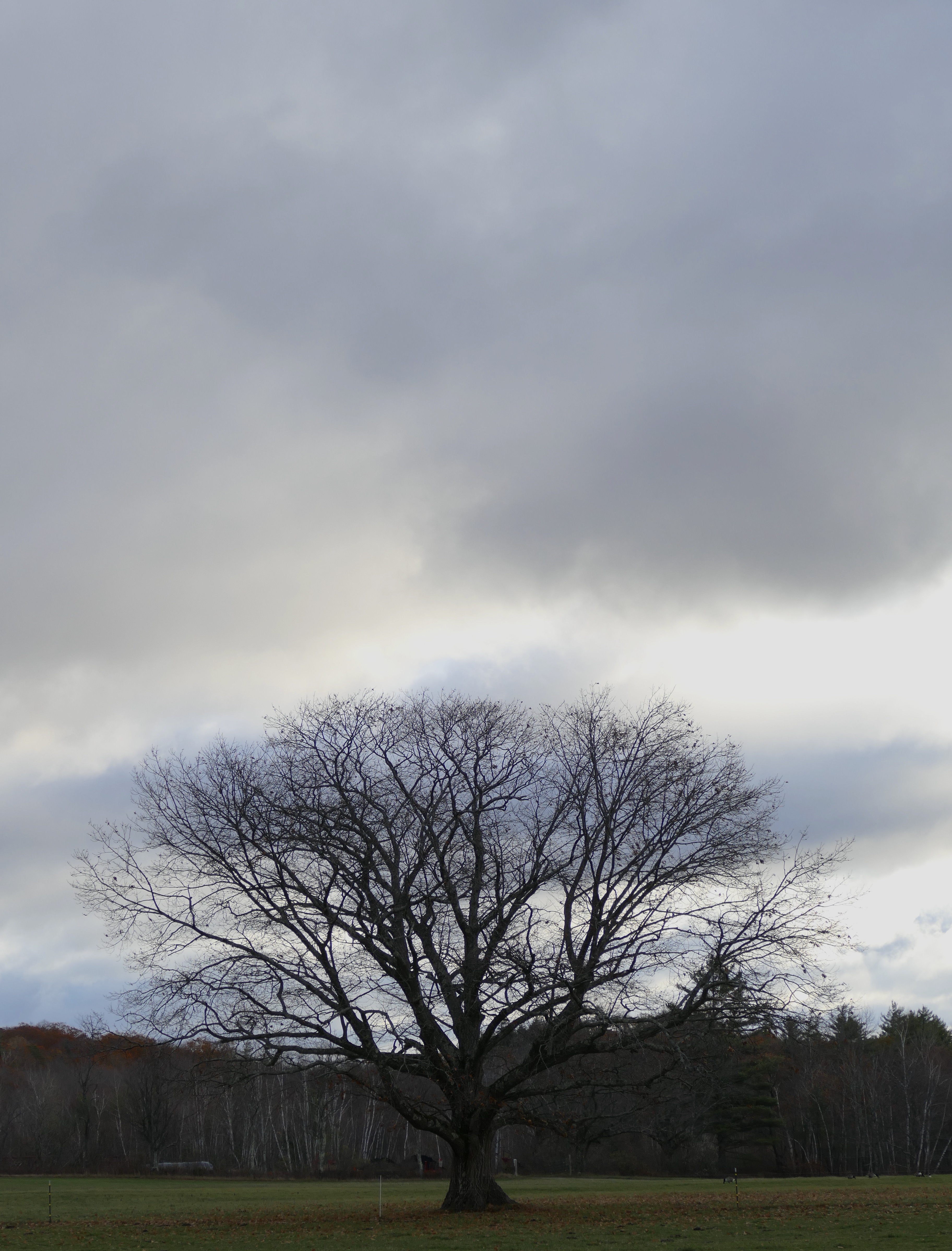
Thus steadily but unobserved the winter steals down from the north–till from our highest hills we can discern its vanguard….Little did we think how near the winter was.
It is as if a scout had brought in word that an enemy was approaching in force only a day’s march distant….We had not thought seriously of winter–we dwelt in fancied security yet.









You must be logged in to post a comment.