May 18, 1851

in Thoreau’s Journal:

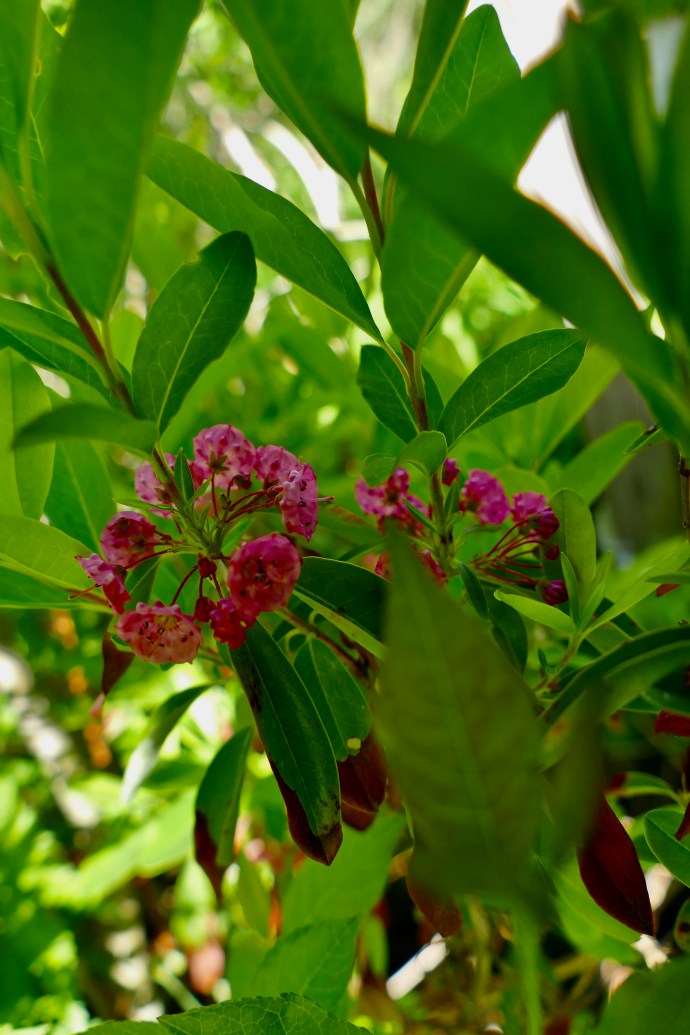
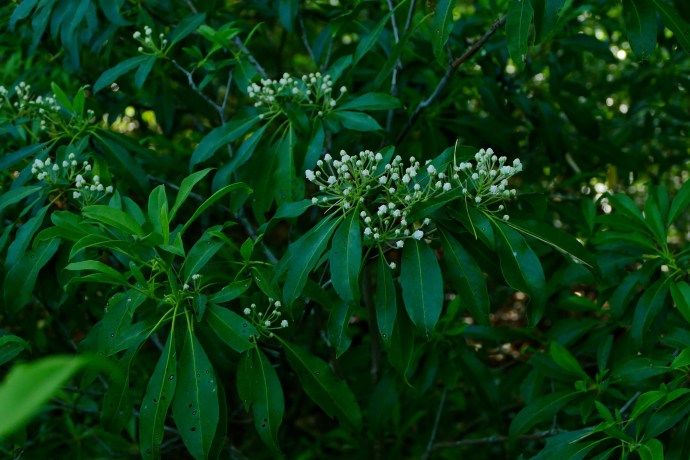
The shrub oaks are now blossoming. The scarlet tanagers are come.

OLYMPUS DIGITAL CAMERA

The oak leaves of all colors are just expanding, and are more beautiful than most flowers. The hickory buds are almost leaves. The landscape has a new life and light infused into it. The deciduous trees are springing, to countenance the pines, which are evergreen. It seems to take but one summer day to fetch the summer in. The turning-point between winter and summer is reached.

May 17, 1853

in Thoreau’s Journal:

I sit now on a rock on the west slope of Fair Haven orchard, an hour before sunset, this warm, almost sultry evening, the air filled with the sweetness of apple blossoms (this is blossom week) — or I think it is mainly that meadow fragrance still — the sun partly concealed behind a low cloud in the west, the air cleared by last evening’s thunder-shower, the river now beautifully smooth (though a warm, bland breeze blows up here), full of light and reflecting the placid western sky and the dark woods which overhang it. I was surprised, on turning round, to behold the serene and everlasting beauty of the world, it was so soothing, I saw that I could not go home to supper and lose it. It was so much fairer, serener, more beautiful, than my mood had been. The fields beyond the river have unexpectedly a smooth, lawn-like beauty, and in beautiful curves sweep round the edge of the woods. The rapidly expanding foliage of the deciduous trees (last evening’s rain or moisture has started them) lights up with a lively yellow green the dark pines which we have so long been used to. Some patches (I speak of woods half a mile or more off) are a lively green, some gray or reddish-gray still, where white oaks stand. With the stillness of the air comes the stillness of the water. The sweetest singers among the birds are heard more distinctly now, as the reflections are seen more distinctly in the water — the veery constantly now. Methinks this serene, ambrosial beauty could hardly have been but for last evening’s thunder-shower, which, to be sure, barely touched us, but cleared the air and gave a start to vegetation. The elm on the opposite side of the river has now a thin but dark verdure, almost as dark as the pines, while, as I have said, the prevailing color of the deciduous woods is a light yellowish and sunny green. The woods rarely if ever present a more beautiful aspect from afar than now. Methinks the black oak at early leafing is more red than the red oak. Ah, the beauty of this last hour of the day — when a power stills the air and smooths all waters and all minds — that partakes of the light of the day and the stillness of the night!

P1330827

May 15, 1854

in Thoreau’s Journal:  

P1330623 2

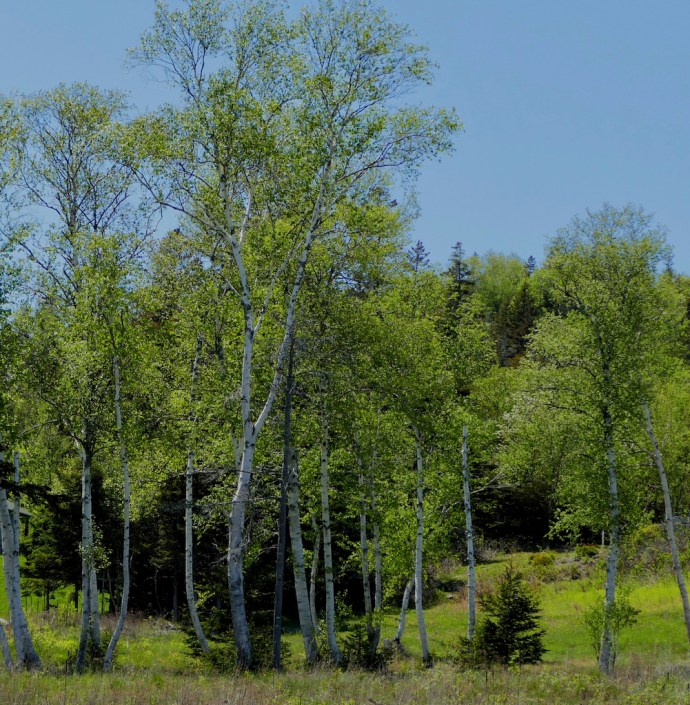
Trees generally are now bursting into leaf.  The aspect of oak and other woods at a distance is somewhat like that of a very thick & reddish or yellowish mist about the evergreens— In other directions the light graceful—& more distinct yellowish green forms of birches are seen—& in swamps the reddish or reddish brown crescents of the red maple tops—now covered with keys— Oak leaves are as big as mouse ear & farmers are busy planting.

May 14, 1852

in Thoreau’s Journal:

P1330542

The sounds & sights—as birds & flowers heard & seen at those seasons when there are fewest—are most memorable & suggestive of poetic associations.  

May 13, 1852

in Thoreau’s Journal:

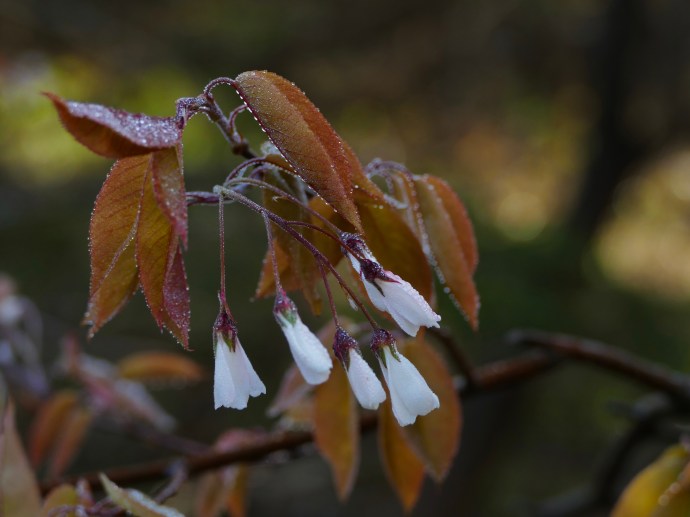
The shad blossom…a very beautiful delicate flower….with its purplish stipules & delicate drooping white blossoms— — So large & graceful a tree or bush— 

P1250418

The shad blossom days in the woods.

OLYMPUS DIGITAL CAMERA

May 12, 1857

in Thoreau’s Journal:

How rarely I meet with a man who can be free, even in thought! We live according to rule. Some men are bedridden; all, world-ridden.

P1330557.jpeg

I take my neighbor, an intellectual man, out into the woods and invite him to take a new and absolute view of things, to empty clean out of his thoughts all institutions of men and start again; but he can’t do it, he sticks to his traditions and his crochets. He thinks that governments, colleges, newspapers, etc., are from everlasting to everlasting.

May 10, 1852

in Thoreau’s Journal:

The rain is making the grass grow apace– It appears to stand upright–its blades and you can almost see it grow. For some reason I now remember the autumn–the succory & the golden-rod. We remember autumn to best advantage in the spring–the fine aroma of it reaches us then. Are those the young keys of sugar maples that I see?

p5070012.jpg

The Canada? (N Brook’s) plum in bloom & a cherry tree. How closely the flower follows upon if it does not precede the leaf! The leaves are but calyx & escort to the flower. Some beds of clover wave…

May 9, 1853

in Thoreau’s Journal:

This has been almost the first warm day––none yet quite so warm.

P5146621.jpeg

Walking to the Cliffs this afternoon––I noticed on Fair Haven Hill a season still-ness as I looked over the distant budding forest & heard the buzzing of a fly–– 

May 8, 1853

in Thoreau’s Journal:

It is wonderful what a variety of flowers may grow within the range of a walk & how long some very conspicuous ones may escape the most diligent walker—If you do not chance to visit their localities the right week or fortnight-when their signs are out. It is a flaming leaf The very leaf has flowered-not the ripe tints of autumn but the rose in the cheek of infancy–a more positive flowering.

May 6, 1852

in Thoreau’s Journal:

P1330301.jpeg

Bluets now just begun.— Dewy calls it Venus Pride! Gray says truly “a very delicate little herb” — “producing in spring a profusion of handsome bright blue blossoms fading to white with a yellow eye.”  I should say bluish white.

May 5, 1852

p4250002.jpg

in Thoreau’s Journal:

A really warm day. I perspire in my thick coat….The maple-tops show red with their blossoms against the higher trees….The red maples & elms now covered with full rich color are now on the whole the most common & obvious blossoms.  It is their season, and they are worthy of it…Every part of the world is beautiful today—

May 3, 1857

in Thoreau’s Journal:

Thermometer from 1 to 2 pm at +78º. 

Neighbors come forth to view the expanding buds in their gardens.

May 2, 1859

in Thoreau’s Journal:

p4300027.jpg

I am surprised by the tender yellowish green of the aspen leaf just expanded suddenly, even like a fire seen in the sun, against the dark-brown twigs of the wood, through these leaflets are yet but thinly dispersed. It is very enlivening.