in Thoreau’s Journal:
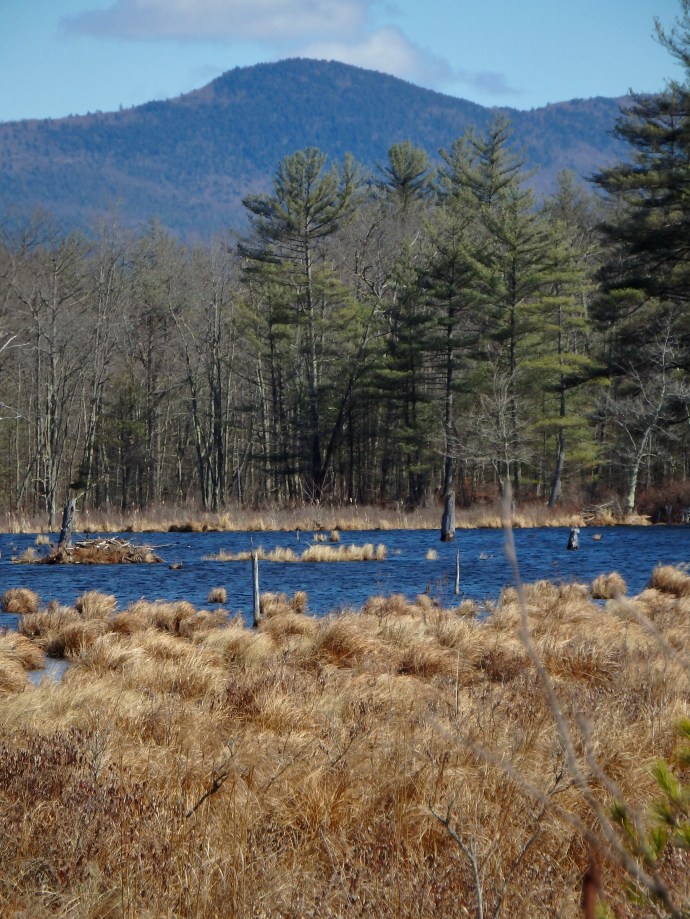
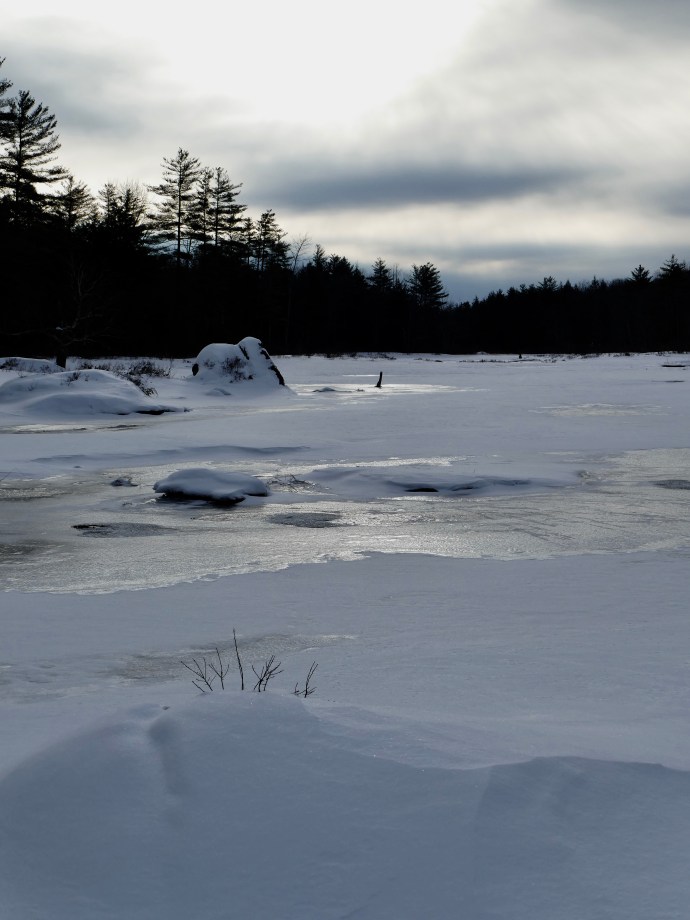
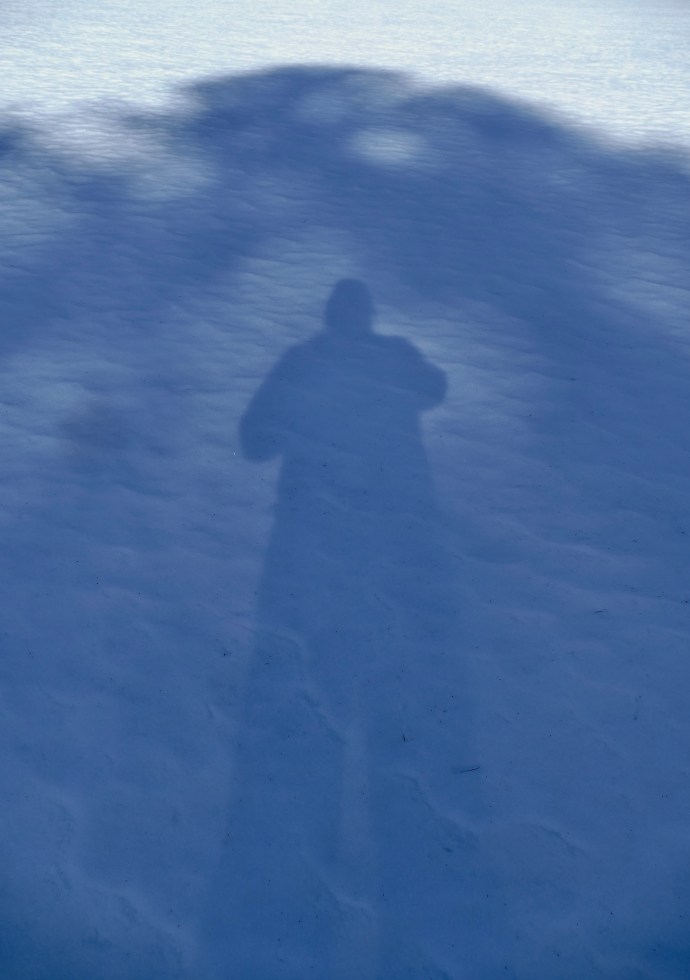
Evidently the distant woods are more blue in a warm and moist or misty day in winter, and is not this connected with the blue in snow in similar days?

in Thoreau’s Journal:
Evidently the distant woods are more blue in a warm and moist or misty day in winter, and is not this connected with the blue in snow in similar days?
1841 in Thoreau’s Journal:
When I select one here and another there, and strive to join sundered thoughts, I make but a partial heap after all— Nature strews her nuts and flowers broadcast, and never collects them into heaps— A man does not tell us all he has thought upon truth or beauty at a sitting—but from his last thought on the subject wanders through a varied scenery of upland meadow and woodland to his next— Sometimes a single and casual thought rises naturally and inevitably with a queenly majesty and escort like the stars in the east.

Fate has surely enshrined it in this hour and circumstances for some purpose— What she has joined together, let not man put asunder.— Shall I transplant the primrose by the river’s brim—to set it beside its sister on the mountain? This was the soil it grew in—this the hour it bloomed in—if sun, wind, and rain came here to cherish and expand it–shall not we come here to pluck it? — Shall we require it to grow in a conservatory for our convenience?
1855 in Thoreau’s Journal:

in Thoreau’s Journal:

In a journal it is important in a few words to describe the weather, or character of the day, as it affects our feelings. That which was so important at the time cannot be unimportant to remember.


in Thoreau’s Journal:
Wait till you can be genuinely polite, though it be till doomsday….

in Thoreau’s Journal:
The sky must have a few clouds, as the mind a few moods;
nor is the evening less serene for them.
in Thoreau’s Journal:
It is remarkable that the straw-colored sedge of the meadows—which in the fall is one of the least noticeable colours—should now that the landscape is mostly covered with snow—be perhaps the most noticeable of all objects in it for its color. —& an agreeable contrast to the snow—

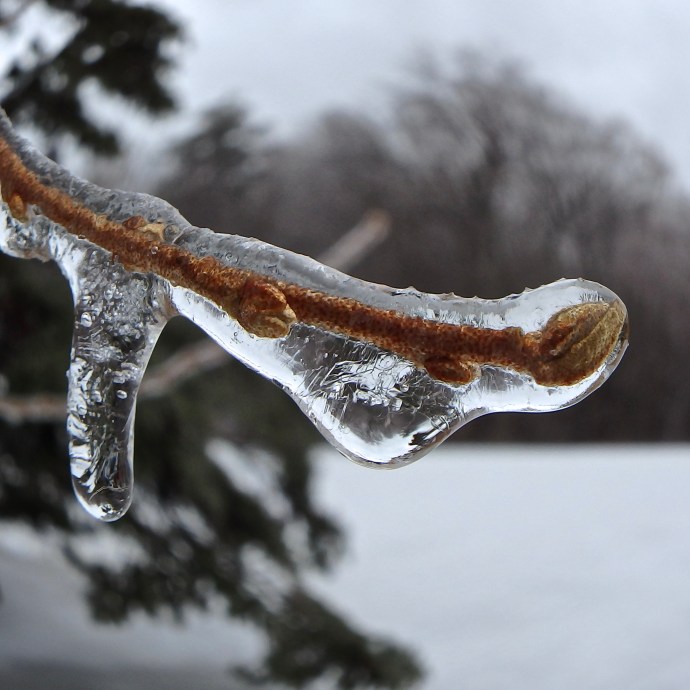
I frequently see where oak leaves–absorbing the heat of the sun have sunk in to the ice & an inch in depth & afterward been blown out–leaving a perfect type of the leaf with its petiole & lobes sharply cut–with perfectly upright sides–so that I can easily tell the species of oak that made it. Sometimes these moulds have been evenly filled with snow–while the ice is dark–& you have the figure of the leaf in white.

February 2, 2020
in Thoreau’s Journal:
A laborer on the RR—tells me it is Candlemas day—(Feb 2d) tomorrow—& the winter half out—half your wood & half your hay—&c &c—& as that day is so will be the rest of the winter.

in Thoreau’s Journal:
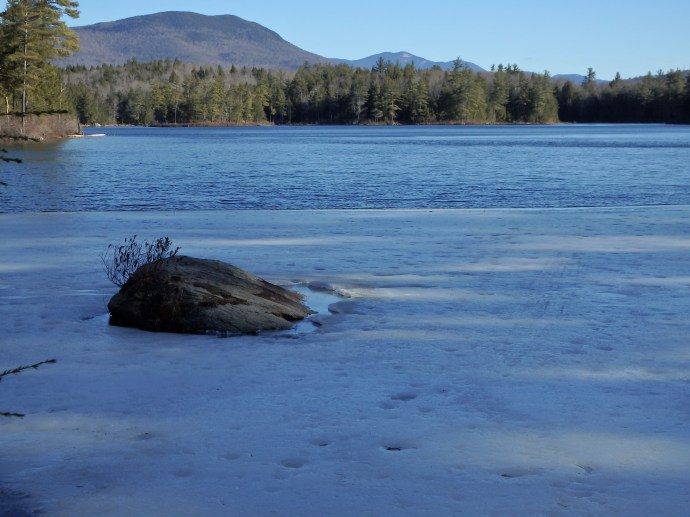
Surely the ice is a great & absorbing phenomenon– Consider how much of the surface of the town it occupies– How much attention it monopolizes! We do not commonly distinguish more than one kind of water in the river–but what various kinds of ice there are!
in Thoreau’s Journal:
Up river on ice & snow to Fair Haven Pond––

There is a few inches of snow perfectly level which now for nearly a week has covered the ice— Going toward the sun you are snow-blinded–– At each clump of willows on the meadow it looks as if there were a hillock––out of which they grow–– This appearance is produced by the willow twigs holding up the ice to height at which it was frozen after the last thaw about 2 feet above the present level.— It forms a regularly rounded hillock. We look at every track in the snow — Every little while there is the track of a fox across the river—turning aside sometimes to a muskrats cabin or a point of ice—where he has left some traces— frequently the larger track of a hound which has followed his trail— It is much easier & pleasanter to walk thus on the river—the snow being shallow & level —& there is no such loud squeaking or cronching of the snow as in the road—and This road is so wide that you do not feel confined in it—& you never meet travelers with whom you have no sympathy. The winter, cold & bound out as it is, is thrown to us like a bone to a famishing dog, & we are expected to get the marrow out of it. While the milkmen in the outskirts are milking so many scores of cows before sunrise these winter mornings, it is our task to milk the winter itself. It is true it is like a cow that is dry & our fingers are numb—& there is none to wake up us— Some desert the field & go into winter quarters in the city— They attend the oratorios while the only music that we hear is the squeaking of the snow under our boots. But the winter was not given to us for no purpose— We must thaw its cold with our genialness. We are tasked to find out & appropriate all the nutriment it yields— If it is a cold & hard season—its fruit no doubt is the more concentrated & nutty. It took the cold & bleakness of November to ripen the walnut—but the human brain is the kernel which the winter itself matures— Not till then does its shell come off— The seasons were not made in vain— Because the fruits of the earth are already ripe—we are not to suppose there is no fruit left for winter to ripen. — It is for man the seasons and the all the fruits exist. The winter was made to concentrate & harden & mature the kernel of his brain—to give tone & firmness & consistency to his thought— Then is the great harvest of the year—the harvest of thought— All previous harvests are stubble to this—mere fodder & green crop. Now we burn with a purer flame like the stars, our oil is winter-strained. We are islanded in Atlantic & Pacific—& Indian Oceans of thought— Bermudas or Friendly or Spice Islands—
Shall we take refuge in cities in November?— shall the nut fall green from the tree? Let not the year be disappointed of its crop— A crazy man walked into an empty pulpit one Sunday & taking up a hymnbook remarked — We have had a good fall for getting in corn & potatoes—let us sing winter— So I say let us sing winter— What else can we sing—and our voices be in harmony with the season.

As we walked up the river—a little flock of chickadees apparently flew to us from a woodside 15 rods off & uttered their lively day day day—& followed us along at a considerable distance—flitting by our side on the button bushes & willows—it is the most if not the only sociable bird we have.
Now is the time to fill ice houses- – Brown filled his last week.
I will be a country man— I will not go to the city—even in winter, any more than the sallows & sweet-gale by the river do— I see their yellow osiers & freckled handsomely imbricated buds still rising above the ice & snow there—to cheer me—
The white rabbit is a large fellow well furred—what does he get to eat—being a vegetable liver—? He must be hardy & cunning in his way— His race have learned by long practice to find their food where a new comer would inevitably starve.
How retired an otter manages to live. He grows to be 4 feet longer without any mortal getting a glimpse of him.
Sometimes one of those great cakes of green ice from Walden or Sam Barretts pond slips from the ice man’s sled in the street and lies there like a great emerald—an object of interest to all travelers.
The hips of the late rose are still abundant & perfect amid the button bushes—
in Thoreau’s Journal:
Of all strange and unaccountable-things this journalising is the strangest, it will allow nothing to be predicated of it; its good is not good, nor its bad bad. If I make a huge effort to expose my innermost and richest wares to light, my counter seems cluttered with the meanest homemade stuffs, but after months or years, I may discover the wealth of India, and whatever rarity is brought overland from Cathay, in that confused heap, and what perhaps seemed a festoon of dried apple or pumpkin, will prove a strong of Brazilian diamonds, or pearls from Coromandel.

Men lie behind the barrier of a relation as effectually concealed as the landscape by a mist; and when at length some unforeseen accident throws me into a new attitude toward them, I am astounded, as if for the first time I saw the sun on the hill-side.— They lie out before me like a new order of things.— As when the master meets his pupil as a man.— Then first do we stand under the same heavens—and master and pupil alike go down the resistless ocean stream together.
in Thoreau’s Journal:

Perhaps I can never find so good a setting for my thoughts
as I shall thus have taken them out of.
in Thoreau’s Journal:
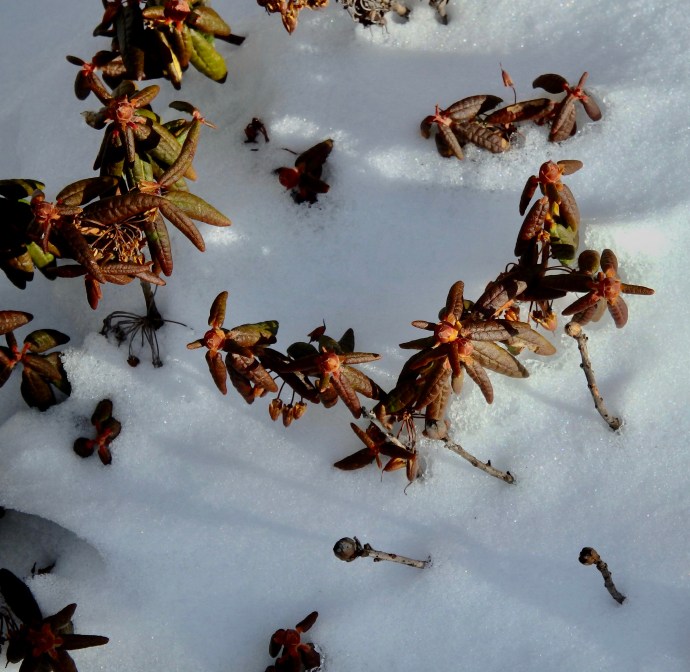
To Hill and beyond. It is so mild & moist as I saunter along by the wall and E of the hill. That I remember or anticipate one of those warm rain storms in the spring, when the earth is just laid bare—the wind is South—& the Kladonia lichens are swollen and lusty with moisture—your foot sinking into them & pressing the water out as from a sponge—& the sandy places also are drinking it in. You wander indefinitely in a beaded coat—wet to the skin of your legs—sit on moss-clad rocks & stumps & hear the lisping of migrating sparrows—flitting amid the shrub oaks—sit hours at a time still & hone your thoughts. A rain which is as serene as fair weather—suggesting fairer weather than was ever seen— You could hug the clods that defile you. You feel the fertilizing influence of the rain in your mind. The part of you that is wettest is fullest of life, like the lichens. You discover evidences of immortality not known to divines. You cease to die—You detect some buds and sprouts of life—every step in the old rye field is on virgin soil.

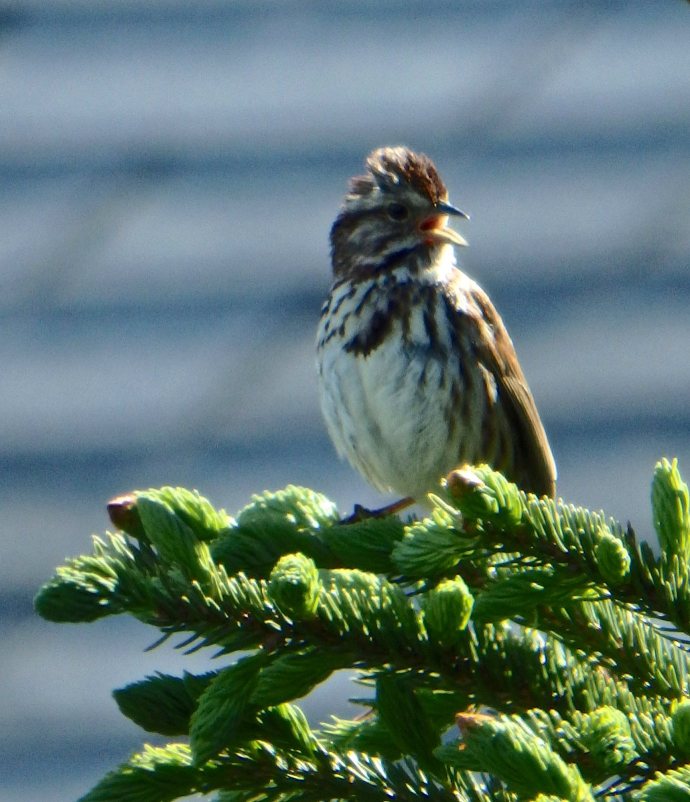
And then the rain comes thicker & faster than before—thawing the remaining part of the ground—detaining the migrating bird,—& you turn your back to it—full of serene, contented thought—soothed by the steady dropping on the withered leaves—more at home for being abroad—more comfortable for being wet—sinking at each step deep into the thawing earth—gladly breaking through the gray rotting ice the dullest sounds seem sweetly modulated by the air— You leave your tracks in fields of spring rye—scaring the fox-colored sparrows along the woodside. —You cannot go home yet you stay and sit in the rain. You glide along the distant woodside—full of joy and expectation—seeing nothing but beauty—hearing nothing but music—as free as the fox-colored sparrow—seeing far ahead—a courageous height—a great philosopher—not indebted to any academy or college for this expansion—but chiefly to the April rain which descendeth on all alike.
Not encouraged by men in your walks not by the divines—not the professors—and to the law giver an outlaw. Not encouraged even when you are reminded of the government at Washington.

Time never passes so quickly & unaccountably as when I am engaged in composition, i.e., in writing down my thoughts. Clocks seem to have been put forward.
The ground being bare this winter I attend less to buds & twigs. Snow covering the ground secures our attention tot twigs &c which rise above it.
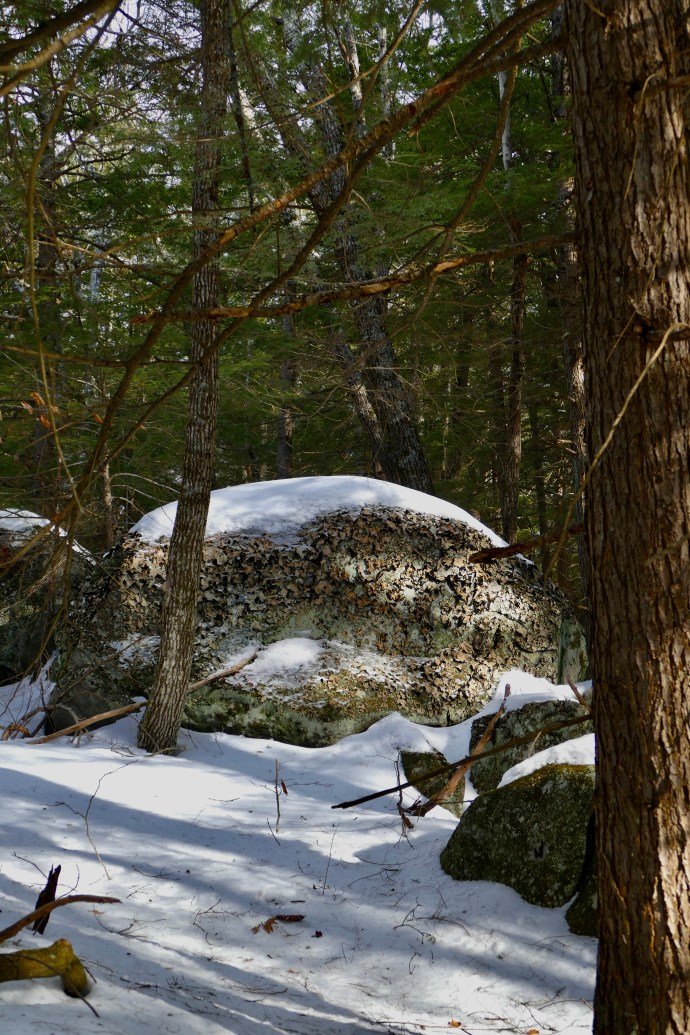
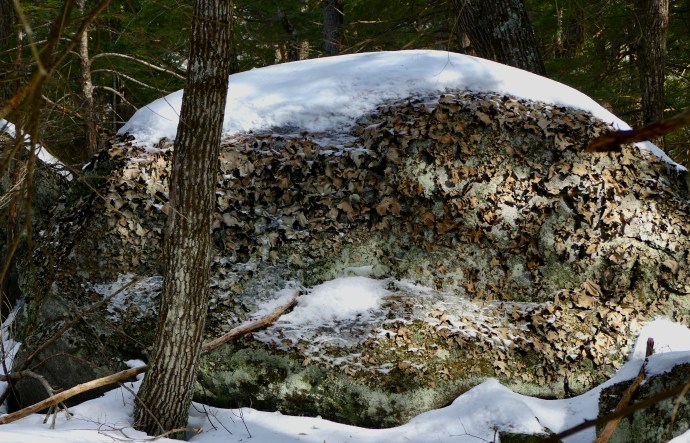
I notice a pretty large rock on the Lee Farm near the site of the old mill over the Assabet which is quite white & bare with the roots of maple cut down a few years ago, spreading over it—& a thin dark green crust or mould—a mere patch of soil a big as a dollar in one or 2 places on it— It is evident that the rock was covered as much as 3 riches deep with soil—a few years since for the old roots are 2 inches thick & that it has been burnt & washed off since—leaving the surface bare & white— There are a few lichens started at one end.
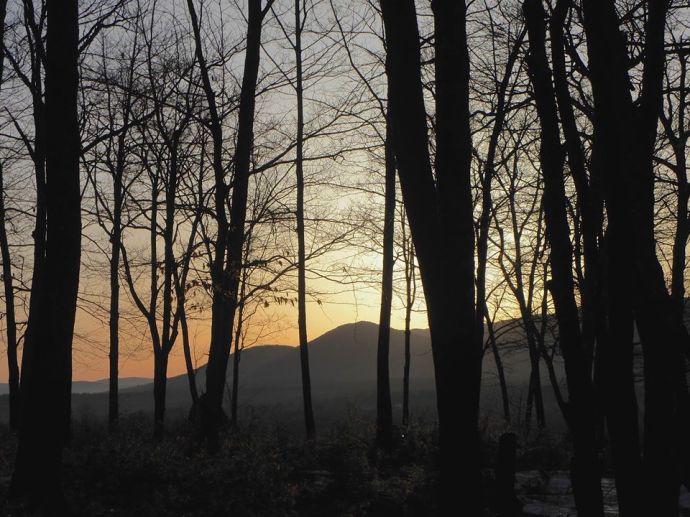
As I came home day before yesterday over the RR causeway—at sunset—the sky was over cast—but beneath the edge of the cloud far in the west was narrow stripe of clear amber sky coextensive with the horizon—which reached no higher than the top of Wachusett. I wished to know how far off the cloud was by comparing it with the mts. It had somewhat the appearance of setting on the mt concealing a part of its summit— I did not suppose it did—because the clouds over my head were too high for that—but when I turned my head I saw the whole out-line of the mts distinctly. I could not tell how far the edge of the cloud was beyond it—but I think it likely that the amber light came to me through a low narrow sky-light the upper sash of whose frame was 40 miles distant.
The amount of it is that I saw a cloud more distant than the mt.
Steadily the elemental rain falls—drip drip drip—the mist drives & clears your sight— The wind blows & warms you—sitting on that sandy upland by the edge of the wood—that April day.

1852 in Thoreau’s Journal:
Let us preserve religiously—secure—protect—the coincidence of our life with the life of nature.— Else what are heat & cold— day & night—sun moon, & stars to us? Was it not from sympathy with the present life of nature that we were born at this epoch rather than at another?
The truest account of heaven is the fairest—& I will accept none which disappoints expectation. It is more glorious to expect a better, than enjoy a worse.
My life as essentially belongs to the present—as that of a willow tree in the spring. Now Now its catkins expand—its yellow bark shines—its sap flows, now or never must you make whistles of it. Get the day to back you—let it back you & the night.
————
We really have four seasons, each incredible to the other. Winter cannot be mistaken for summer here. Though I see the boat turned up on the shore, and half buried under snow, as I walk over the invisible river, summer is far away with its rustling reeds….Would you see your mind, look into the sky. Would you know your own moods, be weather-wise. He whom the weather disappoints, disappoints himself.

1853 in Thoreau’s Journal:
in Thoreau’s Journal:

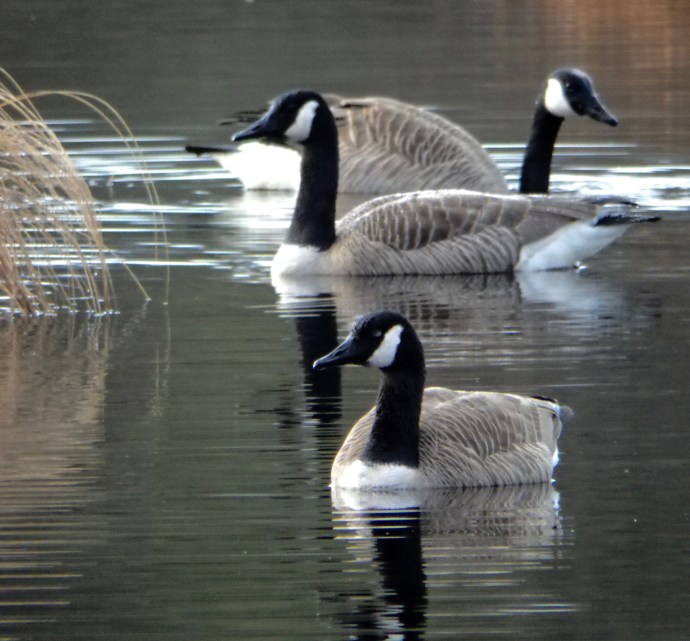
On the morning when the wild geese go over I, too, feel the migratory instinct strong within me, and anticipate the breaking up of winter.
1856 in Thoreau’s Journal:
A journal is a record of experiences & growth–not a preserve of things well done or said. I am occasionally reminded of a statement which I have made in conversation & immediately forgotten–which would read much better than what I put in my journal. It is a ripe dry fruit of long past experience which falls from me easily without giving pain or pleasure– The charm of the journal must consist in a certain greenness–though freshness–& not in maturity. Here I cannot afford to be remembering what I said or did–my scurf cast off–but what I am & aspire to become.

1858 in Thoreau’s Journal:
What is a winter without snow and ice in this latitude?
in Thoreau’s Journal:
To insure health a man’s relation to nature—must come very near to a personal one—he must be conscious of a friendliness in her—when human friends part or die she must stand in the gap to him.

I cannot conceive of any life which deserves the name, unless there is a certain tender relation to nature— This it is which makes winter warm—& supplies society in the desert & wilderness— Unless nature sympathizes with & speaks to us, as it were, the most fertile & blossoming regions are barren & dreary.
in Thoreau’s Journal:
To set down such choice experiences that my own writings may inspire me.— and at last I may make wholes of parts.
Certainly it is a distinct profession to rescue from oblivion & to fix the sentiments & thoughts which visit all men more or less generally. That the contemplation of the unfinished picture may suggest its harmonious completion. Associate reverently, and as much as you can with your loftiest thoughts. Each thought that is welcomed and recorded is a nest egg—by the side of which more will be laid. Thoughts accidentally thrown together become a frame—in which more may be developed—& exhibited. Perhaps this is the main value of a habit of writing—of keeping a journal. That so we remember our best hours—& stimulate ourselves. My thoughts are my company — They have a certain individuality & separate existence—aye personality. Having by chance recorded a few disconnected thoughts and then brought them into juxtaposition—they suggest a whole new field in which it was possible to labor & to think. Thought begat thought….

in Thoreau’s Journal:

The sky has gradually become overcast & now it is just beginning to snow—looking against a dark roof—I detect a single flake from time to time—but when I look at the dark side of the woods 2 miles off in the horizon there already is seen a slight thickness or mistiness in the air—In this way, perhaps, may it first be detected…..Pines & oaks seen at a distance—say 2 miles off—are considerably blended & make one harmonious impression—the former if you attend—are seen to be of a blue or misty black—and the latter form commonly a reddish brown ground, out of which the former rise—These colours are no longer in strong contrast with each other—

in Thoreau’s Journal:
In many instances the snow had lodged on trees yesterday in just such forms as a white napkin or counterpane dropped on them would take—protuberant in the middle with many fold & dimples— An ordinary leafless bush supported so much snow on its twigs—a perfect maze like a whirligig—though not in one solid mass—that you could not see through it— We heard only a few chic-a-dees. Some times the snow on the bent P. Pines made me think of rams’ or elephants’ heads ready to butt you.
In particular places standing on their snowiest side the woods were incredibly fair—white as alabaster—indeed the young pines reminded you of the purest statuary. & the stately full grown ones towering around affected you as if you stood in a Titanic sculptor’s studio. So purely & delicately white—transmitting the light—their dark trunks all concealed. And in many places where the snow lay on withered oak leaves between you & the light—various delicate fawn coloured & cinnamon tints blending with the white still enhanced the beauty.

How new all things seem! Here is a broad, shallow pool in the fields which yesterday was slush, now converted into a soft, white fleecy snow ice…It is like the beginning of the world. There is nothing hackneyed where a new snow can come and cover all the landscape…The world is not only new to the eye, but is still as at creation. Every blade and leaf is hushed, not a bird or insect is heard, only, perchance, a faint tinkling sleigh-bell in the distance…The snow still adheres conspicuously to the N.W. sides of the stems of the trees, quite up to their summits, with a remarkably sharp edge in that direction…It would be about as good as a compass to steer by in a cloudy day or by night…I doubt if I can convey an idea of the appearance of the woods yesterday. As you stood in their midst, and looked round on their boughs and twigs laden with snow, it seemed as if there could be none left to reach the ground. These countless zigzag white arms crossing each other at every possible angle completely closed up the view like a light drift within three or four rods on every side, the wintriest prospect imaginable. That snow which sifted down into the wood paths was much drier and lighter than elsewhere.
in Thoreau’s Journal:

Another bright winter day.
Photo January 19, 2020
You must be logged in to post a comment.