in Thoreau’s Journal:
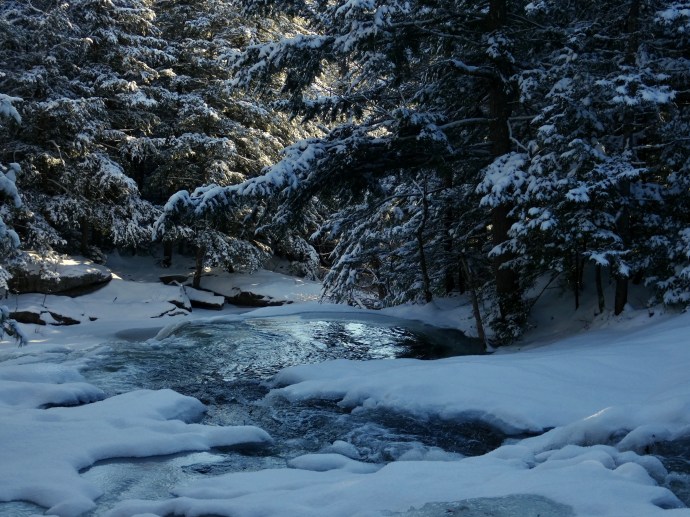
I do not talk to any intellect in nature,
but am presuming an infinite heart somewhere into which I play.
in Thoreau’s Journal:
I do not talk to any intellect in nature,
but am presuming an infinite heart somewhere into which I play.
in Thoreau’s Journal:
It is a record of the mellow and ripe moments that I would keep.
I would not preserve the husk of life—but the kernel.
When the cup of life is full and flowing over—preserve some drops as a specimen-sample. When the intellect enlightens the heart & the heart warms the intellect.
—
The snow which we have had for the past week or 10 days has been remarkably light & dry. It is pleasant walking in the woods now when the sun is just coming out & shining on the woods freshly covered with snow— At a distance the oak woods look very venerable—a fine hale wintry aspect things wear and the pines all snowed up even suggest comfort. Where boughs cross each other much snow is caught—which now in all woods is gradually coming down.

in Thoreau’s Journal:
A slight whitening of snow last evening—the 2nd whitening of the winter—just enough to spoil the skating now 10 days old on the ponds— Walden skimmed over in the widest part, but some acres still open—will prob. freeze entirely to-night if this weather holds.

You cannot go out so early but you will find the track of some wild creature.
in Thoreau’s Journal:
We are tempted to call these the finest days of the year.
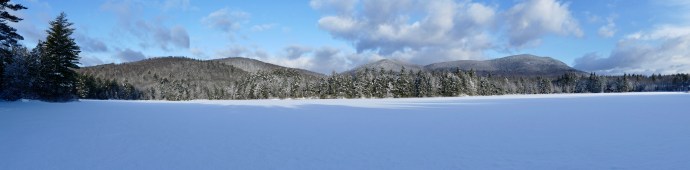
Take Fair Haven Pond, for instance, a perfectly level plain of snow, untrodden as yet by any fisherman, surrounded by snow-clad hills, dark evergreen woods, and reddish oak leaves, so pure and still.
in Thoreau’s Journal:
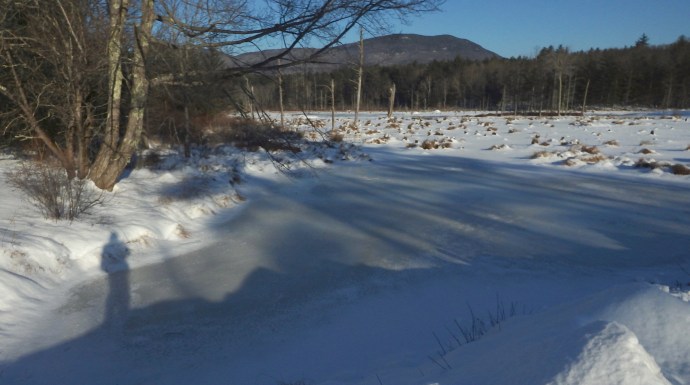
My home is as much of nature as my heart embraces. If I only warm my house, then is that only my home. But if I sympathize with the heats and colds, the sounds and silence of nature, and share the respose and equanimity that reign around me in the fields, then are they my house, as much as if the kettle sang and fagots crackled, and the clock ticked on the wall.
in Thoreau’s Journal:
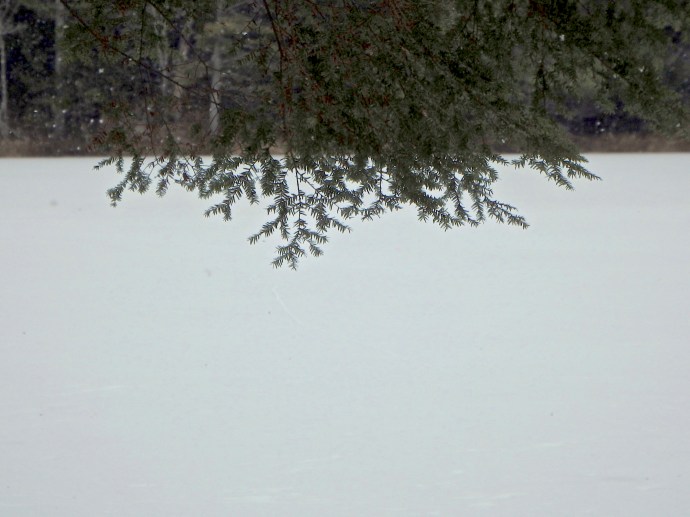
This plain sheet of snow which covers the ice of the pond is not such a blankness as is unwritten, but such as is unread.
in Thoreau’s Journal:
Loring’s Pond beautifully frozen. (This is the first skating.)
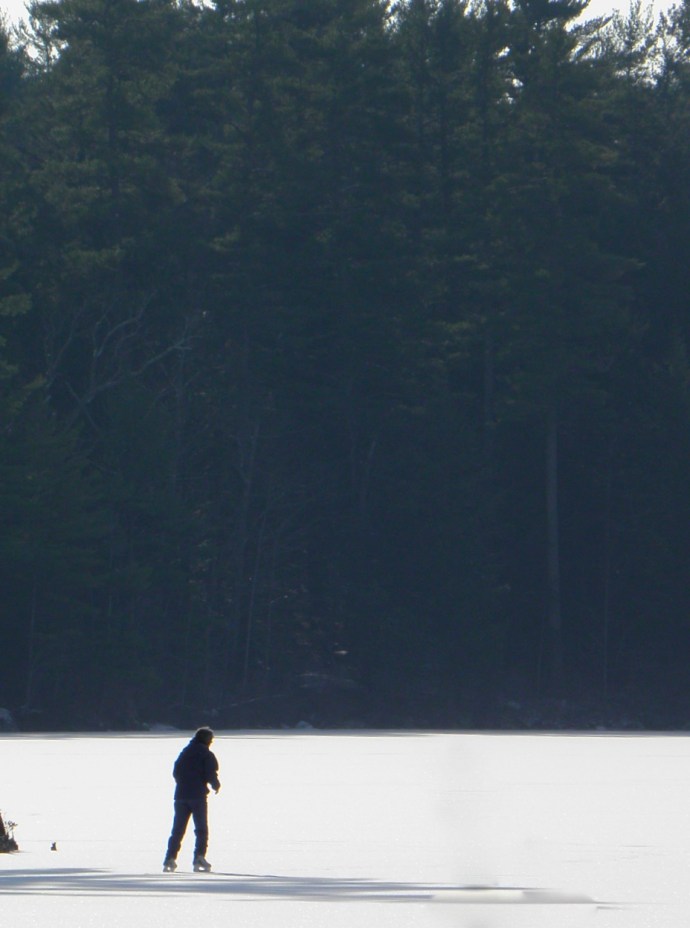
So polished the surface, I took many parts of it for water. It was waved or watered with a slight dust, nevertheless. Cracked into large squares, like the faces of a reflector, it was so exquisitely polished that the sky and dun-colored scudding clouds, with mother-o’-pearl tints, were reflected in it as in the calmest water. I slid over it with a little misgiving, mistaking the ice before me for water. Still the ruby-crowned birds about.
in Thoreau’s Journal:
The winter morning is the time to see in perfection the woods and shrubs wearing their snowy and frosty dress. Even he who visits them half an hour after sunrise will have lost some of their most delicate and fleeting beauties. The trees wear their morning burden but coarsely after midday, and it no longer expresses the character of the tree…the stems and branches of the trees look black by contrast. You wander zigzag through the aisles of the woods where stillness and twilight reign. I do not know but a pine woods is as substantial and as memorable a fact as a friend. I am more sure to come away from it cheered than from this who are nearest to being my friends.
Improve every opportunity to express yourself in writing, as if it were your last….
My acquaintances sometimes wonder why I will impoverish myself by living aloof from this or that company, but greater would be the impoverishment if I should associate with them.
in Thoreau’s Journal:
Speech is fractional, silence is integral.
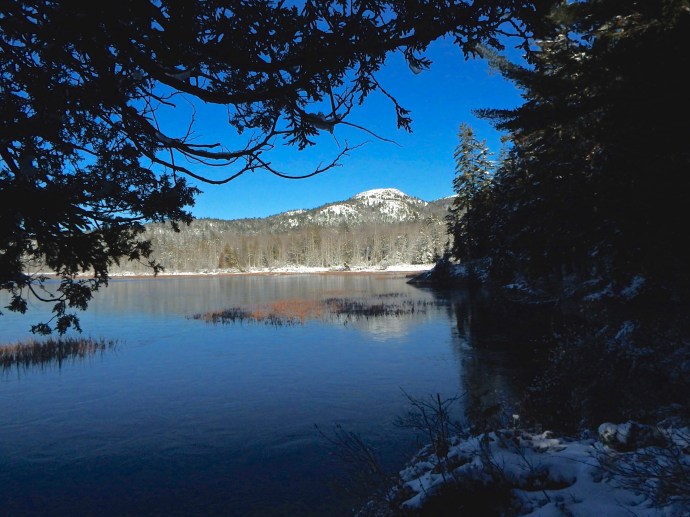
Beauty is where it is perceived. When I see the sun shining on the woods across the pond, I think this side the richer which sees it.
in Thoreau’s Journal:
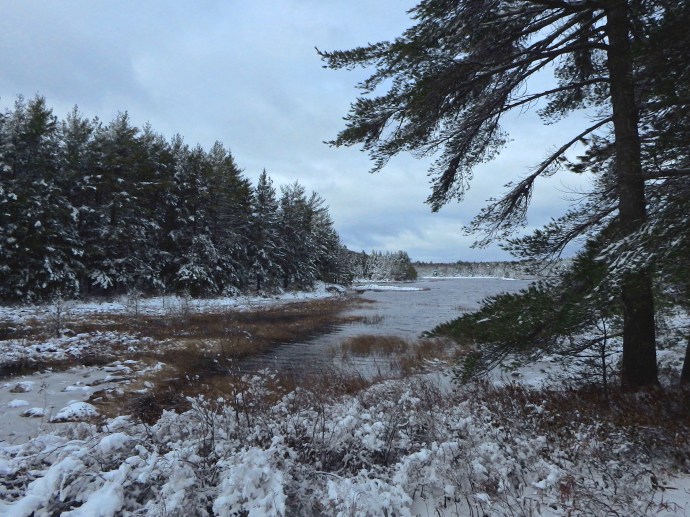
I still recall that characteristic winter evening of December 9th. The cold, dry, and wholesome diet my mind and senses necessarily fed on, —oak leaves, bleached and withered weeds that rose above the snow, the now dark green of the pines, and perchance the faint metallic chip of a single tree sparrow; the hushed stillness of the wood at sundown, aye, all the winter day, the short boreal twilight, the smooth serenity and reflections of the pond, still alone free from ice; the melodious hooting of the owl, heard at the same time with the yet more distant whistle of a locomotive, more aboriginal, and perchance more enduring here than that, heard above all the voices of Concord, as if they were not, the last strokes of the woodchopper (how little he is Anglicized!) who presently bends his steps homeward; the gilded bar of cloud across the apparent outlet of the pond, conducting my thoughts into the eternal west, the deepening horizon glow, and the hasty walk homeward to enjoy the long winter evening.
The hooting of the owl; that is a sound which my red predecessors heard here more than a thousand years ago it rings far and wide, occupying the space rightfully, — grand, primeval, aboriginal sound. There is no whisper in it of the Bulkeleys, the Flints, the Hosmers, who recently squatted here, nor of the first parish, nor of Concord Fight, nor of the last town-meeting.
in Thoreau’s Journal:
As for the weather, all seasons are pretty much alike to one who is actively at work in the woods. I should say that there were two or three remarkably warm days, and as many cold ones in the course of the year, but the rest are all alike in respect to temperature. This is my answer to my acquaintances, who ask if I have not found it very cold being out all day….
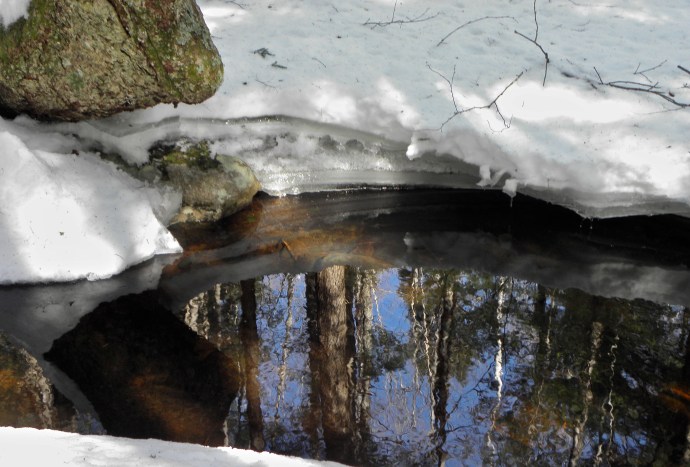
There are certain places where the ice will always be open, where, perchance, warmer springs come in. There are such places in every character, genial and open in the coldest seasons.
1851 in Thoreau’s Journal:
Walk early through the woods to Lincoln to survey. Winter weather may be said to have begun yesterday. Why have I ever omitted early rising and a morning walk?
1852 in Thoreau’s Journal:
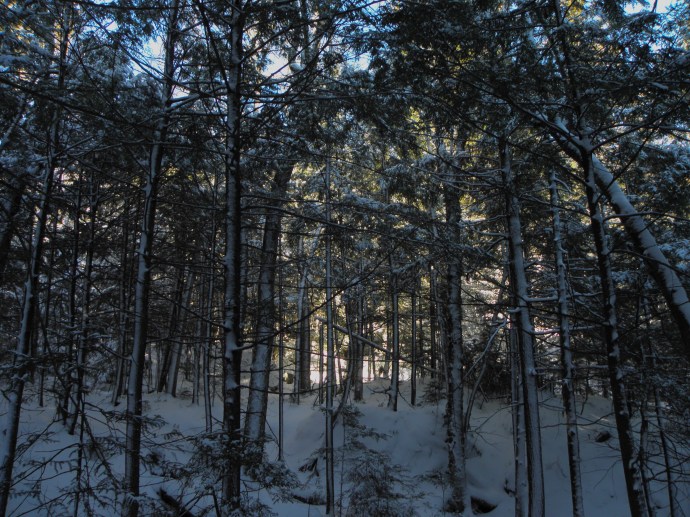
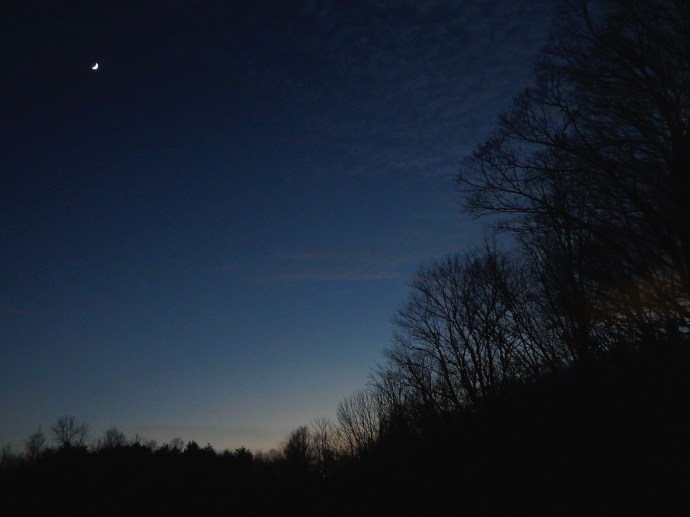
While surveying today saw much Mt Laurel for this neighborhood in Mason’s pasture—just over the line in Carlisle. Its bright yellowish green shoots are agreeable to my eye. We had one hour of almost Indian summer weather in the middle of the day. I felt the influence of the sun— It melted my stoniness a little. The pines looked like old friends again. Cutting a path through a swamp where was much brittle dogwood &c &c I wanted to know the name of every shrub. This varied employment to which my necessities compel me serves instead of foreign travel & the lapse of time— If it makes me forget somethings which I ought to remember, it no doubt enables me to forget many things which it is well to forget. By stepping aside from my chosen path so often I see myself better and am enabled to criticize myself. Of this nature is the only true lapse of time. It seems an age since I took walks & wrote in my journal— And when shall I revisit the glimpses of the moon? To be able to see ourselves—not merely as others see us—but as we are—that service a variety of absorbing employments does us.
in Thoreau’s Journal:
There are times when thought elbows her way through the underwood of words to the clear blue beyond….
in Thoreau’s Journal:
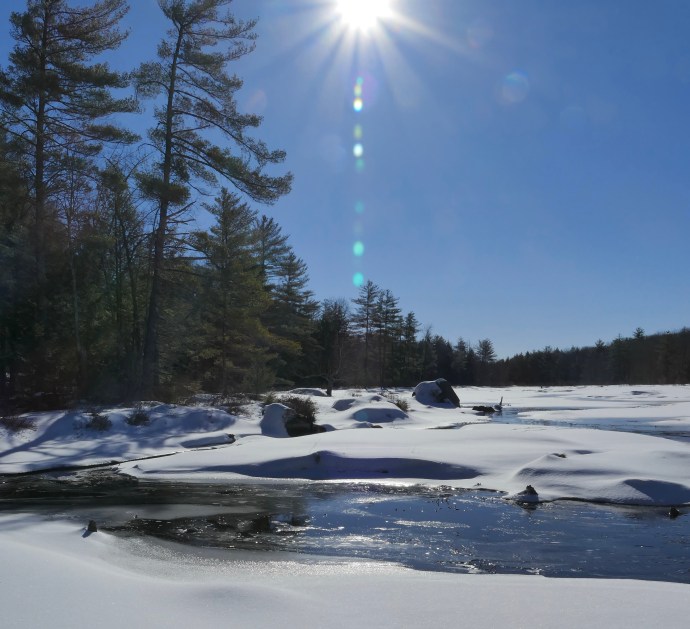
The winter with its snow and ice is not an evil to be corrected…..To perceive freshly, with fresh senses, is to be inspired. Great winter itself looked like a precious gem reflecting rainbow colors from one angle. My body is all sentient. As I go here or there, I am tickled by this or that I come into contact with, as if I touched the wires of a battery. I can generally recall, have fresh in my mind, several scratches last received. These I continually recall to mind, reimpress and harp upon.
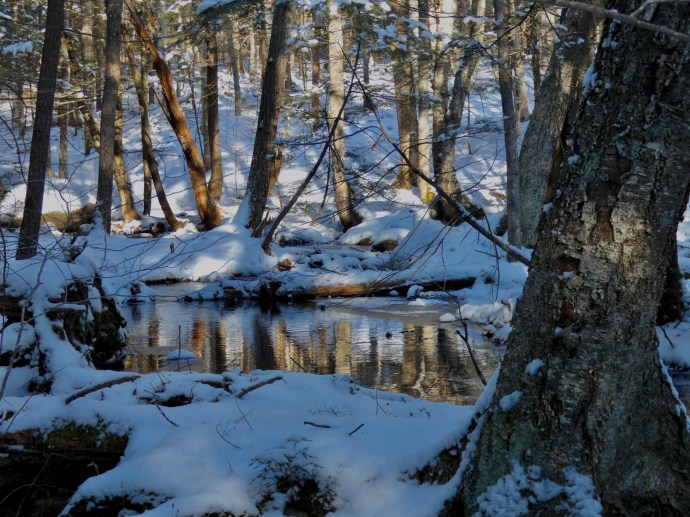
The age of miracles is each moment thus returned; now it is wild apples, now river reflections, now a flock of lesser red-polls. In winter, too, resides immortal youth and perennial summer….What if we could daguerreotype our thoughts and feelings !
in Thoreau’s Journal:
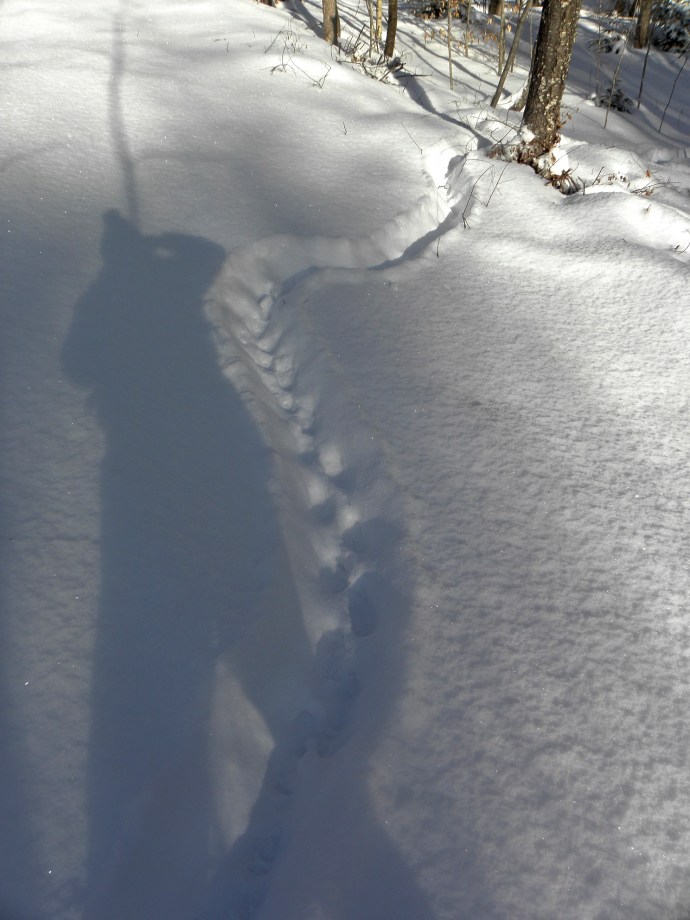
I discover a strange track in the snow, and learn that some migrating otter has made across from the river to the wood, by my yard and the smith’s shop, in the silence of the night. I cannot but smile at my own wealth when I am thus reminded that every chink and cranny of nature is full to overflowing. Such an incident as this startles me with the assurance that the primeval nature is still working, and makes tracks in the snow. It is my own fault that he must thus skulk across my premises by night. Now I yearn toward him, and heaven to me consists in a complete communion with the otter nature. He travels a more wooded path by watercourses and hedgerows, I by the highways, but though his tracks are now crosswise to mine, our courses are not divergent, but we shall meet at last.
in Thoreau’s Journal:
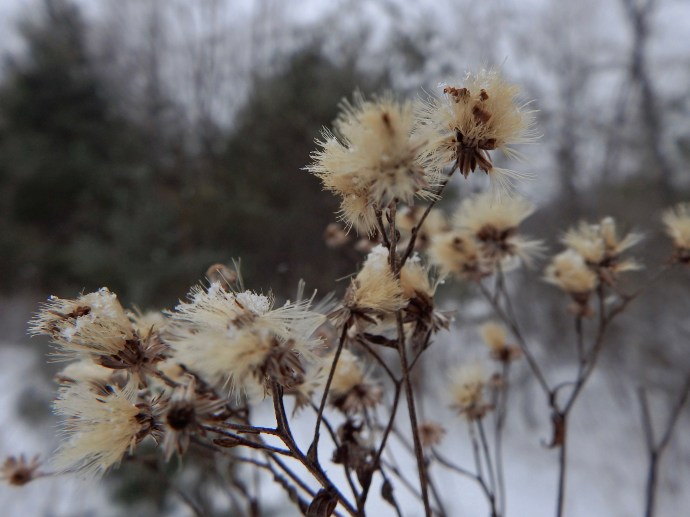
How prominent the late or fall flowers are, now withered above the snow, —the goldenrods and asters, Roman wormwood, etc., etc.! These late ones have a sort of life extended into winter, hung with icy jewelry.
in Thoreau’s Journal:
It snowed in the night of the 6th and the ground is now covered. our first snow 2 inches deep A week ago I saw cows being driven home from pasture— Now they are kept at home. Here’s an end to their grazing. The farmer improves this first light snow to accomplish some pressing jobs—to move some particular rocks on a drag, or the like— I perceive how quickly he has seized the opportunity. I see no tracks now of cows or men or boys beyond the edge of the wood—suddenly they are shut up—the remote pastures & hills beyond the woods are now closed to cows & cowherds aye & to cowards I am struck by this sudden solitude & remoteness which these places have acquired.
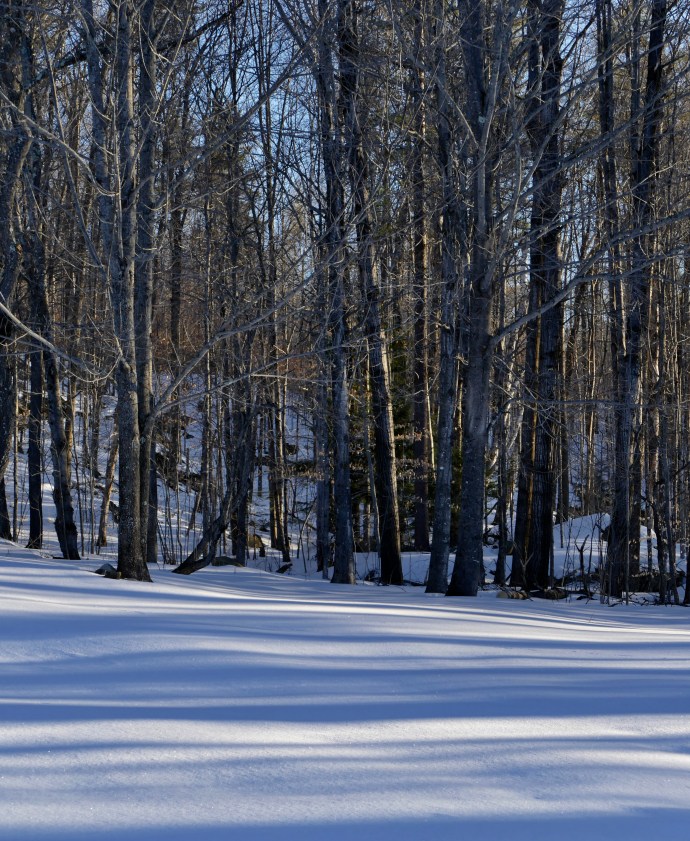
The dear privacy & retirement & solitude which winter makes possible—carpeting the earth with snow, furnishing more than woolen feet to all walkers, crounching the snow only. From Fair Haven I see the hills & fields aye & the icy woods in the Corner shine gleam with the dear old wintery sheen.
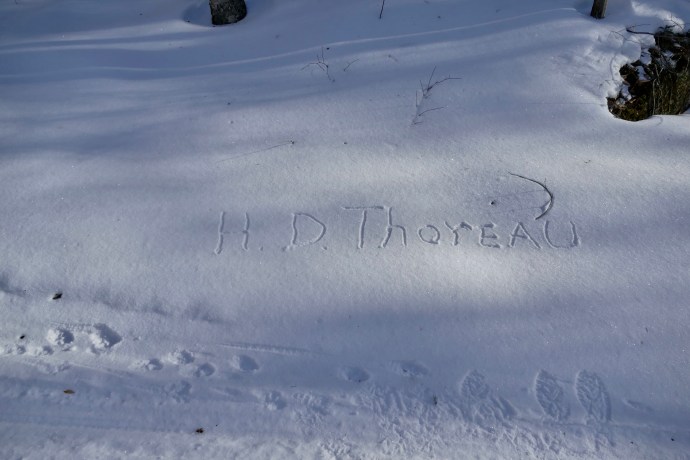
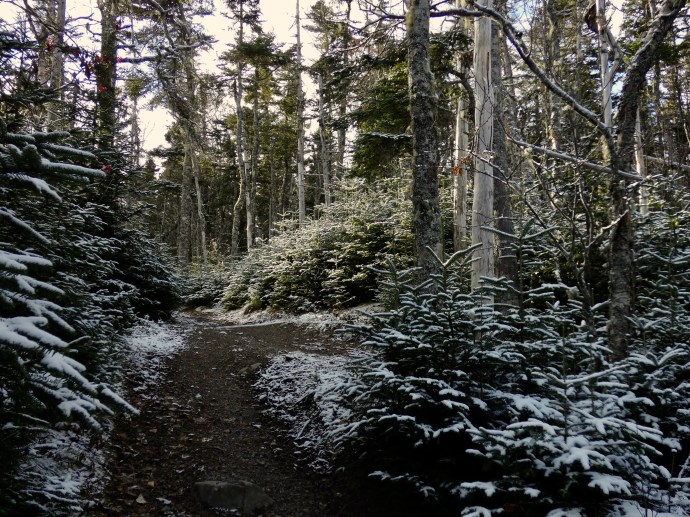
in Thoreau’s Journal:
In November & now before the snow I am attracted by the numerous small evergreens on the forest floor—now most conspicuous.
in Thoreau’s Journal:
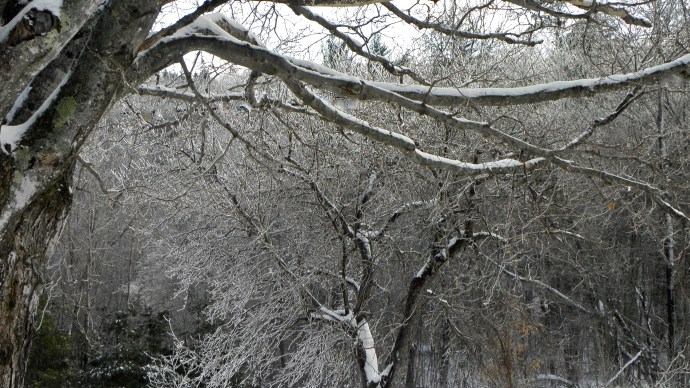
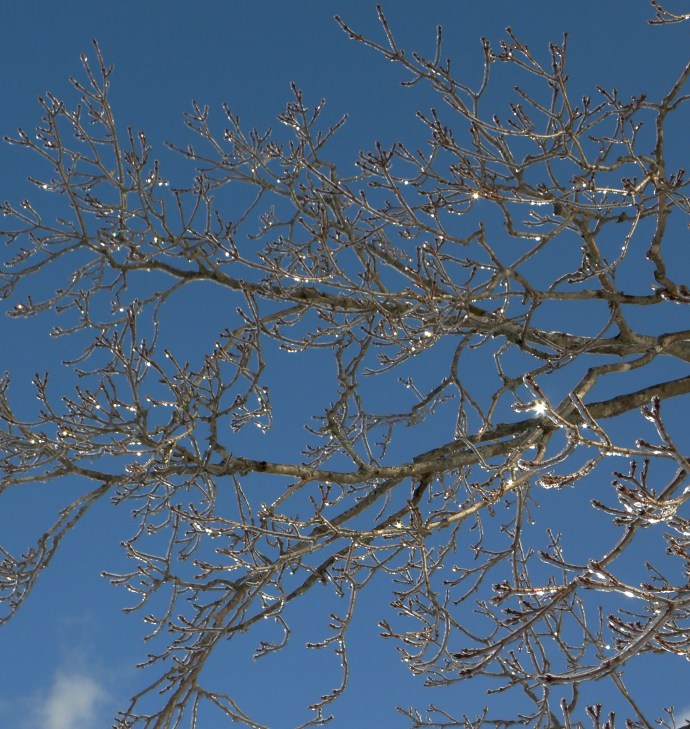
Go out at 9 AM to see the glaze. It is already half fallen, melting off. The dripping trees and wet falling ice will wet you through like rain in the woods. It is a lively sound, a busy tinkling, the incessant brattling and from time to time rushing, crashing sound of this falling ice, and trees suddenly erecting themselves when relieved of their loads. It is now perfect only on the north sides of woods which the sun has not touched or affected. Looking at a dripping tree between you and the sun, you may see here or there one or another rainbow color, a small brilliant point of light.
in Thoreau’s Journal:
Rather hard walking in the snow— There is a slight mist in the air—& accordingly some glaze on the twigs & leaves—& thus suddenly we have passed from Ind. summer to winter. The perfect silence, as if the whispering & creaking earth were muffled–– the stillness of the twigs & of the very weeds & withered grasses as if they were sculpted out of marble—are striking. It is as if you had stept from the withered garden into the yard of a sculptor or worker in marble crowded with delicate works—rich & rare. I remark, half a mile off, a tall & slender pitch pine against the dull grey mist—peculiarly monumental. I noticed also several small white oak trees full of leaves by the road—strangely interesting & beautiful. Their stiffened leaves were very long and deeply cut, & the lighter & glazed underside being almost uniformly turned vertically toward the N.W. as a traveller turns his back to the storm—though enough of the redder & warmer sides were seen to contrast with them—it looked like an artificial tree hung with many-fingered gauntlets. — — — — Such was the disposition of the leaves often in the same plane, that it looked like a brown arbor vitae.
See 4 quails running across the turnpike. How they must be affected by this change from warm weather & bare ground to cold & universal snow!
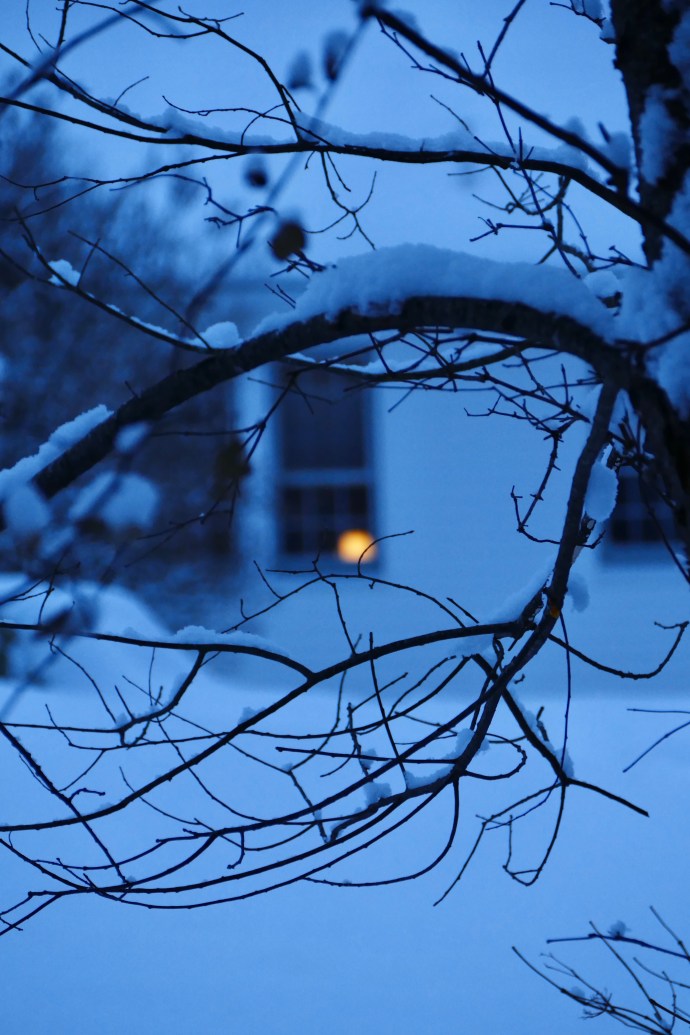
Returning from the P.O. at early candle light, I noticed for the first time this season the peculiar effect of lights in offices & shops seen over the snowy street—suggesting how withdrawn & inward the life in the former—how exposed & outward in the latter.


You must be logged in to post a comment.