October 11

October 11, 1852 in Thoreau’s Journal:

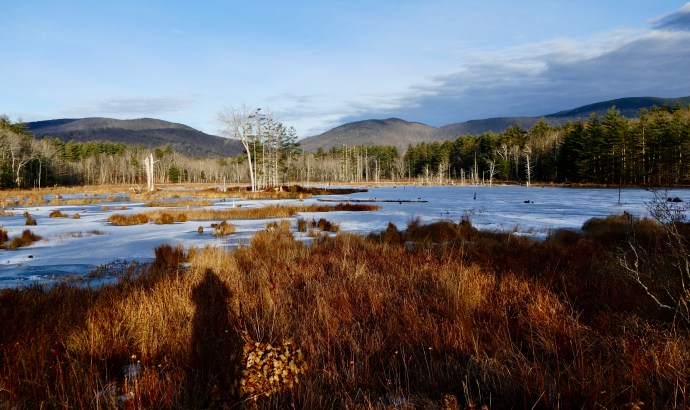
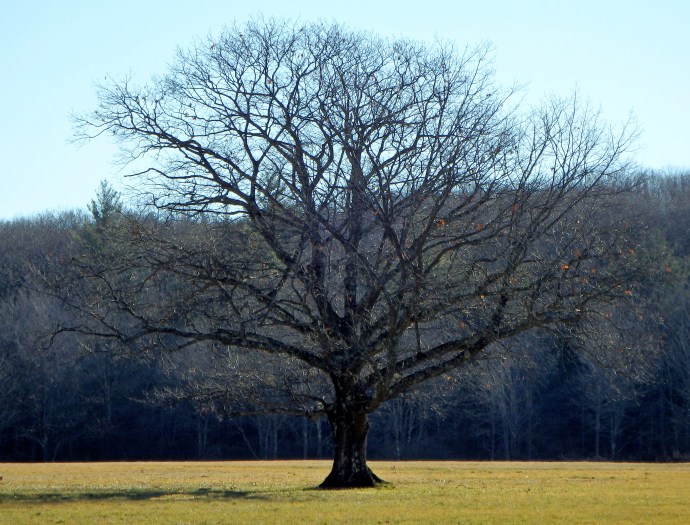
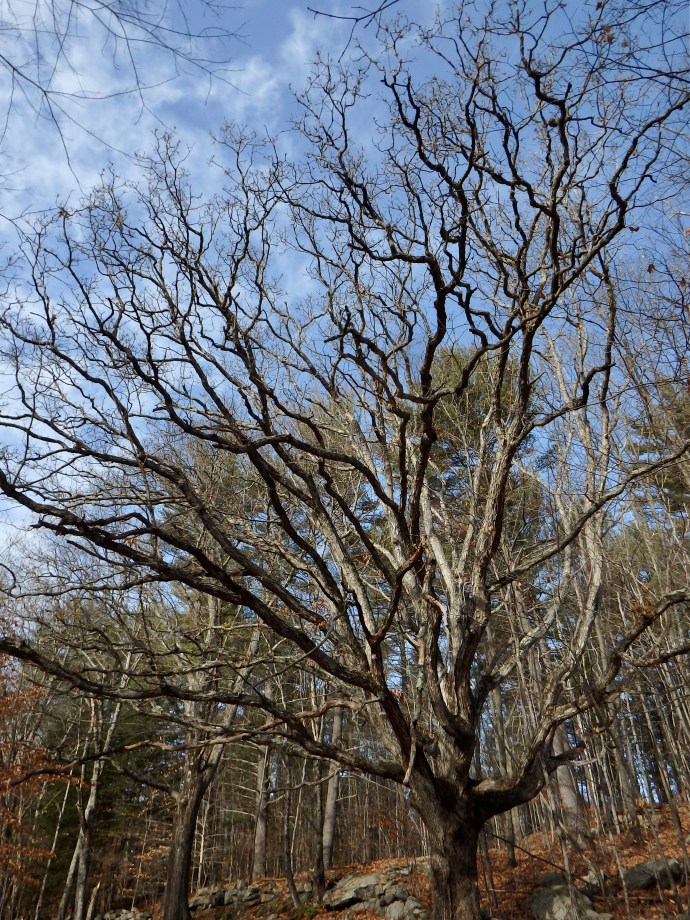
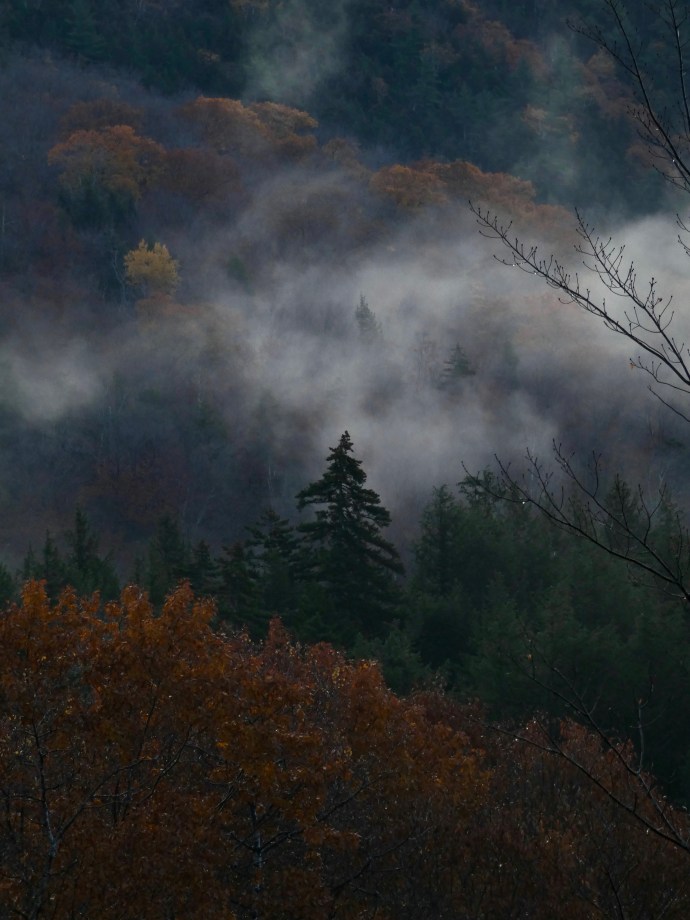
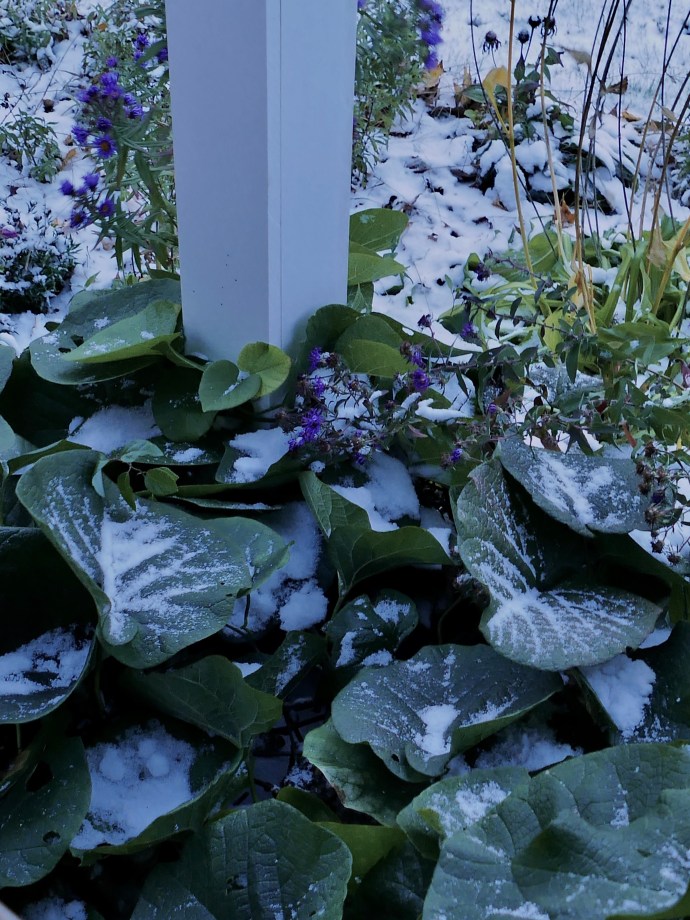
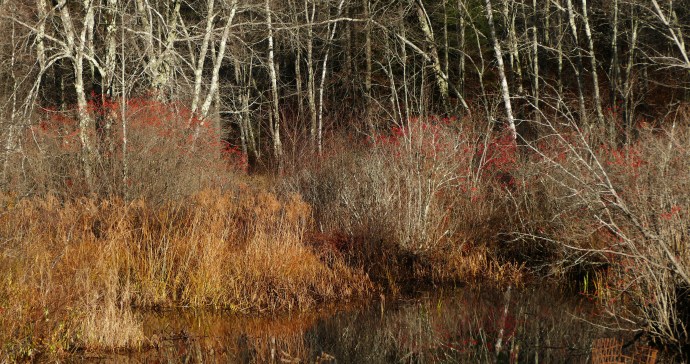
Now it is true autumn—all things are crisp & ripe.

PB070041.jpeg

October 11, 1859:  

The note of the chickadee heard now in cooler weather  & above many fallen leaves––has a new significance.  

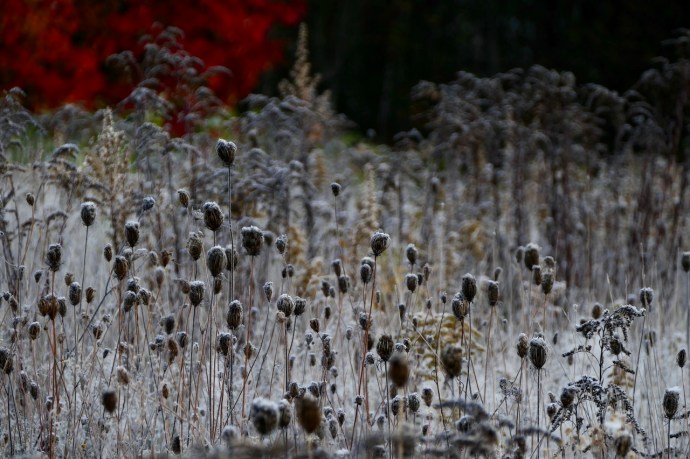
There was a very severe frost this Am prob ground stiffened a chestnut-opening frost.  A season-ripener––opener of the burrs that enclose the Indian summer––  Such is the cold of early or mid October.  The leaves and weeds had that stiff hoary appearance. 

October 10, 1851

in Thoreau’s Journal:

PA150047.jpeg

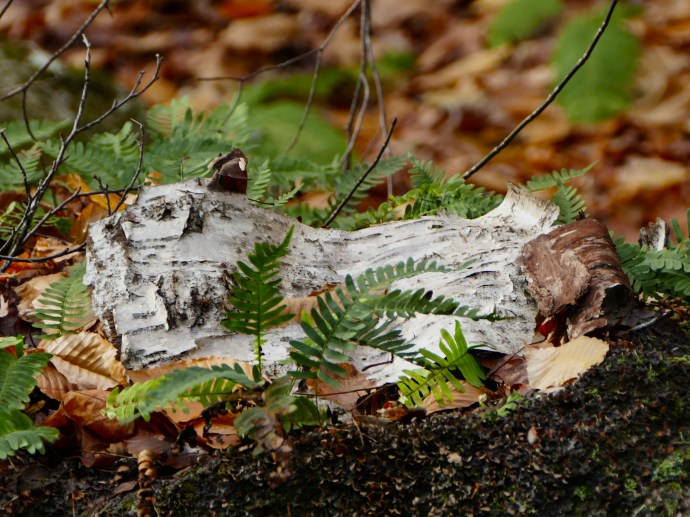
How agreeable to the eye at this season the color of new fallen leaves….sere & crisp. When freshly fallen with their forms & their veins still distinct they have a certain life in them still….You make a great noise now walking in the woods on account of the dry leaves—especially chestnut & oak—& maples that cover the ground….

P1280870.jpeg

The witch hazel loves a hill side with or without wood or shrubs. It is always pleasant to come upon it unexpectedly, as you are threading the woods in such places.

October 9, 1853

P1200189.jpeg

in Thoreau’s Journal:

The red maples are now red & also yellow & reddening. The white maples are green & silvery also yellowing and blushing— The birch is yellow —the black willow brown. The elms sere brown & thin —the bass bare—the button bush which was so late is already mostly bare except the lower part protected — The swamp wht oak is green with a brownish tinge. The Wht ash turned mulberry The white maples toward Ball’s hill have a burnt white appearance— The white oak a salmon color & also red— Is that scarlet oak rosed?— Huckleberries & blackberries are red.

The leaves are falling…

October 8, 1852

in Thoreau’s Journal:

10:8.jpeg

The autumnal tints about the pond are now perfect—nothing can exceed the brilliancy of some of the maples which stand by the shore & extend their red banners over the water—why should so many be yellow?  I see the browner yellow of the chestnuts on Pine Hill—  The maples & hickories are a clearer yellow.  Some white oaks are red—  The shrub oaks are bloody enough for a ground—  The red & black oaks are yet green.

October 7

10:7a.jpeg

October 7, 1852 in Thoreau’s Journal:

Perhaps the autumnal tints are as bright & interesting now as they will be—now is the time to behold the maple swamps—one mass of red & yellow—all on fire as it were.   These and the blood red huckleberries are the most conspicuous—and then in the village the warm brownish yellow elms—& there and elsewhere the dark red ashes.  The green pines springing out of huckleberries on the hillsides look as if surrounded by red or vermillion paint….

I sit on Poplar Hill.  It is a warm Indian summerish afternoon. The sun comes out of clouds & lights up & warms the whole scene— It is perfect autumn….It is the mellowing year.  The sunshine harmonizes with the imbrowned & fiery foliage.

10:7b.jpeg

October 7, 1857 in Thoreau’s Journal:

Halfway up Fair Haven Hill, I am surprised for the thousandth time by the beauty of the landscape and sit down by the orchard wall to behold it in my leisure…..I do not know how to entertain those who cannot take long walks….I give up my forenoon to them, and get along pretty well, the very elasticity of the air and promise of the day abetting me; but they are as heavy as dumplings by mid-afternoon. If they can’t walk, why won’t they take an honest nap in the afternoon and let me go?

October 7, 1860 in Thoreau’s Journal:

Many people have a foolish way of talking about small things––& apologize for themselves or another having attended to a small thing––having neglected their ordinary business & amused or interested themselves by attending to a small thing––  When if the truth were known their ordinary business was the small thing––& almost their whole lives misspent––but they were such fools as not to know it.

10:7c.jpeg

October 6, 1840

in Thoreau’s Journal:  

10:6.jpeg

The revolution of the seasons is a great and steady flow, a graceful, peaceful motion, like the swell on lakes and seas.

What is sacrificed to time is lost to eternity.

October 5, 1857

in Thoreau’s Journal:

There is not now that profusion, and consequent confusion, of events which belongs to a summer walk. There are few flowers, birds, insects, or fruits now, and hence what does occur affects us as more simple and significant, as the cawing of a crow or the scream of a jay. The latter seems to scream more fitly and with more freedom through the vacancies occasioned by fallen maple leaves.

I hear the alarum of a small red squirrel, and see him running by fits and starts along a chestnut bough toward me. His head looks disproportionally large for his body, like a bull-dog’s, perhaps because he has his chaps full of nuts. He chirrups and vibrates his tail, holds himself in, and scratches along a foot as if it was a mile. He finds noise and activity for both of us. 

10:5.jpeg

October 4, 1859

 in Thoreau’s Journal:

10:4.jpeg

Now the year itself begins to be ripe….

P9040062.jpeg

….if it is required that you be affected by ferns, that they amount to anything, signify anything, to you, that they be another sacred scripture and revelation to you, helping to redeem your life, this end is not so surely accomplished.

October 3, 1840

10:3.jpeg

in Thoreau’s Journal:

Why need I travel to seek a site, and consult the points of the compass? My eyes are south windows, and out of these I command a southern prospect. The eye does the least drudgery of any of the senses. It oftenest escapes to a higher employment. The rest serve and escort and defend it. I attach some superiority, even priority, to this sense. It is the oldest servant in the soul’s household; it images what it imagines, it ideates what it idealizes. Through it idolatry crept in which is a kind of religion. If any joy or grief is to be expressed, the eye is the swift runner that carries the news. In circumspection, double, in fidelity, single, it serves truth always, and carries no false news….How man serves this sense more than any other!  When he builds a house, he does not forget to put a window in the wall. We see truth. We are children of light. Our destiny is dark. No other sense has so much to do with the future. The body of science will not be complete till every sense has thus ruled our thought and language and action in its turn.

October 2, 1856

10:2b.jpeg

in Thoreau’s Journal:

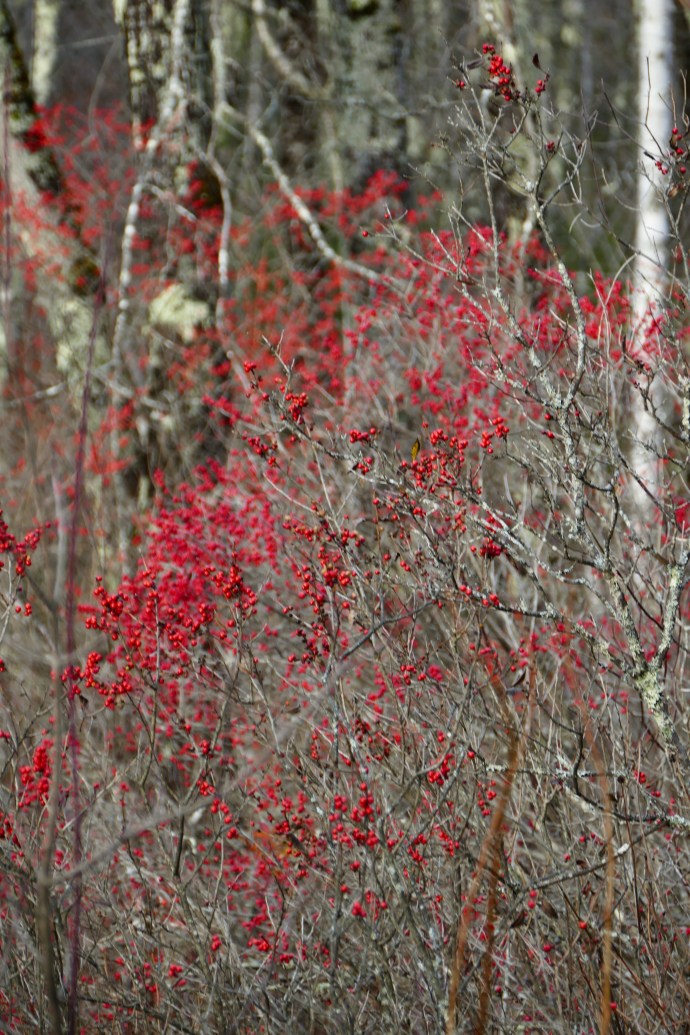
The prinos berries are in their prime––seven sixteenths of an inch in diameter. They are scarlet––somewhat lighter than the arum berries.

10:2a.jpeg

 They are now very fresh and bright and what adds to their effect is the perfect freshness and greenness of the leaves amid which they are seen.

October 1, 1856


P1280741.jpegin Thoreau’s Journal:

Examined an Asclepias Cornuti pod, already opening. As they dry, the pods crack open by the seam along their convex or outer side, revealing the seeds with their silky parachutes, closely packed in an imbricated manner, already right side up, to the number in one instance of 134, as I counted, and again 270. As they lie, they resemble somewhat a round plump fish, with the silk ends exposed at the tail. Children call them fishes. The silk is divided once or twice by the raised partition of the spongy core around which they are arranged. At the top of some more open and drier, is already a little clump of loosened seeds and down two or three inches in diameter, held by the converging tips of the down, like meridians, and just ready to float away when the wind rises.

10:1a.jpeg

September 30, 1856


9:30a.jpeg

in Thoreau’s Journal:

Juniper repens berries are quite green yet. I see some of last year’s dark purple ones at the base of the branchlets. There is a very large specimen on the side of Fair Haven Hill, above Cardinal shore. It is very handsome this bright afternoon, especially if you stand on the lower and sunny side, on account of the various ways in which its surging flakes and leaflets, green or silvery, reflect the light.


9:30c.jpeg

It is as if we were giants and looked down on an evergreen forest from whose flaky surface the light is variously reflected. Though so low, it is so dense and rigid that neither men nor cows think of wading through it. We got a bird’s-eye view of this evergreen forest, as of a hawk sailing over, looking into its inapproachable clefs and recesses, reflecting a green or else a cheerful silvery light.

9:30b.jpeg

September 29, 1840

in Thoreau’s Journal:

All fair action in man is the product of enthusiasm –– There is enthusiasm in the sunset. The shell on the shore takes new layers and new tints from year to year with such rapture as the bard writes his poem. There is a thrill in the spring, when it buds and blossoms––there is happiness in the summer––a contentedness in the autumn––a patient repose in the winter. 

PA060038.jpeg

Nature does nothing in the prose mood, though sometimes grimly with poetic fury, as in earthquakes &c and at other times humorously.

September 28, 1858

9:28.jpeg

in Thoreau’s Journal:

The gentian (Andrewsii) now generally in prime, on low, moist, shady banks. Its transcendent blue shows best in the shade and suggests coolness; contrasts there with the fresh green; a splendid blue, light in the shade, turning to purple with age. They are particularly abundant under the north side of the willow row in Merrick’s pasture. I count fifteen in a single cluster there, and afterward twenty in Gentian Lane near Flint’s Bridge, and there were other clusters below; bluer than the bluest sky they lurk in the moist and shady recesses of the banks.

September 27, 1852

in Thoreau’s Journal:

Who can believe that the mt peak which he beholds 50 miles off in the horizon, rising far & faintly blue above an intermediate range––while he stands on his trivial native hills––or in the dusty highway, can be the same with that which he looked up at once near at hand from a gorge in the midst of primitive woods. For a part of two days I travelled across lots once––loitering by the way––through primitive wood & swamps over the highest peak of the Peterboro Hills to Monadnock once––by ways from which all landlords & stage drivers endeavored to dissuade us–– It was not a month ago––  But now that I look across the globe in an instant to the dim monadnock peak––and these familiar fields & copse woods appear to occupy the greater part of the interval––I cannot realize that Joe Evely’s house still stands there at the base of the mt––& all that long tramp through wild woods with invigorating scents before I got to it–– I cannot realize that on the tops of those cool blue ridges are in abundance berries still, bluer than themselves––as if they borrowed their blueness from their locality.

9:27.jpeg

From the mts we do not discern our native hills, but from our native hills we look out easily to the far blue mts which seem to preside over them. As I look north westward to that summit from a Concord cornfield how little can I realize all the life that is passing between me & it––the retired up country farm houses––the lonely mills––wooded vales––wild rocky pastures––and new clearings on stark mt sides––& rivers gurgling through primitive woods––!  All these and how much more I overlook.  I see the very peak––there can be no mistake––but how much I do not see that is between me & it––how much I over-look!  In this way we see stars. What is it but a faint blue cloud––a mist that may vanish––. But what is it on the other hand to one who has travelled to it day after day has threaded the forest & climbed the hills that are between this & that has tasted the raspberries or the blueberries that grow on it––& the springs that gush from it––has been wearied with climbing its rocky sides––felt the coolness of its summit––and been lost in the clouds there?

September 26, 1854

9:26.jpeg

in Thoreau’s Journal:

Some single red maples are very splendid now––the whole tree bright scarlet––against the cold green pines––now when very few trees are changed a most remarkable object in the landscape. Seen a mile off. It is too fair to be believed––especially seen against the light–– Some are a reddish or else greenish yellow––others with red or yellow cheeks–– I suspect that the yellow maples had not scarlet blossoms.

September 25, 1851


in Thoreau’s Journal:

I did not see but the seeds of milkweed would be borne many hundred miles––and those which were ripened in New England might plant themselves in Pennsylvania. Packed in a little oblong chest––armed with soft downy prickles & lined with a smooth silky lining––lie some hundred of pear shaped seeds or shaped like the weight of steel-yards––the plumb. Closely packed and filling the follicle one or 2 hundred seeds––which have derived their nutriment through a band of extremely fine silken threads attached by their extremities to the core. At length when the seeds are matured & cease to require nourishment form the plant––being weaned & the pod with dryness & frost bursting––the extremities of the silken threads detach them selves from the core & from being the conduits of nutriment to the seed become the buoyant balloon which like some spiders’ webs bears the seeds to new & distant fields. They merely serve to buoy up the full fed seed.–– far finer than the finest thread. Think of the great variety of balloons which are buoyed up by similar means. I am interested in the fate or success of every such venture which the autumn sends forth.

September 24, 1851


in Thoreau’s Journal:

At Clematis Brook I perceive that the pods or follicles of the Asclepias Syriaca point upward––(did they before all point down?) They are already bursting. I release some seeds with the long fine silk attached––the fine threads fly apart open with a spring as soon as released––& then ray themselves out into a hemispherical form, each thread freeing itself from its neighbor & all reflecting prismatic tints. The seeds besides are winged, I let one go and it rises slowly & uncertainly at first now driven this way then that, by airs which I can not perceive––& I fear it will make shipwreck against the neighboring wood––but no, as it approaches it––it surely rises above it & then feeling the strong north wind it is borne off rapidly in the opposite direction––ever rising higher & higher––& tossing & heaved about with every commotion––till at a hundred feet in the air & 50 rods off steering south I loose sight of it. How many myriads go sailing away at this season over hill & meadow & river––to plant their race in new localities––on various tacks until the wind lulls––who can tell how many miles. And for this end these silken streamers have been perfecting all summer, snugly packed in this light chest––a perfect adaptation to this end––a prophecy of the fall & of future openings. Who could believe in the prophecies of Daniel or of Miller that the world would end this summer while one Milkweed with faith matured its seeds!

September 23, 1859

in Thoreau’s Journal:

It is important then that we should air our lives by removals, excursions in the fields and woods….

9:23.jpeg

So live that only the most beautiful wild flowers will spring up where you have dwelt, harebells, violets, and blue-eyed grass.

September 22, 1854

in Thoreau’s Journal:

P1010237_2.jpeg

As I look off from the hilltop, I wonder if there are any finer days in the year than these the air is so fine and bracing. The landscape has acquired some fresh verdure withal. The frosts come to ripen the days like fruits, persimmons.

P1020004.jpeg