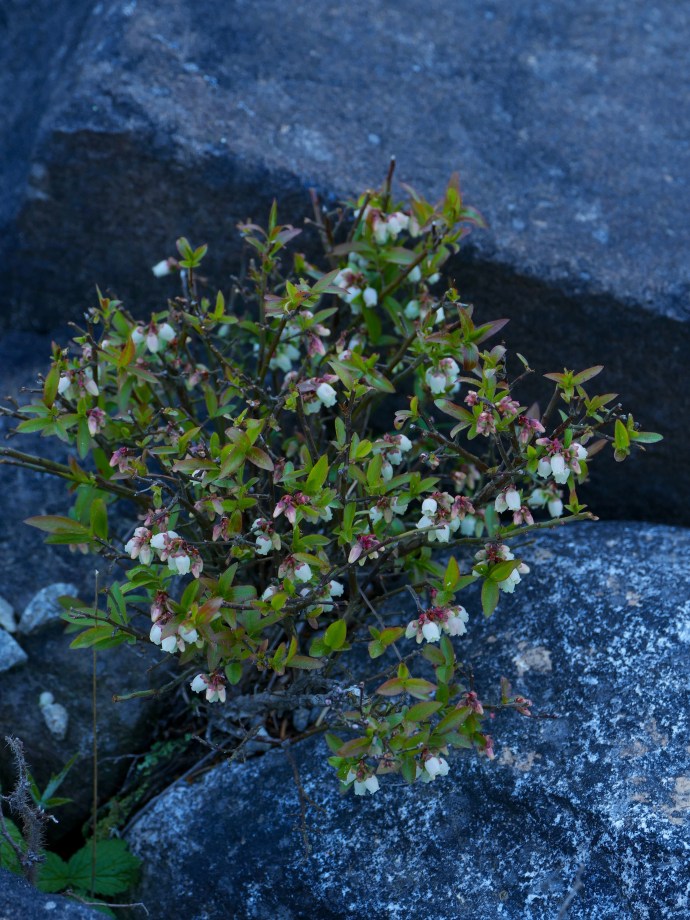
in Thoreau’s Journal:
The red huckleberry & the white & red blueberry blossoms are very handsome and interesting now & would attract more attention if the prospect of their fruit did not make us overlook them.

in Thoreau’s Journal:
The red huckleberry & the white & red blueberry blossoms are very handsome and interesting now & would attract more attention if the prospect of their fruit did not make us overlook them.
in Thoreau’s Journal:

[writing of the great fringed orchis]
The village belle never sees this more delicate belle of the swamp.

How little relation between our life and its! Most of us never see it or hear of it.
The seasons go by to us as if it were not.

in Thoreau’s Journal:
Gathered the first strawberries to day.
in Thoreau’s Journal:
It is a certain faery land where we live––you may walk out in any direction over the earth’s surface––lifting your horizon––and everywhere your path––climbing the convexity of the globe leads you between heaven and earth––
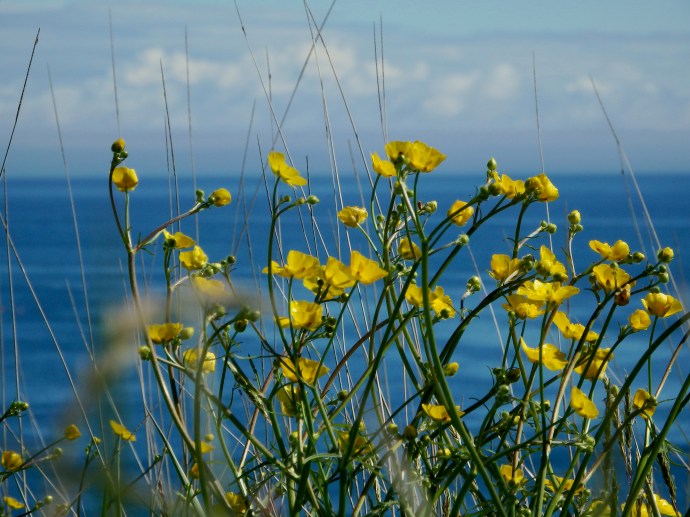
––not away from the light of the sun and stars––& the habitations of men. I wonder that I ever get 5 miles on my way––the walk is so crowded with events––& phenomena. How many questions there are which I have not put to the inhabitants!
in Thoreau’s Journal:
Huckle berry apples which are various stages of a monstrous and abortive development of the flower––common now. Clover begins to redden the fields generally. The horse tail has for some time covered the cause way with a close dense green like moss. The quail is heard at a distance. The marsh-speedwell has been out ap some days. A little mowing begins in the gardens––& front yards. The grass is in full vigor now––yet it is already parti-colored with whitish withered stems which worms have cut.

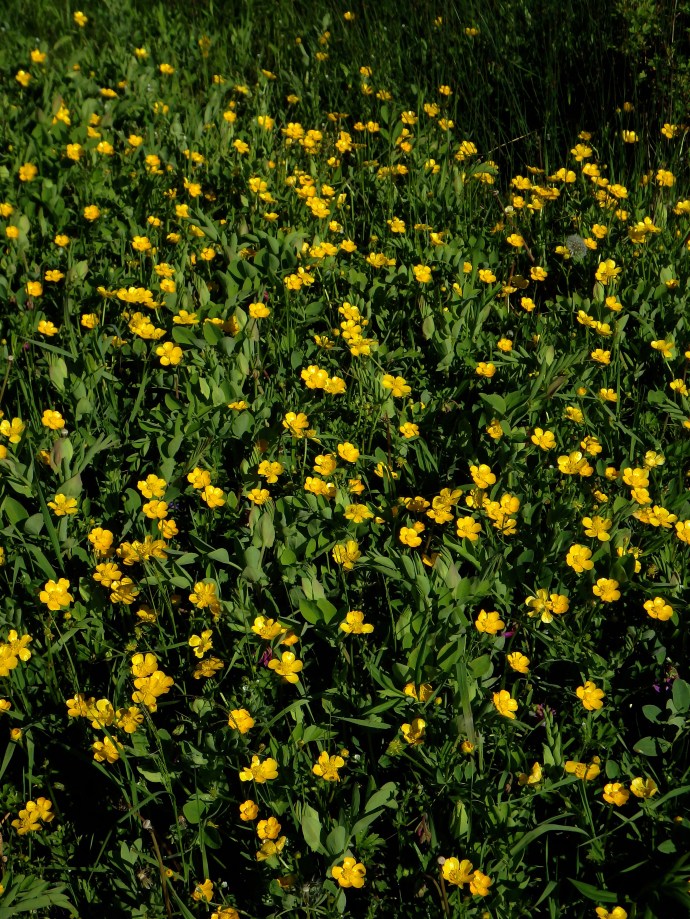
Buttercups of various kind mingled yellow––the meads the tall––the bulbous––& the reopens–– Probably a primos laevigatus in trillium woods ready to blossom. Observe its berries in the fall. The cinque foil in its ascending state––keeping pace with the grass is now abundant in the fields––saw it one or two weeks ago–– This is a feature of June.
in Thoreau’s Journal:
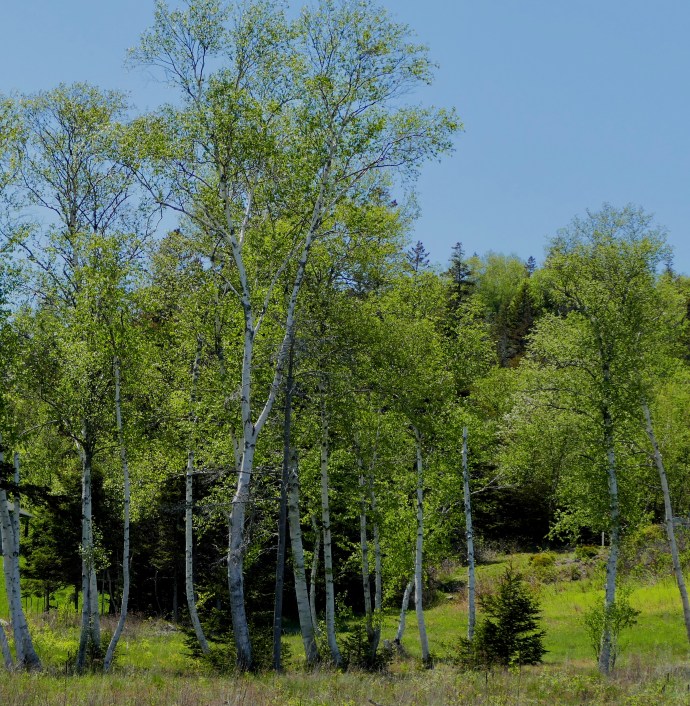
This is June–the month of grass & leaves. The deciduous trees are investing the evergreens & revealing how dark they are. Already the aspens are trembling again, and a new summer is offered me– I feel a little fluttered in my thoughts as if I might be too late. Each season is but an infinitesimal point. It no sooner comes than it is gone. It has no duration. It simply gives a tone & hue to my thought. Each annual phenomenon is a reminiscence & prompting. Our thoughts & sentiments answer to the revolutions of the seasons, as 2 cog-wheels fit into each other– We are conversant with only one point of contact at a time–from which we receive a prompting & impulse & instantly pass to a new season or point of contact. A year is made up of a certain series & number of sensations & thoughts–which have their language in nature. Now I am ice–now I am sorrel. Each experience reduces itself to a mood of the mind. I see a man grafting, for instance–What this imports chiefly is not apples to the owner–or bread to the grafter–but a mood or certain train of thought to my mind.
in Thoreau’s Journal:
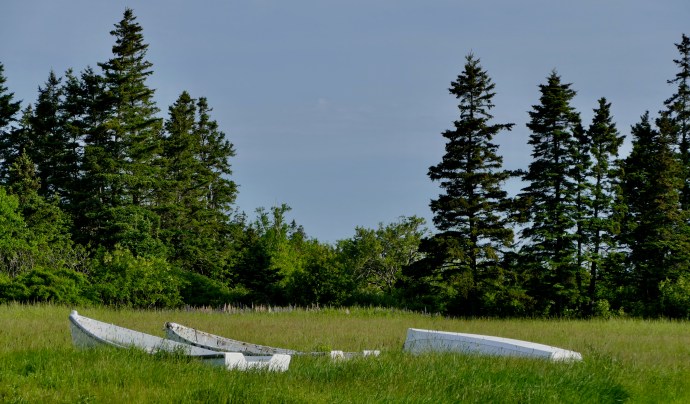
The world now full of verdure & fragrance and the air comparatively clear (not yet the constant haze of the dog days) through which the distant fields are seen reddened with sorrel & the meadows wet green full of fresh grass & the trees in their first beautiful bright untarnished & unspotted green. May is the bursting into leaf––and early flowering with much coolness & wet and a few decidedly warm days ushering in summer –– June verdure & growth––but agreeable, heat––

in Thoreau’s Journal:
The clear brightness of June was well represented yesterday by the buttercups— (R. bilbosa) along the roadside— Their yellow or glossy & varnished within, but not without. Surely there is no reason why the new butter should not be yellow now—

in Thoreau’s Journal:
These are the clear breezy days of early June, when the leaves are young and few and the sorrel not yet in its prime. Perceive the meadow fragrance.
in Thoreau’s Journal:
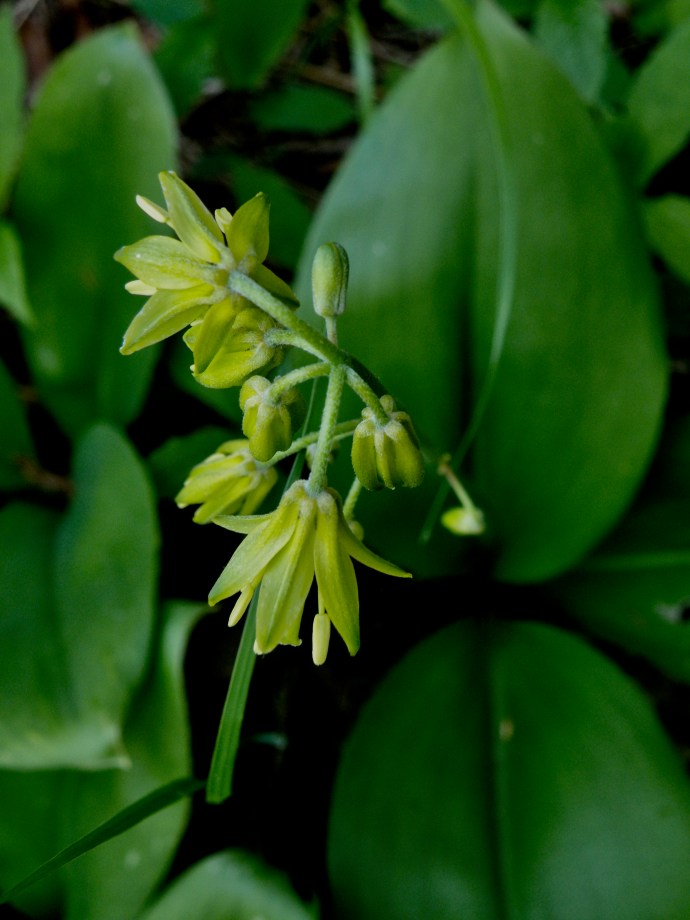
Clintonia Borealis a day or two….This is perhaps the most interesting & neatest of what I may call the liliaceous? plants we have–– Its beauty at present consists chiefly in its commonly 3 very handsome rich clear dark green leaves….They are perfect in form & color––broadly oblanceolate with a deep channel down the middle––uninjured by insects––arching over from a center at the ground sometimes very symmetrically disposed in a triangular fashion––& from their midst arises a scape a foot high with one or more umbels of “green bell—shaped flowers”––: yellowish green nodding or bent downward––but without fragrance–– In fact the flower is all green both leaves & corolla–– The leaves alone––& many have no scape––would detain the walker.
in Thoreau’s Journal:
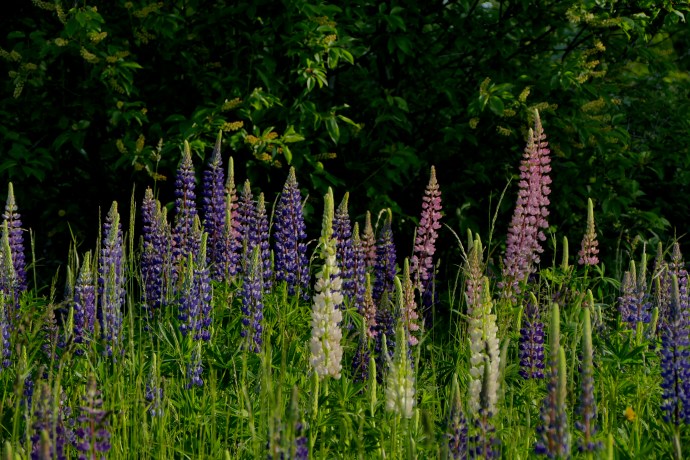
How much lupine is now in full bloom on bare sandy brows or promontories running into meadows where the sod is half worne away & the sand exposed.
in Thoreau’s Journal:
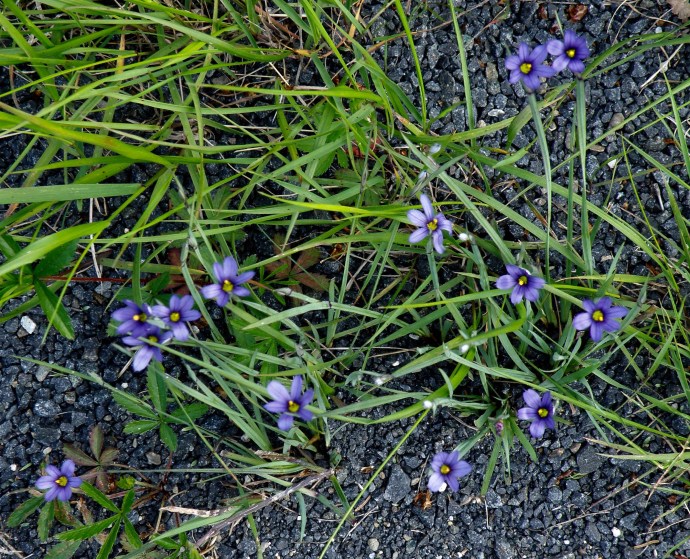
A cold S E wind. Blue-eyed grass ap in pretty good season.

in Thoreau’s Journal:
The common blue flag––just out at Ball’s Hill….On the meadows are large yellow-green patches of ferns beginning to prevail….Landed at a high lupine bank by Carlisle Bridge. How many such lupine banks are! Whose blue you detect rods off––

in Thoreau’s Journal:
That exceedingly neat & interesting little flower blue-eyed grass now claims our attention. The barrenest pastures wear now a green & luxuriant aspect.

in Thoreau’s Journal:
The bulbous arethusa out a day or two––prob. yesterday….Though in a measure prepared for it still its beauty surprised me––it is by far the highest & richest color yet. Its intense color in the midst of the green meadow made it look 2ce as large as reality. It looks very foreign in the midst of our plants.––
in Thoreau’s Journal:

A new season has commenced–– Summer-– Leafy June-– The buttercups in the churchyard are now in perfection….

Blue eyed grass has been out some time as I judge by the size of its seed vessel.

in Thoreau’s Journal:
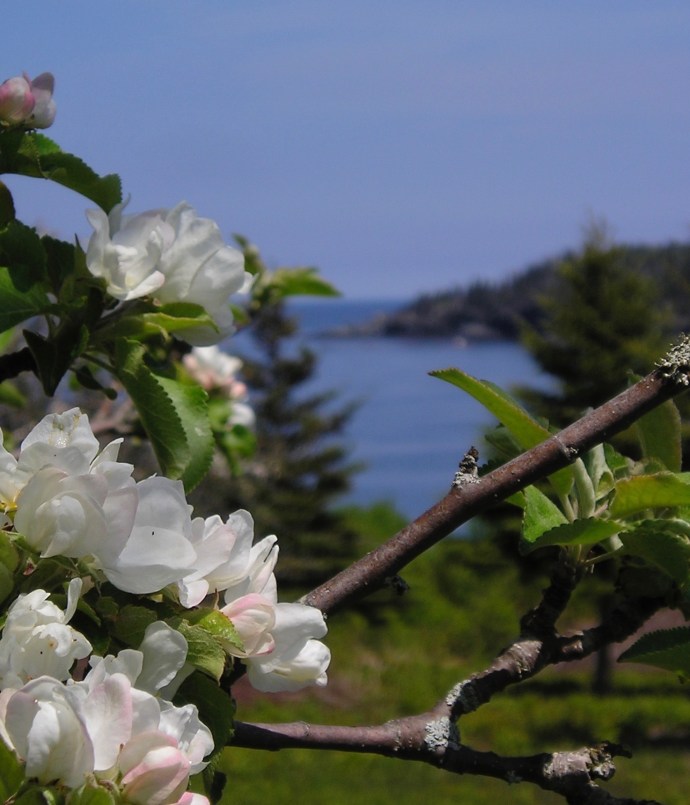
The air is full of the odor of apple blossoms–– Yet the air is fresh as from the salt water. The meadow smells sweet as you go along low places in the road at sundown. To night I hear many crickets. They have commenced their song. They bring in the summer.
in Thoreau’s Journal:
The true sites for human dwellings are unimproved— They command no price on the market….

A vista where you have the near green horizon contrasted with the distant blue one terrestrial with celestial earth. The prospect of a vast horizon must be accessible in our neighborhood. Where men of enlarged views may be educated.— An unchangeable kind of wealth a real estate—

in Thoreau’s Journal:
A sane & growing man revolutionizes every day. What institutions of man can survive a morning experience?
in Thoreau’s Journal:
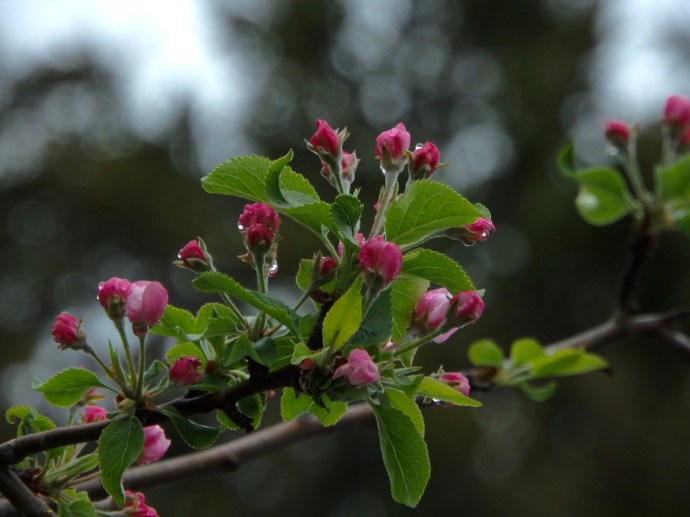
This genus so kind to the human race the malus or pyrus—Rosaceae the the family or others say Pomaceae. Its flowers are perhaps the most beautiful of any tree.
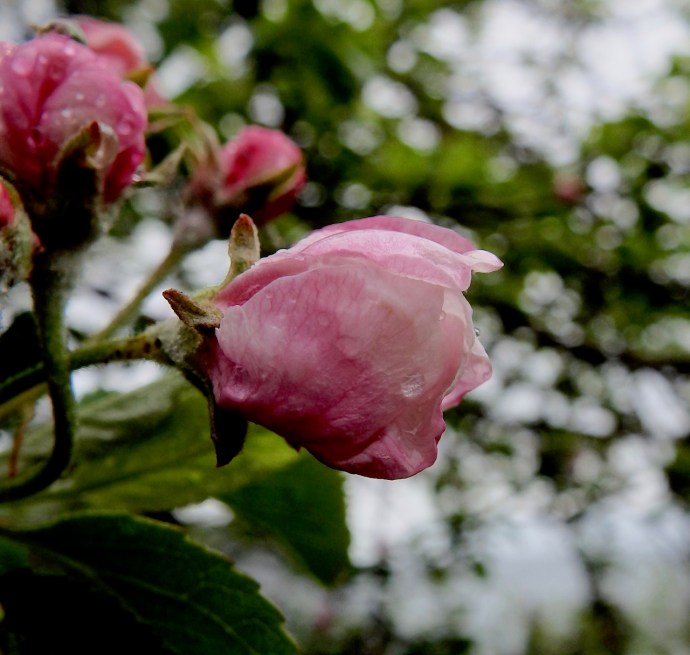
I am frequently compelled to turn & linger by some more than usually beautiful 2/3 expanded blossoms— If such were not so common—its fame would be loud as well as wide. Its most copious & delicious blossoms.
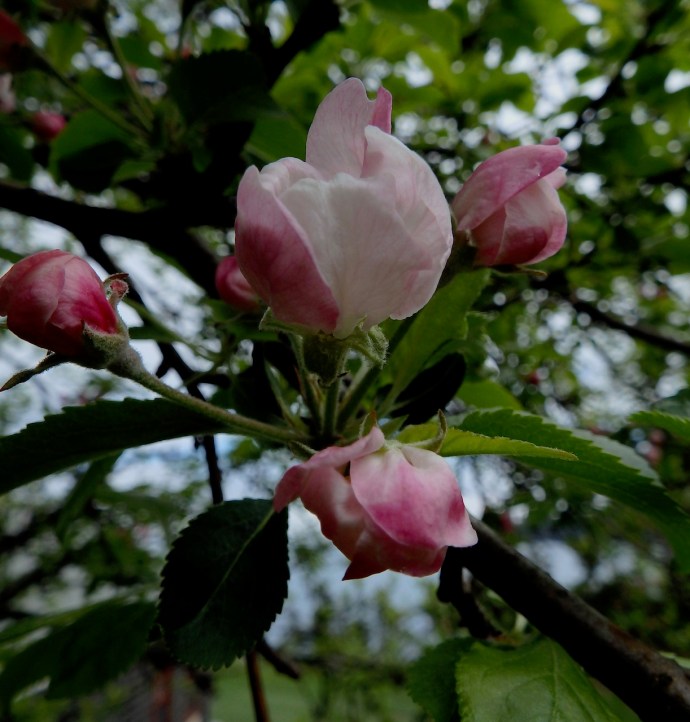
But our wild apple is wild perchance like myself who belong not to the aboriginal race here—but have strayed into the woods from the cultivated stock—where the birds winged thoughts or agents have planted or are planting me. Even these at length furnish hard stocks for the orchard.


You must be logged in to post a comment.