in Thoreau’s Journal:
It is evident that it depends on the character of the season whether this flower or that is the most forward; whether there is more or less snow or cold or rain, etc.

in Thoreau’s Journal:
It is evident that it depends on the character of the season whether this flower or that is the most forward; whether there is more or less snow or cold or rain, etc.

in Thoreau’s Journal:
April has begun like itself–– It is warm & showery—while I sail away with a light SW wind toward the Rock–– Sometimes the sun seems just ready to burst out-yet I know it will not–– The meadow is becoming bare It resounds with the sprayey notes of blackbirds — The birds sing this warm and showery day after a fortnight’s cold (yesterday was wet too) with a universal burst & flood of melody.

in Thoreau’s Journal:
It is incredible what a revolution in our feelings and in the aspect of nature this warmer air alone has produced. Yesterday the earth was simple to barrenness, and dead, bound out. Out of doors there was nothing but the wind and the withered grass, and the cold though sparkling blue water, and you were driven in upon yourself. Now, you would think there was a sudden awakening in the very crust of the earth, as if flowers were expanding and leaves putting forth; but not so. I listen in vain to hear a frog or a new bird as yet. Only the frozen ground is melting a little deeper, and the water is trickling from the hills in some places. No, the change is mainly in us. We feel as if we had obtained a new lease of life.

in Thoreau’s Journal:
How can one help being an early riser and walker in that season when the birds begin to twitter and sing in the morning?

in Thoreau’s Journal:
Though the frost is nearly out of the ground, the winter has not broken up in me. It is a backward season with me. Perhaps we grow older and older till we no longer sympathize with the revolution of the seasons, and our winters never break up.

in Thoreau’s Journal:
I run about these cold, blustering days, on the whole, perhaps, the worst to bear in the year (partly because they disappoint expectation) looking almost in vain for some animal or vegetable life stirring. The warmest springs hardly allow me the glimpse of a frog’s heel as he settles himself in the mud, and I think I am lucky if I see one winter-defying hawk or a hardy duck or two at a distance on the water. As for the singing of birds, the few that have come to us it is too cold for them to sing and for me to hear. The bluebird’s warble comes feeble and frozen to my ear….

in Thoreau’s Journal:
How fitly and exactly any season of the year may be described by indicating the condition of some flower!

in Thoreau’s Journal:
The brown season extends from about the 6th of March ordinarily into April….Tried by various tests, this season fluctuates more or less.


in Thoreau’s Journal:
A score of my townsmen have been shooting and trapping musquash and mink of late. They are gone all day—early and late they scan the rising tide—stealthily they set their traps in remote swamps, avoiding one another. Am not I a trapper too? Early and late scanning the rising flood, ranging by distant woodsides, setting my traps in solitude and baiting them as well as I know how, that I may catch life and light…. As to the color of spring, I should say that hitherto in dry weather it was fawn-colored; in wet, more yellowish or tawny. When wet, the green of the fawn is supplied by the lichens and the mosses.

in Thoreau’s Journal:
How little that occurs to us are we prepared at once to appreciate.
in Thoreau’s Journal:
When I think what were the various sounds and notes, the migrations and works, and changes of fur and plumage which ushered in the spring and marked the other seasons of the year, I am reminded that this my life in nature, this particular round of natural phenomena which I call a year, is lamentably incomplete. I listen to [a] concert in which so many parts are wanting. The whole civilized country is to some extent turned into a city, and I am that citizen whom I pity. Many of those animal migrations and other phenomena by which the Indians marked the season are no longer to be observed. I seek acquaintance with Nature, ––to know her moods and manners….

I am reassured and reminded that I am the heir of eternal inheritances which are inalienable, when I feel the warmth reflected from the sunny bank, and see the yellow sand and the reddish soil, and hear some dried leaves rustle and the trickling of melted snow in some sluiceway. The eternity which I detect in Nature I predicate of myself also. How many springs I have had this same experience! I am encouraged for I recognize this stead persistency and recovery of Nature as a quality of myself.

in Thoreau’s Journal:
Some of the phenomena of an average March are increasing warmth, melting the snow and ice, and gradually the frost in the ground; cold and blustering weather, with high, commonly northwest winds for many days together; misty and other rains taking out frost, whitenings of snow, and winter often back again, both its cold and snow; bare ground and open waters, and more or less of a freshet; some calm and pleasant days reminding us of summer, with a blue haze or a thicker mist over the woods at last, in which perchance, we take off our coats a while, and sit without a fire; the ways getting settled, and some greenness appearing on south banks; April-like rains after the frost is chiefly out; ploughing and planting of peas, etc., just beginning, and the old leaves getting dry in the woods.

in Thoreau’s Journal:
It is a genial and reassuring day; the mere warmth of the west wind amounts almost to balminess. The softness of the air mollifies our own dry and congealed substance. I sit down by a wall to see if I can muse again. We become, as it were, pliant and ductile again to strange but memorable influences; we are led a little way by our genius. We are affected like the earth, and yield to the elemental tenderness. Winter breaks up within us. The frost is coming out of me, and I am heaved like the road. Accumulated masses of ice and snow dissolve, and thoughts like a freshet, pour down unwonted channels.
in Thoreau’s Journal:
It is remarkable by what a gradation of days which we call pleasant and warm, beginning in the last of February, we come at last to real summer warmth. At first a sunny, calm, serene winter day is pronounced spring, or reminds us of it.

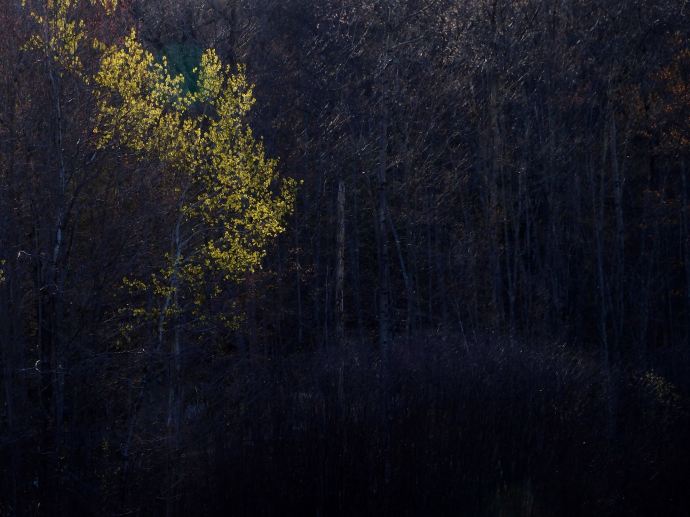
And even the first pleasant spring day, perhaps, we walk with our great-coat buttoned up, and gloves on. [Photo: March 20, 2017]
in Thoreau’s Journal:

1856: The snow was constantly sixteen inches deep at least on a level in open land from January 13th to March 13th.
1858: P.M. To Hill and Grackle Swamp. Another pleasant and warm day. Painted my boat this P.M. These spring impressions (as of the apparent waking up of the meadow described day before yesterday) are not repeated the same year, at least not with the same force, for the next day the same phenomenon does not surprise us, our appetite has lost its edge. The other day the face of the meadow wore a peculiar appearance, as if it were beginning to wake up under the influence of the southwest wind and the warm sun, but it cannot again this year present precisely that appearance to me. I have taken a step forward to a new position and must see something else. We perceive and are affected by changes too subtle to be described.
in Thoreau’s Journal:
Each new year is a surprise to us. We find we had virtually forgotten the note of each bird, and when we hear it again, it is remembered like a dream, reminding us of a previous state of existence.

How happens it that the associations it awakens are always pleasing, never saddening, reminiscences of our sanest hours. The voice of nature is always encouraging.
in Thoreau’s Journal:
When I am opposite the end of the willow row, seeing the osiers of perhaps two years old, all in a mass, they are seen to be very distinctly yellowish beneath and scarlet above. They are fifty rods off.

Here is the same chemistry that colors the leaf or fruit, coloring the bark. It is generally, probably always, the upper part of the twig, the more recent growth, that is the higher colored, and more flower or fruit like. So leaves are more ethereal the higher up and further from the root. It the bark of the twigs, indeed, is the more permanent flower or fruit. The flower falls in the spring or summer, the fruit and leaves fall or wither in autumn, but the blushing twigs retain their color throughout the winter, and appear more brilliant than ever the succeeding spring. They are winter fruits. It adds greatly to the pleasure of late November, of winter, or of early spring walks to look into these mazes of twigs of different colors.

in Thoreau’s Journal:
Another fine morning. Willows and alders along water courses all alive these mornings, and ringing with the trills and jingles and warbles of birds, even as the waters have lately broken loose and tinkle below, ––song-sparrows, blackbirds, not to mention robins, etc., etc. The song-sparrows are very abundant, peopling each bush, willow, or alder for a quarter of a mile, and pursuing each other as if selecting their mates. It is their song which especially fills the air, made an incessant and indistinguishable trill and jingle by their numbers. I see ducks afar sailing on the meadow…


in Thoreau’s Journal:
This afternoon I throw off my outside coat. A mild spring day–– I must hie to the great Meadows. The air is full of blue-birds. The ground almost entirely bare. The villagers are out in the sun––and every man is happy whose work takes him out doors–– I go by sleepy Hollow toward the Great Fields–– I lean over a rail to hear what is in the air liquid with the blue-bird’s warble. My life partakes of infinity. The air is as deep as our natures. Is the drawing in of this vital air attended with no more glorious results than I witness? The air is a velvet cushion against which I press my ear–– I go forth to make new demands on life. I wish to begin this summer well––to do something in it worthy of it & of me–– To transcend my daily routine––& that of my townsmen to have my immortality now––that it be in the quality of my daily life. To pay the greatest price-the-greatest tax of any man in Concord––& enjoy the most!! I will give all I am for my nobility. I will pay all my days for my success. I pray that the life of this spring & summer may ever lie fair in my memory. May I dare as I have never done.–– May my melody not be wanting to the season….It is reasonable that a man should be something worthier at the end of the year than he was at the beginning….We go out without our coats saunter along the streets look at the aments of the willow beginning to appear & the swelling buds of the maple & the elm.

in Thoreau’s Journal:
No sooner has the ice of Walden melted than the wind begins to play in dark ripples over the face of the virgin water. It is affecting to see Nature so tender, however, old, and wearing none of the wrinkles of age. Ice dissolved is the next moment as perfect water as if it had been melted a million years. To see that which was lately so hard and immovable now so soft and impressible. What if our moods could dissolve thus completely? It is like a flush of life on a cheek that was dead. It seems as if it must rejoice in its own newly acquired fluidity, as it affects the beholder with joy. Often the March winds have no chance to ripple its face at all.
You must be logged in to post a comment.