This afternoon the woods & walls and the whole face of the country wears once more a wintry aspect—though there is more moisture in the snow—and the trunks of the trees are whitened now on a more southerly or SE side––

This afternoon the woods & walls and the whole face of the country wears once more a wintry aspect—though there is more moisture in the snow—and the trunks of the trees are whitened now on a more southerly or SE side––

in Thoreau’s Journal:
What means this changing sky, that now I freeze and contract and go within myself to warm me, and now I say it is a south wind and go all soft and warm along the way? I sometimes wonder if I do not breathe the south wind.

in Thoreau’s Journal:
The ducks alight at this season on the windward side of the river in the smooth water, and swim about by twos and threes, pluming themselves and diving to peck at the root of the lily, and the cranberries which the frost has not loosened….

They fly to windward first in order to get under weigh….When preparing to fly they swim about with their heads erect, and then, gliding along a few feet with their bodies just touching the surface, rise heavily with much splashing, and fly low at first….
in Thoreau’s Journal:

Pond. Nature is constantly original and inventing new patterns….
in Thoreau’s Journal:
No sooner has the ice of Walden melted than the wind begins to play in dark ripples over the face of the virgin water. It is affecting to see Nature so tender, however, old and wearing none of the wrinkles of age. Ice dissolved is the next moment as perfect water as if it had been melted a million years. To see that which was lately so hard and immovable now so soft and impressible.

What if our moods could dissolve thus completely? It is like a flush of life on a cheek that was dead. It seems as if it must rejoice in its own newly acquired fluidity, as it affects the beholder with joy. Often the March winds have no chance to ripple its face at all.
in Thoreau’s Journal:
The barrenest surfaces are perhaps the most interesting in such weather as yesterday, where the most terrene colors are seen. The wet earth and sand, and especially subsoil, are very invigorating sights.

March 13, 2016
in Thoreau’s Journal:

I go further east and look across the meadows to Bedford, and see the peculiar scenery of March in which I have taken so many rambles; the earth just bare and beginning to be dry, the snow lying on the north side of hills, the gray, deciduous trees, and the green pines soughing in the March wind. They look now as if deserted by a companion, the snow. When you walk over bare, lichen-clad hills, just beginning to be dry, and look afar over the blue water on the meadows, you are beginning to break up your winter quarters and plan adventures for the new year. The scenery is like, yet unlike, November. You have the same barren russet, but now instead of a dry, hard, cold wind, a peculiarly soft, moist air, or else a raw wind. Now is the reign of water. I see many crows on the water’s edge these days. It is astonishing how soon the ice has gone our of the river. But it sill lies on the bottom of the meadow.
in Thoreau’s Journal:
On Tuesday, the 7th, I heard the first song-sparrow chirp, and saw it flit silently from alter to alder.

This pleasant morning, after three days’ rain and mist, they generally burst forth into sprayey song from the low trees along the river. The development of their song is gradual, but sure, like the expanding of a flower. This is the first song I have heard.
in Thoreau’s Journal:

This clear, placid, silvery water is evidently a phenomenon of spring.
in Thoreau’s Journal:
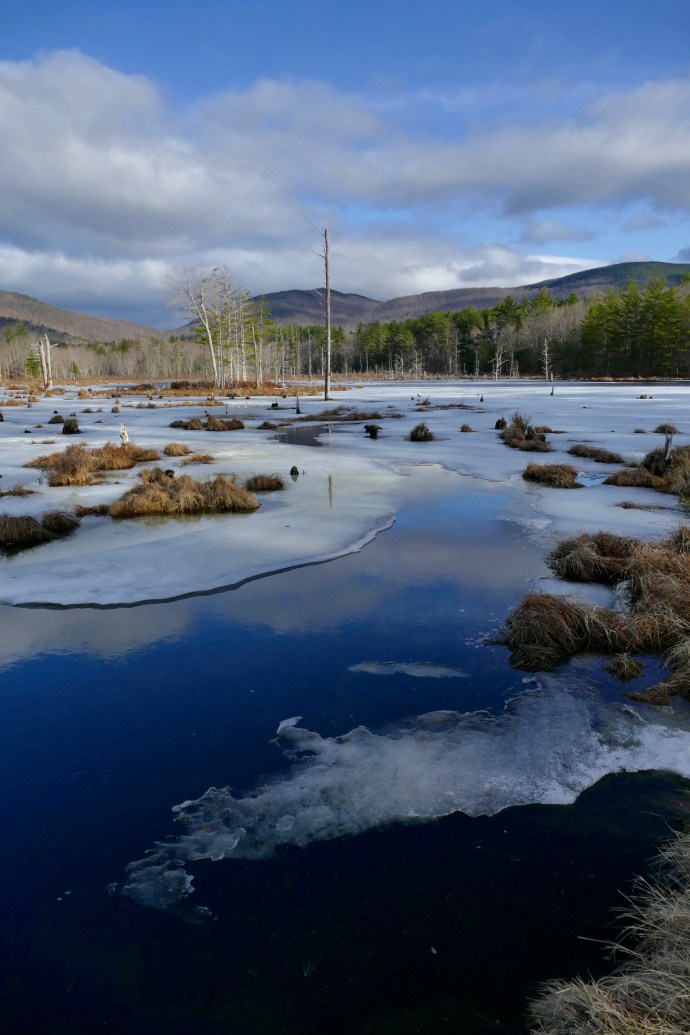
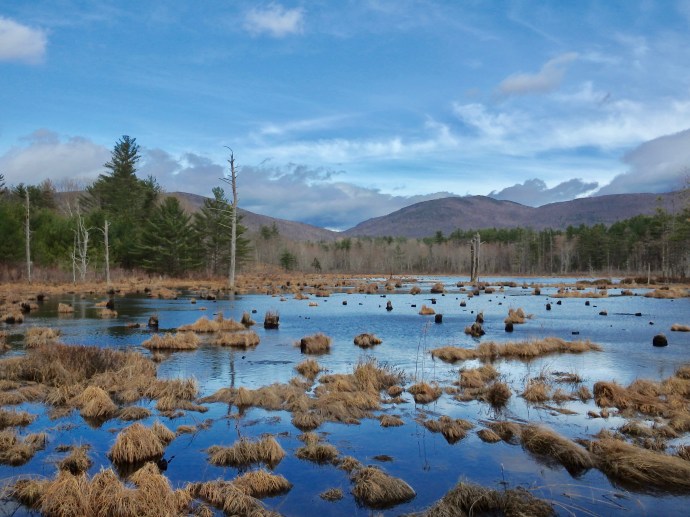
In the spaces of still, open water I see the reflections of the hills and woods, which for so long I have not seen, and it gives expression to the face of nature.

The face of nature is lit up by these reflections in still water in the spring.
in Thoreau’s Journal:
1860
To say nothing of fungi, lichens, mosses, and cryptogamous plants, you cannot say that vegetation absolutely ceases in any season in this latitude. For there is grass in some warm exposures and in springy places always growing more or less, and willow catkins expanding and peeping out a little farther every warm day from the very beginning of winter,

and the skunk-cabbage buds being developed and actually flowering sometimes in the winter, and the sap flowing in the maples on some days in mid-winter, and perhaps some cress growing a little, certainly some pads, and various naturalized garden weeds steadily growing, if not blooming and apple buds sometimes expanding. Thus much of vegetable life, or motion, or growth, is to be detected every winter.
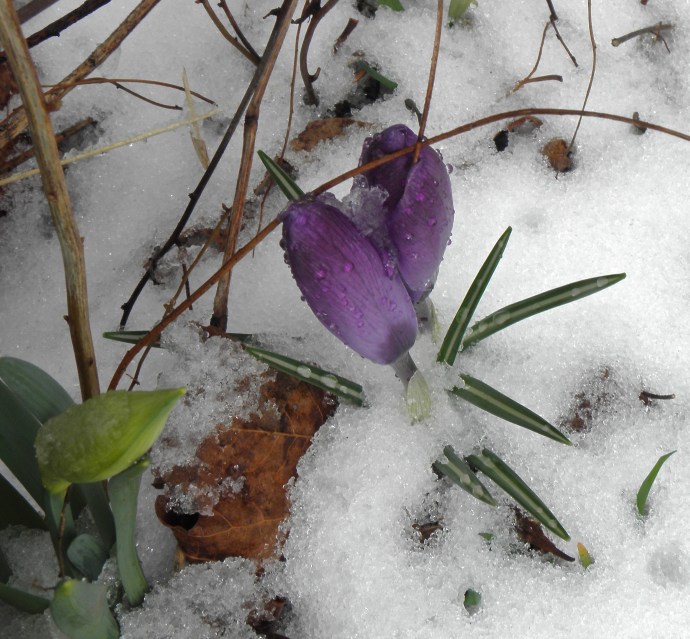
There is something of spring in all seasons.
_____________________________________
March 8, 1859 in Thoreau’s Journal:

To us snow and cold seem a mere delaying of the spring.
How far we are from understanding the value of these things in the economy of Nature.
in Thoreau’s Journal:

What is the earliest sign of spring?
in Thoreau’s Journal:
The water is pretty high on the meadows (though the ground is covered with snow) so that we get a little of the peculiar still like view at evening when the wind goes down.

in Thoreau’s Journal:
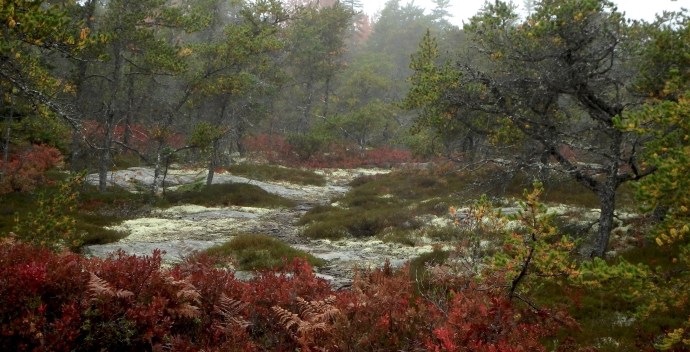
A misty afternoon….This kind of weather is very favorable to our landscape. I must not forget the lichen-painted boles of the beeches….Surely I might take wider views. The habit of looking at things microscopically, as the lichens on the trees and rocks, really prevents my seeing aught else in a walk….

To the lichenist is not the shield (or rather the apothecium) of lichen disproportionately large compared with the universe?
in Thoreau’s Journal:
The river is frozen solidly, and I do not have to look out for openings. Now I can take that walk along the river highway and the meadow which leads me under the boughs of the maples and the swamp white oaks, etc., which in summer overhang the water. I can now stand at my ease and study their phenomena amid the sweet gale and button bushes projecting above the snow and ice.

I see the shore from the water side; a liberal walk, so level, wide, and smooth, without underbrush….The sun has got a new power in his rays after all, cold as the weather is. He could not have warmed me so much a month ago, nor should I have heard such rumblings of the ice in December. I see where a maple has been wounded, the sap is flowing out. Now, then, is the time to make sugar.
in Thoreau’s Journal:
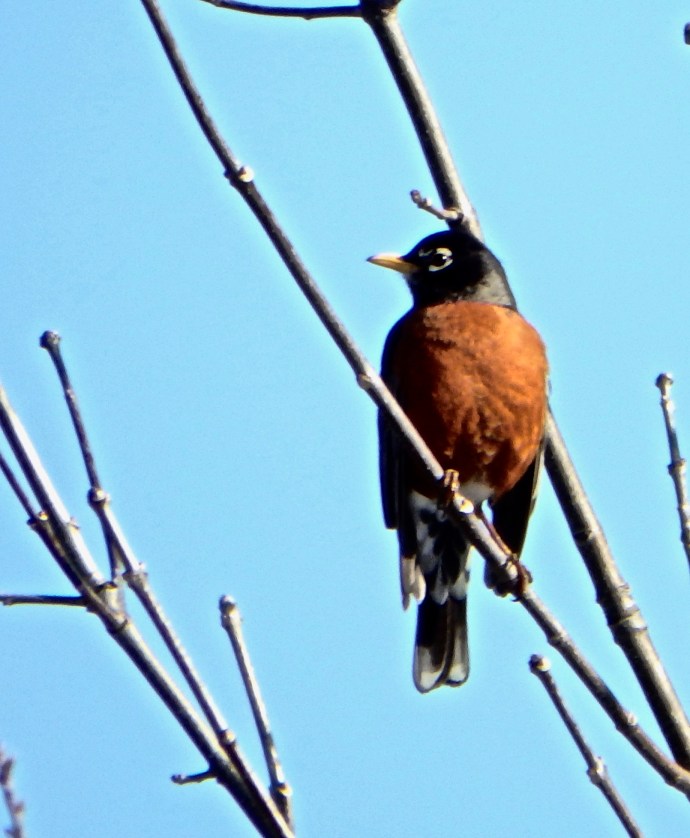
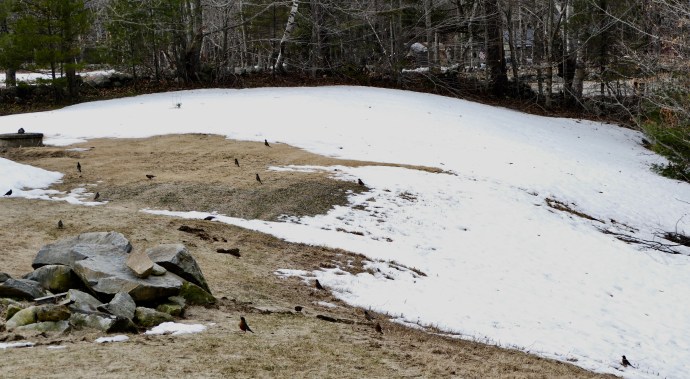
The slight robin snow of yesterday is already mostly dissipated, but where a heap still lingers the sun on the warm face of this cliff leads down a puny, trickling rill, moistening the gutters on the steep face of the rocks where patches of umbilicaria lichens grow, of rank growth, but now thirsty and dry as bones and hornets’ nests, dry as shells which crackle under your feet. The more fortunate of these, which stand by the moistened seam or gutter of the rock, luxuriate in the grateful moisture as in the spring, their rigid nerves relax, they unbend and droop like limber infancy, and from dry ash and leather color turn a lively olive green.

You can trace the course of this trickling stream over the rock through such a patch of lichens by the olive green of the lichens alone. Here and there the same moisture refreshes and brightens up the scarlet crown of some little cockscomb lichen, and when the rill reaches the perpendicular face of the cliff, its constant drip at night builds great organ pipes, of a ringed structure, which run together buttressing the rock. Skating yesterday and today.
in Thoreau’s Journal:
We talk about spring as at hand before the end of February, and yet it will be two good months, one sixth part of the whole year, before we can go a-Maying. There may be a whole month of solid and uninterrupted winter yet, plenty of ice and good sleighing. We may not even see the bare ground, and hardly the water; and yet we sit down and warm our spirits annually with the distant prospect of spring. As if a man were to warm his hands by stretching them towards the rising sun and rubbing them. We listen to the February cock-crowing and turkey gobbling as to a first course or prelude.

The bluebird, which some woodchopper or inspired walker is said to have seen in the sunny interval between the snow storms, is like a speck of clear blue sky seen near the end of a storm, reminding us of an ethereal region, and a heaven which we have forgotten. Princes and magistrates are often styled serene, but what is their turbid serenity to that ethereal serenity which the bluebird embodies. His most serene Birdship! His soft warble melts in the ear as the snow is melting in the valleys around. The bluebird comes, and with his warble drills the ice, and sets free the rivers and ponds and frozen ground. As the sand flows down the slopes a little way, assuming the forms of foliage when the frost comes out of the ground, so this little rill of melody flows a short way down the concave of the sky.
in Thoreau’s Journal:
It is a very pleasant a warm day, the finest.
Yet, with considerable coolness in the air, however.

Winter still.
in Thoreau’s Journal:
As I stood by Eagle Field wall, I heard a fine rattling sound from some dry weeds at my elbow. It was occasioned by the wind rattling the fine seeds in those pods of the indigo-weed which were still closed, a distinct rattling din….not a mere rustling of dry weeds, but the shaking of a rattle or a hunter rattles…
As it is important to consider nature from the point of view of science, remembering the nomenclature and systems of men, and so, if possible go a step further in that direction, so it is equally important often to ignore or forget all that men presume that they know, and take an original and unprejudiced view of Nature, letting her make what impression she will on you, as the first men, and all children, and natural men do.

in Thoreau’s Journal:

Though it was a dry, powdery snow storm yesterday, the sun is now so high that the snow is soft and sticky…The sky, too, is soft to look at, and the air to feel on my cheek.
You must be logged in to post a comment.