in Thoreau’s Journal:
We have had but one, no more, this winter (and that I think was the first) of those
gentle moist snows which lodge perfectly on the trees––
and make perhaps the most beautiful sight
of any.

in Thoreau’s Journal:
We have had but one, no more, this winter (and that I think was the first) of those
gentle moist snows which lodge perfectly on the trees––
and make perhaps the most beautiful sight
of any.
in Thoreau’s Journal:

The hips of the late rose though more or less shrivelled are still red & handsome–
It outlasts other hips–
in Thoreau’s Journal:
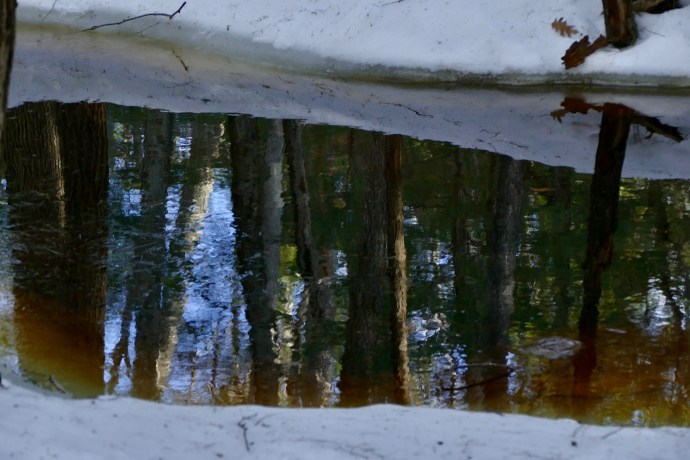
As I remember January we had one? Great thaw succeeded by severe cold— It was harder getting about—though there may have been no more snow because it was light—& there was more continuous cold & clear sparkling weather– But the last part of January & all February thus far has been alternate thaw & freeze & snow.
in Thoreau’s Journal:
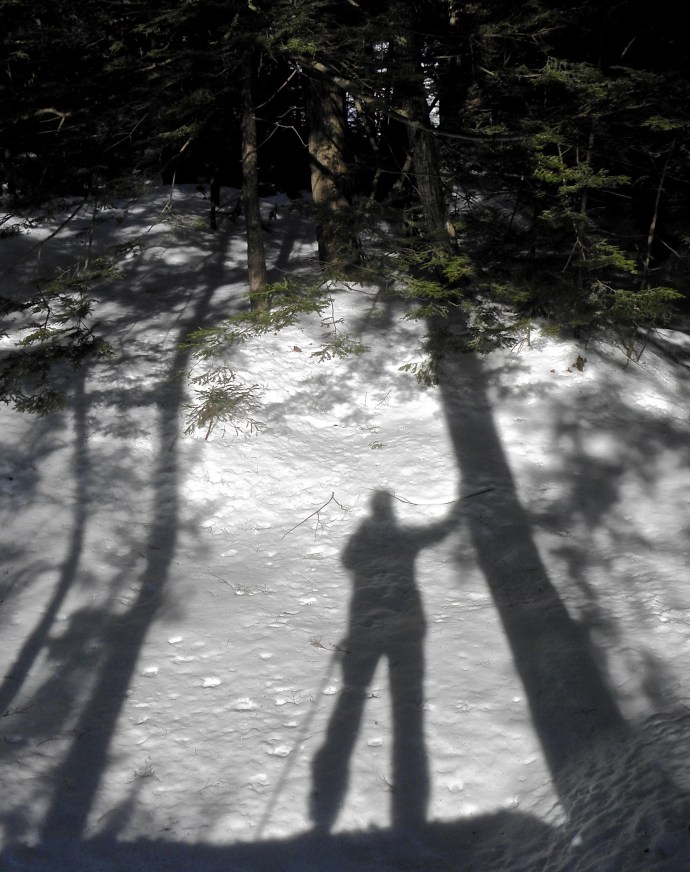
In the early part of winter there was no walking on the snow–but after January perhaps–when the snow banks had settled & their surfaces many times thawed & frozen–become indurated in fact–you could walk on the snow crust pretty well.
in Thoreau’s Journal:

My eyes nibble the piny Sierra
which makes the horizon’s edge as a hungry man nibbles a cracker….
in Thoreau’s Journal:
All day a steady, warm, imprisoning rain, carrying off the snow, not unmusical on my roof. It is a rare time for the student and reader who cannot go abroad in the P.M., provided he can keep awake, for we are wont to be as drowsy as cats in such weather. Without, it is not walking, but wading.

It is so long since I have heard it, that the steady rushing, soaking sound of the rain on the shingles is musical. The fire needs no replenishing, and we save our fuel. It seems like a distant forerunner of spring. It is because I am allied to the elements that the sound of the rain is thus soothing to me. This sound sinks into my spirit, as the water into the earth, reminding me of the season when snow and ice will be no more, when the earth will be thawed, and drink up the rain as fast as it falls.
in Thoreau’s Journal:
We shall see but a little way, if we require to understand what we see. How few things can a man measure with the tape of his understanding! How many greater things might he be seeing in the mean while! One afternoon in the fall, November 21st, I saw Fair Haven Pond with its island and meadow; between the island and the shore, a strip of perfectly smooth water in the lee of the island and two ducks sailing on it, and something more I saw which cannot easily be described, which made me say to myself that the landscape could not be improved. I did not see how it could be improved.

Yet I do not know what these things can be. I began to see such objects only when I leave off understanding them, and afterwards remember them. I did not appreciate them before. But I get no farther than this. How adapted these forms and colors to our eyes, a meadow and its islands. What are these things? Yet the hawks and ducks keep so aloof, and nature is so reserved. We are made to love the river and the meadow, as the wind to ripple the water.
in Thoreau’s Journal:

Winter comes to make walking possible where there was not walking in summer. Not till winter can we take possession of the whole of our territory.
in Thoreau’s Journal:
I find that it is an excellent walk for variety and novelty and wildness to keep round the edge of the meadow. The ice not being strong enough to bear, and transparent as water, on the bare ground or snow just between the highest water mark and the present water line is a narrow, meandering walk rich in unexpected views and objects. The line of rubbish which marks the higher tides, withered flags and seeds and twigs and cranberries, is to my eyes a very agreeable and significant line which nature traces long the edge of the meadows. It is a strongly marked, enduring, natural line which in summer reminds me that the water has once stood over where I walk. Sometimes the grooved trees tell the same tale. The wrecks of the meadow fill a thousand coves, and tell a thousand tales to those who can read them; our prairial, mediterranean shore.

The gentle rise of water around the trees in the meadow—where oaks & maples stand far out in the sea — And young elms sometimes are seen standing close around some rocks which lifts its head above the water—as if protecting it preventing it from being washed away though in truth they owe their origin & preservation to it. It first invited & detained their seed & now preserves the soil in which they grow. A pleasant reminiscence of the rise of waters. To go up one side of the river & down the other following this way which meanders so much more than the river itself— If you cannot go on the ice—you are then gently compelled to take this course which is on the whole more beautiful—to follow the sinuosities of the meadow. Between the highest water mark & the present water line is a space generally from a few feet to a few rods in width. When the water comes over the road, then my spirits rise—when the fences are carried away. A prairial walk—

in Thoreau’s Journal:
Perhaps the best evidence of an amelioration of the climate–at least that the snows are less deep than formerly–is the snow-shoes which still lie about in so many garrets-now useless–though the population of this town has not essentially increased for 75 years past–and the traveling within the limits of the town accordingly not much facilitated. No man ever uses them now–yet the old men used them in their youth.
in Thoreau’s Journal:
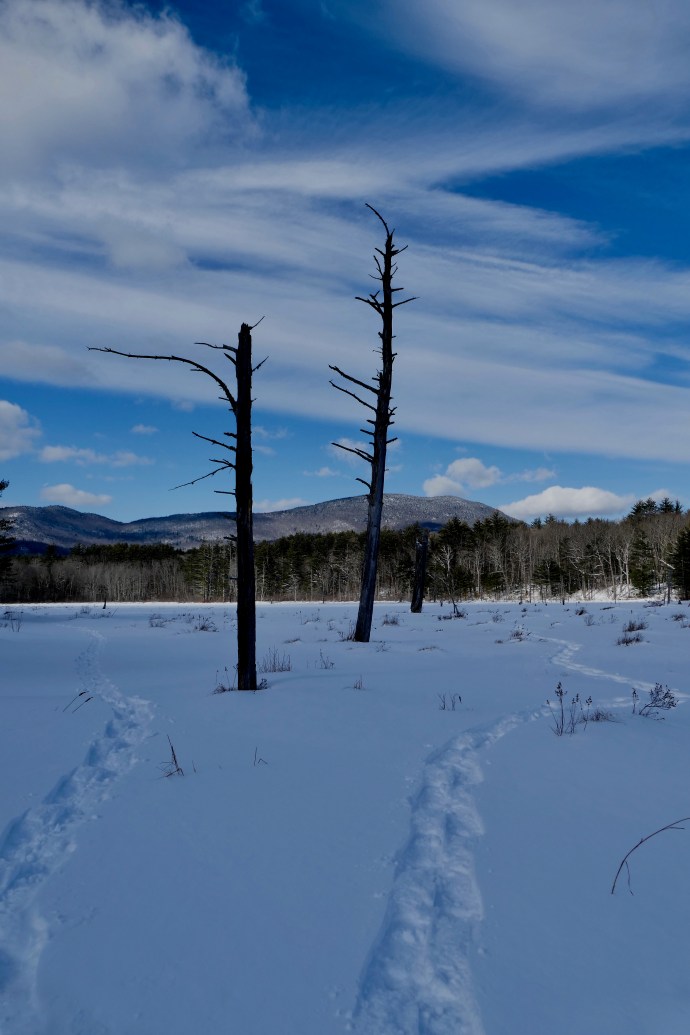
No finer walking in any respect than on our broad meadow highway in the winter….

I do not know of any more exhilarating walking than up or down a broad field of smooth ice like this in a cold, glittering winter day….

in Thoreau’s Journal:
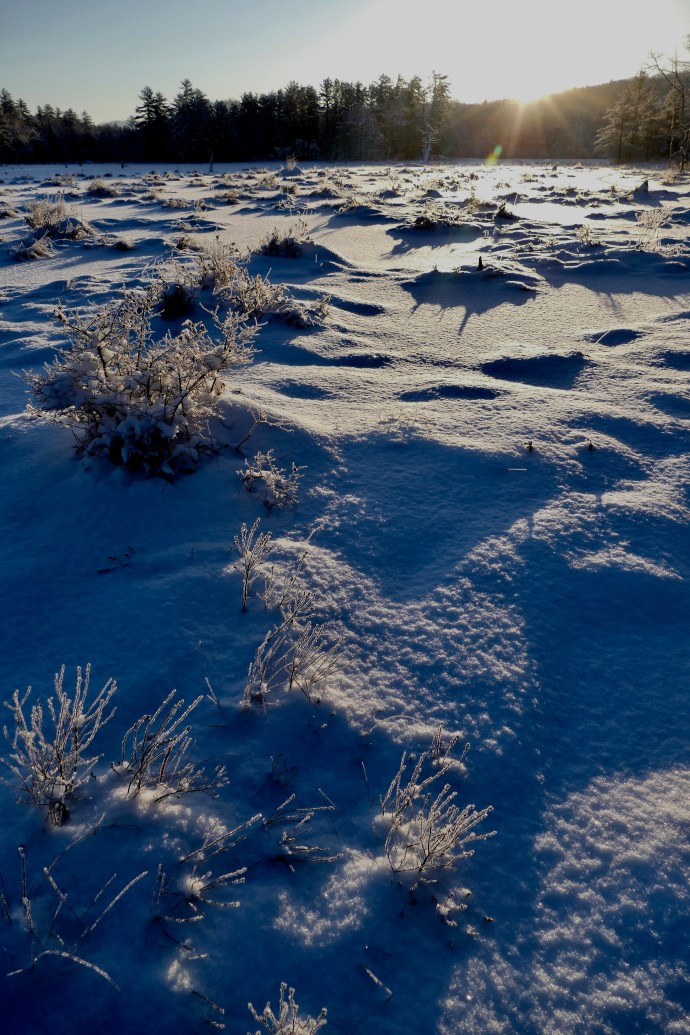
How much the northwest wind prevails in the winter! Almost all our storms come from that quarter, and the ridges of snow-drifts run that way.
in Thoreau’s Journal:

I would rather hear a single shrub oak leaf at the end of a wintry glad rustle of its own accord at my approach than receive a ship-load of stars and garters from strange kings and peoples of the earth.
in Thoreau’s Journal:
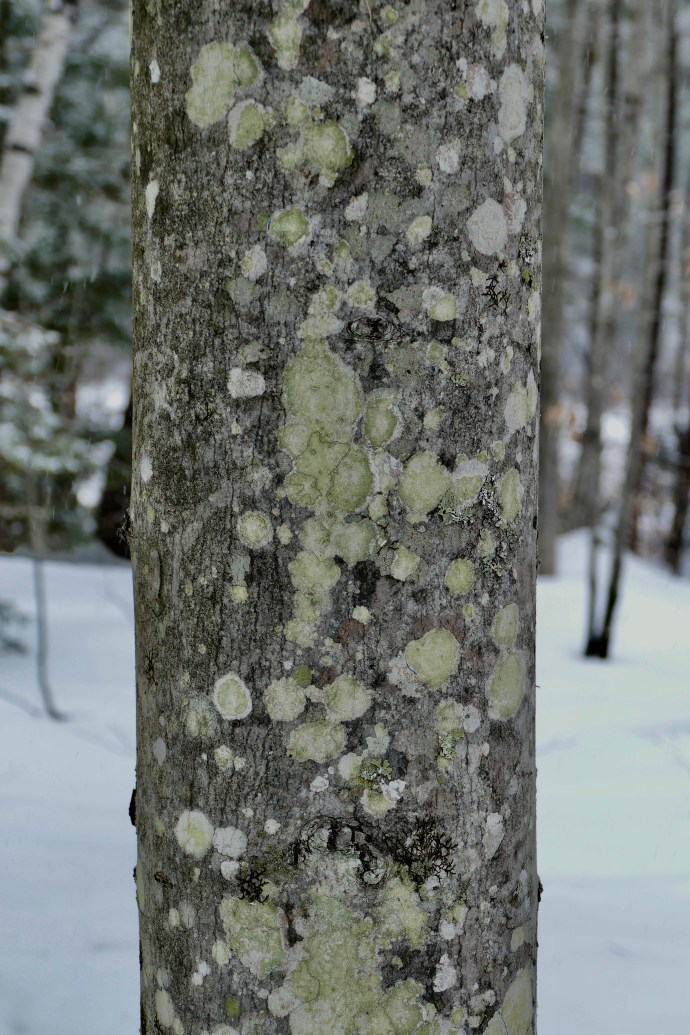
There is no such collyrium or salve for sore eyes as these brightening lichens on a moist day. Go bathe and screen your eyes with them in the softened light of the woods.
in Thoreau’s Journal:
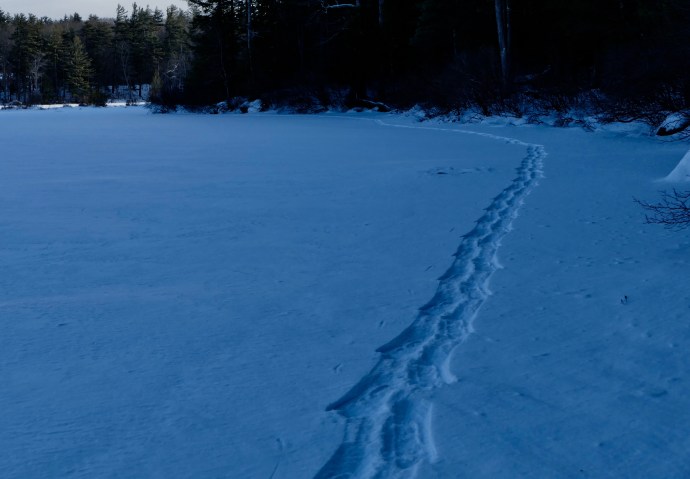
I was walking at five [PM] and found it stinging cold.
in Thoreau’s Journal:
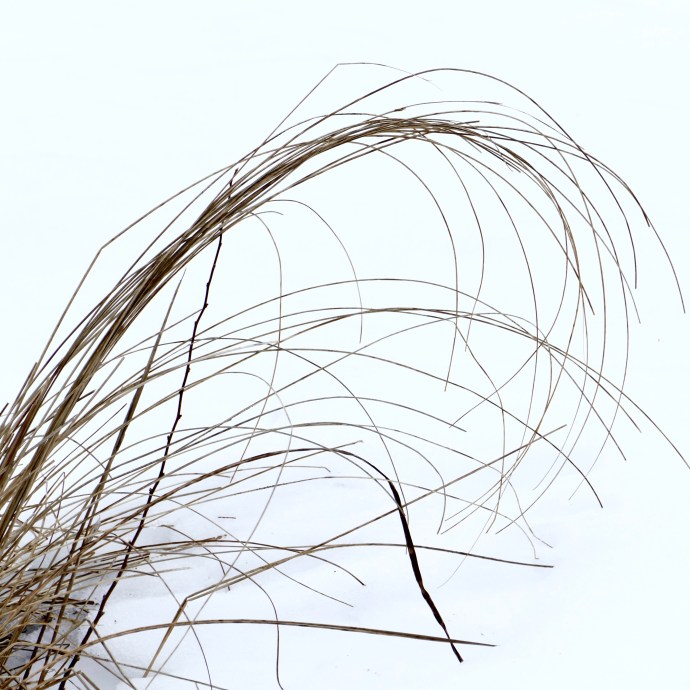
When we have experienced many disappointments, such as the loss of friends, the notes of birds cease to affect us as they did.
in Thoreau’s Journal:
A mild, thawy day. The needles of the pine are the touchstone for the air. Any change in that element is revealed to the practiced eye by their livelier green or increased motion. They are the tell-tales. Now they are (the white pine) a cadaverous, misty blue, anon a lively silvery light plays on them, and they seem to erect themselves unusually, while the pitch pines are a lighter yellowish green than usual. The sun loves to nestle in the boughs of the pine and pass rays through them.
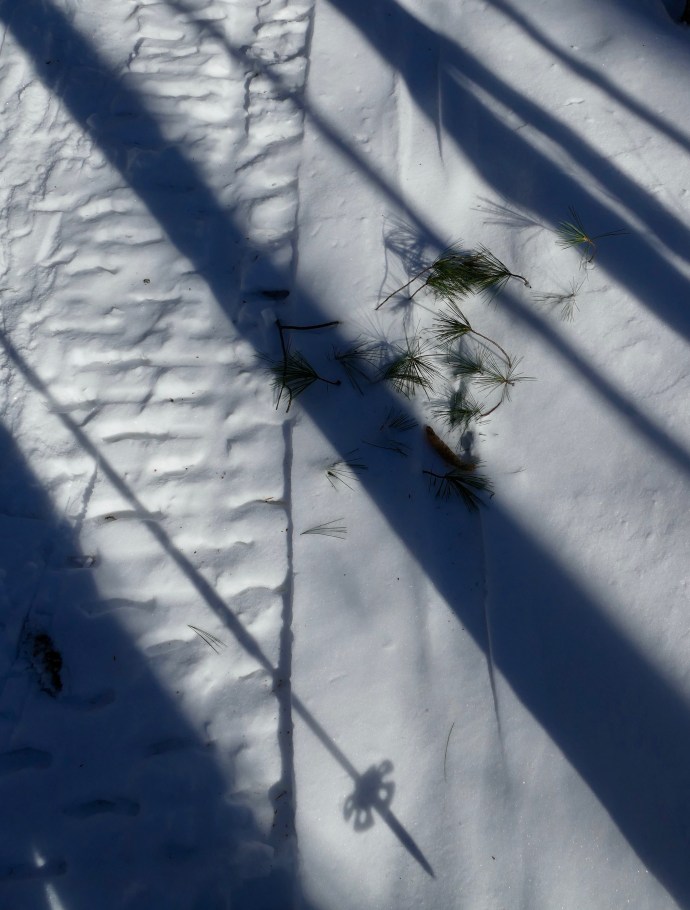
––The scent of bruised pines leaves where a sled has passed is a little exciting to me now.
in Thoreau’s Journal:
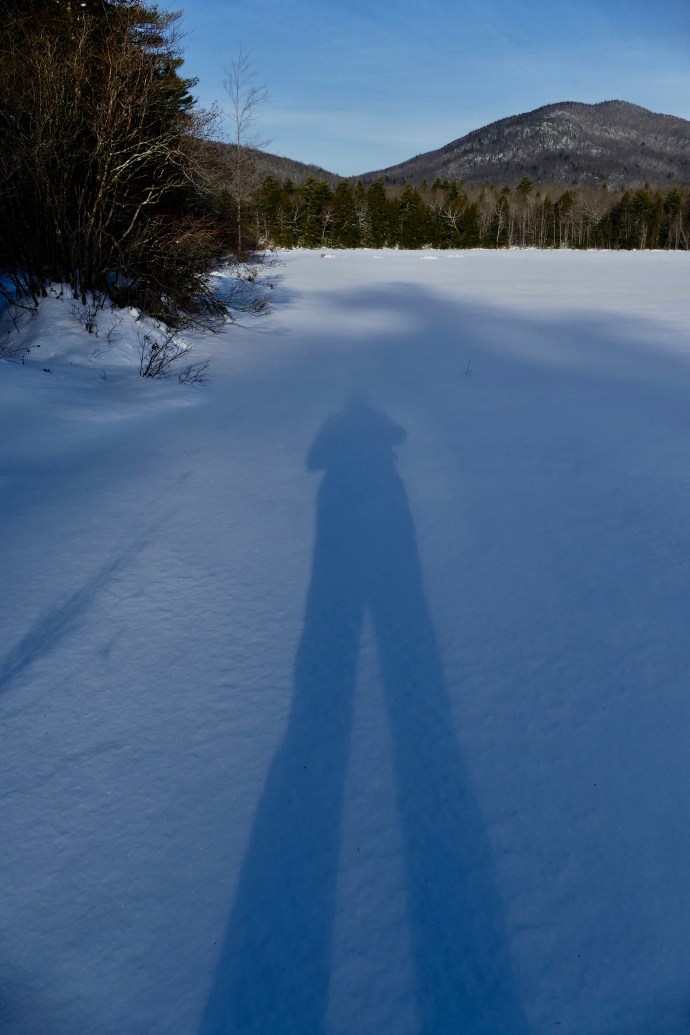
The present seems never to get its due. It is the least obvious, neither before nor behind, but within us. All the past plays into this moment, and we are what we are. My aspiration is one thing, my reflection another; but, overall, myself and condition––is and does.
in Thoreau’s Journal:
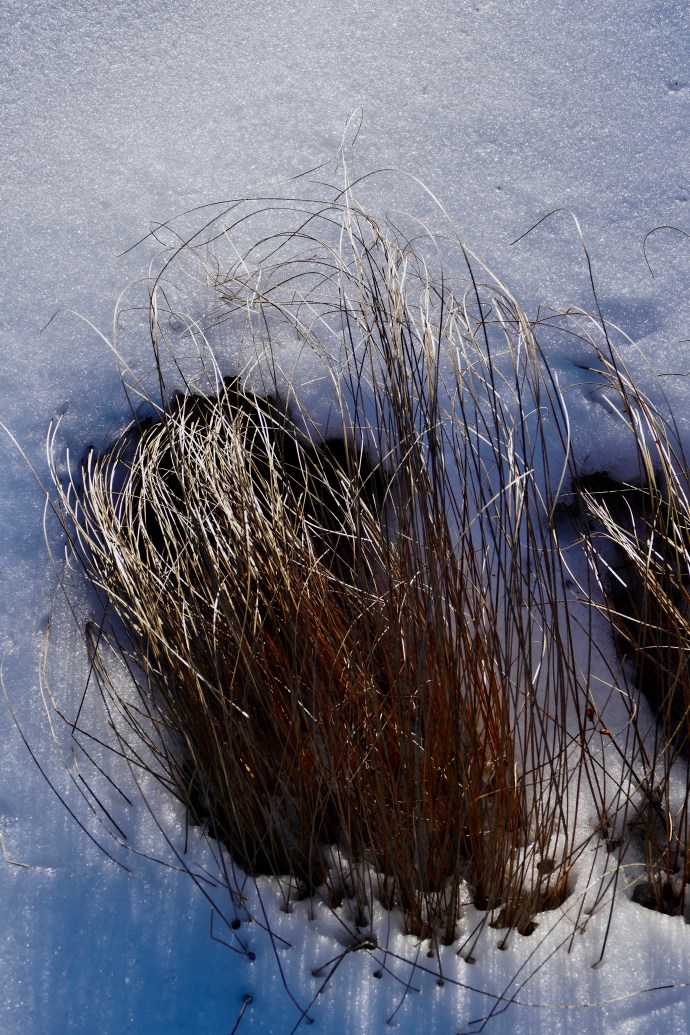
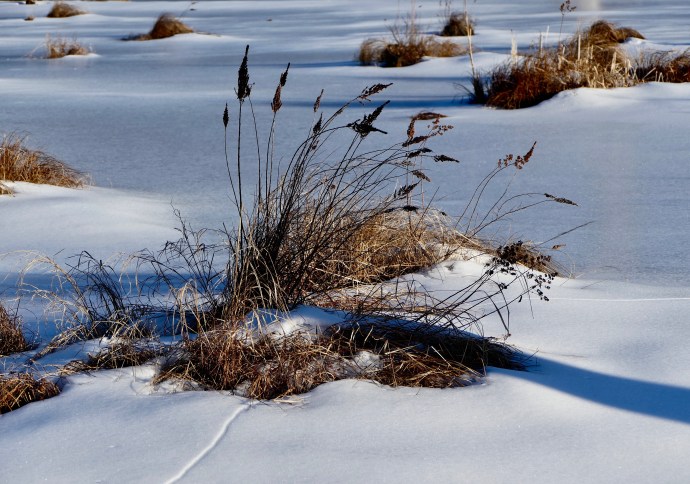
It is remarkable that the straw-colored sedge of the meadows, which in the fall is one of the least noticeable colors, should now, that the landscape is mostly covered with snow, be perhaps the most noticeable of all objects in it for its color, and an agreeable contrast to the snow…
in Thoreau’s Journal:
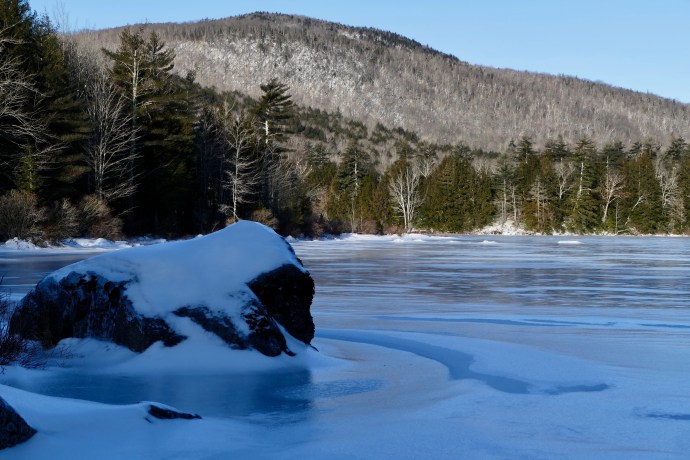
The ponds are yielding a good crop of ice.


You must be logged in to post a comment.