February 14, 1852

in Thoreau’s Journal:

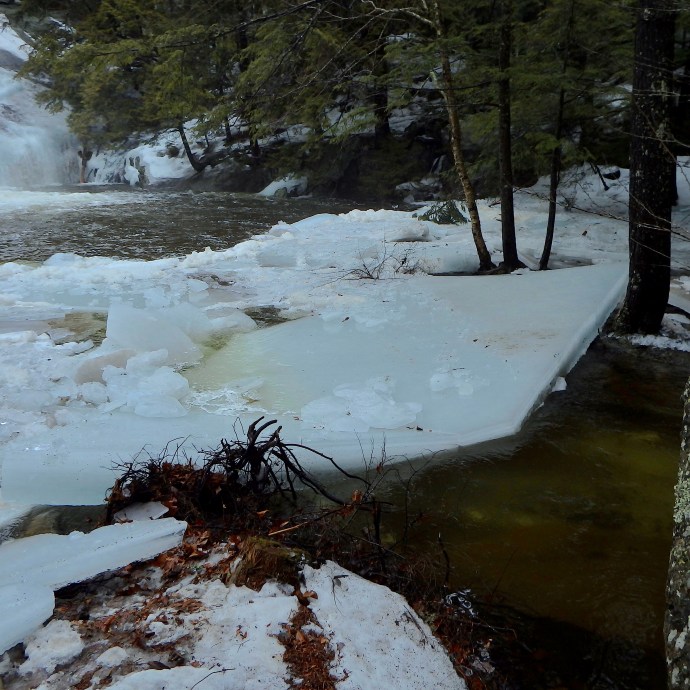
At the Cliffs the rocks are in some places covered with ice. And the least inclination beyond a perpendicular in their faces is betrayed by the formation of icicles at once which hang perpendicularly—like organ pipes—in front of the rock—

P3030039.jpg

They are now conducting downward the melting ice and snow which drips from their points with a slight clinking & lapsing sound—but when the sun has set will freeze there and add to the icicles’ length. Where the icicles have reached the ground & are like thick pillars they have a sort of annular appearance somewhat like the successive swells on the legs of tables and bed-posts— There is perhaps a harmony between the turner’s taste & the law of nature in this instance. The shadow of the water flowing or pulsating behind the transparent icy crust or these stalactites—in the sun imparts a semblance of life to the whole.

P3030036.jpg

February 13, 1859

 in Thoreau’s Journal:

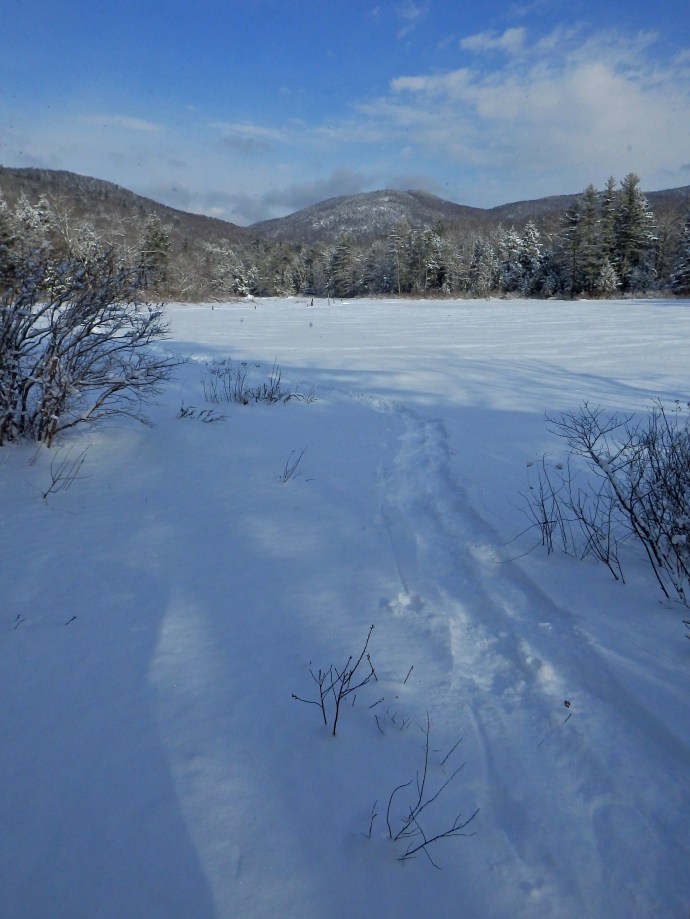
Winter comes to make walking possible where there was no walking in summer. Not till winter can we take possession of the whole of our territory.…

16-12-31 - 1 of 53 (38).jpg

…The wonderful stillness of a winter day…!

…A transient acquaintance with any phenomenon is not sufficient to make it completely the subject of your muse. You must be so conversant with it as to REMEMBER it, and be reminded of it long afterward, while it lies remotely fair and elysian in the horizon, approachable only by the imagination.

17-01-02 - 1 of 112 (5).jpg

February 12, 1851

in Thoreau’s Journal:

I find that it is an excellent walk for variety and novelty and wildness to keep round the edge of the meadow. The ice not being strong enough to bear, and transparent as water, on the bare ground or now just between the highest water mark and the present water line is a narrow, meandering walk rich in unexpected views and objects.

The line of rubbish which marks the higher tides, withered flags and seeds and twigs and cranberries, is to my eyes a very agreeable and significant line which nature traces along the edge of the meadows. It is a strongly marked, enduring, natural line which in summer reminds me that the water has once stood over where I walk. Sometimes the grooved trees tell the same tale. The wrecks of the meadow fill a thousand coves, and tell a thousand tales to those who can read them; our prairial, mediterranean shore…

P2190005.jpg

If you cannot go on the ice, you are then gently compelled to take this course, which is, on the whole, more beautiful, to follow the sinuosities of the meadow.

P2190021.jpg

February 11, 1859

 in Thoreau’s Journal:

….Now, as after a freshet in cold weather, the ice which had formed around and frozen to the trees and bushes along the shore, settling, draws them down to the ground or water, after breaking them extensively. It reminds you of an alligator or other evil genius of the river pulling the trees and bushes, which had come to drink, into the water. If a maple or alder is unfortunate enough to slip its lower limbs into the freshet, dallying with it, their fate is sealed, for the water freezing that night takes fast hold of them like a vise, and when the water runs out from beneath an irresistible weight brings them down to the ground and holds them there. Only the spring will soften the heart of the relentless monster when commonly it is too late.

P1030501.jpg

February 10, 2017: Montgomery Brook, Sandwich, New Hampshire

February 8, 1841

in Thoreau’s Journal:

My Journal is that of me which would else spill over and run to waste.— gleanings from the field which in action I reap. I must not live for it, but in it for the gods— They are my correspondent to whom daily I send off this sheet post-paid. I am clerk in their counting room and at evening transfer the account from day-book to ledger.

It is as a leaf which hangs over my head in the path — I bend the twig and write my prayers on it then letting it go the bough springs up and shows the scrawl to heaven. As if it were not kept shut in my desk—but were as public a leaf as any in nature—it is papyrus by the river side—it is vellum in the pastures—it is parchment on the hills— I find it every where as free as the leaves which troop along the lanes in autumn—

PA060019.jpg

The crow—the goose—the eagle—carry my quill—and the wind blows the leaves—as far as I go— Or if my imagination does not soar, but gropes in slime and mud—then I write with a reed.

It is always a chance scrawl, and commemorates some accident—as great as earthquake or eclipse. Like the sere leaves in yonder vase these have been gathered far and wide—upland and lowland.— forest and field have been ransacked.

January 6

in Thoreau’s Journal:

A cold drifting wind sweeps from the north—the surface of the snow is imbricated on a great scale being very regularly blown into waves—alike over the high- and the rail-road concealing the tracks & meadows & the river & the pond—

P1080128.jpg

It is all one great wintry looking snow-field—whose surface consists of great wavelike drifts….

February 5, 1853

in Thoreau’s Journal:

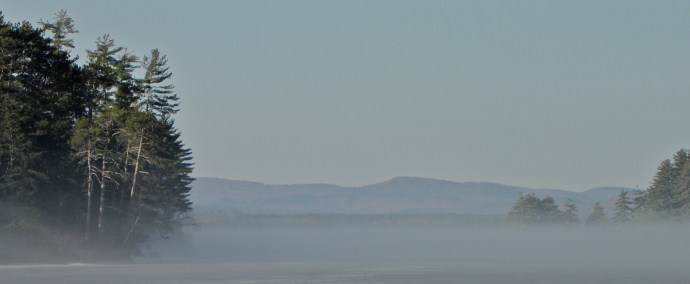
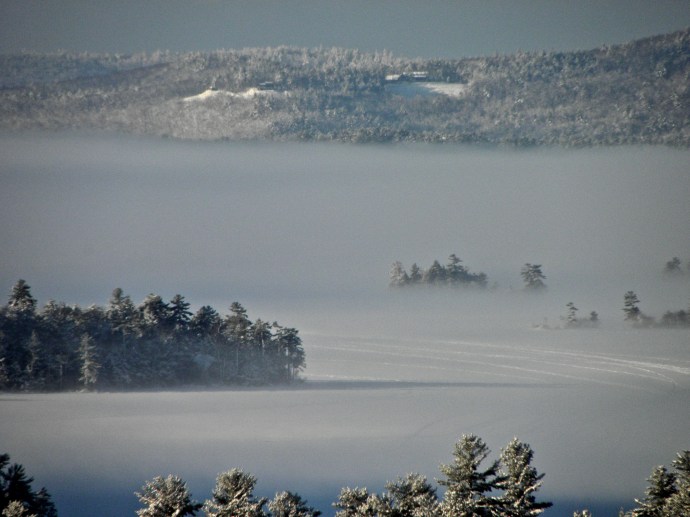
A Thick fog. The trees & woods look well through it….

P3211402.jpg

I remember now that the mist was much thicker over the pond than elsewhere— I could not distinguish a man there more than ten rods off—and the woods seen dimly across a bay were mistaken for the opposite side of the Pond— I could almost fancy a bay of an acre in extent the whole pond. Elsewhere methinks I could see twice as far— I felt the greater coolness of the air over the pond….

February 3, 1852

in Thoreau’s Journal:

P1030150.jpg

Access to nature for original observation is secured by one ticket—by one kind of expense—but access to the works of your predecessors by a very different kind of expense— All things tend to cherish the originality of the original. Nature at least takes no pains to introduce you to the works of his predecessors—but only presents him with her own Opera Omnia.

February 2, 1860

in Thoreau’s Journal:

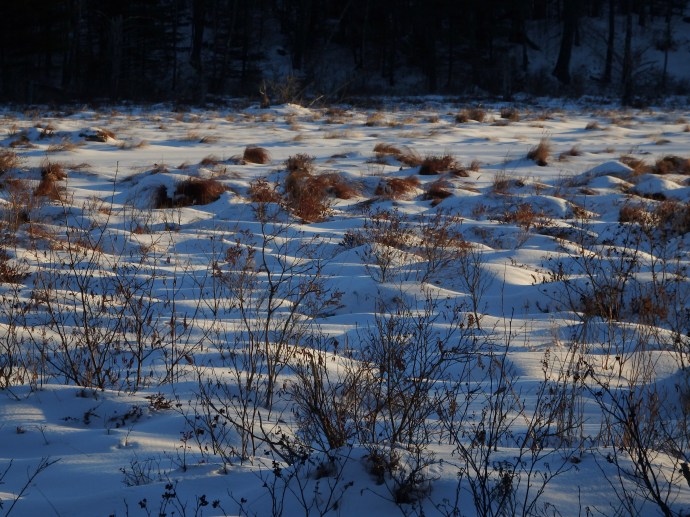
It is remarkable that the straw-colored sedge of the meadows, which in the fall is one of the least noticeable colors, should now, that the landscape is mostly covered with snow, be perhaps the most noticeable of all objects in it for its color, and an agreeable contrast to the snow…

P1290009.jpg

Winter 1845-1846

 in Thoreau’s Journal:

And again in winter to cross this pond on the ice—is our Davis’ straits or Baffin’s Bay—as a pleasant adventure.— to see the Lincoln hills rise up around it as a center—Mt. Tabor—& Bare Hill & the rest— It is a somewhat novel scenery, and not often seen in summer….

P2190061.jpg

This is our Lake country.

January 31, 1854

 in Thoreau’s Journal:

We too have our thaws— They come to our January moods—when our ice cracks—& our sluices break loose — Thought that was frozen up under stern experience gushes forth in feelings & expression—

P2250014.jpg

This is a freshet which carries away dams of accumulated ice….

P2250022.jpg

January 30, 1852

in Thoreau’s Journal:

…..the first book & not the last should contain the poetry of flowers….The most poetical of books— It should have the beauty & fragrance of flowers.— some of their color…. In which is uttered breathed man’s love of flowers.

P7130021.jpg

Do nothing merely out of good resolutions. Discipline yourself only to yield to love— Suffer yourself to be attracted. It is in vain to write on chosen themes. We must wait till they have kindled a flame in our minds. There must be the copulating & generating force of love behind every effort destined to be successful. The cold resolve gives birth to —begats nothing. The theme seeks me, not I it. The poet’s relation to this theme is the relation of lovers. It is no more to be courted. Obey—report.

January 29, 1841

 in Thoreau’s Journal:

Men lie behind the barrier of a relation as effectually concealed as the landscape by a mist; and when at length some unforeseen accident throws me into a new attitude toward them,

P2259006.jpg

I am astounded as if for the first time I saw the sun on the hillside.

January 27, 1852

in Thoreau’s Journal:

I do not know but thoughts written down thus in a journal might be printed in the same form with greater advantage—than if the related ones were brought together into separate essays. They are now allied to life—& are seen by the reader not to be far fetched— It is more simple—less artful— I feel that in the other cases I should have no proper frame for my sketches. Mere facts & names & dates communicate more than we suspect—

PC200035.jpg

Whether the flower looks better in the nosegay—than in the meadow where it grew—& we had to wet our feet to get it! Is the scholastic air any advantage?

PC200036.jpg

January 26, 1852

in Thoreau’s Journal:  [selections from a very long entry]

A tree seen against other trees is a mere dark mass, but against the sky it has parts, has symmetry and expansion…

The thousand fine points & tops of the trees delight me—they are the plumes & standards & bayonets of a host that march to victory over the earth. The trees are handsome towards the heavens—as well as up their boles—they are good for other things than boards & shingles…

P1010040.jpg

Obey the spur of the moment. These accumulated it is that makes the impulse & impetus of the life of genius….

My life essentially belongs to the present…

In winter we will think brave & hardy—& most native thoughts. Then the tender summer birds are flown.

In few countries do they enjoy so fine a contrast of summer & winter—we really have four seasons. each incredible to the other. Winter cannot be mistaken for summer here…

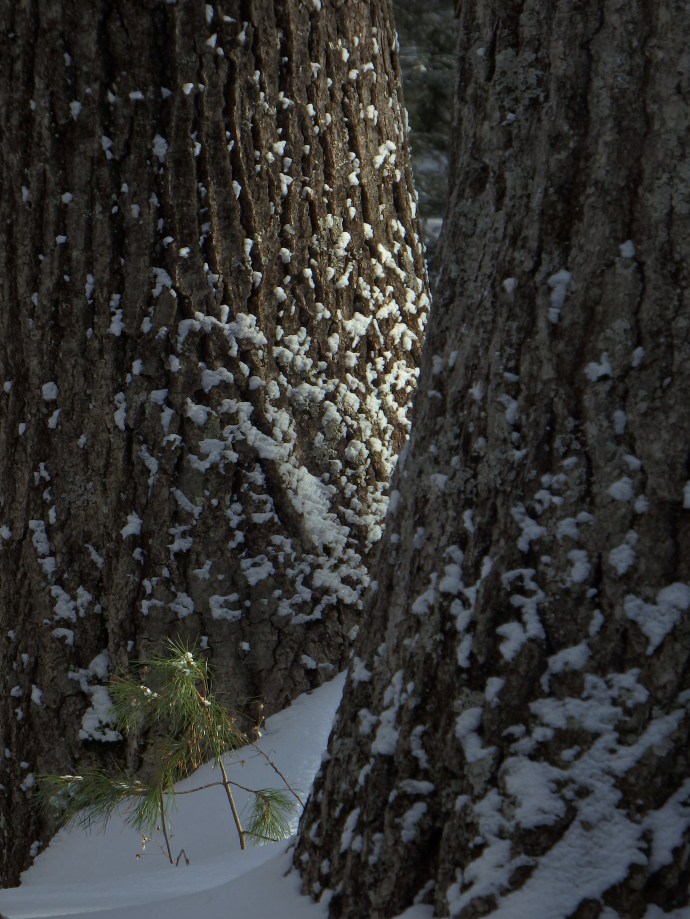
The lichens look rather bright today near the town line…I could study a single piece of bark for hours. How they flourish! I sympathize with their growth…

January 25, 1856

 in Thoreau’s Journal:

A closed pitch pine cone, gathered January 22nd, opened last night in my chamber. If you would be convinced how differently armed the squirrel is naturally for dealing with pitch pine cones, just try to get one open with your teeth. He who extracts the seeds from a single closed cone, with the aid of a knife, will be constrained to confess that the squirrel earns his dinner. He has the key to this conical and spiny chest of many apartments. He sits on a post vibrating his tail, and twirls it as a plaything.

PB250133.jpg

So is a man commonly a locked-up chest to us, to open whom, unless we have the key of sympathy, will make our hearts bleed.