November 25, 1850

in Thoreau’s Journal:

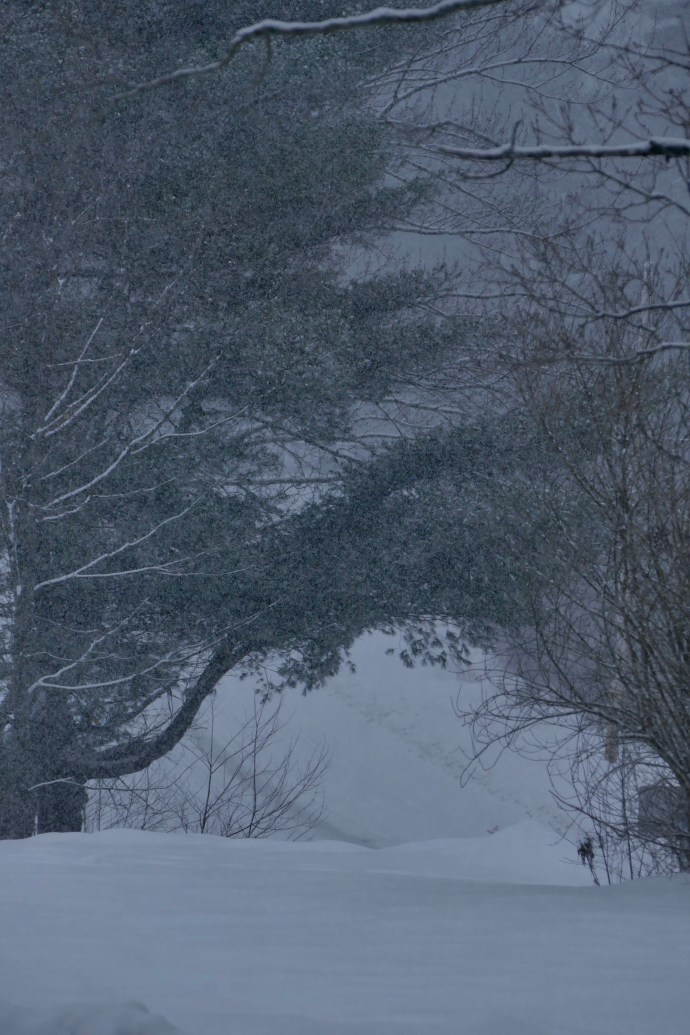
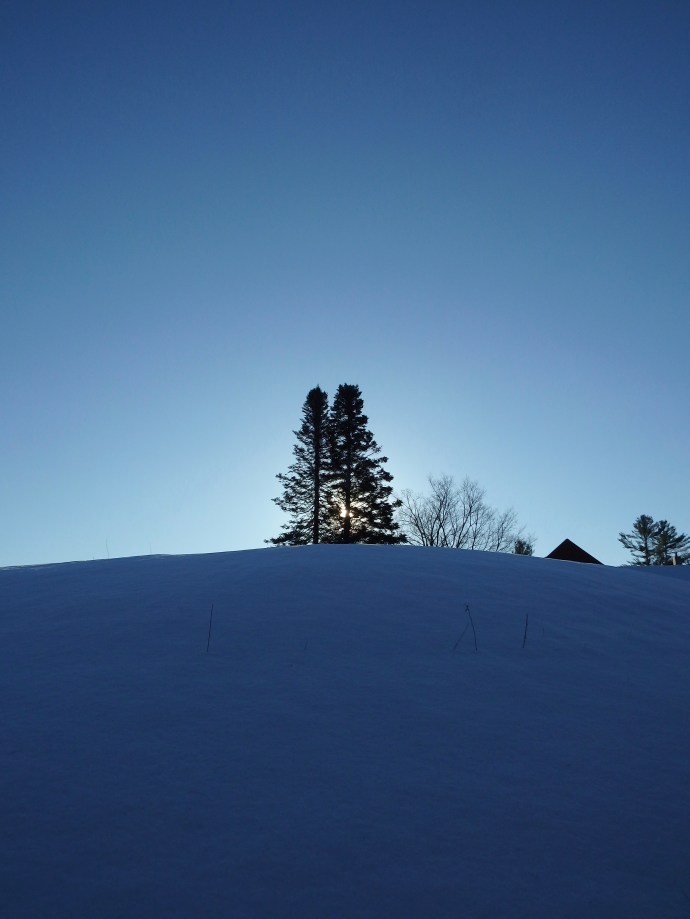
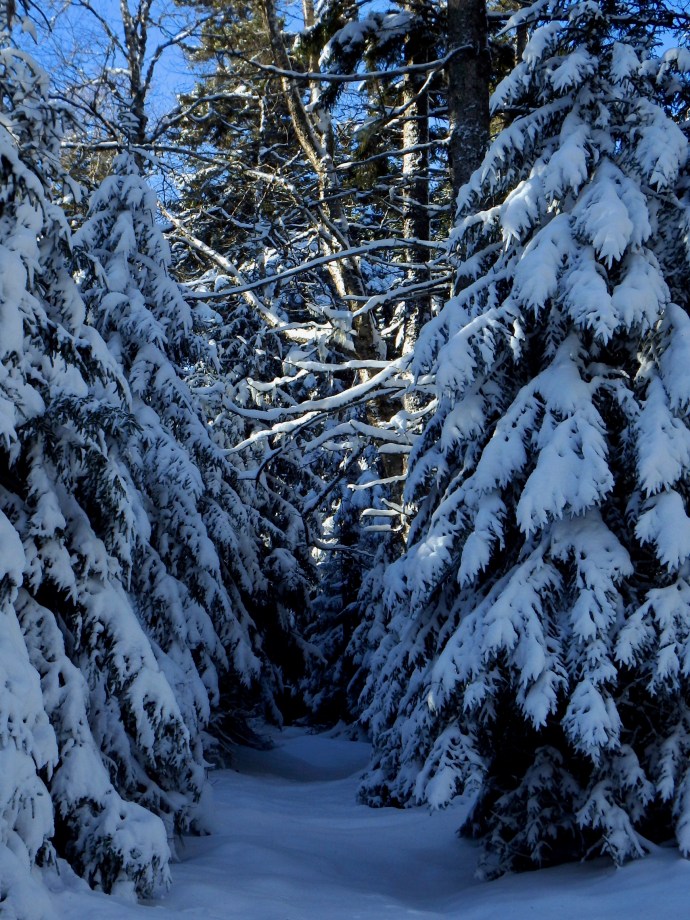
I feel a little alarmed when it happens that I have walked a mile into the woods bodily, without getting there in spirit…This afternoon, late and cold as it is, has been a sort of Indian summer Indeed, I think we have summer days from time to time the winter through, and that it is often the snow on the ground which makes the whole difference.

1125.jpg

This afternoon the air was indescribably clear and exhilarating, and though the thermometer would have shown it to be cold, I thought there was a finer and purer warmth than in summer, a wholesome, intellectual warmth in which the body was warmed by the mind’s contentment, —the warmth hardly sensuous, but rather the satisfaction of existence.

November 24, 1858

 in Thoreau’s Journal: 

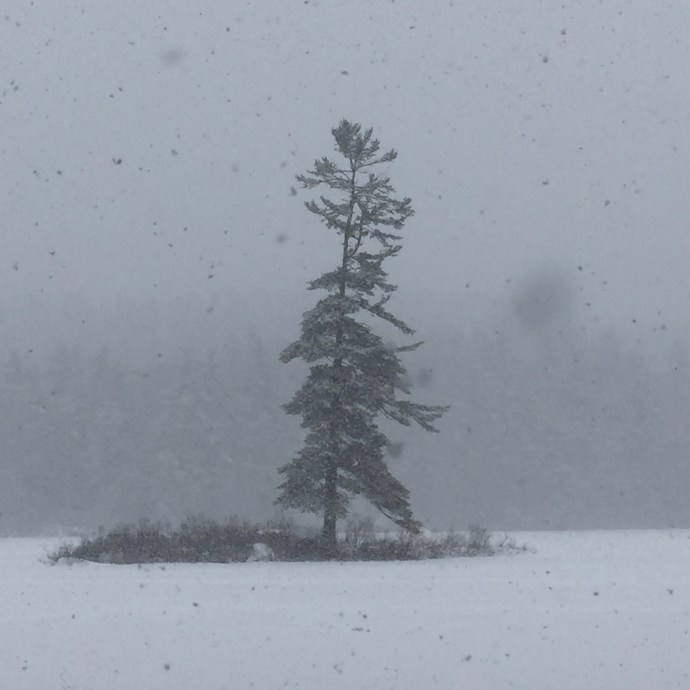
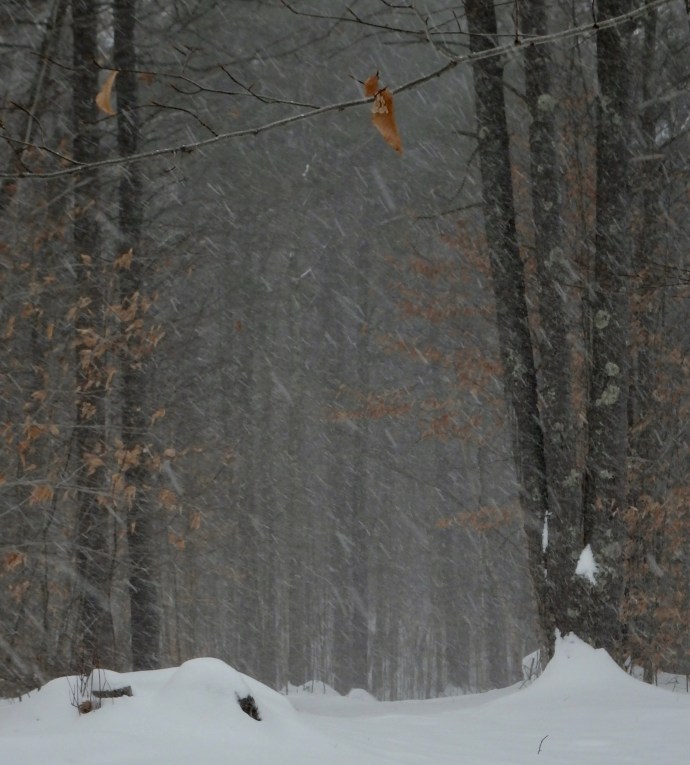
It is a lichen day, with a little moist snow falling.  The great green lungwort lichen shows now on the oaks

112401.jpg

(strange that there should be none on the pines close by), and the fresh bright chestnut fruit of other kinds, glistening with moisture, brings life and immortality to light.

112402.jpg

November 20, 1853

in Thoreau’s Journal:

I was just thinking

it would be fine to get a specimen leaf from each changing tree & shrub & plant in Autumn in sep- & oct- when it had got its brightest characteristic color the intermediate ripeness in its transition from the green to the russet or brown state —outline & copy its color exactly with paint in a book —A book which should be a memorial of October—Be entitled October hues—or Autumnal tints—

PA130206.jpg

I remember especially the beautiful yellow of the P. Grandidentata & the tint of the scarlet maple. What a memento such a book would be—beginning with the earliest reddening of the leaves—woodbine & ivy—&c &c And the lake of red-leaves-down to the latest oaks.

November 19, 1850

in Thoreau’s Journal:

There was also the columbine, its leaves still alive and green; and I was pleased to smell the pennyroyal which I had bruised, though this dried up long ago. Each season is thus drawn out and lingers in certain localities, as the birds and insects know very well.

PB250079.jpg

If you penetrate to some warm recess under a cliff in the woods, you will be astonished at the amount of summer life that still flourishes there.

November 17, 1858

in Thoreau’s Journal:

The very sunlight on the pale-brown-bleached fields is an interesting object these cold days. I naturally look toward it as to a wood fire. Not only different objects are presented to our attention at different seasons of the year, but we are in a frame of body and mind to appreciate different objects at different seasons. I see one thing when it is cold and another when it is warm.

We are interested at this season by the manifold ways in which the light is reflected to us. Ascending a little knoll covered with sweet fern, the sun appearing but little above the sweet fern, its light was reflected from a dense mass of the bare, downy twigs of this plant in a surprising manner which would not be believed, if described. In was quite like the sunlight reflected from grass and weeds covered with hoar frost. Yet in an ordinary light, these are but dark or dusky-looking with scarcely a noticeable downiness. But as I saw them, there was a perfect halo of light resting on the knoll. I moved to right or left. A myriad of surfaces are now prepared to reflect the light This is one of the hundred silvery lights of November. The setting sun, too, is reflected from windows more brightly than at any other season. “November lights” would be a theme for me.

Nature is moderate, and loves degrees. Winter is not all white and sere. Some trees are evergreen to cheer us and on the forest floor our eyes do not fall on sere brown leaves along, but some evergreen shrubs are placed there to relieve the eye. Mountain laurel, lamb kill, checkerberry, wintergreen, etc., keep up the semblance of summer still.

PB116987.jpg

November 14, 2012: Reflections in the Bearcamp River, Sandwich, NH

November 16, 1850

 in Thoreau’s Journal:

There is a place whither I should walk today though oftenest I fail to find; when, by accident, I ramble into it, great is my delight. I have stood by my door sometimes half an hour irresolute as to what course I should take…

What shall we do with a man who is afraid of the woods—their solitude & darkness— What salvation is there for him? God is silent & mysterious.

Some of our richest days are those in which no sun shines outwardly, but so much the more a sun shines inwardly. I love nature. I love the landscape…

PAz2.jpg

The sweet scented life everlasting…
The partridge berry leaves checker the ground…
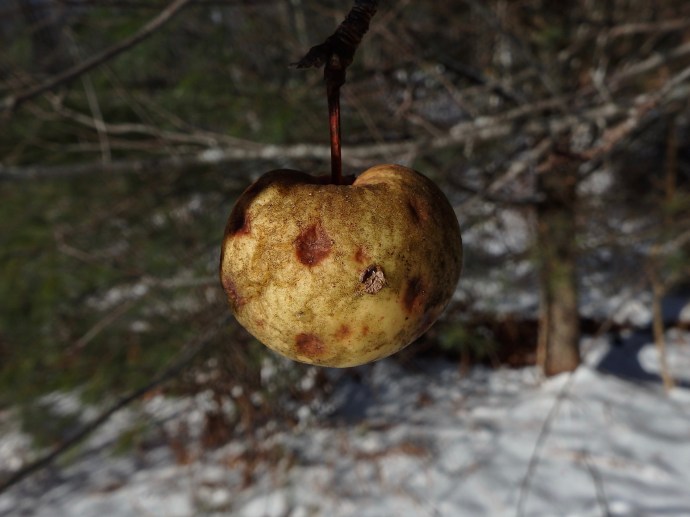
The era of wild apples will soon be over—

My Journal should be the record of my love. I would write in it only the things I love. My affection for any aspect of the world. What I love to think of. I have no more distinctness or pointedness in my yearnings than an expanding bud—which does indeed point to to flower & fruit to summer & autumn—but is aware of the warm sun & spring influence only.

Photo: November 14, 2016

November 15, 1853

in Thoreau’s Journal:

After having some business dealings with men—I am occasionally chagrined—& feel as if I had done some wrong—& it is hard to forget the ugly circumstance— I see that such intercourse long continued would make me thoroughly prosaic hard & coarse— But the longest intercourse with Nature though in her rudest moods does not thus harden & make coarse— A hard insensible man whom we liken to a rock—is indeed much harder than a rock—

P4140087.jpg

From hard coarse insensible men with whom I have no sympathy—I go to commune with the rocks whose hearts are comparatively soft—

November 13, 1851

in Thoreau’s Journal:

….cold and dark….the landscape is barren of objects, the trees being leafless… Truly hard times, these! Not a mosquito left, not an insect to hum. Crickets gone into winter quarters. Friends long since gone there, and you left to walk on frozen ground with your hands in your pockets . Ah, but is not this a glorious time for your deep inward fires? ….Nothing but the echo of your steps on the frozen ground, which, it is true, is being prepared for immeasurable snows.

PB120029.jpg

Still there are brave thoughts within you that shall remain to rustle the winter through, like white-oak leaves upon your boughs, or like shrub oaks that remind the traveler of a fire upon the hillsides, or evergreen thoughts, cold even in the midsummer by their nature. These shall contrast the more fairly with the snow….

November 11, 1853

in Thoreau’s Journal:

That delicate, waving, feathery dry grass which I saw yesterday is to be remembered with the autumn.

PB100032.jpg

The dry grasses are not dead for me. A beautiful form has as much life at one season as at another.

Photo:  November 10, 2016

November 8, 1858

in Thoreau’s Journal:

Each phase of nature, while not invisible, is yet not too distinct and obtrusive. It is there, to be found when we look for it, but not demanding our attention. It is like a silent but sympathizing companion, in whose company we retain most of the advantages of solitude, with whom we can walk and talk, or be silent, naturally, without the necessity of talking in a strain foreign to the place.

P2116309.jpg

November 7, 1855

in Thoreau’s Journal:

I find it good to be out in this still, dark, mizzling afternoon. My walk or voyage is more suggestive and profitable than in bright weather. The view is contracted by misty rain. The water is perfectly smooth, and the stillness is favorable to reflection. I am more open to impressions, more sensitive, not calloused or indurated by sun and wind, as if in a chamber still. My thoughts are concentrated. I am all compact. The solitude is real too, for this weather keeps other men at home. This mist is like a roof and walls over and around, and I walk with a domestic feeling.

PA290014.jpg

The sound of a wagon going over an unseen bridge is louder than ever, and so of other sounds. I am compelled to look at near objects. All things have a soothing effect The very clouds and mists brood over me. My power of observation and contemplation is much increased. My attention does not wander. The world and my life are simplified. What now are Europe and Asia?

November 6, 1853

in Thoreau’s Journal:

Climbed the wooded hill by Holden’s spruce swamp —& got a novel View of the river & Fair Haven Bay —through the almost leafless woods. How much handsomer a river or lake such as ours seen thus through a foreground of scattered or else partially leafless trees though at a considerable distance this side of it—especially if the water is open without wooded shores or isles— It is the most perfect & beautiful of all frames which yet the sketcher is commonly careful to brush aside.

PA310187.jpg

I mean a pretty thick foreground—a view of the distant water through the near forest—through a thousand little vistas—as we are rushing toward the former—that intimate mingling of wood & water which excites an expectation which the near & open view rarely realizes. We prefer that some part be concealed—which our imagination may navigate.