in Thoreau’s Journal:

Our work should be fitted to and lead on the time, as bud flower and fruit lead the circle of the seasons—
in Thoreau’s Journal:
Our work should be fitted to and lead on the time, as bud flower and fruit lead the circle of the seasons—
in Thoreau’s Journal
Snows again this morning– For the last month the weather has been remarkably changeable; hardly 3 days together alike.
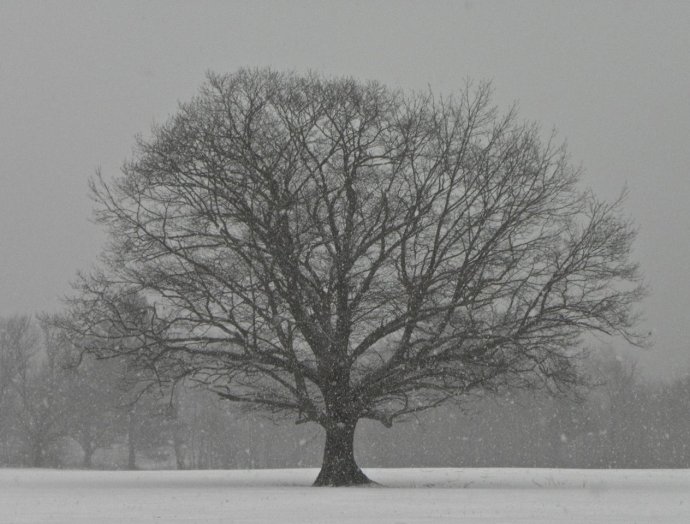
That is an era—not yet arrived—when the earth being partially thawed, melts the slight snows which fall on it.
 in Thoreau’s Journal:
All day a steady, warm imprisoning rain, carrying off the snow, not unmusical on my roof. It is a rare time for student and reader who cannot go abroad in the P.M., provided he can keep awake, for we are wont to be as drowsy as cats in such weather. Without, it is not walking, but wading.
in Thoreau’s Journal:
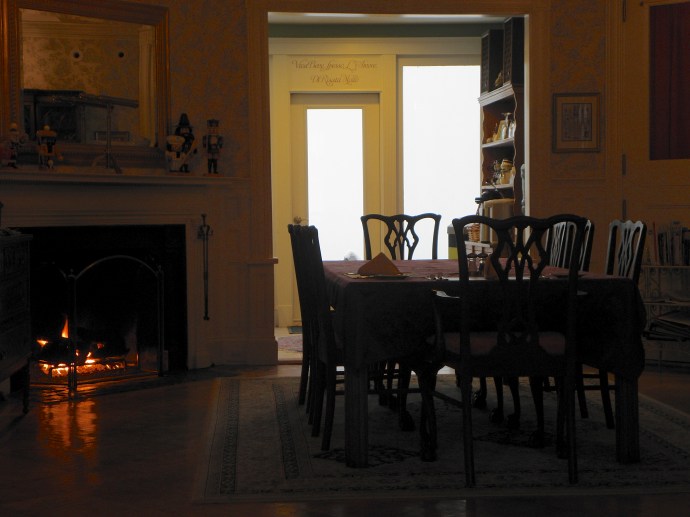
The laws of nature always furnish us with the best excuse for going & coming. If we do not go now—we shall find our fire out.
———————-
November 11, 1851 in Thoreau’s Journal:
It is not I but nature in me.
The Work Of Happiness
I thought of happiness, how it is woven
Out of the silence in the empty house each day
And how it is not sudden and it is not given
But is creation itself like the growth of a tree.
No one has seen it happen, but inside the bark
Another circle is growing in the expanding ring.
No one has heard the root go deeper in the dark,
But the tree is lifted by this inward work
And its plumes shine, and its leaves are glittering.
So happiness is woven out of the peace of hours
And strikes its roots deep in the house alone:
The old chest in the corner, cool waxed floors,
White curtains softly and continually blown
As the free air moves quietly about the room;
A shelf of books, a table, and the white-washed wall––
These are the dear familiar gods of home,
And here the work of faith can best be done,
The growing tree is green and musical
For what is happiness but growth in peace,
The timeless sense of time when furniture
Has stood a life’s span in a single place,
And as the air moves, so the old dreams stir
The shining leaves of present happiness?
No one has heard thought or listened to a mind,
But where people have lived in inwardness
The air is charged with blessing and does bless;
Windows look out on mountains and the walls are kind.
— May Sarton
in Thoreau’s Journal:

The wonderful stillness of a winter day! the sources of sound are, as it were frozen up.
in Thoreau’s Journal:
I find that it is an excellent walk for variety & novelty & wildness to keep round the edge of the meadow….A narrow meandering walk rich in unexpected views & objects…The wrecks of the meadow which fill a thousand coves and tell a thousand tales to those who can read them.
 Our prairial mediterranean shore….If you cannot go on the ice—you are gently compelled to take this course which is on the whole more beautiful—to follow the sinuosities of the meadow.
in Thoreau’s Journal:
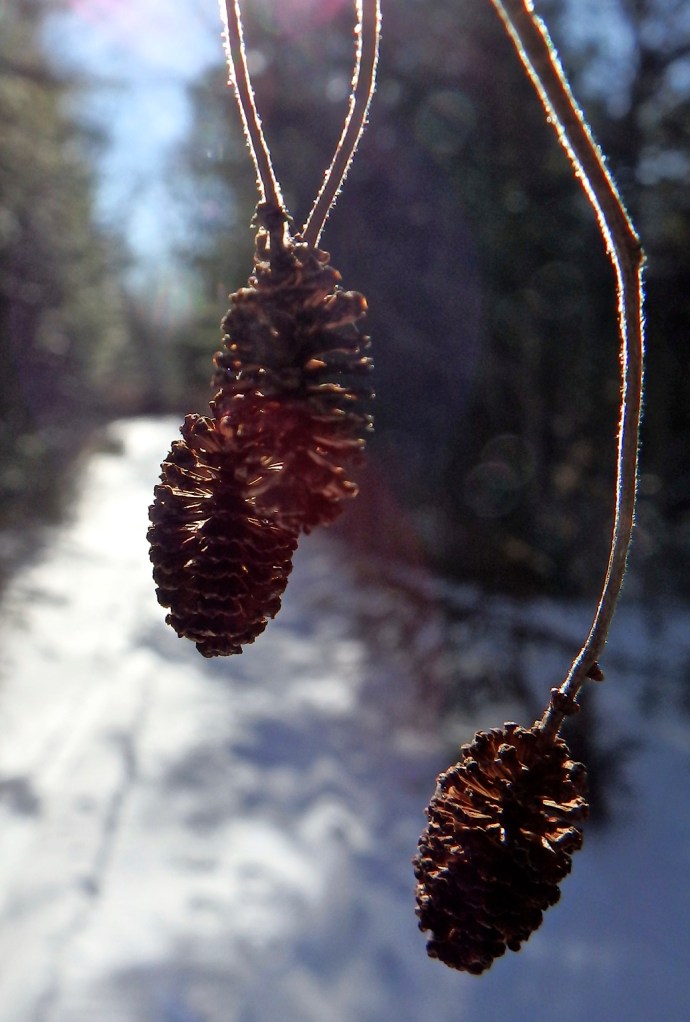
In the winter we so value the semblance of fruit that even the dry, black female catkins of the alder are an interesting sight, not to mention, on shoots rising a foot or two above these, the red or mulberry male catkins in tight parcels dangling at a less than right angle with the stems, and the short female ones at their bases.
February 10, 1860 in Thoreau’s Journal:
I do not know of any more exhilarating walking than up or down a broad field of smooth ice like this in a cold, glittering, winter day….

February 10, 1841
I asked a man to-day if he would rent me some land, and he said he had four acres as good soil “as any outdoors.” It was a true poet’s account of it. He and I, and all the world, went outdoors to breathe the free air and stretch ourselves. For the world is but outdoors, – and we duck behind a panel.
February 10, 1860
In the cold, clear, rough air from the northwest we walk amid what simple surroundings! Surrounded by our thoughts or imaginary objects, living in our ideas, not one in a million even sees the objects which are actually around him.
In Thoreau’s Journal:
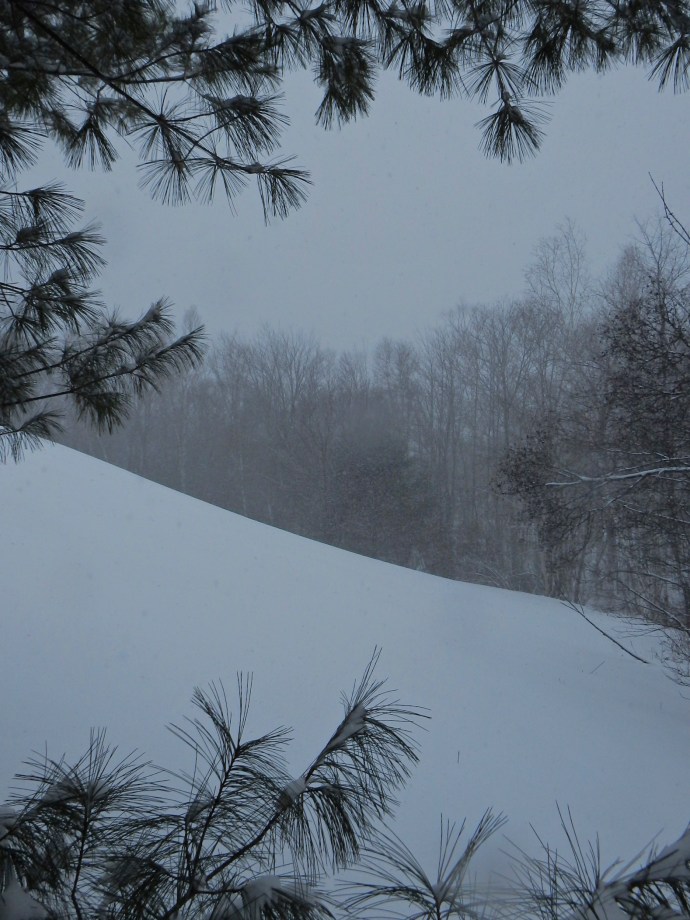 It is easier to get about the country than at any other season— Easier than in summer because the rivers & meadows are frozen—& there is no high grass or other crops to be avoided—easier than in Dec. before the crust was frozen.
in Thoreau’s Journal

In this winter often no apparent difference between rivers, ponds & fields.
in Thoreau’s Journal
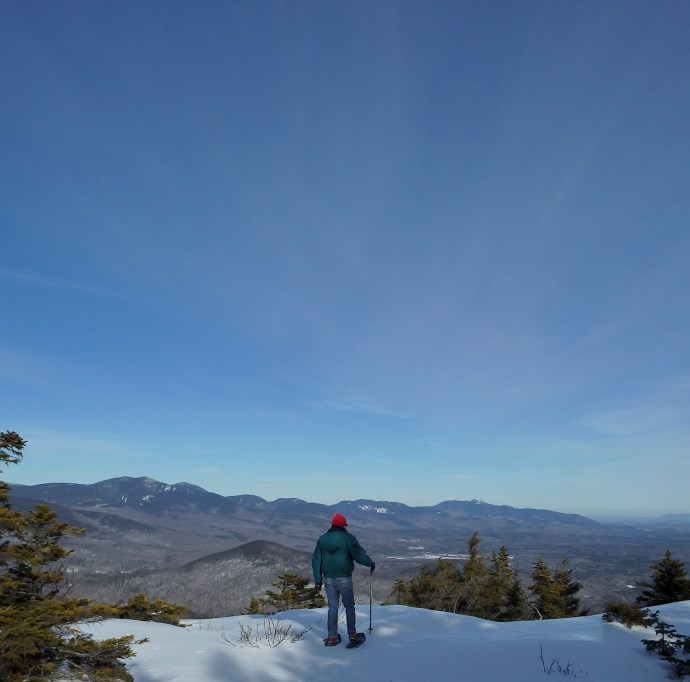
….If possible, come upon the top of hill unexpectedly, perhaps through the woods, and then look off from it….
in Thoreau’s Journal
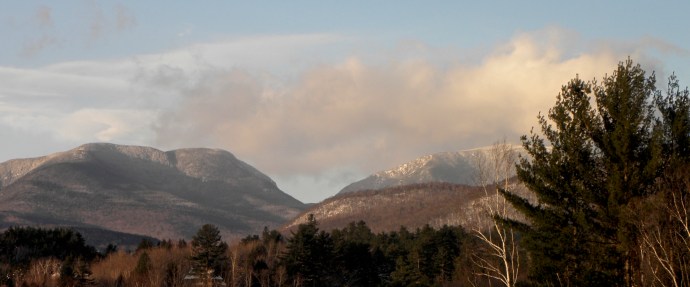
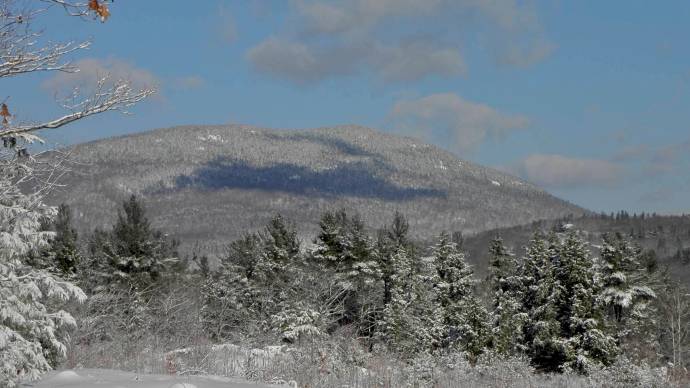
I see great shadows on the N.E.. sides of the mts 40 miles off….
in Thoreau’s Journal:
When we have experienced many disappointments, such as the loss of friends, the notes of birds cease to affect us as they did.
February 5, 1841
Friday….There is something in the effect of a harmonious voice upon the disposition of its neighborhood analogous to the law of crystals; it centralizes itself and sounds like the published law of things. If the law of the universe were to be audibly promulgated, no mortal lawgiver would suspect it, for it would be a finer melody than his ears ever attended to. It would be sphere music.
in Thoreau’s Journal:
A mild thawy day. The needles of the pine are the touch-stone for the air-any change in that element is revealed to the practiced eye by their livelier green or increased motion.
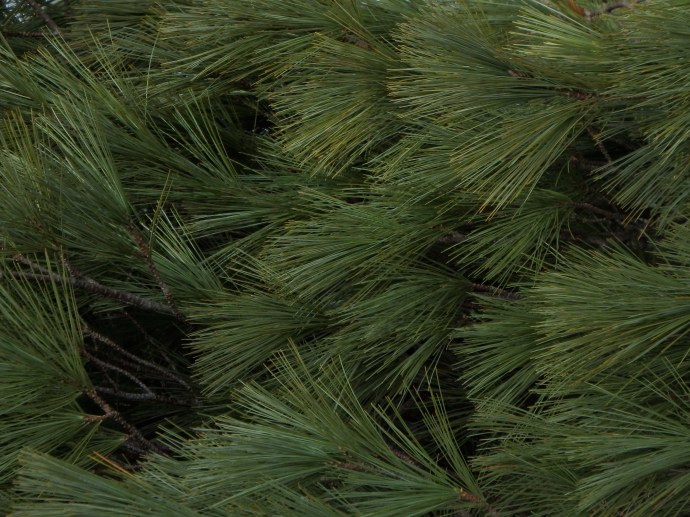
They are the tell-tales Now they are (the white pine) a cadaverous misty blue-anon a lively silvery light plays on them—& they seem to erect themselves unusually-while the pitch pines are a brighter yellowish green than usual- The sun loves to nestle in the boughs of the pine & pass rays through them.
in Thoreau’s Journal:
Access to nature for original observation is secured by one ticket—by one kind of expense—but access to the works of your predecessors by a very different kind of expense- All things tend to cherish the originality of the original. Nature at least takes no pains to introduce him to the works of his predecessors-but only presents him with her own Opera Omnia.

Is it the lover of nature who has access to all that has been written on the subject of his favorite studies? No; he lives far away from this. It is the lover of books & systems-who know nature chiefly at 2nd hand.
in Thoreau’s Journal
Already we begin to anticipate spring and this is an important difference between this time & a month ago — We begin to say that the day is spring-like.

Is not January the hardest month to get through—? When you have weathered that—you get into the gulf-stream of winter nearer the shores of Spring—
in Thoreau’s Journal:
….skated up the river yesterday, now here, now there….the great arundo in the Sudbury meadows was all level with ice. There was a great bay of ice stretching up the Pantry, and up Larned Brook.
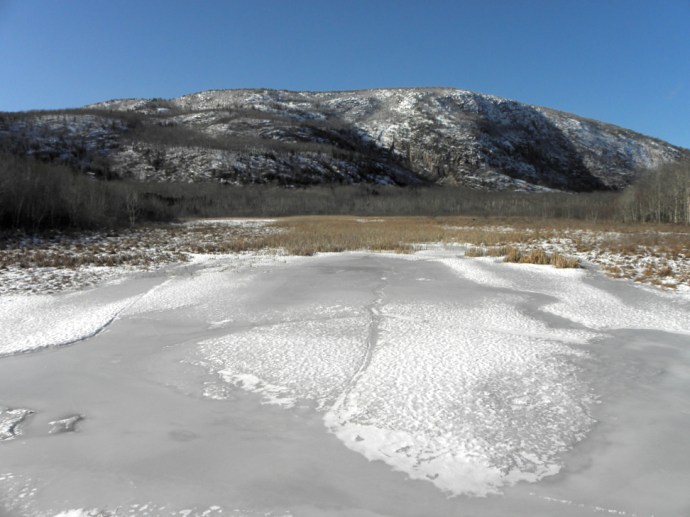
I looked up a broad, glaring bay of ice at the last place which seemed to reach to the base of Nobscot and almost to the horizon. Some dead maple or oak saplings laid side by side made my bridges, by which I got on to the ice along the watery shore, It was a problem to get off, and another to get on, dry shod.
in Thoreau’s Journal

We too have our thaws. They come to our January moods….
in Thoreau’s Journal:
You glance up these paths, closely imbowered by bent trees, as through the side aisles of as cathedral, and expect to hear a quire chanting from their depths. You are never so far in them as they are far before you. Their secret is where you are not, and where your feet can never carry you.
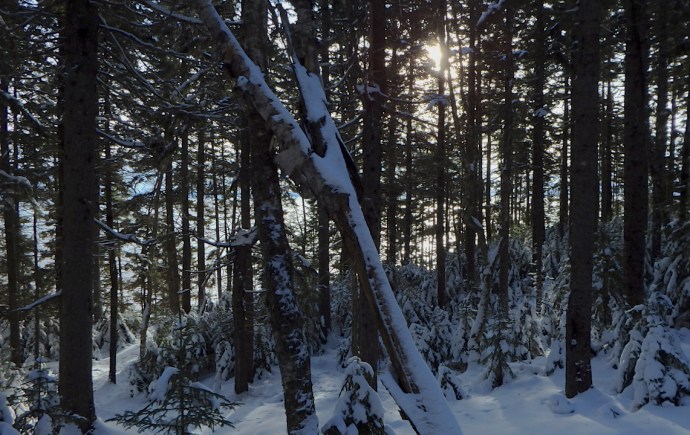
I tread in the tracks of the fox which has gone before me by some hours, or which perhaps I have started, with such a tiptoe of expectation, as if I were on the trail of the spirit itself which resides in these woods, and expected soon to catch it in its lair.
The snow falls on no two trees alike, but the forms it assumes are as various as those of the twigs and leaves which receive it.
Here is the distinct trail of a fox stretching quarter of a mile across the pond. Now I am curious to know what has determined its graceful curvatures, its greater or less spaces and distinctness, and how surely they were coincident with the fluctuations of some mind….
The pond was his journal, and last nights snow made a tabla rasa for him. I know which way a mind wended this morning. —what horizon it faced by the setting of these tracks—whether it moved slowly or rapidly….
in Thoreau’s Journal:
Men lie behind the barrier of a relation as effectually concealed as the landscape by a mist; and when at length some unforeseen accident throws me into a new attitude toward them, I am astounded as if for the first time I saw the sun on the hillside.
Of all strange and unaccountable things this journalizing is the strangest. It will allow nothing to be predicted of it.


You must be logged in to post a comment.