November 23, 1852

in Thoreau’s Journal:

3 P. M. –To Cliffs and Walden.

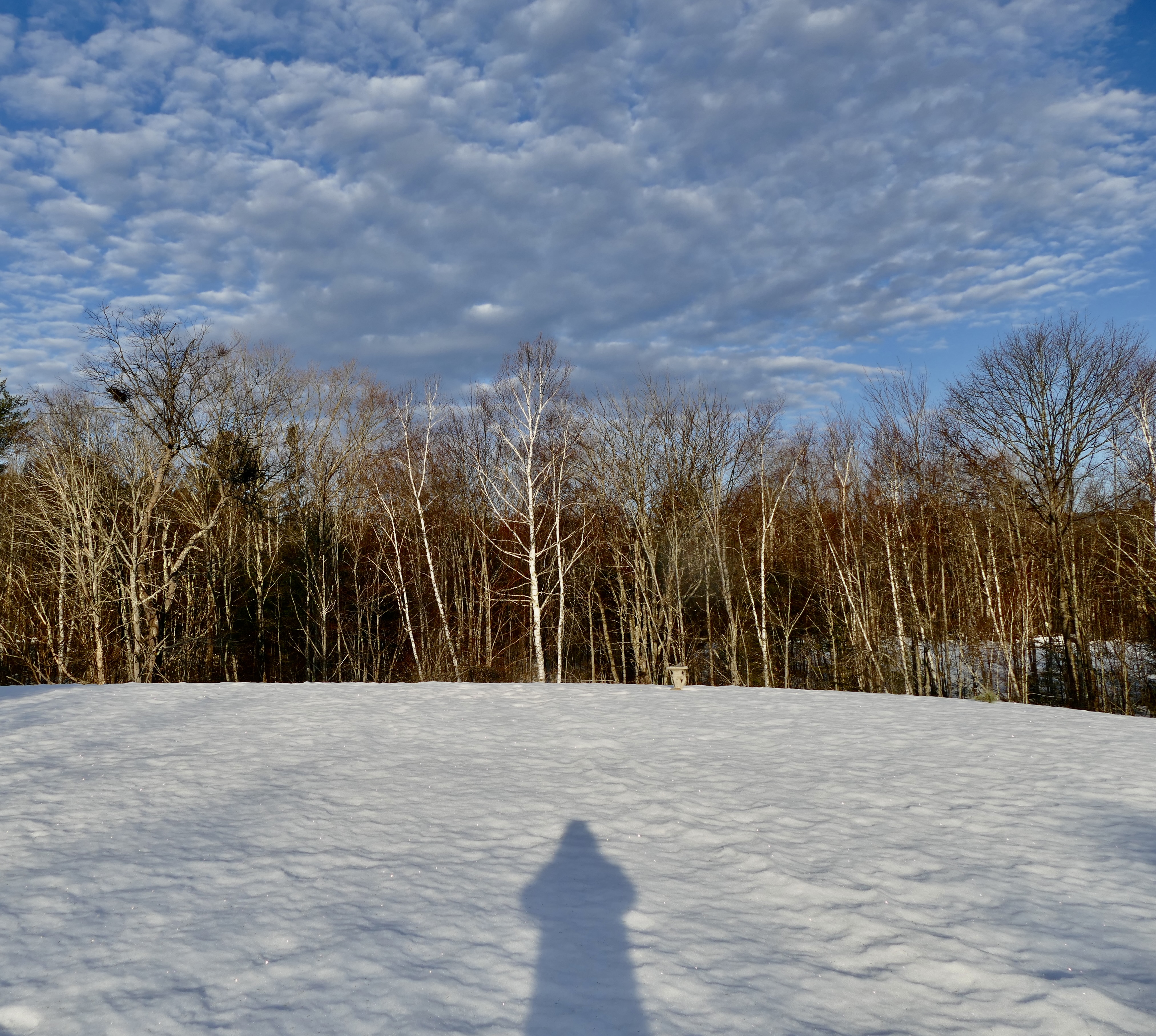
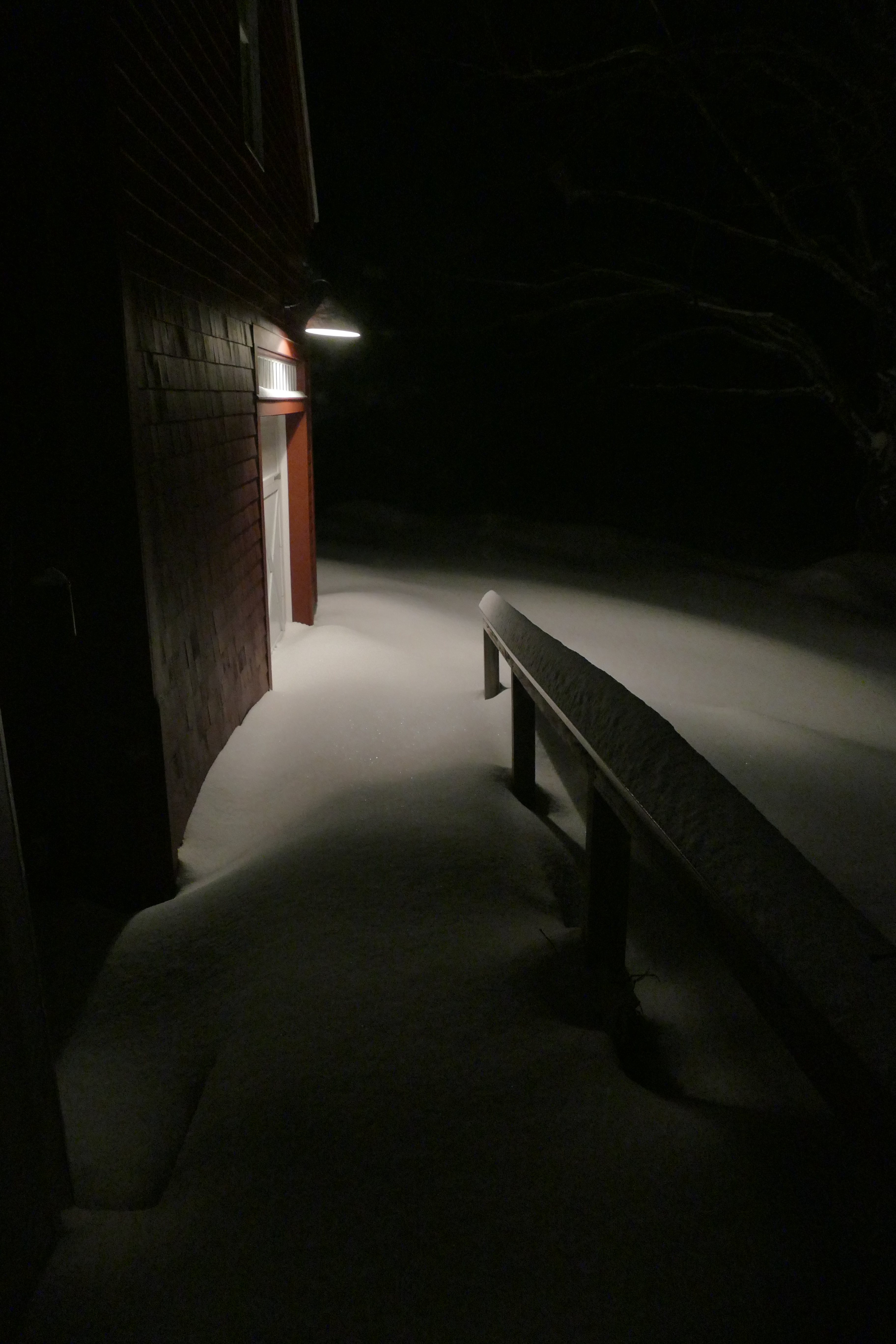
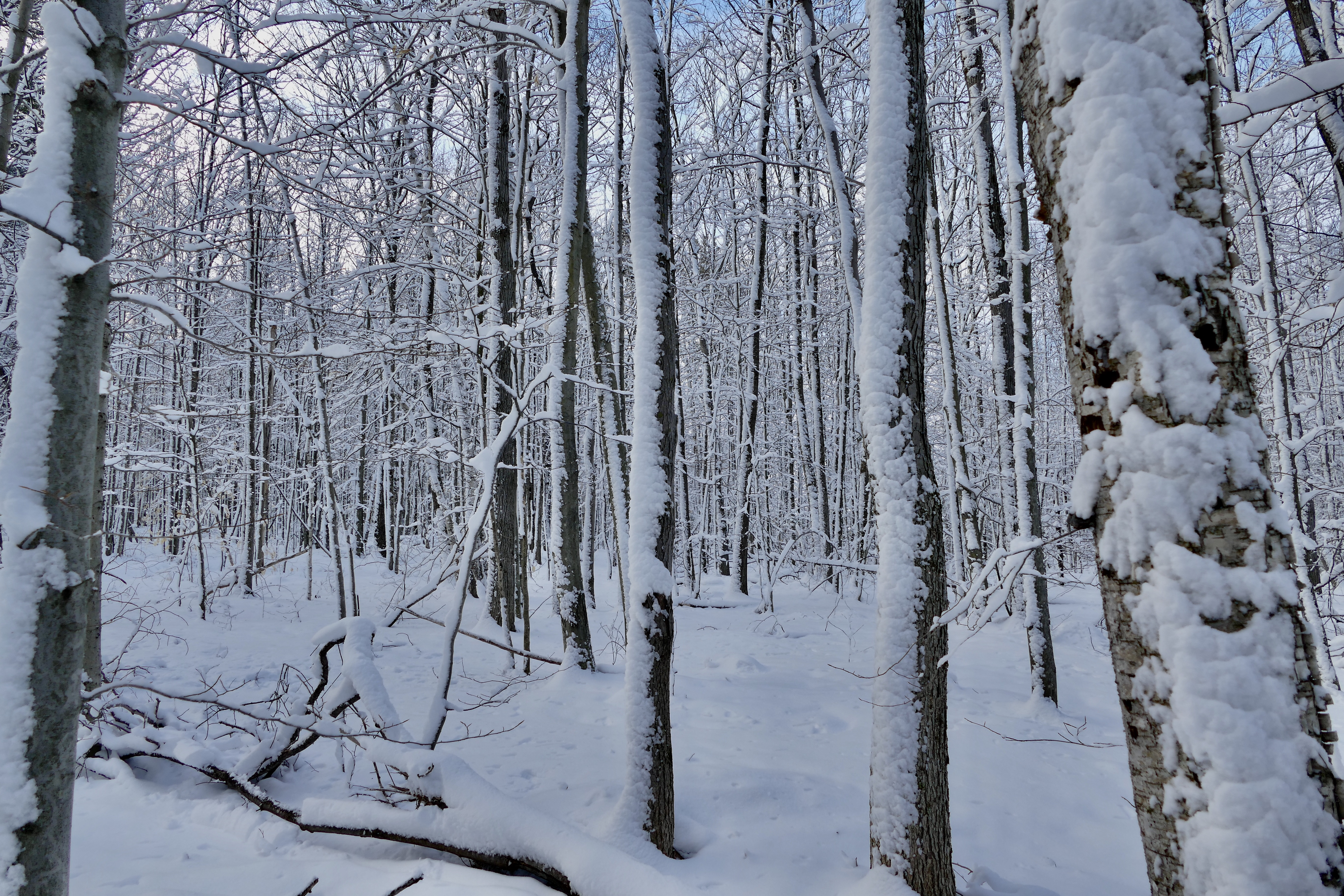
You must go forth early to see the snow on the twigs. The twigs and leaves are all bare now, and the snow half melted on the ground; where the trees are thick it has not reached the ground at all, except in the shape of water in the course of the day.

But early this morning the woods presented a very different scene. The beauty and purity of new-fallen snow, lying just as it fell, on the twigs and leaves all the country over, afforded endless delight to the walker. It was a delicate and fairylike scene. But a few hours later the woods were comparatively lumpish and dirty. So, too, you must go forth very early to see a hoar frost, which is rare here; these crisped curls adorn only the forehead of the day. The air is full of low, heavy mist, almost rain. The pines, in this atmosphere and contrasted with the snow, are suddenly many degrees darker, and the oaks redder. But still the tops of the dead grass rise above the snow in the fields, and give the country a yellow or russet look. The wetter meadows are quite russet. I am surprised to see Fair Haven entirely skimmed over.

November 22, 1860

in Thoreau’s Journal:

I rejoice in the bare, bleak, hard, and barren-looking surface of the tawny pastures, the firm outline of the hills, so convenient to walk over, and the air so bracing and wholesome. Though you are finger-cold toward night, and you cast a stone on to your first ice, and see the unmelted crystals under every bank, it is glorious November weather, and only November fruits are out.

There is quite a white cedar swamp behind the old tavern S of Maynards— You walk fast and far, and every apple left out is grateful to your invigorated taste. 

You enjoy not only the bracing coolness, but all the heat and sunlight that there is, reflected back to you from the earth. The sandy road itself, lit by the November sun, is beautiful. Shrub oaks and young oaks generally, and hazel bushes and other hardy shrubs, now more or less bare, are your companions, as if it were an iron age, yet in simplicity, innocence, and strength a golden one.

November 21, 1850

in Thoreau’s Journal:

October must be the month of ripe & tinted leaves — Throughout November they are almost entirely withered & somber—the few that remain. In this month the sun is valued—when it shines warmer or brighter we are sure to observe it— There are not so many colors to attract the eye.

We begin to remember the summer. We walk fast to keep warm. For a month past I have sat by a fire.

November 20, 1858

in Thoreau’s Journal:

It is a cool but pleasant November afternoon. The glory of November is in its silvery, sparkling lights. I think it is peculiar among the months for the amount [of] sparkling white light reflected from a myriad of surfaces. The air is so clear, and there are so many bare, polished, bleached or hoary surfaces to reflect the light. Few things are more exhilarating, if it is only moderately cold, then to walk over bare pastures and see the abundant sheeny light like a universal halo, reflected from the russet and bleached earth. The earth shines perhaps more than in spring, for the reflecting surfaces are less dimmed now. It is not a red but a white light. In the woods and about swamps, as Ministerial, also, there are several kinds of twigs, this year’s shoots of shrubs, which have a slight down or hairiness, hardly perceptible in ordinary lights though held in the hand, but which, seen toward the sun, reflect a shining silvery light. Such are not only the sweet-fern, but the hazel in a less degree, alder twigs, and even the short huckleberry twigs, also lespedeza stems. It is as if they were covered with a myriad fine spiculse which reflect a dazzling white light, exceedingly warming to the spirits and imagination. This gives a character of snug warmth and cheerfulness to the swamp, as if it were a place where the sun consorted with rabbits and partridges. Each individual hair on every such shoot above the swamp is bathed in glowing sunlight and is directly conversant with the day god. 

November 19, 1850

in Thoreau’s Journal:

There was also the columbine, its leaves still alive and green; and I was pleased to smell the pennyroyal which I had bruised, though this dried up long ago. Each season is thus drawn out and lingers in certain localities, as the birds and insects know very well. If you penetrate to some warm recess under a cliff in the woods, you will be astonished at the amount of summer life that still flourishes there. No doubt more of the summer’s life than we are aware thus slips by and outmanoeuvres the winter, gliding from fence to fence. I have no doubt that a diligent search in proper places would discover many more of our summer flowers thus lingering till the snow came, than we suspect. It is as if the plant made no preparation for winter.

Epigaea repens — trailing-arbutus, blooming late November, Sandwich, NH

November 18, 1857

in Thoreau’s Journal:

There are many ways of feeling one’s pulse. In a healthy state the constant experience is a pleasurable sensation or sentiment. For instance, in such a state I find myself in perfect connection with nature, and the perception, or remembrance even, of any natural phenomena is attended with a gentle pleasurable excitement. Prevailing sights and sounds make the impression of beauty and music on me. But in sickness all is deranged. I had yesterday a kink in my back and a general cold, and as usual it amounted to a cessation of life. I lost for the time my rapport or relation to nature. Sympathy with nature is an evidence of perfect health. You cannot perceive beauty but with a serene mind.

The cheaper your amusements, the safer and saner. They who think much of theatres, operas, and the like, are beside themselves. Each man’s necessary path, though as obscure and apparently uneventful as that of a beetle in the grass, is the way to the deepest joys he is susceptible of; though he converses only with moles and fungi and disgraces his      relatives, it is no matter if he knows what is steel to his flint.

Nov. 17, 1837

in Thoreau’s Journal:

 If there is nothing new on earth, still there is some thing new in the heavens. We have always a resource in the skies. They are constantly turning a new page to view.

The wind sets the types in this blue ground, and the inquiring may always read a new truth.

November 16, 1850

in Thoreau’s Journal:

I am accustomed to regard the smallest brook with as much interest for the time being as if it were the Orinoco or Mississippi.

What is the difference, I would like to know, but mere size? And when a tributary rill empties in, it is like the confluence of famous rivers I have read of. When I cross one on a fence, I love to pause in mid-passage and look down into the water, and study its bottom, its little mystery. 

November 15, 1857

in Thoreau’s Journal:

The obvious falling of leaves–(i.e not to include the fall of the P pines–& larches–& the complete fall of the birches, white willows &c) ended about the 1st of November. A very few bright colored leaves on small shrubs–such as oak sprouts–black cherry–blueberry &c–have lingered up to this time in favorable places–

By the 1st of November–or at most a few days later–the trees generally wear on the whole–(or in the main) their winter aspect–their leaves gradually falling until spring.

November 14, 1853

in Thoreau’s Journal:

I climb Anursnack—under this strong wind—more dry oak leaves are rattling down—all winter is their fall— A distinction is to be made between those trees whose leaves fall as soon as the bright autumnal tints are gone and they are withered—& those whose leaves are rustling & falling all winter even into spring. October is the month of painted leaves—of ripe leaves—when all the earth—not merely flowers—but fruits & leaves are ripe— With respect to its colors & its season it is the sunset month of the year—when the earth is painted like the sunset sky— This rich glow flashes round the world— This light fades into the clear white leafless twilight of November—and whatever more glowing sunset—or Indian summer we have then is the after-glow of the year— In October the man is ripe even to his stalk & leaves—he is pervaded by his genius—When all the forest is a universal harvest —Whether he possess the enduring color of the pines which it takes 2 years to ripen & wither—or the brilliant color of the deciduous trees which fade the first fall.

November 12, 1858

in Thoreau’s Journal:

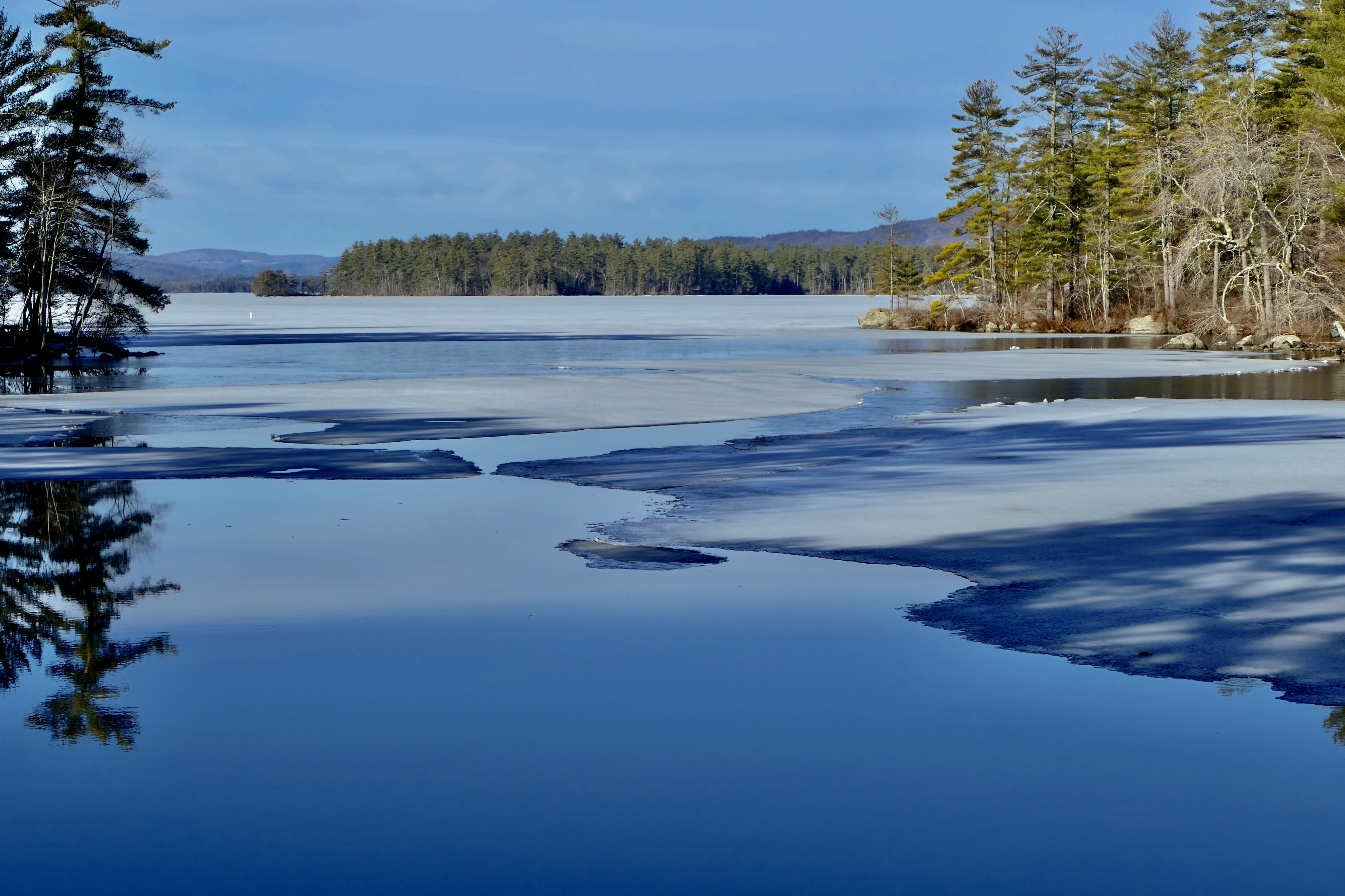
The riverside is skimmed over and presents a wintry aspect, —those great plaits, or folds, as it were, where the crystals have shot, wool-grass frozen in, and the thin white ice where the water has gone down.

Now for a brisk and energetic walk, with a will and a purpose. Have done with sauntering, in the idle sense. You must rush to the assault of winter. Make haste into the outskirts, climb the ramparts of the town, be on the alert and let nothing escape your observation. The army is all van.

The cold alone has brought down a good part of the remaining leaves of abeles and white willows. I see the handsome leaves of the last thickly strewn over the ice and reminding of grain even, half upside down. Pitch pine leaves are about all fallen.

The very common redness of the recent shoots, as white maples, huckleberries, etc., now that the twigs are bare, and on many sides masses of them are run together in a maze, adds to the general russet of nature. The black willow shoots are a very pale brownish yellow.

We are now reduced to browsing on buds and twigs, and methinks, with this diet and this cold, we shall look to the stall-fed thinkers like those unkempt cattle in meadows now, grazing the withered grass.

November 11, 1850

in Thoreau’s Journal:

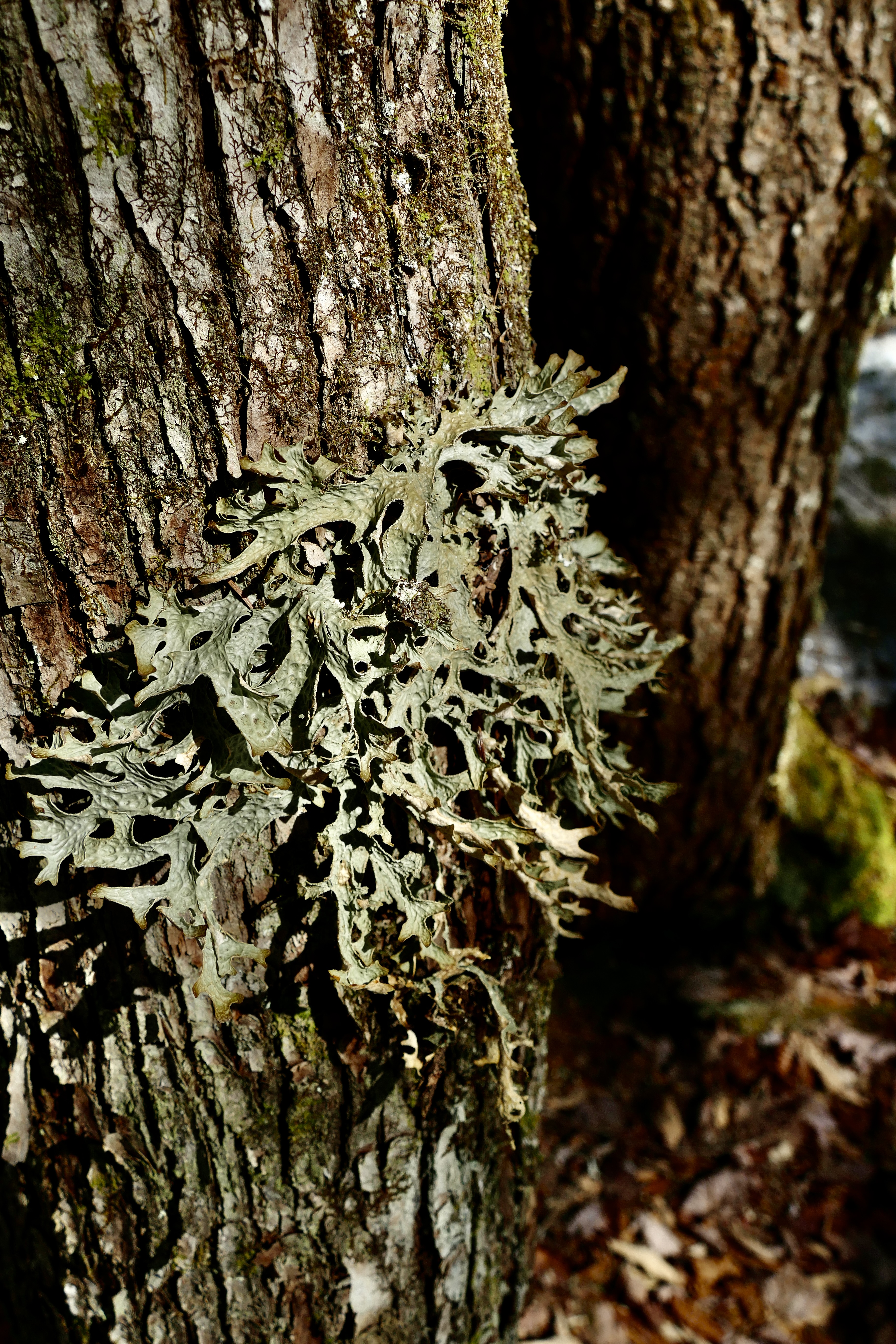
Now is the time for wild apples. I pluck them as a wild fruit native to this quarter of the earth, fruit of old trees that have been dying ever since I was a boy and are not yet dead. From the appearance of the tree you would expect nothing but lichens to drop from it, but underneath your faith is rewarded by finding the ground strewn with spirited fruit.

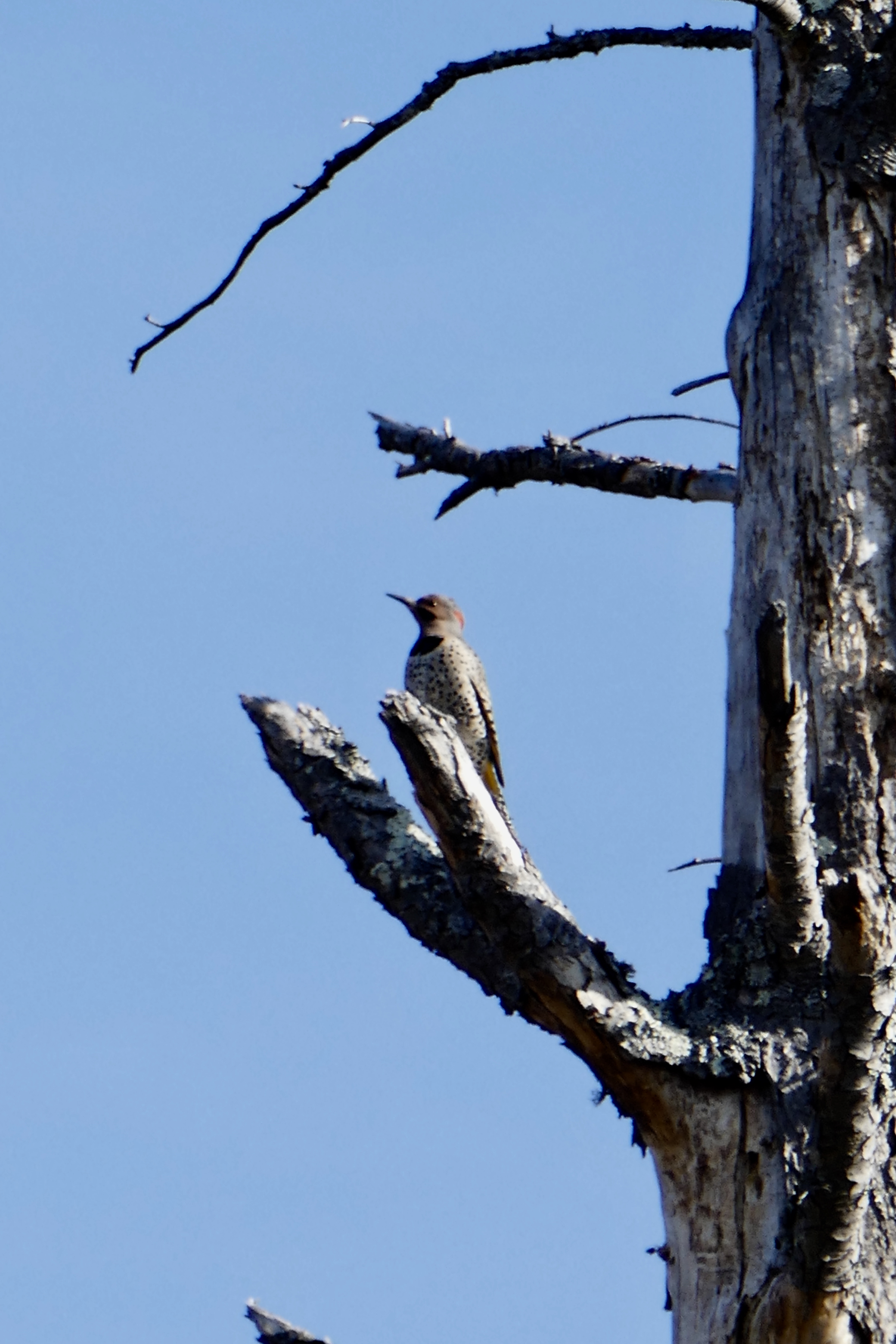
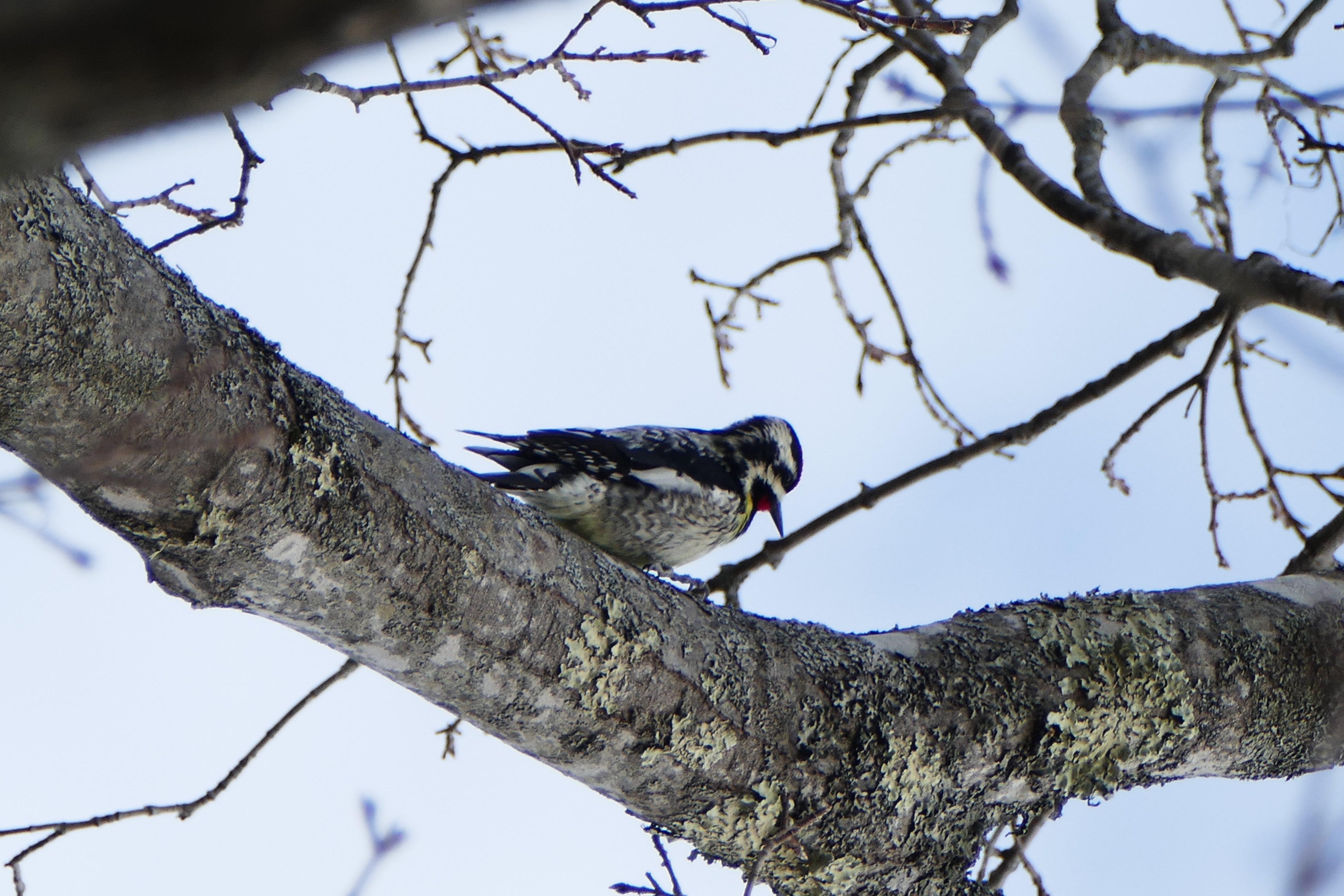
Frequented only by the woodpecker, deserted now by the farmer, who has not faith enough to look under the boughs. Food for walkers. Sometimes apples red inside, perfused with a beautiful blush, faery food, too beautiful to eat, — apple of the evening sky, of the Hesperides. 

November 10, 1858

in Thoreau’s Journal:

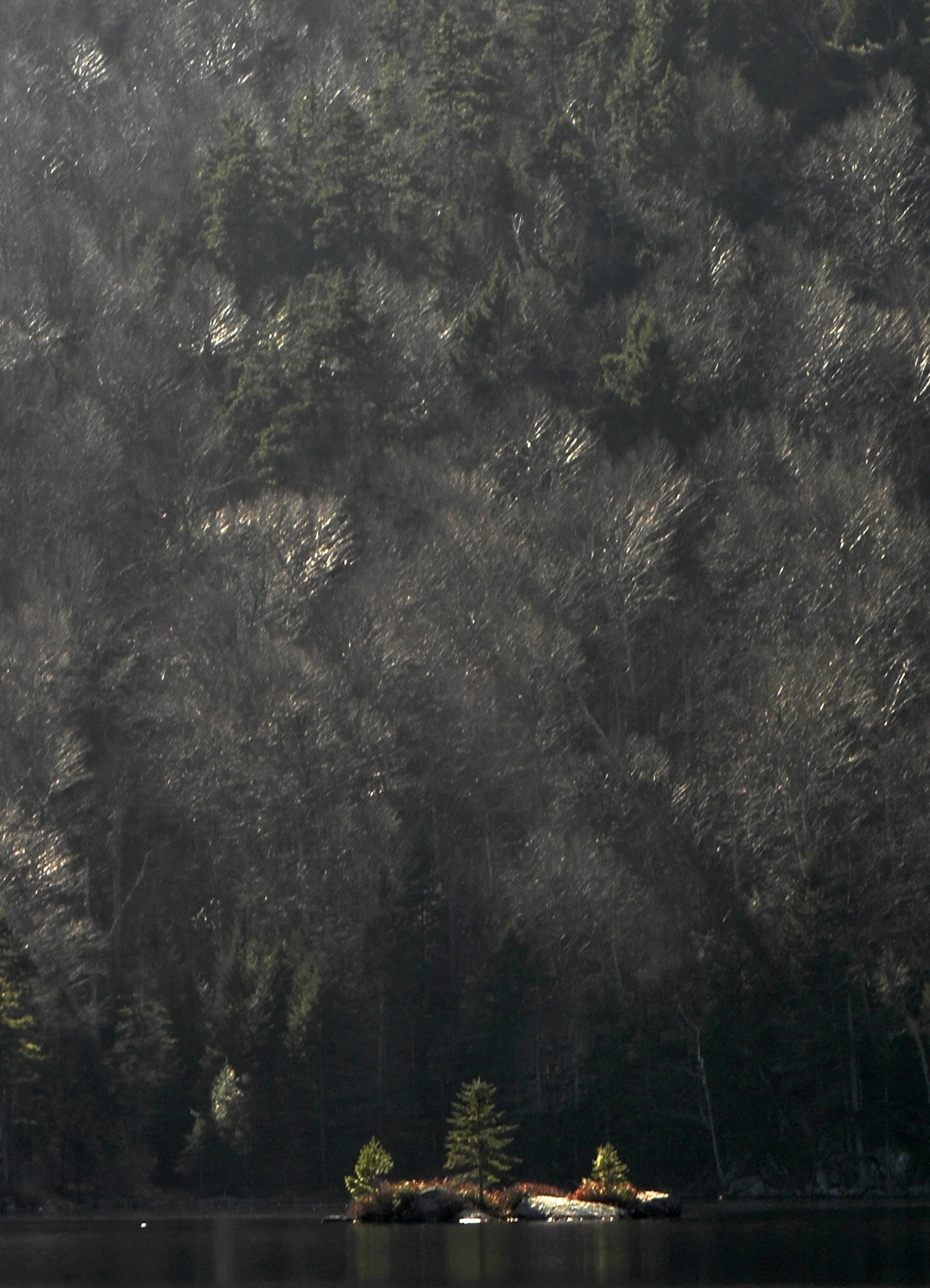
The brilliancy of the scarlet oak being generally dulled, the season of brilliant leaves may be considered over, ––say about the 10th; and now a new season begins, the pure November season of the russet earth and withered leaf and bare twigs and hoary withered goldenrods, etc.

November 9, 1851

in Thoreau’s Journal:

Pitch pine cones very beautiful—not only the fresh leather colored ones but especially the dead grey ones—covered with lichens— The scales so regular & close—like an impenetrable coat of mail. These are very handsome to my eye— Also those which have long since opened regularly & shed their seeds

An abundance of the rattlesnake Plantain in the woods by Brown’s Pond….

November 8, 1858

in Thoreau’s Journal:

Nature has many scenes to exhibit, and constantly draws a curtain over this part or that. She is constantly repainting the landscape and all surfaces, dressing up some scene for our entertainment. Lately we had a leafy wilderness, now bare twigs begin to prevail, and soon she will surprise us with a mantle of snow. Some green she thinks so good for our eyes, like blue, that she never banishes it entirely, but has created evergreens.

November 7, 1858

in Thoreau’s Journal:

It cleared up this forenoon. I leave my boat opposite the Hemlocks. I see the cold sunlight from some glade between the clouds falling on distant oak woods, now nearly bare, and as I glance up the hill between them seeing the bare but bright hillside beyond, I think, Now we are left to the hemlocks and pines with their silvery light, to the bare trees and withered grass.

The very rocks and stones in the rocky roads (that beyond Farmer’s) look white in the clear November light, especially after the rain. We are left to the chickadee’s familiar notes, and the jay for trumpeter. What struck me was a certain emptiness beyond, between the hemlocks and the hill, in the cool, washed air, as if I appreciated even here the absence of insects from it. It suggested agreeably to me a mere space in which to walk briskly. The fields are bleak, and they are, as it were, vacated. The very earth is like a house shut up for the winter, and I go knocking about it in vain. But just then I heard a chickadee on a hemlock, and was inexpressibly cheered to find that an old acquaintance was yet stirring about the premises, and was, I was assured, to be there all winter. All that is evergreen in me revived at once.

November 6, 1854

in Thoreau’s Journal:

Surveying on Colburn Place — It is suddenly cold. Pools frozen so as to bear–& ground frozen so that it is difficult if not impossible to force down a stake in plowed ground.

November 5, 1857

in Thoreau’s Journal:

I think that the man of science makes this mistake, and the mass of mankind along with him: that you should coolly give your chief attention to the phenomenon which excites you as something independent on you, and not as it is related to you. The important fact is its effect on me. He thinks that I have no business to see anything else but just what he defines the rainbow to be, but I care not whether my vision of truth is a waking thought or dream remembered, whether it is seen in the light or in the dark. It is the subject of the vision, the truth alone, that concerns me.

The philosopher for whom rainbows, etc., can be explained away never saw them. With regard to such objects, I find that it is not they themselves (with which the men of science deal) that concern me; the point of interest is somewhere between me and them (i. e. the objects). . . .

November 4, 1851

in Thoreau’s Journal:

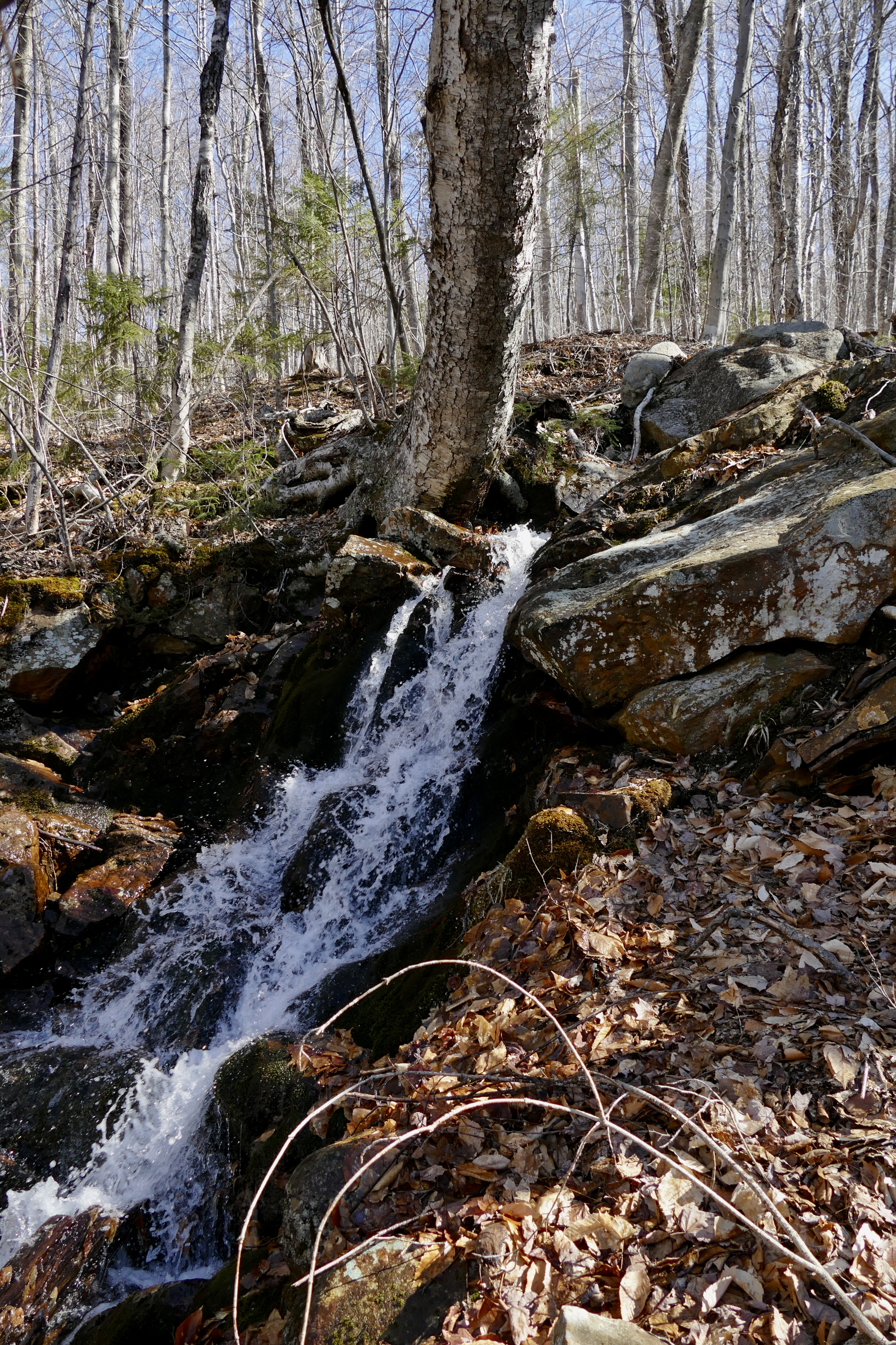
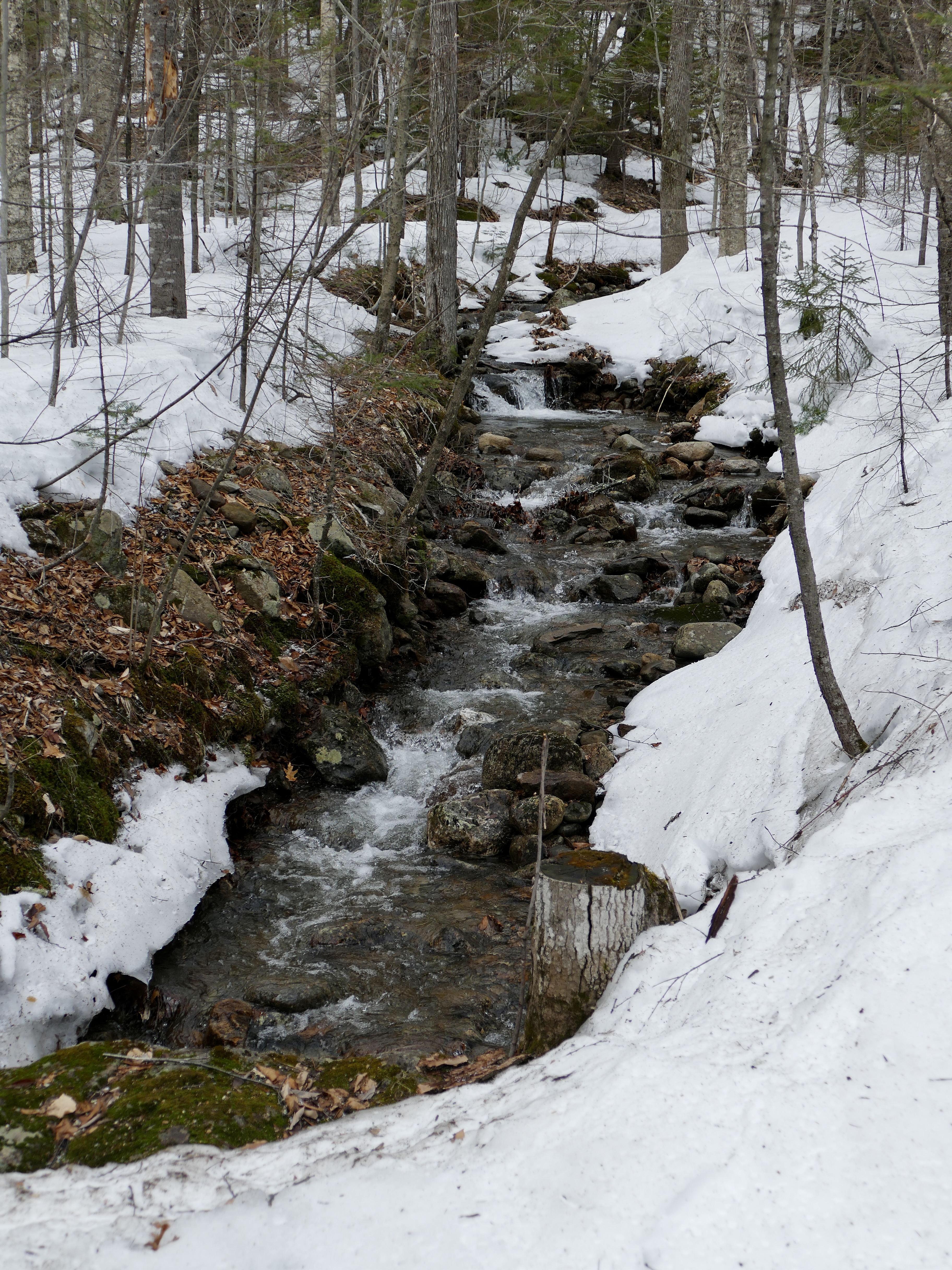
It was quite a discovery when I first came upon this brawling mountain stream in Concord woods. Rising out of an obscure meadow in the woods, for some fifty or sixty rods of its course it is a brawling mountain stream in our quiet Concord woods, as much obstructed by rocks – rocks out of all proportion to its tiny stream – as a brook can well be. And the rocks are bared throughout the wood on either side, as if a torrent had anciently swept through here; so unlike the after character of the stream. Who would have thought that, on tracing it up from where it empties into the larger Mill Brook in the open peat meadows, it would conduct him to such a headlong and impetuous youth. Perchance it should be called a “force”. It suggests what various moods may attach to the same character.

Ah, if I but knew that some minds which flow so muddily in the lowland portion of their course, when they cross the highways, tumbled thus impetuously and musically, mixed themselves with the air in foam, but a little way back in the woods! that these dark and muddy pools, where only the pout and the leech are to be found, issued from pure trout streams higher up! that the man’s thoughts ever flowed as sparkling mountain water, that trout there loved to glance through his dimples, where the witch-hazel hangs over his stream!