The snow is fine and drives low; is composed of granulated masses one sixteenth to one twentieth of an inch in diameter. Not in flakes at all. I think it is not those large-flaked snow-storms that are the worst for the traveller, or the deepest.
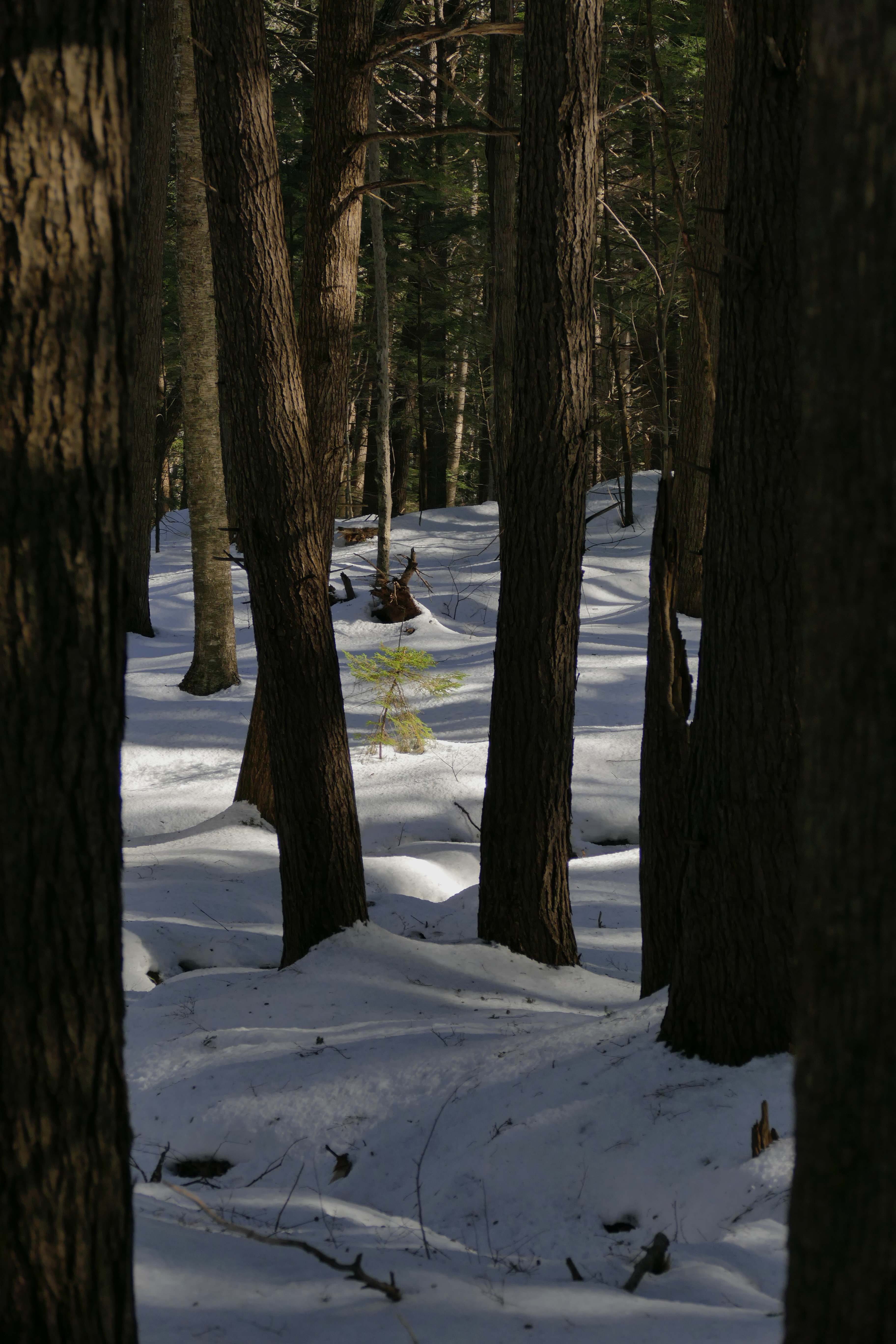
It is a moist & starry snow–lodging on trees–leaf bough & trunk. The pines are well laden with it. How handsome, though wintry the side of a high pine wood–well greyed with the snow that has lodged on it– & the smaller pitch pines converted into marble or alabaster–with their lowered plumes–like rams-heads’ drawings.
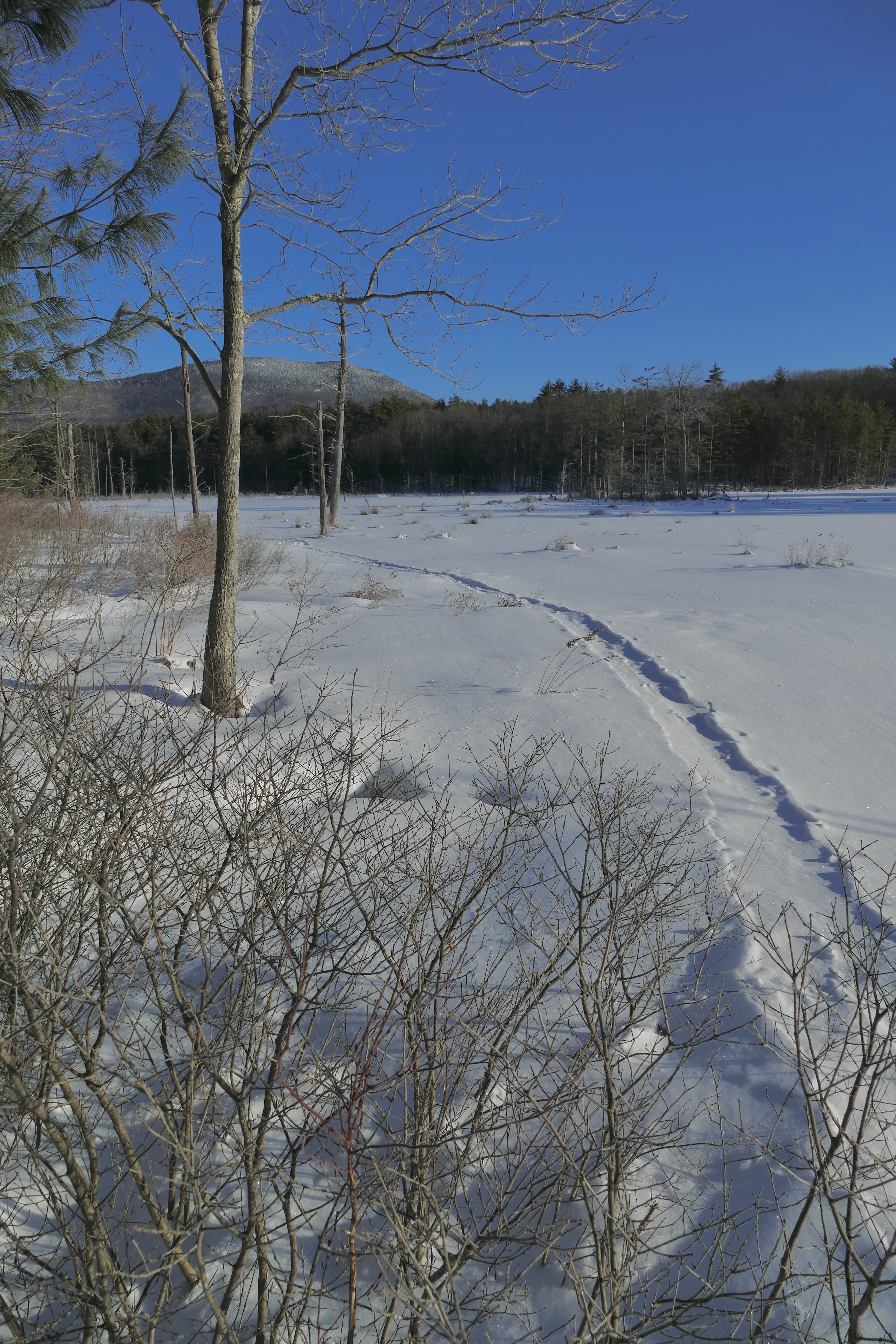
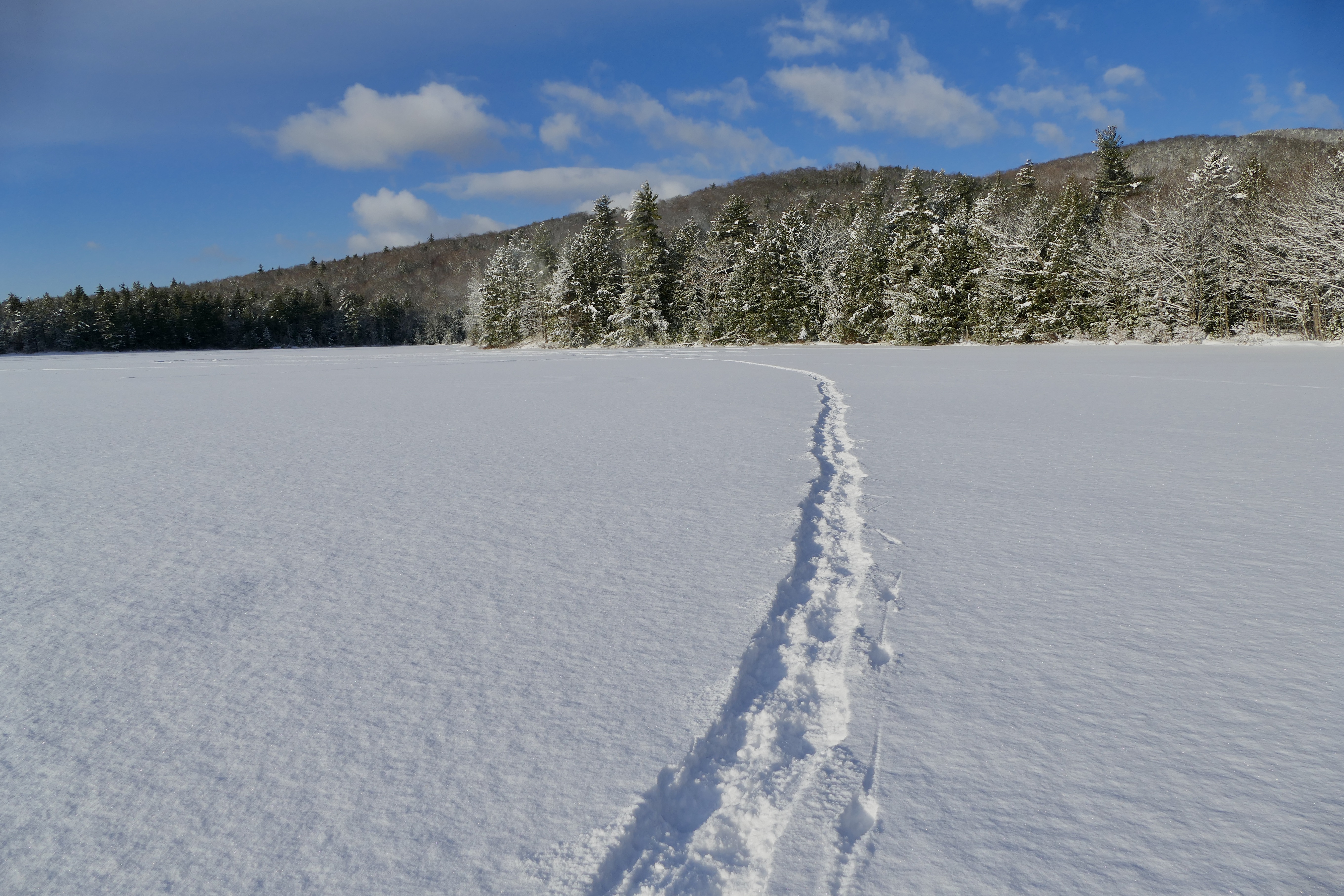
The character of the wood paths is wholly changed by the new fallen snow–- not only all tracks are concealed–but the pines drooping over it–& half concealing or filling it, it is merely a long chink or winding open space between the trees–
I have just been reading the account of Dr. Ball’s sufferings on the White Mountains. Of course, I do not wonder that he was lost. I should say: Never undertake to ascend a mountain or thread a wilderness where there is any danger of being lost, without taking thick clothing, partly india-rubber, if not a tent or material for one; the best map to be had and a compass; salt pork and hard-bread and salt; fish-hooks and lines; a good jack-knife, at least, if not a hatchet, and perhaps a gun; matches in a vial stopped water-tight; some strings and paper. Do not take a dozen steps which you could not with tolerable accuracy protract on a chart. I never do otherwise. Indeed, youmust have been living all your life in some such methodical and assured fashion, though in the midst of cities, else you will be lost in spite of all this preparation.
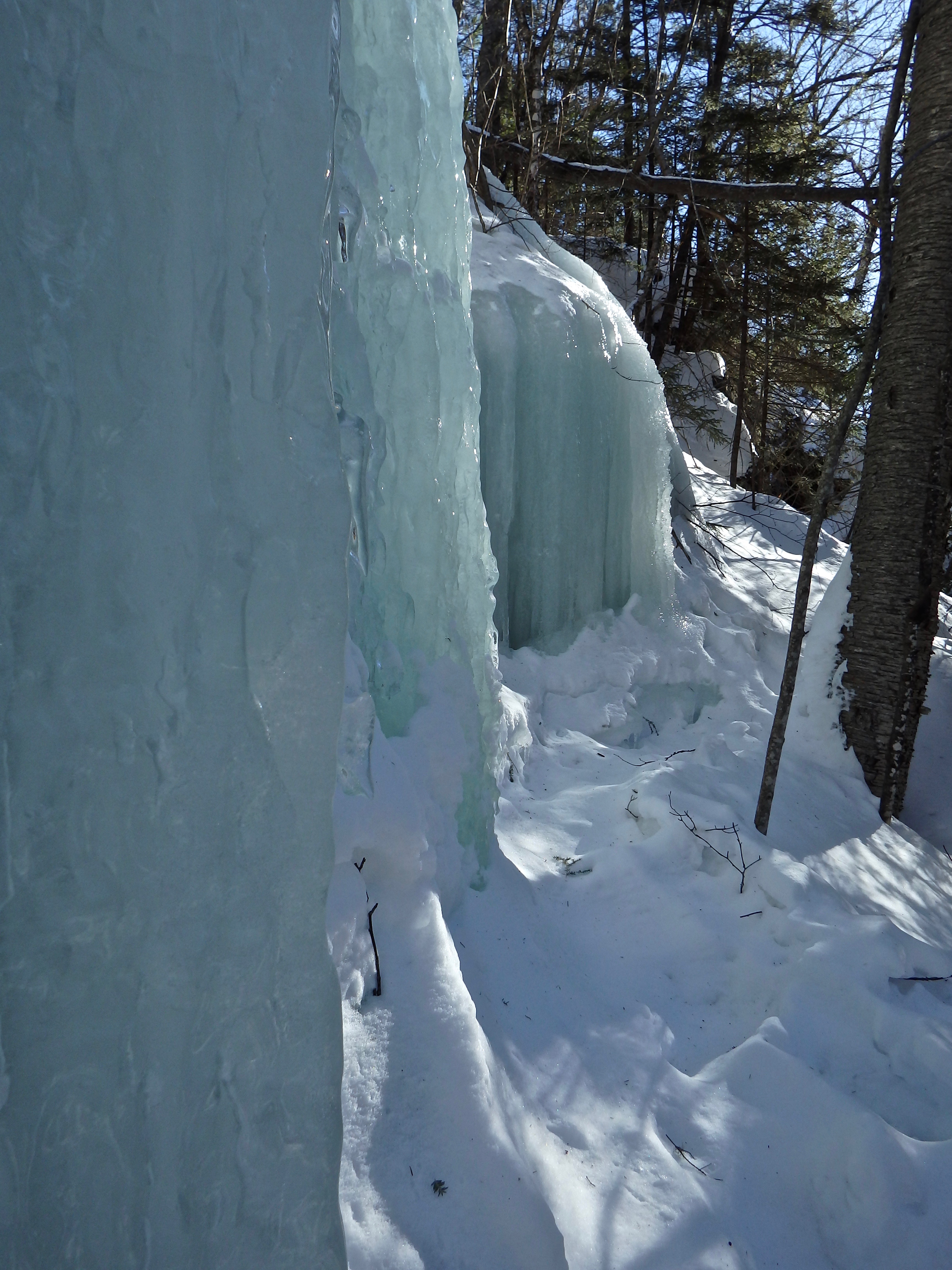
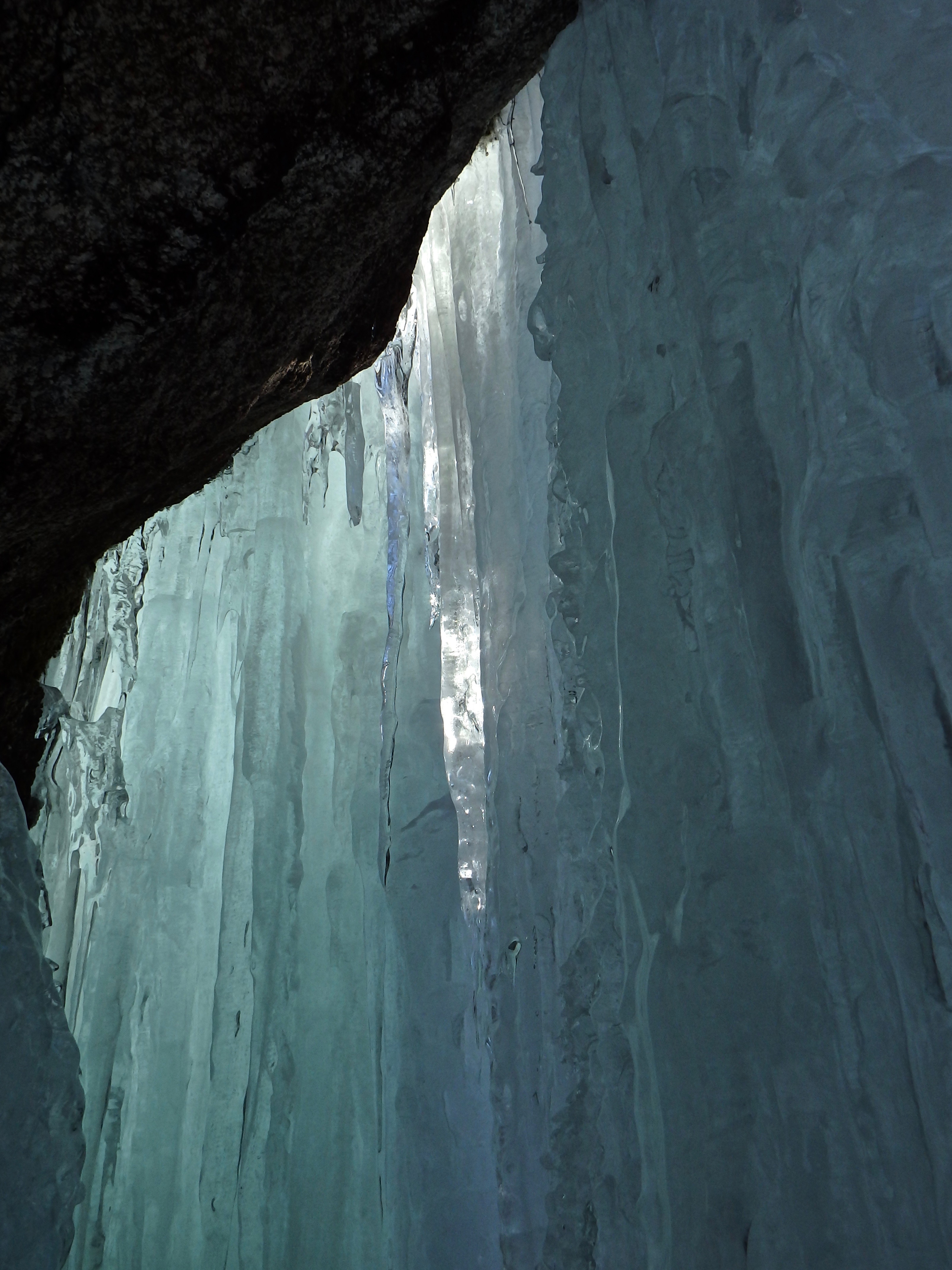
At the Cliffs the rocks are in some places covered with ice. And the least inclination beyond a perpendicular in their faces is betrayed by the formation of icicles at once which hang perpendicularly—like organ pipes—in front of the rock—They are now conducting downward the melting ice and snow which drips from their points with a slight clinking & lapsing sound—but when the sun has set will freeze there and add to the icicles’ length. Where the icicles have reached the ground & are like thick pillars they have a sort of annular appearance somewhat like the successive swells on the legs of tables and bed-posts— There is perhaps a harmony between the turner’s taste & the law of nature in this instance. The shadow of the water flowing or pulsating behind the transparent icy crust or these stalactites—in the sun imparts a semblance of life to the whole.
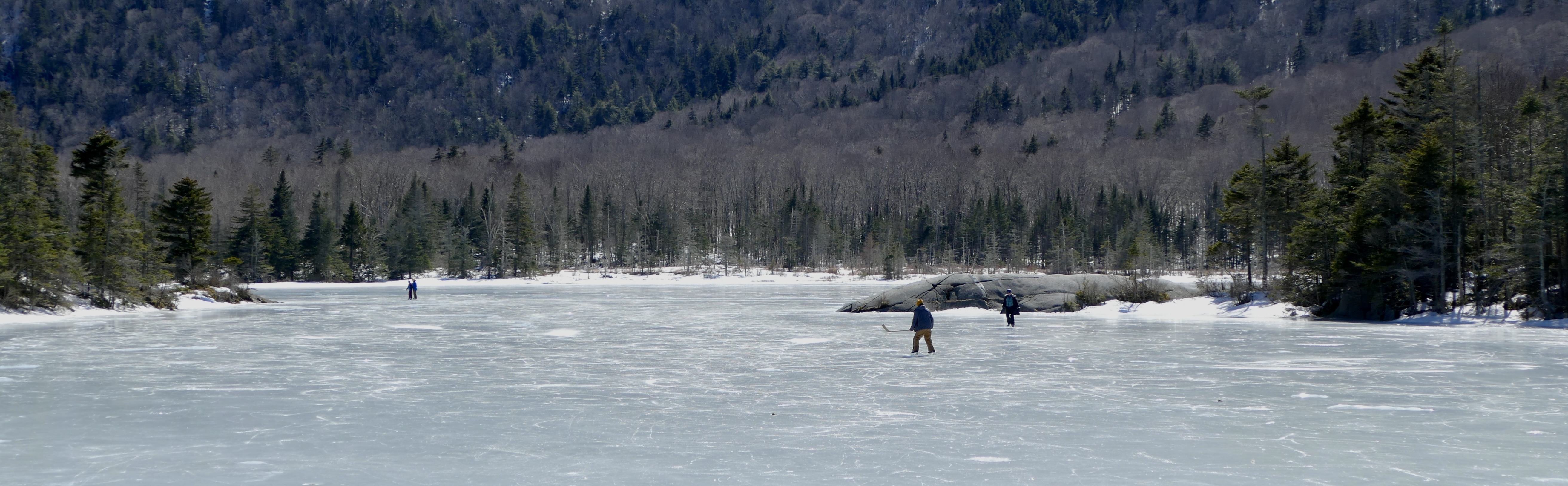
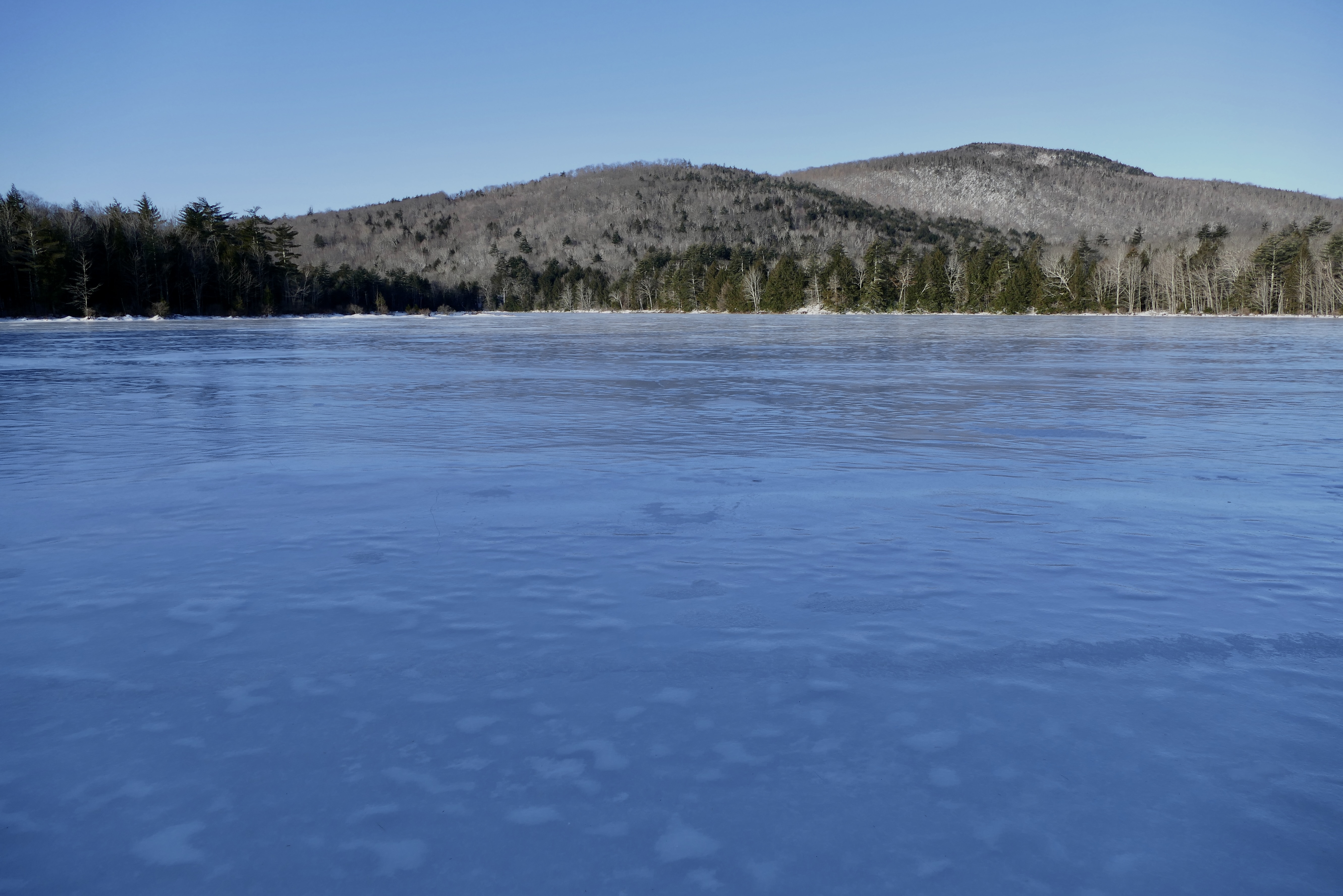
Yesterday there was no skating, unless you swept the snow from the ice; but to-day, though there has been no rain nor thaw, there is pretty good skating. Yesterday the water which had flowed, and was flowing, back over the ice on each side of the river and the meadows, a rod or two in width, was merely skimmed over, but last night it froze so that there is good skating there. Also the wind will generally lay bare some portion of the ice, unless the snow is very deep.
This yellowish ice which froze yesterday and last night is thickly and evenly strewn with fibrous frost- crystals very much like bits of asbestos, an inch or more long, sometimes arranged like a star or rosette, one for every inch or two; but where I broke in yesterday, and apparently wherever the water overflowed the thin ice late in the day, there are none. I think that this is the vapor from the water which found its way up through the ice and froze in the night. It is sprinkled like some kind of grain, and is in certain places much more thickly strewn, as where a little snow shows itself above the ice.
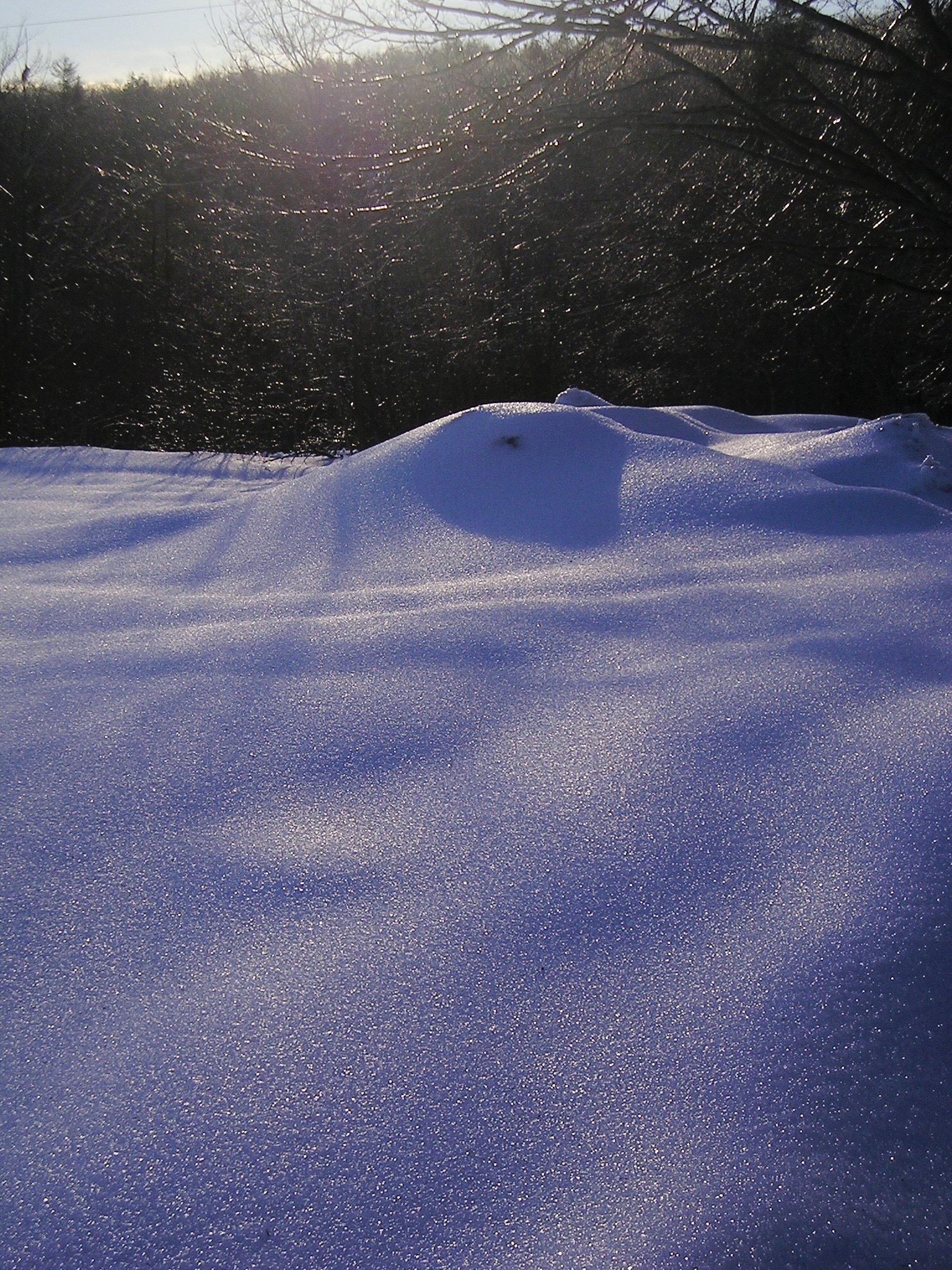
The old ice is covered with a dry, powdery snow about one inch deep, from which, as I walk toward the sun, this perfectly clear, bright afternoon, at 3.30 o’clock, the colors of the rainbow are reflected from a myriad fine facets. It is as if the dust of diamonds and other precious stones were spread all around. The blue and red predominate. Though I distinguish these colors everywhere toward the sun, they are so much more abundantly reflected to me from two particular directions that I see two distant rays, or arms, so to call them, of this rainbow-like dust, one on each side of the sun, stretching away from me and about half a dozen feet wide, the two arms including an angle of about sixty degrees. When I look from the sun, I see merely dazzling white points. I can easily see some of these dazzling grains fifteen or twenty rods distant on any side, though the facet which reflects this light cannot be more than a tenth or twelfth of an inch at most. Yet I might easily, and commonly do, overlook all this.
Winter comes to make walking possible where there was no walking in summer. Not till winter do we take possession of the whole of our territory. I have three great highways raying out from one centre, which is near my door. I may walk down the main river or up either of its two branches. Could any avenues be contrived more convenient ? With this river I am not compelled to walk in the tracks of horses.
To make a perfect winter day like this, you must have a clear, sparkling air, with a sheen from the snow, sufficient cold, little or no wind; and the warmth must come directly from the sun. It must not be a thawing warmth. The tension of nature must not be relaxed.
The earth must be resonant if bare, and you hear the lisping tinkle of chickadees from time to time and the unrelenting steel-cold scream of a jay, unmelted, that never flows into a song, a sort of wintry trumpet, screaming cold; hard, tense, frozen music, like the winter sky itself in the blue livery of winter’s band. It is like a flourish of trumpets to the winter sky. There is no hint of incubation in the jay’s scream. Like the creak of a cart-wheel. There is no cushion for sounds now. They tear our ears.
Perhaps the best evidence of an amelioration of the climate – at least that the snows are less deep than formerly – is the snow-shoes which still lie about in so many garrets, now useless, though the population of this town has not essentially increased for seventy-five years past, and the travelling within the limits of the town accordingly not much facilitated. No man ever uses them now, yet the old men used them in their youth.
In the cold, clear, rough air from the northwest we walk amid what simple surroundings! Surrounded by our thoughts or imaginary objects, living in our ideas, not one in a million even sees the objects which are actually around him.
It is easier to get about the country than at any other season— Easier than in summer because the rivers & meadows are frozen—& there is no high grass or other crops to be avoided—easier than in Dec. before the crust was frozen.
A clear and a pleasanter and warmer day than we have had for a long time. The snow begins (at noon) to soften somewhat in the road.
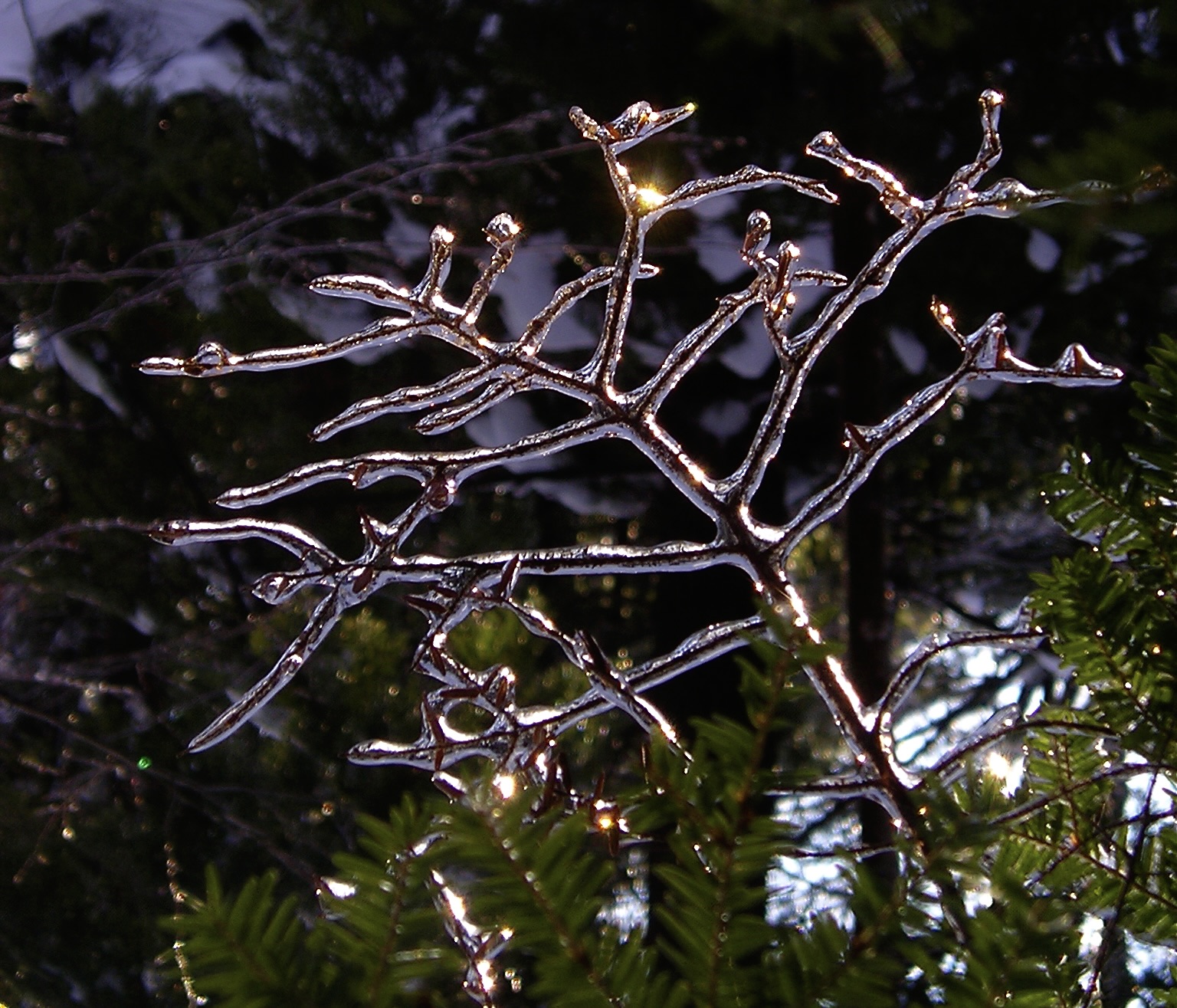
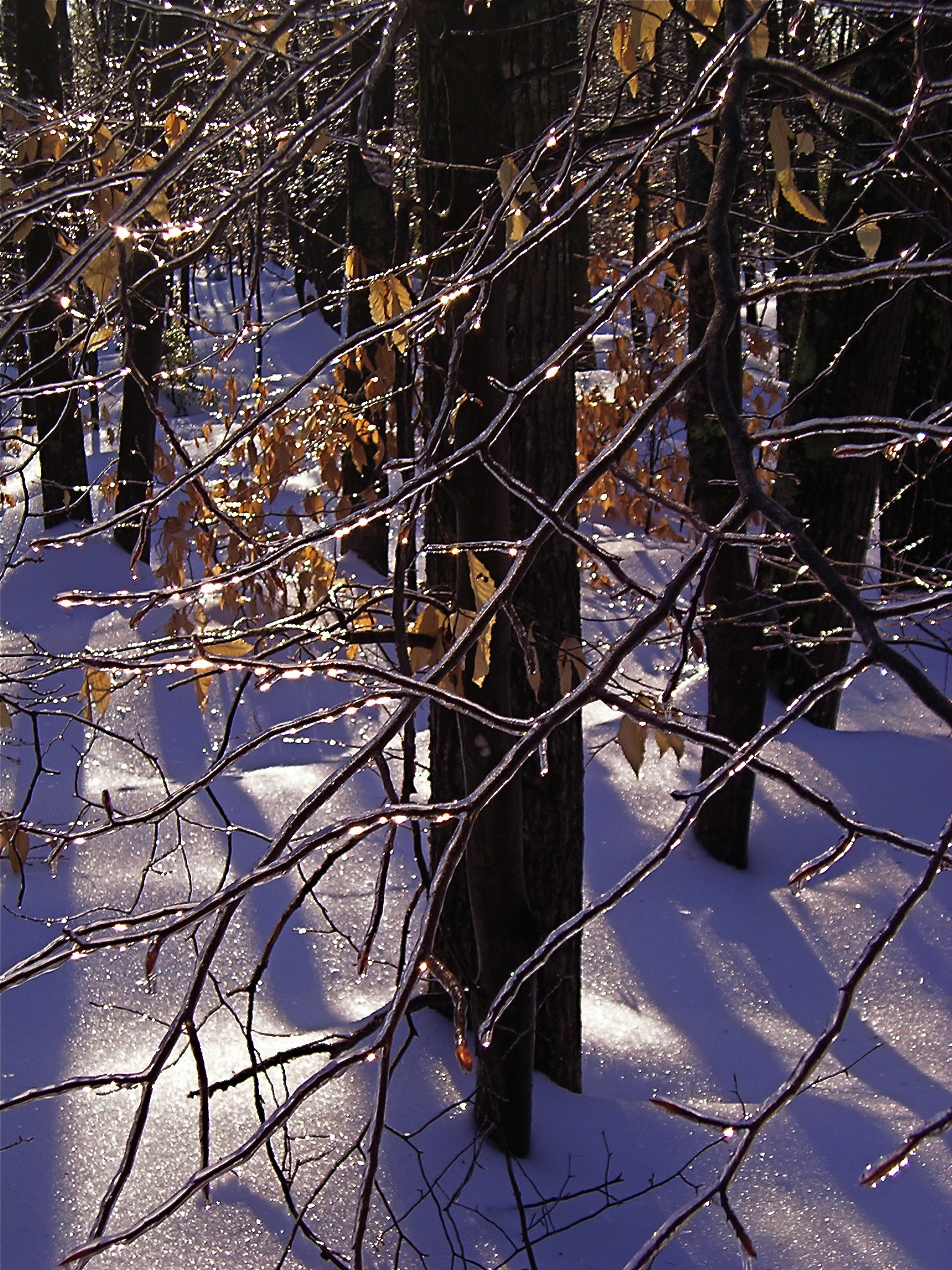
For two or three weeks, successive light and dry snows have fallen on the old crust and been drifting about on it, leaving it at last three quarters bare and forming drifts against the fences, etc., or here and there low, slaty, fractured ones in mid-field, or pure white hard-packed ones. These drifts on the crust are commonly quite low and flat. But yesterday’s snow turning to rain, which froze as it fell, there is now a glaze on the trees, giving them a hoary look, icicles like rakes’ teeth on the rails, and a thin crust over all the snow.
At this hour the crust sparkles with a myriad brilliant points or mirrors, one to every six inches, at least. This crust is cracked like ice into irregular figures a foot or two square. Perhaps the snow has settled considerably, for the track in the roads is the highest part. Some heard a loud cracking in the ground or ice last night.
Under the waves of the snowy ocean yesterday, roads and rivers, pastures and cultivated fields, all traces of man’s occupancy of the globe were for the most part concealed. Water and sand also assume this same form under the influence of wind. And I have seen, on the surface of the Walden ice, great sweeping, waving lines, somewhat like these. It is the track of the wind, the impress which it makes on flowing materials.
9 a. m. —Down railroad to see the glaze, the first we have had this year, but not a very good one.
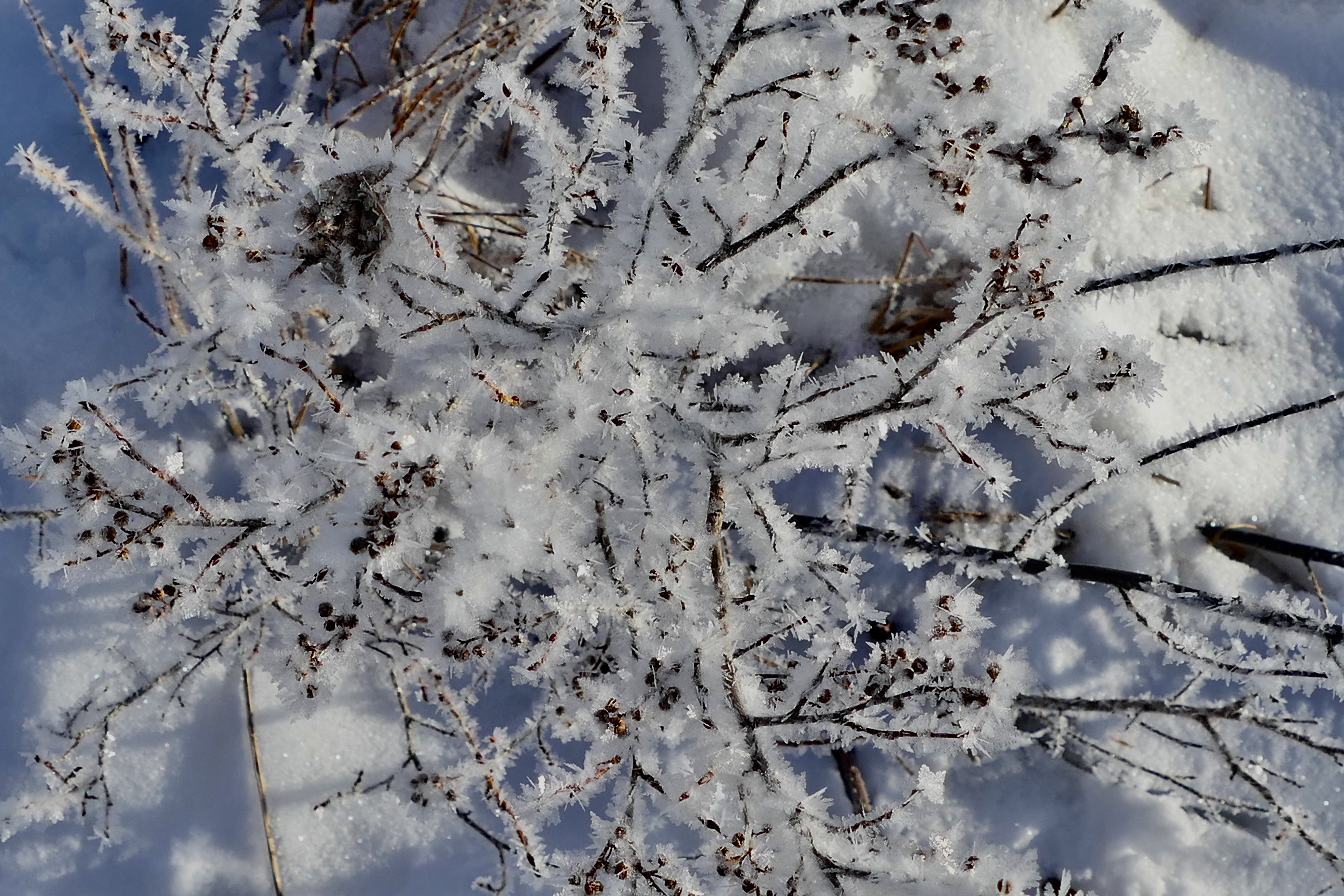
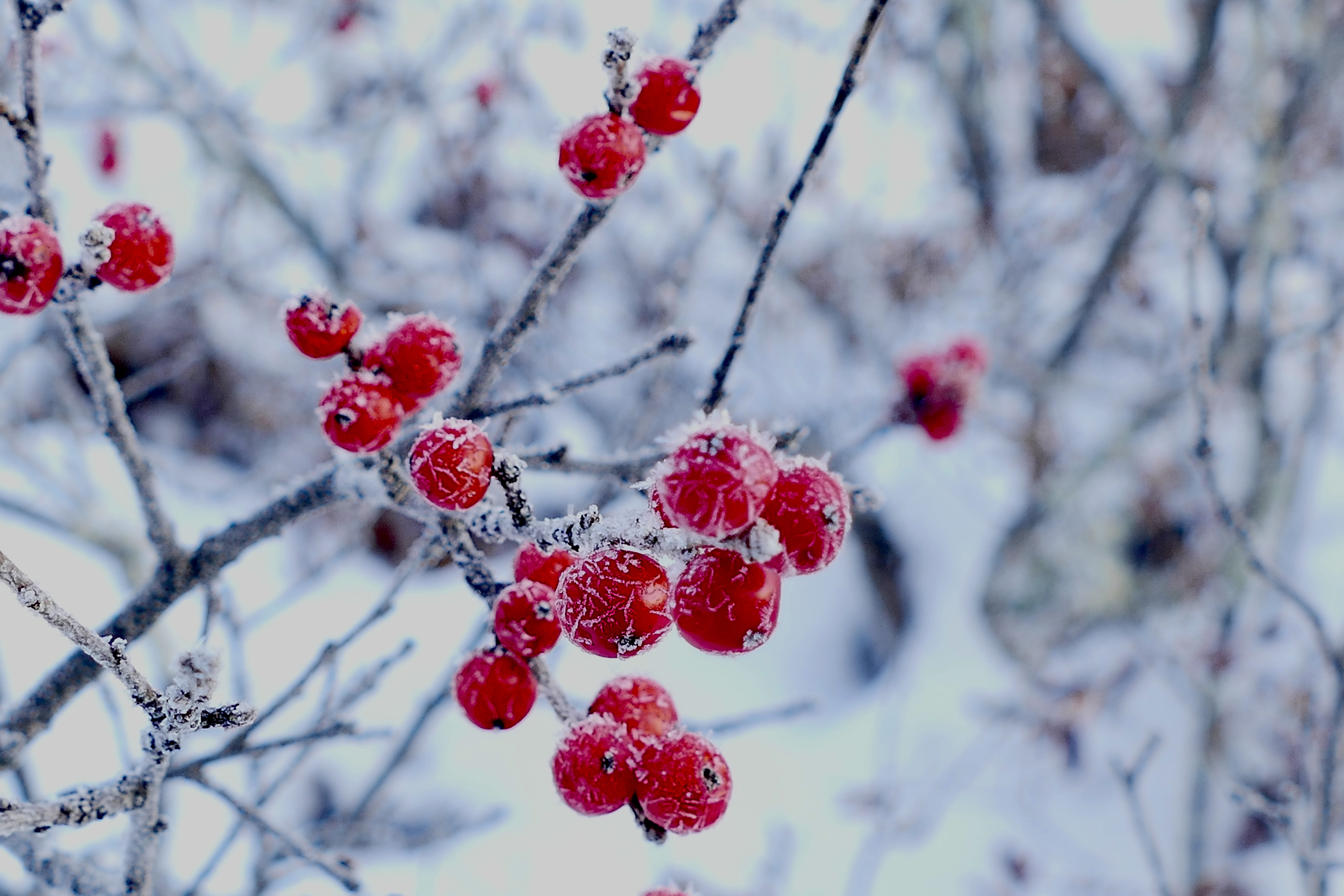
It is about a fifth or a sixth of an inch thick on the northeast sides of twigs, etc., not transparent, but of an opaque white, granular character. The woods, especially wooded hillsides half a mile or more distant, have a rich, hoary, frosted look, still and stiff, yet it is not so thick but that the green of the pines and the yellow of the willow bark and the leather color of oak leaves show through it. These colors are pleasantly toned down. The pines transmit a subdued green, —some pitch pines a livelier grass green, —deepest in the recesses, and a delicate buff (?) tinge is seen through the frosty veil of the willow. The birches, owing to the color of their trunks, are the most completely hoary. The elms, perhaps, are the most distinctly frosted, revealing their whole outlines like ghosts of trees, even a mile off, when seen against a dark hillside. The ground is encased in a thin black glaze (where it chances to be bare) and the iron rails and the telegraph wire. Insignificant weeds and stubble along the railroad causeway and elsewhere are now made very conspicuous, both by their increased size and bristling stiffness and their whiteness. Each wiry grass stem is become a stiff wand. The wind that begins to rise does not stir them; you only hear a fine crackling sound when it blows hardest. Behind each withered vegetable plant stands a stout ice plant, overlapping and concealing it. Stem answers to stem, and fruit to fruit. The heads of tansy are converted into confectionery somewhat like sugared almonds and regularly roughened (like orange-peel), and those of evening-primrose, and mullein, and hardhack, and lespedeza bear a still coarser kind. The wild carrot’s bird’s-nest umbel, now contracted above, is converted into almost a perfect hollow sphere, composed of contiguous thickened meridional ribs, which remind me of the fingers of a starfish (or five-finger). Each plant preserves its character, though exaggerated. Pigweed and Roman wormwood are ragged as ever on a larger scale, and the butterweed as stiffly upright. Tall goldenrod still more recurved. You naturally avoid running against the plant which you did not notice before. Standing on the southeast side, I see the fine dark cores which the stems make. On the opposite side, only the pure white ice plant is seen.
When I reach the woods I am surprised to find that the twigs, etc., are bristling with fine spiculse, which stand on a thin glaze. I do not remember to have seen them previous winters. They are from one quarter to five eighths of an inch long by one twenty-fifth to one fiftieth of an inch wide at base and quite sharp, commonly on the storm side of the twig only and pointing in all directions horizontally and even vertically within an arc of 90°, but sometimes on opposite sides of the twig. They answer exactly to prickles or spines, especially to those of the locust. I observe them on the locust itself by chance, an icy spine at right angles on a vegetable one, making such a branch as is seen on some speci and weeds and leaves, even the pine-needles, are armed with them. The pine-needles especially, beside their hoary glaze, are bristling with countless fine spiculse, which appear to point in almost all directions. It is also interesting to meet with them by accident on the edges of oak leaves, answering exactly to the vegetable spines there (though they are commonly at right angles with the plane of the leaf and often almost as thick as a comb), and on pine cones, suggesting that there should be something in that soil especially favorable to promote the growth of spines. As far as I observed, theses pines were chiefly confined to the woods, —at least I had not noticed them on the causeway, —as if a fog might have collected in the former place but not in the last. They were, then, built in the mist, by a more delicate accretion. Thus it seems that not leaves only but other forms of vegetation are imitated by frost.
Already the white pine plumes were drooping, but the pitch pines stood stiffly erect. I was again struck by the deep open cup at the extremity of the latter, formed by the needles standing out very regularly around the red-brown buds at the bottom. It is very warm, and by ten o’clock this ice is rapidly falling from the trees and covering the ground like hail; and before noon all that jewelry was dissolved.
In a journal it is important in a few words to describe the weather, or character of the day, as it affects our feelings. That which was so important at the time cannot be unimportant to remember.
I go to walk at 3 p.m., thermometer 18°. It has been about this (and 22°) at this hour for a week or two. All the light snow, some five inches above the crust, is adrift these days and driving over the fields like steam, or like the foam-streaks on a flooded meadow, from northwest to southeast. The surface of the fields is rough, like a lake agitated by the wind.
Already we begin to anticipate spring, to say that the day is spring-like. This is an important difference between this time and a month ago. Is not January the hardest month to get through?
When you have weathered that, you get into the gulf stream of winter, nearer the shores of spring.
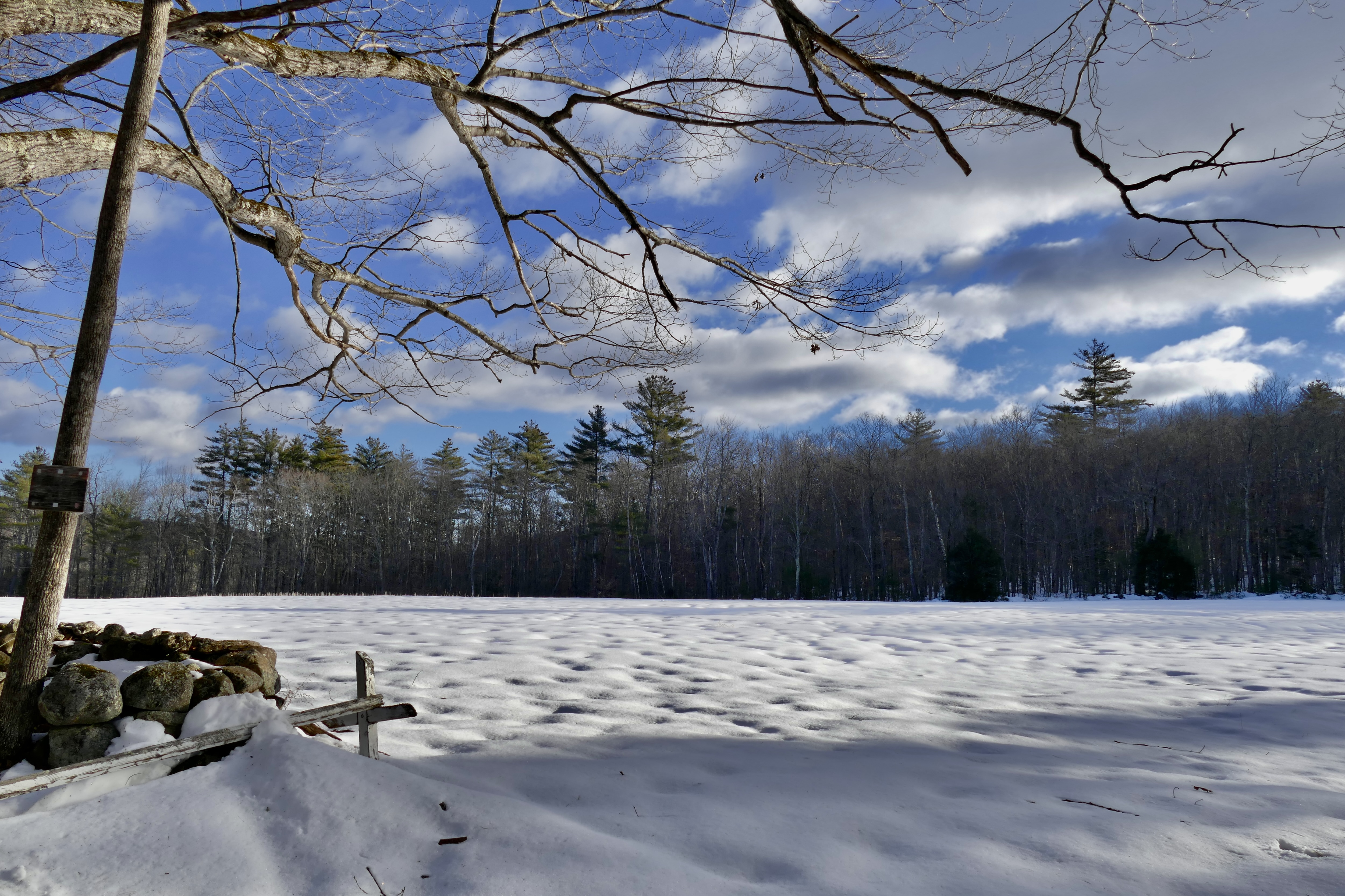
What a difference between life in the city and in the country at present, between walking in Washington St., threading your way between countless sledges and travellers, over the discolored snow, and crossing Walden Pond, a spotless field of snow surrounded by woods, whose intensely blue shadows, and your own, are the only objects.














You must be logged in to post a comment.