in Thoreau’s Journal:
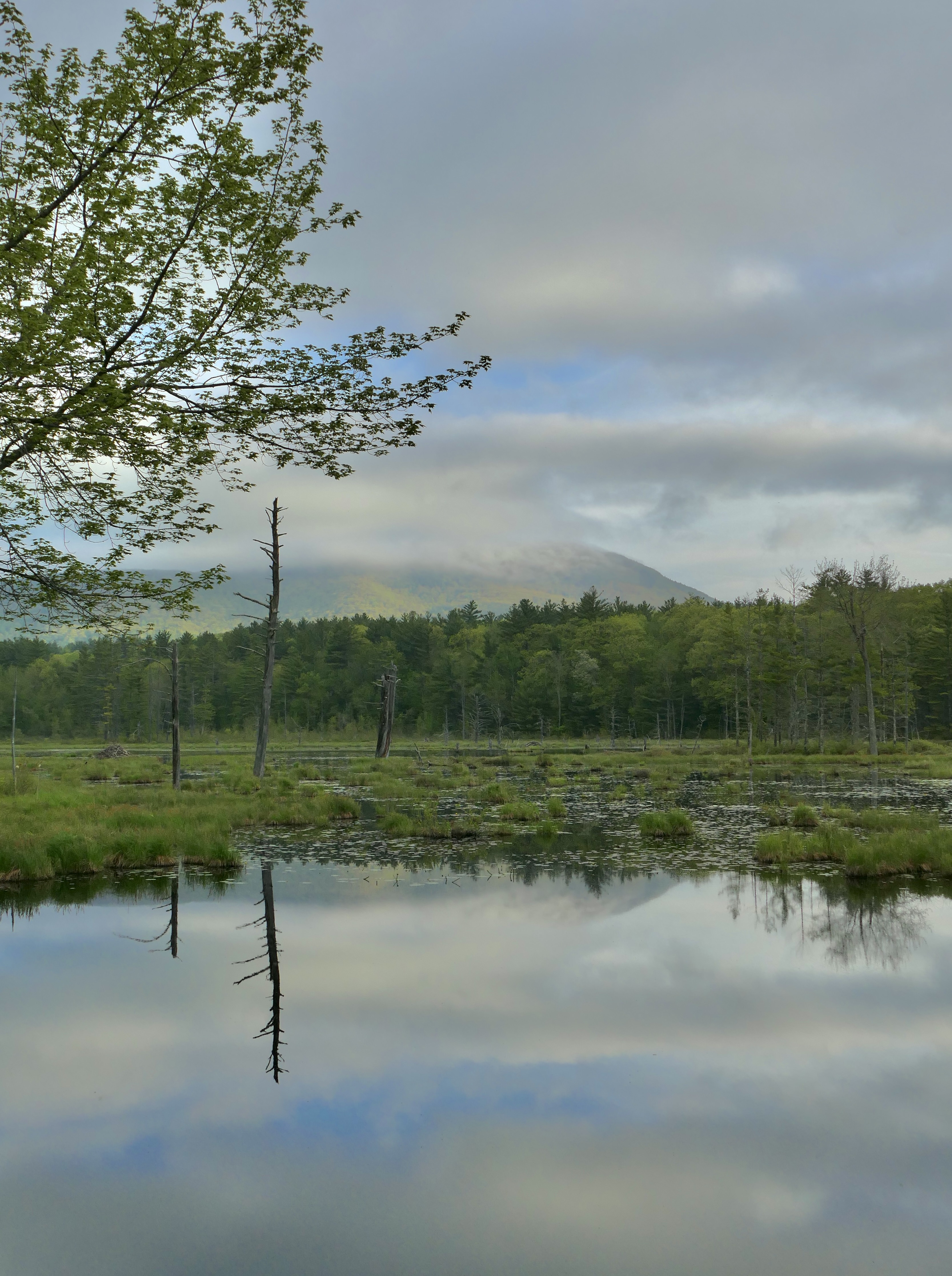
To-day for the first time, it appears to me summer-like and a new season.
in Thoreau’s Journal:
To-day for the first time, it appears to me summer-like and a new season.
in Thoreau’s Journal:
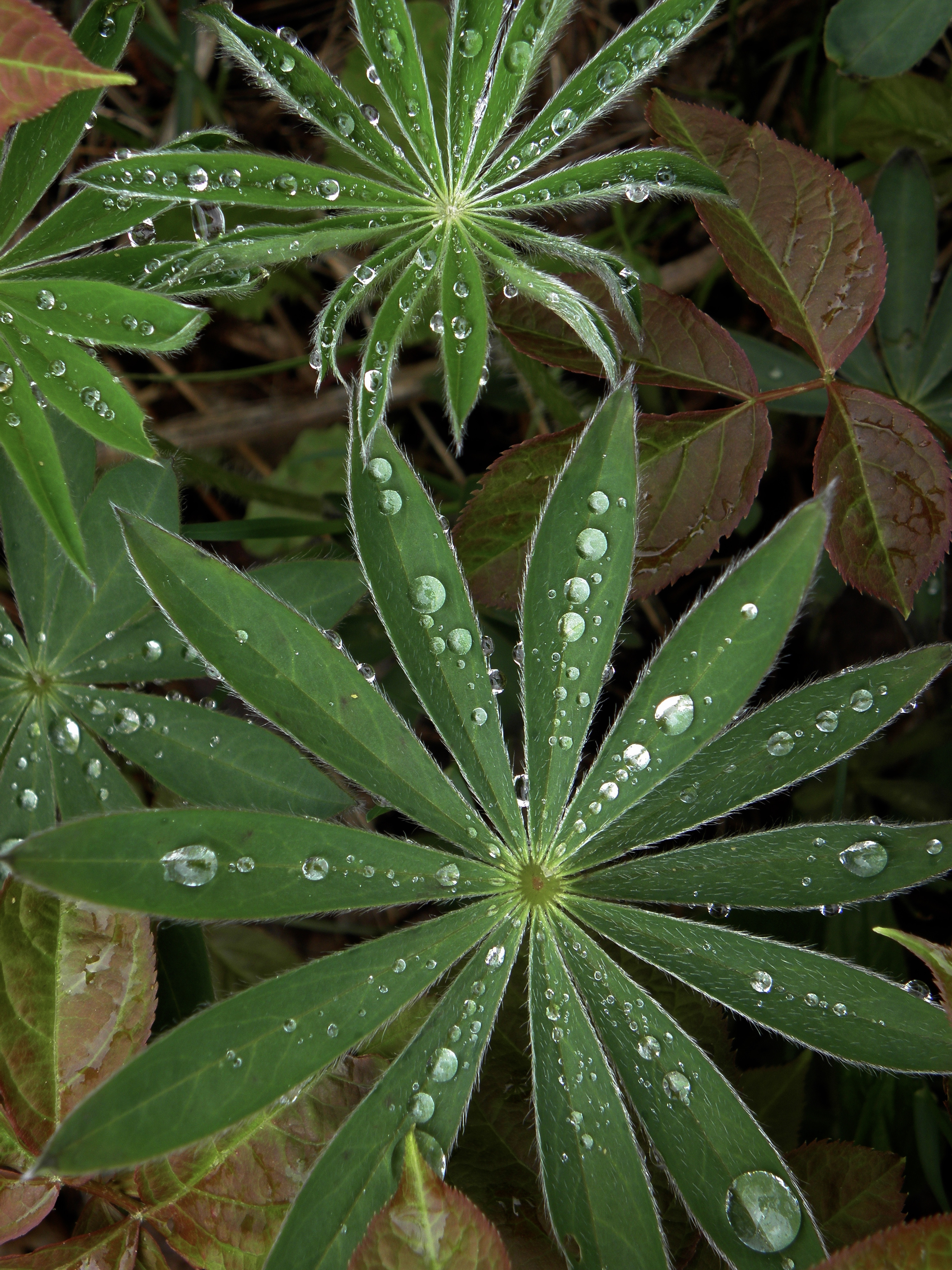
The leaves of the lupine, six inches high, are handsome, covered with rain-drops.
in Thoreau’s Journal:
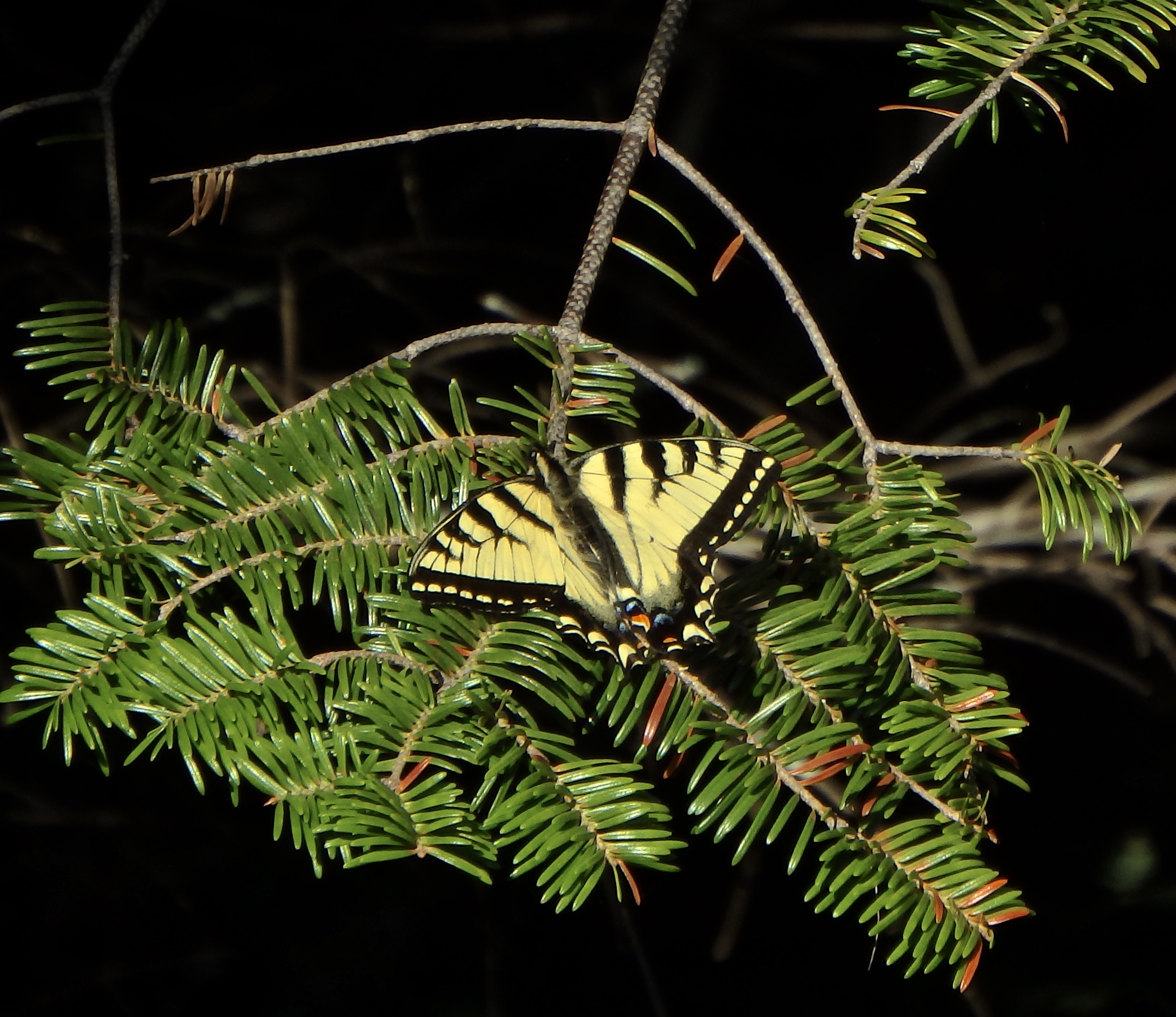
Some grass is seen to wave in the distance on the side of N. Barrett’s warm hill, showing the lighter under sides. That is a soft, soothing, June-like impression when the most forward grass is seen to wave and the sorrel looks reddish. The year has the down of youth on its cheek. This, too, is the era of the bobolink, now, when apple trees are ready to burst into bloom. Now it is too late to retreat from the summer adventure. You have passed the Rubicon, and will spend your summer here. Lately, for a few days, the note of the pine warbler rang through the woods, but now it is lost in the notes of other birds. Then each song was solo. Its vetter vetter vetter vetter rang through silent woods. Now I rarely hear it. A yellow butterfly.
in Thoreau’s Journal:

White birches are suddenly leafing in some places, so as to make an open veil or gauze of green against the other trees
in Thoreau’s Journal:
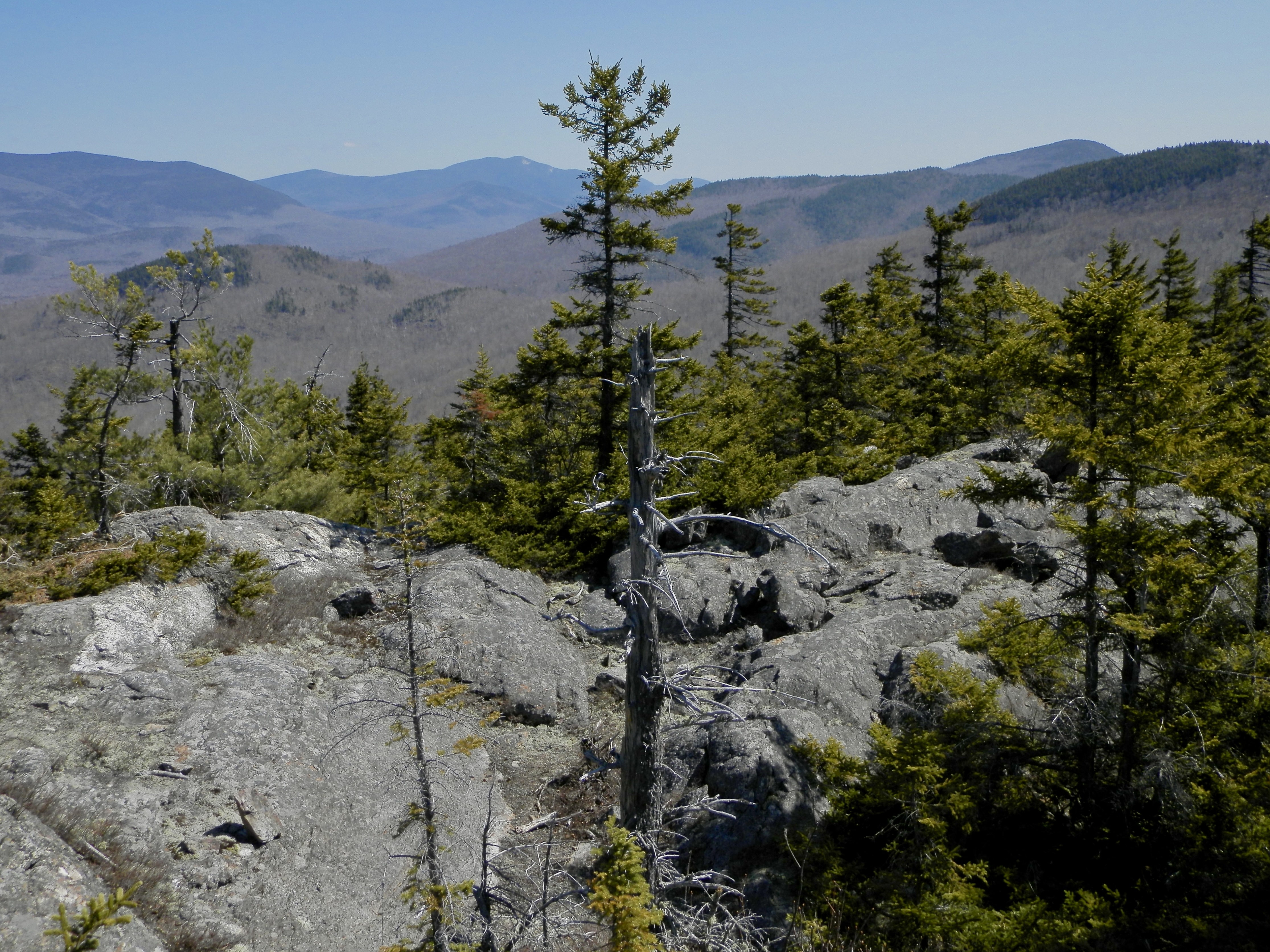
From the hill, I look westward over the landscape. The deciduous woods are in their hoary youth, every expanding bud swaddled with downy webs. From this more eastern hill, with the whole breadth of the river valley on the west, the mountains appear higher still, the width of the blue border is greater, —not mere peaks, or a short and shallow sierra, but a high blue table-land with broad foundations, a deep and solid base or tablet, in proportion to the peaks that rest on it. As you ascend, the near and low hills sink and flatten into the earth; no sky is seen behind them; the distant mountains rise. The truly great are distinguished. Vergers, crests of the waves of earth, which in the highest break at the summit into granitic rocks over which the air beats. A part of their hitherto concealed base is seen blue. You see, not the domes only, but the body, the facade, of these terrene temples. You see that the foundation answers to the superstructure. Moral structures. (The sweet-fern leaves among odors now.) The successive lines of haze which divide the western landscape, deeper and more misty over each intervening valley, are not yet very dense; yet there is a light atmospheric line along the base of the mountains for their whole length, formed by this denser and grosser atmosphere through which we look next the earth, which almost melts them into the atmosphere, like the contact of molten metal with that which is unfused; but their pure, sublimed tops and main body rise, palpable skyland above it, like the waving signal of the departing who have already left these shores. It will be worth the while to observe carefully the direction and altitude of the mountains from the Cliffs. The value of the mountains in the horizon, —would not that be a good theme for a lecture? The text for a discourse on real values, and permanent; a sermon on the mount. They are stepping-stones to heaven, —as the rider has a horse-block at his gate, by which to mount when we would commence our pilgrimage to heaven; by which we gradually take our departure from earth, from the time when our youthful eyes first rested on them, —from this bare actual earth, which has so little of the hue of heaven. They make it easier to die and easier to live. They let us off.
in Thoreau’s Journal:
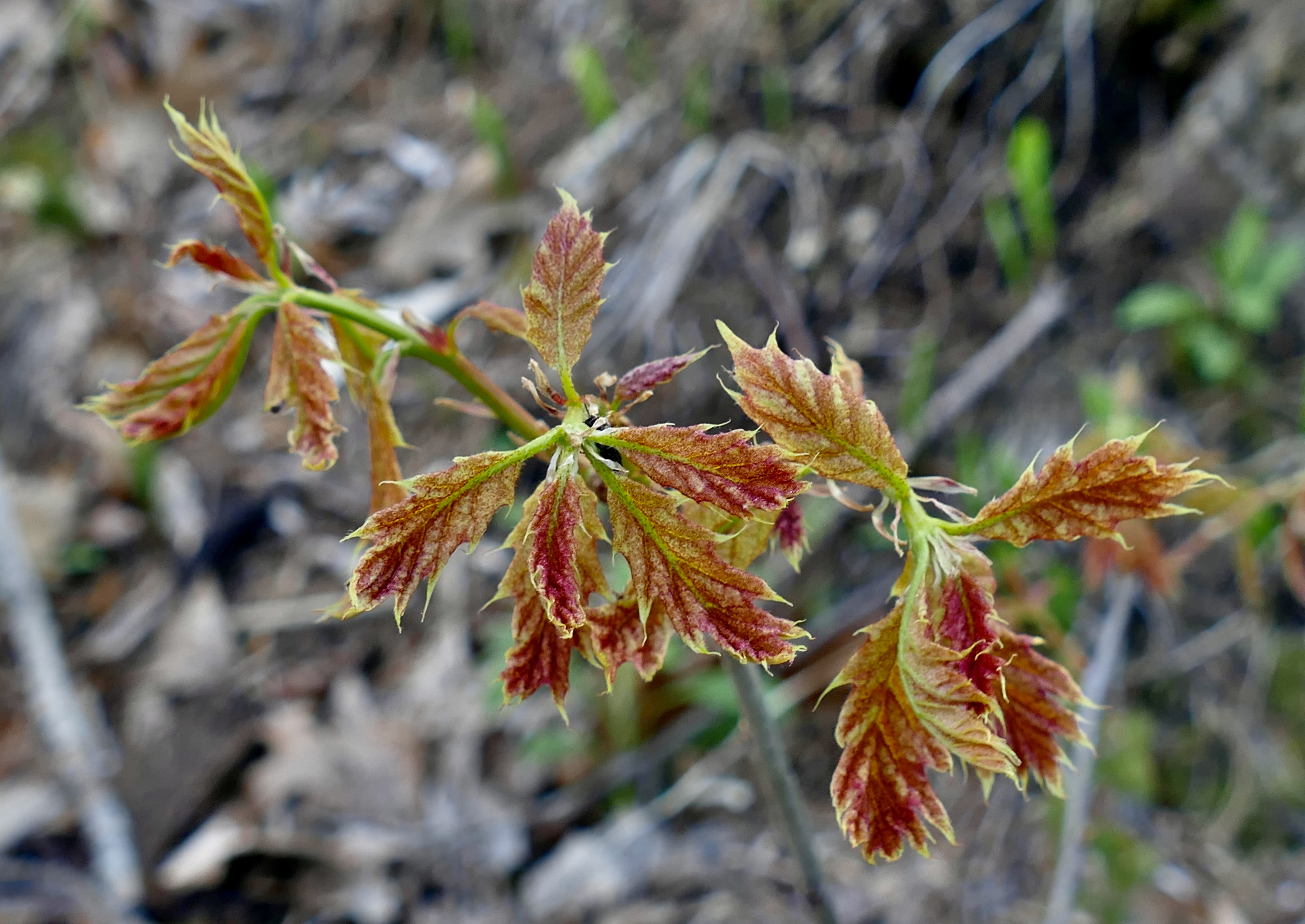
Leaves generally are most beautiful when young and tender, before insects or weather has defaced them.
in Thoreau’s Journal:
It is wonderful what a variety of flowers may grow within the range of a walk & how long some very conspicuous ones may escape the most diligent walker—If you do not chance to visit their localities the right week or fortnight––when their signs are out.

It is a flaming leaf The very leaf has flowers––not the ripe tints of autumn but the rose in the cheek of infancy––a more positive flowering.
in Thoreau’s Journal:
Has been a dew which wets the feet. & I see a very thin fog over the low ground…
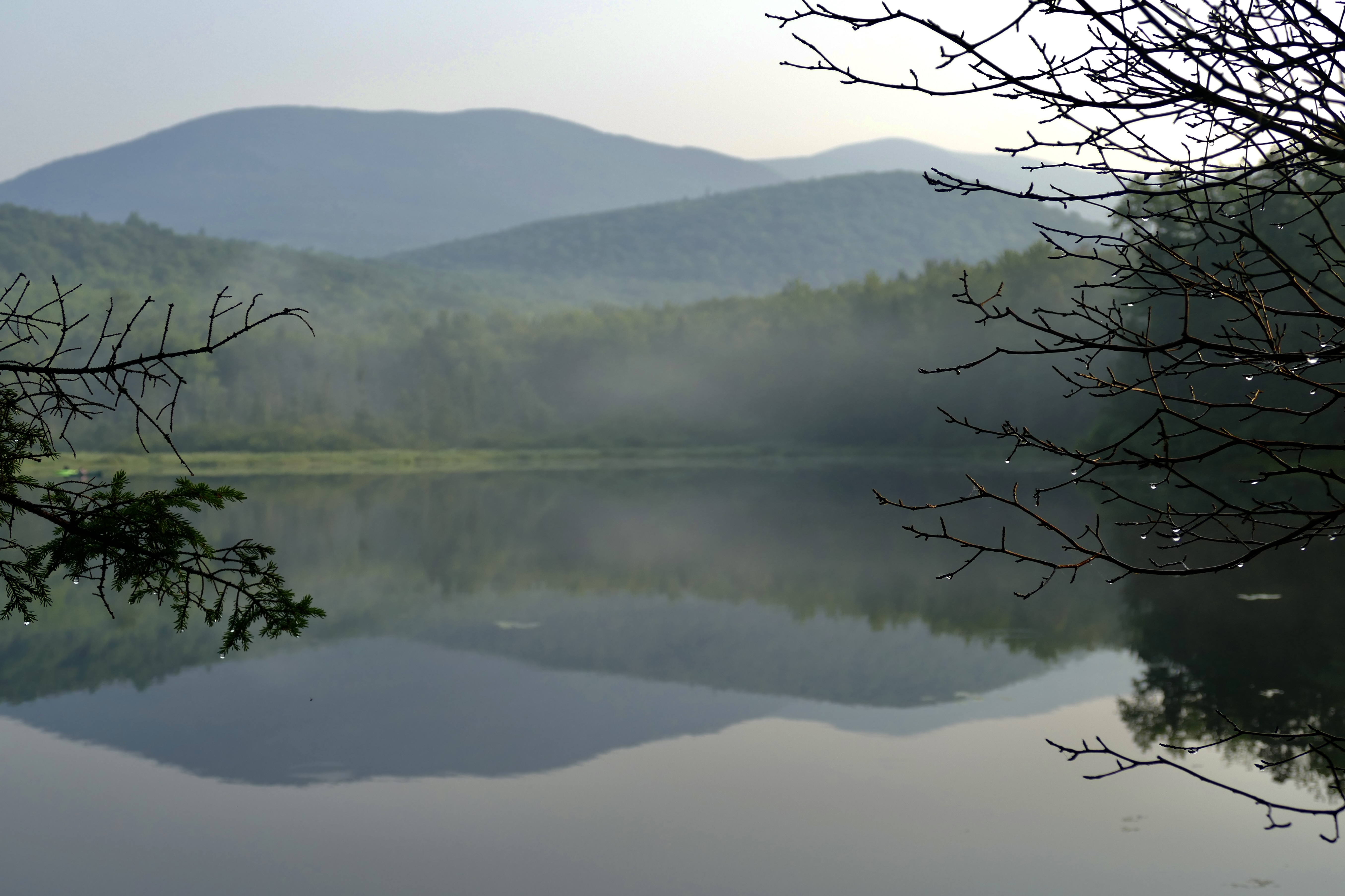
This is the gray morning––the sun risen–– a very thin mist on the landscape––the falling water smooth– Far below a screaming jay seen flying against the bare stems of the pines. The young oaks on the plain the pines stand here and there–the walls in Conantum pastures seen in the sun the little groves on the opposite side of the river lit up by it while I am shade–these are memorable & belong to the hour.
in Thoreau’s Journal:
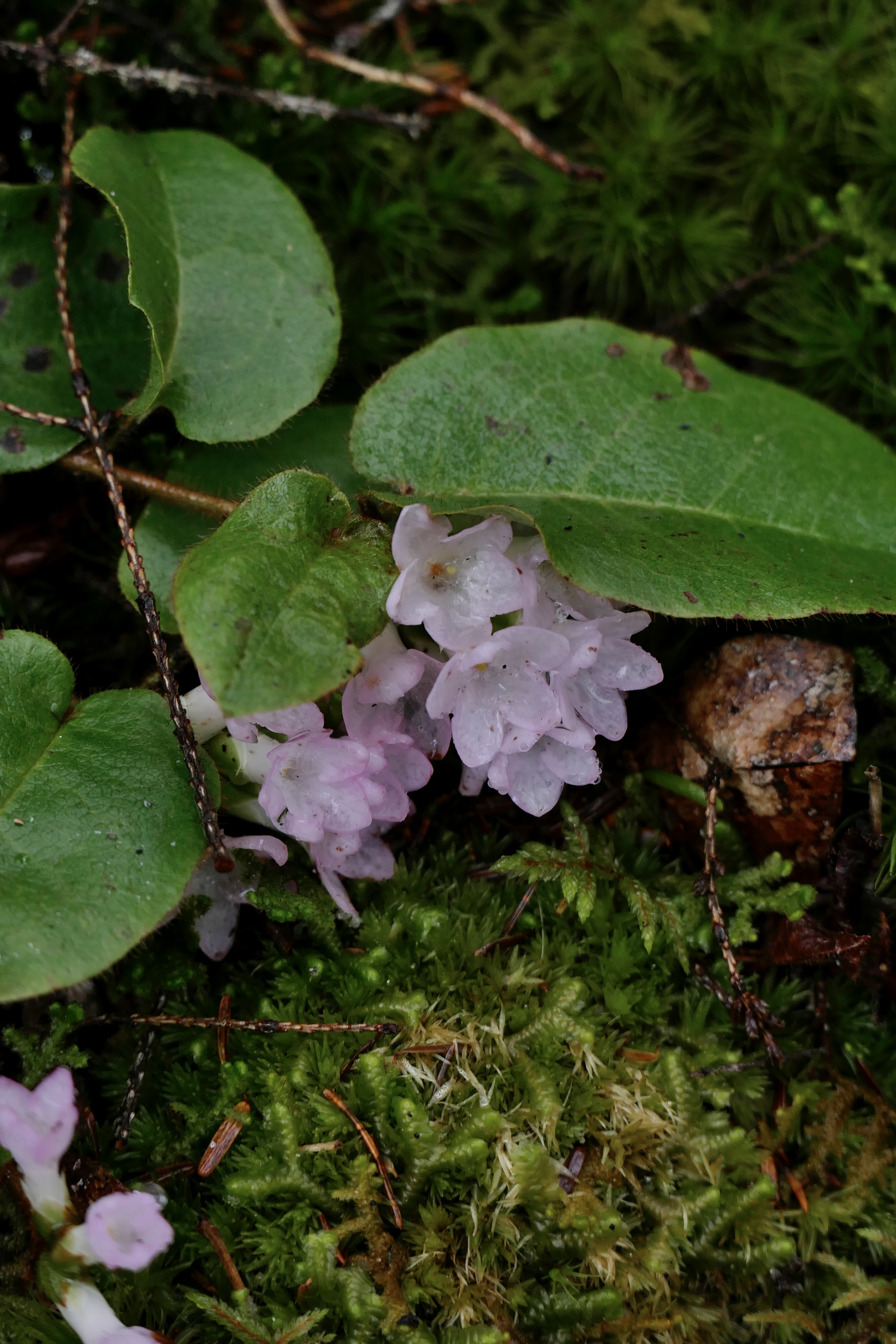
—To epigaea via Clamshell Hill.
There is no such thing as pure objective observation. Your observation, to be interesting, i. e. to be significant, must be subjective. The sum of what the writer of whatever class has to report is simply some human experience, whether he be poet or philosopher or man of science. The man of most science is the man most alive, whose life is the greatest event. Senses that take cognizance of outward things merely are of no avail. It matters not where or how far you travel, —the farther commonly the worse, —but how much alive you are. If it is possible to conceive of an event outside to humanity, it is not of the slightest significance, though it were the explosion of a planet. Every important worker will report what life there is in him. It makes no odds into what seeming deserts the poet is born. Though all his neighbors pronounce it a Sahara, it will be a paradise to him; for the desert which we see is the result of the barrenness of our experience. No mere willful activity whatever, whether in writing verses or collecting statistics, will produce true poetry or science. If you are really a sick man, it is indeed to be regretted, for you cannot accomplish so much as if you were well. All that a man has to say or do that can possibly concern mankind, is in some shape or other to tell the story of his love, ––to sing; and if he is fortunate and keeps alive, he will be forever in love. This alone is to be alive to the extremities. It is a pity that this divine creature should ever suffer from cold feet; a still greater pity that the coldness so often reaches to his heart. I look over the report of the doings of a scientific association and am surprised that there is so little life to be reported; I am put off with a parcel of dry technical terms. Anything living is easily and naturally expressed in popular language. I cannot help suspecting that the life of these learned professors has been almost as inhuman and wooden as a rain-gauge or self-registering magnetic machine. They communicate no fact which rises to the temperature of blood-heat. It doesn’t all amount to one rhyme.
in Thoreau’s Journal:
I succeed best when I recur to my experience not too late, but within a day or two; when there is some distance, but enough of freshness.
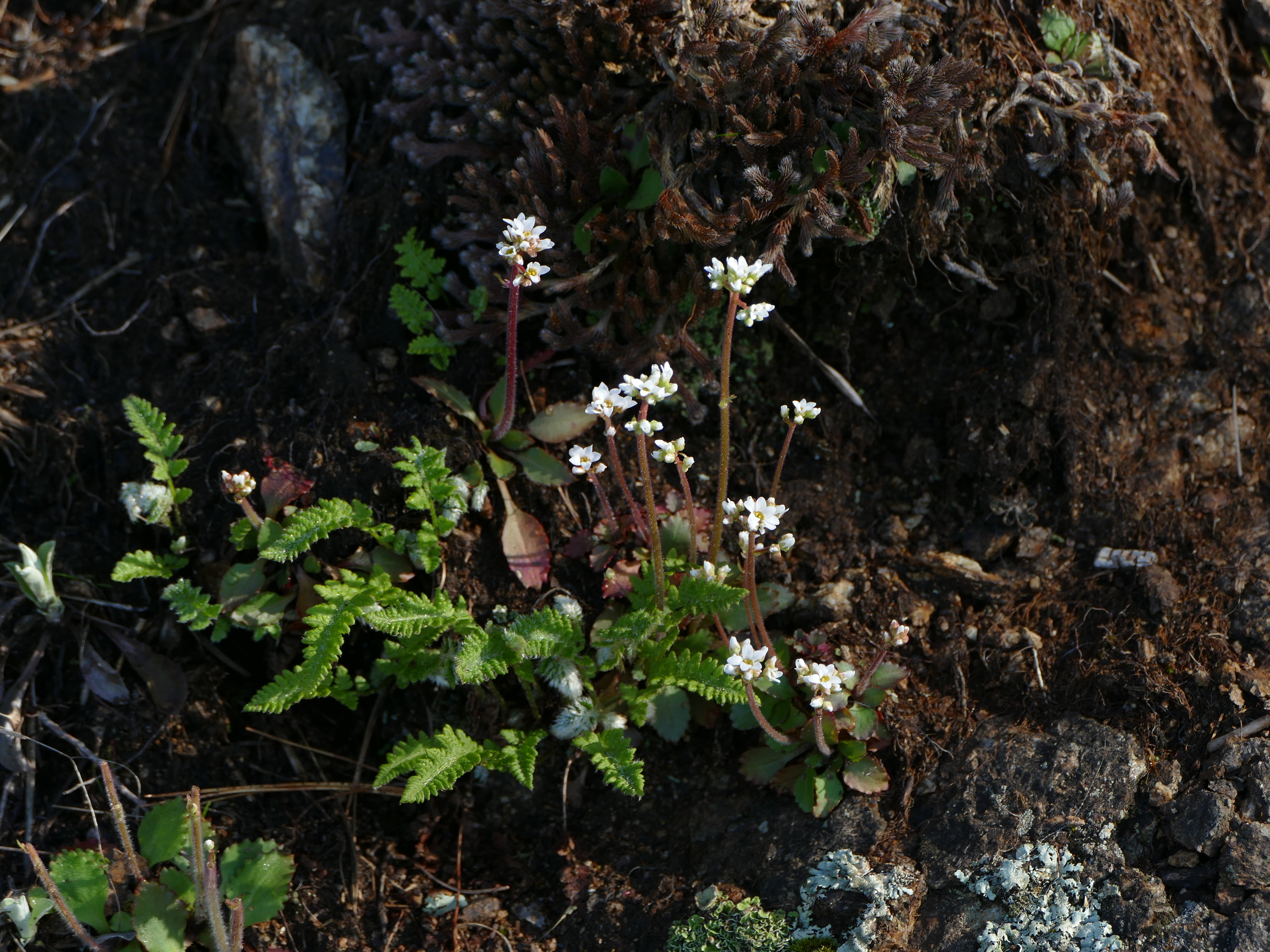
Saxifrage and crowfoot abundant, though I have found but one violet. The crowfoot has a sweet spring-like fragrance, like the dandelion, if you have many, but very little of it. A gloss like varnish on its thin petals. It makes a show here in the grass over warm rocks. Saxifrage still less scent.
in Thoreau’s Journal:
Looking up through this soft and warm southwest wind, I notice the conspicuous shadow of Middle Conanturn Cliff, now at 3 p. m., and elsewhere the shade of a few apple trees, —their trunks and boughs. Through this warm and hazy air the sheeny surface of the hill, now considerably greened, looks soft as velvet, and June is suggested to my mind. It is remarkable that shadow should only be noticed now when decidedly warm weather comes, though before the leaves have expanded, i. e., when it begins to be grateful to our senses. The shadow of the Cliff is like a dark pupil on the side of the hill. This first shadow is as noticeable and memorable as a flower. I observe annually the first shadow of this cliff. When we begin to pass from sunshine into shade for our refreshment; when we look on shade with yearning as on a friend. That cliff and its shade suggests dark eyes and eyelashes and overhanging brows. Few things are more suggestive of heat than this first shade, though now we see only the tracery of tree-boughs on the greening grass and the sandy street.
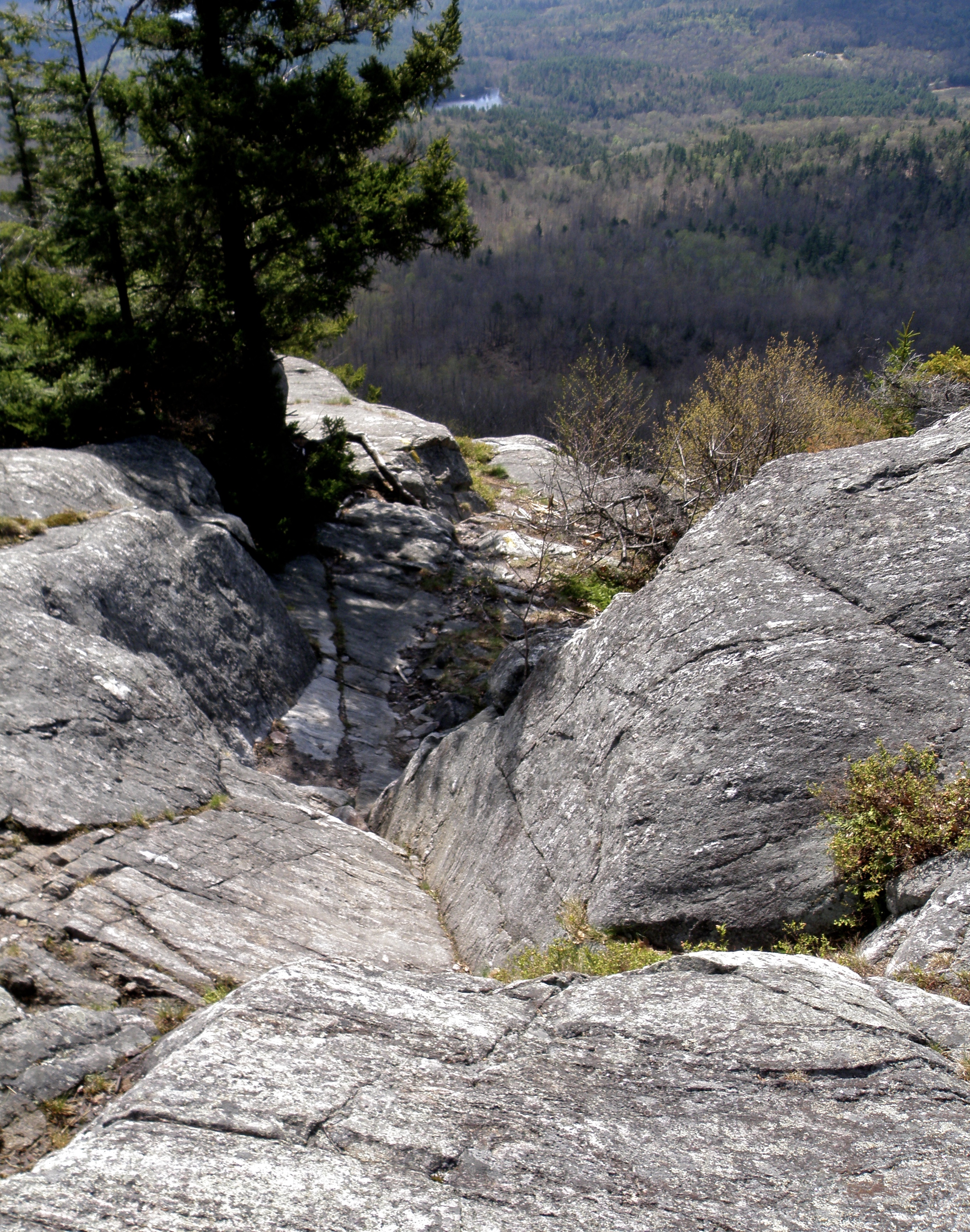
This I notice at the same time with the first bumblebee, when the Rana palustris purrs in the meadow generally, the white willow and aspen display their tender green full of yellow light, the parti-colored warbler is first heard over the swamp, the woodchuck, who loves warmth, is out on the hillsides in numbers, the jingle of the chip-bird is incessantly heard, the thrasher sings incessantly, the first cricket is heard in a warm rocky place, and that scent of vernal flowers is in the air. This is an intenser expression of that same influence or aspect of nature which I began to perceive ten days ago (vide 25th), —the same lieferung.
in Thoreau’s Journal:
A cold wind from the northwest. How much are our summers retarded by the snow on the mountains ? Annursnack looks green three miles off. This is an important epoch, when the distant bare hills begin to show green or verdurous to the eye.
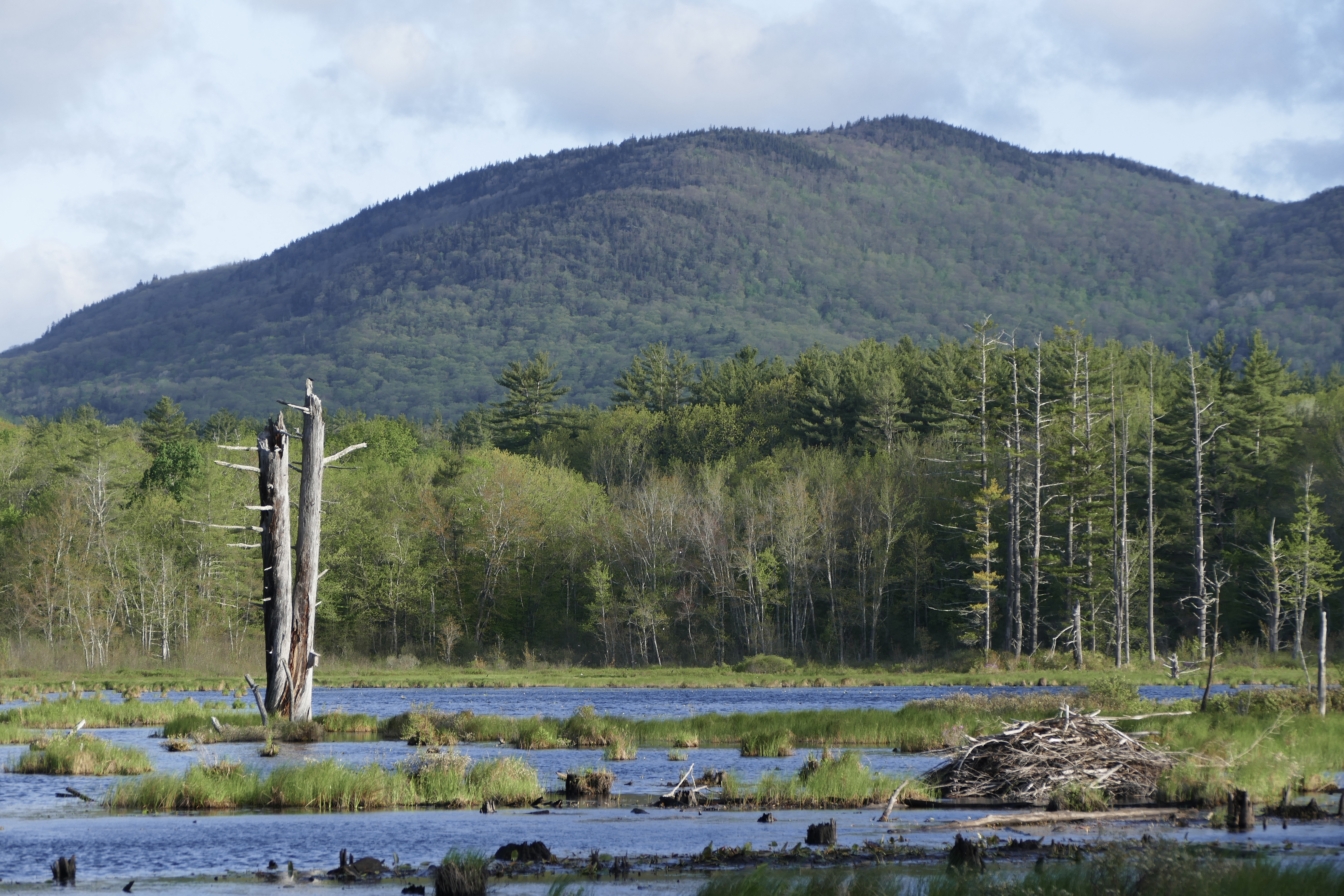
The earth wears a new aspect. Not tawny or russet now, but green, are such hills.
in Thoreau’s Journal:
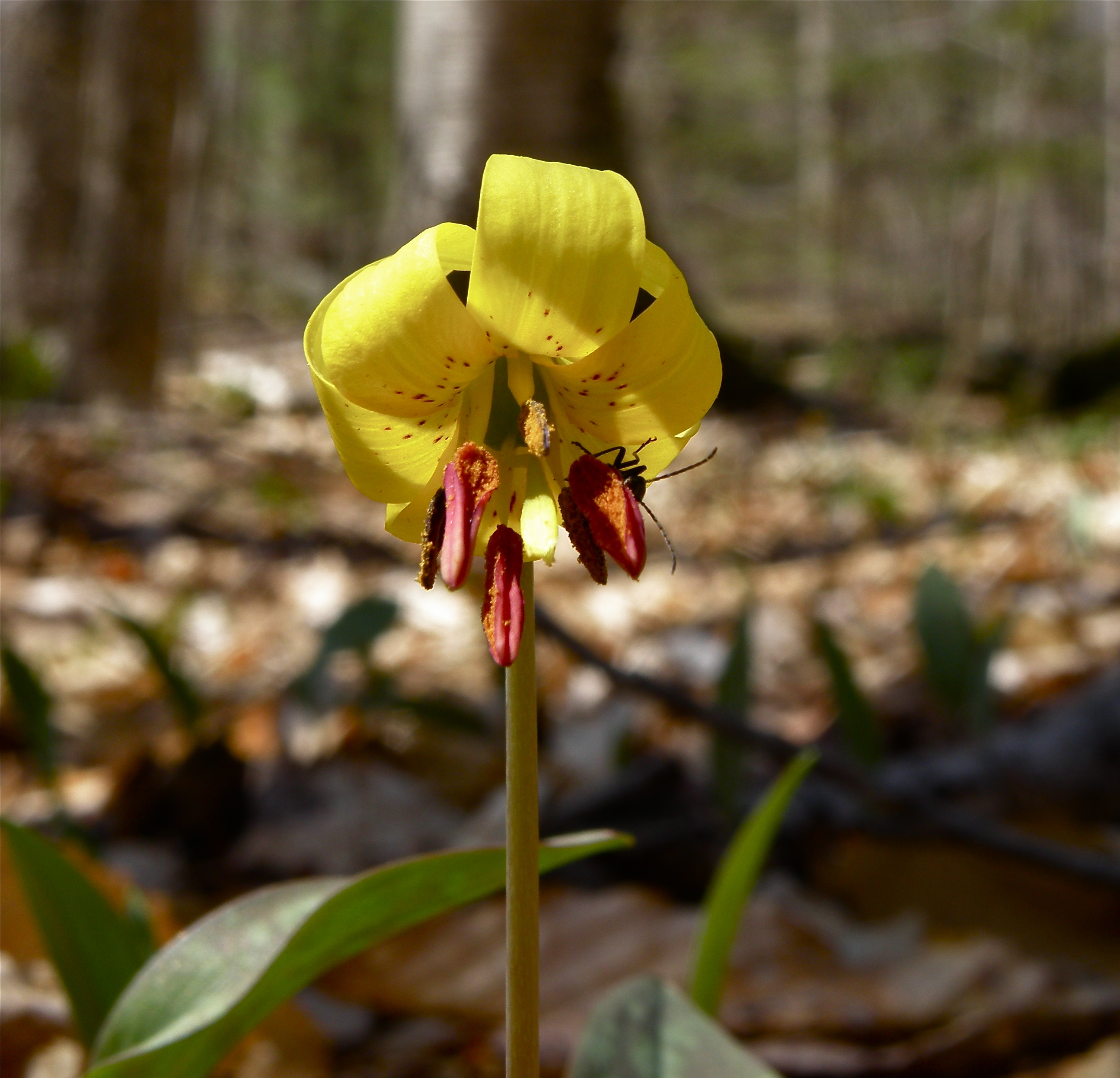
The Yellow lily is budded.
in Thoreau’s Journal:
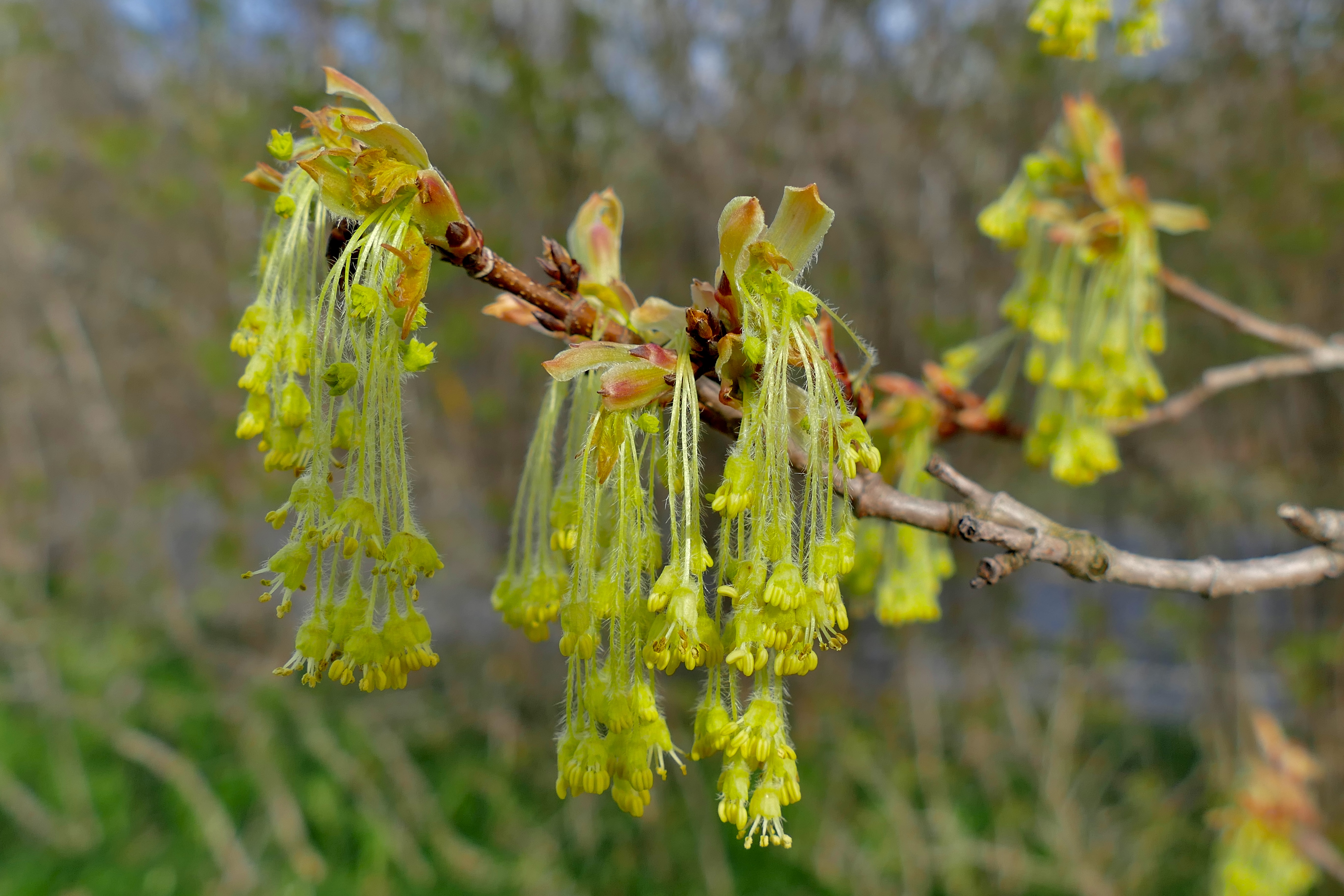
The sugar maple keys (or buds?) hang down one inch, quite.
in Thoreau’s Journal:
The Viburnum nudum around the edge of the swamp, on the northern edge of the warm bays in sunny and sheltered places, has just expanded, say two days, the two diverging leafets being an inch long nearly, — pretty yellowish-brown leafets in the sun, the most noticeable leafiness here now, just spotting and enlivening the dead, dark, bare twigs, under the red blossoms of the maples.
It is a day for many small fuzzy gnats and other small insects. Insects swarm about the expanding buds.
The viburnum buds are so large and long, like a spear-head, that they are conspicuous the moment their two leafets diverge and they are lit up by the sun. They unfold their wings like insects and arriving warblers. These, too, mark the season well. You see them a few rods off in the sun, through the stems of the alders and maples.


in Thoreau’s Journal:


in Thoreau’s Journal:
I approach a great nature with infinite expectation and uncertainty, not knowing what I may meet. It lies as broad and unexplored before me as a scraggy hillside or pasture. I may hear a fox bark, or a partridge drum, or some bird new to these localities may fly up. It lies out there as old, and yet as new. The aspect of the woods varies every day, what with their growth and the changes of the seasons and the influence of the elements, so that the eye of the forester never twice rests upon the same prospect.
Much more does a character show newly and variedly, if directly seen.
in Thoreau’s Journal:
It is astonishing how soon and unexpectedly flowers appear, when the fields are scarcely tinged with green.

Yesterday, for instance, you observed only the radical leaves of some plants; to-day you pluck a flower.
in Thoreau’s Journal:

It is a great art to saunter.
in Thoreau’s Journal:

The may flower is well budded & ready to blossom but not yet out—nor the Andromeda—nor saxifrage—nor violet that I can find. I am surprised to find the cowslip in full bloom at 2nd Div meadow. numerous flowers. Growing in the water is not comparatively so backward this year perhaps. Its heart or kidney shaped crenate green leaves which had not freshly grown when I was here before have suddenly pushed up. The snows soon melted on this meadow. The horse tail too is ready to flower. And what is the low regular red-leaved & red rooted plant in the meadow with the cowslip? Yet we walk over snow & ice a long distance in the road here.


You must be logged in to post a comment.