As soon as those spring mornings arrive in which the birds sing I am sure to be an early riser— I am waked by my genius— I wake to inaudible melodies, and am surprised to find myself awaiting the dawn—in so serene and joyful & expectant a mood. I have an appointment with spring.
It is a genial and reassuring day; the mere warmth of the west wind amounts almost to balminess. The softness of the air mollifies our own dry and congealed substance. I sit down by a wall to see if I can muse again. We become, as it were, pliant and ductile again to strange but memorable influences; we are led a little way by our genius. We are affected like the earth, and yield to the elemental tenderness. Winter breaks up within us. The frost is coming out of me, and I am heaved like the road. Accumulated masses of ice and snow dissolve, and thoughts like a freshet, pour down unwonted channels. A strain of music comes to solace the traveler over earth’s downs and dignify his chagrins. The petty men whom he meets are shadows of grander to come. Roads lead else-wither than to Carlisle and Sudbury. The earth is uninhabited, but fair to inhabit, like the old Carlisle road. Is, then, the road so rough that it should be neglected? Not only narrow, but rough, is the way that leads to life everlasting. Our experience does not wear upon us. It is seen to be fabulous or symbolical, and the future is worth expecting. Encouraged, I set out once more to climb the mountain of the earth, for my steps are symbolical.
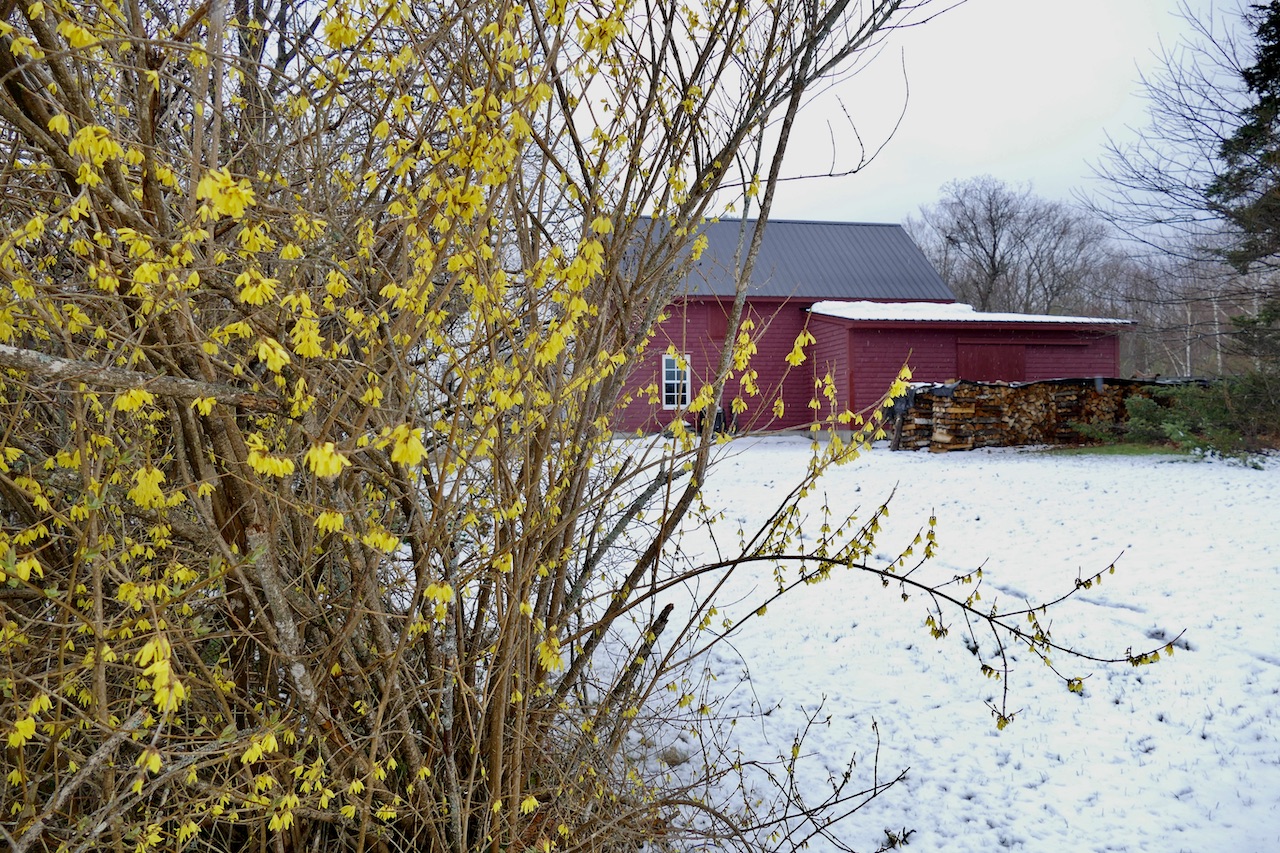
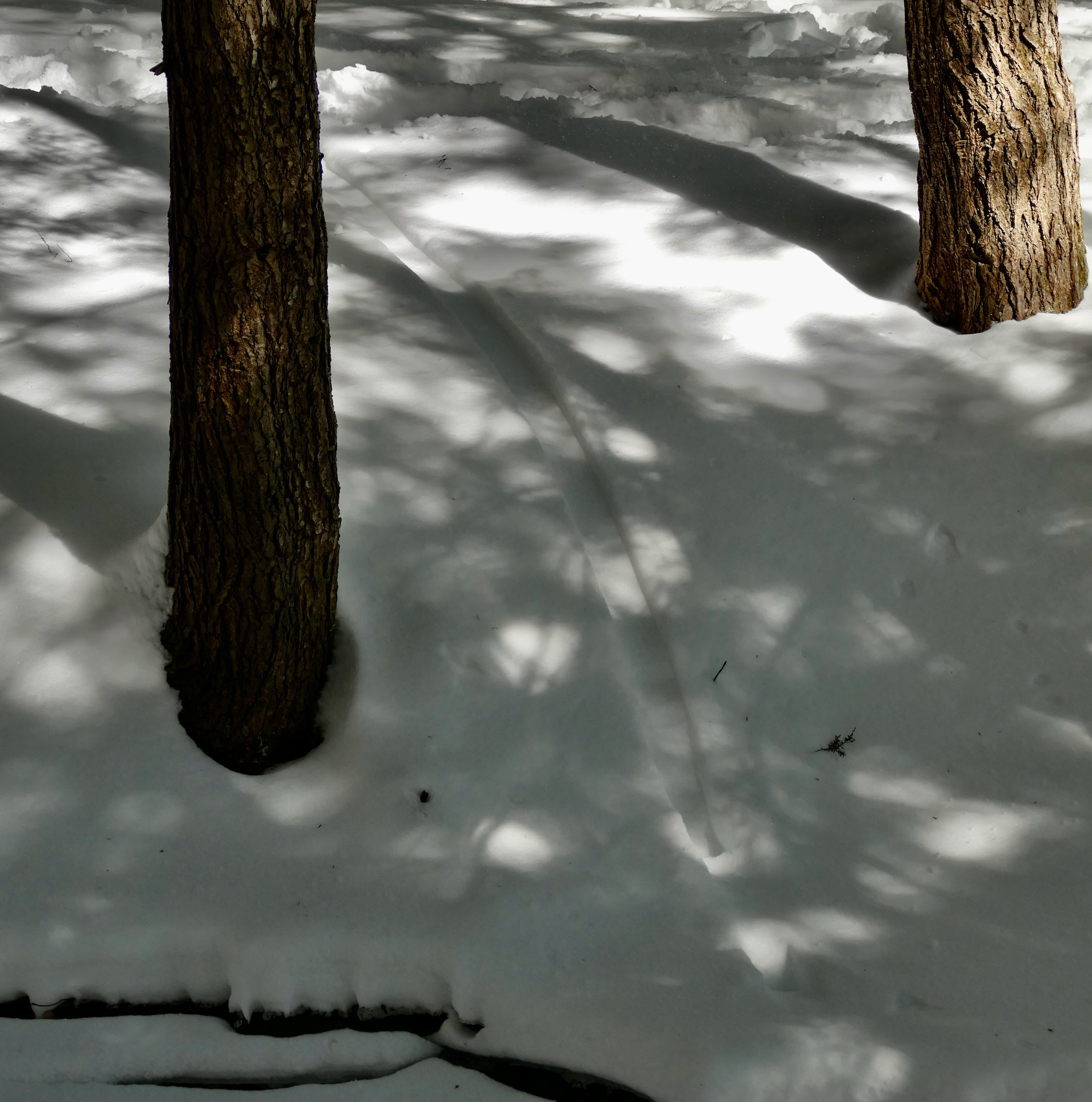
This afternoon the woods & walls and the whole face of the country wears once more a wintry aspect—though there is more moisture in the snow—and the trunks of the trees are whitened now on a more southerly or SE side––
No mortal is alert enough to be present at the first dawn of the spring, but he will presently discover some evidence that vegetation had awaked some days at least before.
A thick mist, spiriting away the snow. Very bad walking. This fog is one of the first decidedly spring signs also the withered grass bedewed by it and wetting my feet. A still, foggy, and rather warm day.
I heard this morning, also, quite a steady warbling from tree sparrows on the dripping bushes, and that peculiar drawling note of a hen, who has this peevish way of expressing her content at the sight of bare ground and mild weather. The crowing of cocks and the cawing of crows tell the same story. The ice is soggy and dangerous to be walked on.
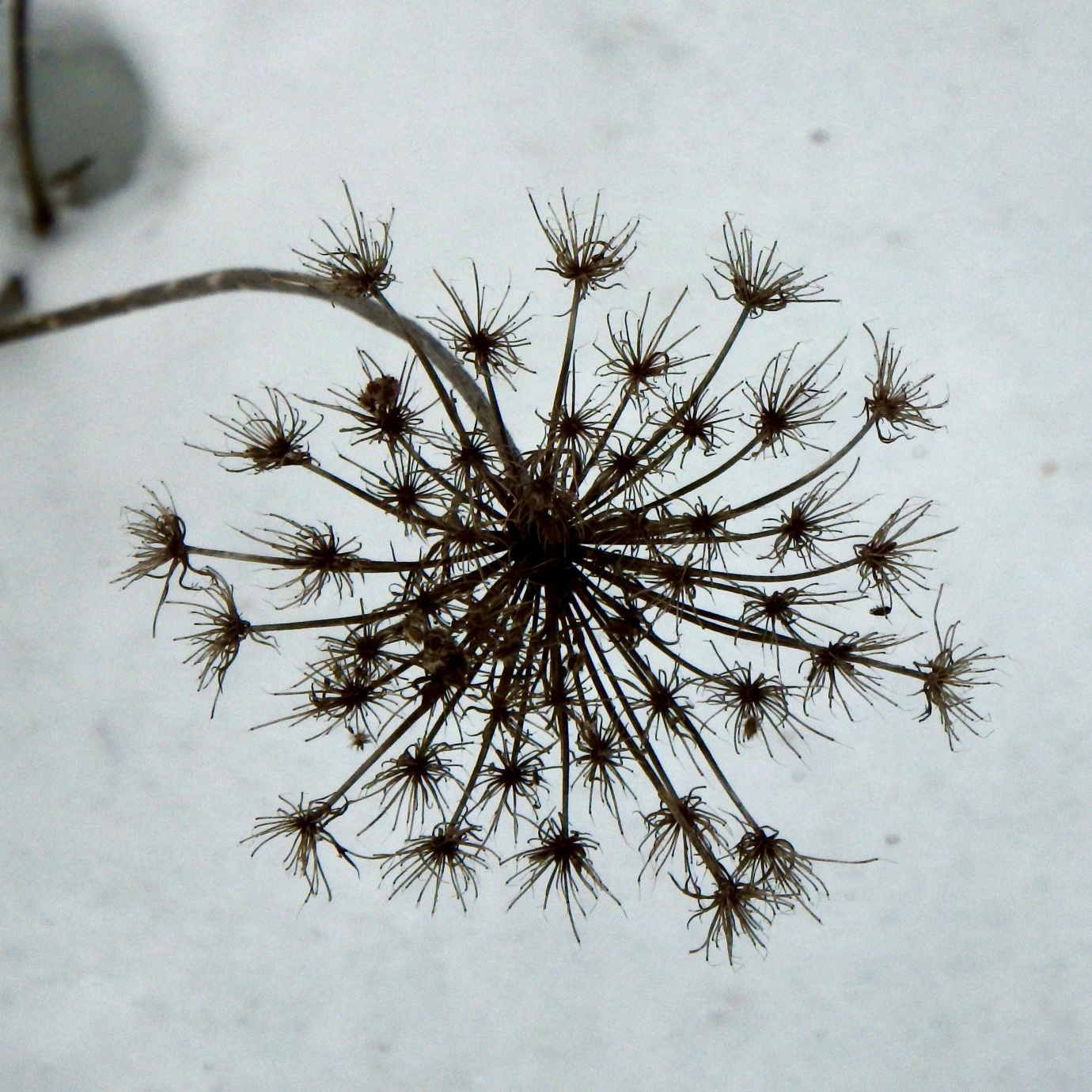
There seems, however, to be little seed left in them. This, then, is reason enough why these withered stems still stand, that they may raise these granaries above the snow for the use of the snowbirds.
How alone must our life be lived! We dwell on the seashore, and none between us and the sea. Men are my merry companions, my fellow-pilgrims, who beguile the way but leave me at the first turn in the road, for none are travelling one road so far as myself.
I am not aware of growth in any plant yet, unless it be the further peeping out of willow catkins. They have crept out further from under their scales, and, looking closely into them, I detect a little redness along the twigs even now. You are always surprised by the sight of the first spring bird or insect; they seem premature, and there is no such evidence of spring as themselves, so that they literally fetch the year about. It is thus when I hear the first robin or bluebird or, looking along the brooks, see the first water-bugs out circling. But you think. They have come, and Nature cannot recede.
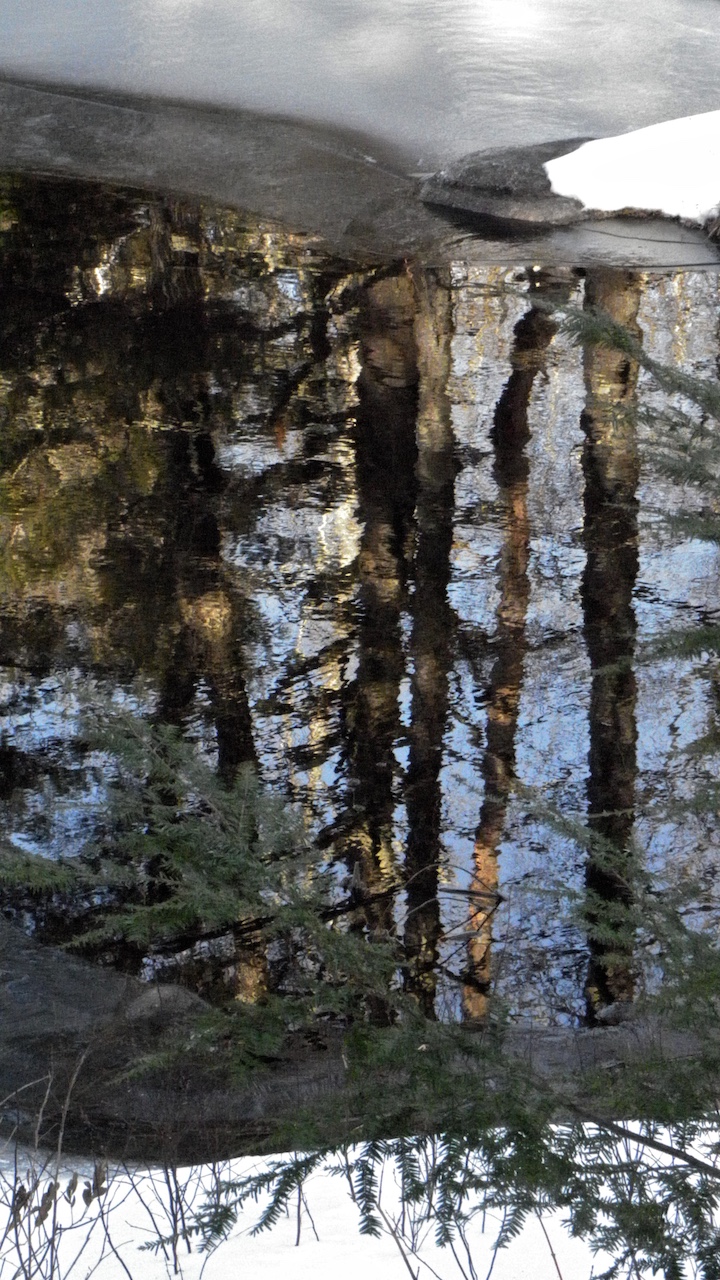
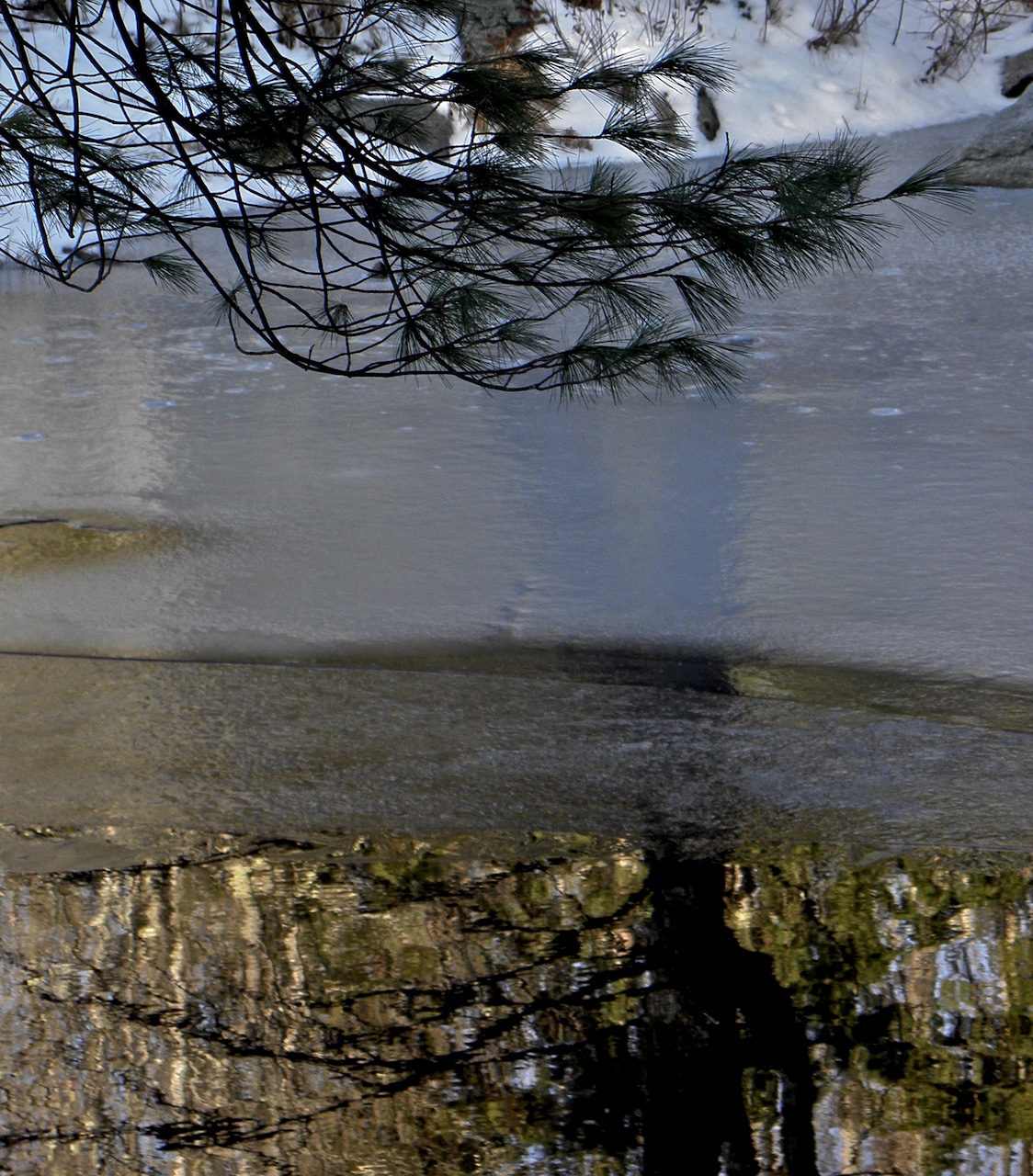
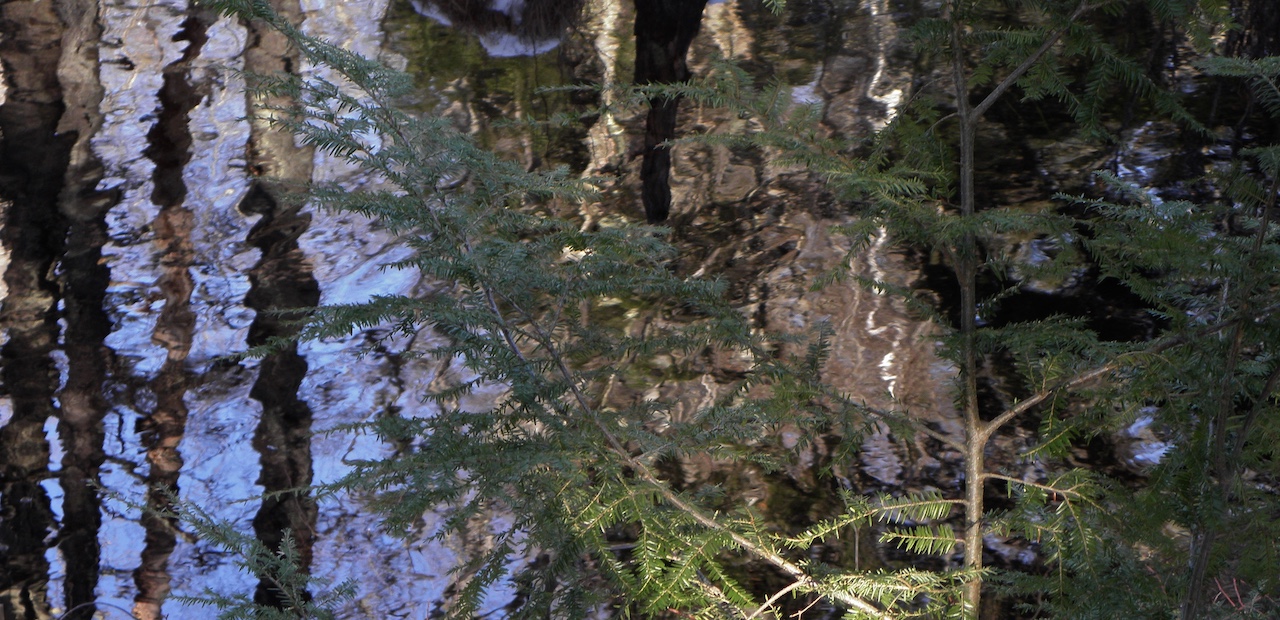
In the spaces of still, open water I see the reflection of the hills and woods, which for so long I have not seen, and it gives expression to the face of nature. The face of nature is lit up by these reflections in still water in the spring. Sometimes you see only the top of distant hill reflected far within the meadow, where a dull, gray field of ice intervenes between the water and the shore.
We were walking along the sunny hillside on the south of Fair Haven Pond (on the 4th), which the choppers had just laid bare, when, in a sheltered and warmer place, we heard a rustling amid the dry leaves on the hillside and saw a striped squirrel eying us from its resting-place on the bare ground. It sat still till we were within a rod, then suddenly dived into its hole, which was at its feet, and disappeared. The first pleasant days of spring come out like a squirrel and go in again.
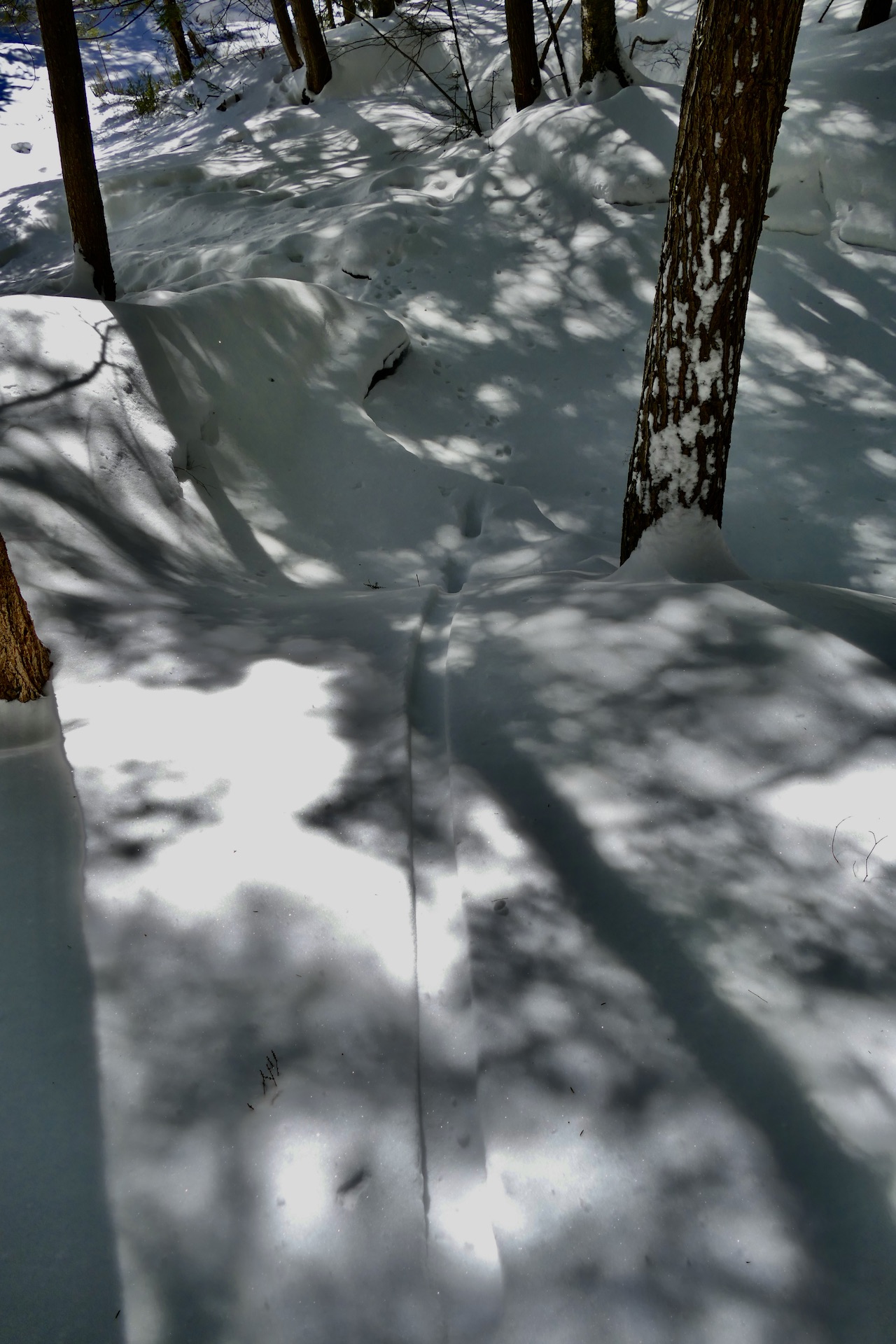
The snow is softening. Methinks the lichens are a little greener for it. A thaw comes, and then the birches, which were gray on their white ground before, appear prettily clothed in green. I see various kinds of insects out on the snow now. On the rock this side the Leaning Hemlocks, is the track of an otter.
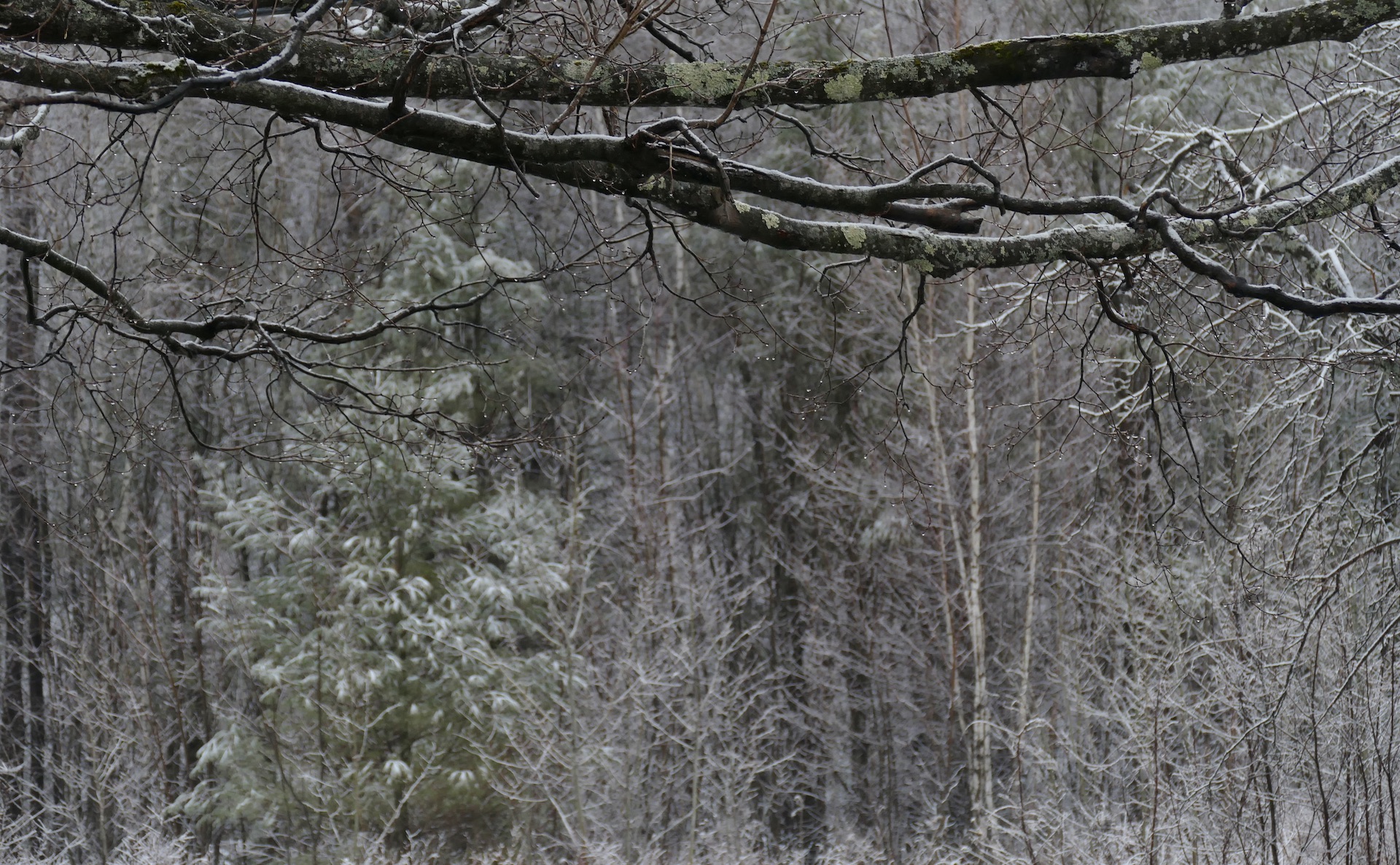
I must not forget the lichen-painted boles of the beeches….The habit of looking at things microscopically, as the lichens on the trees and rocks, really prevents my seeing aught else in a walk.
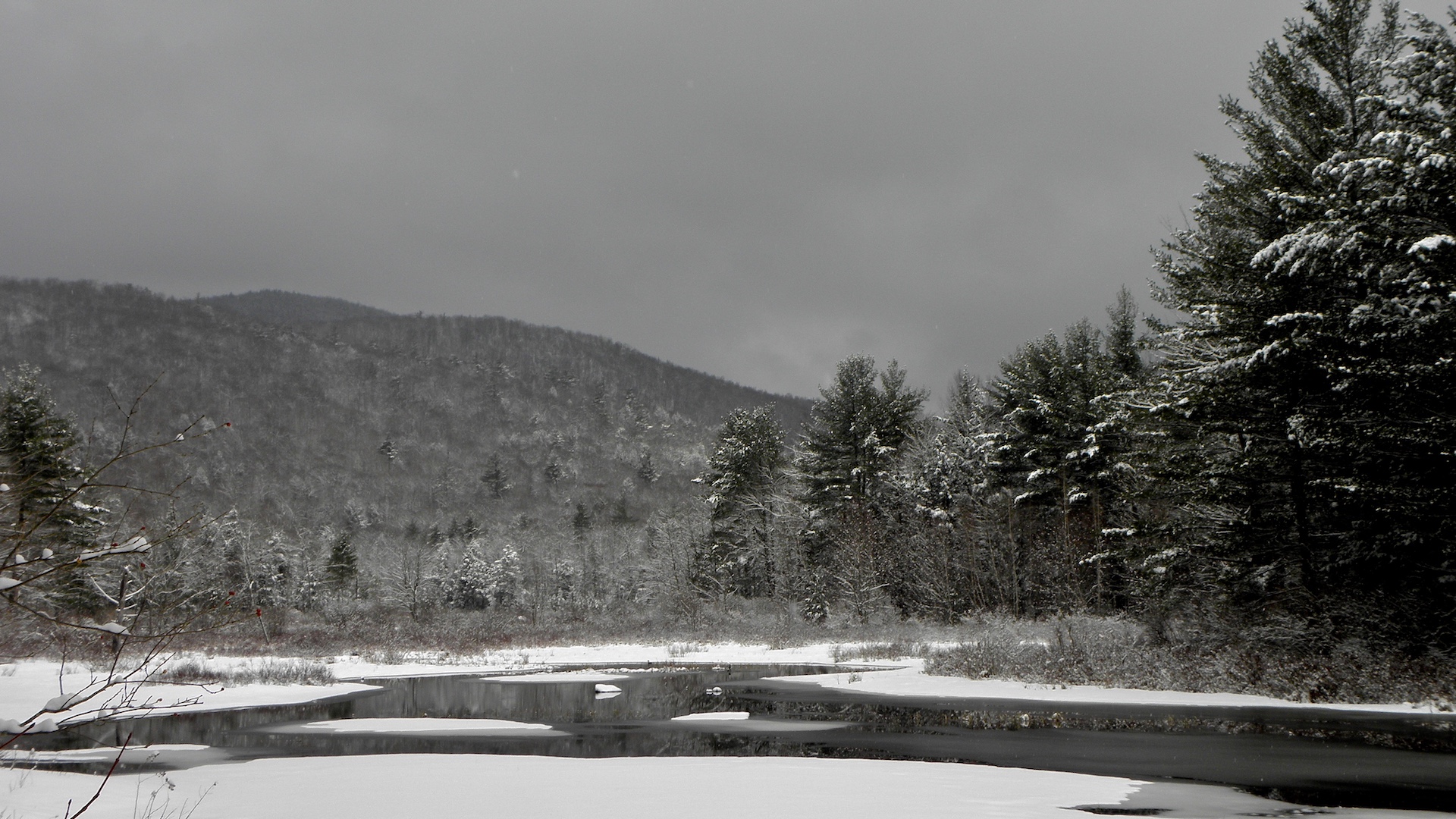
Up river on ice to Fairhaven Pond…The air is fresher & the sky clearer in the morning –– We have this morning the clear cold continent sky of January. The river is frozen solidly & I do not have to look out for openings. Now I can take that walk along the river highway & the meadow––which leads me under––the boughs of the maples & the swamp white oaks &c which in summer overhang the water––there I can now stand at my ease & study their phenomena––amid the sweet gale & button bushes projecting above the snow & ice. I see the shore from the water side–– A liberal walk––so level & wide & smooth without under brush.
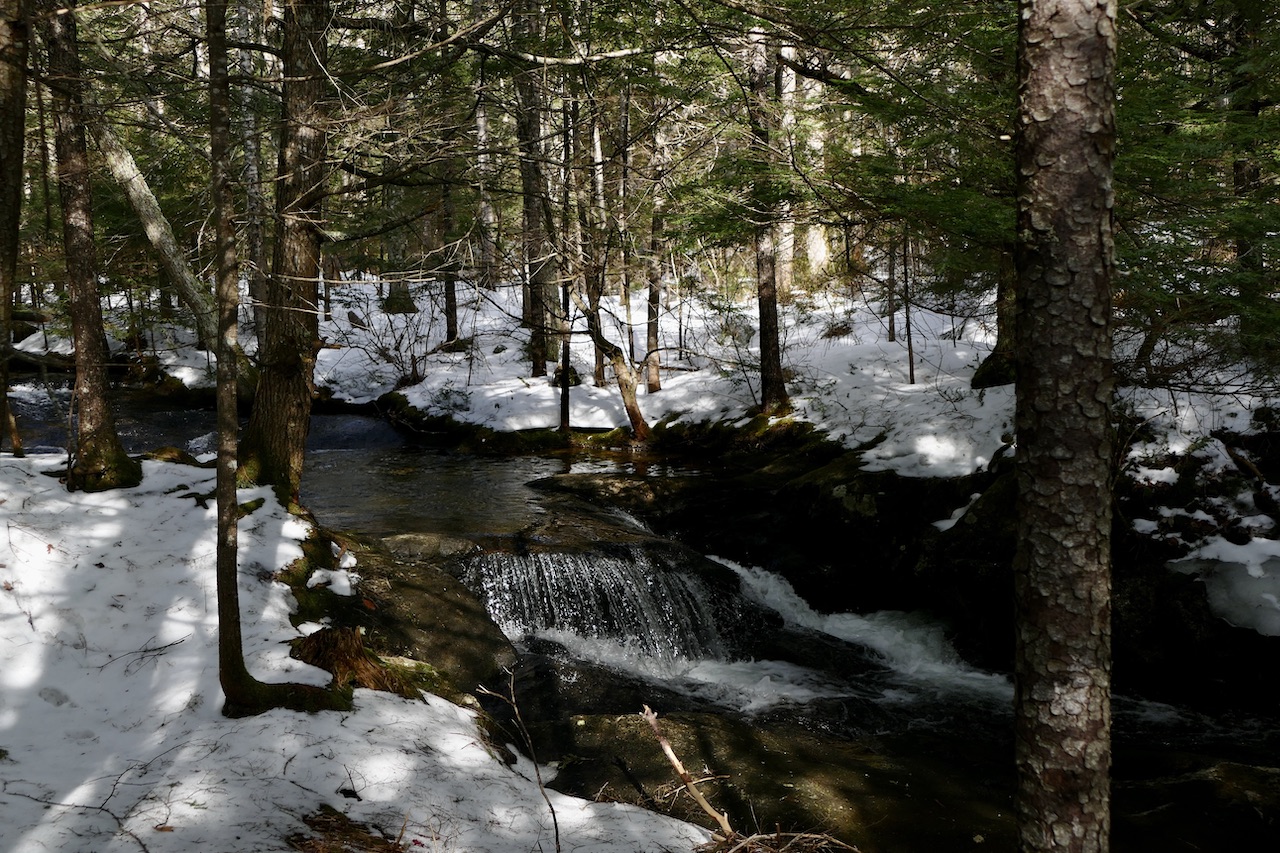
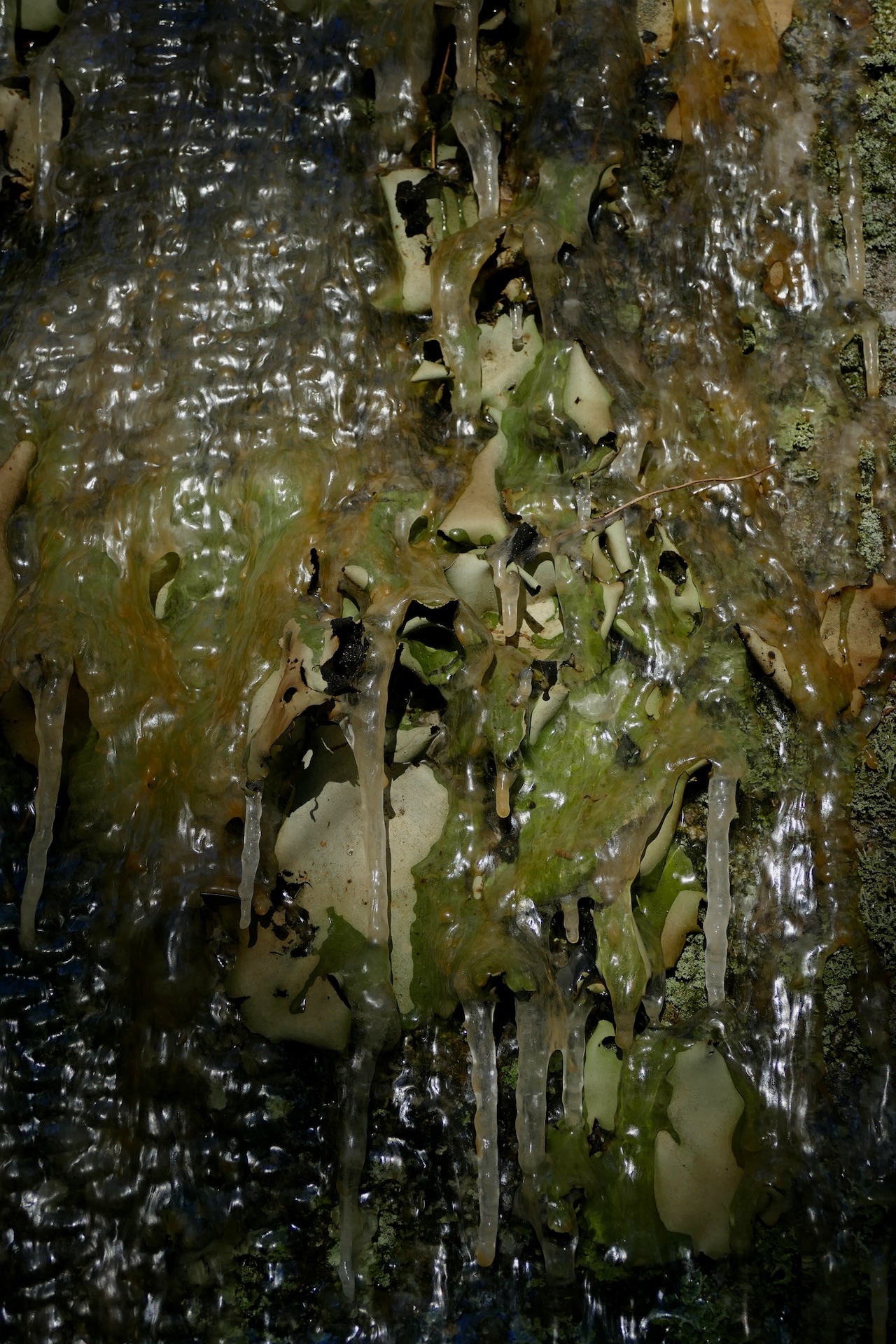
I go along below the north end of the Cliffs. The rocks in the usual place are buttressed with icy columns, for water in almost imperceptible quantity is trickling down the rocks. It is interesting to see how the dry black or ash-colored umbilicaria, which get a little moisture when the snow melts and trickles down along a seam or shallow channel of the rock, become relaxed and turn olive-green and enjoy their spring, while a few inches on each side of this gutter or depression in the face of the rock they are dry and crisp as ever. Perhaps the greater part of this puny rill is drunk up by the herbage on its brink.













You must be logged in to post a comment.