
in Thoreau’s Journal:
The R. lucida with its broader & duller leaves—but larger & perhaps deeper colored & more purple petals—perhaps yet higher scented. & its great yellow center of stamens.
in Thoreau’s Journal:
The R. lucida with its broader & duller leaves—but larger & perhaps deeper colored & more purple petals—perhaps yet higher scented. & its great yellow center of stamens.


in Thoreau’s Journal:
By half past fives robins more than before–crows of course & jays. Dogsbane is just ready to open. Swallows. It is pleasant walking through the June grass (in Pleasant meadow) so thin & offering but little obstruction. The night hawk squeaks & booms. The veratrum viride top is now a handsome green cluster 2 feet by 10/12. Here also at well meadow head I see the fringed purple orchis–unexpectedly beautiful–though a pale lilac purple–a large spike of purple flowers. I find two–one answers to the O. fimbriata of Big & Psycodes of Gray–the other the grandiflora of Big– & fimbriata of Gray. Big. thinks it the most beautiful of all the orchises. I am not prepared to say it is the most beautiful wild flower I have found this year– Why does it grow there only–far in a swamp remote from public view? It is somewhat fragrant reminding me of the ladies slipper. Is it not significant that some rare & delicate beautiful flowers should be found only in unfrequented wild swamps.– There is the mould in which the orchis grows. Yet I am not sure but this is a fault in the flower– It is not quite perfect in all its parts– a beautiful flower must be simple–not spiked.– It must have a fair stem & leaves– This stem is rather naked & the leaves are for shade & moisture. It is fairest seen rising from amid brakes & hellebore, its lower part or rather naked stem concealed. Where the most beautiful wild flowers grow–there Man’s spirit is fed–& poets grow– It cannot be high-colored growing in the shade. Nature has taken no pains to exhibit–and few that bloom are ever seen by mortal eyes. The most striking & handsome large wild flower of the year thus far the I have seen.


in Thoreau’s Journal:
Went through the woods along the old Canal to Haynes’ Pasture from the height of which we looked down on the rich New-Hampshire wood we had come out of––the ground rising within the wood gave it the appearance of woods rising by successive stages from a smaller growth on the edge to stately trees in the middle. & Nobscot was seen in the S.W. through the blue furnace mist. This seems the true hour to be abroad sauntering far from home–– Your thoughts being already turned toward home––your walk in one sense ended–– You are in that favorable frame of mind described by De Quincy, open to great impressions––& you see those rare sights with the unconscious side of the eye––which you could not see by a direct gaze before–– Then the dews begin to descend in your mind & its atmosphere is strained of all impurities –– And home is farther away than ever––here is home ––the beauty of the world impresses you–– There is a coolness in your mind as in a well–– Life is too grand for supper.––

The wood-thrush launches forth his evening strains from the midst of the pines. I admire the moderation of this master–– There is nothing tumultuous in his song––he launches forth one strain with all his heart & life & soul––of pure & unmatchable melody––and then he pauses and gives the hearer & himself time to digest this and then another & at suitable intervals. Men talk of the rich song of other birds––the thrasher––mocking bird––nightingale––but I doubt I doubt–– They know not what they say; There is as great an interval between the Thrasher & the Wood Thrush as between Thompson’s Seasons & Homer. –– The sweetness of the day crystalizes in this morning coolness.
in Thoreau’s Journal:
All things in this world must be seen with the morning dew on them, must be seen with youthful, early-opened, hopeful eyes.
in Thoreau’s Journal:
The note of the wood thrush answers to some cool unexhausted morning vigor in the hearer.
in Thoreau’s Journal:
No one to my knowledge, has observed the minute differences in the seasons. Hardly two nights are alike. The rocks do not feel warm to-night, for the air is warmest; nor does the sand particularly. A book of the seasons, each page of which should be written out-of-doors, or in its own locality wherever it may be.


in Thoreau’s Journal:
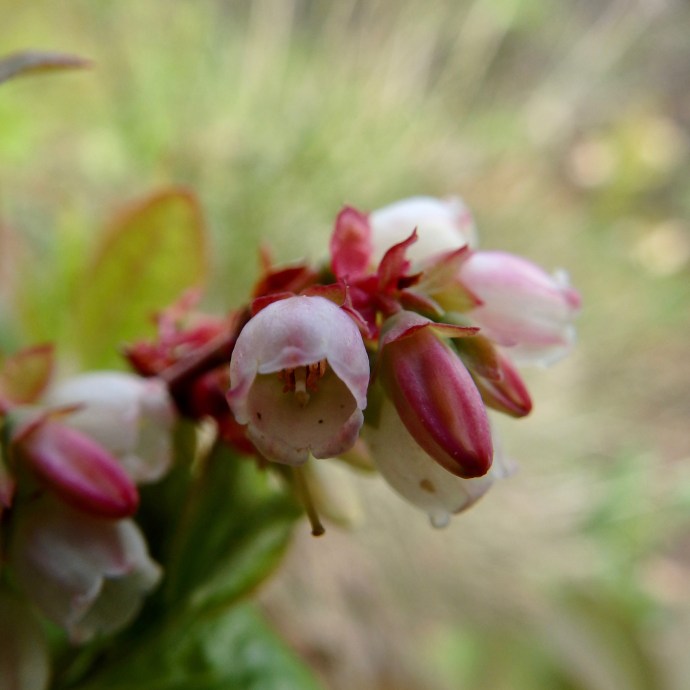
The red huckleberry & the white & red blueberry blossoms are very handsome and interesting now & would attract more attention if the prospect of their fruit did not make us overlook them.


in Thoreau’s Journal:
Gathered the Linnaea borealis.
in Thoreau’s Journal:
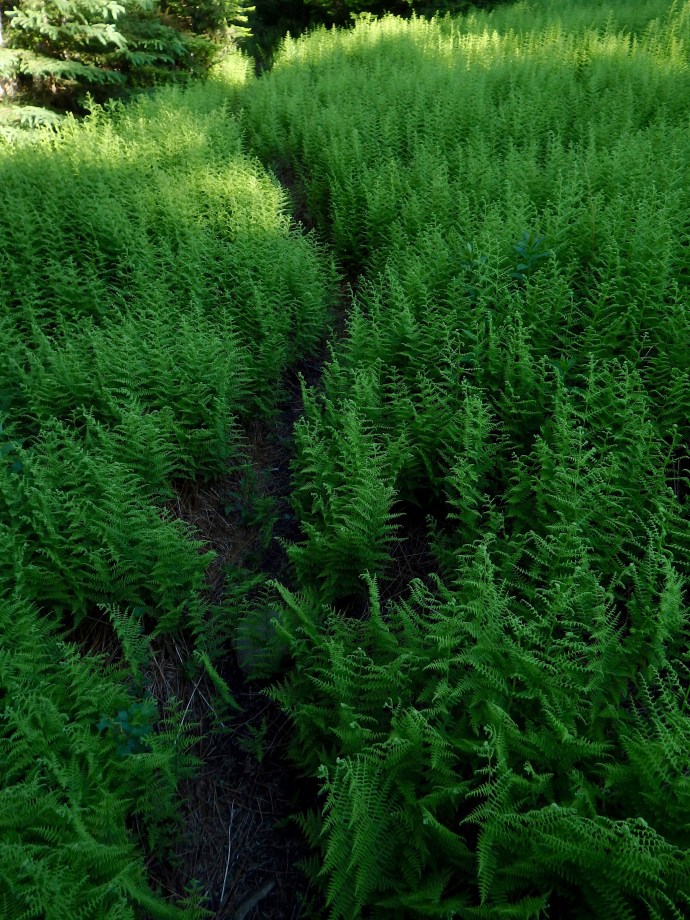
This is truly June when you begin to see brakes (dark green) fully expanded in the wood paths.
in Thoreau’s Journal:
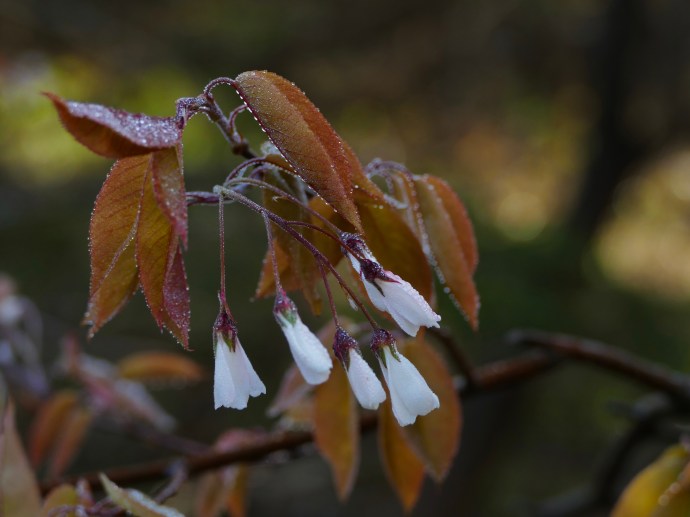
It is but a step from flowers to fruit.

in Thoreau’s Journal:
This is June–the month of grass & leaves. The deciduous trees are investing the evergreens & revealing how dark they are. Already the aspens are trembling again, and a new summer is offered me–
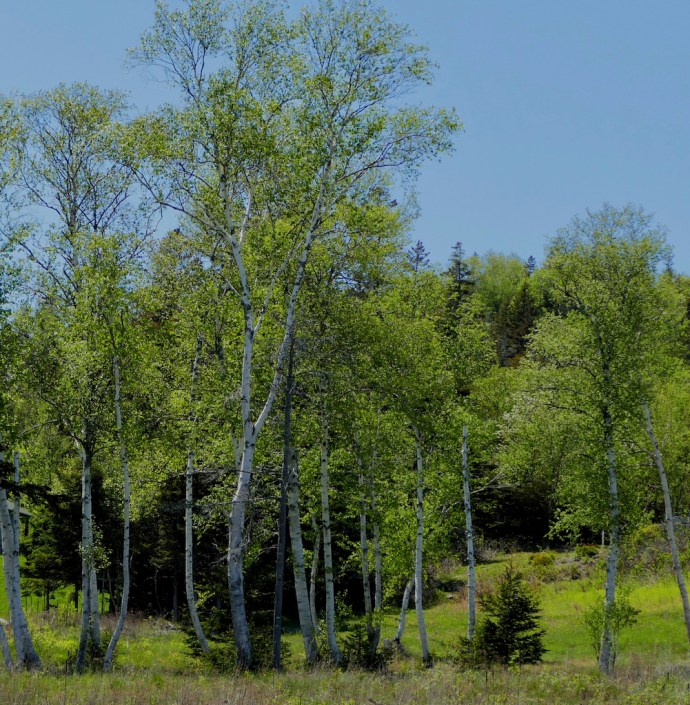
I feel a little fluttered in my thoughts as if I might be too late. Each season is but an infinitesimal point. It no sooner comes than it is gone. It has no duration. It simply gives a tone & hue to my thought. Each annual phenomenon is a reminiscence & prompting. Our thoughts & sentiments answer to the revolutions of the seasons, as 2 cog-wheels fit into each other– We are conversant with only one point of contact at a time–from which we receive a prompting & impulse & instantly pass to a new season or point of contact. A year is made up of a certain series & number of sensations & thoughts–which have their language in nature. Now I am ice–now I am sorrel. Each experience reduces itself to a mood of the mind. I see a man grafting, for instance–What this imports chiefly is not apples to the owner–or bread to the grafter–but a mood or certain train of thought to my mind.
in Thoreau’s Journal:
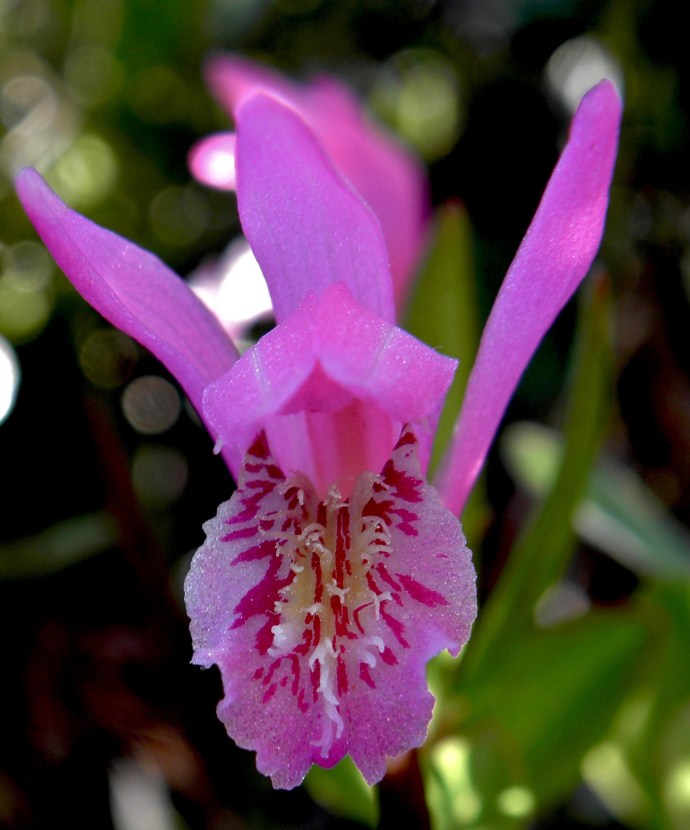
Some poet must sing in praise of the bulbous Arethusa.

in Thoreau’s Journal:
The song of birds is more lively and seems to have a new character;
a new season has commenced.
 in Thoreau’s Journal:
Going up Fair Haven Hill the blossoms of the huckleberries & blue berries imparted a sweet scent to the whole hill-side.
in Thoreau’s Journal:
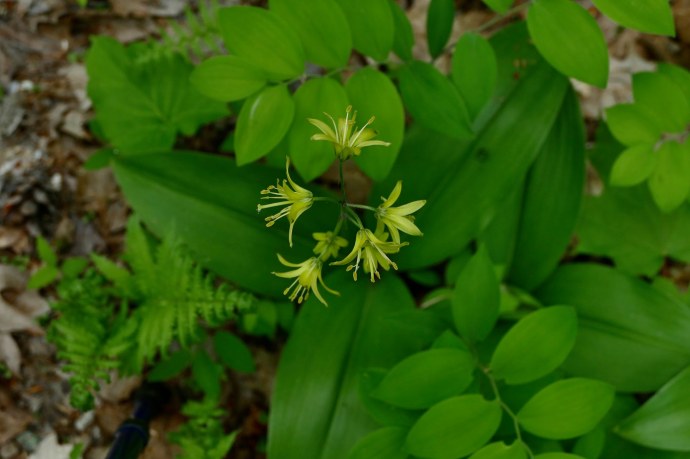
Clintonia Borealis a day or two….This is perhaps the most interesting & neatest of what I may call the liliaceous? plants we have–– Its beauty at present consists chiefly in its commonly 3 very handsome rich clear dark green leaves….They are perfect in form & color––broadly oblanceolate with a deep channel down the middle––uninjured by insects––arching over from a center at the ground sometimes very symmetrically disposed in a triangular fashion––& from their midst arises a scape a foot high with one or more umbels of “green bell—shaped flowers”––: yellowish green nodding or bent downward––but without fragrance–– In fact the flower is all green both leaves & corolla–– The leaves alone––& many have no scape––would detain the walker.
in Thoreau’s Journal:
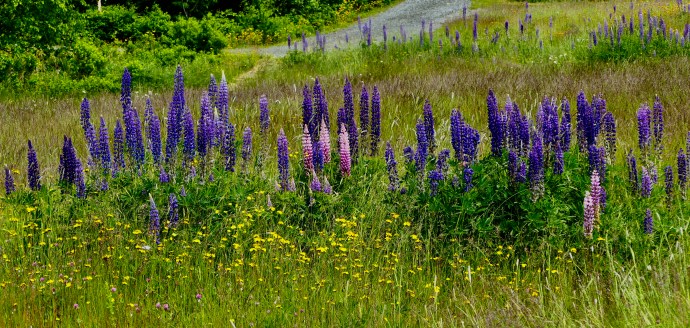
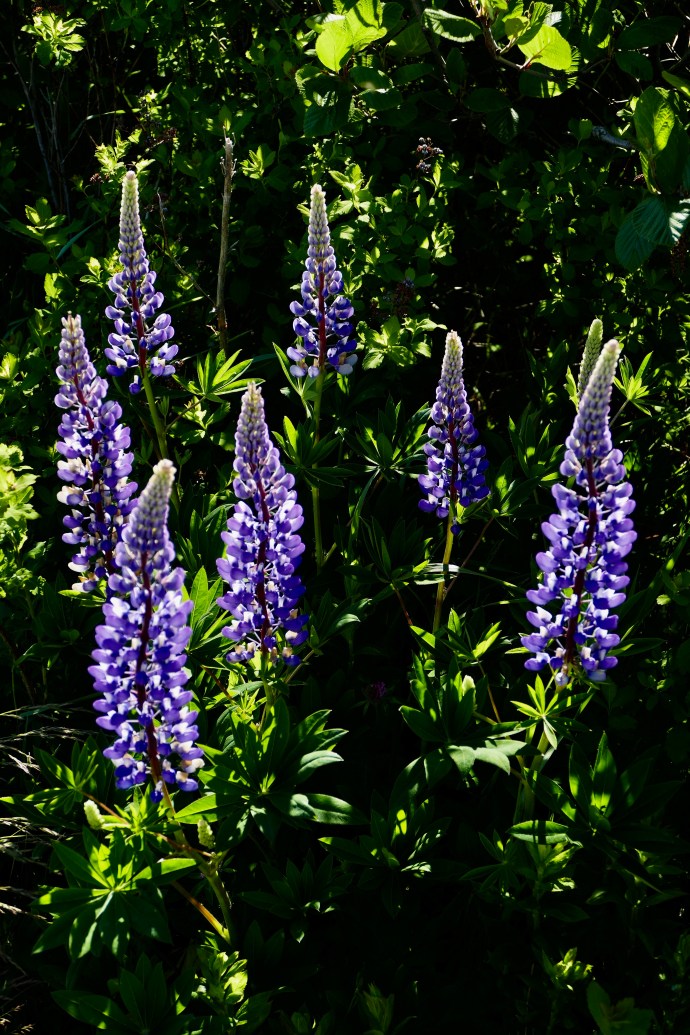
How much lupine is now in full bloom on bare sandy brows or promontories running into meadows where the sod is half worne away & the sand exposed.

in Thoreau’s Journal:
A cold SE wind. Blue-eyed grass ap in pretty good season.


in Thoreau’s Journal:

The common blue flag––just out at Ball’s Hill….On the meadows are large yellow-green patches of ferns beginning to prevail….Landed at a high lupine bank by Carlisle Bridge. How many such lupine banks are! Whose blue you detect rods off––
in Thoreau’s Journal:
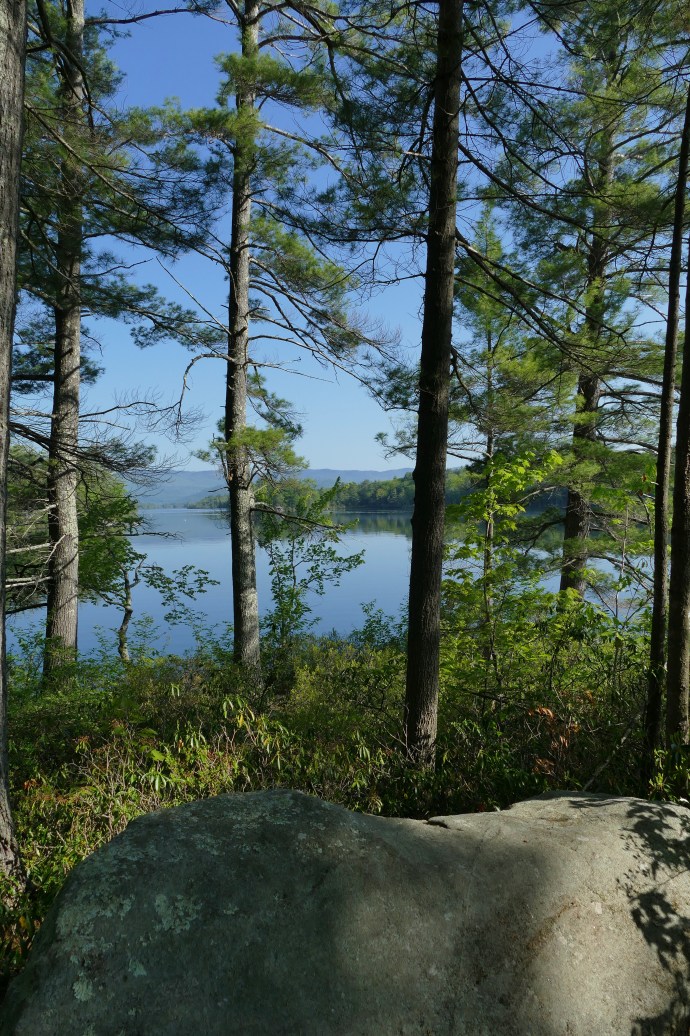
The rock feels cold to my body, as if it were a different season of the year.
in Thoreau’s Journal:
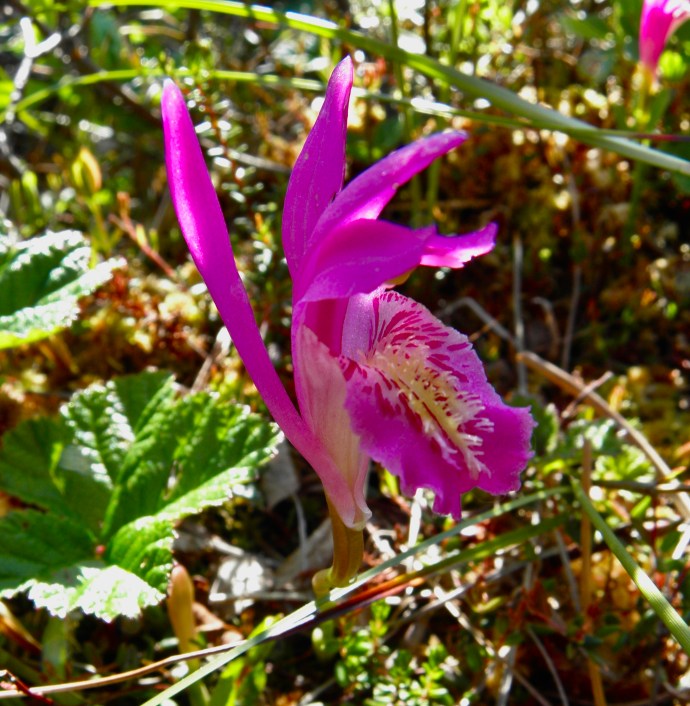
The bulbous arethusa out a day or two––prob. yesterday….Though in a measure prepared for it, still its beauty surprised me––it is by far the highest & richest color yet. Its intense color in the midst of the green meadow made it look 2ce as large as reality. It looks very foreign in the midst of our plants.––

 allandibiase.com
You must be logged in to post a comment.