June 23, 1852

P7050008.jpeg

in Thoreau’s Journal:

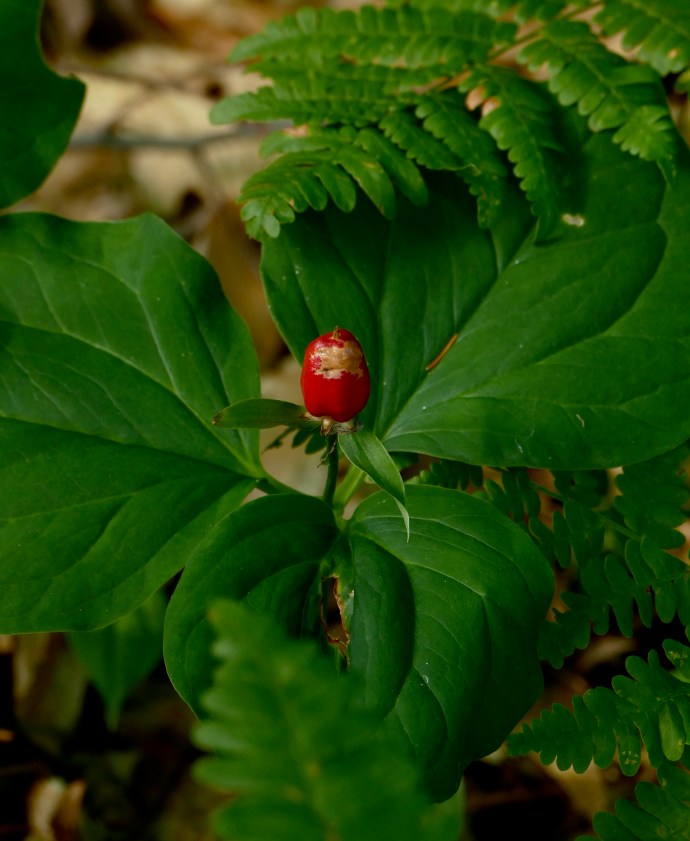
The pretty little Mitchella repens with its twin flowers spots the ground under the pines with its downy petalled cross shaped flowers & its purplish buds.

P7050002.jpeg

June 22, 1853

in Thoreau’s Journal:

Listen in every zephyr for some reproof.  It is the sweetest strain of the music. Its satire trembles round the world. We cannot touch a string––awake a sound but it reproves us….

P1260306.jpeg

Not a music to dance to, but to live by.

June 21, 1852

in Thoreau’s Journal: 

Nature has looked uncommonly bare & dry to me for a day or two. With our senses applied to the surrounding world we are reading our own physical & corresponding moral revolutions. Nature was so shallow all at once I did not know what had attracted me all my life.

P1260042.jpeg

I was therefore encouraged when going through a field this evening, I was unexpectedly struck with the beauty of an apple tree –– the perception of beauty is a moral test…

June 20, 1850

in Thoreau’s Journal:

And then for my afternoon walks I have a garden––larger than any artificial garden that I have read of––and far more attractive to me, mile after mile of embowered walks, with animals running free & wild therein as from the first––varied with land & water prospect––and above all so retired that it is extremely rare that you meet a single wanderer in its maze –– 

P1260406.jpeg

No gardener is see therein no gates nor… You may wander away to solitary bowers & brooks & hills….

June 19, 1852

in Thoreau’s Journal:

Green early blue-berries on hill sides passim remind you of the time when berries will be ripe. This is the ante-huckleberry season–when fruits are green.

Maybe the huckleberry- bird best expresses the season, or the red-eye.

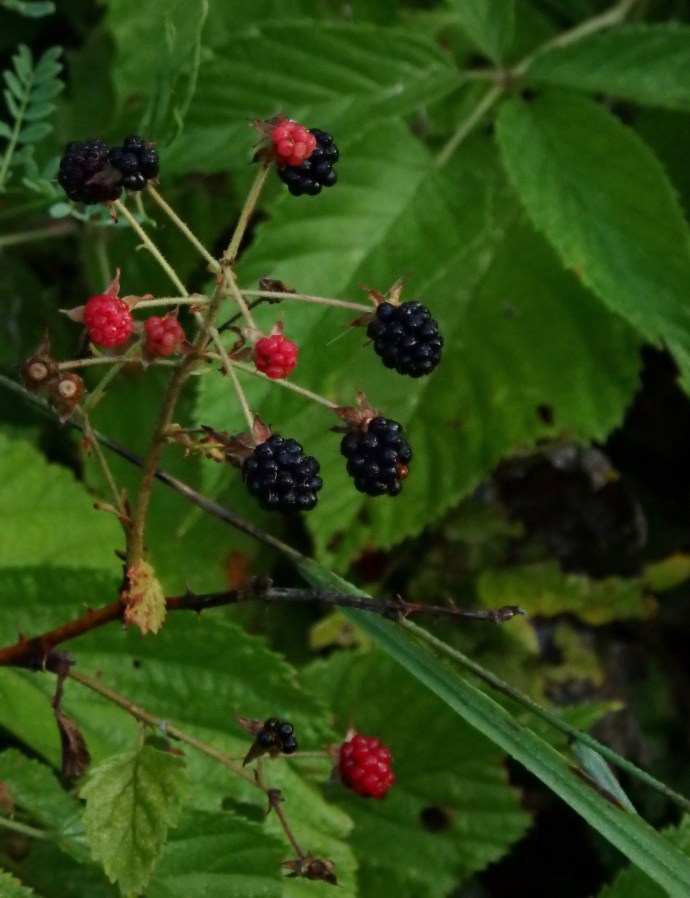
What subtle differences between one season and another! The warmest weather has, perchance, arrived and the longest days, but not the driest. When I remember gathering ripe blackberries on sandy fields or stones by the roadside, the very berries warmed by the sun, I am convinced of this. The seasons admit of infinite degrees in their revolutions.

P1070207.jpeg

Found one of the purple orchises in an open meadow.

June 18, 1852

in Thoreau’s Journal:

Methinks I saw & heard goldfinches.  Pyrolas are beginning to blossom. The four-leaved loose strife. The longest days in the year have now come. 

P6220034.jpeg

June 17, 1853

P6230002.jpeg

in Thoreau’s Journal:

There are some fine large clusters of lambkill close to the shore of Walden and in the Peak fronting the south–– They are early there & large ap. both on account of the warmth & the vicinity of the water –– These flowers are in perfect cylinders sometimes 6 inches long by 2 wide––and 3 such raying out or upward from one centre i.e. 3 branches clustered together.

P1060425.jpeg

Examined closely I think this handsomer than the mt. Laurel which we have.  The color is richer––but they do not show so well at a little distance and the corymbs are somewhat concealed by the green shoot and leaves rising above them, and also injured by the mixture of the dry remains of last years flowers––

P1060590.jpeg

June 16, 1854


P1070275.jpeg

in Thoreau’s Journal:

Nymphaea odorata.  Again I scent the white water-lily, and a season I had waited for has arrived. How indispensable all these experiences to make up the summer!

June 15, 1852

P1170267.jpeg

in Thoreau’s Journal:

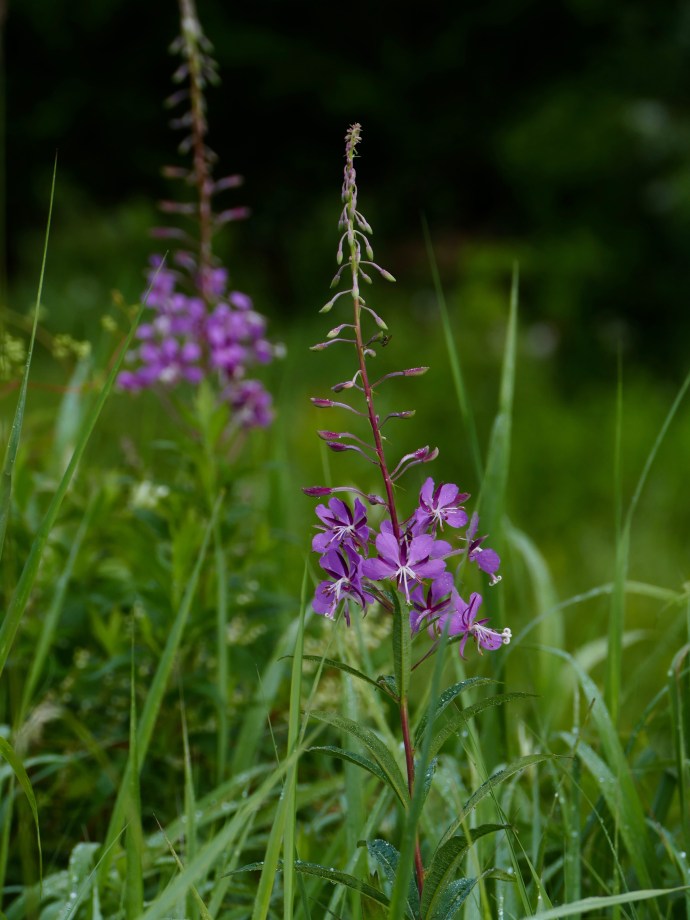
The fields are blued with blue eyed grass a slaty blue. The epilobium shows some color in its spikes. How rapidly new flowers infold—as if nature would get through her work too soon. One has as much as he can do to observe how flowers successively unfold. It is a flowery revolution to which but few attend. Hardly too much attention can be bestowed on flowers. We follow we march after the highest color—that is our flag—our standard—our “color.”  Flowers were made to be seen not overlooked. Their bright colors imply eyes—spectators.— 

June 14, 1853

in Thoreau’s Journal:

Went through the woods along the old Canal to Haynes’ Pasture from the height of which we looked down on the rich New-Hampshire wood we had come out of––the ground rising within the wood gave it the appearance of woods rising by successive stages from a smaller growth on the edge to stately trees in the middle.  & Nobscot was seen in the S.W. through the blue furnace mist. This seems the true hour to be abroad sauntering far from home–– Your thoughts being already turned toward home––your walk in one sense ended–– You are in that favorable frame of mind described by De Quincy, open to great impressions––& you see those rare sights with the unconscious side of the eye––which you could not see by a direct gaze before––

P1070289.jpeg

Then the dews begin to descend in your mind & its atmosphere is strained of all impurities –– And home is farther away than ever––here is home ––the beauty of the world impresses you–– There is a coolness in your mind as in a well–– Life is too grand for supper.––  The wood-thrush launches forth his evening strains from the midst of the pines. I admire the moderation of this master–– There is nothing tumultuous in his song––he launches forth one strain with all his heart & life & soul––of pure & unmatchable melody––and then he pauses and gives the hearer & himself time to digest this and then another & at suitable intervals.  Men talk of the rich song of other birds––the thrasher––mocking bird––nightingale––but I doubt I doubt–– They no not what they say; There is as great an interval between the Thrasher & the Wood Thrush as between Thompson’s Seasons & Homer.  –– The sweetness of the day crystalizes in this morning coolness.

June 12, 1853

P8090004.jpeg

in Thoreau’s Journal:

The leaf of the rattlesnake plantain now surprises the walker amid the dry leaves on cool hill-sides in the woods–– Of very simple form but richly veined with longitudinal & transverse white veins. It looks like art.

June 11, 1851

P1070108.jpeg

in Thoreau’s Journal:

No one to my knowledge, has observed the minute differences in the seasons. Hardly two nights are alike. The rocks do not feel warm to-night, for the air is warmest; nor does the sand particularly. A book of the seasons, each page of which should be written out-of-doors, or in its own locality wherever it may be.

June 10, 1852

P1250879.jpeg

in Thoreau’s Journal:

The red huckleberry & the white & red blueberry blossoms are very handsome and interesting now & would attract more attention if the prospect of their fruit did not make us overlook them.

P1250950.jpeg

June 9, 1854

in Thoreau’s Journal:

P1180268.jpeg

[writing of the great fringed orchis] 

The village belle never sees this more delicate belle of the swamp.

P1180275.jpeg

How little relation between our life and its!  Most of us never see it or hear of it.

The seasons go by to us as if it were not.

 June 7, 1851

in Thoreau’s Journal:

It is a certain faery land where we live––you may walk out in any direction over the earth’s surface––lifting your horizon––and everywhere your path––climbing the convexity of the globe leads you between heaven and earth––

P6080065.jpeg

––not away from the light of the sun and stars––& the habitations of men. I wonder that I ever get 5 miles on my way––the walk is so crowded with events––& phenomena. How many questions there are which I have not put to the inhabitants!

June 7, 1853

P6190026.jpeg

in Thoreau’s Journal:

Huckle berry apples which are various stages of a monstrous and abortive development of the flower––common now. Clover begins to redden the fields generally.  The horse tail has for some time covered the cause way with a close dense green like moss. The quail is heard at a distance.  The marsh-speedwell has been out ap some days. A little mowing begins in the gardens––& front yards. The grass is in full vigor now––yet it is already parti-colored with whitish withered stems which worms have cut.

P6190015.jpeg

Buttercups of various kind mingled yellow––the meads the tall––the bulbous––& the reopens–– Probably a primos laevigatus in trillium woods ready to blossom. Observe its berries in the fall.  The cinque foil in its ascending state––keeping pace with the grass is now abundant in the fields––saw it one or two weeks ago–– This is a feature of June.  

June 6, 1857

P1250834.jpeg

in Thoreau’s Journal:  

This is June–the month of grass & leaves. The deciduous trees are investing the evergreens & revealing how dark they are. Already the aspens are trembling again, and a new summer is offered me– I feel a little fluttered in my thoughts as if I might be too late. Each season is but an infinitesimal point. It no sooner comes than it is gone. It has no duration. It simply gives a tone & hue to my thought. Each annual phenomenon is a reminiscence & prompting. Our thoughts & sentiments answer to the revolutions of the seasons, as 2 cog-wheels fit into each other– We are conversant with only one point of contact at a time–from which we receive a prompting & impulse & instantly pass to a new season or point of contact. A year is made up of a certain series & number of sensations & thoughts–which have their language in nature. Now I am ice–now I am sorrel. Each experience reduces itself to a mood of the mind. I see a man grafting, for instance–What this imports chiefly is not apples to the owner–or bread to the grafter–but a mood or certain train of thought to my mind.