July 10, 1852

 in Thoreau’s Journal:
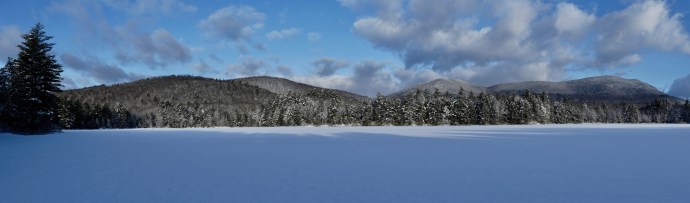
We turn aside near the old Lee place—


P1070156.jpg


The rye-fields are now quite yellow & ready for the sickle. Already there are many flavous colors in the landscape—much maturity of small seeds. The nodding heads of the rye make an agreeable maze to the eye.

July 9, 1852

in Thoreau’s Journal:

Morton, in his Crania Americana says—referring to Wilkinson as his authority—that “Vessels of porcelain of Chinese manufacture, have of late been repeatedly found in the catacombs of Thebes, in Egypt” some as old as the Pharaonic period. And the inscriptions on them “have been read with ease by Chinese scholars, and in three instances record the following legend:—

The flower opens, and lo! another year.”

P1150014.jpg

There is something sublime in the fact that some of the oldest written sentences should thus celebrate the coming in of Spring. How many times have the flowers opened and new year begun! Hardly a more cheering sentence could have come down to us. How old is spring—a phenomenon still so fresh! Do we perceive any decay in Nature?  How much evidence is contained in this short and simple sentence respecting the form inhabitants of this globe! It is a sentence to be inscribed on vessels of porcelain.  Suggesting that so many years had gone before. An observation as fit then as now.


July 6, 1852

in Thoreau’s Journal: 

P1180066.jpg

The pure white cymes (?) of the elder are very conspicuous now along the edges of meadows contrasting with the green above and around— 

P1180085.jpg


July 5, 1852

in Thoreau’s Journal:

How fitting to have every day in a vase of water on your table the wild flowers of the season–which are just blossoming–can any house said to be furnished without them?….

P1170046.jpg

So may the season suggest the fine thoughts it is fitted to suggest.

July 3, 1852

in Thoreau’s Journal: 

The chimaphila umbellata winter-green must have been in blossom some time….

p7220080.jpg

It is a very pretty little chandelier of a flower fit to adorn the forest floor. Its buds are nearly as handsome (They appear long in unfolding). 

July 2

1851 in Thoreau’s Journal:

P1180063.jpg
To-day the milk-weed is blossoming.

1852 in Thoreau’s Journal:

P1180073.jpg

Men will travel to the Nile to see the lotus flower, who have never seen in their glory the lotuses of their native streams.

1858 in Thoreau’s Journal:

P8313792.jpg

What a relief and expansion of my thoughts when I come out from that inland position by the grave yard to this broad river’s shore!….It is equal to a different season and country and creates a different mood.

July 1, 1852

 in Thoreau’s Journal: 

P1070381.jpg

The rich violet purple of the pontederias was the more striking as the blossoms were still rare. Nature will soon be very lavish of this blue along the river sides.

June 30, 1860

 in Thoreau’s Journal: 

P1070406.jpg

Now that season begins when you see the river to be so regularly divided longitudinally into pads, smooth water, and sparkling ripples between, in a clear day. 

June 29, 1851

in Thoreau’s Journal:

P1170892.jpg

There is a great deal of white clover this year….As this is the season for the swarming of bees, and this clover is very attractive to them, it is probably the more difficult to secure them; at any rate it is more important, now that they can make honey so fast. It is an interesting inquiry why this year is so favorable to the growth of clover.

June 27, 1852

in Thoreau’s Journal: 

I still perceive that ambrosial sweetness from the meadows in some places.  Give me the strong, rank scent of ferns in the spring for vigor, just blossoming late in the spring.

P1170842.jpg

A healthy and refined nature would always derive pleasure from the landscape. As long as the bodily vigor lasts, man sympathizes with Nature. 

June 26, 1852

in Thoreau’s Journal: 

Just so much beauty and virtue as there is in the world, and just so much ugliness and vice, you see expressed in flowers.  Each human being has his flower which expresses his character.  In them nothing is concealed, but everything published.  

P1060886.jpg

June 25, 1852

in Thoreau’s Journal: 

P1060806.jpg

Methinks roses oftenest display their bright colors which invariably attract all eyes and betray them, against a dark ground, as the dark green or the shady recesses of other bushes and copses, where they show to best advantage. Their enemies do not spare the open flower for an hour. Hence, if for no other reason, their buds are most beautiful. Their promise of perfect and dazzling beauty, when their buds are just beginning to expand, beauty which they can hardly contain, as in most youths, commonly surpasses the fulfillment of their expanded flowers. The color shows fairest and brightest in the bud. The expanded flower has no higher or deeper tint than the swelling bud exposed. This raised a dangerous expectation. The season when wild roses are in bloom should have some preeminence I think.

P1060818.jpg


June 24, 1852

in Thoreau’s Journal: 

They are the flitting sails in that ocean whose bounds no man has visited. They are like all great themes, always at hand to be considered, or they float over us unregarded….

P1060389.jpg

What could a man learn by watching the clouds? These objects which go over our heads unobserved are vast and indefinite…..They are among the most glorious objects in Nature.  A sky without clouds is a meadow without flowers, a sea without sails. 

June 23

 in Thoreau’s Journal: 

June 23, 1851

P7200002.jpg

These are very agreeable pastures to me, no house in sight, no cultivation. 

June 23, 1852

36054125_10217249832499253_3868944344538939392_o.jpg

This grassy road now dives into the wood,

as if it were entering a cellar or bulkhead,

the shadow is so deep….

June 23, 2018 Photo

June 22, 1852

 in Thoreau’s Journal: 

P8210025.jpg

We have had a succession of thunder showers to-day, and at sunset a rainbow.  How moral the world is made! This bow is not utilitarian….

How glorious should be the life of man passed under this arch!