in Thoreau’s Journal:
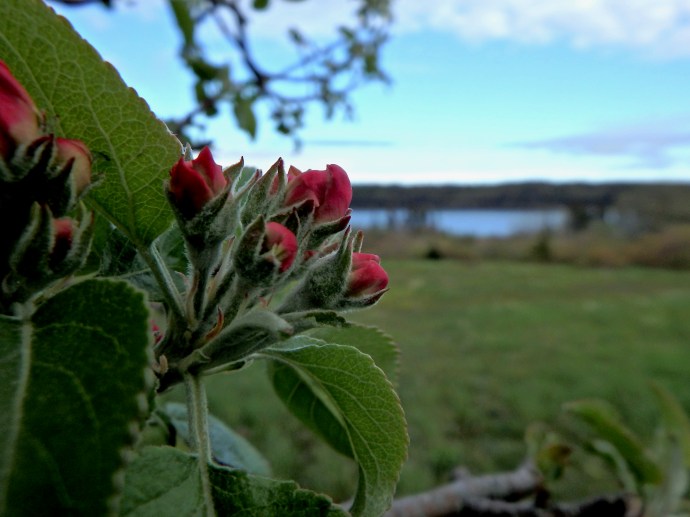
The golden willow catkins begin to fall–their prime is past–& buttercups and silvery cinquefoil, and the first apple blossoms, and waving grass beginning to be tinged with sorrel, introduce us to a different season.
in Thoreau’s Journal:
The golden willow catkins begin to fall–their prime is past–& buttercups and silvery cinquefoil, and the first apple blossoms, and waving grass beginning to be tinged with sorrel, introduce us to a different season.

in Thoreau’s Journal:

Insects have just begun to be troublesome.
in Thoreau’s Journal:

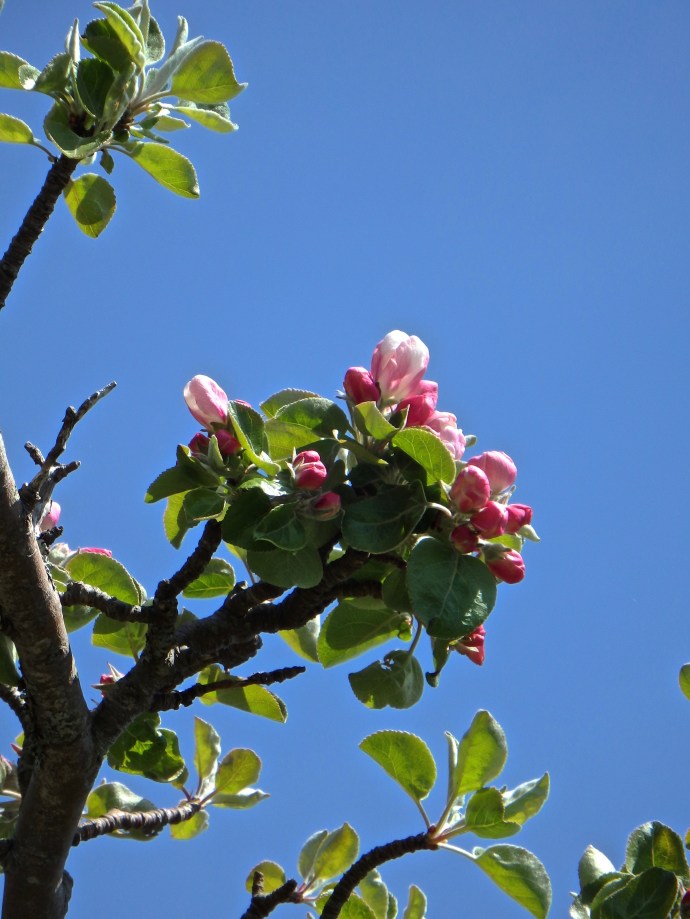
The birches at a distance appear at as a thin green veil––in their expanding leaves.
in Thoreau’s Journal:

The rain is making the grass grow apace– It appears to stand upright–its blades and you can almost see it grow. For some reason I now remember the autumn–the succory & the golden-rod. We remember autumn to best advantage in the spring–the fine aroma of it reaches us then. Are those the young keys of sugar maples that I see? The Canada? (N Brook’s) plum in bloom & a cherry tree. How closely the flower follows upon if it does not precede the leaf! The leaves are but calyx & escort to the flower. Some beds of clover wave
in Thoreau’s Journal:
There is a positive sweetness in the air from flowers & expanding leaves—a universal sweetness….
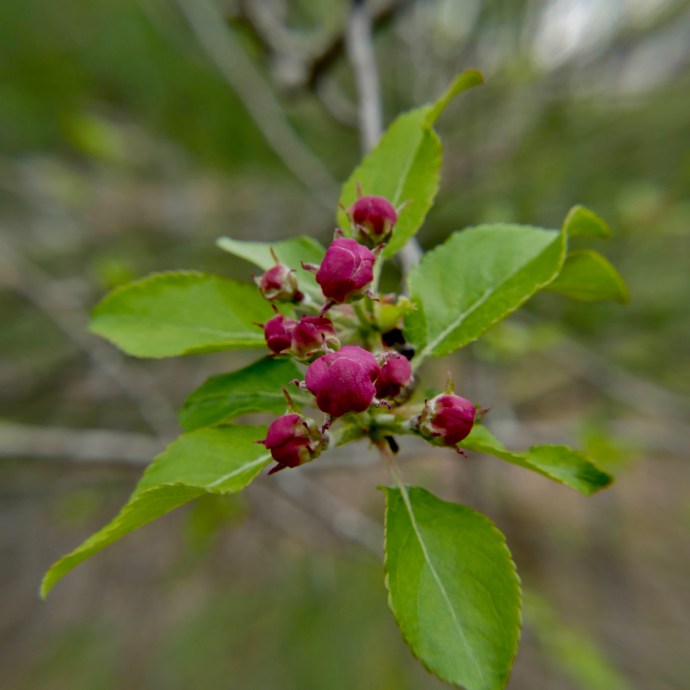
Leaves generally are most beautiful when young and tender before insects or weather has defaced them.
in Thoreau’s Journal:
I am most impressed by the rapidity of the changes within a week….The sugar maples in our streets are now green with young leaves.
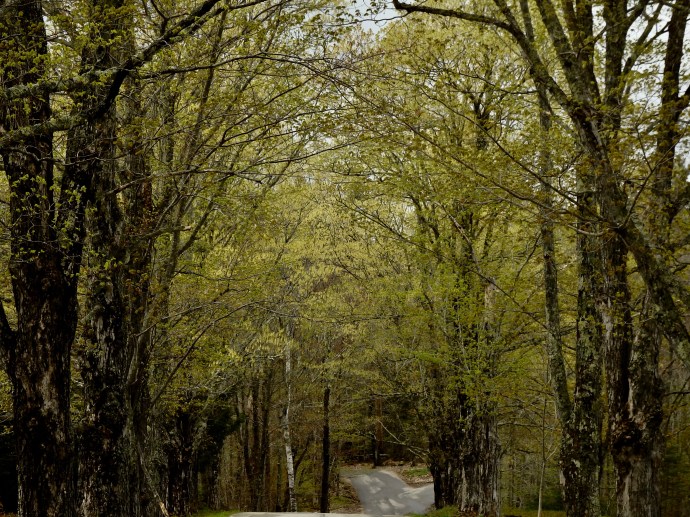
Methinks the scent is a more primitive inquisition than they eye.–– more oracular and trusty-worthy. When I criticise my own writing I go by the scent, as it were. The scent reveals of course what is concealed from the other senses— By it I detect earthiness.
in Thoreau’s Journal:
Has been a dew which wets the feet. & I see a very thin fog over the low ground….
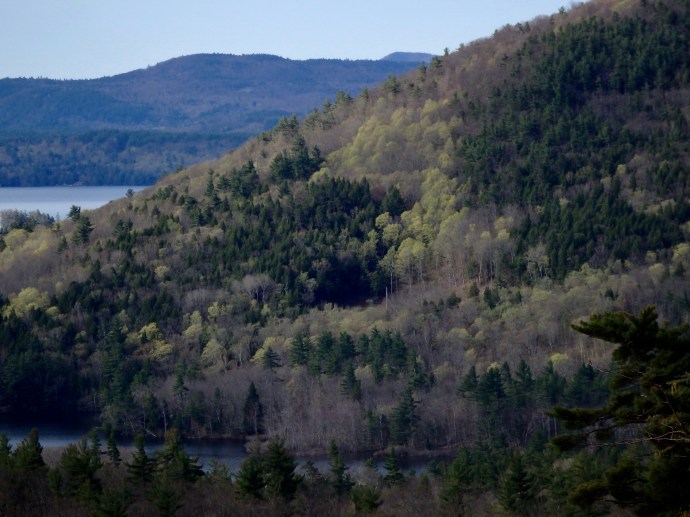
This is the gray morning––the sun risen–– a very thin mist on the landscape––the falling water smooth– Far below a screaming jay seen flying against the bare stems of the pines. The young oaks on the plain the pines stand here and there–the walls in Conantum pastures seen in the sun the little groves on the opposite side of the river lit up by it while I am shade–these are memorable & belong to the hour.
in Thoreau’s Journal:
Bluets now just begun. –
 Dewy calls it Venus Pride! Gray says truly “a very delicate little herb” – “producing in spring a profession of handsome bright blue blossoms fading to white with a yellow eye.” I should say bluish white.
in Thoreau’s Journal:
A really warm day…. The shade is even agreeable today. I smell the pines lately; is it because they are starting? O the huckleberry bird! The viola pedata budded, ready to blossom….Every part of the world is beautiful today– – The bright shimmering water–the fresh light-green grass spinging up on the hills–tender firm moss-like before it waves.– the very faint blue sky without distinct clouds is least beautiful of all, having yielded its beauty to the earth–& the fine light smokes–sometimes blue against the woods.– and the tracts where the woods have been but the past winter. the beautiful etherial not misty blue of the horizon–& its mts., as if painted. Now all buds may swell methinks–now the summer may begin for all creatures….

in Thoreau’s Journal:
I see the slate-colored snow bird still––a few. What was that large olive-yellow bird on Heywood’s apple trees? The female flower of the Sweet Gale. red–like so many female flowers– The meadow sweet begins to leave out. The male flowers of the maple look yellowish scarlet. looking up to the sky. The elms are still in full blossom. The cowslips’s is a vigorous growth––& makes at present the most show of any flower––
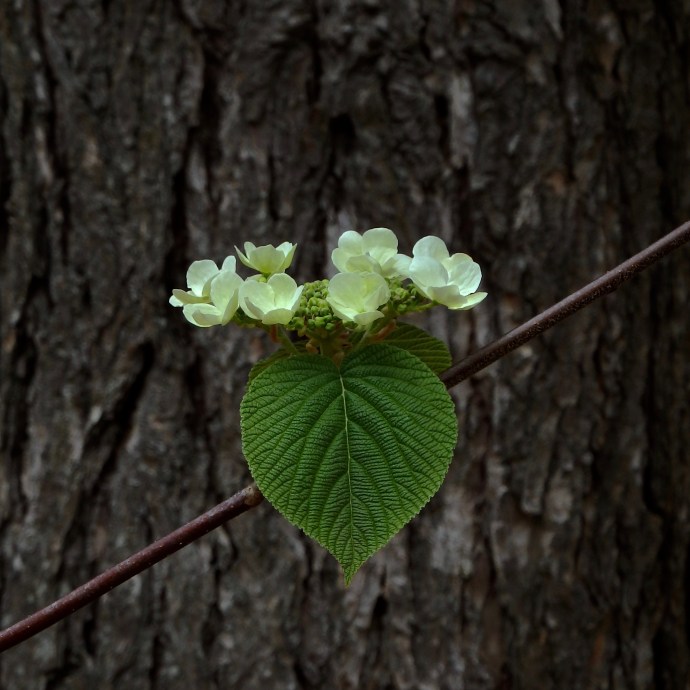
Leaf-stem bud and flower are all very handsome in their place & season.
in Thoreau’s Journal:
How cheering & glorious any landscape viewed from an eminence! for every one has its horizon & sky. It is so easy to take wide views….

The vast wild earth.
in Thoreau’s Journal:
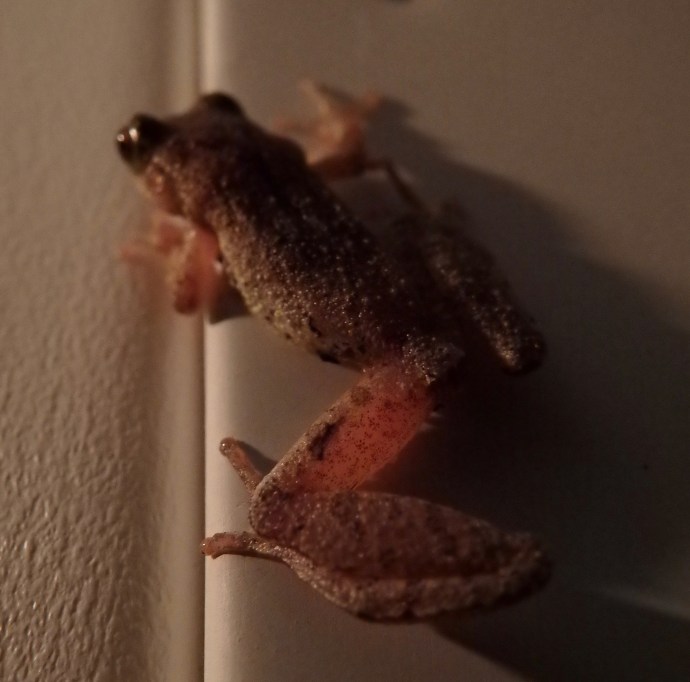
The little frogs I kept 3 days in the house peeped at evening twilight through they had been silent all day—never failed.— Swelled up their little bag pipes. transparent & big as a small cherry. or a LARGE pea.
in Thoreau’s Journal:
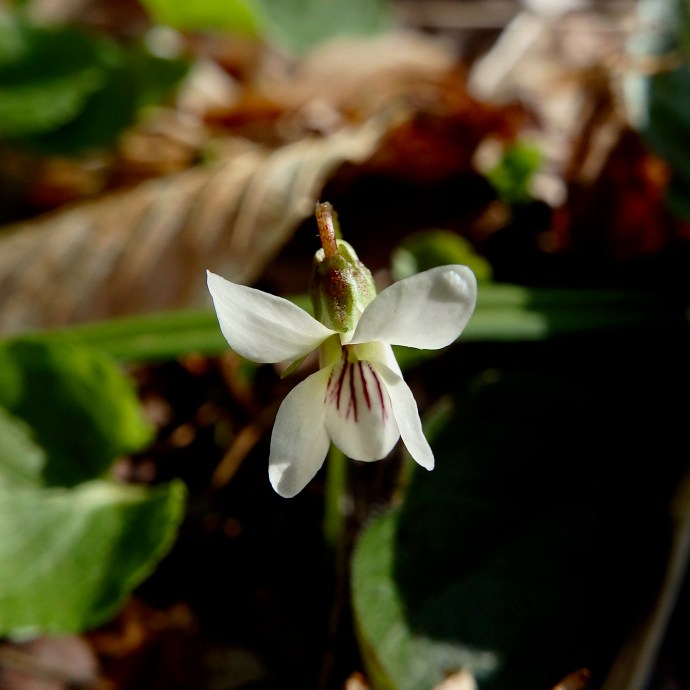
Found the first Violet…. The woods have a damp smell this morning — I hear a robin amid them….The grass ground—low ground at least wears a good green tinge now.
in Thoreau’s Journal:
The season advances by fits & starts you would not believe that there could be so many degrees to it….Yesterday I would not have believed that there could have been such an improvement on that day as this is-–short of mid summer or June. My pocket being full of the flowers of the maple––elm &c my handkerchief by its fragrance reminded me of some— fruitful or flowery bank I know not where.
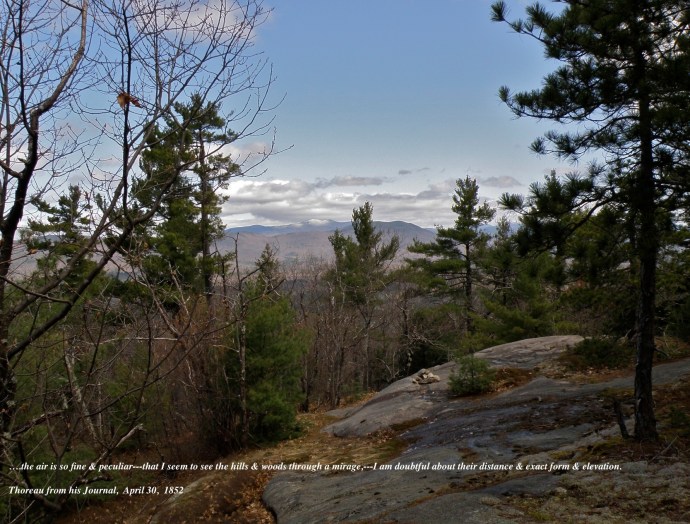

in Thoreau’s Journal:
The acorns among the leaves have been sprouted for a week past—the shells open and the blushing (red) meat exposed at the sprout end where the sprout is already turning toward the bowels of the earth….

—Pick these up & plant them if you would make a forest.
in Thoreau’s Journal:
How suddenly the flowers bloom…..The spring flowers wait not to perfect their leaves before they expand their blossoms. The blossom in many cases precedes the leaf so with poetry? ––they flash out. In the most favorable locality you will find flowers earlier than the May goers will believe. This year at at least one flower (of several) hardly precedes another….


Photos, April 27, 2017
There is no important change in the color of the woods yet–– There are fewer dry leaves–buds color the maples–and perhaps the bark on some last year’s shoots as the willows are brighter & some willows covered with catkins––& even alders maples elms & poplars show at a distance.

The earth has now a greenish tinge….
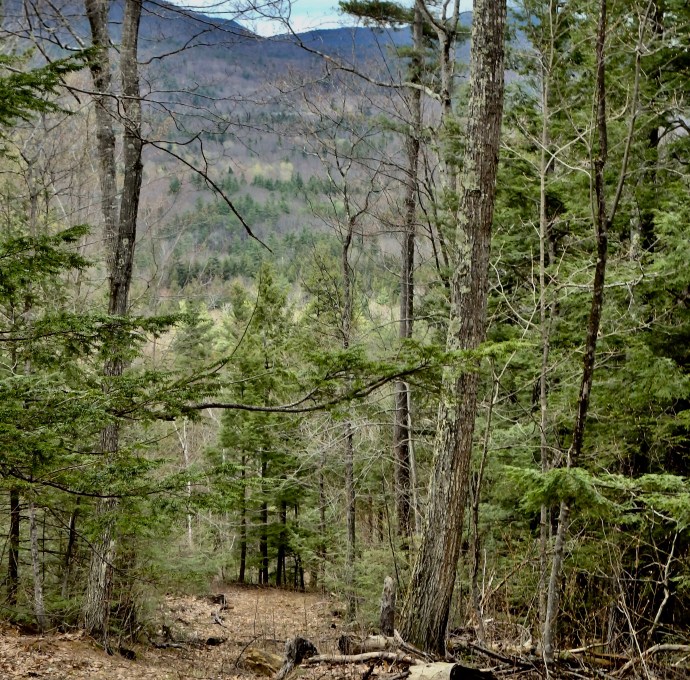
in Thoreau’s Journal:
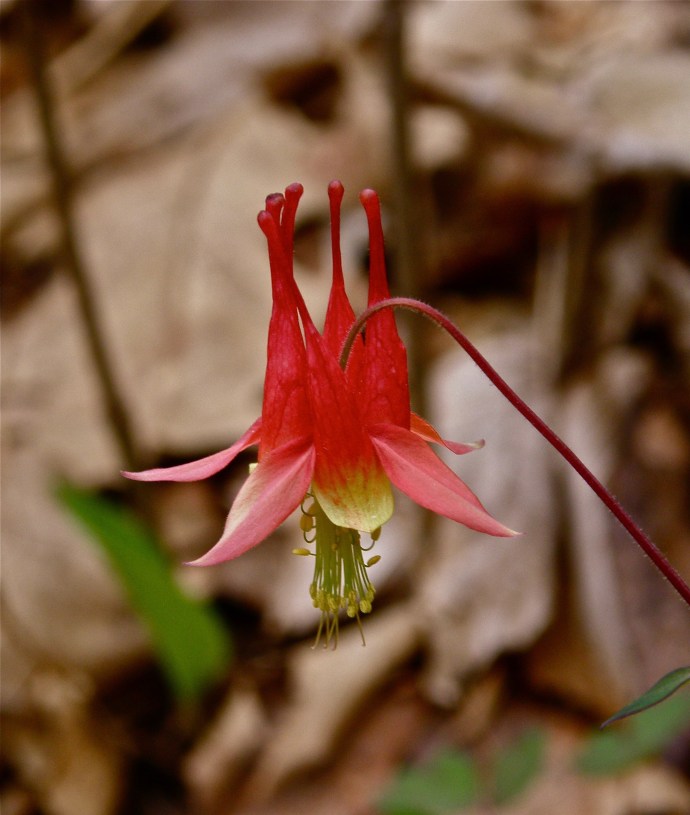
It is astonishing how soon & unexpectedly flowers appear–– When the fields are scarcely tinged with green.


You must be logged in to post a comment.