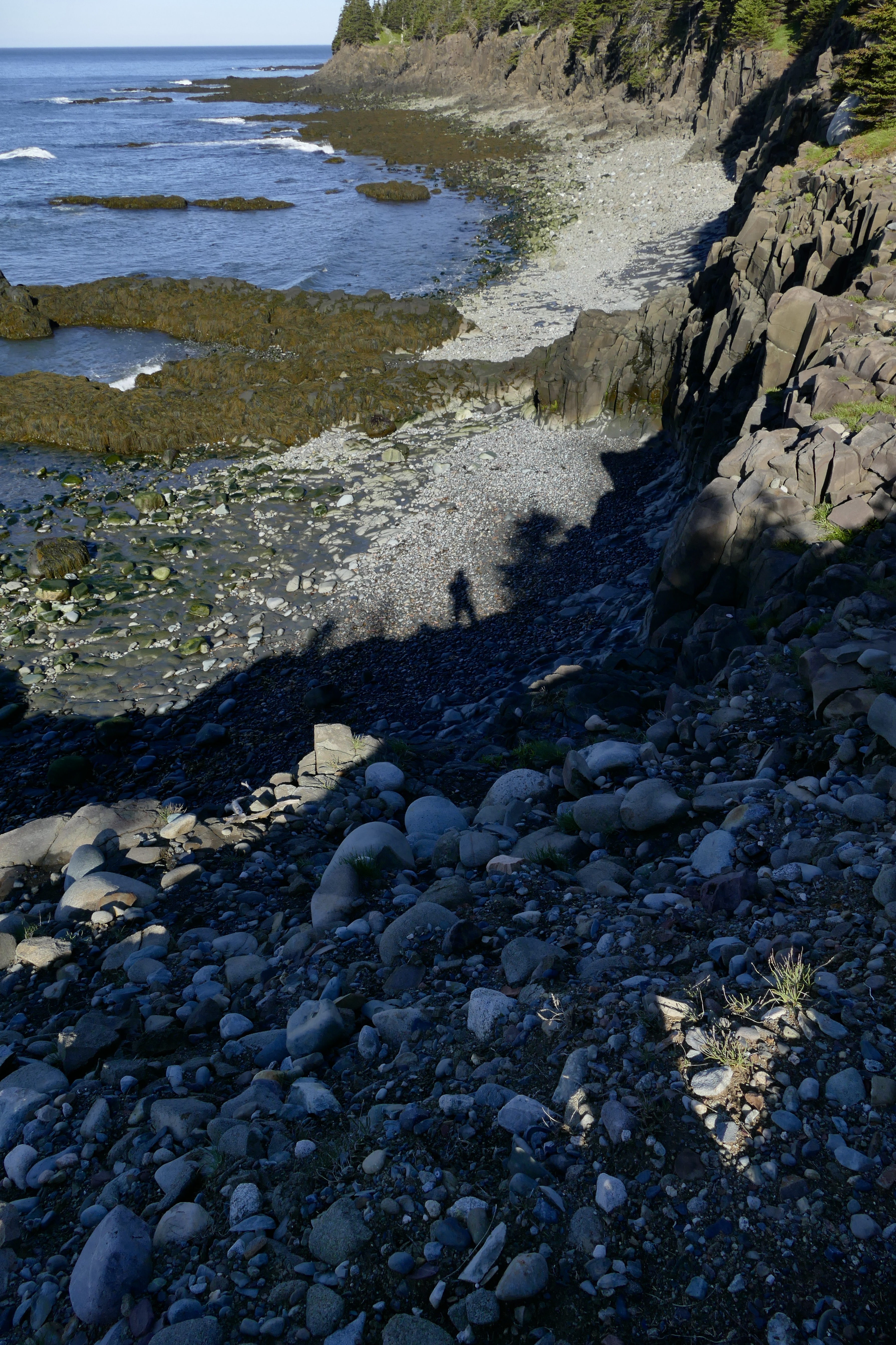
My shadow has the distinctness of a second person, a certain black companion bordering on the imp, and I ask, “Who is this?” which I see dodging behind me as I am about to sit down on a rock.
No one to my knowledge, has observed the minute differences in the seasons. Hardly two nights are alike. The rocks do not feel warm to-night, for the air is warmest; nor does the sand particularly. A book of the seasons, each page of which should be written out-of-doors, or in its own locality wherever it may be.
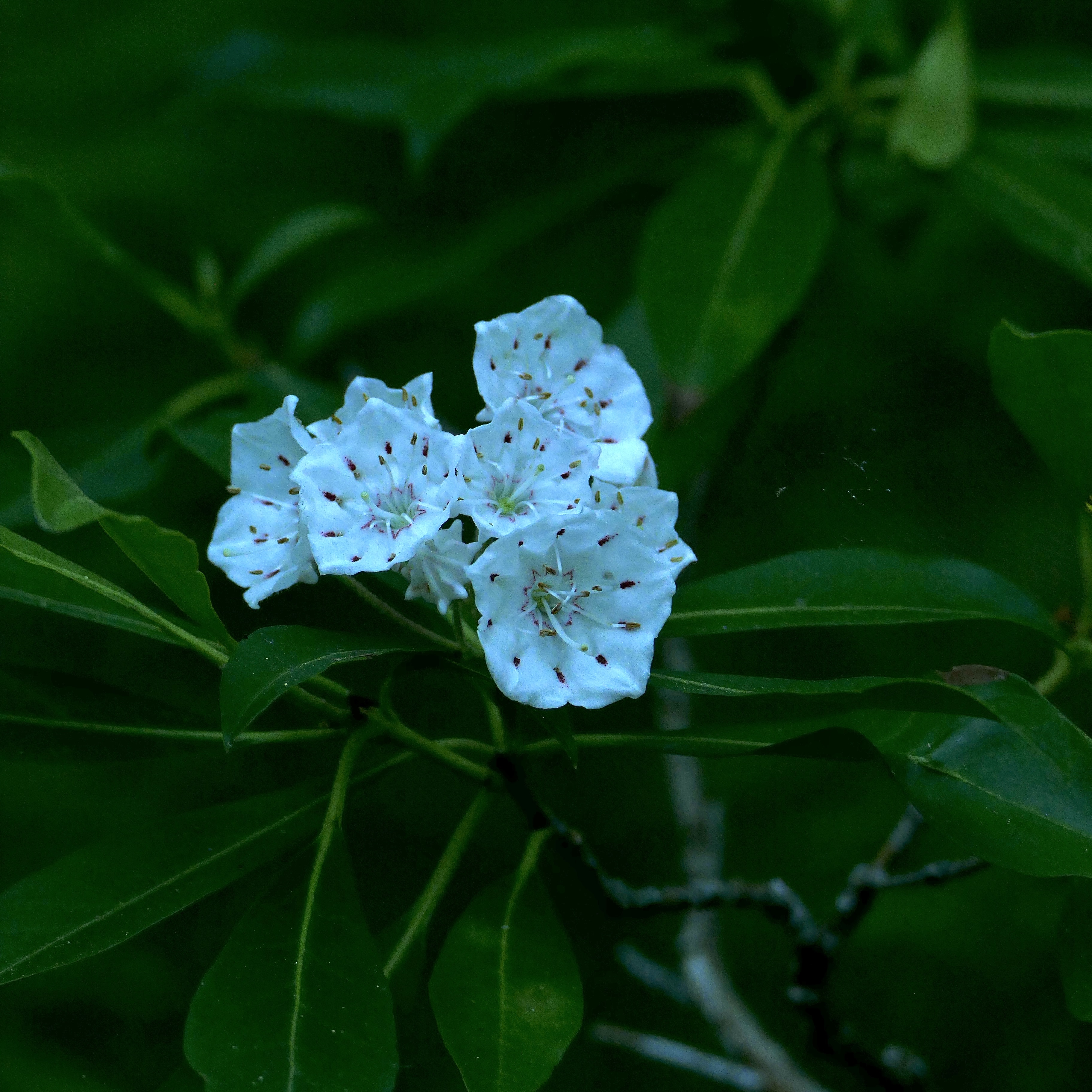
The mountain laurel will begin to bloom to-morrow. The frost some weeks since killed most of the buds and shoots, except where they were protected by trees or by themselves, and now new shoots have put forth and grow four or five inches from the sides of what were the leading ones. It is a plant which plainly requires the protection of the wood.
It is a certain faery land where we live––you may walk out in any direction over the earth’s surface––lifting your horizon––and everywhere your path––climbing the convexity of the globe leads you between heaven and earth–– ––not away from the light of the sun and stars––& the habitations of men. I wonder that I ever get 5 miles on my way––the walk is so crowded with events––& phenomena. How many questions there are which I have not put to the inhabitants!
Not only the foliage begins to look dark and dense, but many ferns are fully grown, as the cinnamon and interrupted, perfectly recurved over the bank and shore, adding to the leafy impression of the season. The Osmunda regalis looks later and more tender, reddish-brown still. It preserves its habit of growing in circles, though it may be on a steep bank and one half the circle in the water.
The new leaves are now very fair, pure, unspotted green, commonly more or less yellowish. The swamp white oak leaf looks particularly tender and delicate. The red maple is much harder and more matured. Yet the trees commonly are not so densely leaved but that I can see through them; e. g., I see through the red oak and the bass (below Dove Rock), looking toward the sky. They are a mere network of light and shade after all. The oak may be a little the thickest. The white ash is considerably thinner than either.
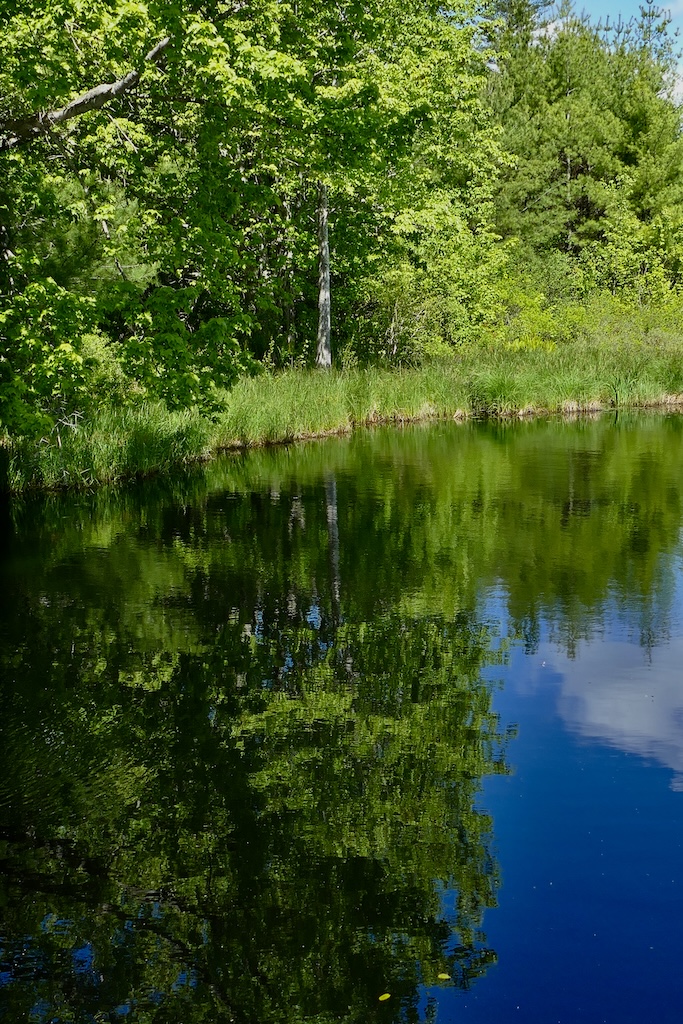
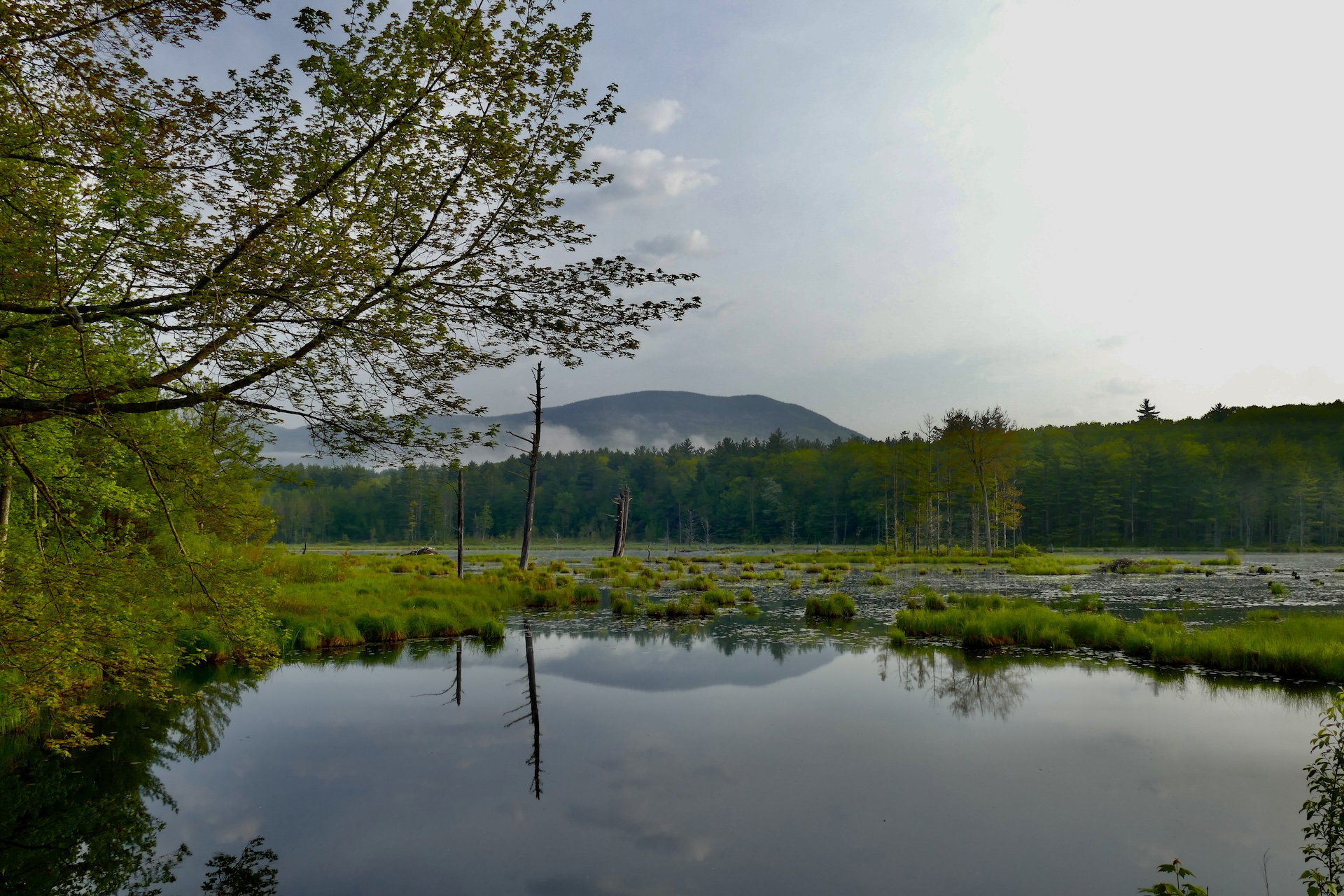
The grass and foliage are particularly fresh and green after the two days of rain, and we mark how the darkening elms stand along the highways. Like wands or wreaths seen against the horizon, they streak the sky with green.
The world now full of verdure & fragrance and the air comparatively clear (not yet the constant haze of the dog days) through which the distant fields are seen reddened with sorrel & the meadows wet green full of fresh grass & the trees in their first beautiful bright untarnished & unspotted green.
May is the bursting into leaf––and early flowering with much coolness & wet and a few decidedly warm days ushering in summer –– June verdure & growth––but agreeable, heat––
Yesterday, when I walked to Goodman’s Hill, it seemed to me that the atmosphere was never so full of fragrance and spicy odors. There is a great variety in the fragrance of the apple blossoms as well as their tints. Some are quite spicy. The air seemed filled with the odor of ripe strawberries, though it is quite too early for them. The earth was not only fragrant but sweet and spicy to the smell, reminding us of Arabian gales and what mariners tell of the spice islands.
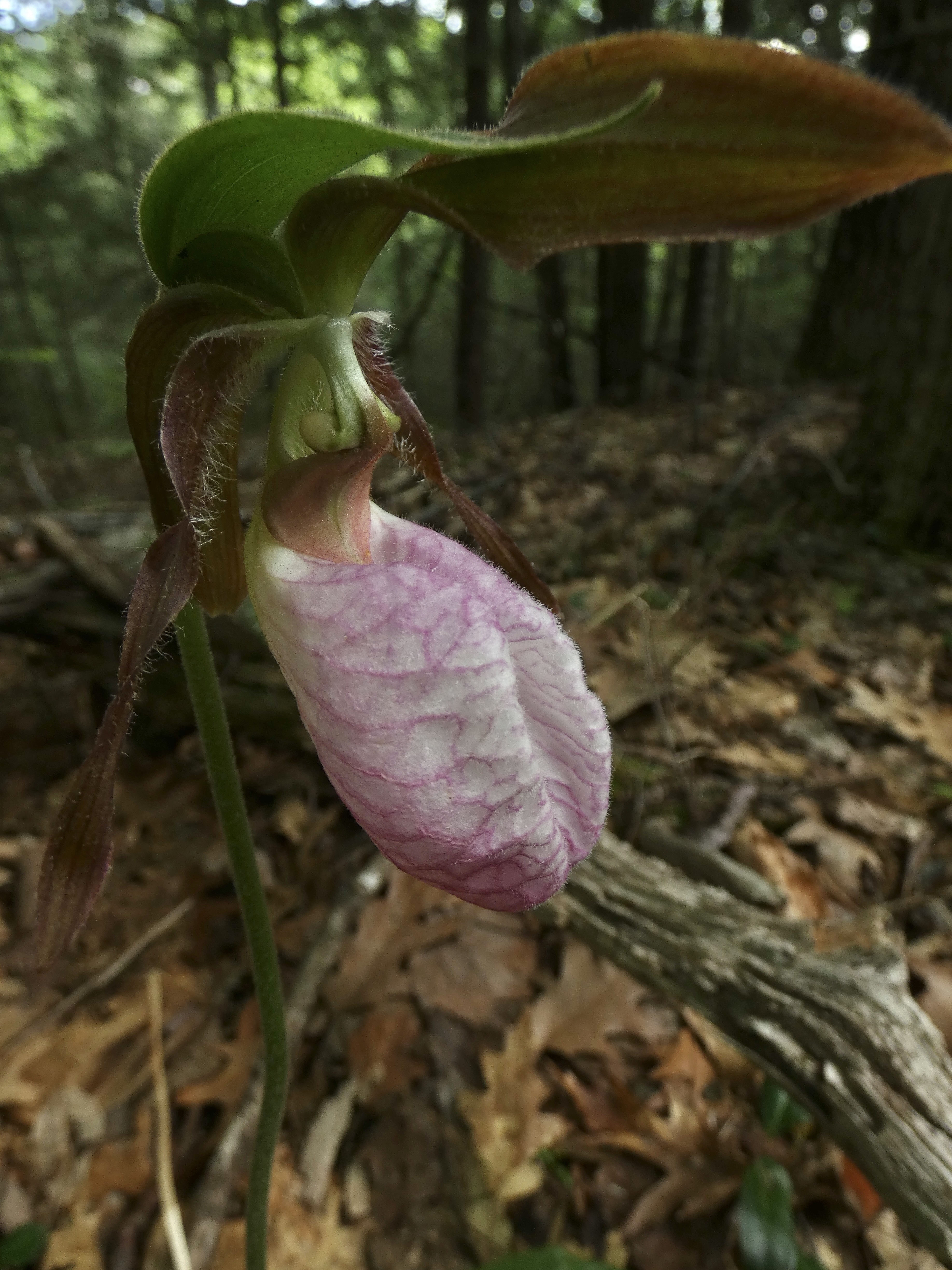
The first of June, when the lady’s-slipper and the wild pink have come out in sunny places on the hillsides, then the summer is begun according to the clock of the seasons.
These are the clear breezy days of early June, when the leaves are young and few and the sorrel not yet in its prime.
Perceive the meadow fragrance. The roads are strewn with red maple seed. The pine shoots have grown generally from three to six inches, and begin to make a distant impression, even at some distance, of white and brown above their dark green. The foliage of deciduous trees is still rather yellow-green than green.
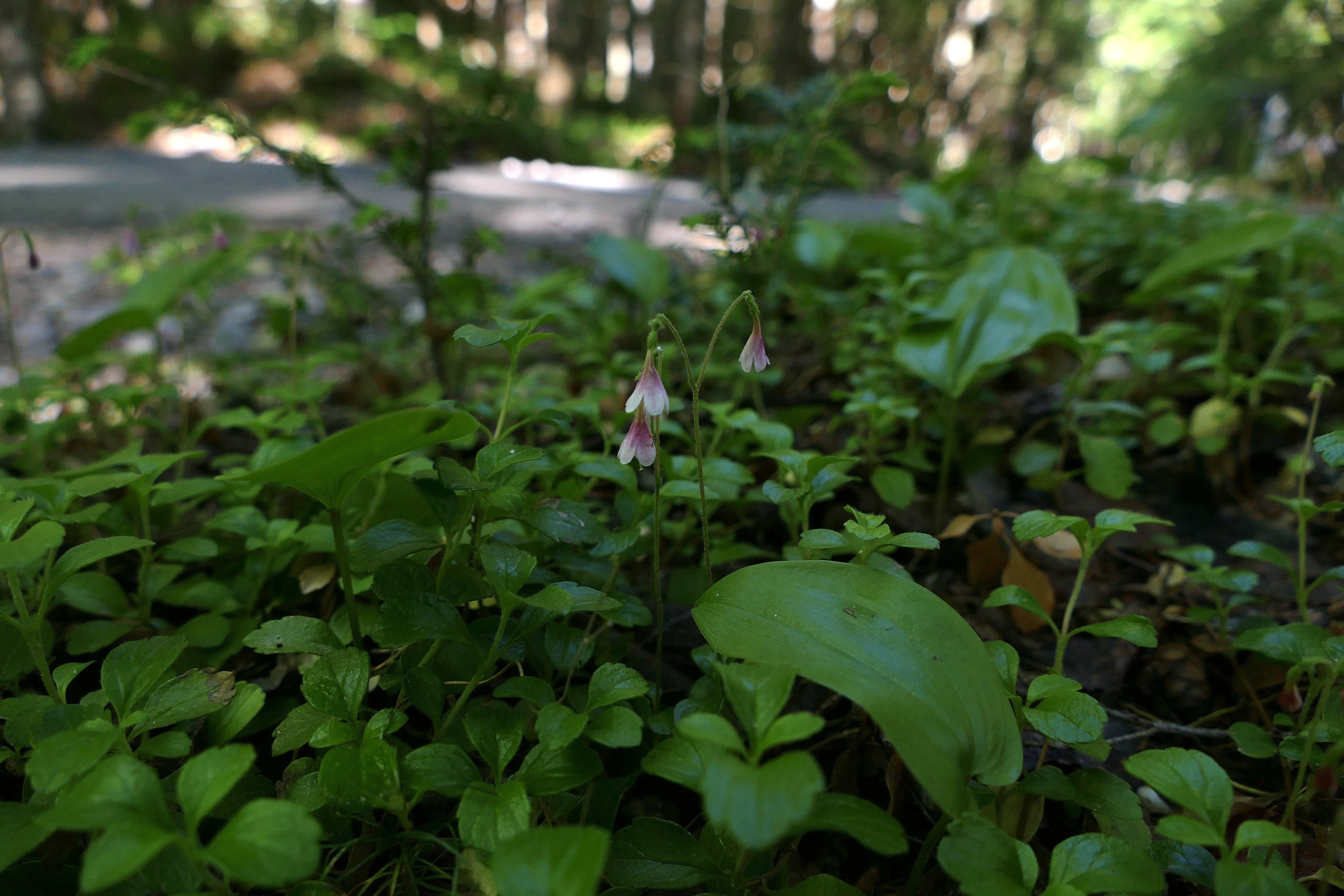
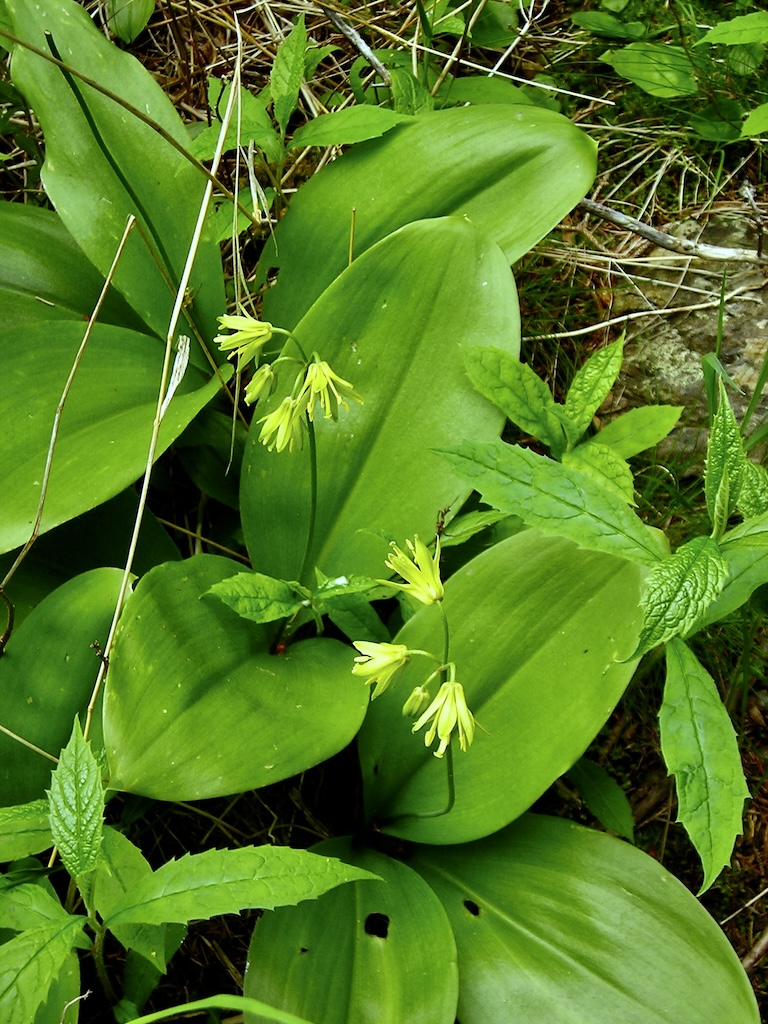
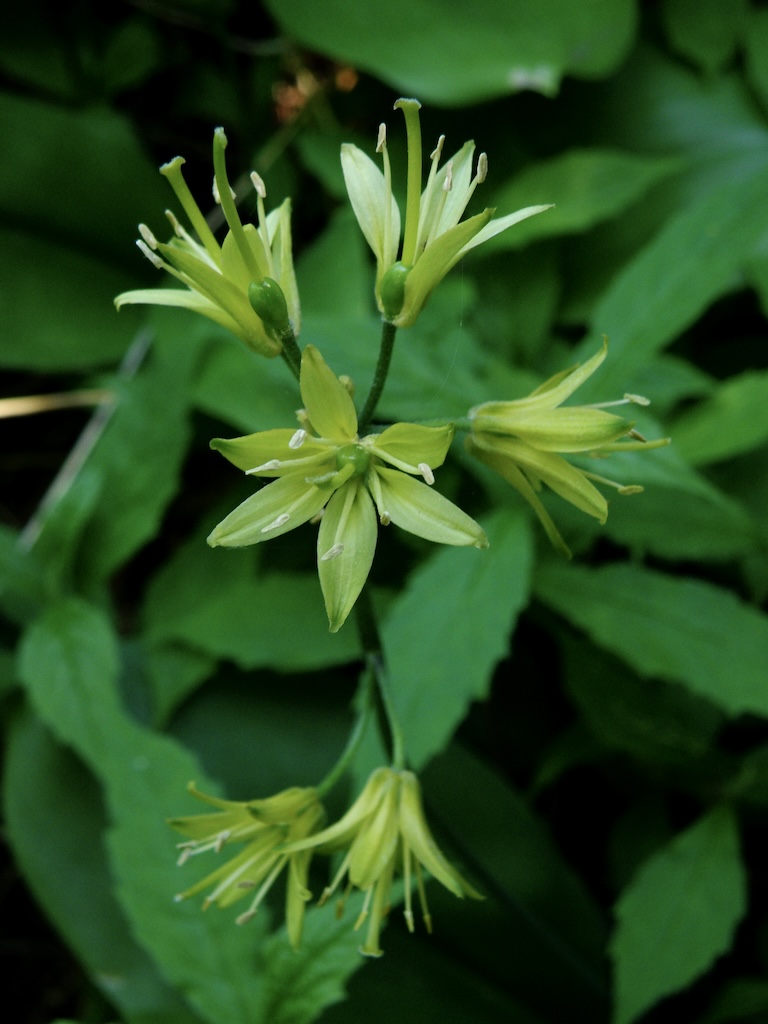
Clintonia Borealis a day or two….This is perhaps the most interesting & neatest of what I may call the liliaceous? plants we have–– Its beauty at present consists chiefly in its commonly 3 very handsome rich clear dark green leaves….They are perfect in form & color––broadly oblanceolate with a deep channel down the middle––uninjured by insects––arching over from a center at the ground sometimes very symmetrically disposed in a triangular fashion––& from their midst arises a scape a foot high with one or more umbels of “green bell—shaped flowers”––: yellowish green nodding or bent downward––but without fragrance–– In fact the flower is all green both leaves & corolla–– The leaves alone––& many have no scape––would detain the walker.
Summer begins now about a week past—with the expanded leaves—the shade & warm weather….what a variety of colors we are entertained––yet most colors are rare or in small doses presented us as a condiment or spice ––– Much of green-blue-black & white but of yellow & the different shades of red far less. The eyes feast on the different shades of flowers as on tit-bits—-they are its spices.
On the meadows are large yellow-green patches of ferns beginning to prevail….Landed at a high lupine bank by Carlisle Bridge. How many such lupine banks are! Whose blue you detect rods off–
It is evident that the virtues of plants are almost completely unknown to us, and we esteem the few with which we are better acquainted unreasonably above the many which are comparatively unknown to us.
It would be worth the while to ask ourselves weekly, Is our life innocent enough? Do we live inhumanely, toward man or beast in thought or act? To be serene and successful we must be at one with the universe.
The least conscious and needless injury inflicted on any creature is to its extent a suicide. What peace –– or life –– can a murderer have?
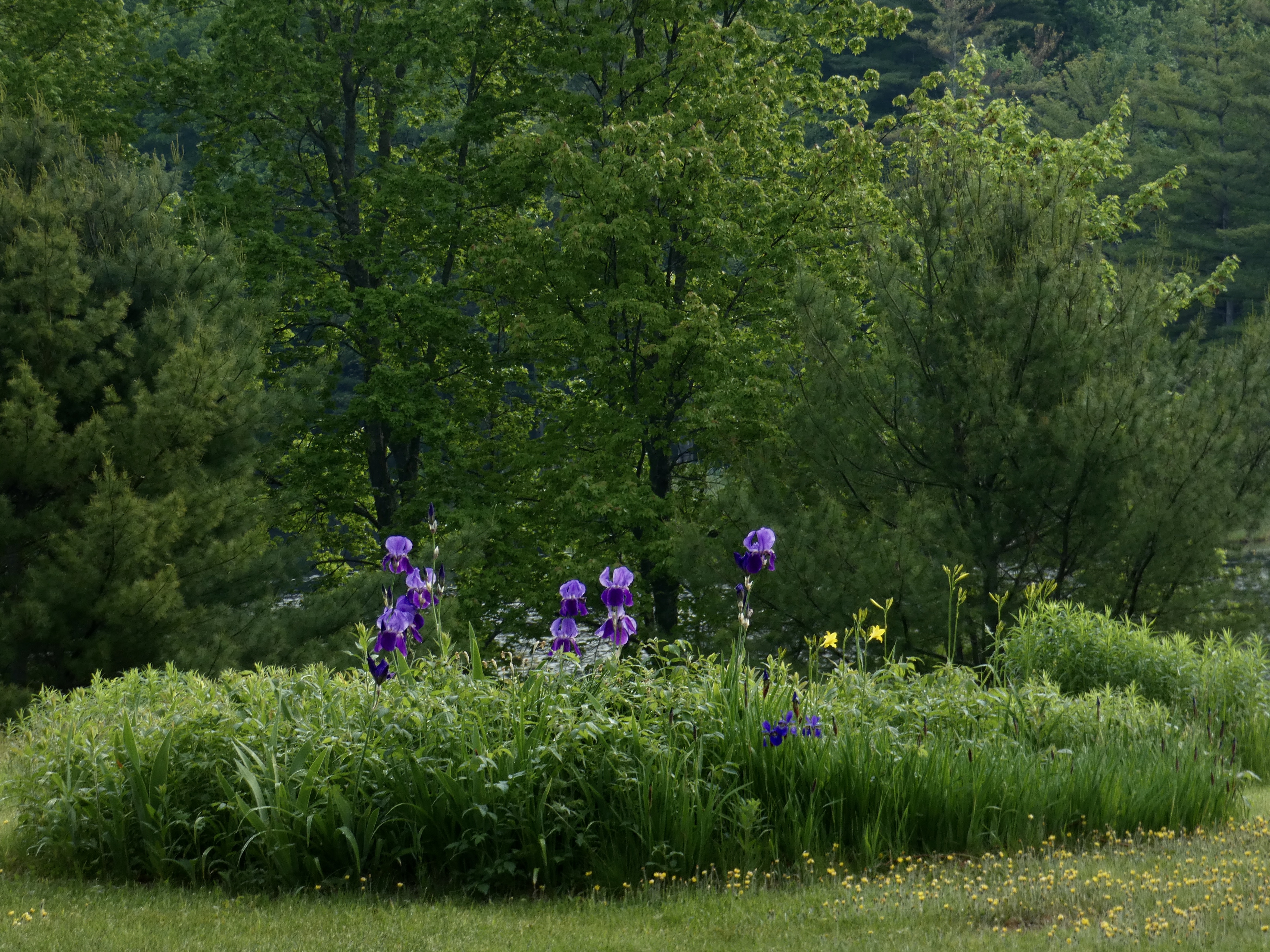
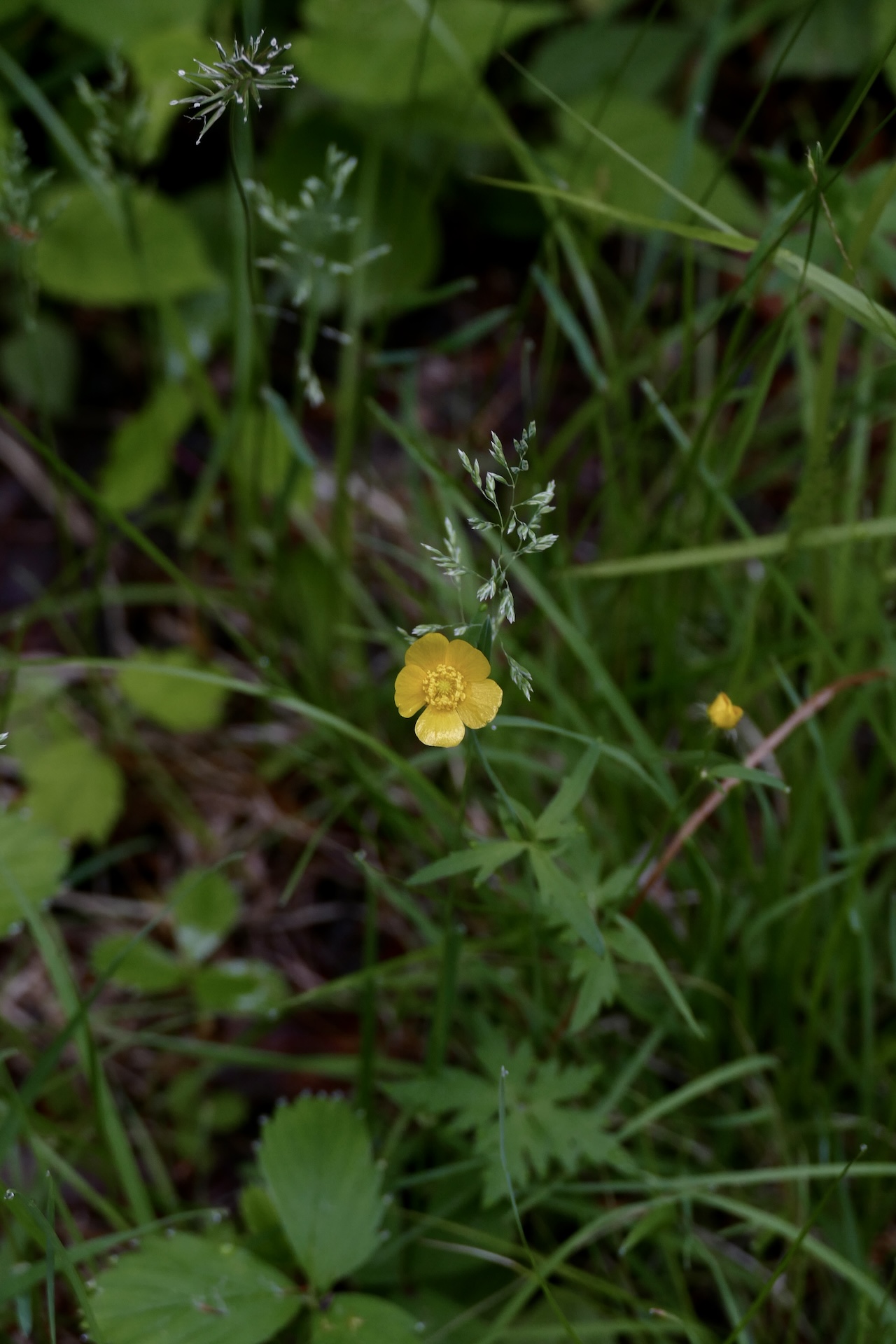
A new season has commenced–– Summer-– Leafy June-– The buttercups in the churchyard are now in perfection….Blue eyed grass has been out some time as I judge by the size of its seed vessel.
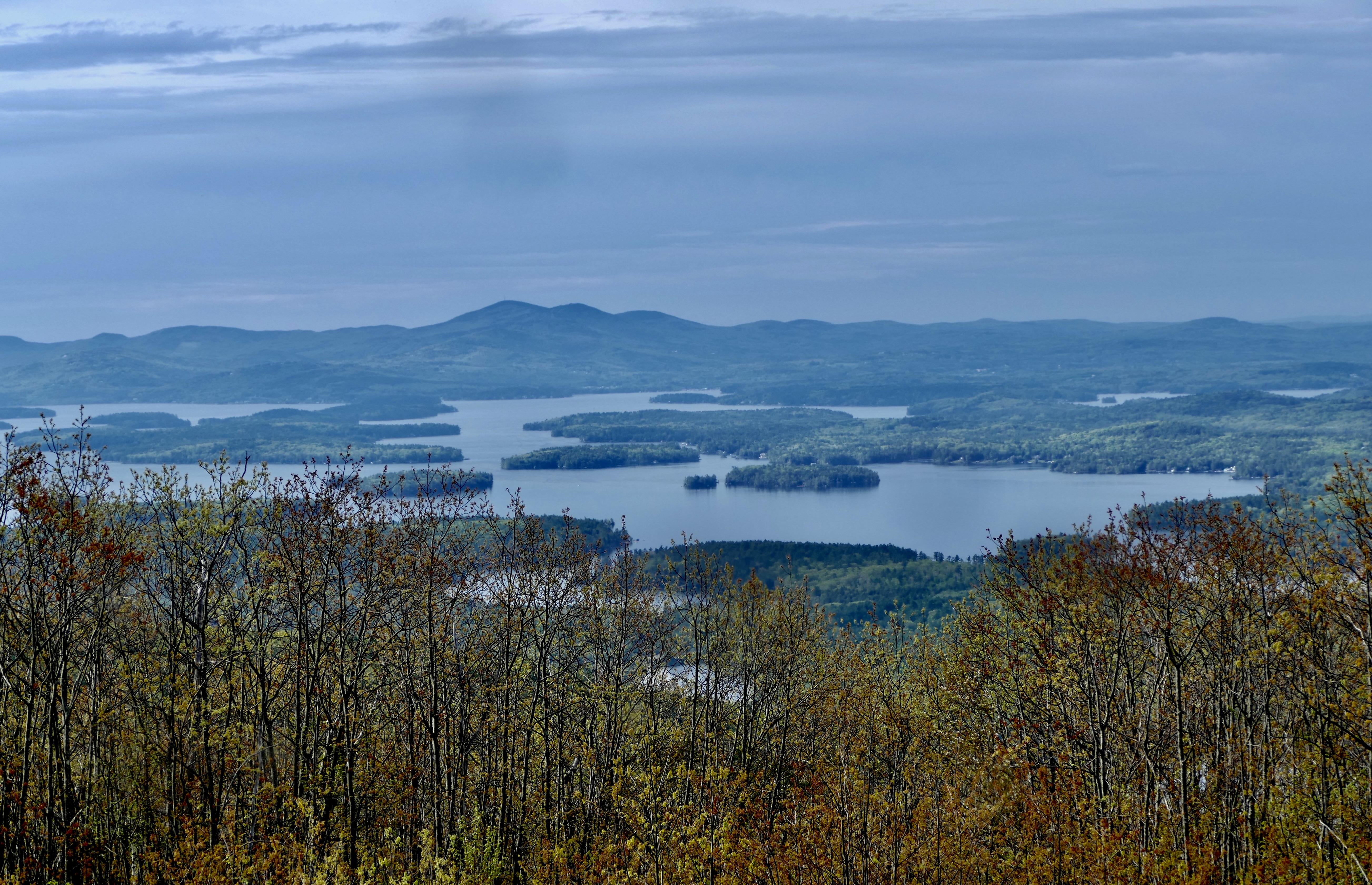
A fine, freshening air, a little hazy, that bathes and washes everything, saving the day from extreme heat. Walked to the hills south of Wayland by the road by Deacon Farrar’s. First vista just beyond Merron’s (?), looking west down a valley, with a verdant-columned elm at the extremity of the vale and the blue hills and horizon beyond. These are the resting-places in a walk. We love to see any part of the earth tinged with blue, cerulean, the color of the sky, the celestial color. I wonder that houses are not oftener located mainly that they may command particular rare prospects, every convenience yielding to this. The farmer would never suspect what it was you were buying, and such sites would be the cheapest of any. A site where you might avail yourself of the art of Nature for three thousand years, which could never be materially changed or taken from you, a noble inheritance for your children. The true sites for human dwellings are unimproved. They command no price in the market. Men will pay something to look into a travelling showman’s box, but not to look upon the fairest prospects on the earth.
A vista where you have the near green horizon contrasted with the distant blue one, terrestrial with celestial earth. The prospect of a vast horizon must be accessible in our neighborhood. Where men of enlarged views may be educated. An unchangeable kind of wealth, a real estate.











You must be logged in to post a comment.