July 23, 1853

in Thoreau’s Journal:

A comfortable breeze blowing. Methinks I can write better in the afternoon, for the novelty of it— if I should go abroad this morning— My genius makes distinctions which my understanding cannot— and which my senses do not report. If I should reverse the usual— go forth & saunter in the fields all the forenoon then sit down in my chamber in the afternoon, which it is so unusual for me to do—it would be like a new season to me & the novelty of it inspire me. The wind has fairly blown me out doors—the elements were so lively & active— & I so sympathized with them that I could not sit while the wind went by.

And I am reminded that we should especially improve the summer to live out of doors— When we may so easily it behoves us to break up this custom of sitting in the house. for it is but a custom—and I am not sure that it has the sanction of common sense. A man no sooner gets up than he sits down again….Is the literary man to live always or chiefly sitting in a chamber—through which Nature enters by a window only? What is the use of the summer?  ….but here outdoors is the place to store up influences.

July 21, 1851

in Thoreau’s Journal:

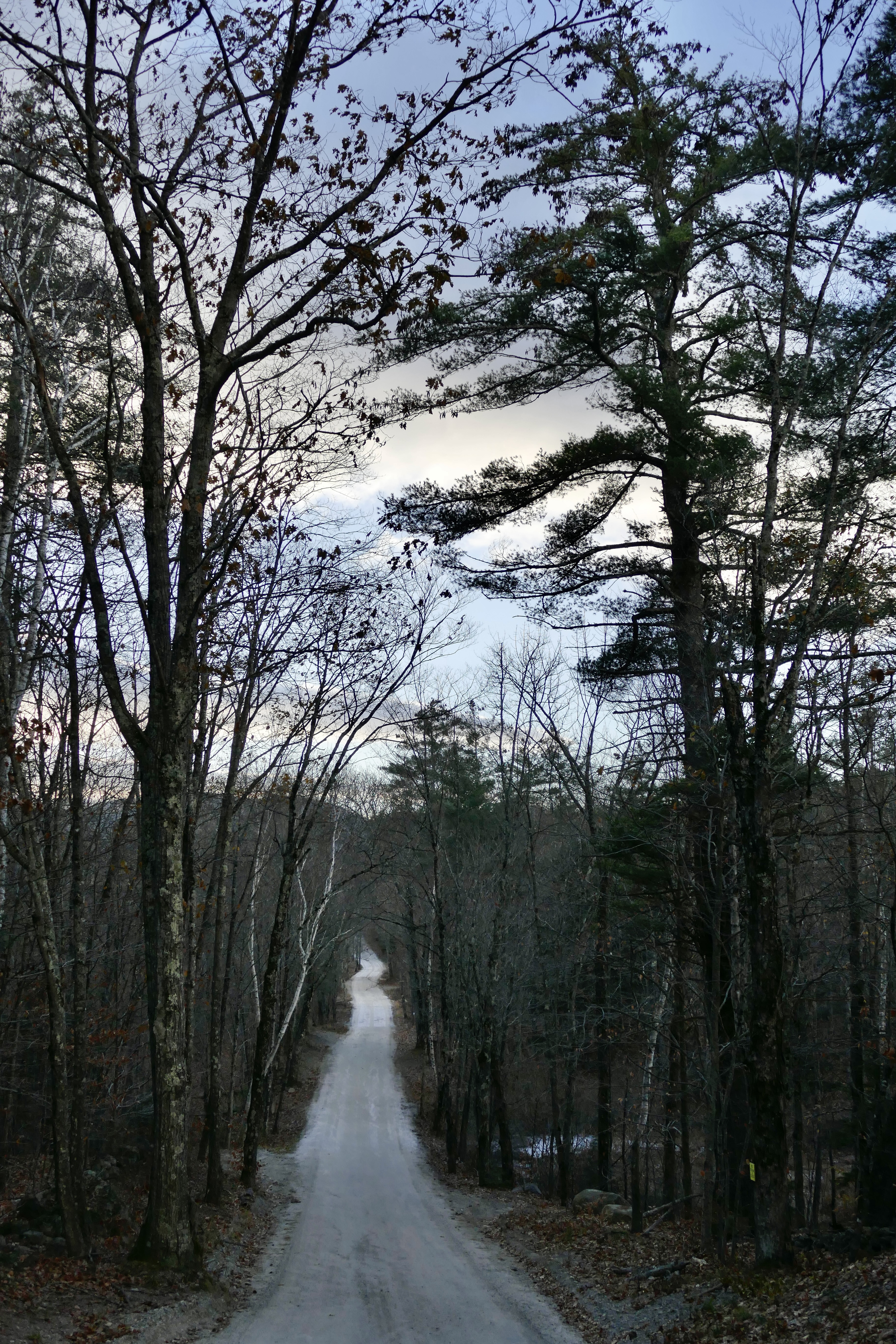
The forenoon is fuller of light. The butterflies on the flowers look like other & frequently larger flowers themselves.  Now I yearn for one of those old meandering dry uninhabited roads which lead away from towns––which lead us away from temptation, which conduct to the outside of earth––over its uppermost crust––where you may forget in what country you are traveling––where no farmer can complain that you are treading down his grass––no gentlemen who has recently constructed a seat in the country that you are trespassing––on which you can go off at half cock––and waive adieu to the village––along which you may travel like a pilgrim––going nowither. Where travelers are not too often to be met. Where my spirit is free––where the walls & fences are not cared for––where your head is more in heaven than your feet are on the earth––which have long reaches––where you can see the approaching traveller half a mile off and be prepared for him––not so luxuriant a soil as to attract men––some root and stump fences which do not need attention––  Where travelers have no occasion to stop––but pass along and leave you to your thoughts–– Where it makes no odds which way you face whether you are going or coming––whether it is morning or evening––mid noon or mid-night–– Where earth is cheap enough by being public. Where you can walk and think with least obstruction––there being nothing to measure progress by. Where you can pace when your breast is full and cherish your moodiness. Where you are not in false relations with men––are not dining nor conversing with them….It must simply be the way and the life. 
July 20, 1853

in Thoreau’s Journal:

The gentle susurrus from the leaves of the trees on shore is very enlivening, as if Nature were freshening, awakening to some enterprise.

There is but little wind, but its sound, incessantly stirring the leaves at a little distance along the shore, heard not seen, is very inspiriting. It is like an everlasting dawn or awakening of nature to some great purpose.

July 18, 1851

in Thoreau’s Journal:

It is a test question affecting the youth of a person, —Have you knowledge of the morning? Do you sympathize with that season of nature? Are you abroad early, brushing the dews aside? If the sunrises on you slumbering, if you do not hear the morning cock-crow, if you do not witness the blushes of Aurora, if you are not acquainted with Venus as the morning star, what relation have you to wisdom and purity? You have then forgotten your Creator in the days of your youth! Your shutters were darkened till noon!

July 17, 1854

in Thoreau’s Journal:

I go to observe the lilies….

The pontederia is in its prime alive with butterflies yellow & others––I see its tall blue spikes reflected beneath the edge of the pads on each side––pointing down to a heaven beneath as well as above–

July 16, 1851

in Thoreau’s Journal:

The milkweeds, or silkweeds, are rich flowers, now in blossom. The Asclepias syriaca, or common milkweed; its buds fly open at a touch.

But handsomer much is Asclepias pulchra, or water wilkweed. The thin green bark of this last, and indeed of the other, is so strong that a man cannot break a small strip of it by pulling. It contains a mass of fine silken fibres, arranged side by side like the strings of a fiddle-bow, and may be bent short without weakening it.

July 15, 1854

in Thoreau’s Journal:

Rained still in forenoon; now cloudy. Fields comparatively deserted to-day and yesterday. Hay stands cocked in them on all sides. Some, being shorn, are clear for the walker. It is but a short time that he has to dodge the haymakers.

This cooler, still, cloudy weather after the rain is very autumnal and restorative to our spirits. The robin sings still, but the goldfinch twitters over oftener, and I hear the link link of the bobolink (one perfect strain!), and the crickets creak more as in the fall. All these sounds dispose our minds to serenity. Perhaps the mosquitoes are most troublesome such days in the woods, if it is warm enough. We seem to be passing, or to have passed, a dividing line between spring and autumn, and begin to descend the long slope toward winter.

July 14, 1853

in Thoreau’s Journal:

I see a rose now in its prime by the river in the water amid the willows & button bushes––while others lower on shore are nearly out of bloom…

July 13, 1852

in Thoreau’s Journal:

A Journal.  —a book that shall contain a record of all your joy—your extacy….

The northern wild red wild cherry is ripe—handsome bright red but scarcely edible—also, sooner than I expected….

July 10, 1853

in Thoreau’s Journal:

The berries of the Vaccinium vacillans are very abundant and large this year on Fair Haven, where I am now. Indeed these and huckleberries and blackberries are very abundant in this part of the town.

Nature does her best to feed man. The traveller need not go out of the road to get as many as he wants; every bush and vine teems with palatable fruit. Man for once stands in such relation to Nature as the animals that pluck and eat as they go. The fields and hills are a table constantly spread.

July 9, 1852

in Thoreau’s Journal:

The red-lily with its torrid color & sun freckled spots––dispensing too with the outer garment of a calyx––its petals so open & wide apart that you can see through it in every direction tells of hot weather–– It is a handsome bell shape––so upright & the flower prevails over every other part. It belongs not to spring. 

July 8, 1858

in Thoreau’s Journal:

[on Mt. Washington, NH]

It is unwise for one to ramble over these mountains at any time, unless he is prepared to move with as much certainty as if he were solving a geometrical problem.  

July 7, 1852

in Thoreau’s Journal:

The first really foggy morning yet before I rise I hear the song of birds from out it—like the bursting of its bubbles with music—the bead on liquids just uncorked. Their song gilds thus the frostwork of the morning— As if the fog were a great sweet froth on the surface of land and water—whose fixed air escaped—whose bubbles burst with music. The sound of its evaporation—the fixed air of the morning just brought from the cellars of the night escaping.— The morning twittering of birds in perfect harmony with it. I came near awaking this morning. I am older than last year the mornings are further between— The days are fewer— Any excess—to have drunk too much water even, the day before is fatal to the morning’s clarity—but in health the sound of a cow bell is celestial music. O might I always wake to thought & poetry—regenerated! Can it be called a morning—if our senses are not clarified so that we perceive more clearly—if we do not rise with elastic vigor? How wholesome these fogs which some fear—they are cool medicated vapor baths—mingled by nature which bring to our senses all the medical properties of the meadows. The touchstones of health— Sleep with all your windows open and let the mist embrace you.

July 6, 1858

in Thoreau’s Journal:

Keep on through North Tamworth, and breakfast by shore of one of the Ossipee Lakes. Chocorua north-northwest. Hear and see loons and see a peetweet’s egg washed up. A shallow-shored pond, too shallow for fishing, with a few breams seen near shore; some pontederia and targetweed in it.

Travelling thus toward the White Mountains, the mountains fairly begin with Red Hill and Ossipee Mountain, but the White Mountain scenery proper on the high hillside road in Madison before entering Conway, where you see Chocorua on the left, Mote Mountain ahead, Doublehead, and some of the White Mountains proper beyond, i. e. a sharp peak.

We fished in vain in a small clear pond by the roadside in Madison.

Chocorua is as interesting a peak as any to remember. You may be jogging along steadily for a day before you get round it and leave it behind, first seeing it on the north, then northwest, then west, and at last southwesterly, ever stern, rugged and inaccessible, and omnipresent. It was seen from Gilmanton to Conway, and from Moultonboro was the ruling feature.