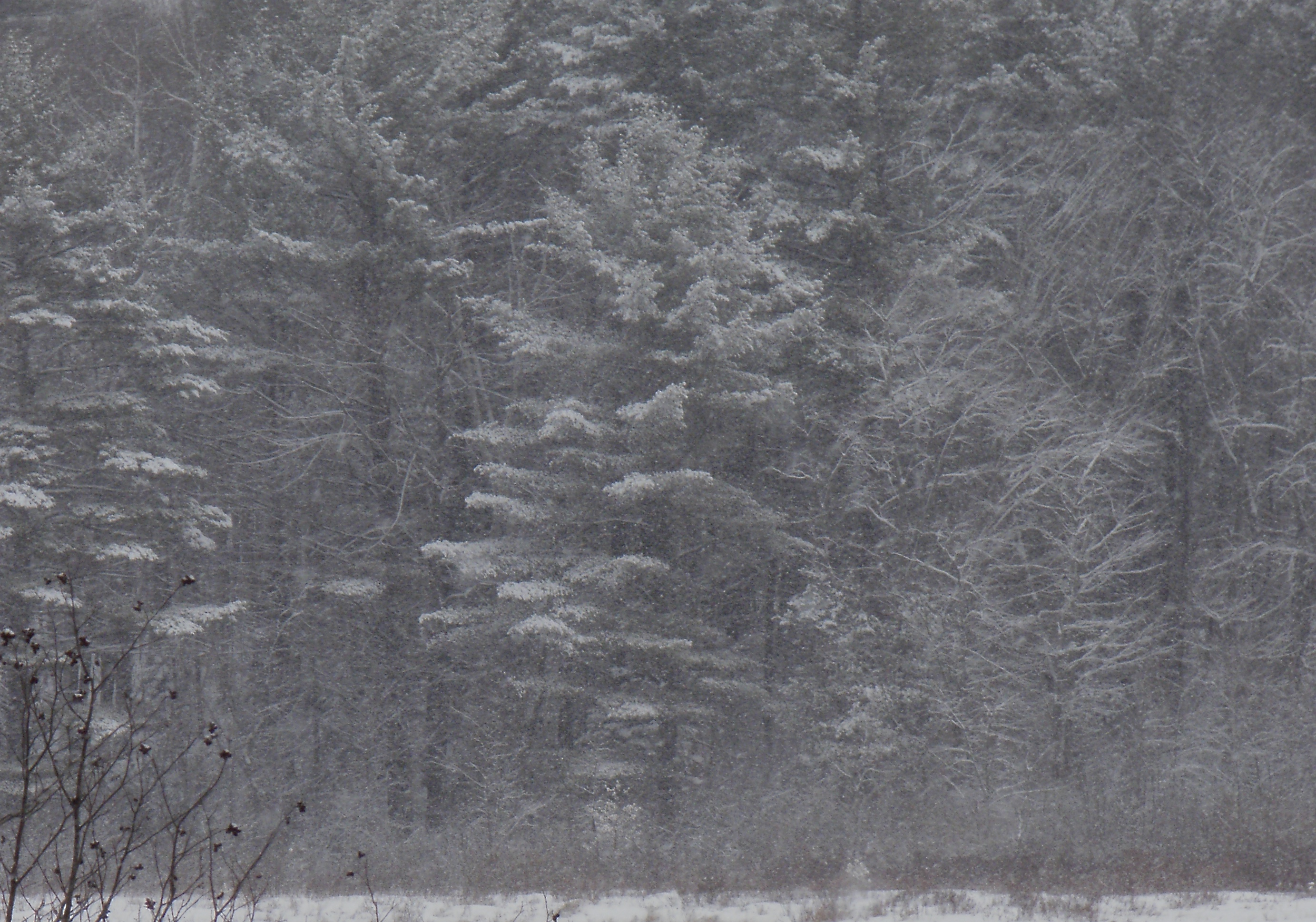
Snows again….The snow is very moist, with large flakes. Looking toward Trilllium wood, the nearer flakes appear to move quite swiftly, often making the impression of a continuous white line. They are also seen to move directly, and nearly horizontally. But the more distant flakes appear to loiter in the air, as if uncertain how they will approach the earth, or even to cross the course of the former, and are always seen as simple and distinct flakes. I think that this difference is simply owing to the fact that the former pass quickly over the field of view, while the latter are much longer in it.
We love not so well the landscape represented as in broad noon, but in a morning or evening twilight, those seasons when the imagination is most active, the more hopeful or pensive seasons of the day.
The moods of man should unfold and alternate as gradually and placidly as those of nature. The sun shines for aye! The sudden revolutions of these times and this generation have acquired a very exaggerated importance. They do not interest me much, for they are not in harmony with the longer periods of nature.
A man asked me the other night whether such and such persons were not as happy as anybody, being conscious, as I perceived, of much unhappiness himself and not aspiring to much more than an animal content. “Why!”, said I… “the stones are happy, Concord River is happy, and I am happy too… The most brutish and inanimate objects that are made suggest an everlasting and thorough satisfaction; they are the homes of content. Wood, earth, mould, etc., exist for joy. Do you think that Concord River would have continued to flow these millions of years…if it had not been happy…?” When I look up a fragment of a walnut shell this morning, I saw by its grain and composition, its form and color, etc., that is was made for happiness. The most brutish and inanimate objects that are made suggest an everlasting and thorough satisfaction. They are the homes of content. Wood, earth, mould, etc., exist for joy.
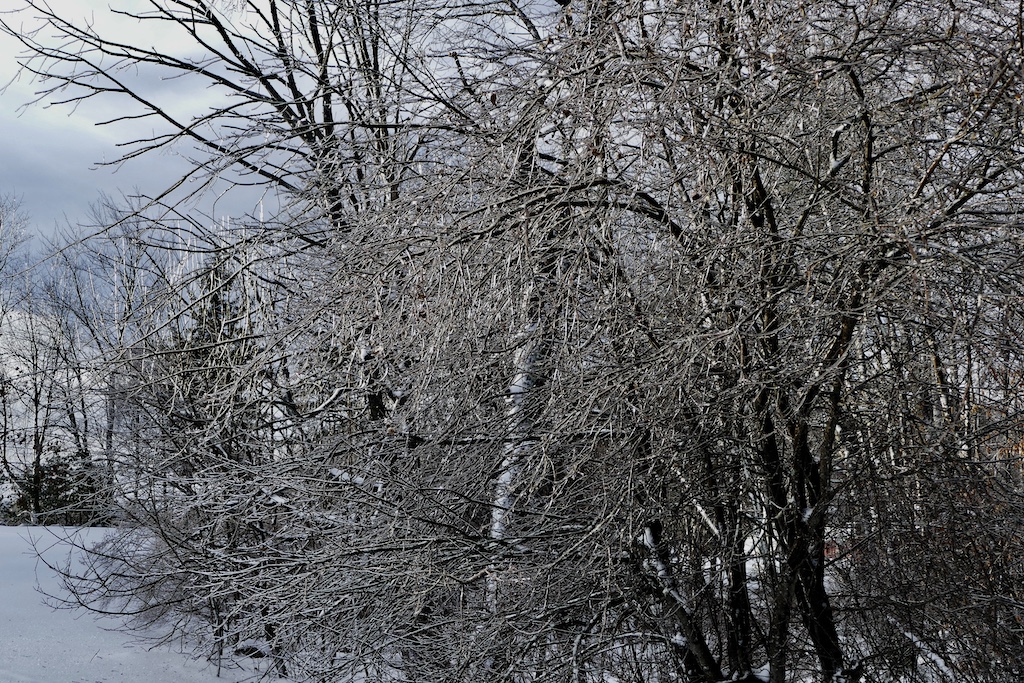
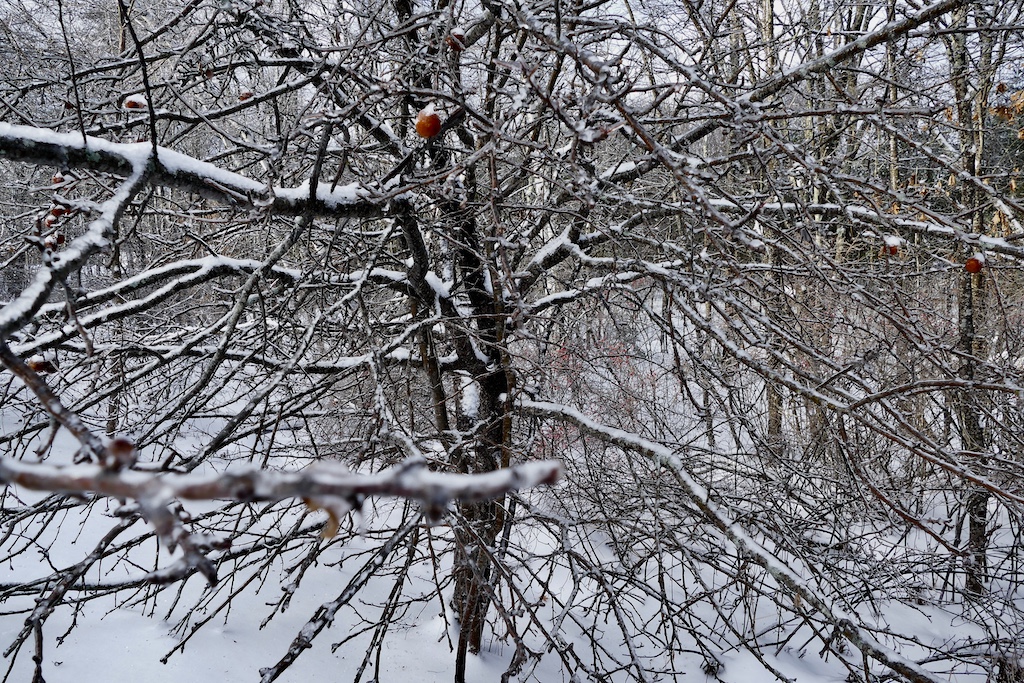
To-day the trees are white with snow—I mean their stems & branches and have the true wintry look—on the storm-side—not till this has the winter come to the forest. They look like the small frost work in the path & on the windows now—. Especially the oak woods at a distance, & you see better the form which their branches take. That is a picture of winter & now you may put a cottage under them and roof it with snowdrifts.— & let the smoke curl up amid the boughs in the morning.
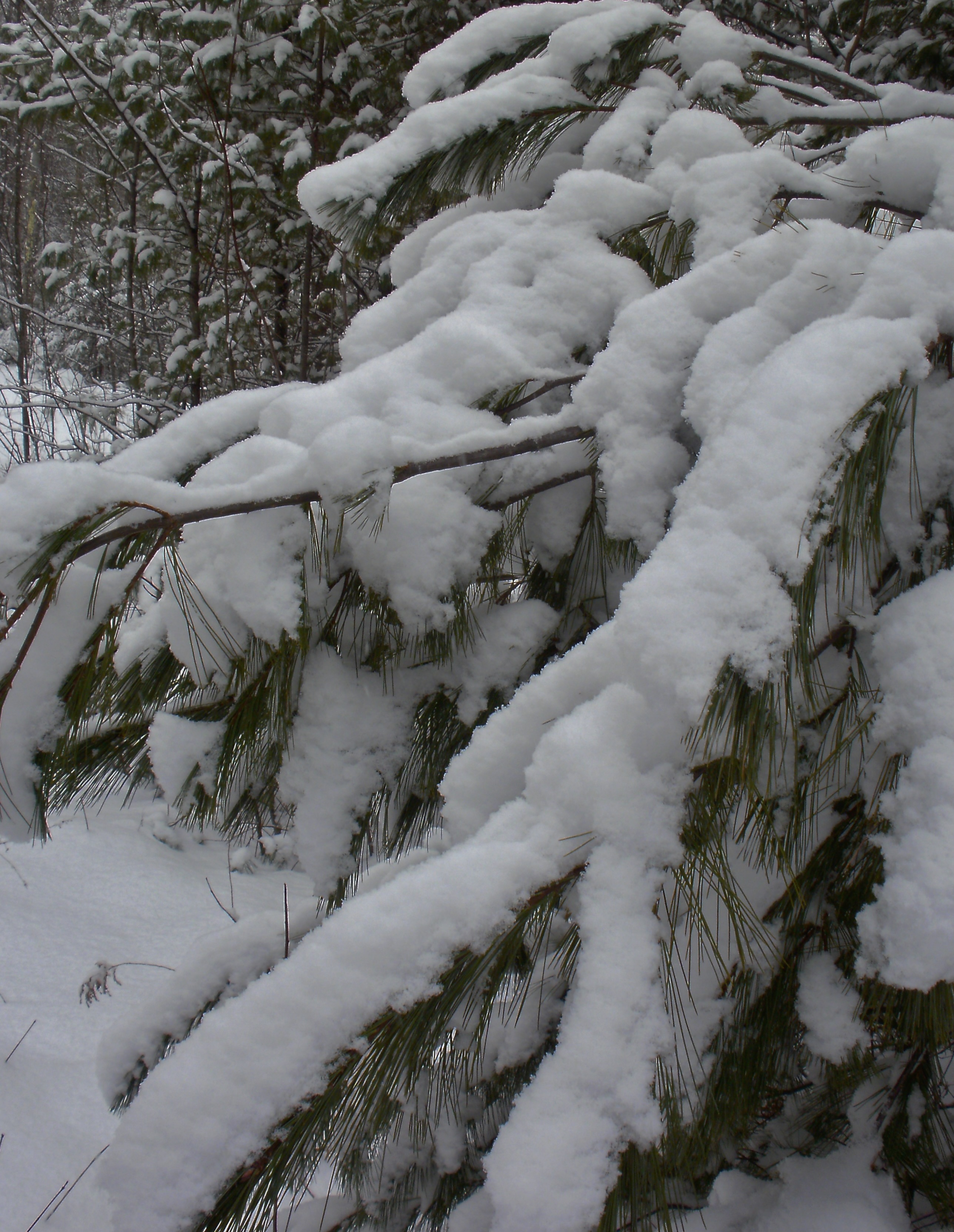
The air is thick and darkened with falling snow, and the woods are being draped with it in white wreaths. This is winter. They are putting on their white greatcoats.
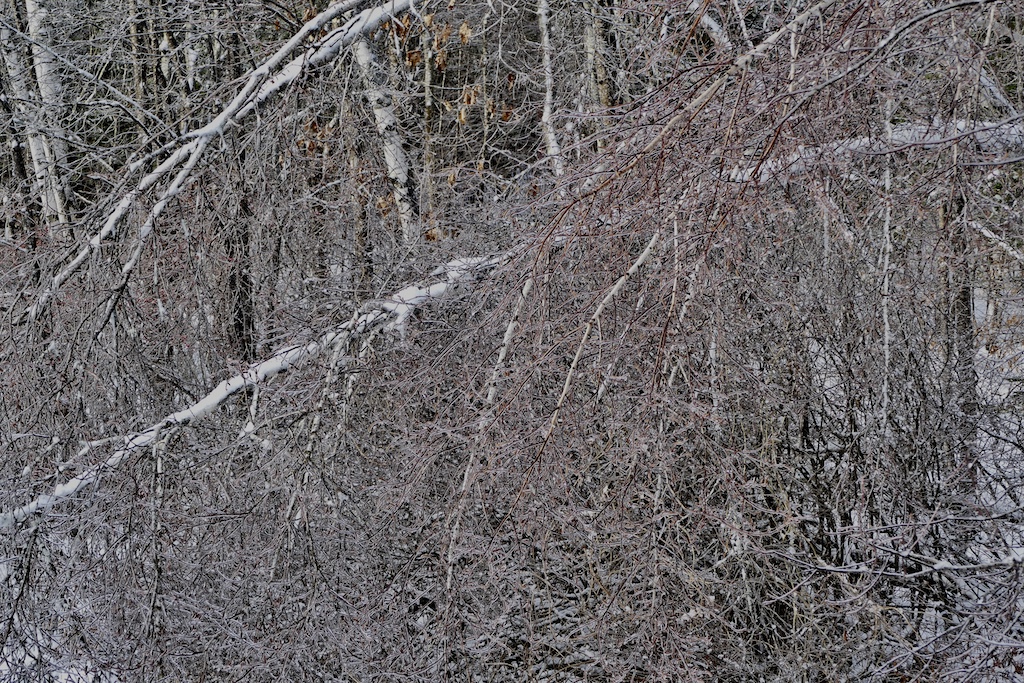
In this clear air and bright sunlight, the ice covered trees have a new beauty, especially the birches along under the edge of Warren’s wood….bent quite to the ground in every kind of curve….The birch is remarkable, perhaps, from the feathery form of the tree, whose numerous small branches sustain so great a weight, bending it to the ground; and, moreover, because, from the color of the bark, the core is less observable….The birches droop over in all directions, like ostrich feathers.
….As the hunters are forward to take the field as soon as the first snow has fallen, so he who would make the most of his life for discipline must be abroad early and late, in spite of cold and wet, in pursuit of nobler game, whose traces there are most distinct, —a life which we seek not to destroy, but to make our own.
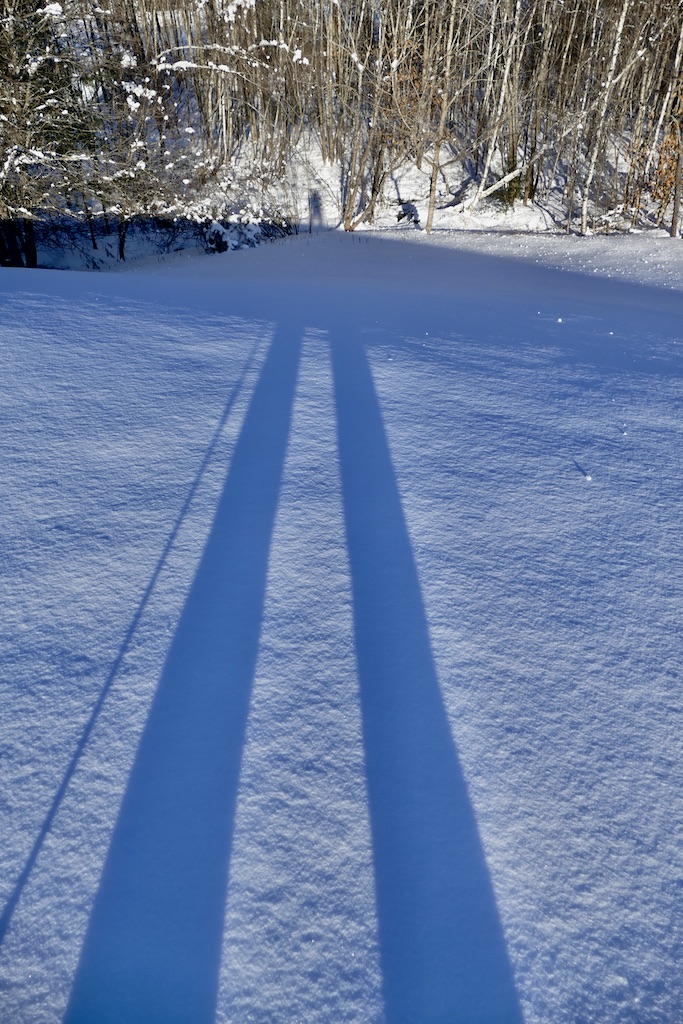
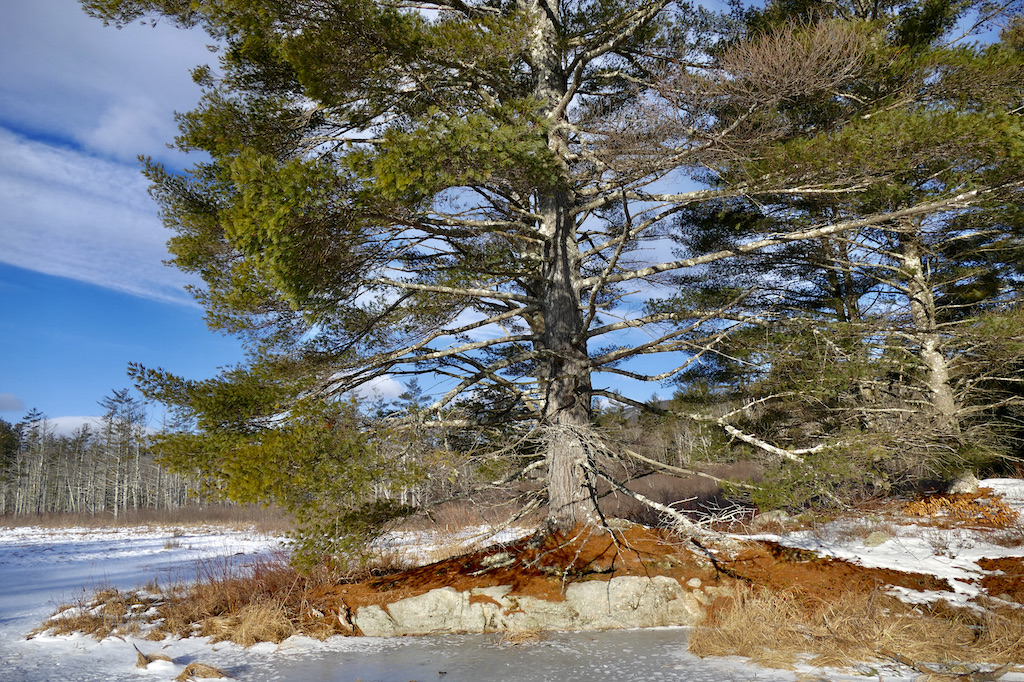
A beautiful, clear, not very cold day. The shadows on the snow are indigo blue. The pines look very dark. The white-oak leaves are a cinnamon color, the black and red (?) oak leaves a reddish-brown or leather color…A partridge rises from the alders and skims across the river at its widest part, just before me; a fine sight…
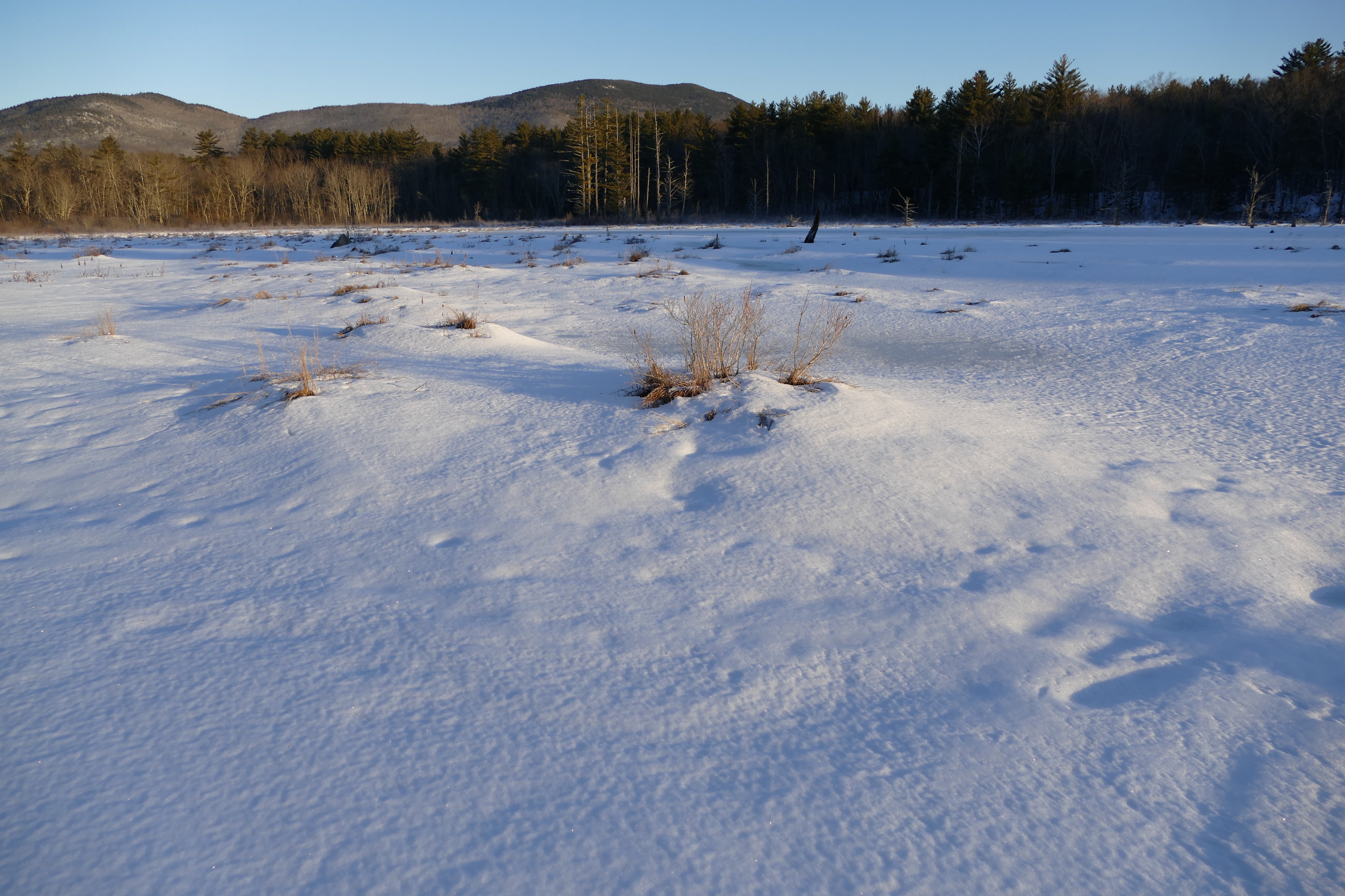
How glorious the perfect stillness and peace of the winter landscape.
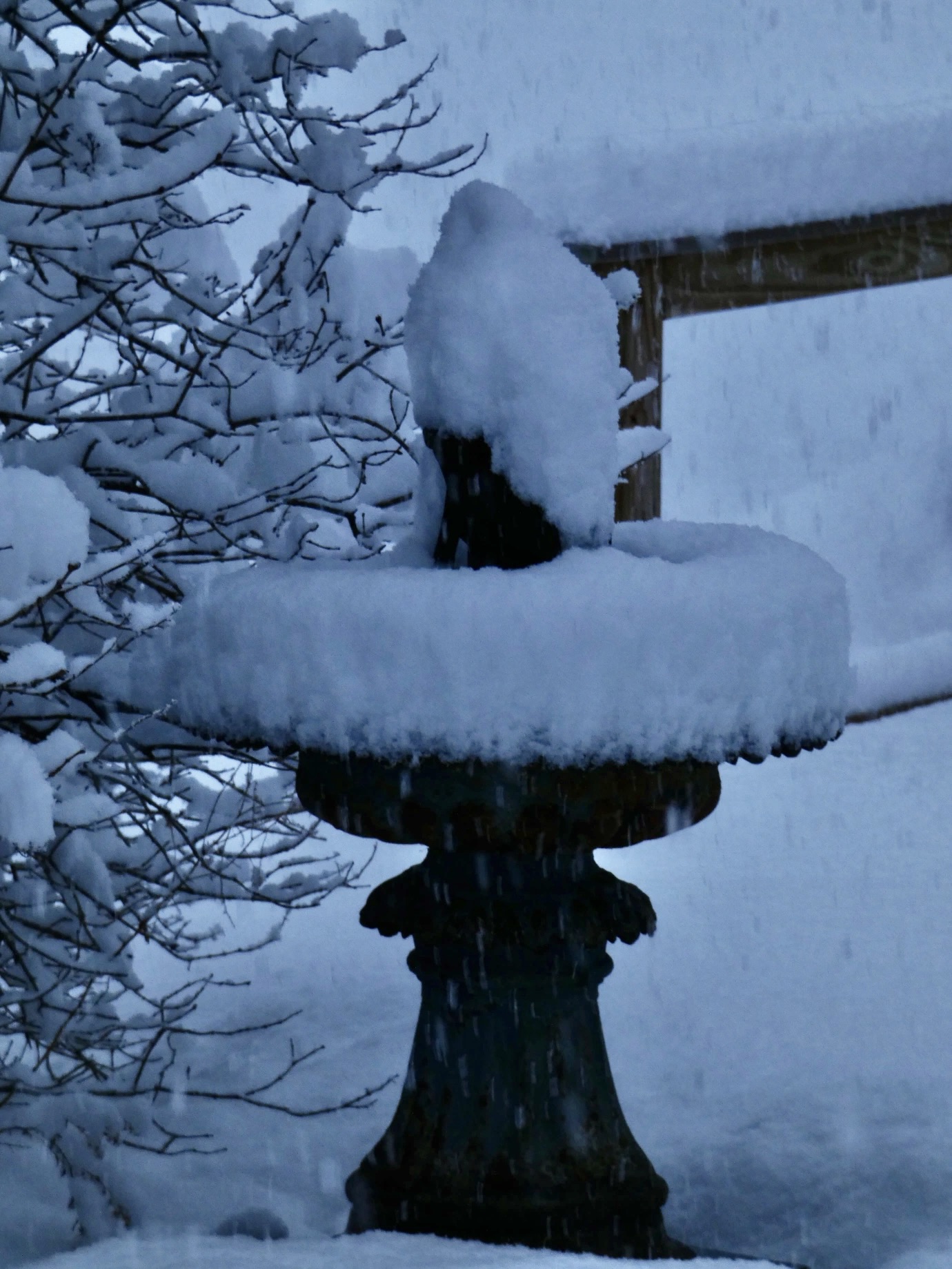
The snow which began last night has continued to fall very silently but steadily, and now it is not far from a foot deep, much the most we have had yet; a dry, light, powdery snow. When I come down I see it in miniature drifts against the panes, alternately streaked dark and light as it is more or less dense. A remarkable, perfectly regular conical peak, a foot high, with concave sides, stands in the fireplace under the sink-room chimney. The pump has a regular conical Persian cap, and every post about the house a similar one. It is quite light, but has not drifted. About 9 a. m. it ceases, and the sun comes out, and shines dazzlingly over the white surface. Every neighbor is shoveling out, and hear the sound of shovels scraping on door-steps. Winter now first fairly commenced, I feel.
Both for bodily and mental health, court the present. Embrace health wherever you find her. A clump of birches raying out from one centre make a more agreeable object than a single tree. The rosettes in the ice, as Channing calls them, now and for some time have attracted me.
The man is blessed who every day is permitted to behold anything so pure and serene as the western sky at sunset, while revolutions vex the world.
There is no winter necessarily in the sky, though snow covers the earth. They sky is always ready to answer our moods. We can see summer there or winter.
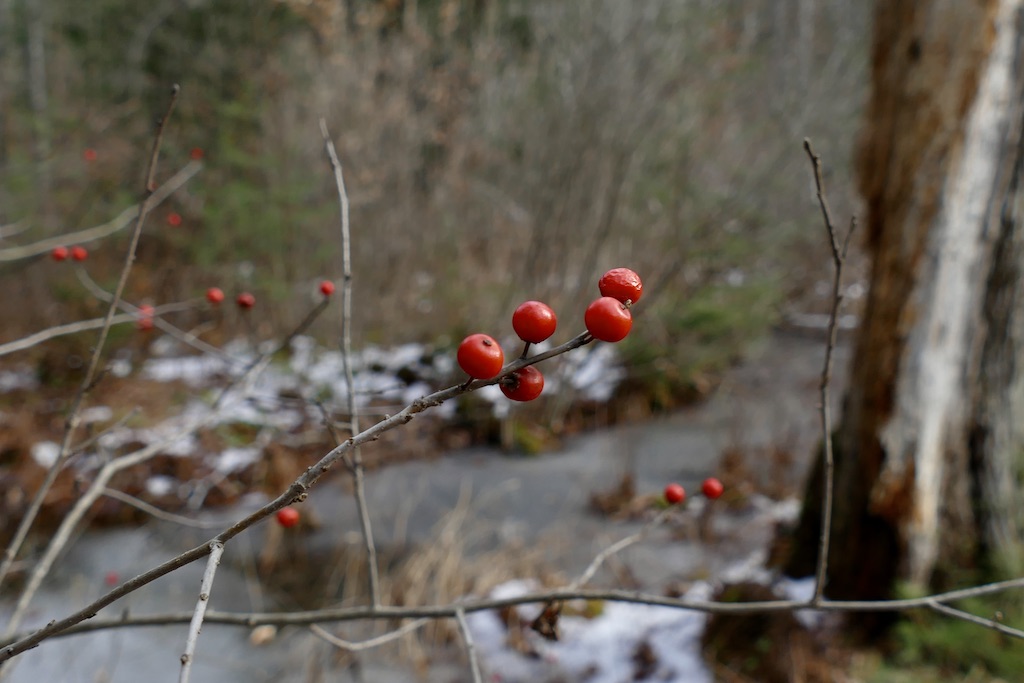
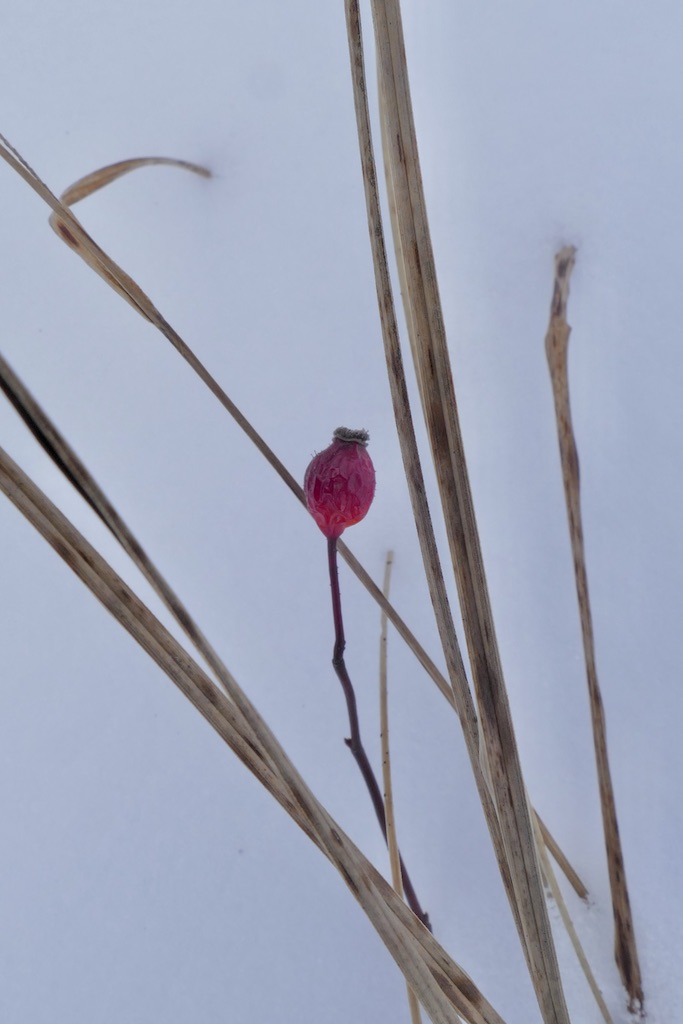
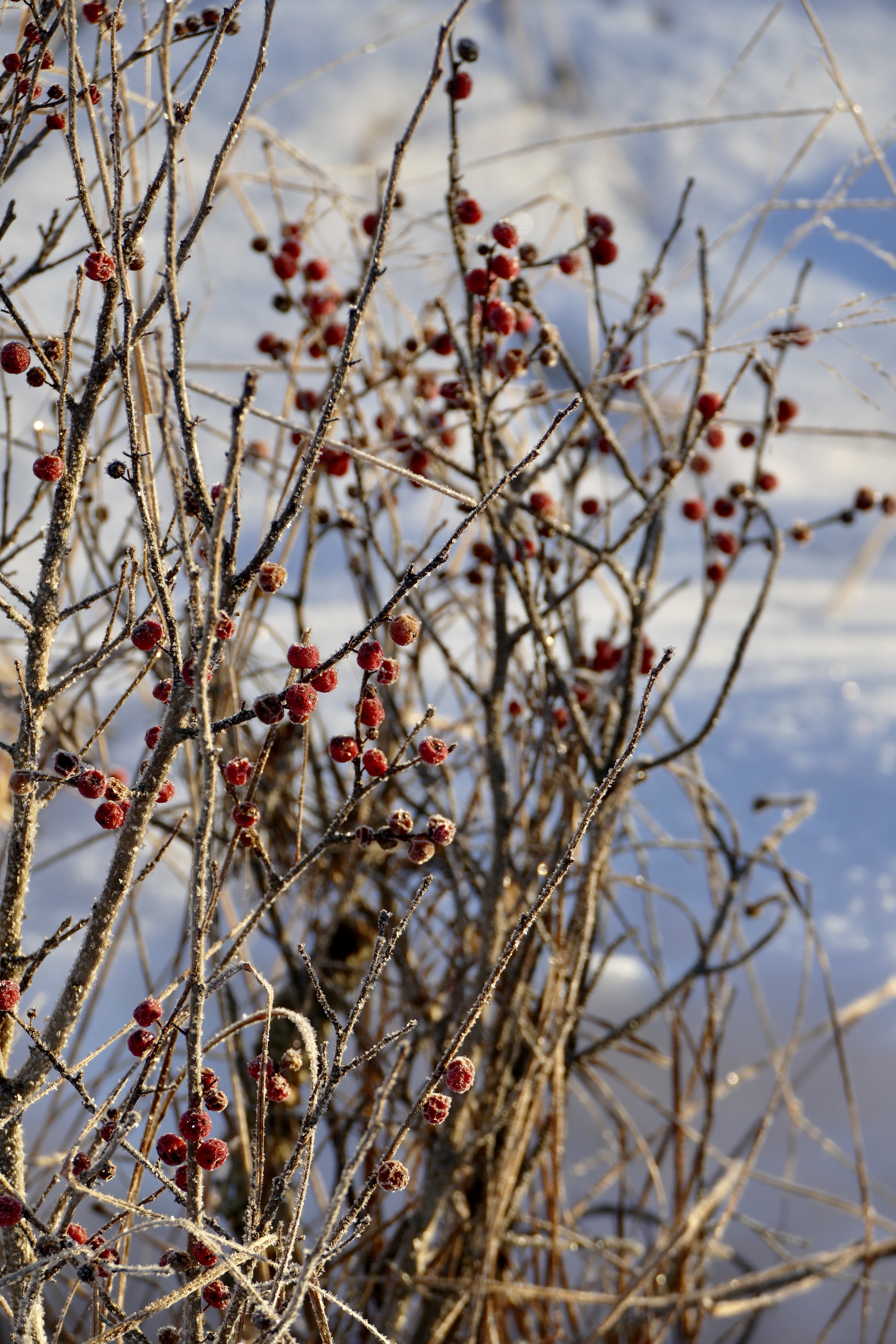
Particularly are we attracted in the winter by greenness and signs of growth, as the green and white shoots of grass and weeds, pulled or floating on the water, and also by color, as cockspur lichens and crimson birds, etc.
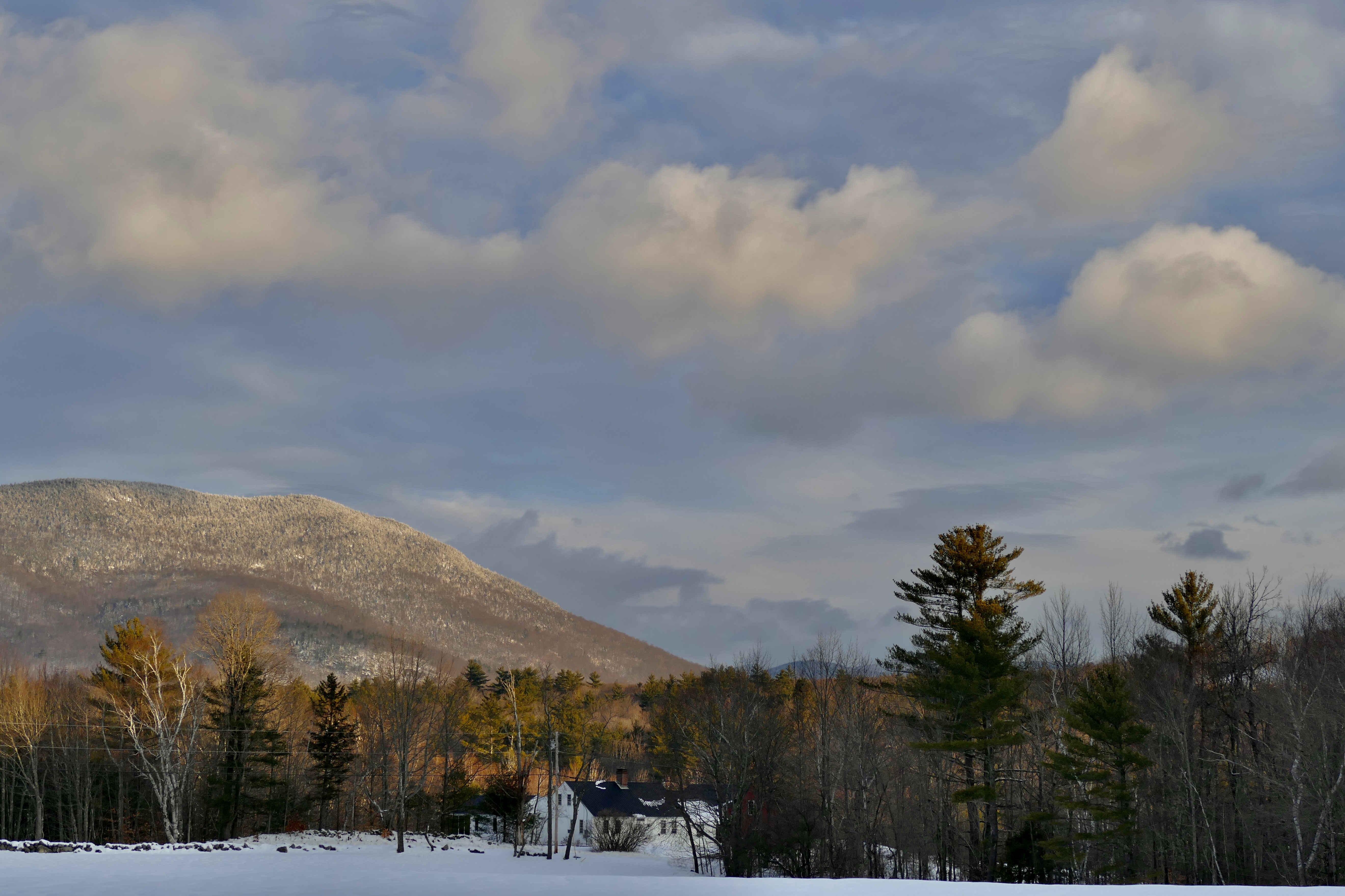
I go forth to see the sunset. Who knows how it will set, even half an hour beforehand ? whether it will go down in clouds or a clear sky? I feel that it is late when the mountains in the north and northwest have ceased to reflect the sun. The shadow is not partial but universal.
In walking across the Great Meadows to-day on the snow-crust, I noticed that the fine, dry snow which was blown over the surface of the frozen field, when I looked westward over it or toward the sun, looked precisely like steam curling up from its surface, as sometimes from a wet roof when the sun comes out after a rain.
The snow catches only in the hollows and against the reeds and grass, and never rests there, but when it has formed a broad and shallow drift or a long and narrow one like a winrow on the ice, it blows away again from one extremity, and leaves often a thin, tongue-like projection at one end, some inches above the firm crust.
I observe that there are many dead pine-needles sprinkled over the snow, which had not fallen before. Saw a shrike pecking to pieces a small bird, apparently a snowbird. At length he took him up in his bill, almost half as big as himself, and flew slowly off with his prey dangling from his beak. I find that I had not associated such actions with my idea of birds. It was not birdlike.
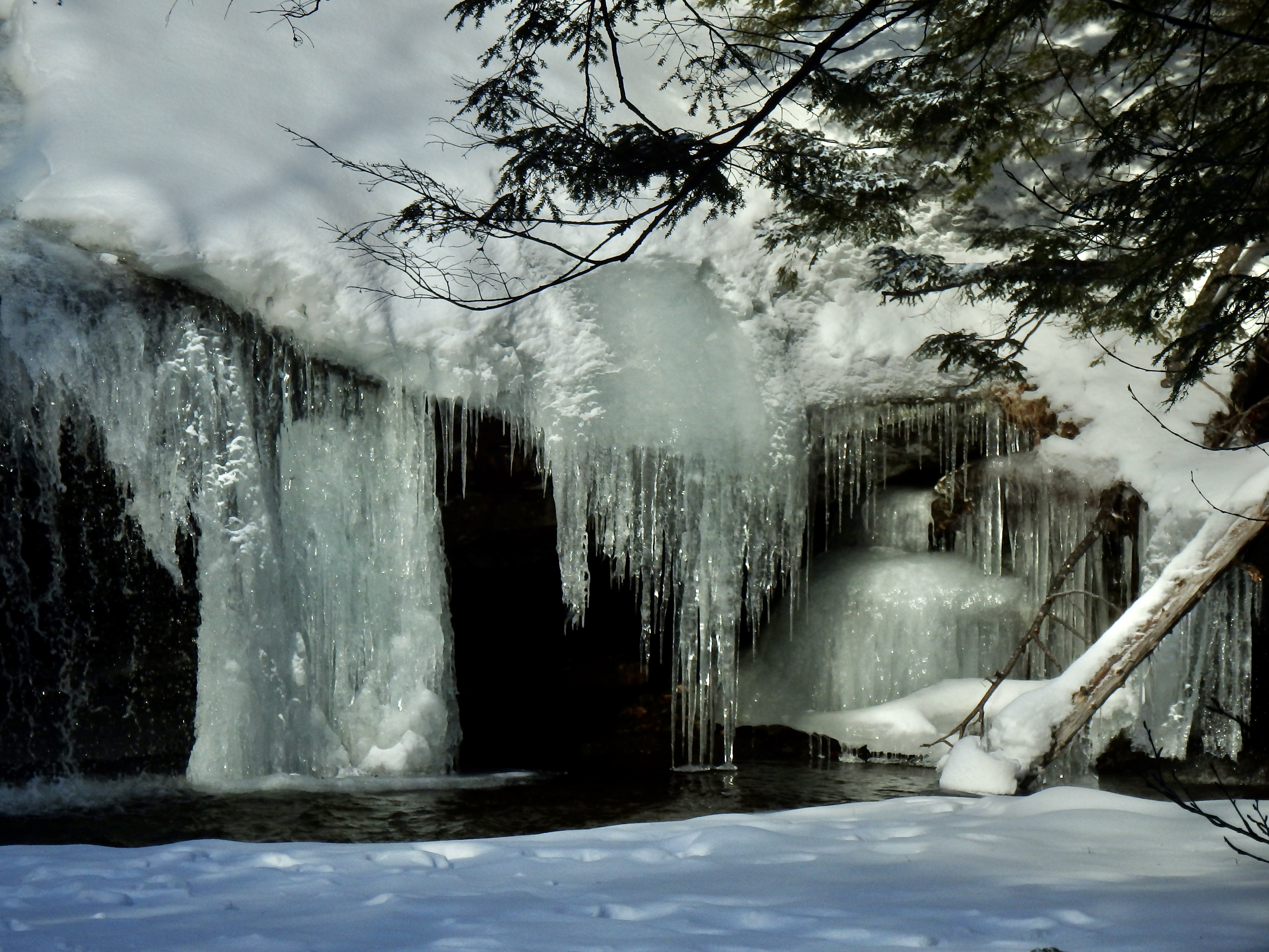
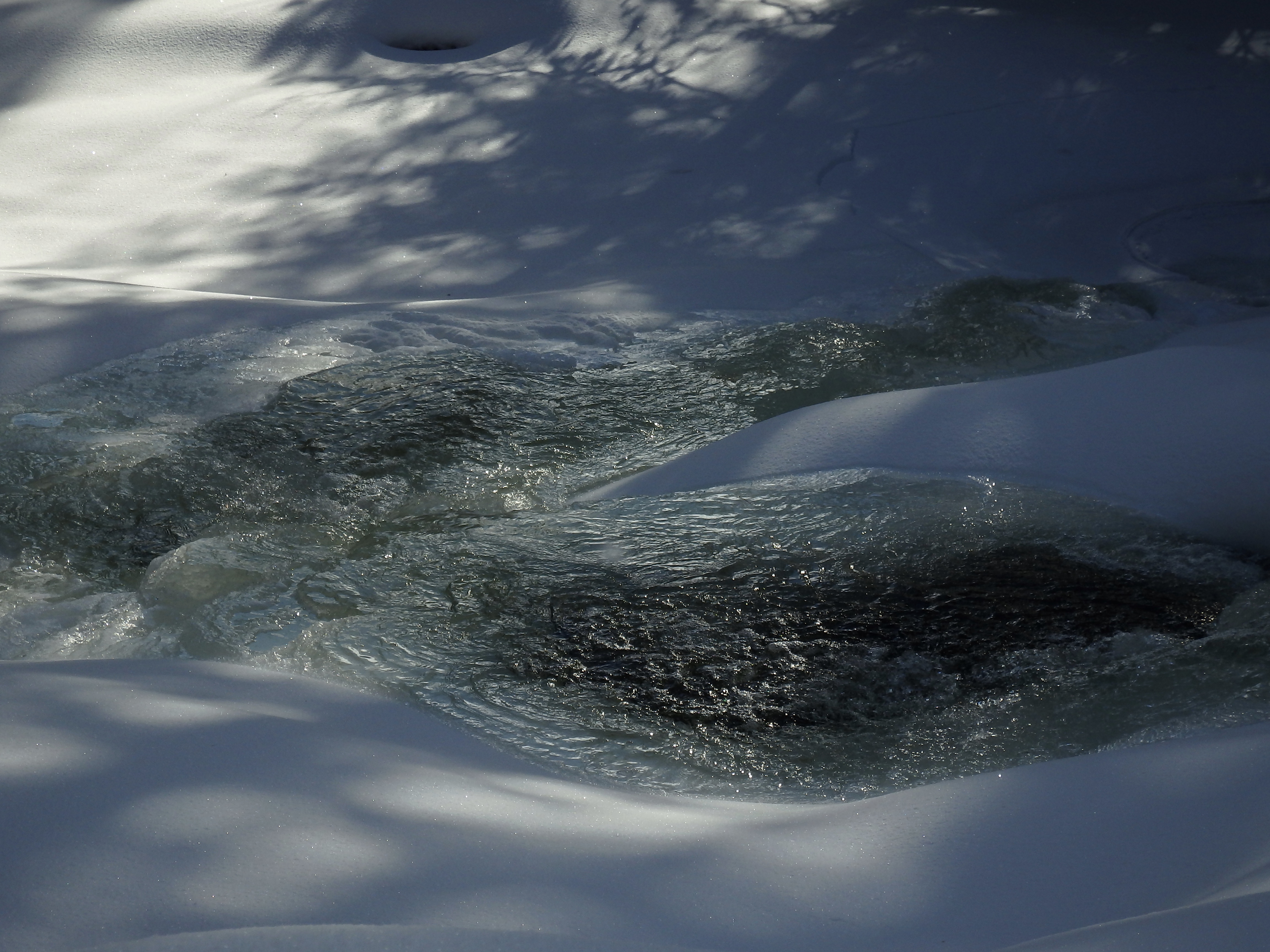
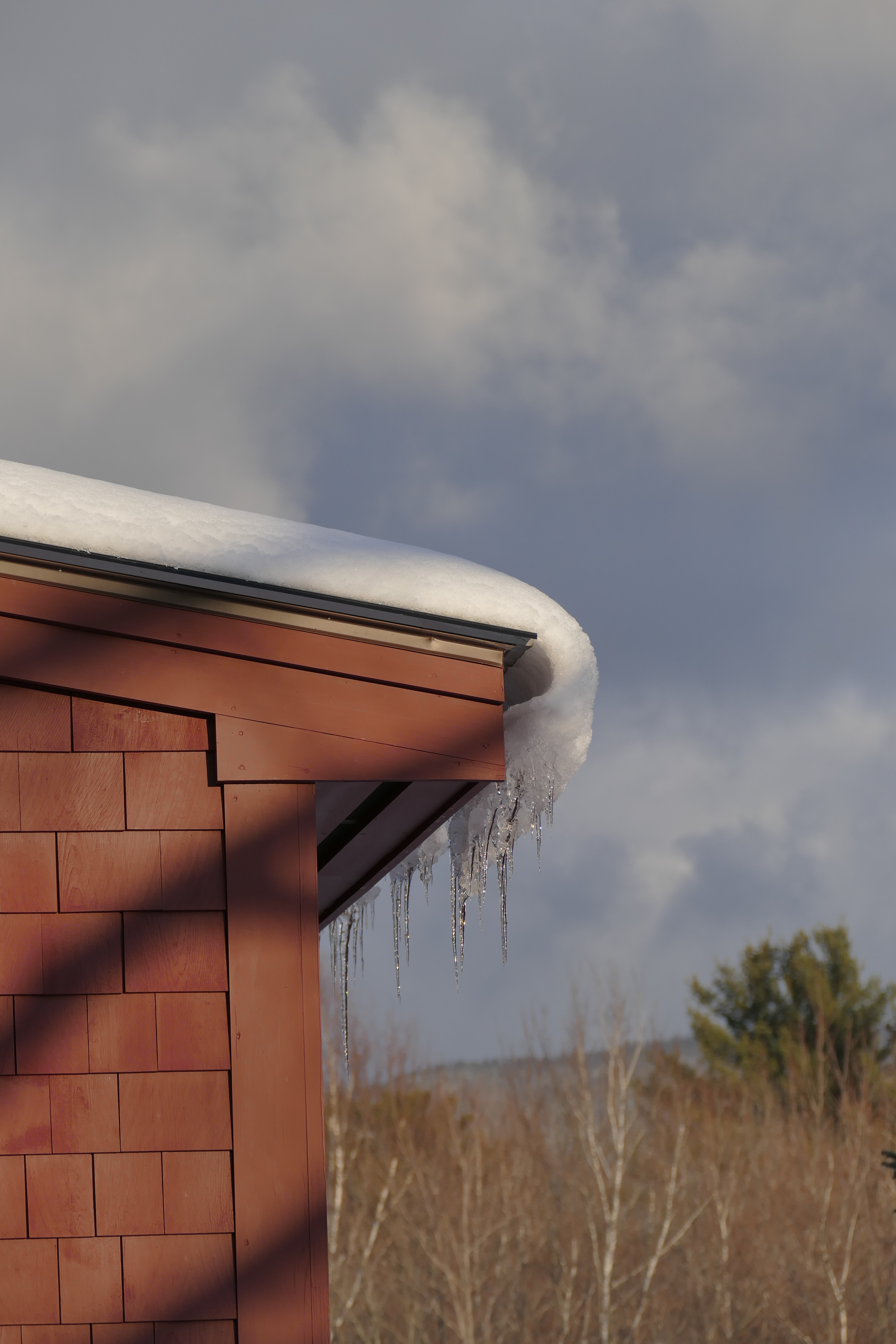
It is never so cold but it melts somewhere. Our mason well remarked that he had sometimes known it to be melting and freezing at the same time on a particular side of a house; while it was melting on the roof the icicles [were] forming under the eaves. It is always melting and freezing at the same time when icicles are formed.
Our thoughts are with those among the dead into whose sphere we are rising, or who are now rising into our own. Others we inevitably forget, though they be brothers and sisters.
Thus the departed may be nearer to us than when they were present. At death our friends and relations either draw nearer to us and are found out, or depart further from us and are forgotten. Friends are as often brought nearer together as separated by death.
We are tempted to call these the finest days of the year.
Take Fair Haven Pond, for instance, a perfectly level plain of snow, untrodden as yet by any fisherman, surrounded by snow-clad hills, dark evergreen woods, and reddish oak leaves, so pure and still.

















You must be logged in to post a comment.