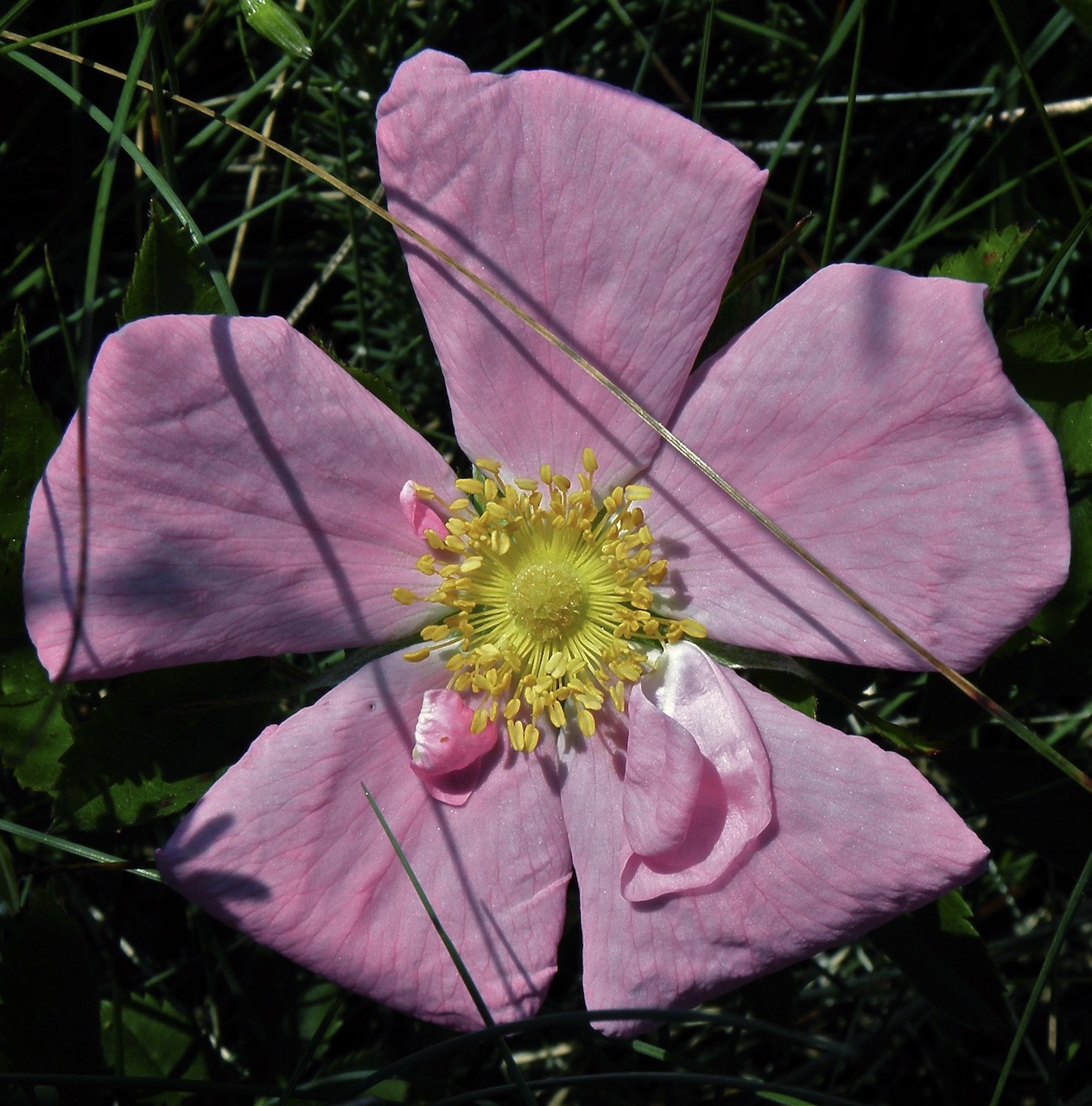
Just so much beauty and virtue as there is in the world, and just so much ugliness and vice, you see expressed in flowers. Each human being has his flower which expresses his character. In them nothing is concealed, but everything published.
I cannot see the bottom of the sky, because I cannot see to the bottom of myself. It is the symbol of my own infinity. My eye penetrates as far into the ether as that depth is inward from which my contemporary thought springs.
Not by constraint or severity shall you have access to true wisdom, but by abandonment, and childlike mirthfulness. If you would know aught, be gay before it.
Nature has looked uncommonly bare & dry to me for a day or two. With our senses applied to the surrounding world we are reading our own physical & corresponding moral revolutions. Nature was so shallow all at once I did not know what had attracted me all my life. I was therefore encouraged when going through a field this evening, I was unexpectedly struck with the beauty of an apple tree –– the perception of beauty is a moral test….
What subtle differences between one season and another! The warmest weather has, perchance, arrived and the longest days, but not the driest. When I remember gathering ripe blackberries on sandy fields or stones by the roadside, the very berries warmed by the sun, I am convinced of this. The seasons admit of infinite degrees in their revolutions. Found one of the purple orchises in an open meadow.
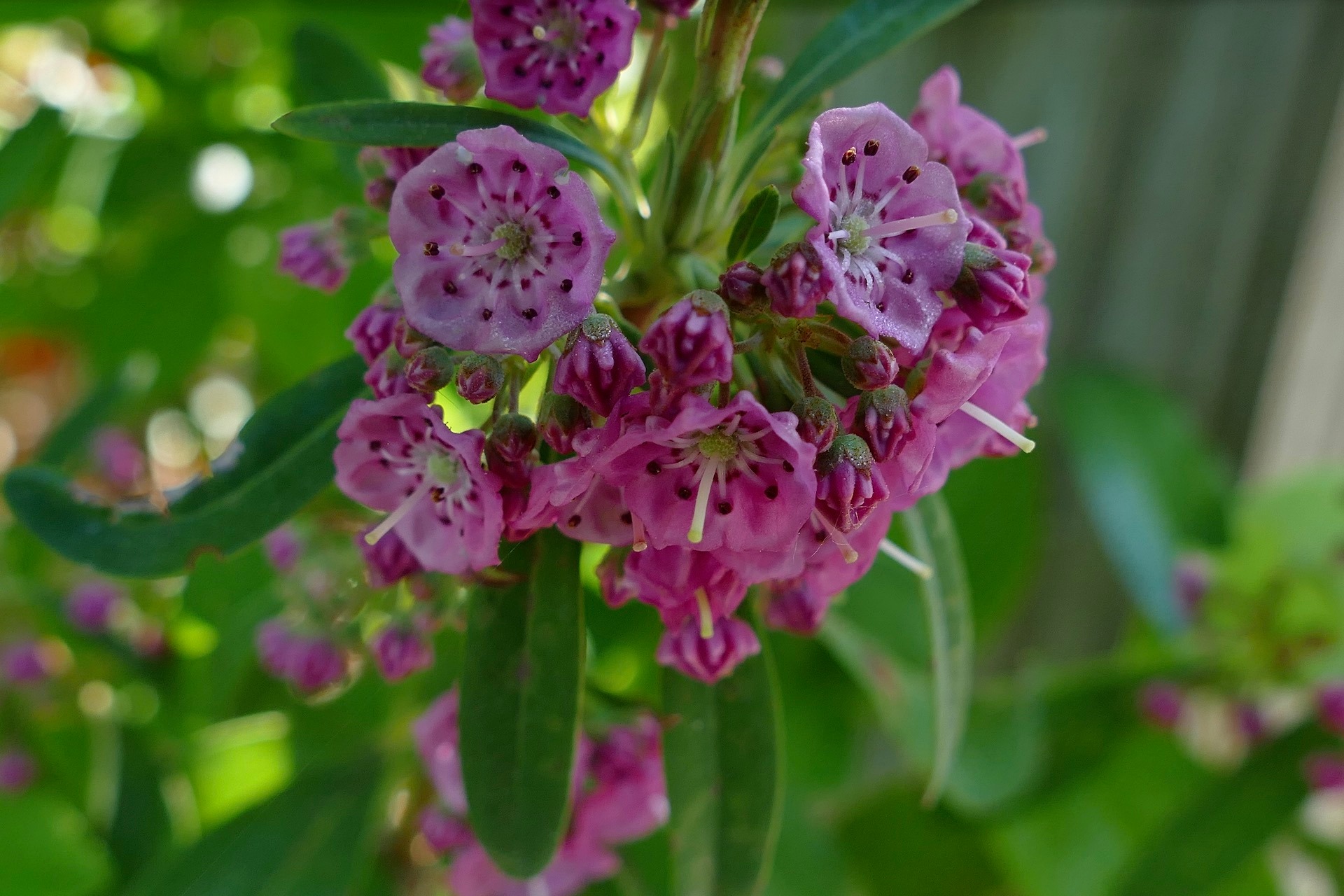
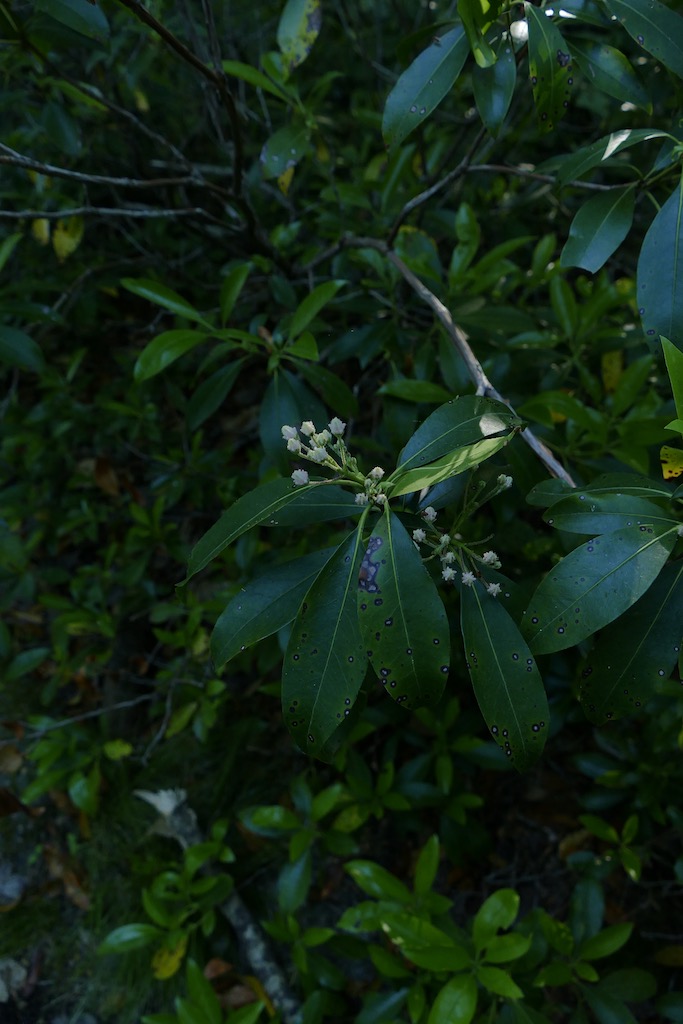
There are some fine large clusters of lambskill close to the shore of Walden and in the Peak fronting the south–– They are early there & large ap. both on account of the warmth & the vicinity of the water –– These flowers are in perfect cylinders sometimes 6 inches long by 2 wide––and 3 such raying out or upward from one centre i.e. 3 branches clustered together.
Paddle from the ash tree to the swimming-place. The further shore is crowded with polygonums (leaves) and pontederia leaves. There seems to have intervened no night. The heat of the day is unabated. You perspire before sunrise. The bullfrogs boom still. The river appears covered with an almost imperceptible blue film. The sun is not yet over the bank. What wealth in a stagnant river! There is music in every sound in the morning atmosphere. As I look up over the bay, I see the reflections of the meadow woods and the Hosmer hill at a distance, the tops of the trees cut off by a slight ripple. Even the fine grasses on the near bank are distinctly reflected. Owing to the reflections of the distant woods and hills, you seem to be paddling into a vast hollow country, doubly novel and interesting. Thus the voyageur is lured onward to fresh pastures. The melting heat begins again as soon as the sun gets up. My shoes are covered with the reddish seeds of the grass, for I have been walking in the dew. I hear a stake-driver, like a man at his pump, which sucks, — fit sound for our sluggish river. What is the devil’s-needle about? He hovers about a foot above the pads on humming wings thus early, from time to time darting one side as if in pursuit of some invisible prey. Most would suppose the stake-driver the sound of a farmer at a distance at his pump, watering his cattle. It oftener sounds like this than like a stake, but sometimes exactly like a man driving a stake in the meadow.
Mistook a crow blackbird, on a dark-brown rock rising out of the water, for a crow or a bittern, referring it to a greater distance than the actual, by some mirage. It had a boat tail, conspicuous when it flew.
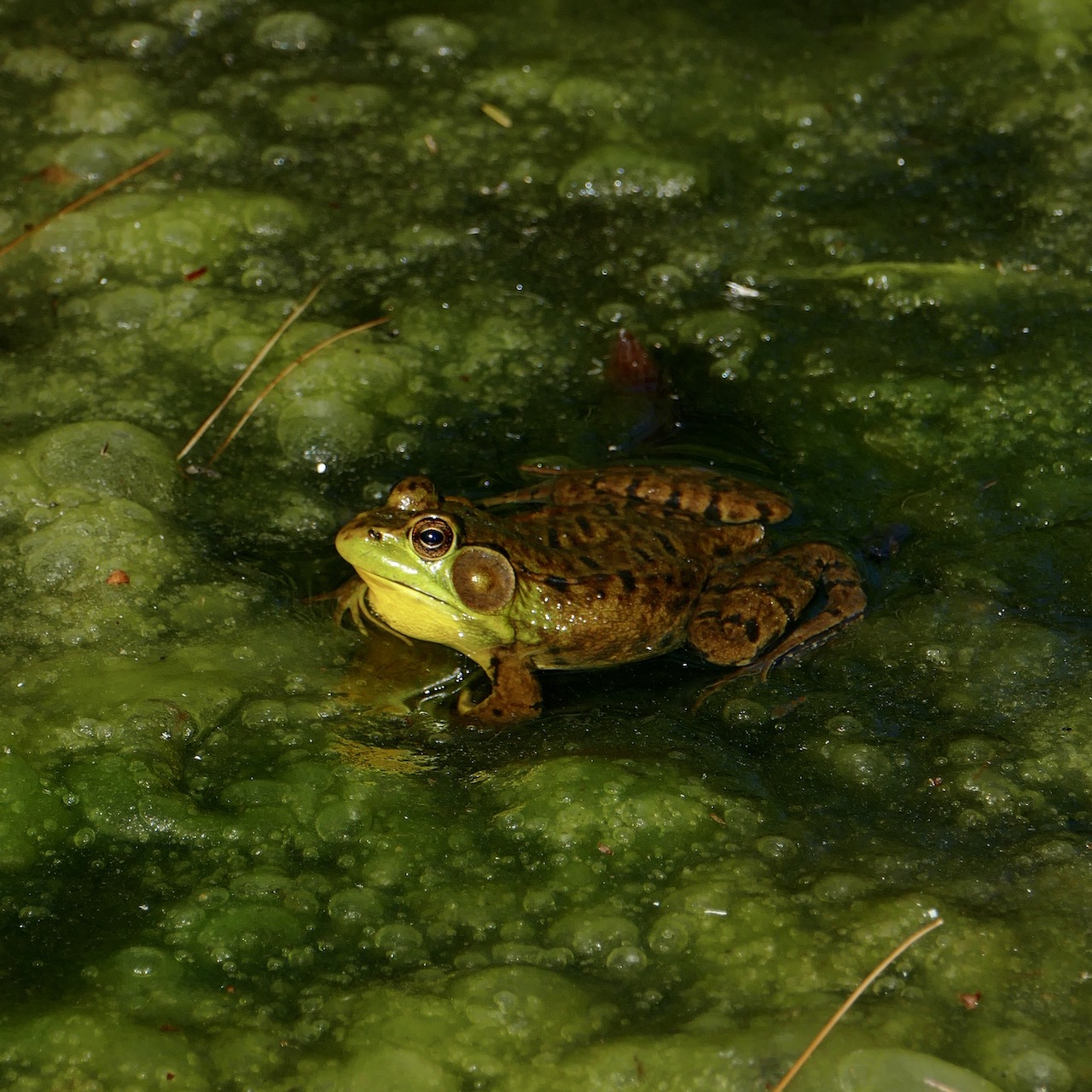
The bullfrogs lie on the very surface of the pads, showing their great yellow throats, color of the yellow breeches of the old school, and protuberant eyes. His whole back out, revealing a vast expanse of belly. His eyes like ranunculus or yellow lily buds, winking from time to time and showing his large dark-bordered tympanum. Imperturbable-looking. His yellow throat swells up like a small moon at a distance over the pads when he croaks. The floating pondweed (Potamogeton natans), with the oblong oval leaf floating on the surface, now in bloom. The yellow water ranunculus still yellows the river in the middle, where shallow, in beds many rods long. It is one of the capillary-leaved plants.
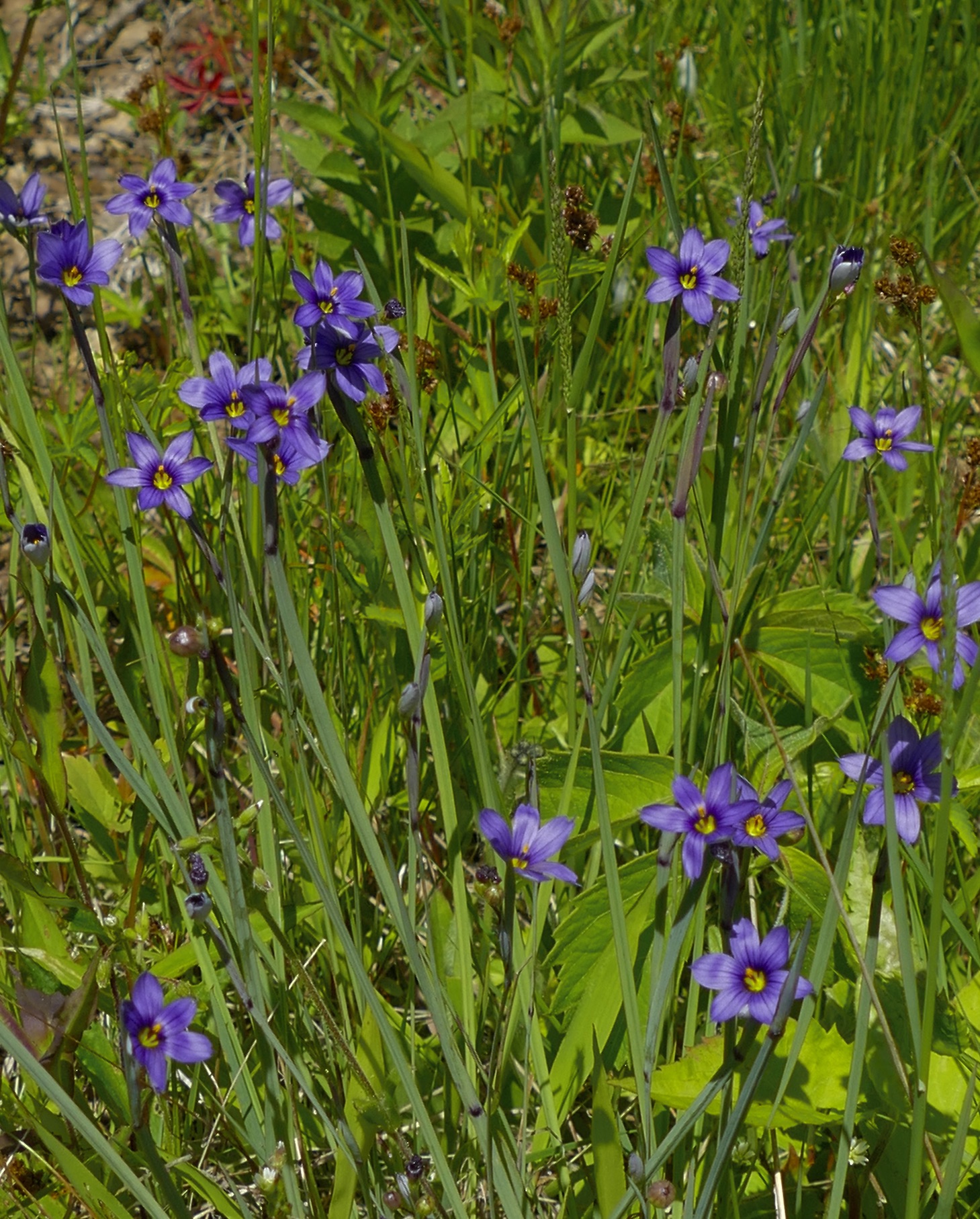
The fields are blued with blue eyed grass a slaty blue. The epilobium shows some color in its spikes. How rapidly new flowers infold—as if nature would get through her work too soon. One has as much as he can do to observe how flowers successively unfold. It is a flowery revolution to which but few attend. Hardly too much attention can be bestowed on flowers. We follow we march after the highest color—that is our flag—our standard—our “color.” Flowers were made to be seen not overlooked. Their bright colors imply eyes—spectators.—
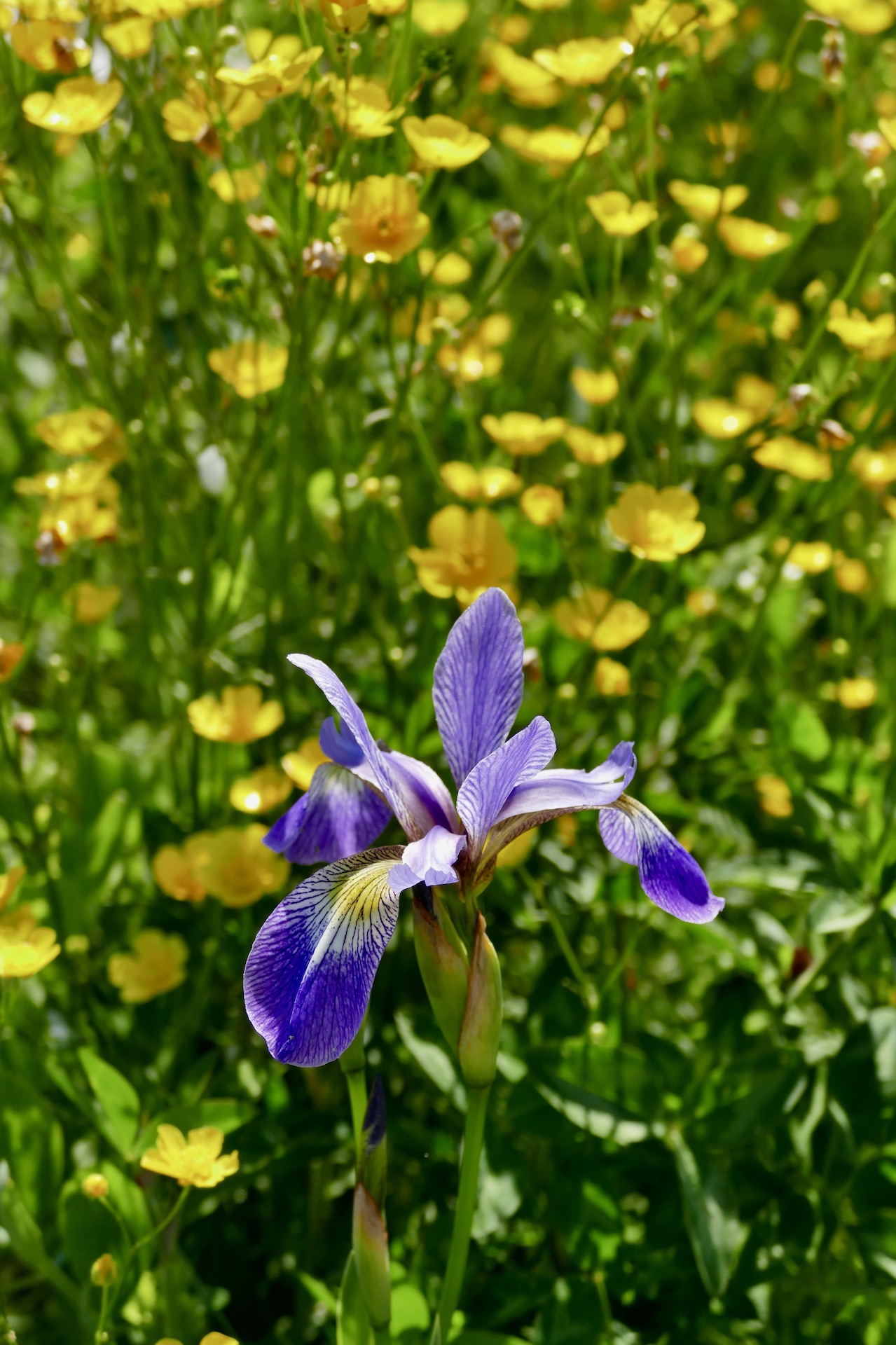
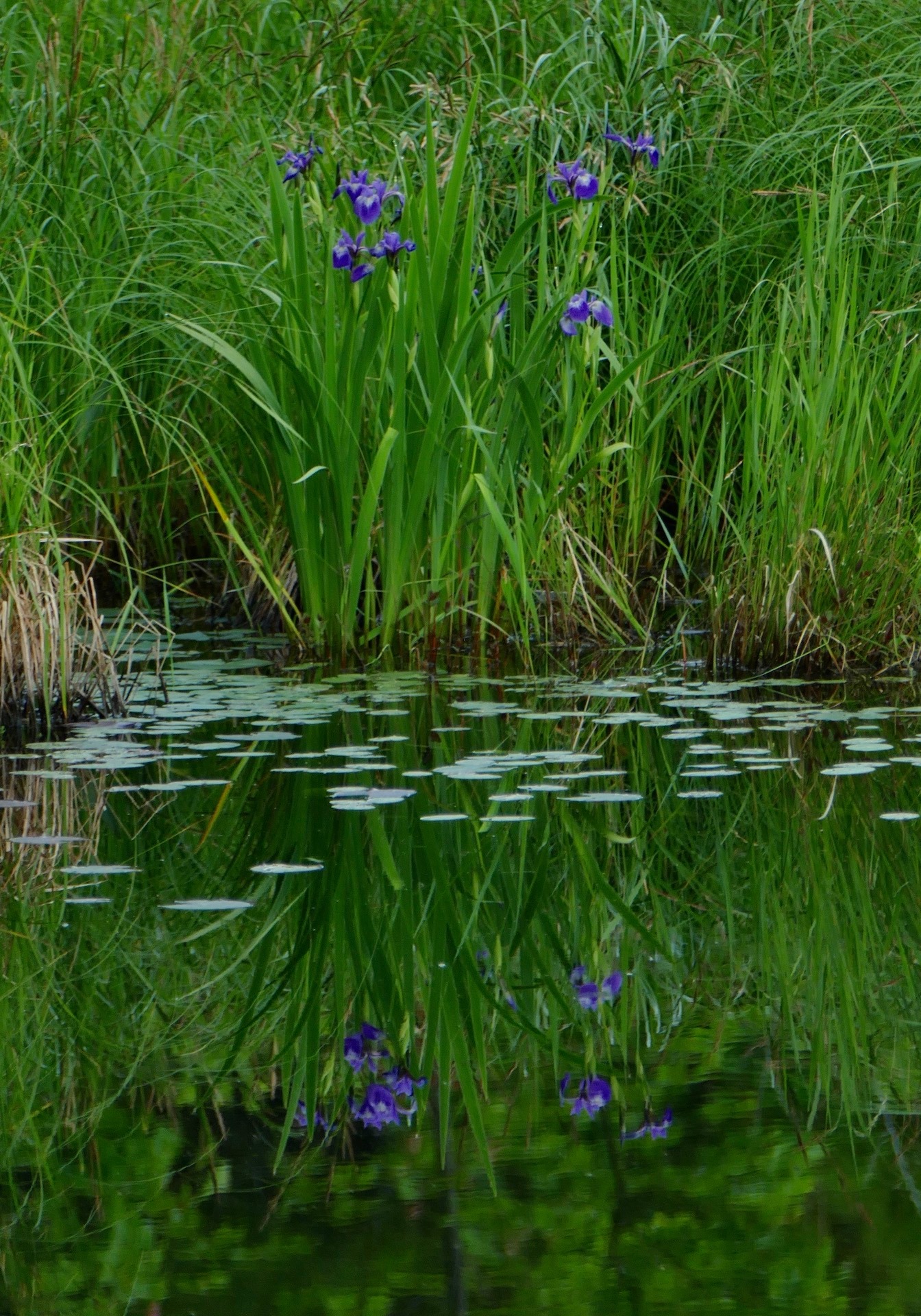
The blue flag (Iris versicolor) grows in this pure water, rising from the stony bottom all around the shores, and is very beautiful, ––not too high-colored, ––especially its reflections in the water. There was something in its bluish blade which harmonized with the greenish water.
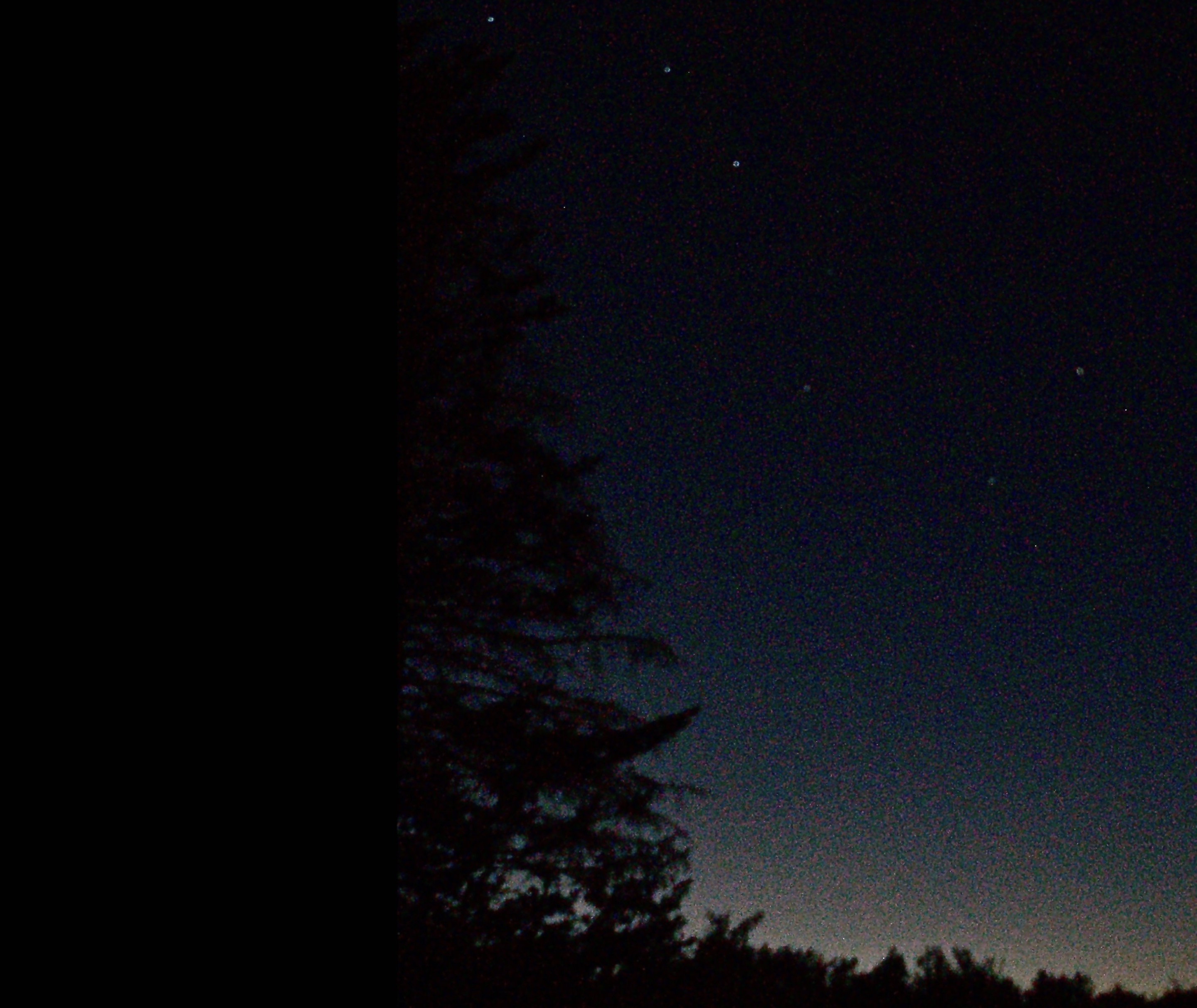
By night no flowers, at least no variety of colors. The pinks are no longer pink; they only shine faintly, reflecting more light. Instead of flowers underfoot, stars overhead.
My shadow has the distinctness of a second person, a certain black companion bordering on the imp, and I ask, “Who is this?” which I see dodging behind me as I am about to sit down on a rock.
No one to my knowledge, has observed the minute differences in the seasons. Hardly two nights are alike. The rocks do not feel warm to-night, for the air is warmest; nor does the sand particularly. A book of the seasons, each page of which should be written out-of-doors, or in its own locality wherever it may be.
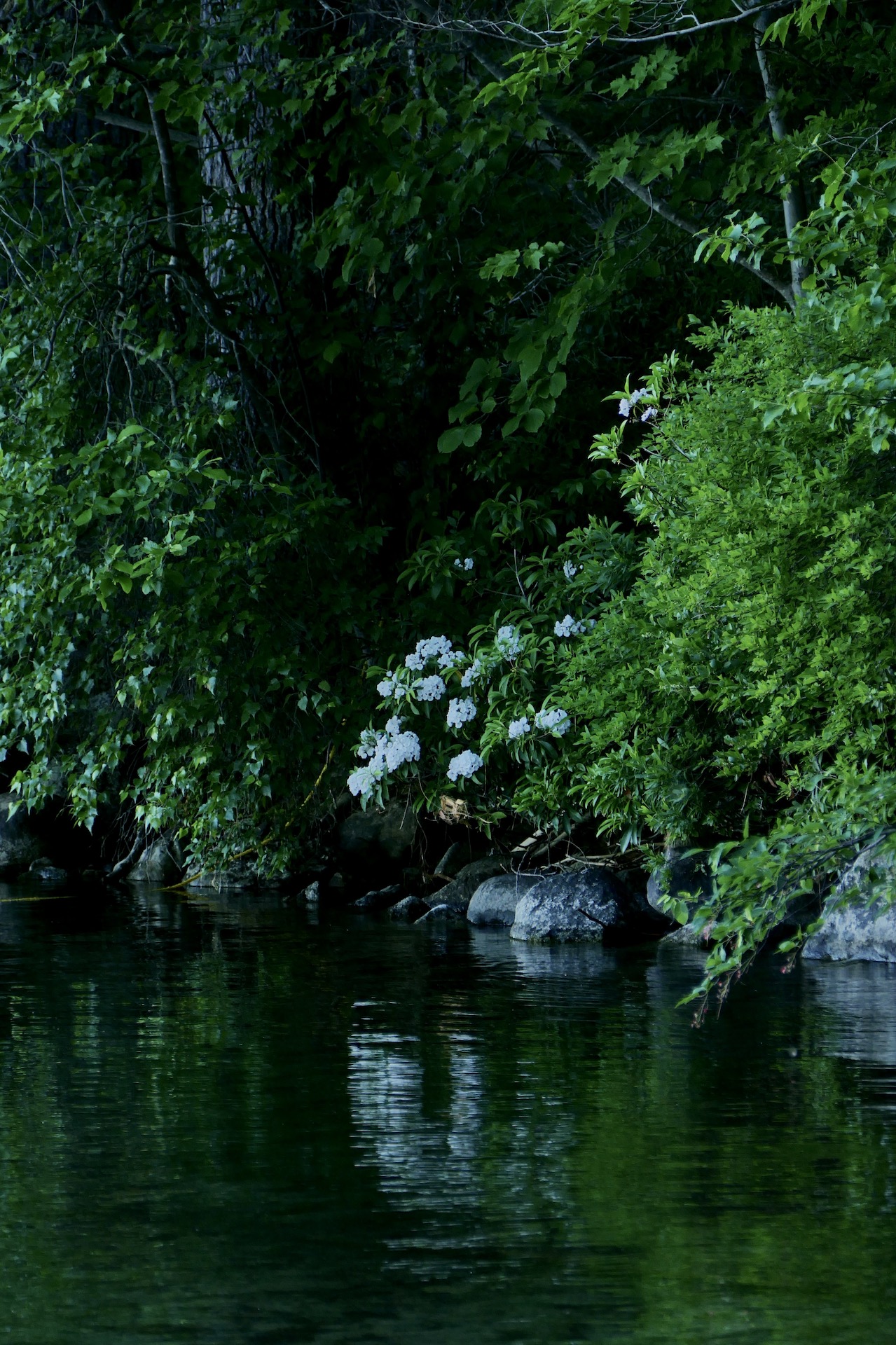
The mountain laurel will begin to bloom to-morrow. The frost some weeks since killed most of the buds and shoots, except where they were protected by trees or by themselves, and now new shoots have put forth and grow four or five inches from the sides of what were the leading ones. It is a plant which plainly requires the protection of the wood.
Find the great fringed orchis out apparently two or three days. Two are almost fully out, two or three only budded. A large spike of peculiarly delicate pale-purple flowers growing in the luxuriant and shady swamp amid hellebores, ferns, golden senecios, etc., etc. It is remarkable that this, one of the fairest of all our flowers, should also be one of the rarest, ––for the most part not seen at all. I think that no other but myself in Concord annually finds it. That so queenly a flower should annually bloom so rarely and in such withdrawn and secret places as to be rarely seen by man!
The village belle never sees this more delicate belle of the swamp. How little relation between our life and its! Most of us never see it or hear of it. The seasons go by to us as if it were not. A beauty reared in the shade of a convent, who has never strayed beyond the convent bell. Only the skunk or owl or other inhabitant of the swamp beholds it. In the damp twight of the swamp, where it is wet to the feet. How little anxious to display its attractions ! It does not pine because man does not admire it. How independent on our race! It lifts its delicate spike amid the hellebore and ferns in the deep shade of the swamp. I am inclined to think of it as a relic of the past as much as the arrowhead, or the tomahawk I found on the 7th.
My practicalness is not to be trusted to the last. To be sure, I go upon my legs for the most part, but, being hard-pushed and dogged by a superficial common sense which is bound to near objects by beaten paths,
I am off the handle, as the phrase is, ––I am like those guinea-fowl which Charles Darwin saw at the Cape de Verd Islands. He says,”They avoided us like partridges on a rainy day in September, running with their heads cocked up; and if pursued, they readily took to the wing.











You must be logged in to post a comment.