in Thoreau’s Journal:

Yesterday was very cold, with northwest wind, and this morning the first frost in the garden, killing some of our vines.
in Thoreau’s Journal:
Yesterday was very cold, with northwest wind, and this morning the first frost in the garden, killing some of our vines.
in Thoreau’s Journal:
Like the fruits, when cooler weather and frosts arrive, we too are braced and ripened. When we shift from the shady to the sunny side of the house, and sit there in an extra coat for warmth,

our green and leafy and pulpy thoughts acquire color and flavor, and perchance a sweet nuttiness at last, worth your cracking.
in Thoreau’s Journal:
I must walk more with free senses–– It is as bad to study stars & clouds as flowers & stones–– I must let my senses wander as my thoughts––my eyes see without looking. Carlyle said that how to observe was to look––but I say that is rather to see––& the more you look the less you will observe––
I have the habit of attention to such excess that my senses get no rest––but suffer from a constant strain. Be not preoccupied with looking. Go not to the object. Let it come to you….What I need is not to look at all––but a true sauntering of the eye.
in Thoreau’s Journal:
The prinos berries are pretty red. Any redness like cardinal-flowers, or poke, or the evening sky, or Cheronaea, excites us as a red flag does cows and turkeys.
in Thoreau’s Journal:
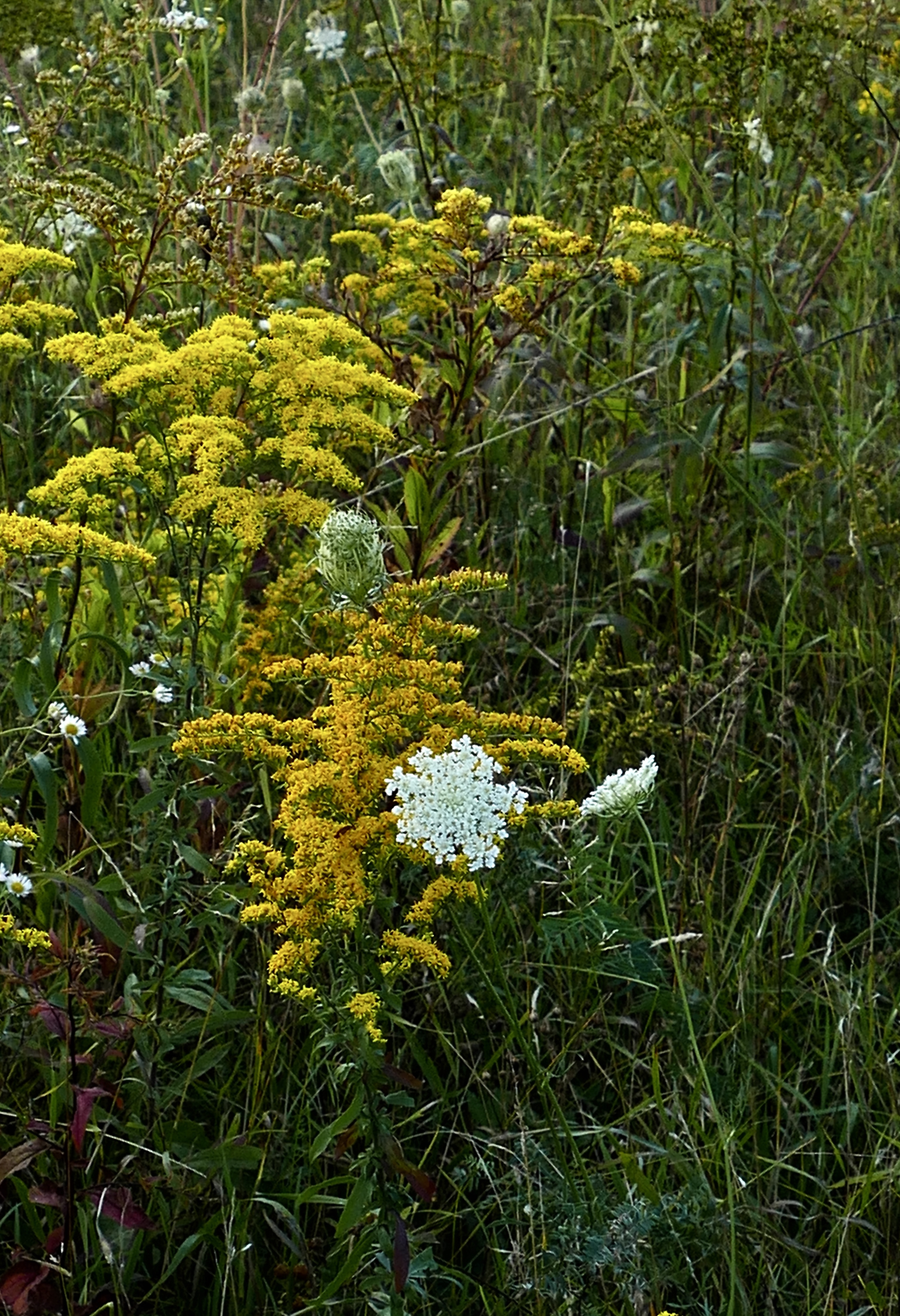
This is the season when the prevalence of the goldenrod gives such a ripe and teeming look to the dry fields and to the swamp
in Thoreau’s Journal:
The poke is a very rich and striking plant. Some which stand under the Cliffs quite dazzled me with their now purple stems gracefully drooping each way, their rich, somewhat yellowish, purple-veined leaves, their bright purple racemes, —peduncles, and pedicels, and calyx-like petals from which the birds have picked the berries (these racemes, with their petals now turned to purple, are more brilliant than anything of the kind), — flower-buds, flowers, ripe berries and dark purple ones, and calyx-like petals which have lost their fruit, all on the same plant. I love to see any redness in the vegetation of the temperate zone. It is the richest color. I love to press these berries between my fingers and see their rich purple wine staining my hand.

It asks a bright sun on it to make it show to best advantage, and it must be seen at this season of the year. It speaks to my blood. Every part of it is flower, such is its superfluity of color, —a feast of color. That is the richest flower which most abounds in color. What need to taste the fruit, to drink the wine, to him who can thus taste and drink with his eyes? Its boughs, gracefully drooping, offering repasts to the birds. It is cardinal in its rank, as in its color. Nature here is full of blood and heat and luxuriance. What a triumph it appears in Nature to have produced and perfected such a plant, enough for a summer.
in Thoreau’s Journal:
2 A. M. – The moon not quite full. To Conantum via road. There is a low vapor in the meadows beyond the depot, dense and white, though scarcely higher than a man’s head, concealing the stems of the trees. I see that the oaks, which are so dark and distinctly outlined, are illumined by the moon on the opposite side. This as I go up the back road. A few thin, ineffectual clouds in the sky. I come out thus into the moonlit night, where men are not, as if into a scenery anciently deserted by men.
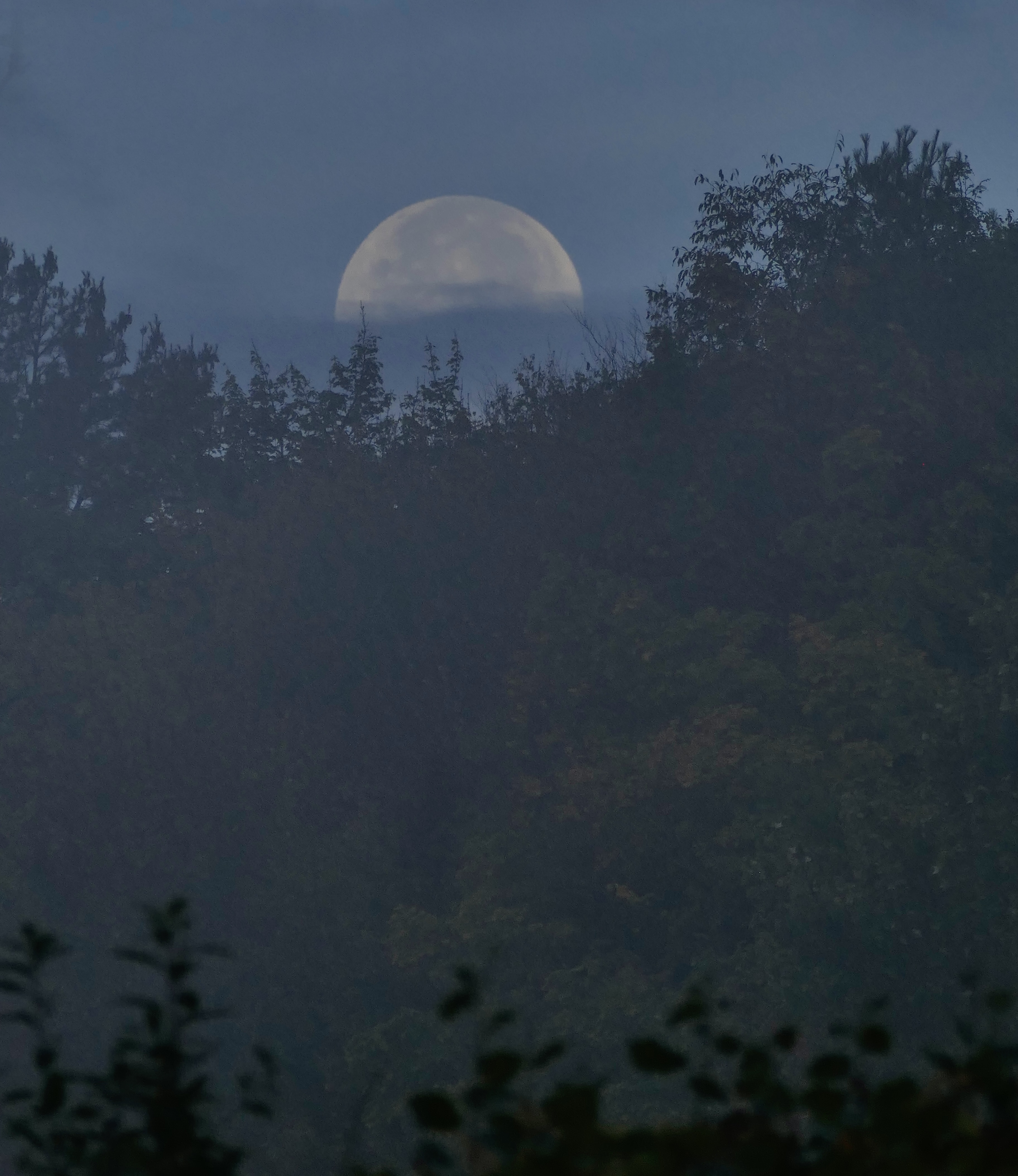
The life of men is like a dream. It is three thousand years since night has had possession. Go forth and hear the crickets chirp at midnight. Hear if their dynasty is not an ancient one and well founded. I feel the antiquity of the night. She surely repossesses herself of her realms, as if her dynasty were uninterrupted, or she had underlain the day. No sounds but the steady creaking of crickets and the occasional crowing of cocks. I go by the farmer’s houses and barns, standing there in the dim light under the trees, as if they lay at an immense distance or under a veil. The farmer and his oxen now all asleep. Not even a watch-dog awake. The human slumbers. There is less of man in the world. The fog in the lowlands on the Corner road is never still. It now advances and envelops me as I stand to write these words, then clears away, with ever noiseless step. It covers the meadows like a web. I hear the clock strike three.
in Thoreau’s Journal:
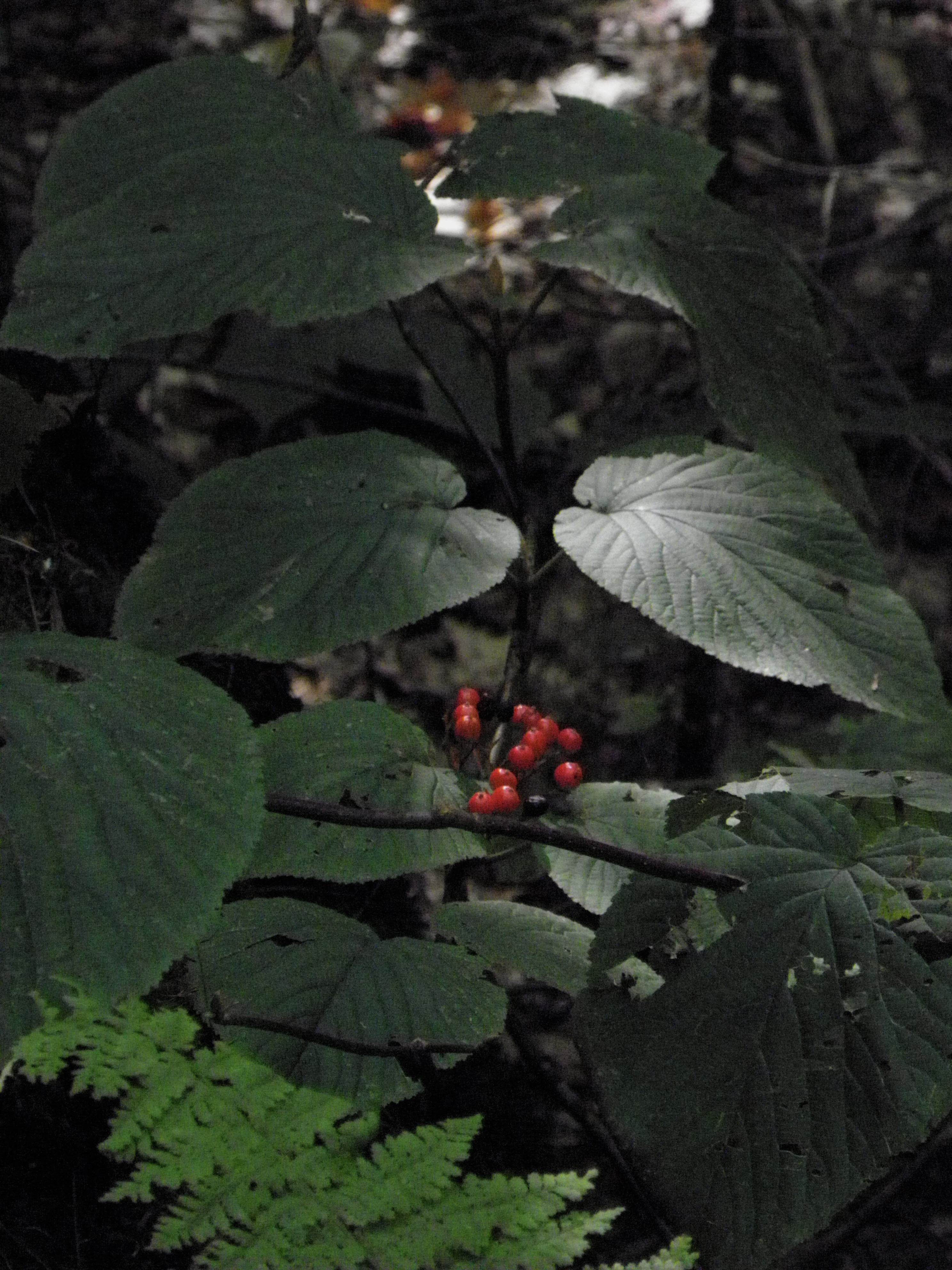
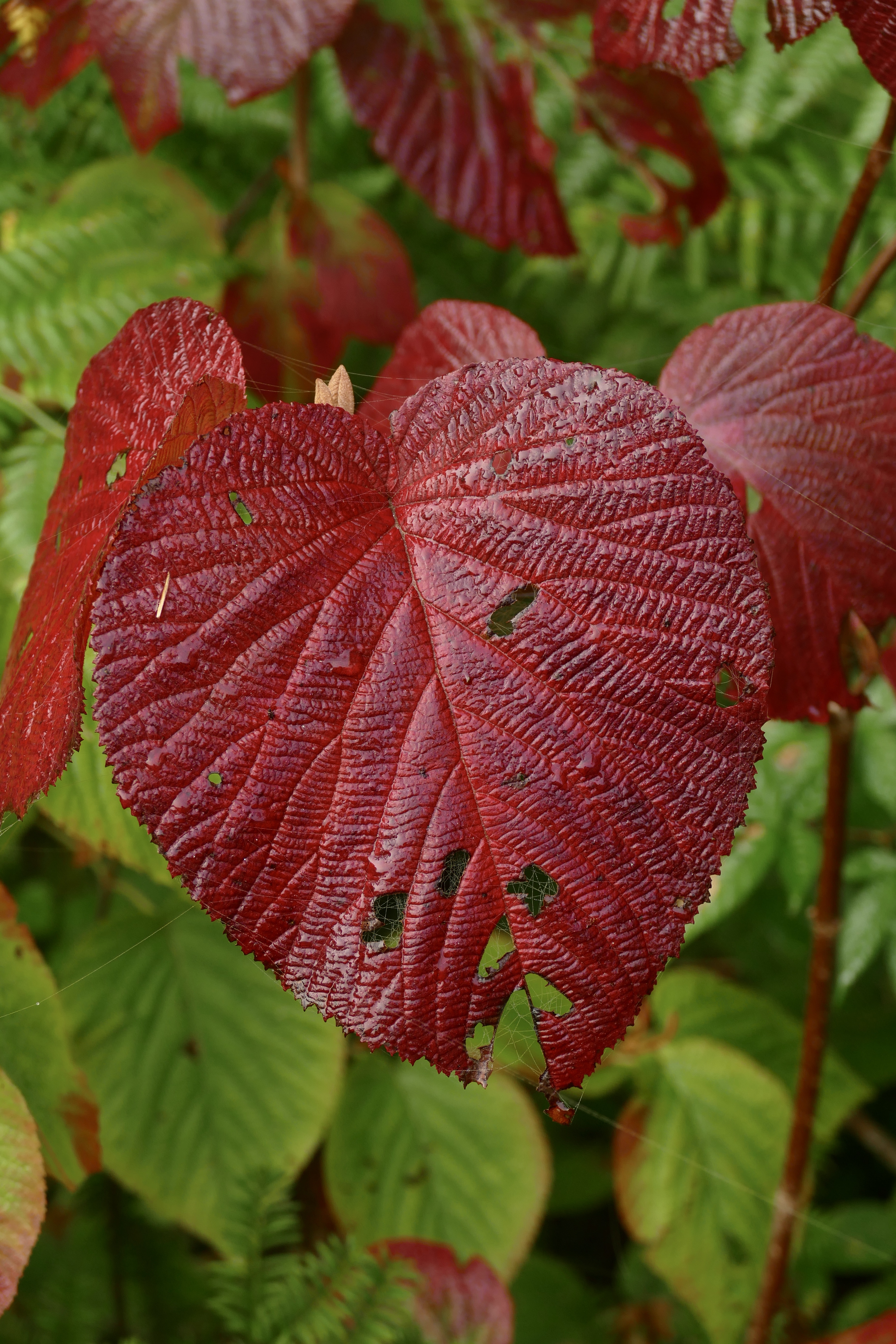
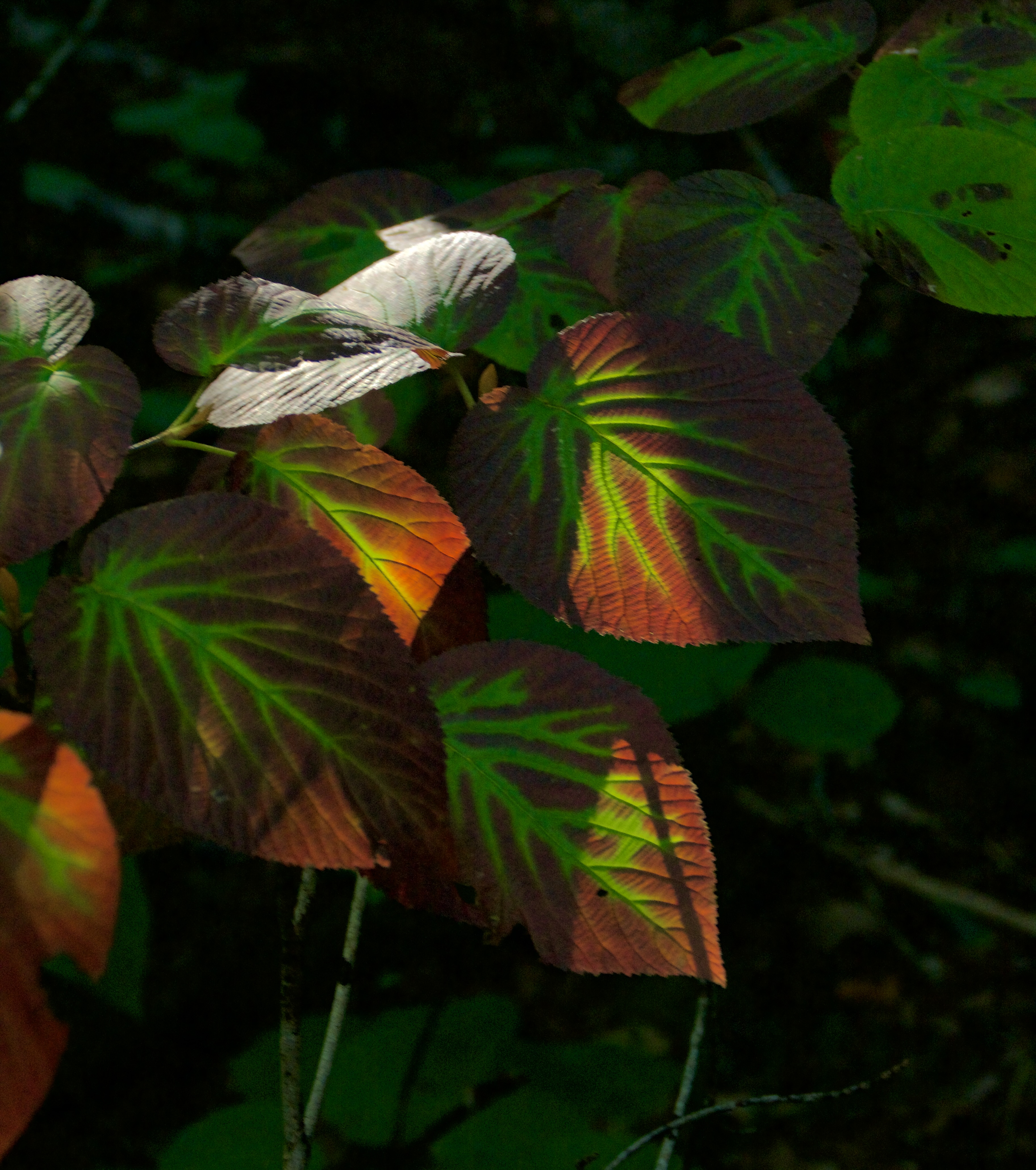
There is the hobble-bush with its berries and large roundish leaves, now beginning to turn a deep dull crimson red.
in Thoreau’s Journal:
We are receiving our portion of the infinite. The art of life! Was there ever anything memorable written upon it? By what disciplines to secure the most life, with what care to watch our thoughts. To observe what transpires, not in the street, but in the mind and heart of me! I do not remember any page which will tell me how to spend this afternoon. I do not so much wish to know how to economize time as how to spend it, by what means to grow rich, that the day may not have been in vain.
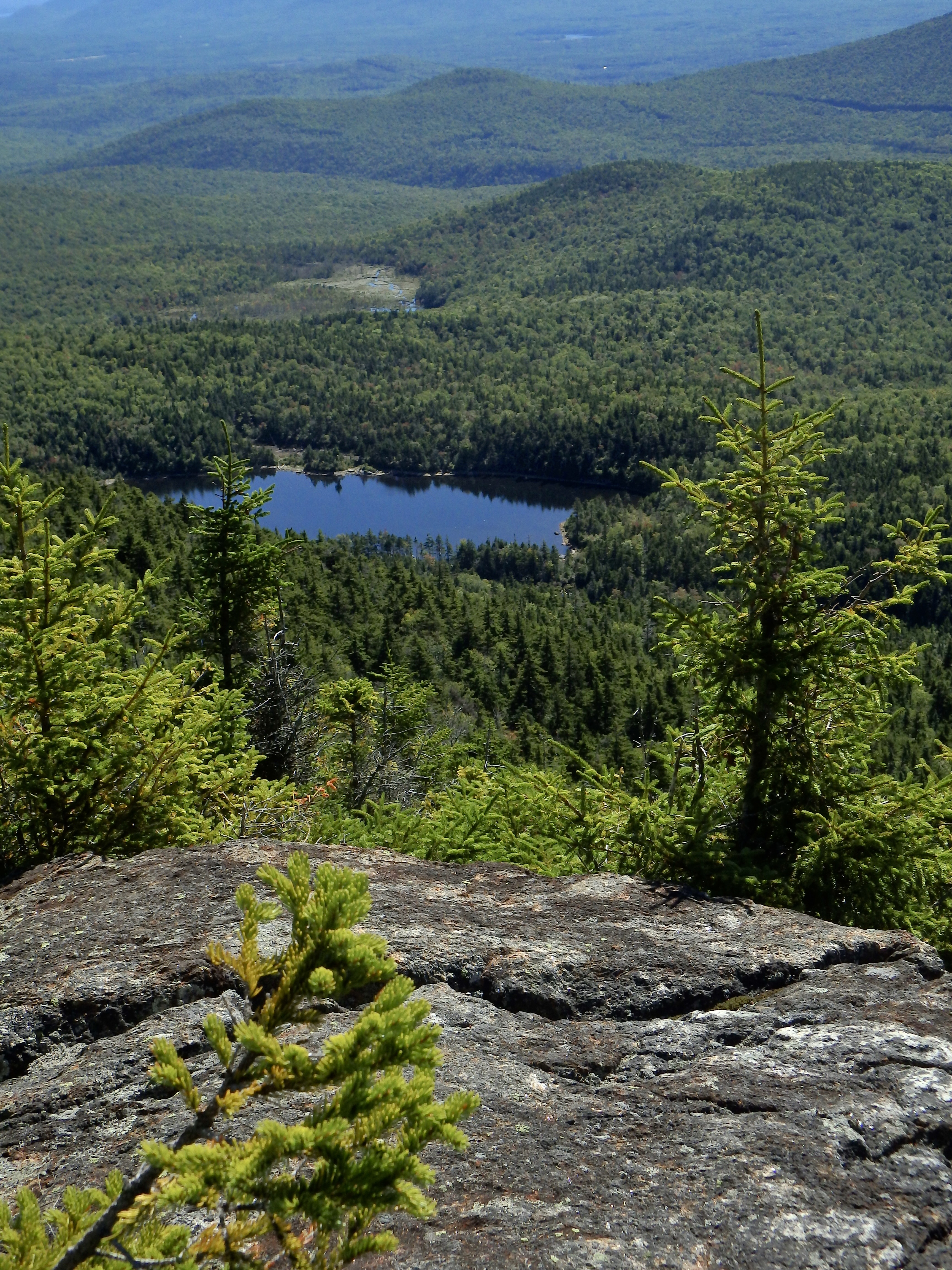
The scenery, when it is truly seen, reacts on the life of the seer. How to live. How to get the most life. As if you were to teach the young hunter how to entrap his game. How to extract its honey from the flower of the world. That is my every-day business. I am as busy as a bee about it.
in Thoreau’s Journal:
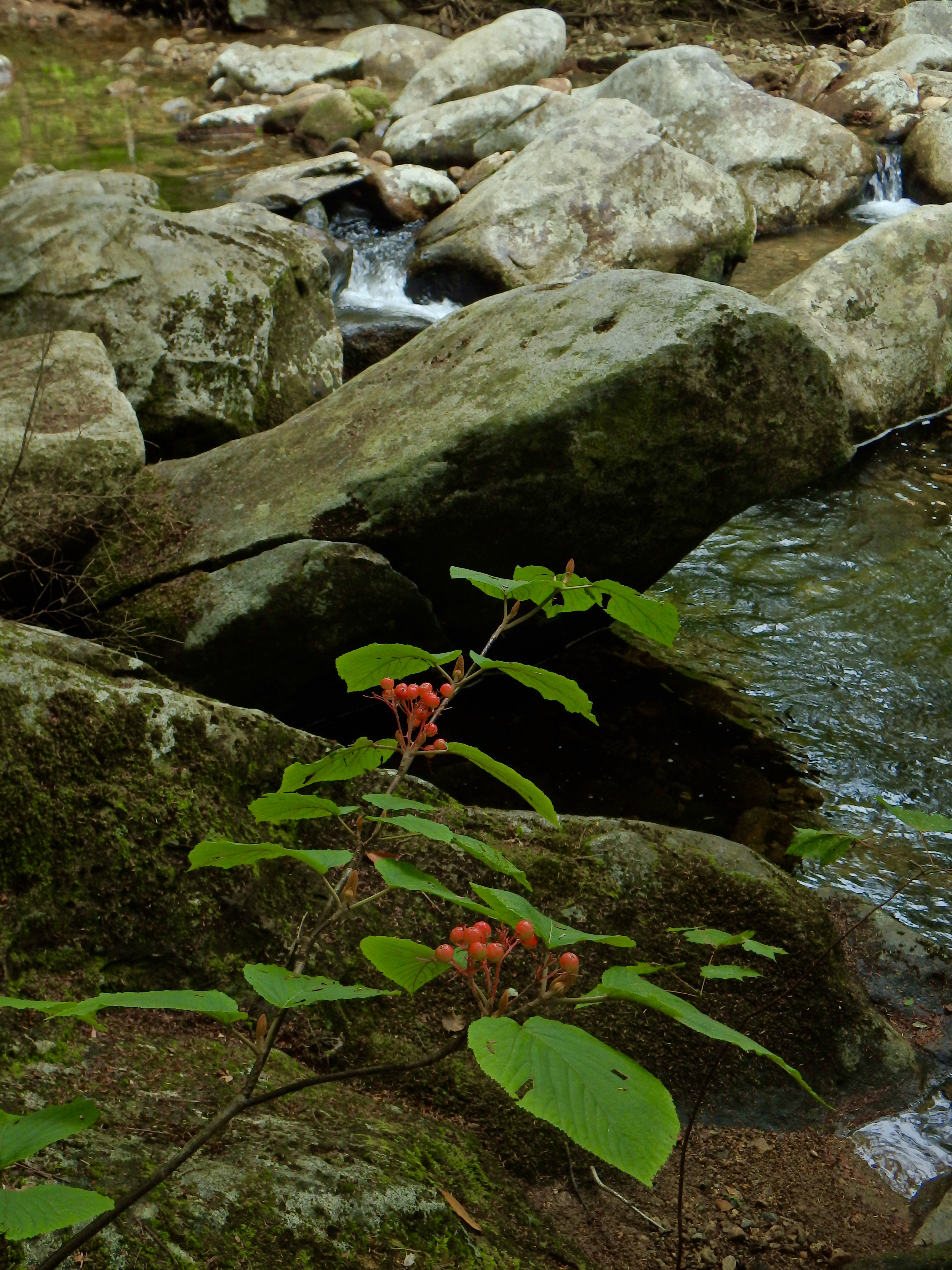
In the woods near the top the Vib. lantanoides Hobble bush-AM. in fruit—mostly large & red but the ripe dark blue or black like the V. nudum— what I have formerly falsely called Moose-berry.
in Thoreau’s Journal:

Sometimes a day serves only to hold time together.
in Thoreau’s Journal:
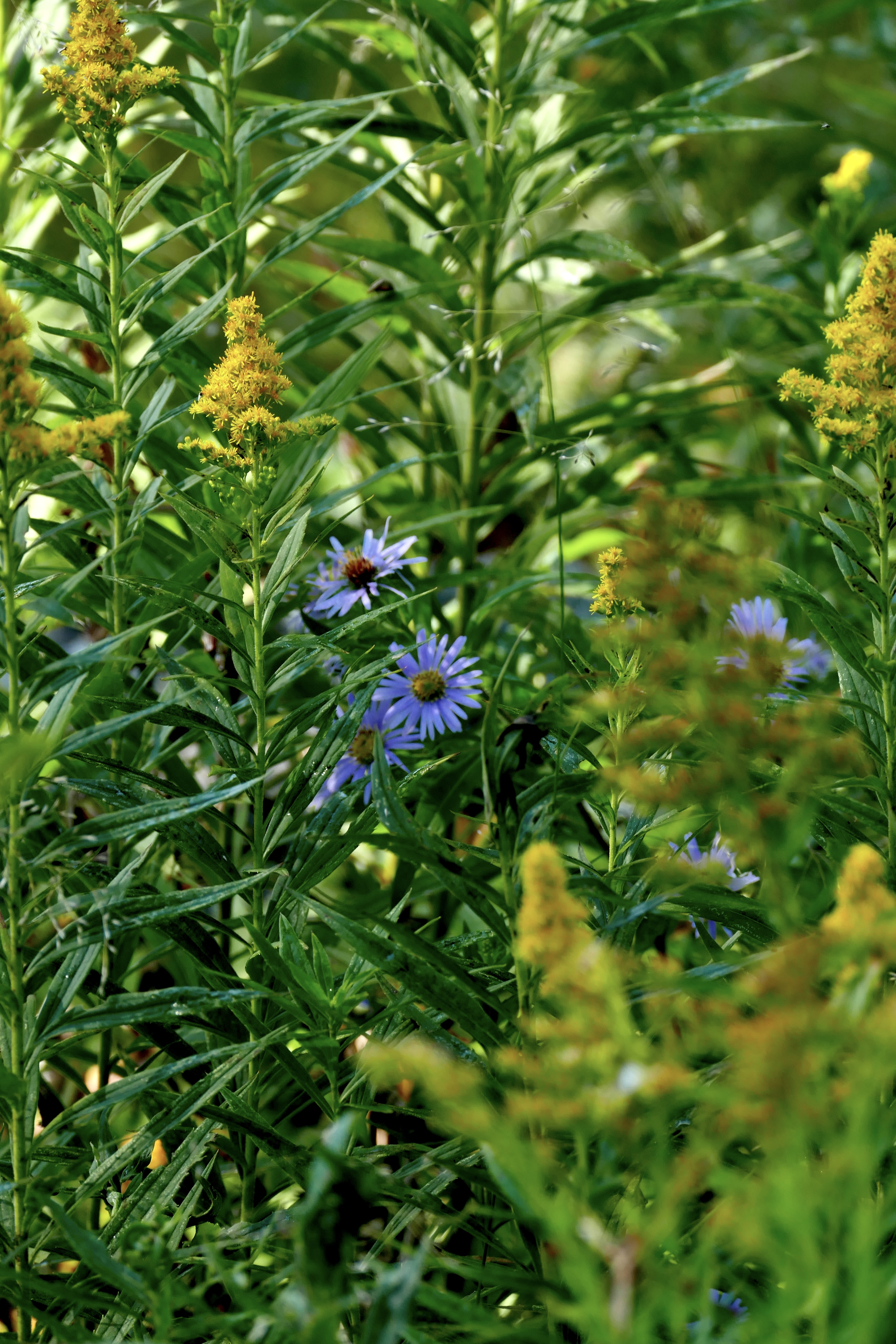
Would it not be worth the while to devote one day each year to collecting with pains the different kinds of asters––perhaps about this time––and another to the goldenrods?
in Thoreau’s Journal:
As for walking, the inhabitants of large English towns are confined almost exclusively to their parks and to the highways. The few footpaths in their vicinities “are gradually vanishing,” says Wilkinson, “under the encroachments of the proprietors.” He proposes that the people’s right to them be asserted and defended and that they be kept in a passable state at the public expense. “This,”says he,”would be easily done by means of asphalt laid upon a good foundation” ! ! ! So much for walking, and the prospects of walking, in the neighborhood of English large towns.
Think of a man — he may be a genius of some kind—being confined to a highway and a park for his world to range in! I should die from mere nervousness at the thought of such confinement.
I should hesitate before I were born, if those terms could be made known to me before hand. Fenced in forever by those green barriers of fields, where gentlemen are seated ! Can they be said to be inhabitants of this globe? Will they be content to inhabit heaven thus partially?
in Thoreau’s Journal:
Sometimes my thought rustles in midsummer as if ripe for the fall—
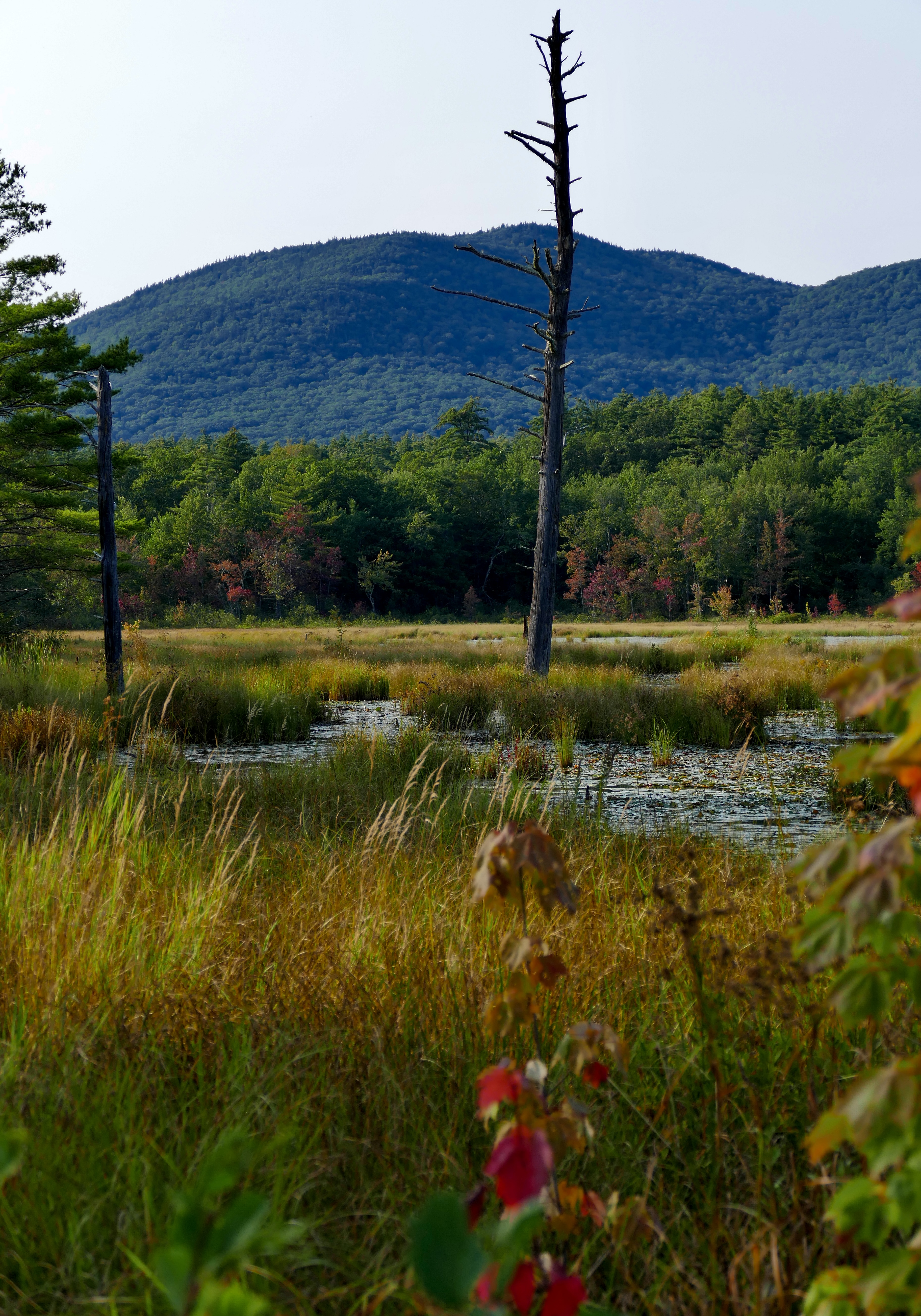
I anticipate the russet hues and the dry scent of autumn, as the feverish man dreams of balm and sage.
in Thoreau’s Journal:
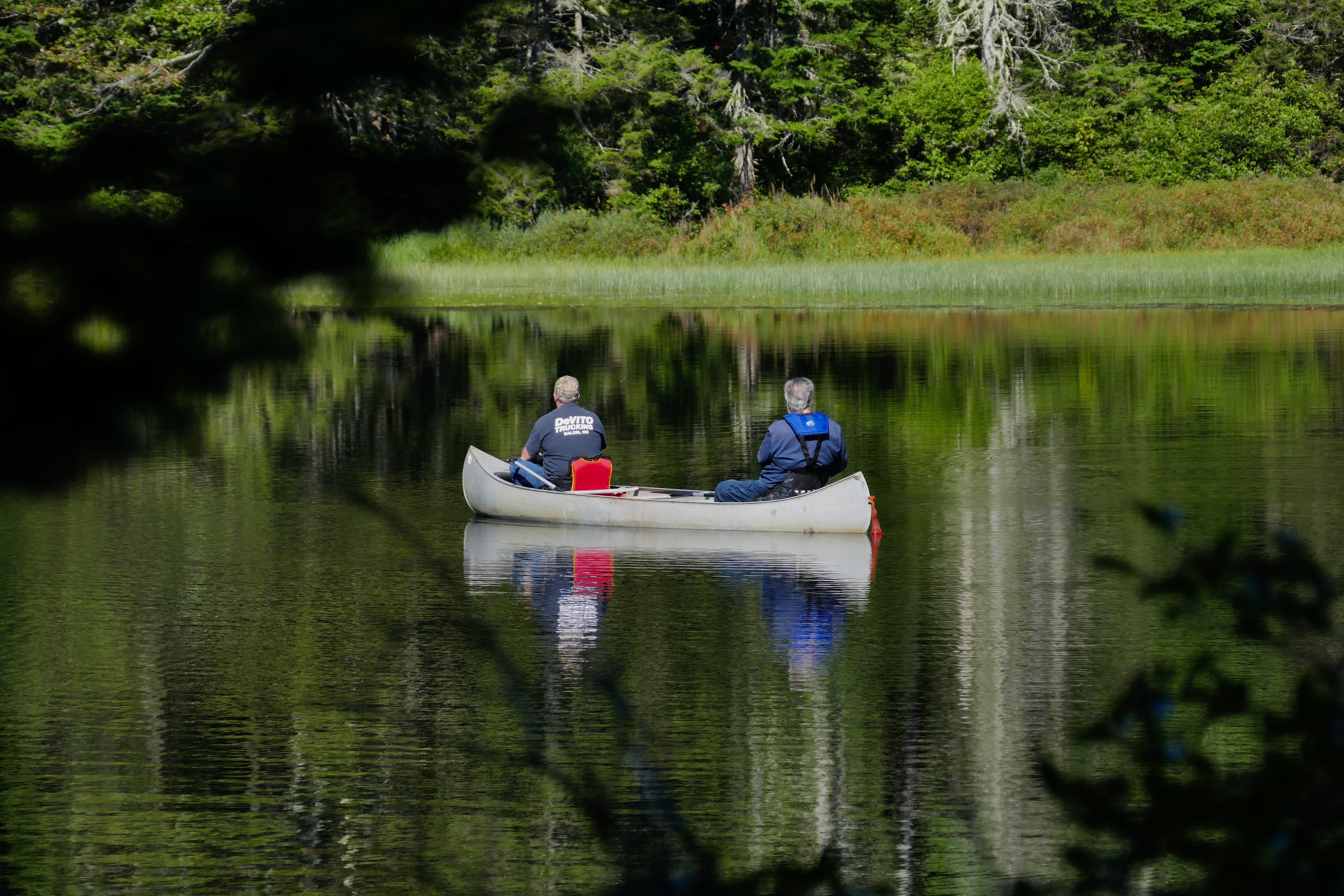
Let us know and conform only to the fashions of eternity.
in Thoreau’s Journal:
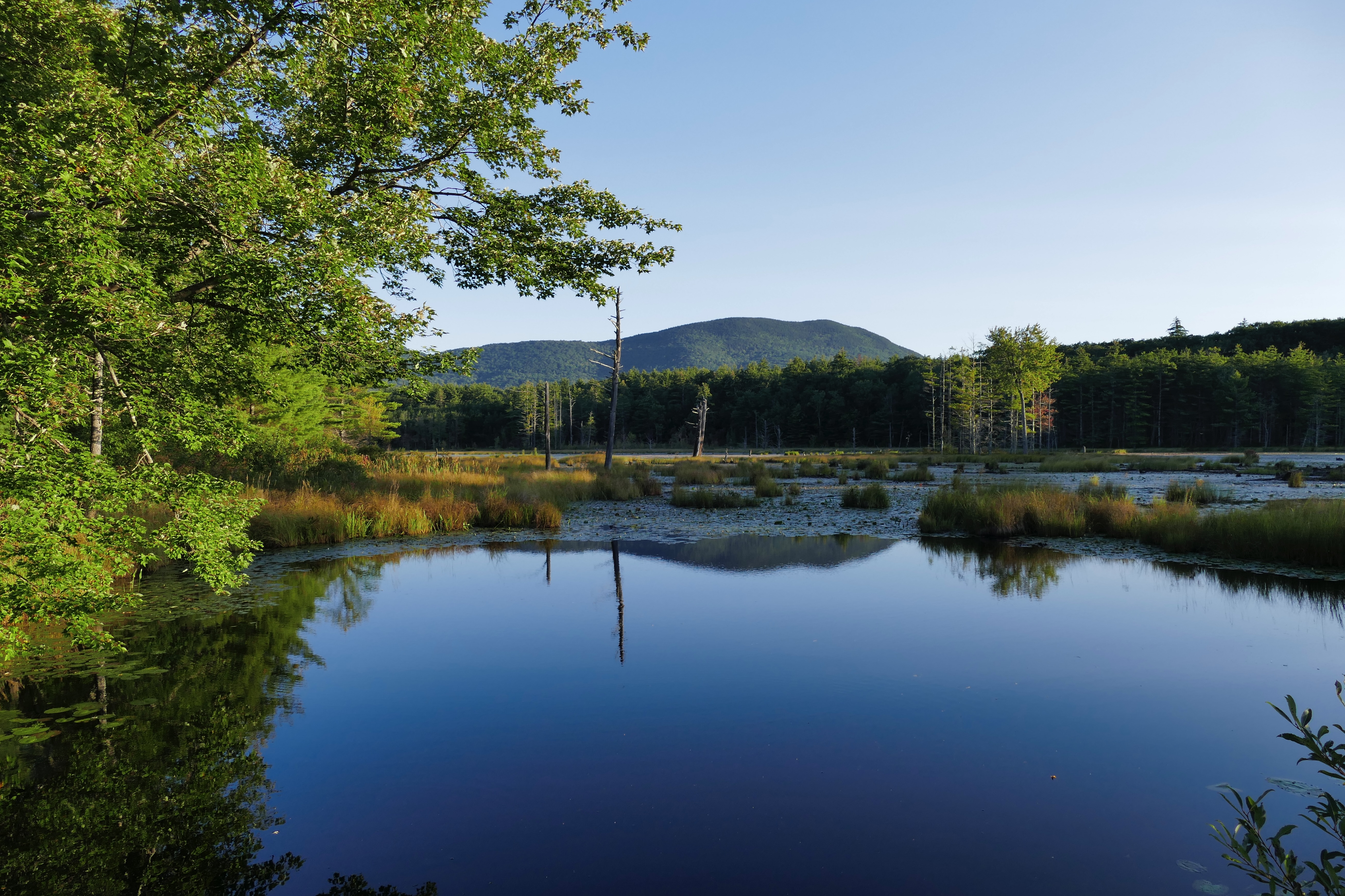
The reflections are perfect.
in Thoreau’s Journal:
Both a conscious and an unconscious life are good. Neither is good exclusively, for both have the same source. The wisely conscious life springs out of an unconscious suggestion. I have found my account in travelling in having prepared beforehand a list of questions which I would get answered, not trusting to my interest at the moment, and can then travel with the most profit.
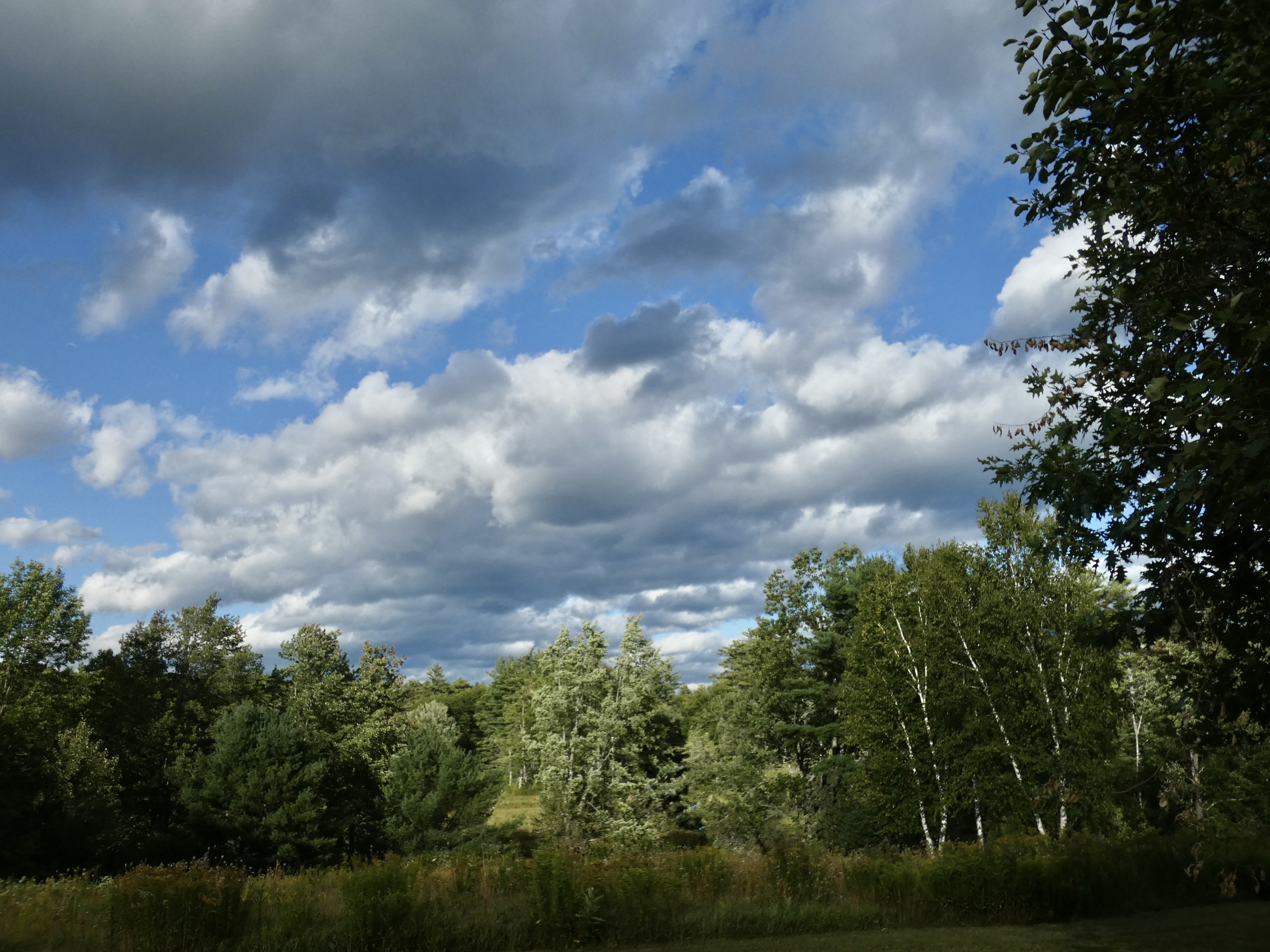
Indeed, it is by obeying the suggestions of a higher light within you that you escape from yourself and, in the transit, as it were see with the unworn sides of your eye, travel totally new paths.
in Thoreau’s Journal:
Walking down the street in the evening, I detect my neighbor’s ripening grapes by the scent twenty rods off; though they are concealed behind his house, every passer knows of them.

So, too, ever and anon I pass through a little region possessed by the fragrance of ripe apples.
in Thoreau’s Journal:
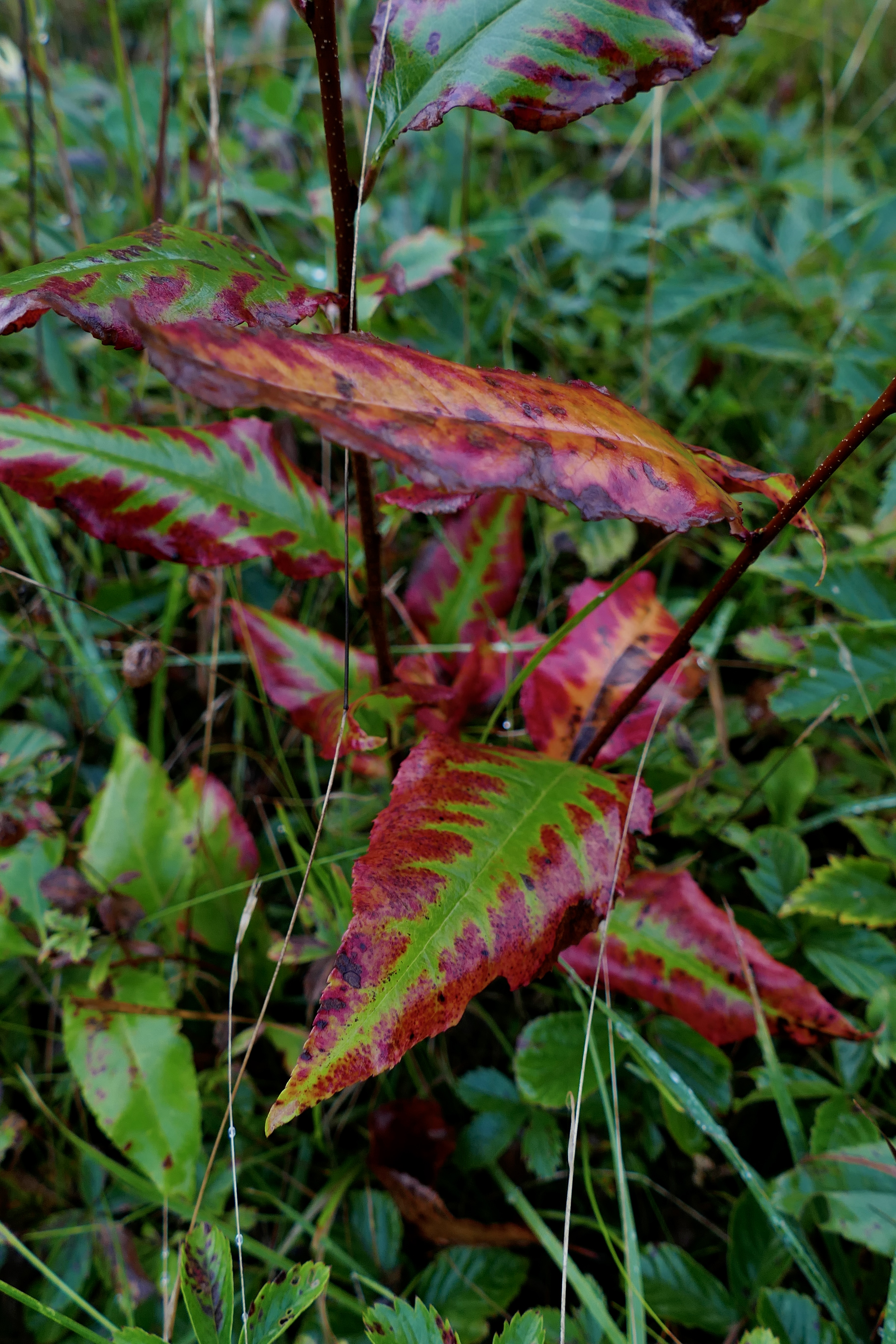
Soaking rain last night, straight down. When the wind stirs after the rain, leaves that were prematurely ripe or withered begin to strew the ground on the leeward side. Especially the scarlet leaves of the cultivated cherry are seen to have fallen.

Their change, then, is not owing to drought, but commonly a portion of them ripens thus early, reminding us of October and November. When, as I go to the post-office this morning, I see these bright leaves strewing the moist ground on one side of the tree and blown several rods from it into a neighboring yard, I am reminded that I have crossed the summit ridge of the year and have begun to descend the other slope. The prospect is now toward winter. These are among the first-fruits of the leafy harvest. The sharp whistling note of a downy woodpecker, which sounds rare; perhaps not heard since spring.
in Thoreau’s Journal:
Would it not be well to describe some of those rough—all day walks across lots….

—-Picking our way over quaking meadows & swamps —& occasionally slipping into the muddy batter mid-leg deep—-jumping or fording ditches & brooks—forcing our way through dense blueberry swamps—-where there is water beneath & bushes above—then brushing through extensive birch forests all covered with green lice—which cover our clothes & face—then under larger wood relieved, more open beneath—-steering for some more conspicuous trunk Now along a rocky hill side where the sweet fern grows for a mile—then over a recent cutting—finding our uncertain footing on the cracking tops & trimmings of trees left by the choppers— Now taking a step or 2 of smooth walking across a high way— Now through a dense pine wood descending—into a rank dry swamp where the cinnamon fern rises above your head—with isles of poison dog wood— Now up a scraggy hill—covered with shrub oak—stooping & winding ones way—for half a mile—tearing ones clothes in many places & putting out ones eyes—& find at last that it has no bare brow but another slope of the same character— Now through a corn field diagonally with the rows—now coming upon the hidden melon patch seeing the back-side of familiar hills & not knowing them. The nearest house to home which you do not know—seeming further off—than the farthest which you do know— In the spring defiled with the froth on various bushes, &c &c &c— Now reaching on higher land some open—pigeon place—a breathing place for us.
 allandibiase.com
You must be logged in to post a comment.