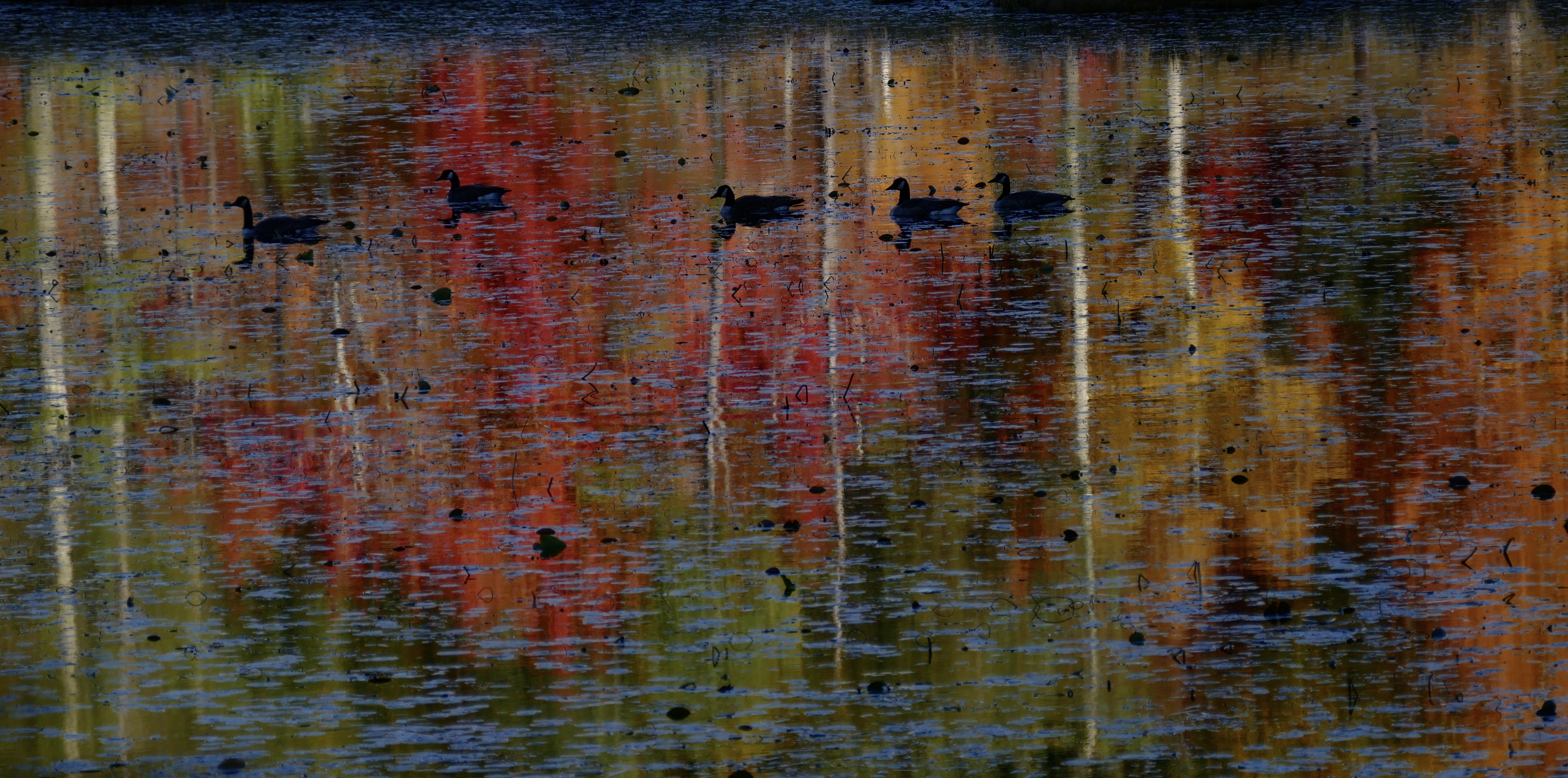
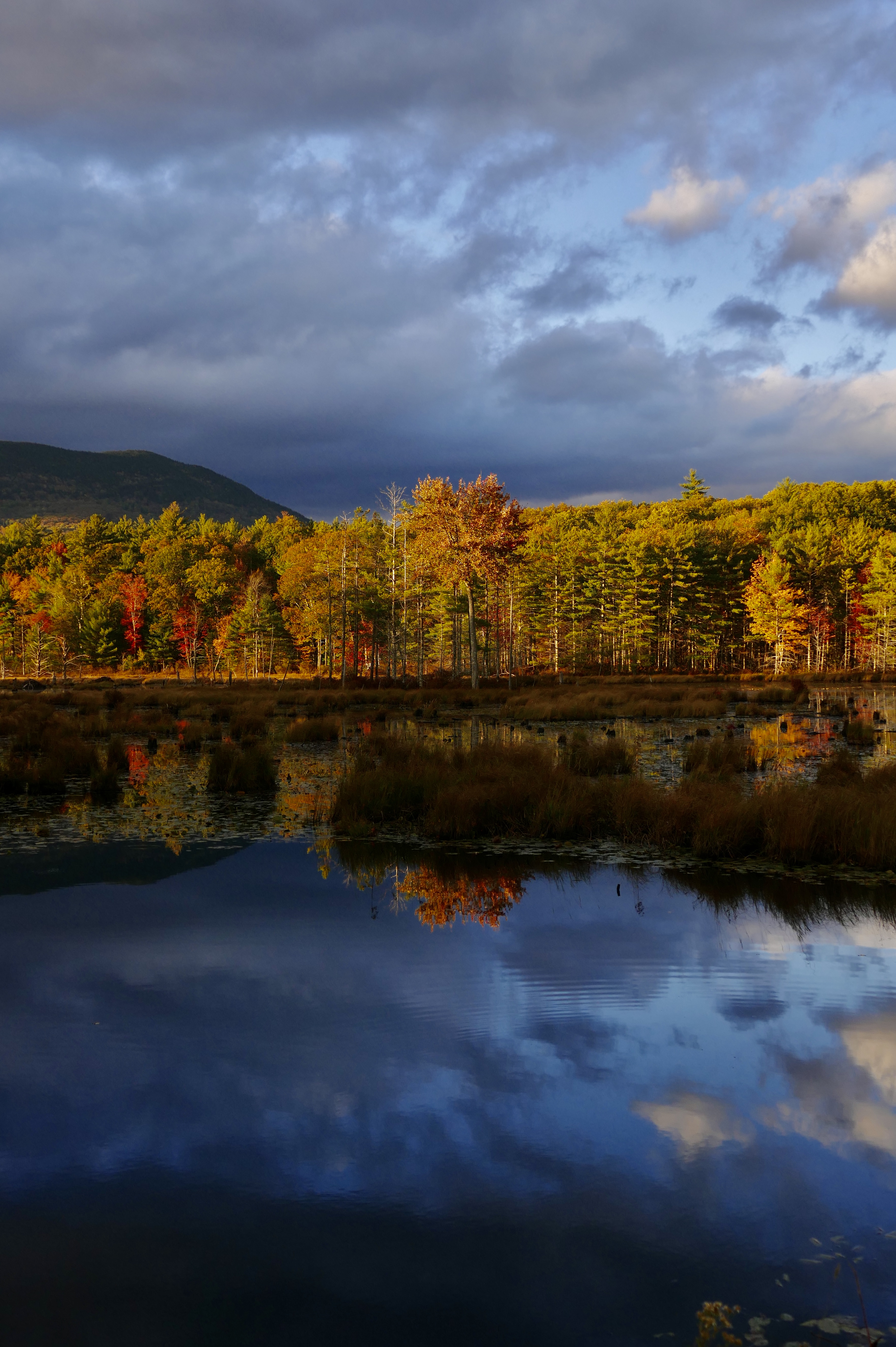
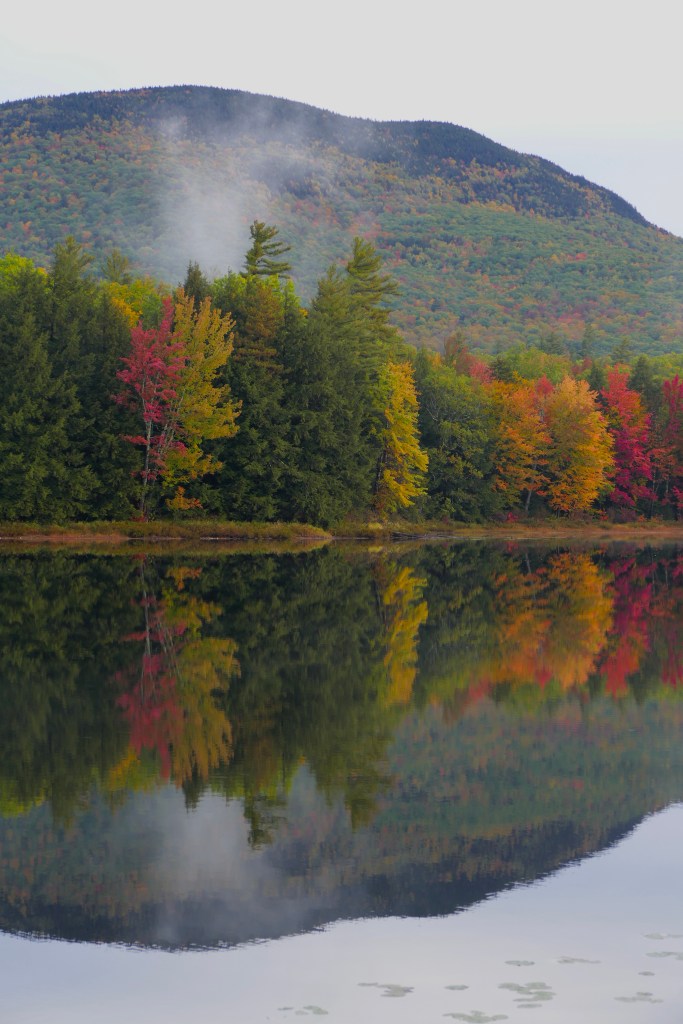
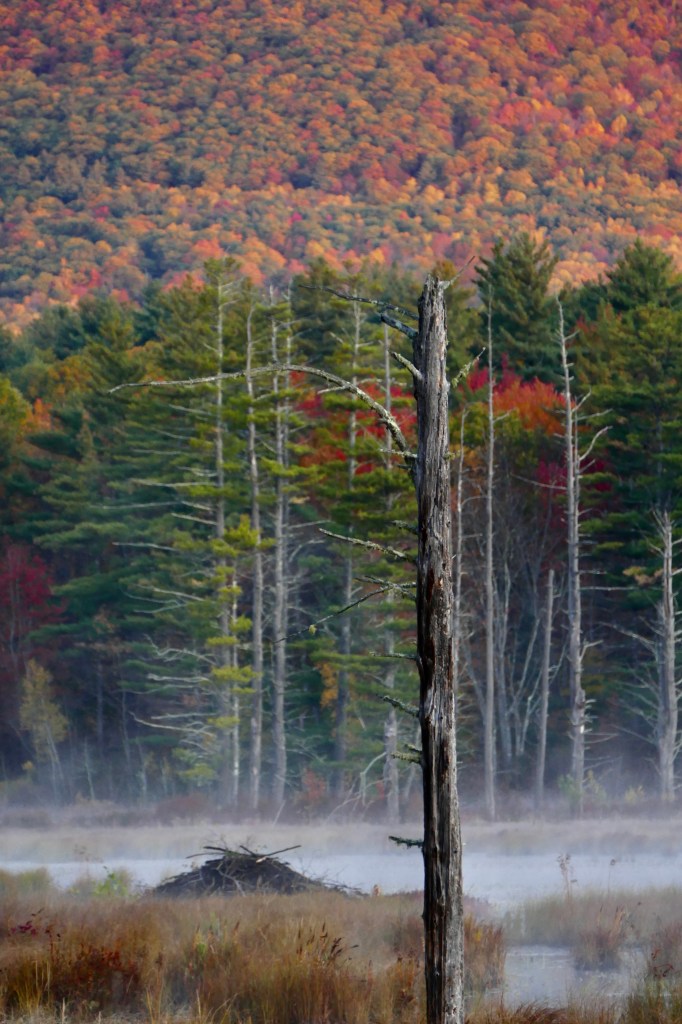
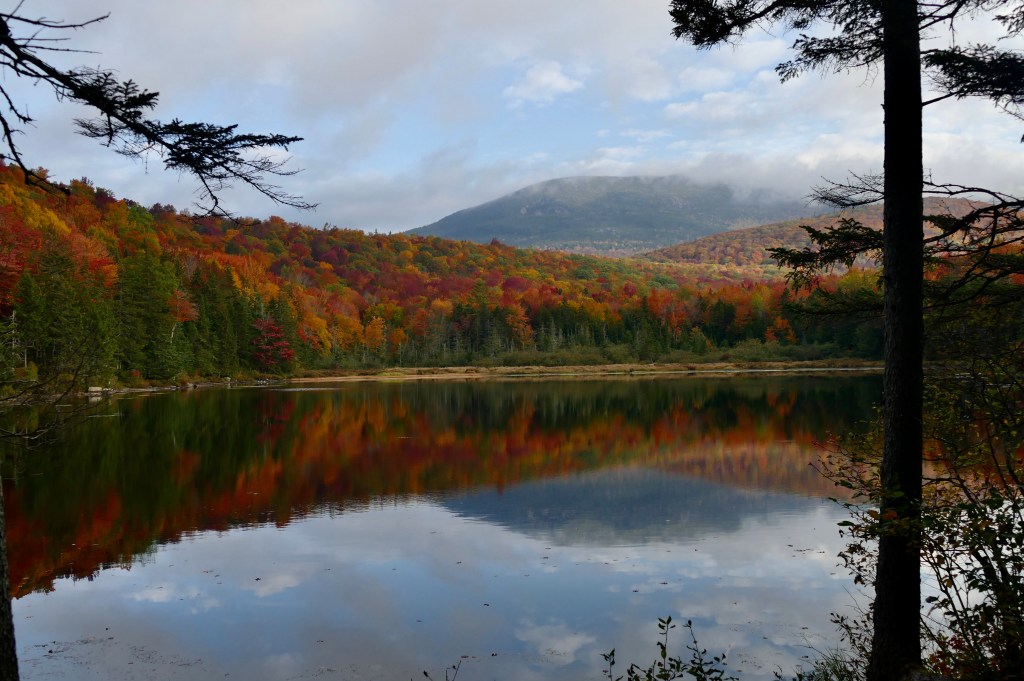
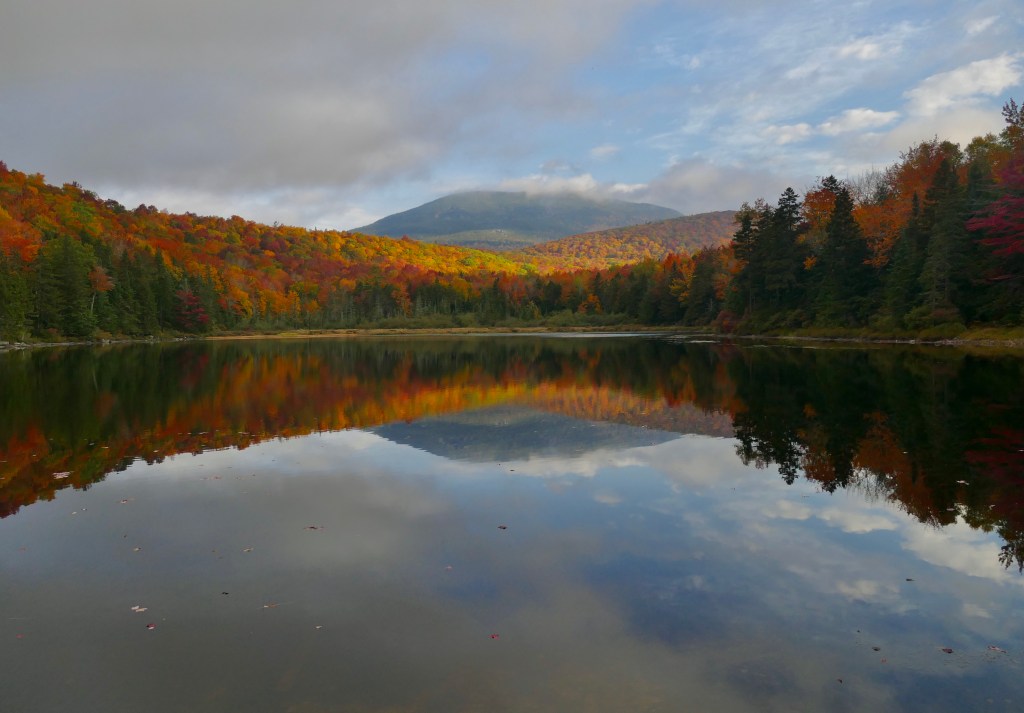
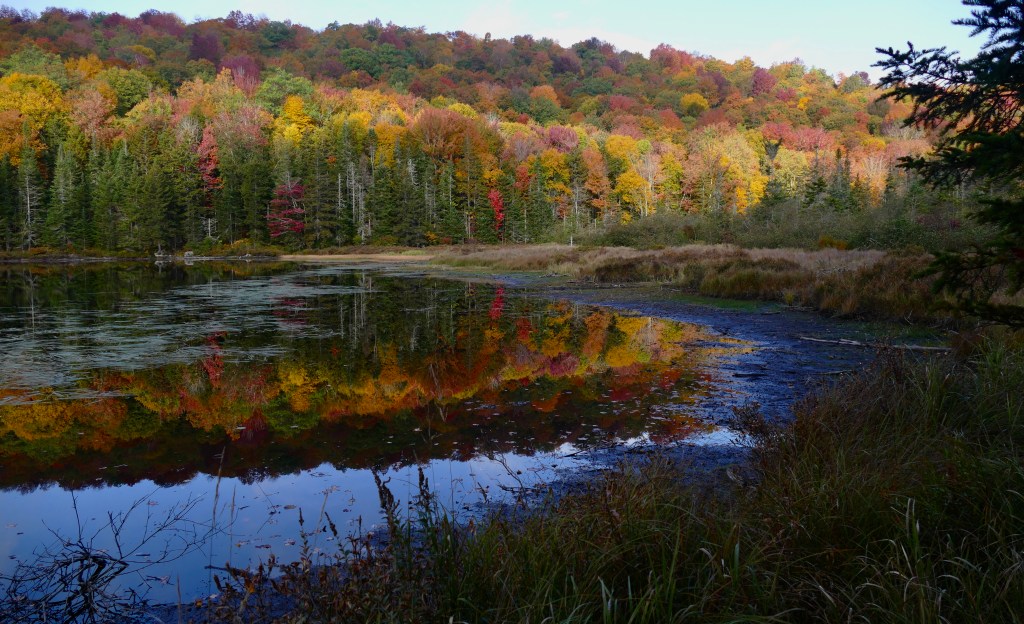
Methinks the reflections are never purer and more distinct than now at the season of the fall of the leaf, just before the cool twilight has come, when the air has a finer grain. Just as our mental reflections are more distinct at this season of the year, when the evenings grow cool and lengthen and our winter evenings with their brighter fires may be said to begin. And painted ducks, too, often come and sail or float amid the painted leaves.
Am surprised to find an abundance of witch hazel now at the height of its change. The tallest bushes are bare, though in bloom; but the lowest are full of leaves many of the green, but chiefly clear and handsome yellow of various shades, from a pale lemon in the shade or within the bush, to a darker and warmer yellow without…
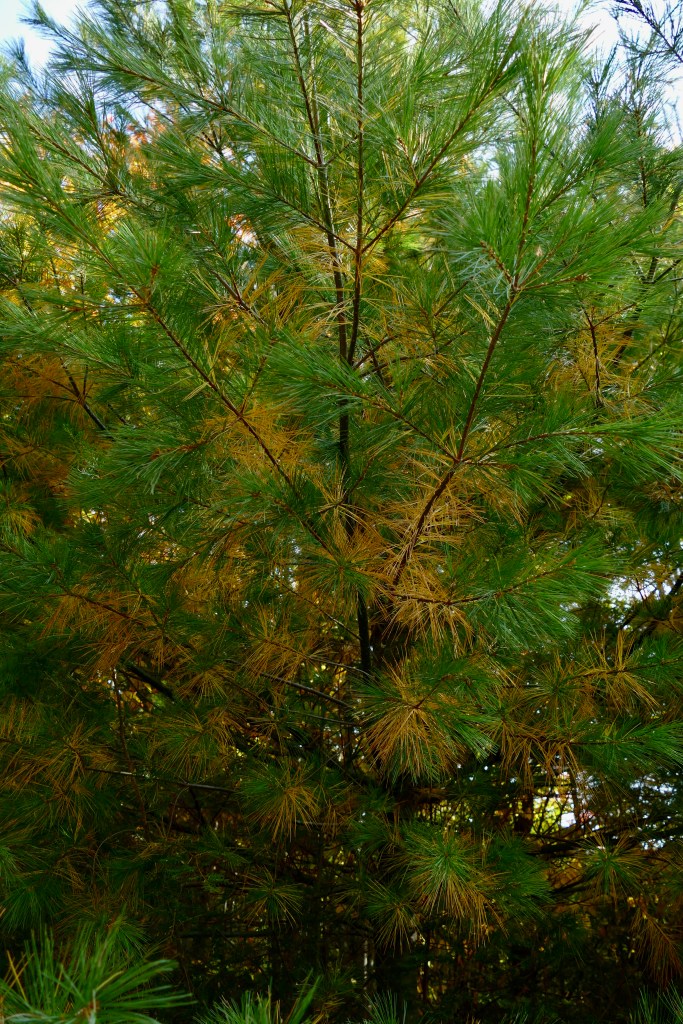
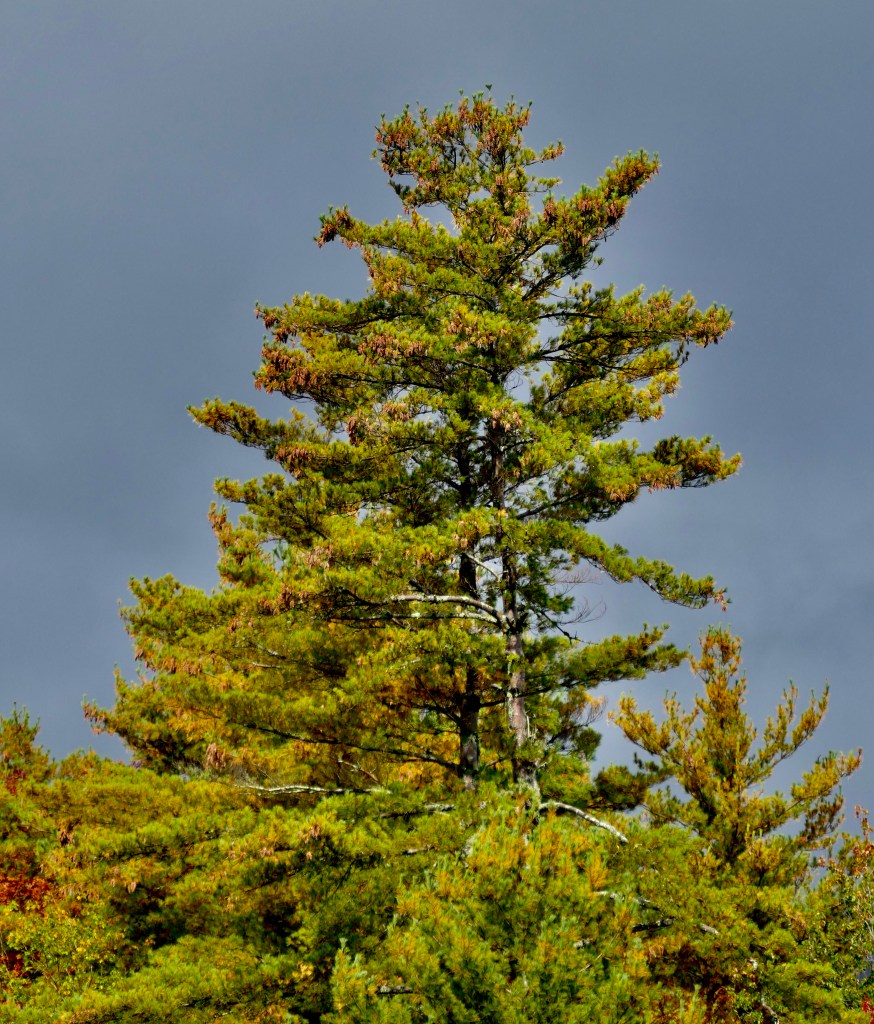
Sat in the old pasture beyond the Corner Spring Woods to look at that pine wood now at the height of its change, pitch and white. Their change produces a very singular and pleasing effect. They are regularly parti-colored. The last year’s leaves, about a foot beneath the extremities of the twigs on all sides, now changed and ready to fall, have their period of brightness as well as broader leaves. They are a clear yellow, contrasting with the fresh and liquid green of the terminal plumes, or this year’s leaves. These two quite distinct colors are thus regularly and equally distributed over the whole tree. You have the warmth of the yellow and the coolness of the green. So it should be with our own maturity, not yellow to the very extremity of our shoots, but youthful and untried green ever putting forth afresh at the extremities, foretelling a maturity as yet unknown. The ripe leaves fall to the ground and become nutriment for the green ones, which still aspire to heaven.
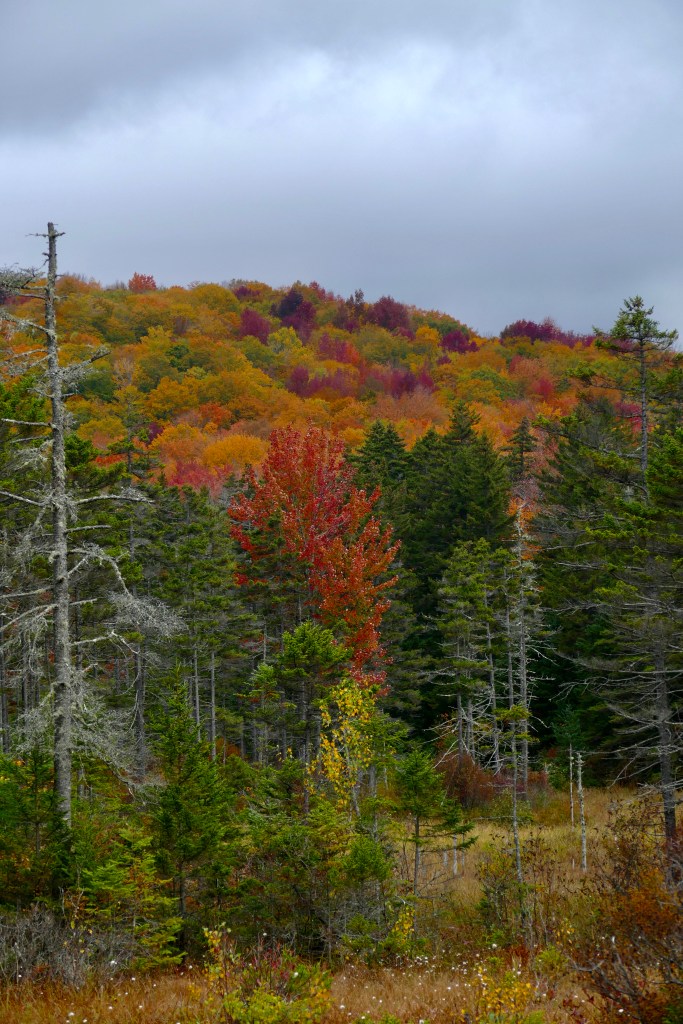
The red of oaks, etc., is far more general now than three or four days ago, but it is also much duller, so that some maples that were a bright scarlet can now hardly be distinguished by their color from oaks, which have just turned red….
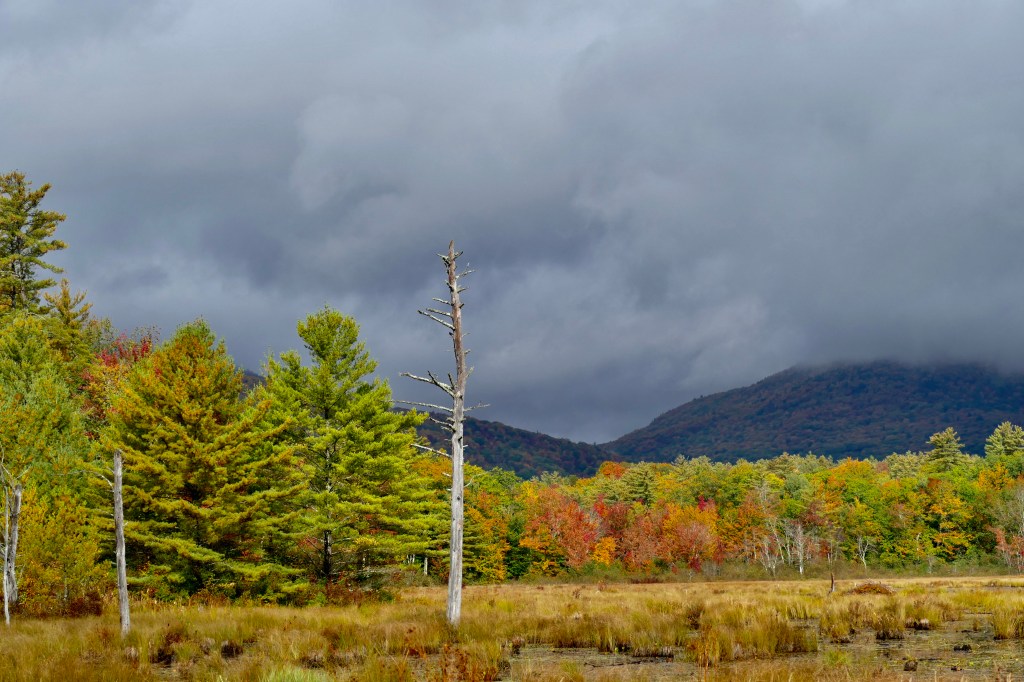
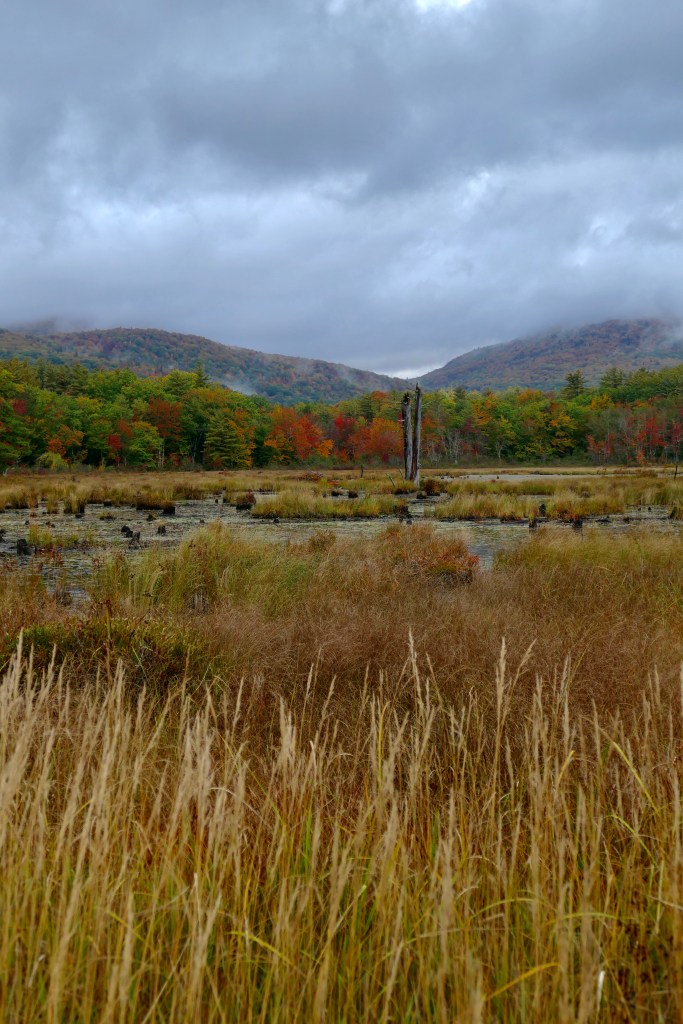
PM To Poplar Hill. Maple fires are burnt out generally, and they have fairly begun to fall and look smoky in the swamps. When my eyes were resting on those smoke-like bare trees, it did not at first occur to me why the landscape was not as brilliant as a few days ago. The outside trees in the swamps lose their leaves first.
I love very well this cloudy afternoon, so sober and favorable to reflection after so many bright ones. What if the clouds shut out the heavens, provided they concentrate my thoughts and make a more celestial heaven below!
I hear crickets plainer; I wander less in my thoughts, am less dissipated; am aware how shallow was the current of my thoughts before. Deep streams are dark, as if there were a cloud in the sky; shallow ones are bright and sparkling, reflecting the sun from their bottoms. The very wind on my cheek seems more fraught with meaning.
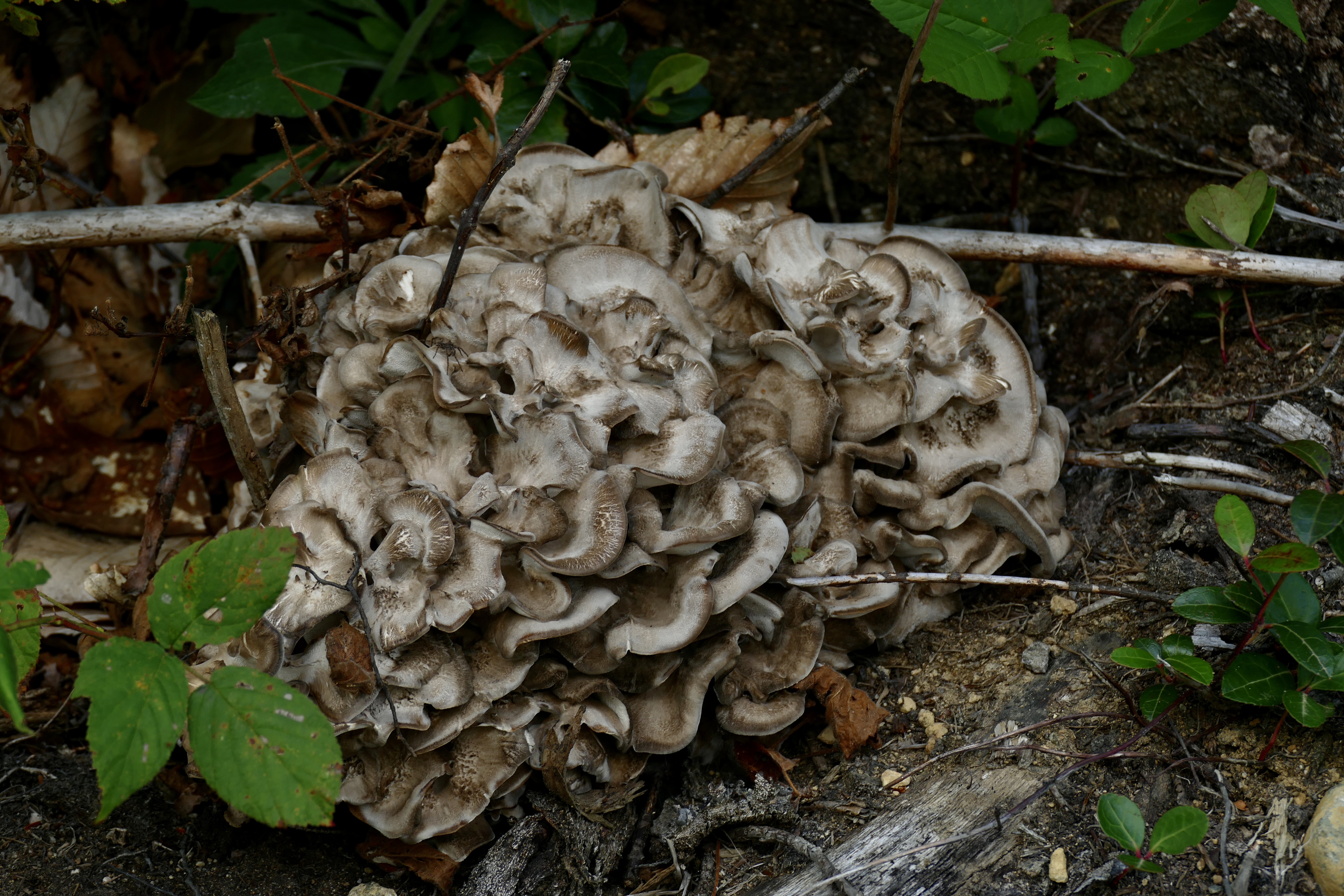
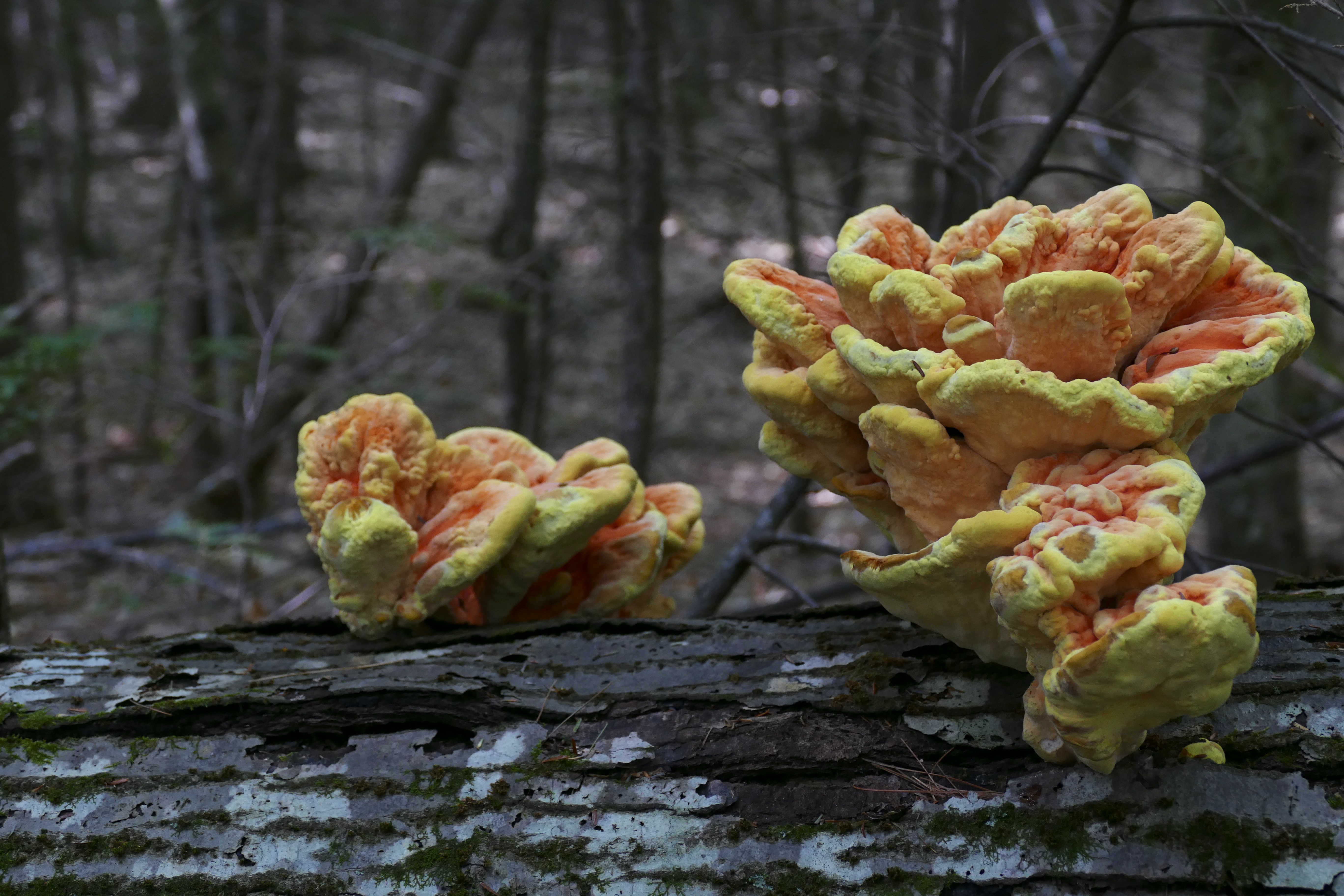
The simplest and most lumpish fungus has a peculiar interest to us, compared with a mere mass of earth, because it is so obviously organic and related to ourselves, however mute. It is the expression of an idea; growth according to a law; matter not dormant, not raw, but inspired, appropriated by spirit. If I take up a handful of earth, however separately interesting the particles may be, their relation to one another appears to be that of mere juxtaposition generally. I might have thrown them together thus. But the humblest fungus betrays a life akin to my own. It is a successful poem in its kind. There is suggested something superior to any particle of matter, in the idea or mind which uses and arranges the particles.
The red maples are now red & also yellow & reddening. The white maples are green & silvery also yellowing and blushing— The birch is yellow —the black willow brown. The elms sere brown & thin —the bass bare—the button bush which was so late is already mostly bare except the lower part protected — The swamp wht oak is green with a brownish tinge. The Wht ash turned mulberry The white maples toward Ball’s hill have a burnt white appearance— The white oak a salmon color & also red— Is that scarlet oak rosed?— Huckleberries & blackberries are red.
The autumnal tints about the pond are now perfect—nothing can exceed the brilliancy of some of the maples which stand by the shore & extend their red banners over the water—why should so many be yellow? I see the browner yellow of the chestnuts on Pine Hill— The maples & hickories are a clearer yellow. Some white oaks are red— The shrub oaks are bloody enough for a ground— The red & black oaks are yet green.
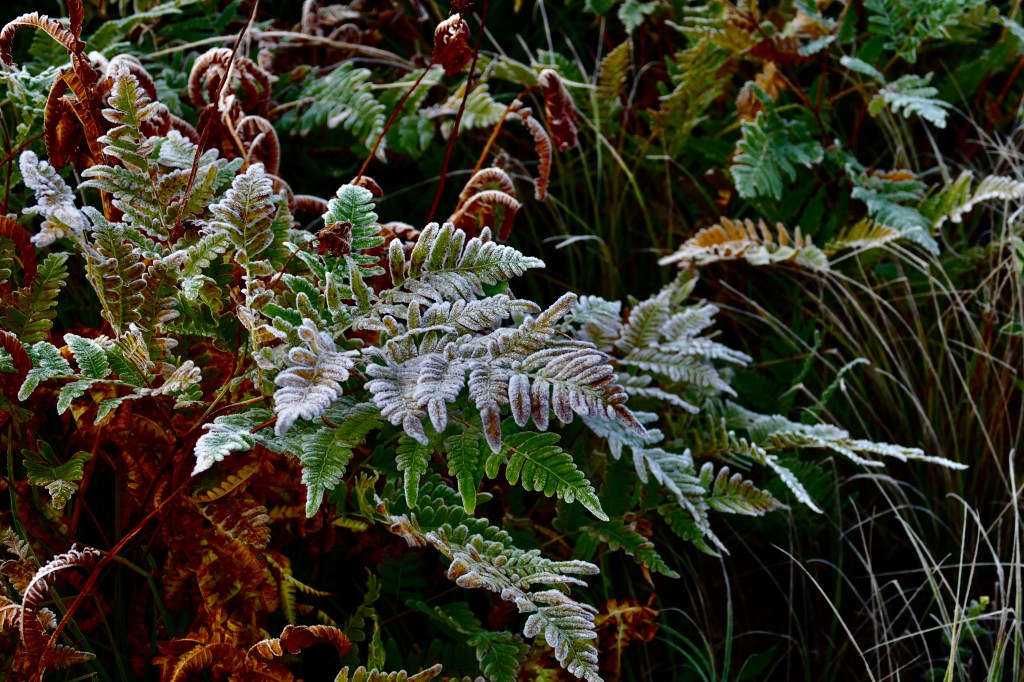
There is a great difference between this season and a month ago — warm as this happens to be — as between one period of your life and another. A little frost is at the bottom of it.
Everything — all fruits and leaves, the reddish-silvery feather grass in clumps, even the surfaces of stone and stubble — are all ripe in this air. Yes, the hue of maturity has come even to that fine silver-topped feathery grass, two or three feet high, in clumps on dry places. I am riper for thought, too.
It is well to find your employment and amusement in simple and homely things. These wear best and yield most.
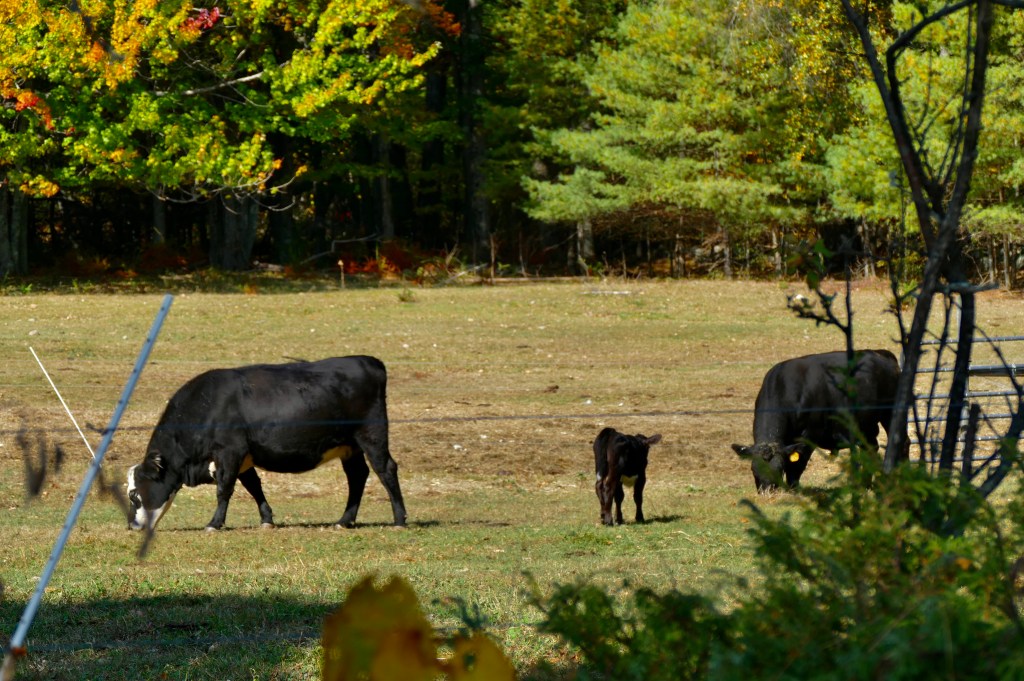
I think I would rather watch the motions of these cows in their pasture for a day, which I now see all headed one way and slowly advancing, – watch them and project their course carefully on a chart, and report all their behavior faithfully, – than wander to Europe or Asia and watch other motions there; for it is only ourselves that we report in either case, and perchance we shall report a more restless and worthless self in the latter case than in the first.
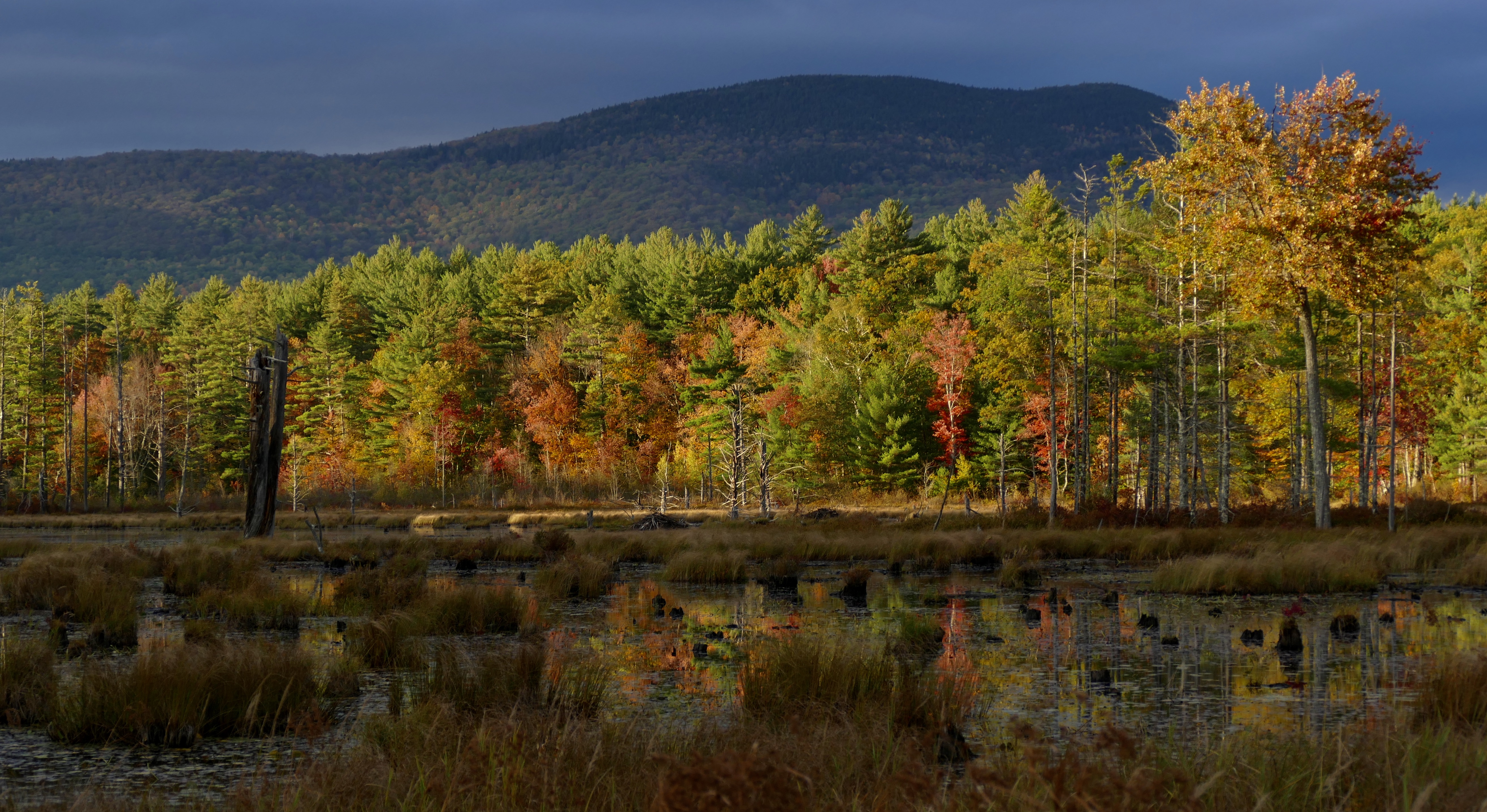
The maples about Walden are quite handsome now. Standing on the railroad, I look across the pond to Pine Hill, where the outside trees and the shrubs scattered generally through the wood glow through the green, yellow, and scarlet, like fires just kindled at the base of the trees, – a general conflagration just fairly under way, soon to envelop every tree. The hillside forest is all aglow along its edge and in all its cracks and fissures, and soon the flames will leap upward to the tops of the tallest trees. About the pond I see maples of all their tints, and black birches (on the southwest side) clear pale yellow; and on the peak young chestnut clumps and walnuts are considerably yellowed.
How much more beautiful the lakes now like Fair Haven surrounded by the autumn tinted woods & hills.— as in an ornamented frame. Some maples in sprout lands are of a delicate pure clear unspotted red inclining to crimson—surpassing most flowers— I would fain grasp at the whole tree & carry it home for a nose-gay.
The young black birches about Walden, next the south shore, are now commonly clear pale-yellow, very distinct at distance, like bright-yellow white birches, so slender amid the dense growth of oaks and evergreens on the steep shores. The black birches and red maples are the conspicuous trees changed about the pond. Not yet the oaks.
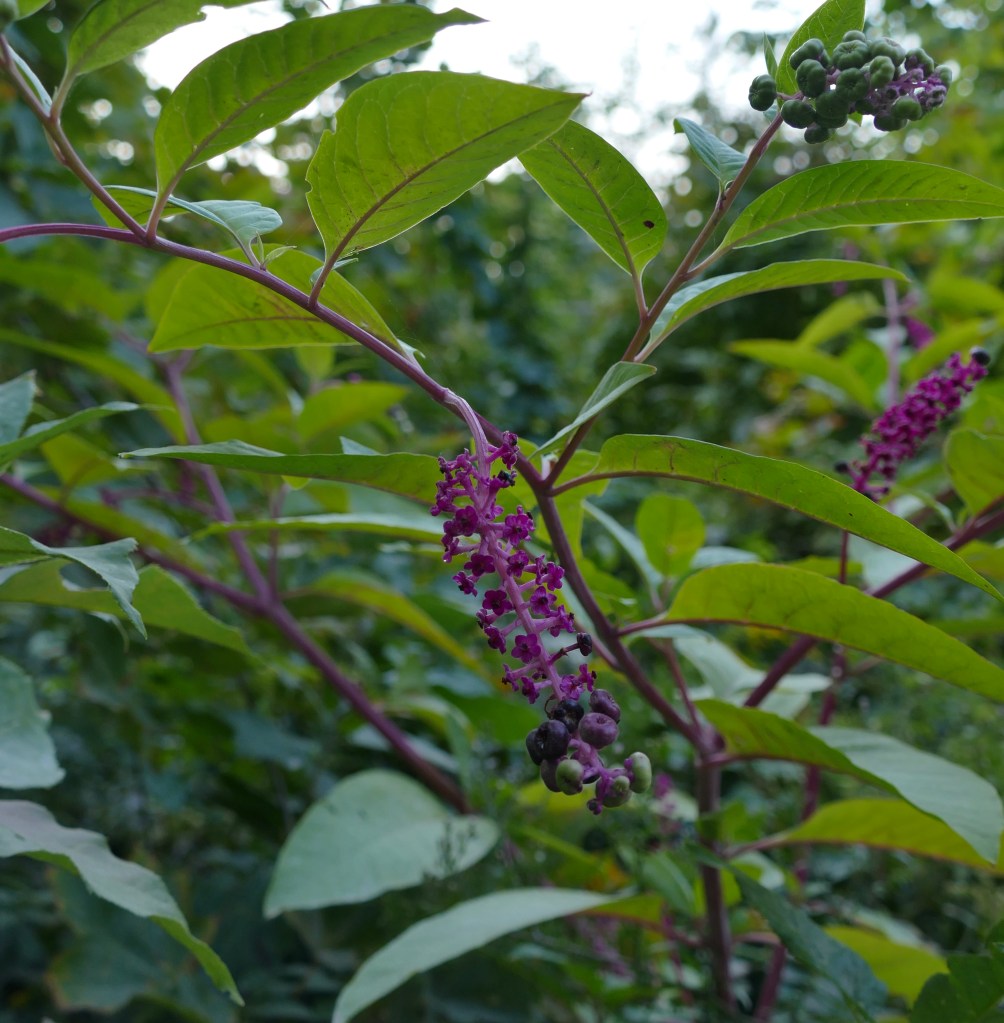
P. M. – To old mill-site behind Ponkawtasset. Poke berries in the sprout-land east of the red huckleberry still fresh and abundant, perhaps a little past prime. I never saw so many. The plants stand close together, and their drooping racemes three to five inches long, of black or purplish-black berries (ending in red and less [an indecipherable word]), almost crowd one another, hanging around the bright-purple, now for the most part bare, stems.
I hear some birds about, but see none feeding on the berries. I could soon gather bushels there. The arum berries are still fresh and abundant, perhaps in their prime. A large cluster is two and a half inches long by two wide and rather flattish. One, which has ripened prematurely, the stalk being withered and drooping, resembles a very short thick ear of scarlet corn. This might well enough be called snake-corn. These singular vermilion-colored berries, about a hundred of them, surmount a purple bag on a peduncle six or eight inches long. It is one of the most remarkable and dazzling, if not the handsomest, fruits we have. These were by violet wood-sorrel wall. How many fruits are scarlet now! – barberries, prinos, etc. A flock of vireo-like, somewhat yellowish birds, very neat, white beneath and olive above, in garden.




 allandibiase.com
You must be logged in to post a comment.