in Thoreau’s Journal:

The lilac is beginning to open today.

How we prize any redness on the ground..
in Thoreau’s Journal:
The lilac is beginning to open today.
How we prize any redness on the ground..
in Thoreau’s Journal:

An early morning walk is a blessing for the whole day.
in Thoreau’s Journal:
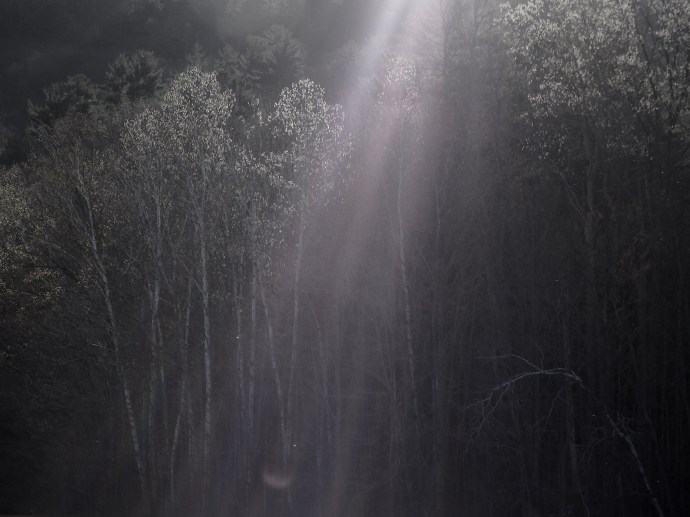
The calm bright hour after the sun came out was very pleasant.
in Thoreau’s Journal:
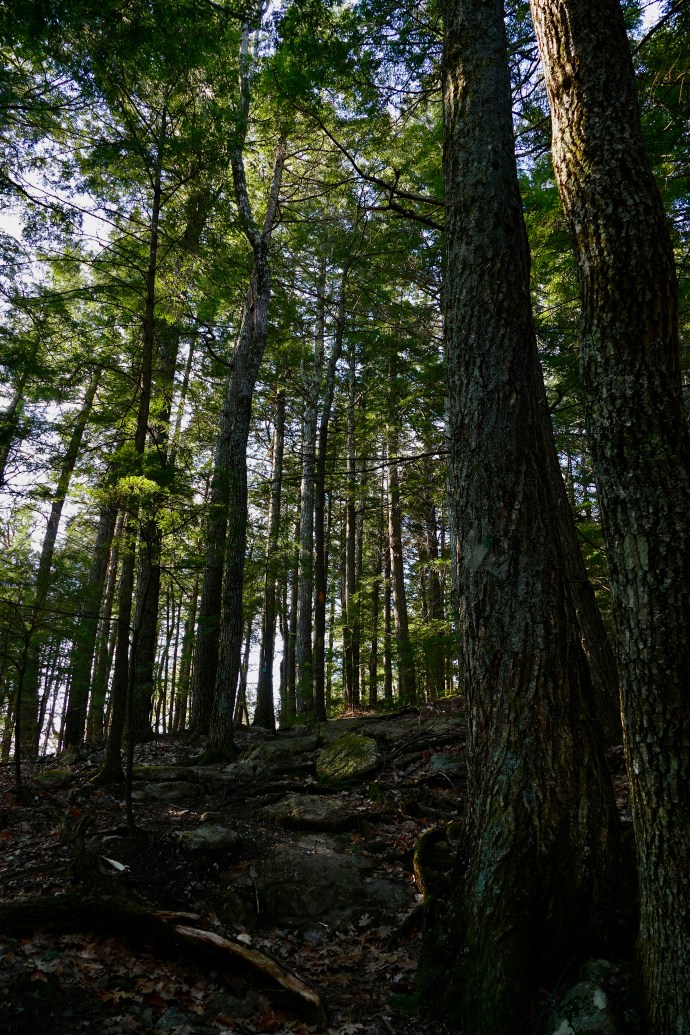
…As Cawley loved a garden, so I a forest.
in Thoreau’s Journal:
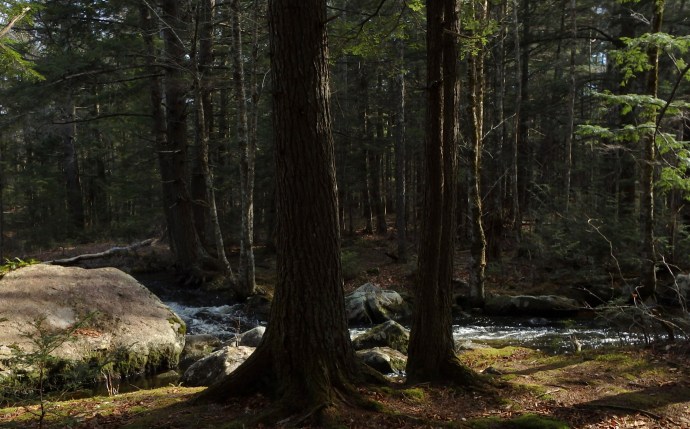
Sat on the smooth river bank under Fair Haven—
The sun-light in the wood across the stream.
in Thoreau’s Journal:
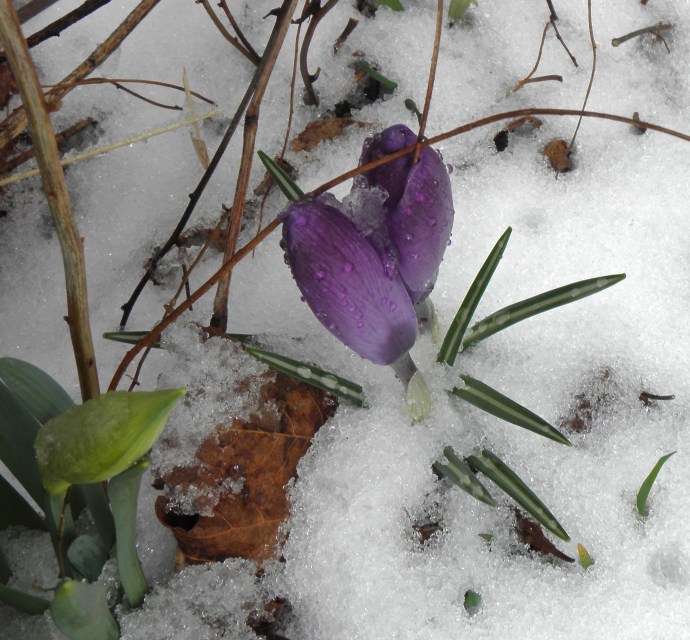
A cold disagreeable day—sun not fairly out—yet the snow of yesterday melts apace—you can almost see it melt. Each time I look out I see more of russet or green — At first the bare ground showed itself in the middle of the road & rapidly widened giving the birds wider pasture; then the grass in the fields began to peep through & the landscape to acquire a russet hue again— The green blades under the south side of the houses & hills appear to have grown wonderfully since the snow fell & to be several shades darker green.
in Thoreau’s Journal:
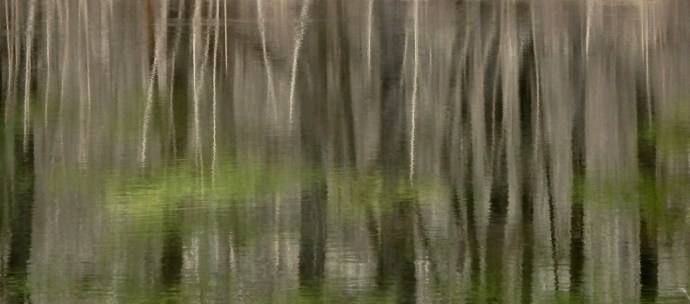
9 Am. to Atkin’s Boat House–(No sun till setting) Another still moist overcast day–without sun but all day a crescent of light as if breaking away in the north. The waters smooth & full of reflections– A still cloudy day like this is perhaps the best to be on the water– To the clouds perhaps we owe both the stillness & the reflections–for the light is in a great measure reflected from the water.
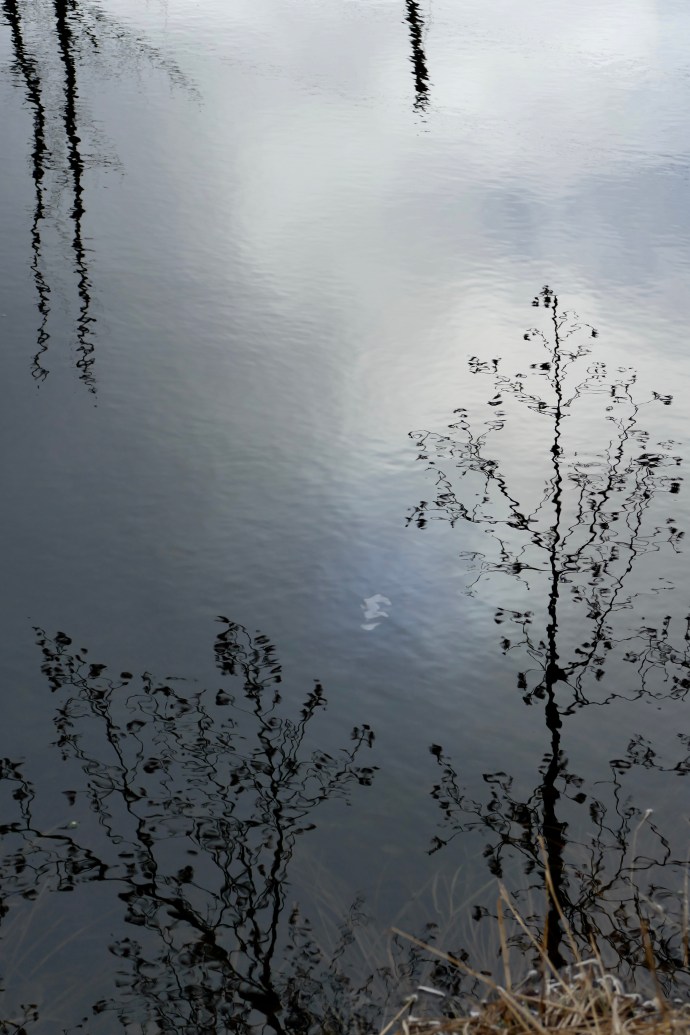
Robins sing now at 10 Am as in the morning–& the Phoebe–& pig– woodpecker’s caclle is heard–& many martins (with white-bel– swallows) are & twittering skimming above the water–perhaps catching the small fuzzy gnats with which the air is filled. The sound of church bells, at various distances–in Concord & the neighboring towns, sounds very sweet to us on the water–this still day– It is the song of the villages heard with the song of the birds. The great meadows are covered, except a small island in their midst….

in Thoreau’s Journal:

The golden brown tassels of the alder are very rich now—

in Thoreau’s Journal:
A driving snow storm in the night & still raging––5 or 6 inches deep on a level at 7 Am. All birds are turned into snow birds. Trees and houses have put on the aspect of winter. The travelers carriage wheels, the farmer’s wagon are converted into white disks of snow through which the spokes hardly appear. But it is good now to stay in the house & read & write. We do not now go wandering all abroad & dissipated––but the imprisoning storm condenses our thoughts–– My life is enriched– I love to hear the wind howl. I have a fancy for sitting with my book or paper––in some mean & apparently unfavorable place––in the kitchen for instance where the work is going on––rather a little cold than comfortable–– –– My thoughts are of more worth in such places than they would be in a well-furnished & warmed studio.



in Thoreau’s Journal:
A pure brook is a very beautiful object to study minutely. It will bear the closest inspection, even to the fine air-bubbles, like minute globules of quicksilver, that lie on its bottom. The minute particles or spangles of golden mica in these sands, when the sun shines on them, remind one of the golden sands we read of. Everything is washed clean and bright, and the water is the best glass through which to see it….
in Thoreau’s Journal:
The Saxifrage is beginning to be abundant, elevating its flowers somewhat, pure trustful white amid its pretty notched and reddish cup of leaves.

The white saxifrage is a response from earth to the increased light of the year…
April 9, 1853 in Thoreau’s Journal:
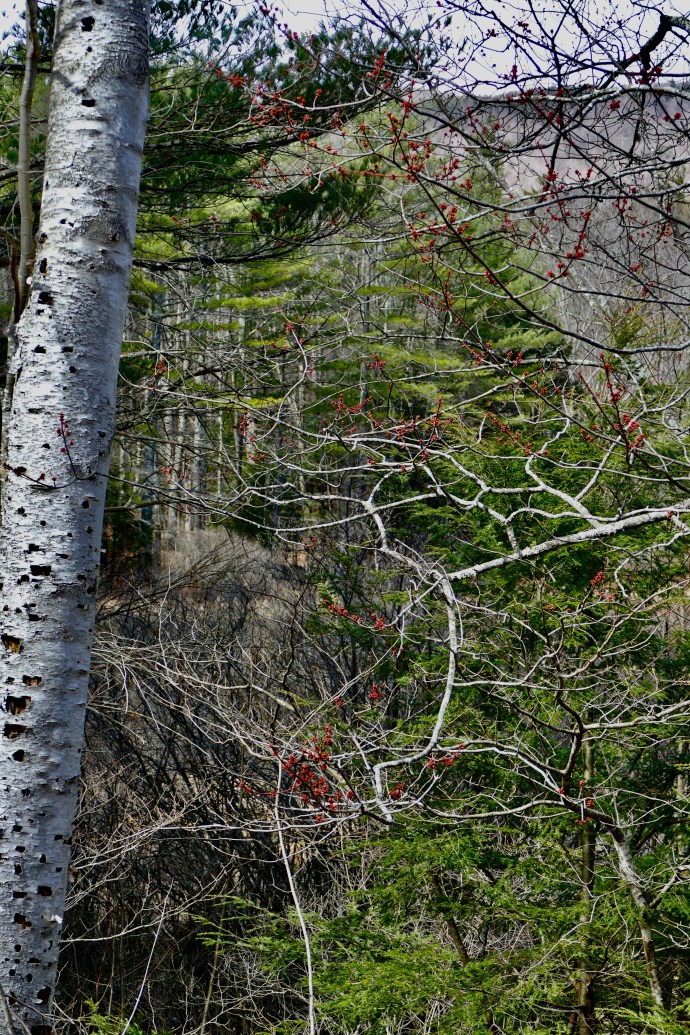
The male red maple buds now show 8 or 10 (counting everything) scales alternately crosswise—& the pairs successively brighter red or scarlet, which will account for the gradual reddening of their tops. They are about ready to open.
in Thoreau’s Journal:
The epigaea is not quite out.
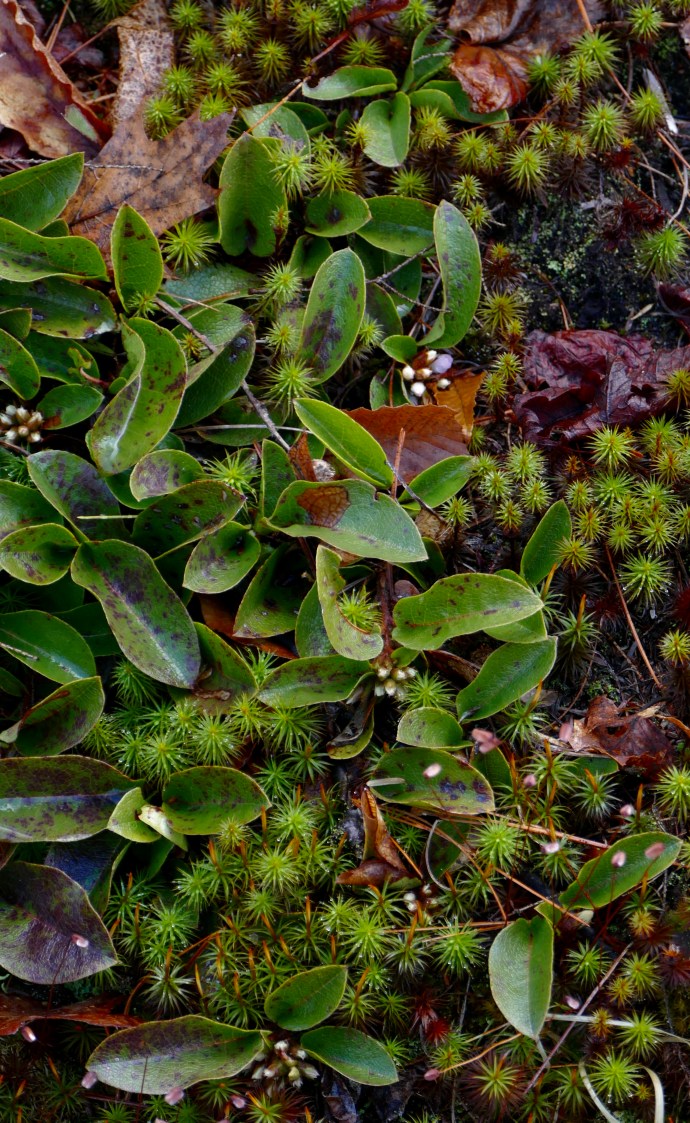
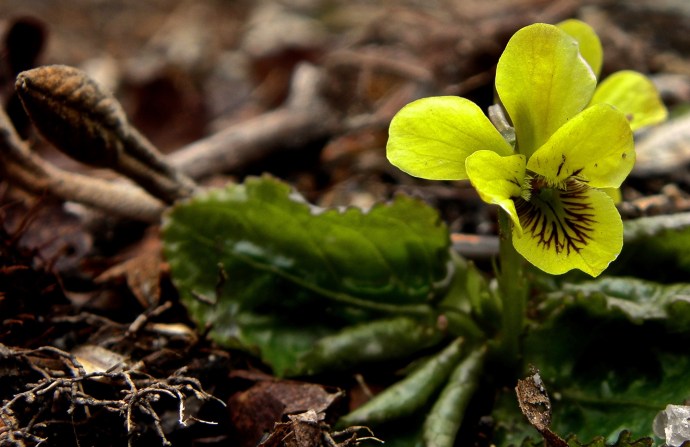
The earliest peculiarly woodland herbaceous flowers are epigaea, thalictrum, and (by the first of May) Viola pedata. These grow quite in the woods amid dry leaves, nor do they depend so much on water as the very earliest flowers. I am perhaps more surprised by the growth of the Viola pedata leaves by the side of paths amid the shrub oaks, and half covered with oak leaves, than by any other growth, the situation is so dry and the surrounding bushes so apparently lifeless.
in Thoreau’s Journal:
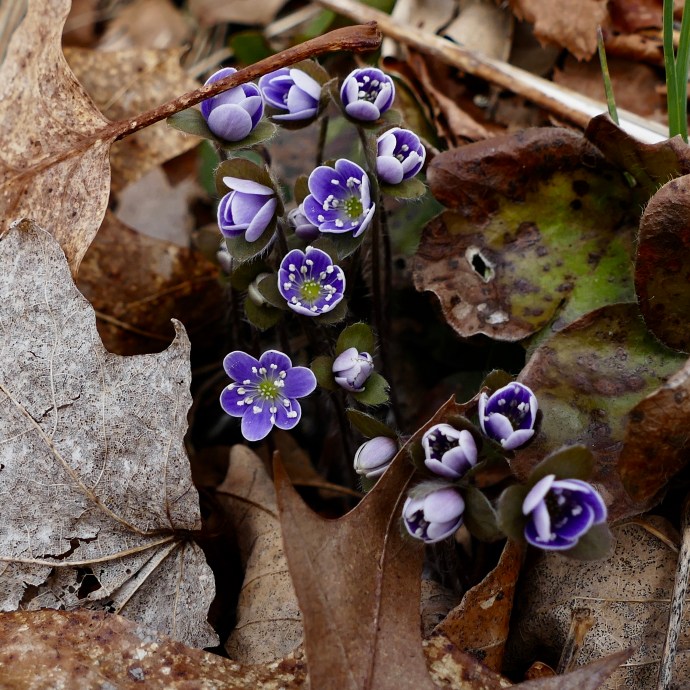
As to which are the earliest flowers, it depends on the character of the season, and ground bare or not, meadows wet or dry, etc., etc., also on the variety of soils and localities within your reach.
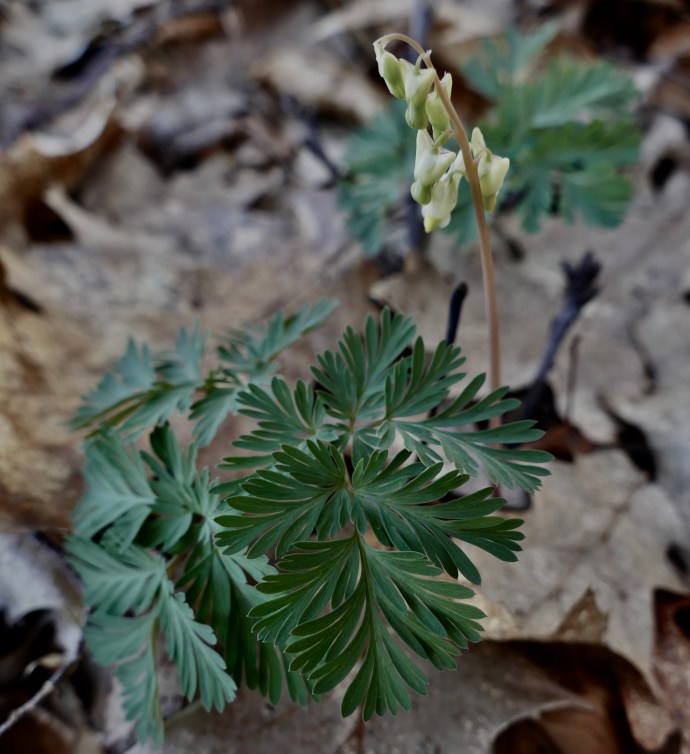
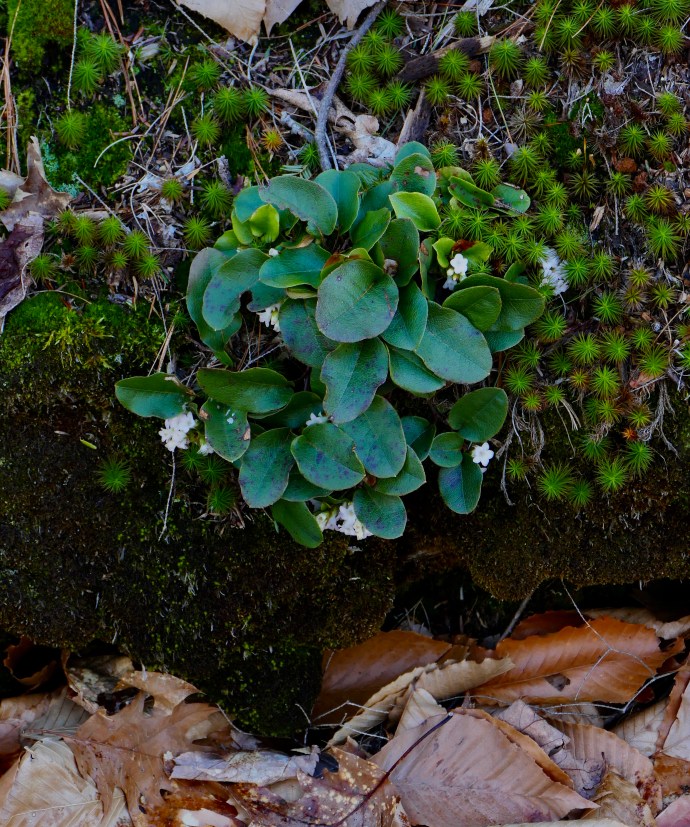 in Thoreau’s Journal:
One thing I may depend on, there has been no idling with the flowers. Nature loses not a moment, takes no vacation. They advance as steadily as a clock.

in Thoreau’s Journal:
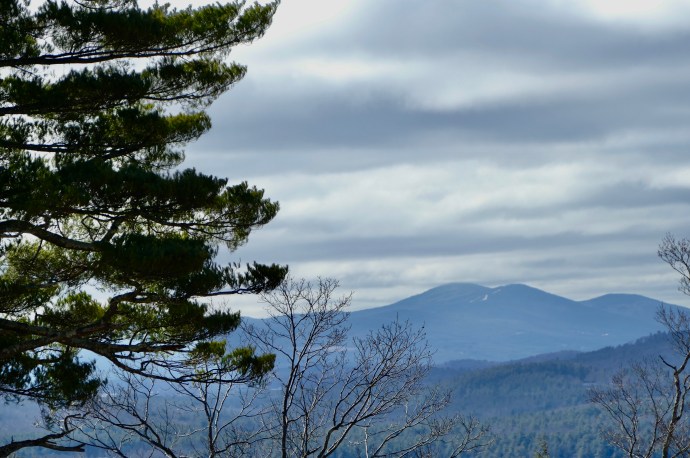
Begin to look off the hills & see the landscape again through a slight haze, with warm wind on the cheek.
in Thoreau’s Journal:
All the earth is bright. the very pines glisten–& the water is a bright blue….
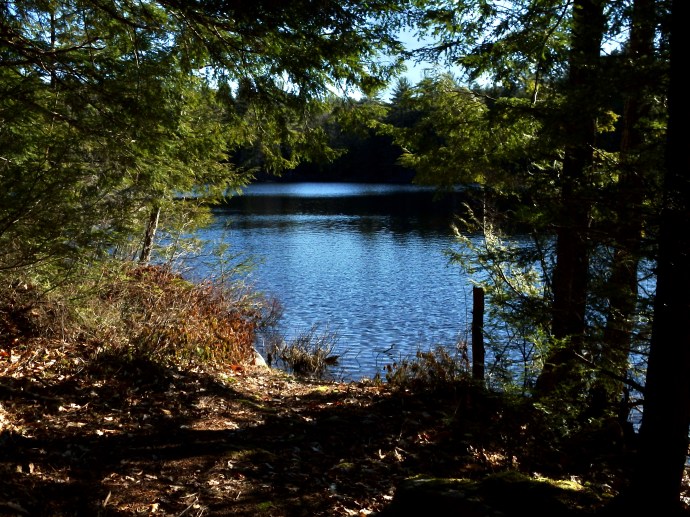
Not only are the evergreens brighter–but the pools–as that upland one behind Lees–the ice as well as snow– about their edges being now completely melted–have a peculiarly warm–watery & bright April look–as if ready to be inhabited by frogs.
 in Thoreau’s Journal:
It is surprising how the earth on bare south banks begins to show some greenness in its russet cheeks in this rain and fog—a precious emerald-green tinge—almost like a green mildew, the growth of the night — a green blush suffusing her cheek — heralded by twittering birds. This sight is no less interesting than the corresponding bloom & ripe blush of the fall. How encouraging to perceive again that faint tinge of green, spreading amid the russet on earth’s cheeks! I revive with Nature—her victory is mine.
in Thoreau’s Journal:
It is evident that it depends on the character of the season whether this flower or that is the most forward; whether there is more or less snow or cold or rain, etc.
 allandibiase.com
You must be logged in to post a comment.