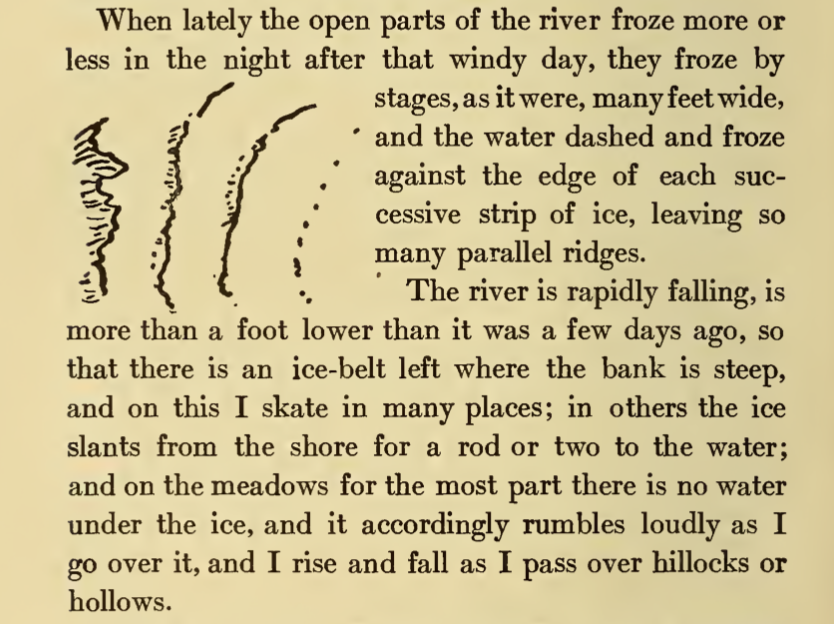
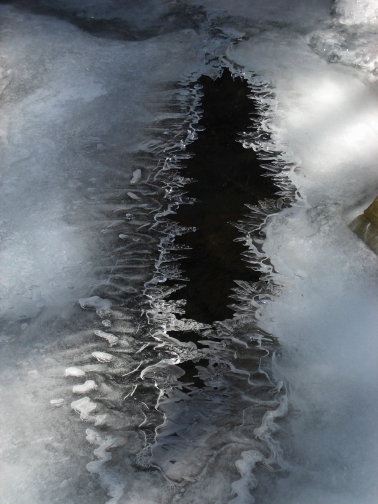
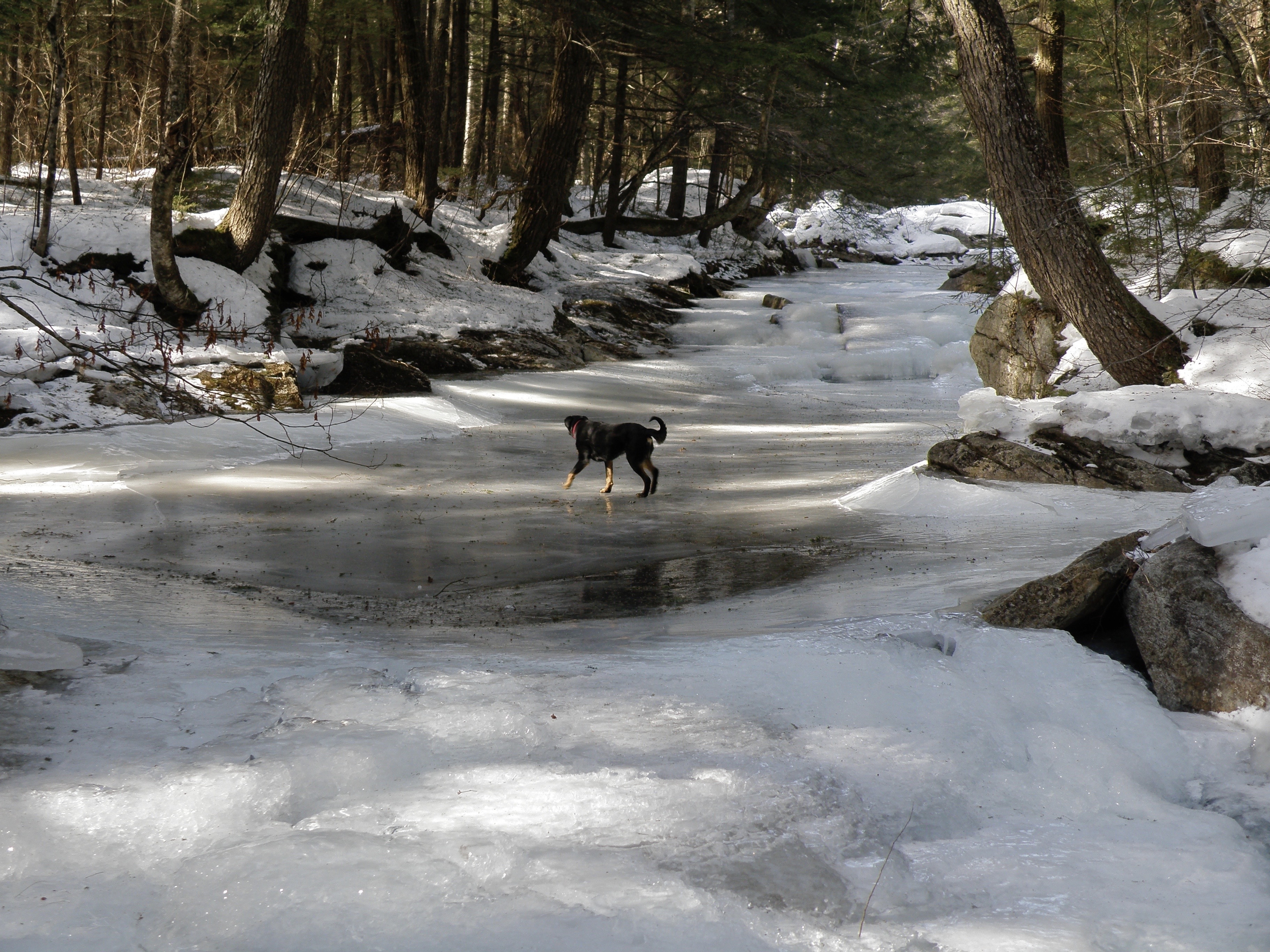
When lately the open parts of the river froze more or less in the night after that windy day, they froze by stages, as it were, many feet wide, and the water dashed and froze against the edge of each successive strip of ice, leaving so many parallel ridges.
The river is rapidly falling, is more than a foot lower than it was a few days ago, so that there is an ice-belt left where the bank is steep, and on this I skate in many places; in others the ice slants from the shore for a rod or two to the water; and on the meadows for the most part there is no water under the ice, and it accordingly rumbles loudly as I go over it, and I rise and fall as I pass over hillocks or hollows.
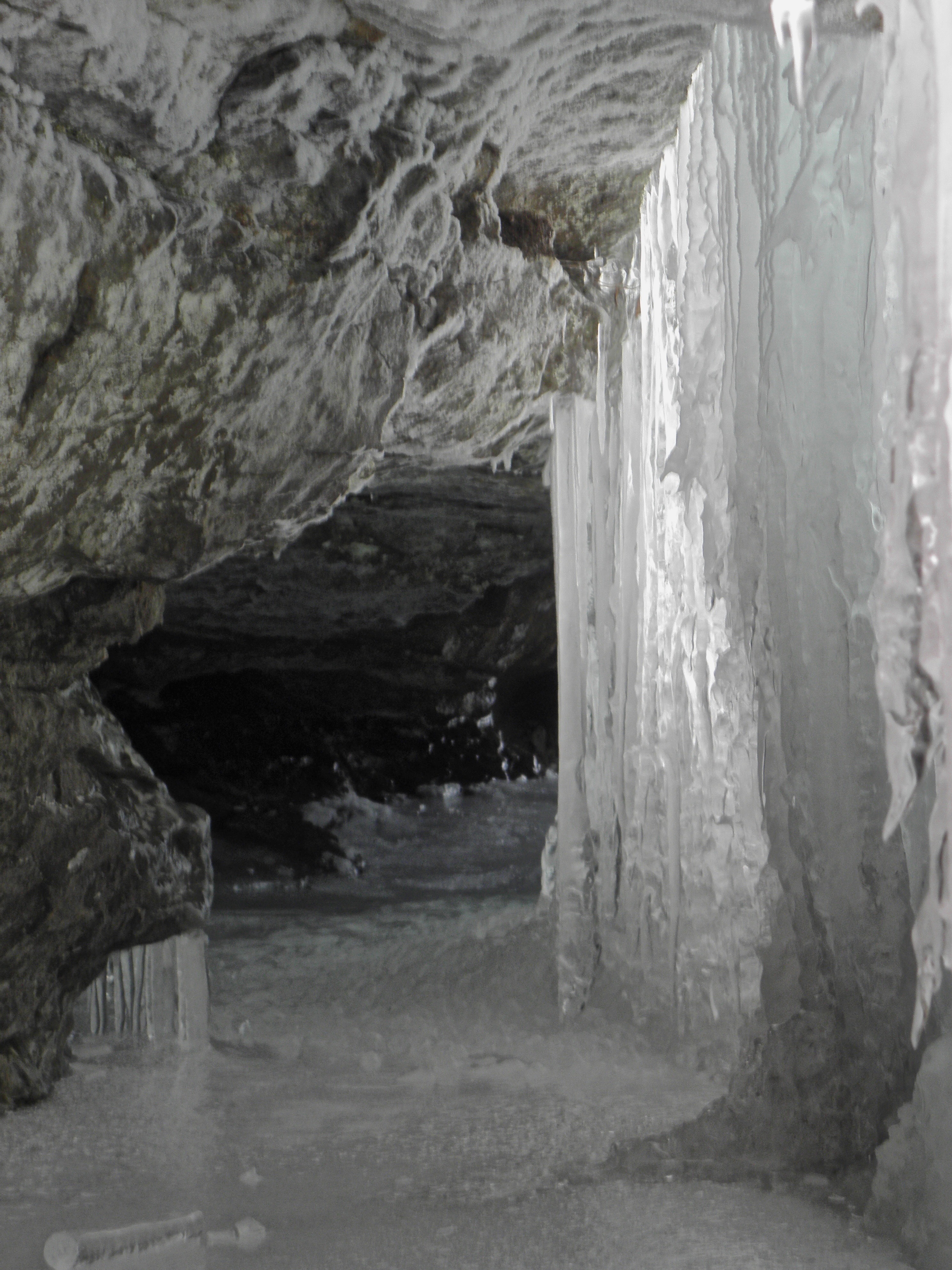
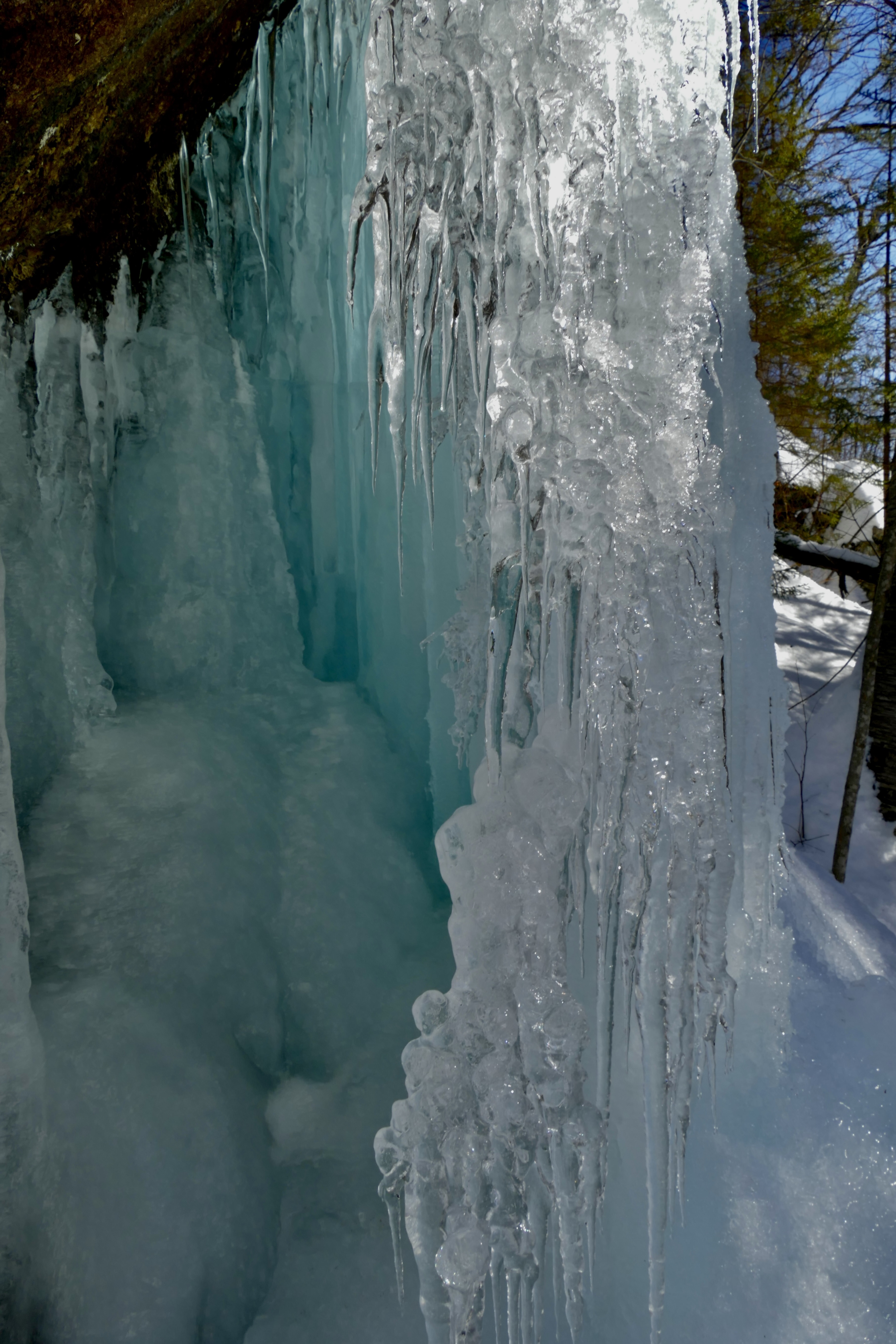
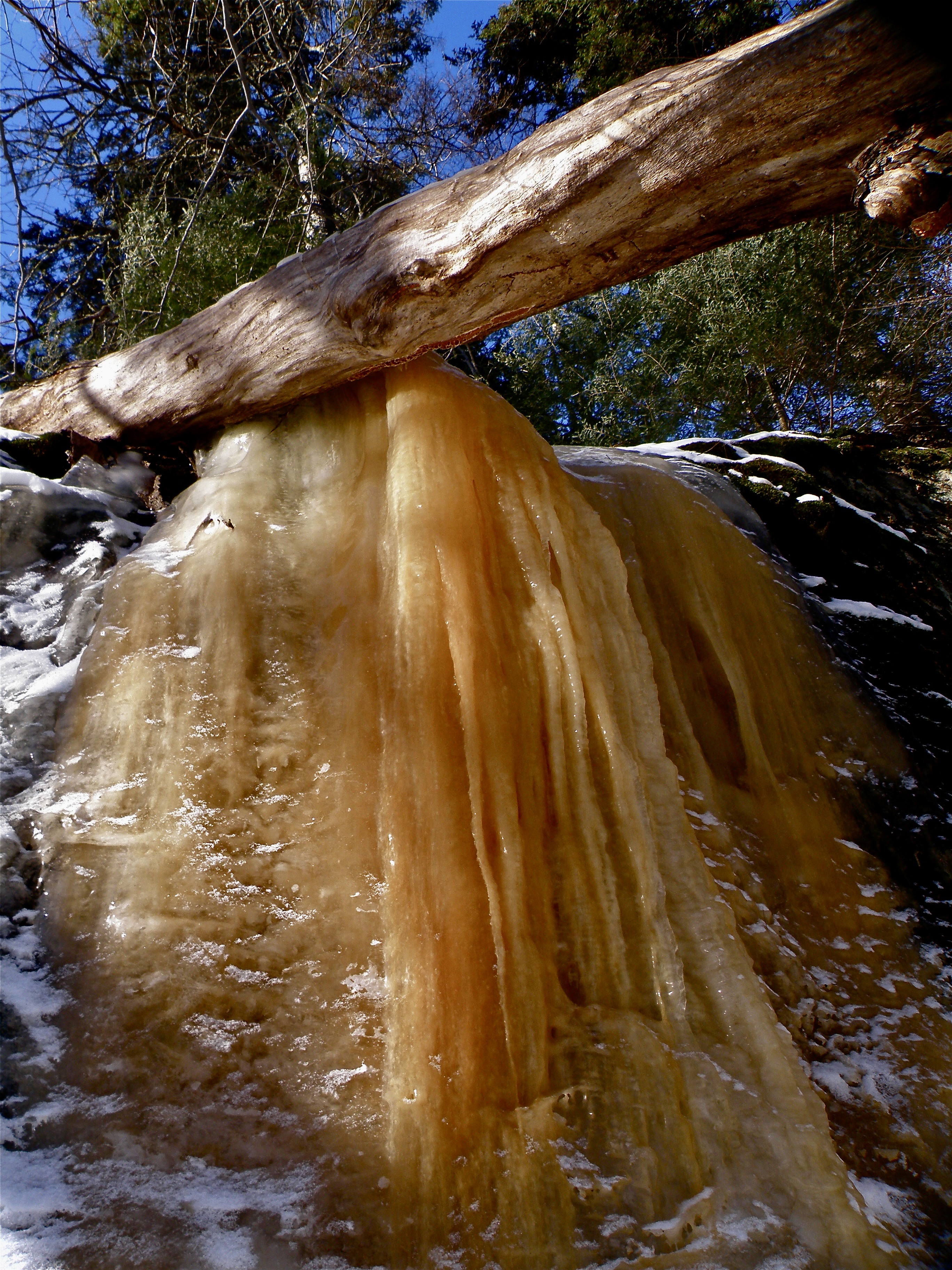
At the Cliffs the rocks are in some places covered with ice. And the least inclination beyond a perpendicular in their faces is betrayed by the formation of icicles at once which hang perpendicularly—like organ pipes—in front of the rock—They are now conducting downward the melting ice and snow which drips from their points with a slight clinking & lapsing sound—but when the sun has set will freeze there and add to the icicles’ length. Where the icicles have reached the ground & are like thick pillars they have a sort of annular appearance somewhat like the successive swells on the legs of tables and bed-posts— There is perhaps a harmony between the turner’s taste & the law of nature in this instance. The shadow of the water flowing or pulsating behind the transparent icy crust or these stalactites—in the sun imparts a semblance of life to the whole.
Winter comes to make walking possible where there was no walking in summer. Not till winter do we take possession of the whole of our territory.
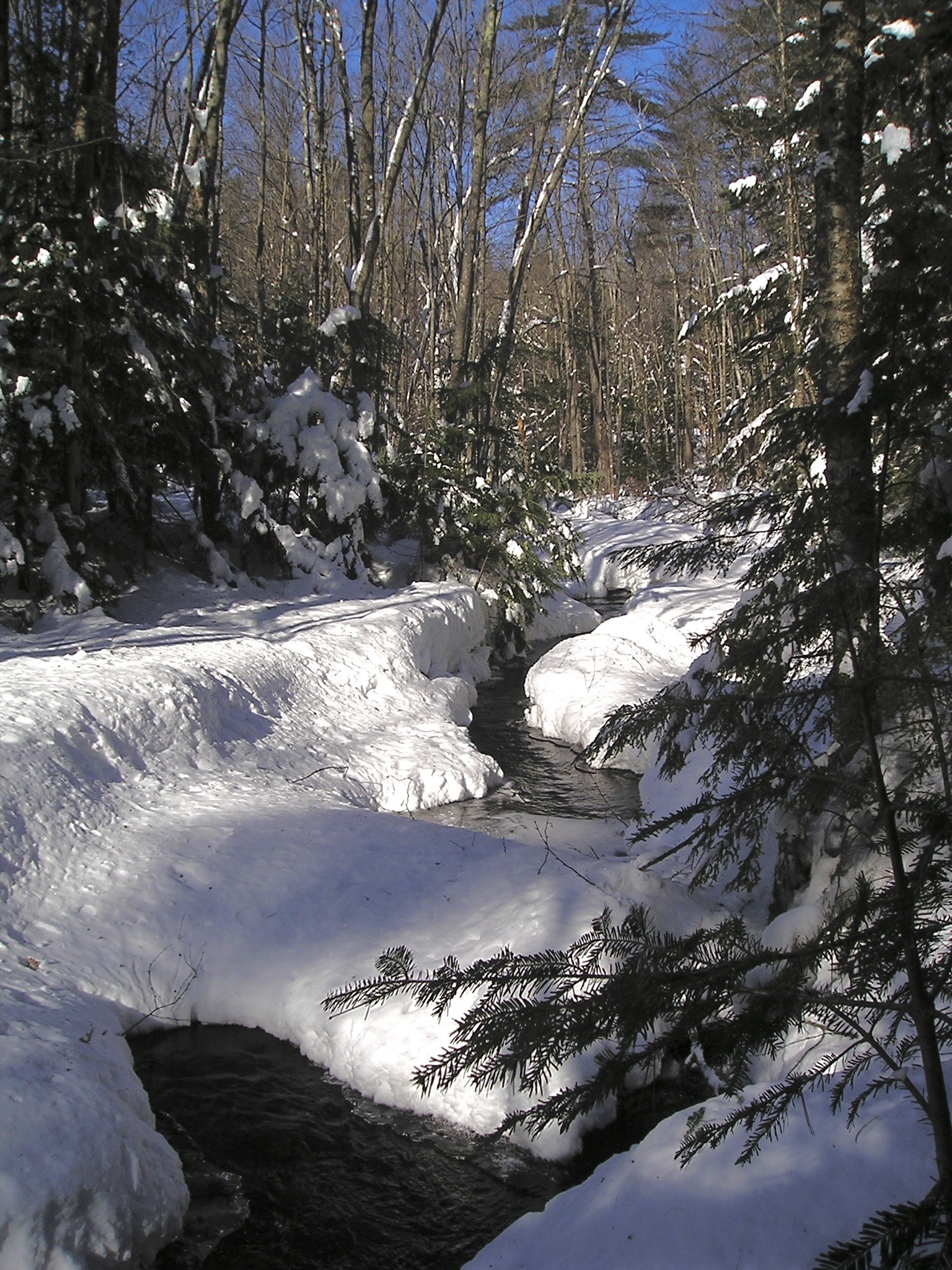
I have three great highways raying out from one centre, which is near my door. I may walk down the main river or up either of its two branches. Could any avenues be contrived more convenient ? With this river I am not compelled to walk in the tracks of horses.
Nature works by contraries. That which in summer was most fluid and unresting is now most solid and motionless….
Such is the cold skill of the artist. He carves a statue out of a material which is fluid as water to the ordinary workman. His sentiments are a quarry which he works.
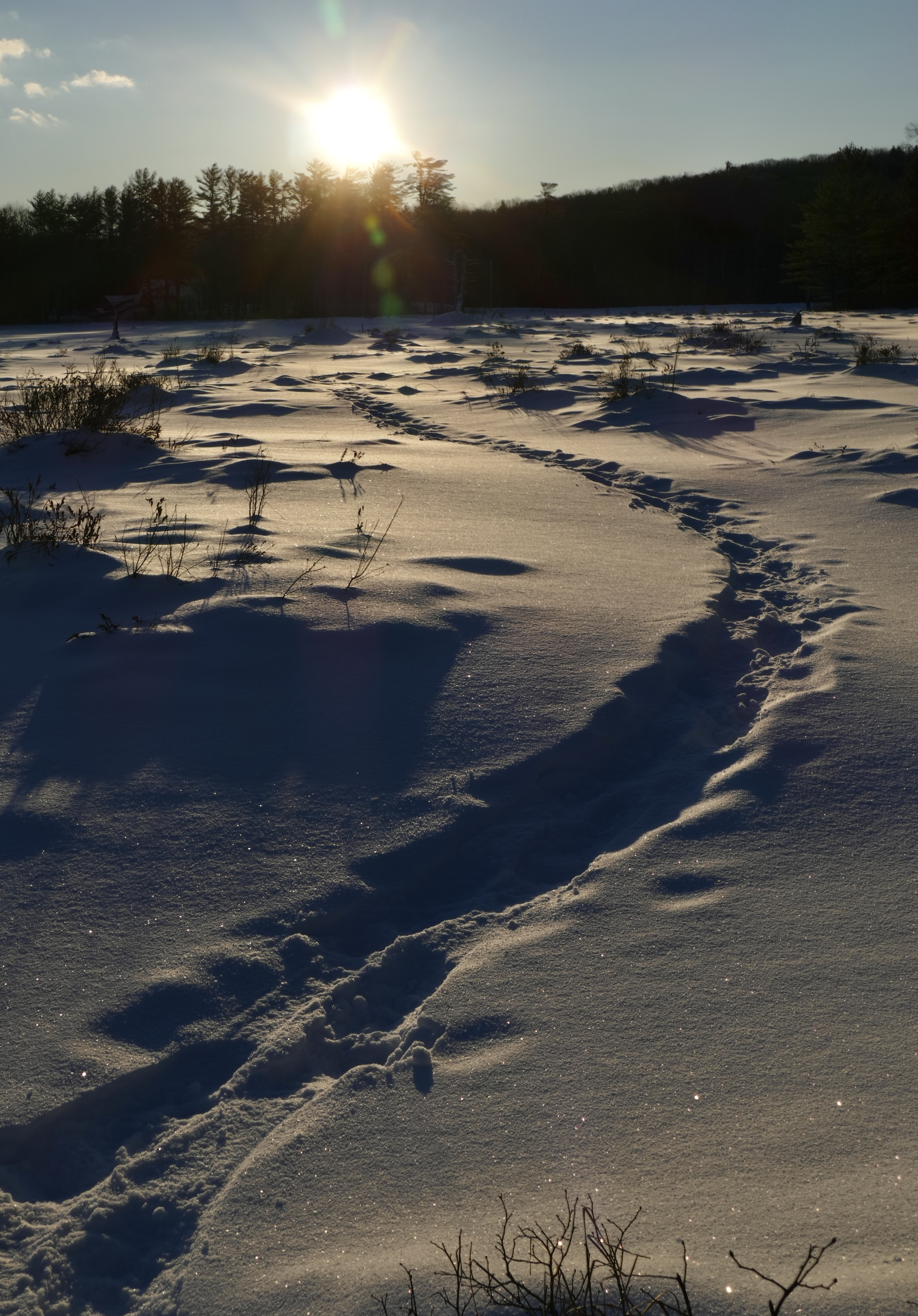
A fine clear day— There is a glare of light from the fresh unstained surface of the snow that it pains the eyes to travel toward the sun. I go across Walden.
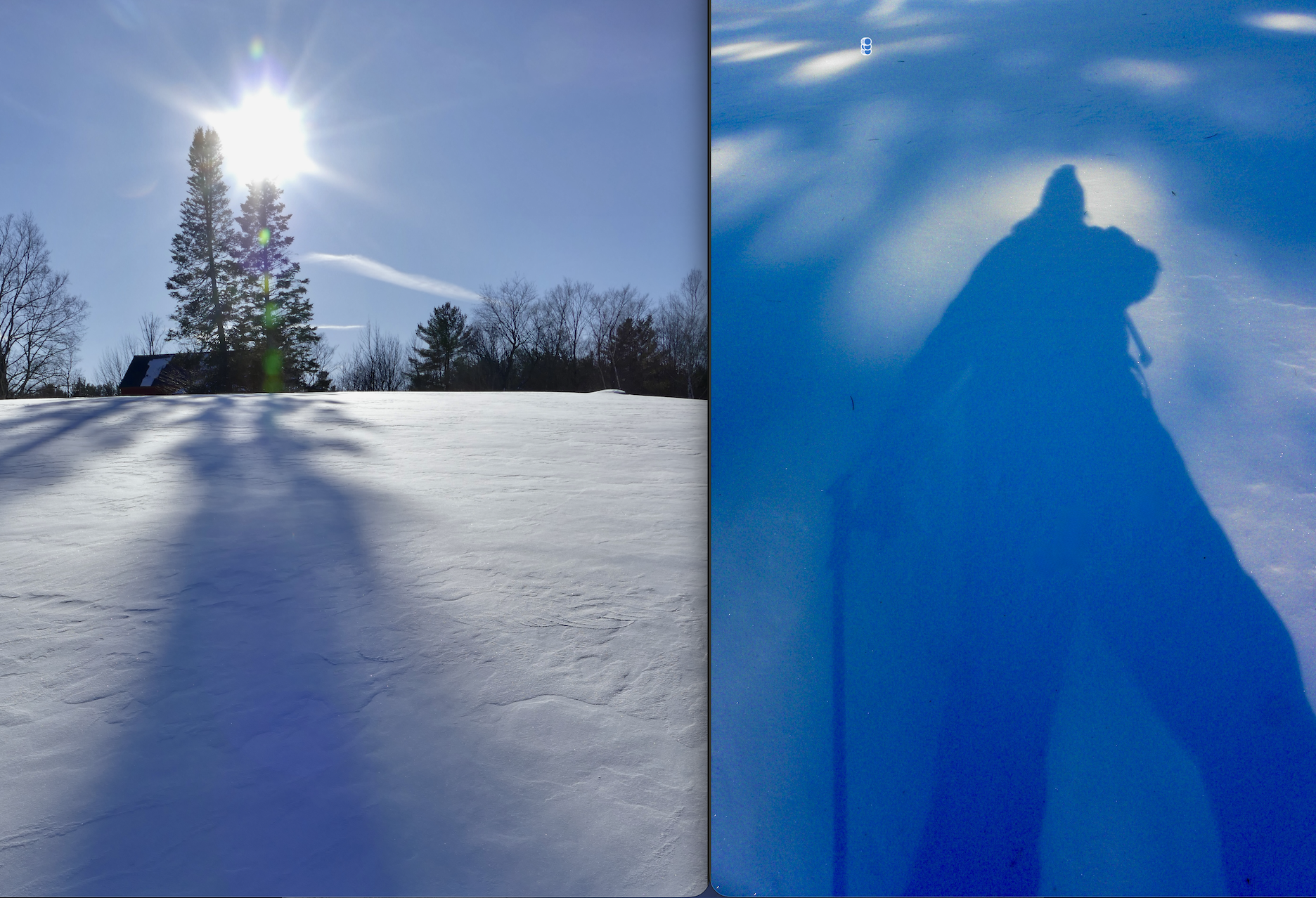
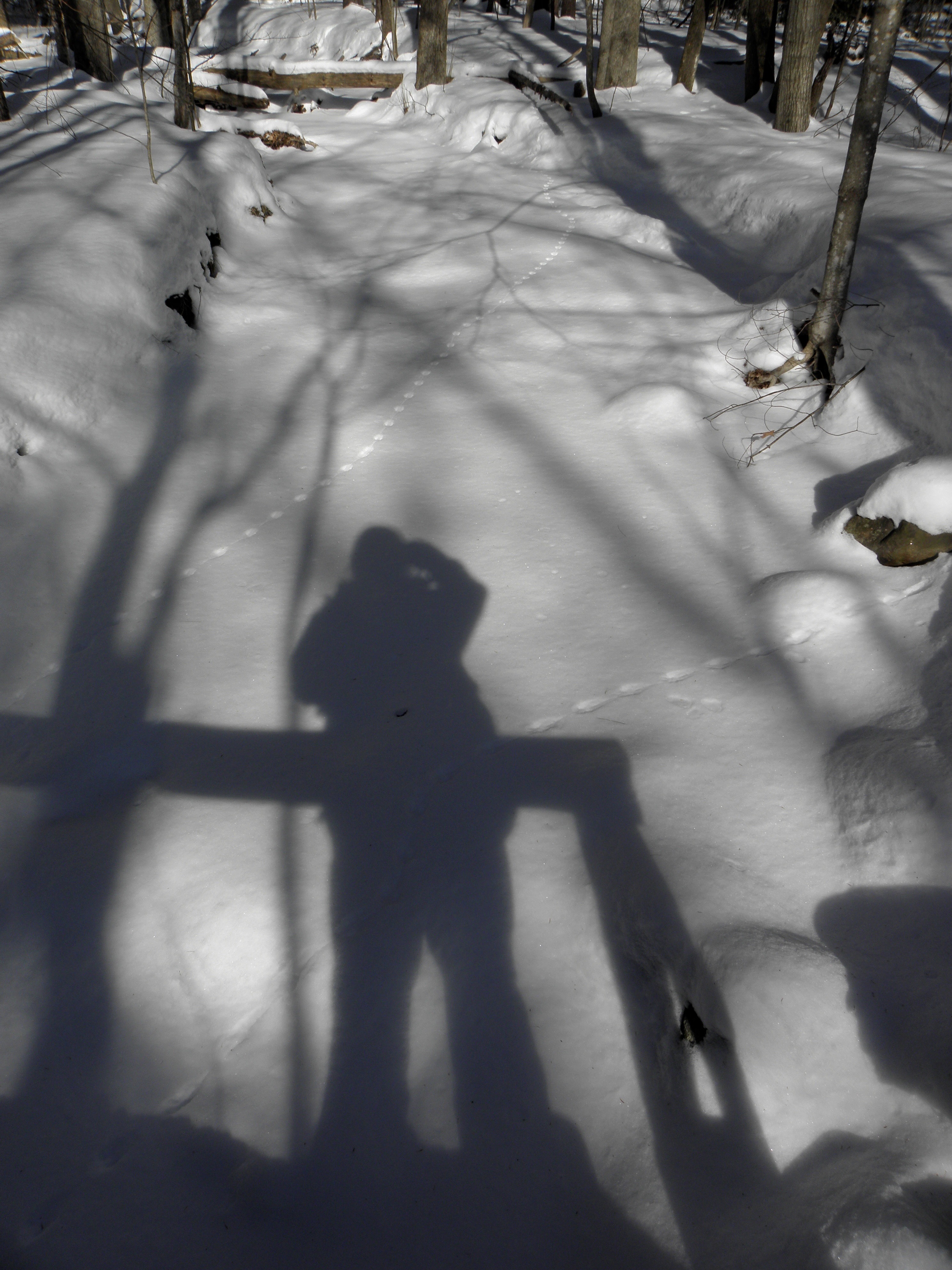
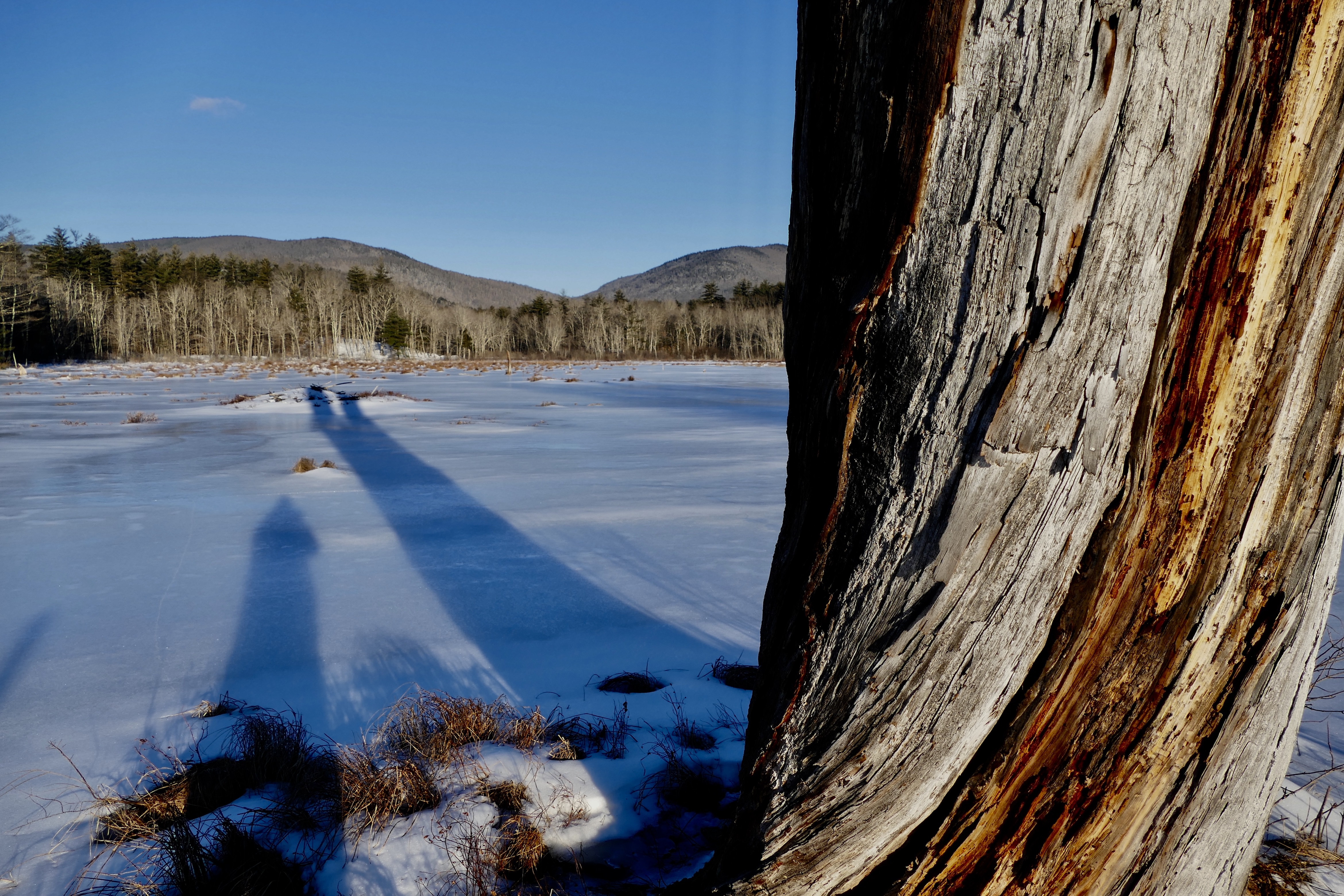
My shadow is very blue— It is especially blue when there is a bright sun light on pure white snow— It suggests that there may be something divine—something celestial in me.
Debauched and worn-out senses require the violent vibrations of an instrument to excite them, but sound and still youthful senses, not enervated by luxury, hear music in the wind and rain and running water. One would think from reading the critics that music was intermittent as a spring in the desert, dependent on some Paganini or Mozart, or heard only when the Pierians or Euterpeans drive through the villages; but music is perpetual, and only hearing is intermittent.
I hear it in the softened air of these warm February days which have broken the back of the winter…
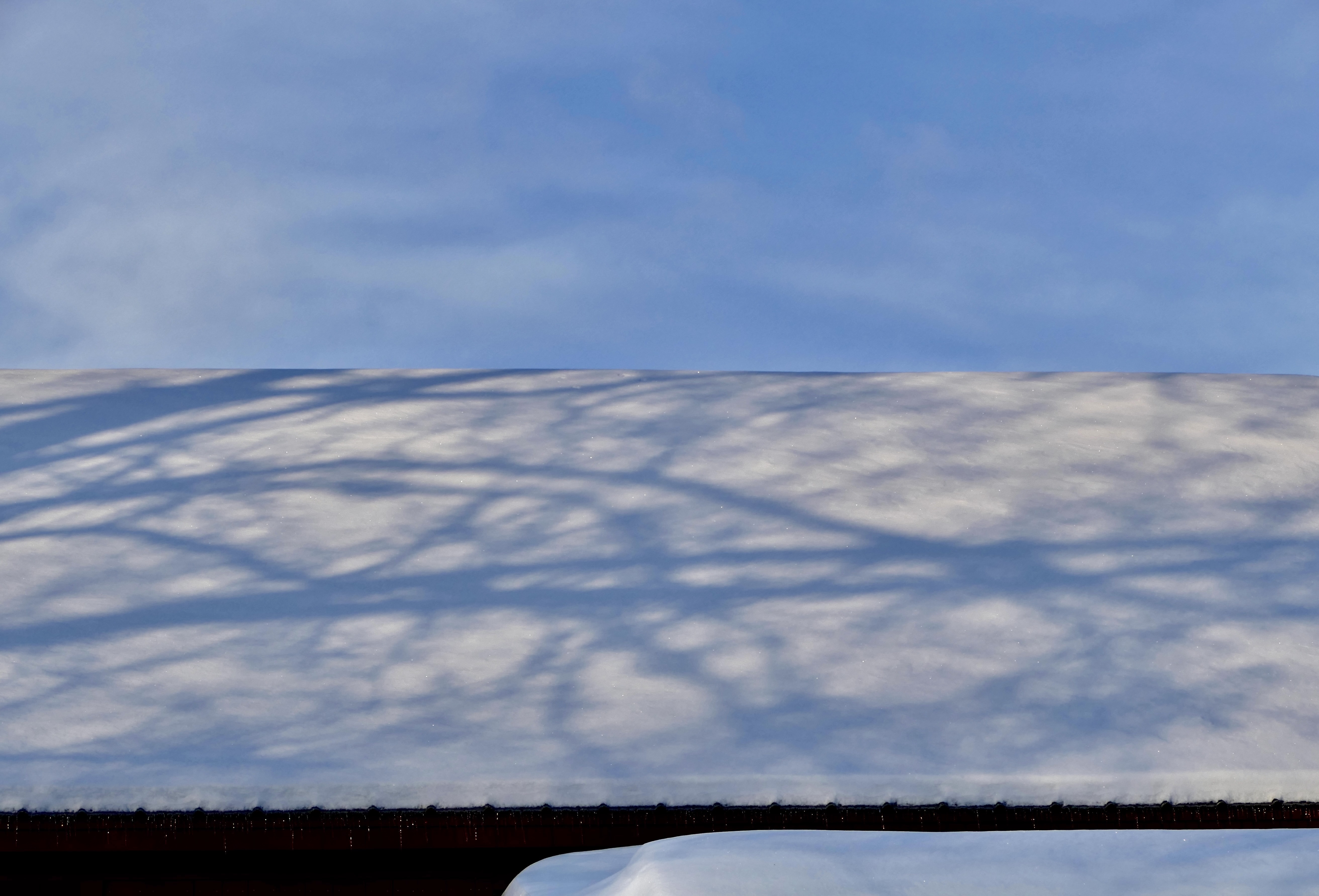
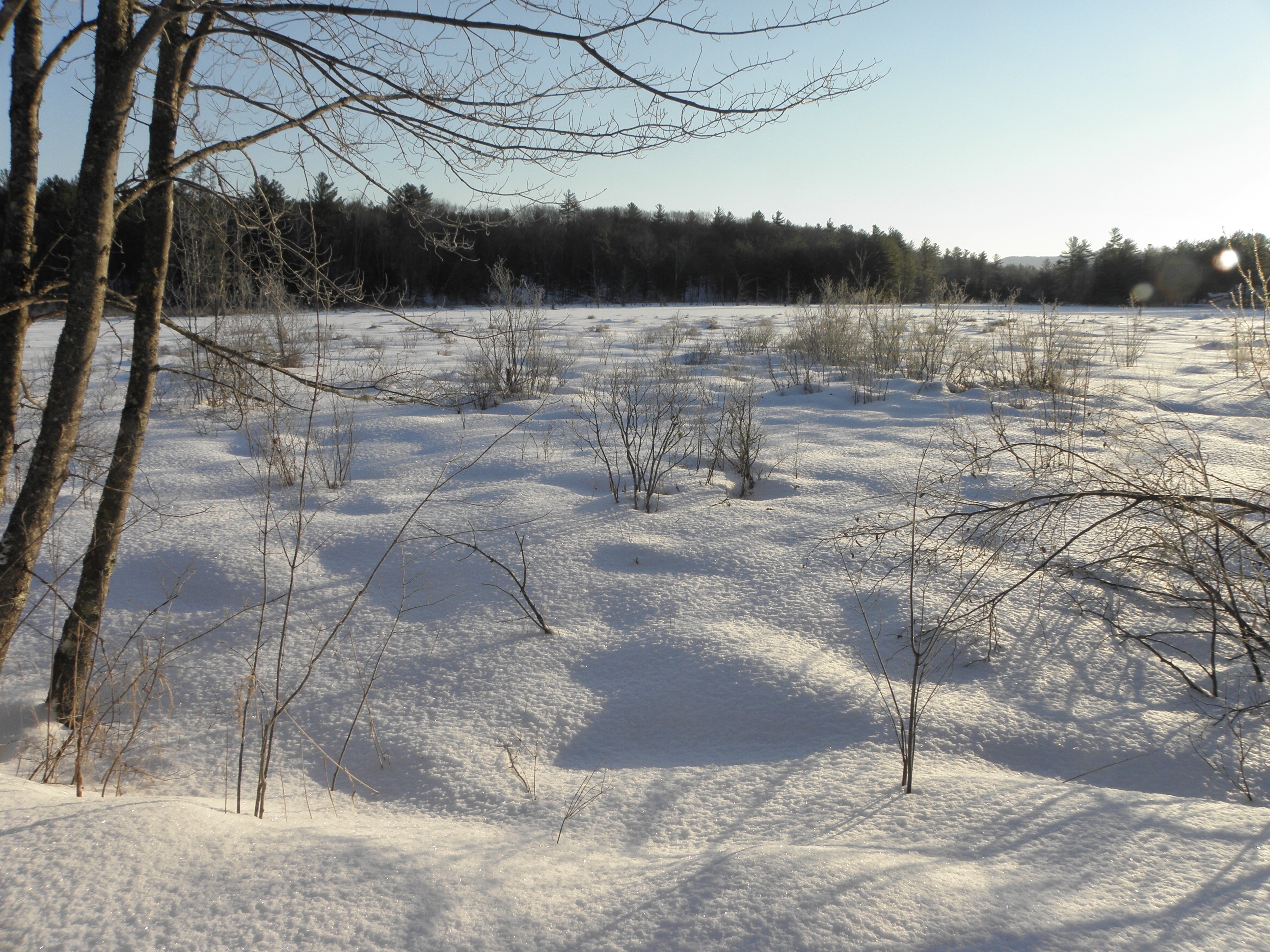
Under the waves of the snowy ocean yesterday, roads and rivers, pastures and cultivated fields, all traces of man’s occupancy of the globe were for the most part concealed. Water and sand also assume this same form under the influence of wind.
And I have seen, on the surface of the Walden ice, great sweeping, waving lines, somewhat like these. It is the track of the wind, the impress which it makes on flowing materials.
When I select one here and another there, and strive to join sundered thoughts, I make but a partial heap after all— Nature strews her nuts and flowers broadcast, and never collects them into heaps— A man does not tell us all he has thought upon truth or beauty at a sitting—but from his last thought on the subject wanders through a varied scenery of upland meadow and woodland to his next— Sometimes a single and casual thought rises naturally and inevitably with a queenly majesty and escort like the stars in the east.
Fate has surely enshrined it in this hour and circumstances for some purpose— What she has joined together, let not man put asunder.— Shall I transplant the primrose by the river’s brim—to set it beside its sister on the mountain? This was the soil it grew in—this the hour it bloomed in—if sun, wind, and rain came here to cherish and expand it–shall not we come here to pluck it? — Shall we require it to grow in a conservatory for our convenience?
In a journal it is important in a few words to describe the weather, or character of the day, as it affects our feelings. That which was so important at the time cannot be unimportant to remember.
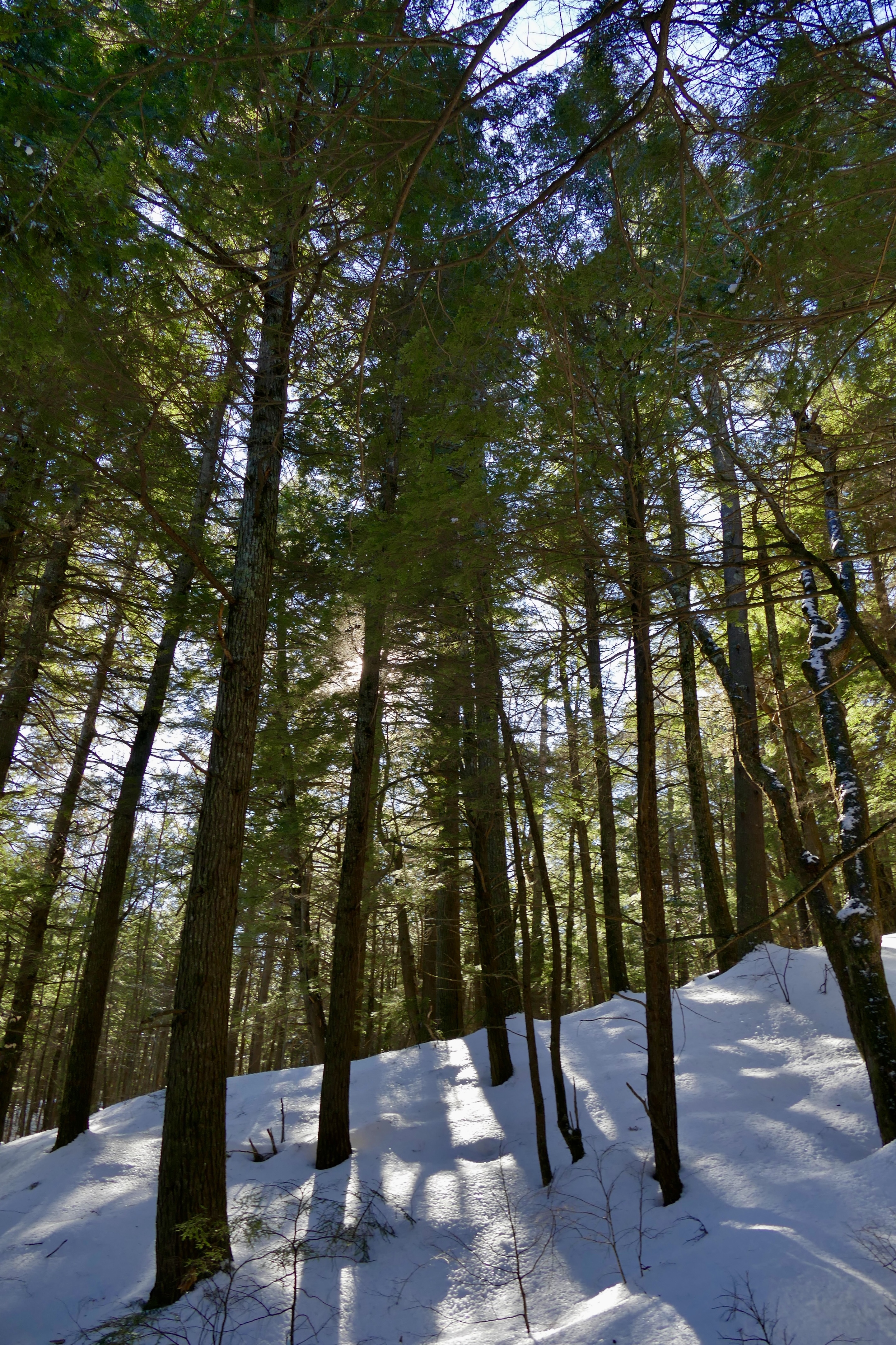
A mild, thawy day. The needles of the pine are the touch-stone for the air—any change in that element is revealed to the practiced eye by their livelier green or increased motion. They are the tell-tales. Now they are (the white pine) a cadaverous, misty blue—anon a lively silvery light plays on them —& they seem to erect themselves unusually—while the pitch pines are a brighter yellowish green than usual—The sun loves to nestle in the boughs of the pine & pass rays through them.
The scent of bruised pine leaves where a sled has passed is a little exciting to me now…
Access to nature for original observation is secured by one ticket, by one kind of expense, but access to the works of your predecessors by a very different kind of expense. All things tend to cherish the originality of the original.
Nature, at least, takes no pains to introduce him to the works of his predecessors, but only presents him with her own Opera Omnia.
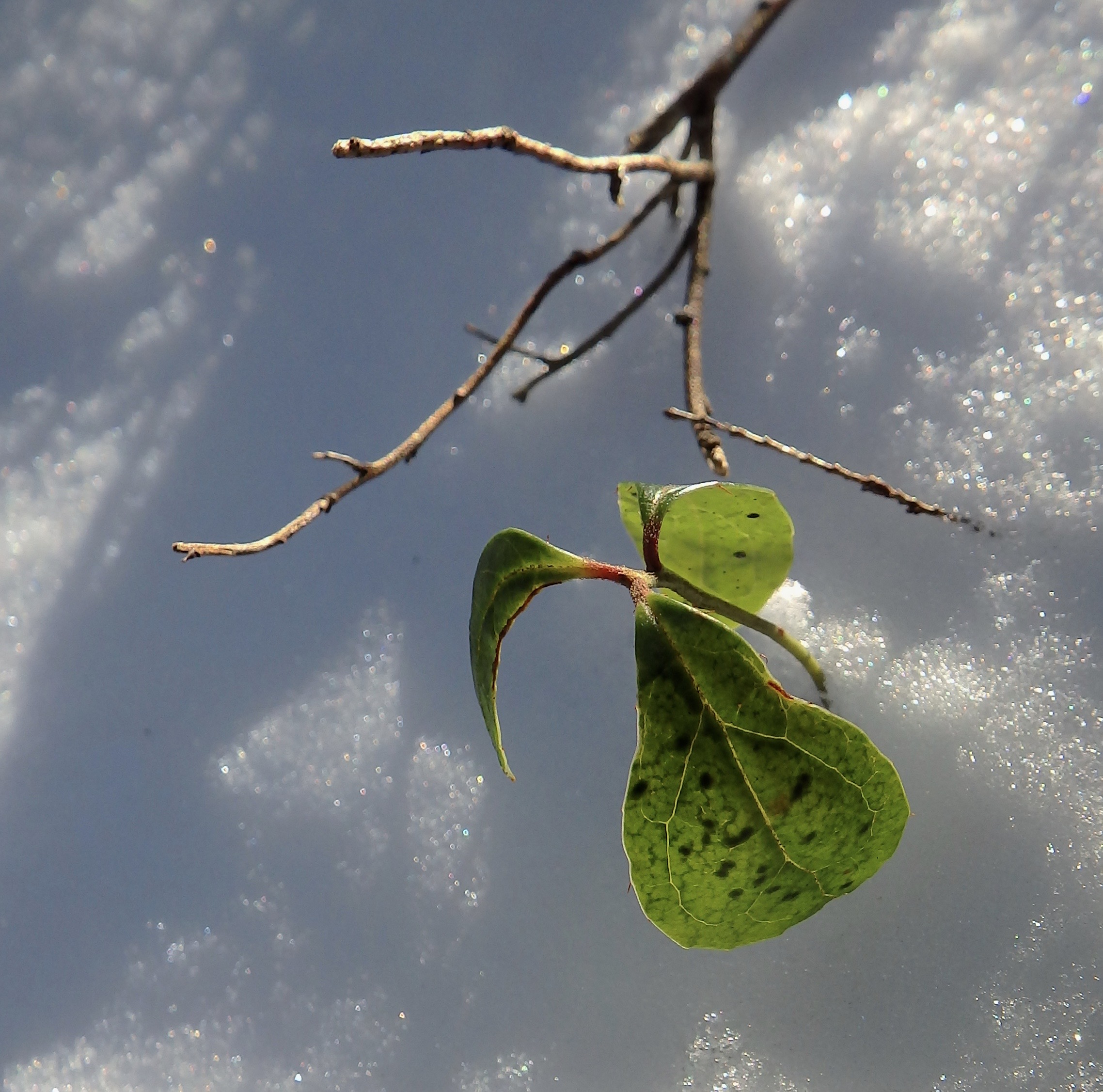
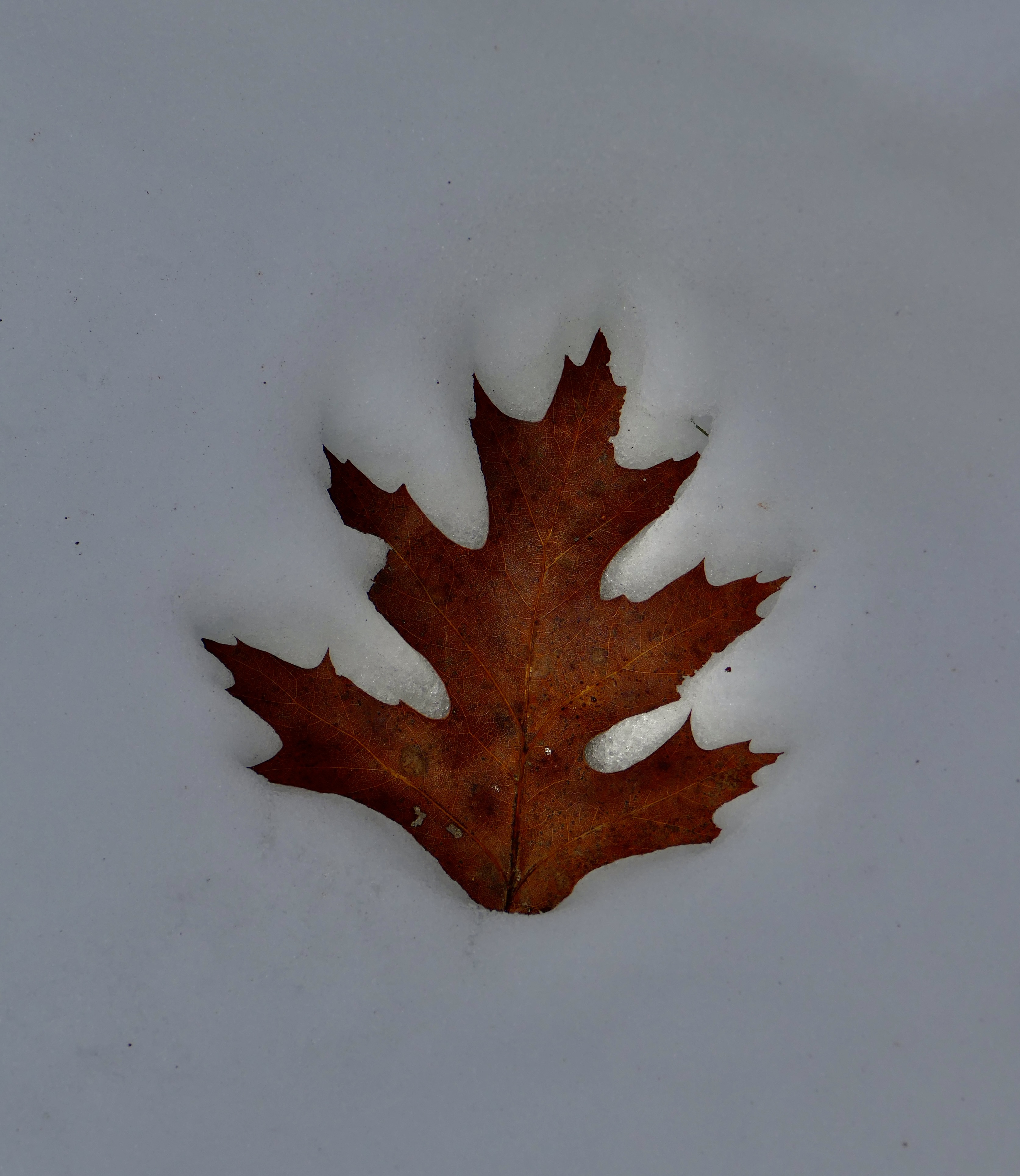
I frequently see where oak leaves–absorbing the heat of the sun have sunk in to the ice & an inch in depth & afterward been blown out–leaving a perfect type of the leaf with its petiole & lobes sharply cut–with perfectly upright sides–so that I can easily tell the species of oak that made it. Sometimes these moulds have been evenly filled with snow–while the ice is dark–& you have the figure of the leaf in white.
It is interesting to see near the sources even of small streams or brooks which now flow through an open country–
perhaps shrunken in their volume–the traces of ancient mills–which have devoured the primitive forest–the earthen dams & old sluice ways–& ditches and banks for obtaining a supply of water–
Perhaps I can never find so good a setting for my thoughts as I shall thus have taken them out of. The crystal never sparkles more brightly than in the cavern. The world have always loved best the fable with the moral. The children could read the fable alone, the grown-up read both. The truth so told has the best advantages of the most abstract statement, for it is not the less universally applicable. Where else will you ever find the true cement for your thoughts?
How will you ever rivet them together without leaving the marks of the file? Yet Plutarch did not so; Montaigne did not so. Men have written travels in this form, but perhaps no man’s daily life has been rich enough to be journalized.
As I stand under the hill beyond J. Hosmer’s and look over the plains westward toward Acton and see the farmhouses nearly half a mile apart, few and solitary, in these great fields between these stretching woods, out of the world, where the children have to go far to school; the still, stagnant, heart-eating, life-everlasting, and gone-to-seed country, so far from the post-office where the weekly paper comes, wherein the new-married wife cannot live for loneliness, and the young man has to depend upon his horse for society; see young J. Hosmer’s house, whither he returns with his wife in despair after living in the city, — I standing in Tarbell’s road, which he alone cannot break, — the world in winter for most walkers reduced to a sled track winding far through the drifts, all springs sealed up and no digressions;
where the old man thinks he may possibly afford to rust it out, not having long to live, but the young man pines to get nearer the post-office and the Lyceum, is restless and resolves to go to California, because the depot is a mile off (he hears the rattle of the cars at a distance and thinks the world is going by and leaving him); where rabbits and partridges multiply, and muskrats are more numerous than ever, and none of the farmer’s sons are willing to be farmers, and the apple trees are decayed, and the cellar-holes are more numerous than the houses, and the rails are covered with lichens, and the old maids wish to sell out and move into the village, and have waited twenty years in vain for this purpose and never finished but one room in the house, never plastered nor painted, inside or out, lands which the Indian was long since dispossessed [of], and now the farms are run out, and what were forests are grain-fields, what were grain-fields, pastures; dwellings which only those Arnolds of the wilderness, those coureurs de bois, the baker and the butcher visit, to which at least the latter penetrates for the annual calf, — and as he returns the cow lows after, — whither the villager never penetrates, but in huckleberry time, perchance, and if he does not, who does? — where some men’s breaths smell of rum, having smuggled in a jugful to alleviate their misery and solitude; where the owls give a regular serenade; — I say, standing there and seeing these things, I cannot realize that this is that hopeful young America which is famous throughout the world for its activity and enterprise, and this is the most thickly settled and Yankee part of it.


You must be logged in to post a comment.