in Thoreau’s Journal:

The larches in the swamps are now conspicuously yellow & ready for their fall.
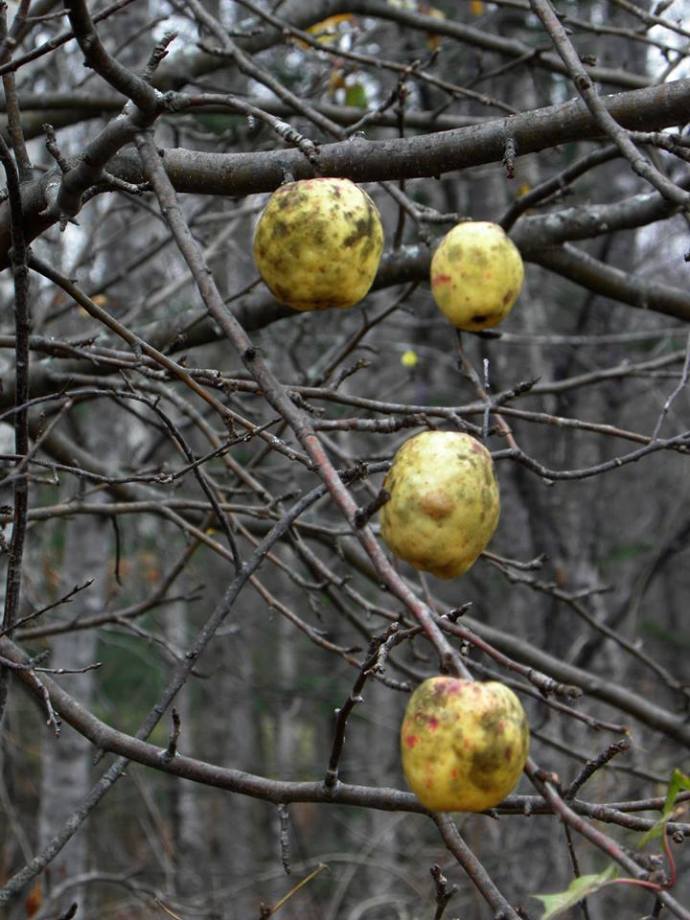
Small yellow apples hanging over the road.
in Thoreau’s Journal:
The larches in the swamps are now conspicuously yellow & ready for their fall.
Small yellow apples hanging over the road.
in Thoreau’s Journal:
This may be called an Ind. summer day. It is quite hazy withal & the mts invisible. I see a hore-hound turned lake or steel claret color. The yel lily pads in Hubbards ditch are fresh as if recently expanded. There are some white lily pads in river still—but very few indeed of the yel. lily. A pasture thistle on Conantum just budded but flat with the ground. The fields generally wear a russet hue. A striped snake out. The milk weed (Syriaca) now rapidly discounting.

The lanceolate pods having opened the seeds spring out on the least jar or when dried by the sun—& form a little fluctuating white silky mass or tuft each held by the extremities of the fine threads, until a stronger puff of wind sets them free. It is a pleasant sight to see it dispersing its seeds…
in Thoreau’s Journal:
To Walden
Ebby Hubbards oaks now turned a sober & warm red & yellow have a very rich crisped & curled took—especially against the green pines— This is when the ripe high colored leaves have begun to curl & wither—then they have a warm & harmonious tint. First they are ripened by the progress of the year & the character of each appears in distinct colors. Then come the severe frosts & dulling the brilliancy of most—produces a harmony of warm brown—or red & yellow tinges through out the forest.— Something like marbling & paining over it—making one shade run into another. The forest is more rug-like…

In consequence of the above winds—& clouds—we have tonight a bright warm sunset (to me on the water) after a cool gray afternoon—lighting up the green pines at the NE end of the pond—every yellow leaf of birch or aspen or hickory is doubly bright—& looking over the forest on Pine Hill I can hardly tell which trees are lit up by the sun-shine and which are the yellow chestnut tops. Thus both the spring & autumn tints or aspect of the woods reminds me of the sunshine. The first has never so good a setting and foreground as seen from the middle of a lake rising from the water’s edge— The waters edge makes the best frame for the picture & natural boundary to the forest.

in Thoreau’s Journal:
This is a remarkable feature in the landscape now—the abundance of dead weeds. The frosts have done it. Winter comes on gradually. The red maples have lost their leaves before the rock maple which is now losing its leaves at top first.

All the country over the frosts have come & sered the tenderer herbs along all brook sides— How unobserved this change until it has taken place.
in Thoreau’s Journal:
Green leaves are doubtless handsome in their season, but now that we behold these ripe ones, we are inclined to think that the former are handsome somewhat as green fruits are, as green apples and melons….

At this season each leaf becomes a laboratory in which the fairest and brightest colors are compounded.
in Thoreau’s Journal:
At this season of the year, when each leaf acquires its peculiar color, Nature prints this history distinctly, as it were an illuminated edition. Every oak and hickory and birch and aspen sprinkled amid the pines tells its tale a mile off, and you have not to go laboriously through the wood examining the bark and leaves.

These facts would be best illustrated by colors, ––green, yellow, red, etc.
1858 in Thoreau’s Journal:
A village is not complete unless it has these trees to make the season in it. They are as important as a town clock. Such a village will not be found to work well. It has a screw loose; an essential part is wanting. Let us have willows for spring, elms for summer, maples and walnuts and tupelos for autumn, evergreens for winter, and oaks for all seasons.

1859 in Thoreau’s Journal:
Why can we not oftener refresh one another with original thoughts? If the fragrance of the dicksonia fern is so grateful and suggestive to us, how much more refreshing and encouraging – re-creating – would be fresh and fragrant thoughts communicated to us fresh from a man’s experience and life! I want none of his pity, nor sympathy, in the common sense, but that he should emit and communicate to me his essential fragrance, that he should not be forever repenting and going to church (when not otherwise sinning), but, as it were, going a-huckleberrying in the fields of thought, and enrich all the world with his visions and his joys.
in Thoreau’s Journal:

Methinks the reflections are never purer and more distinct than now at the season of the fall of the leaf, just before the cool twilight has come, when the air has a finer grain. Just as our mental reflections are more distinct at this season of the year, when the evenings grow cool and lengthen and our winter evenings with their brighter fires may, be said to begin. And painted ducks, too, often come and sail or float amid the painted leaves.
in Thoreau’s Journal:

It is the more remarkable at this season because the oak is all red and yellow and the pine all green. I understand it and read its history easily before I get to it.
in Thoreau’s Journal:

The first snow is falling (after not very cool weather) in large flakes filling the air & obscuring the distant woods & houses….


in Thoreau’s Journal:
The Pond is now most beautifully framed with the autumn tinted woods & hills—
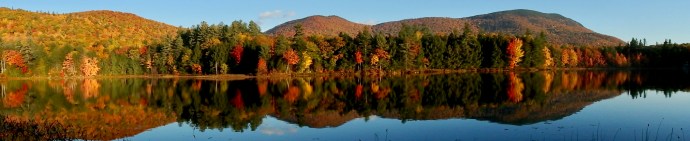
….How peaceful great nature—there is no disturbing sound…
1851 in Thoreau’s Journal:

I seem to be more constantly merged in nature; my intellectual life is more obedient to nature than formerly, but perchance less obedient to spirit. I have less memorable seasons.
1852 in Thoreau’s Journal:
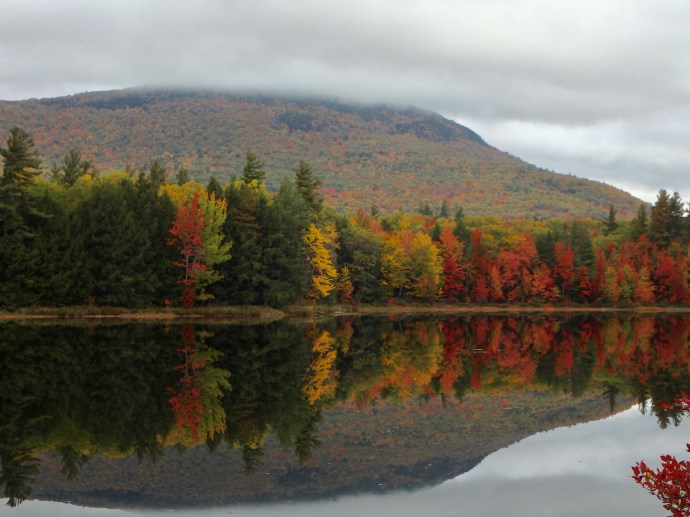
What an ample share of the light of heaven each pond & lake on the surface of the globe enjoys— No woods are so dark & deep but it is light above the pond. Its window or skylight is as broad as its surface. It lies out patent to the sky. From the mt top you may not be able to see out because of the woods—but on the lake you are bathed in light.
in Thoreau’s Journal:
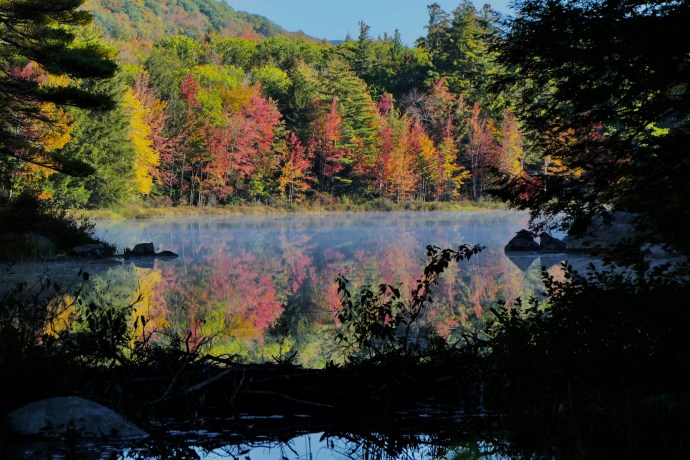
Now it is true autumn—all things are crisp & ripe.
in Thoreau’s Journal:
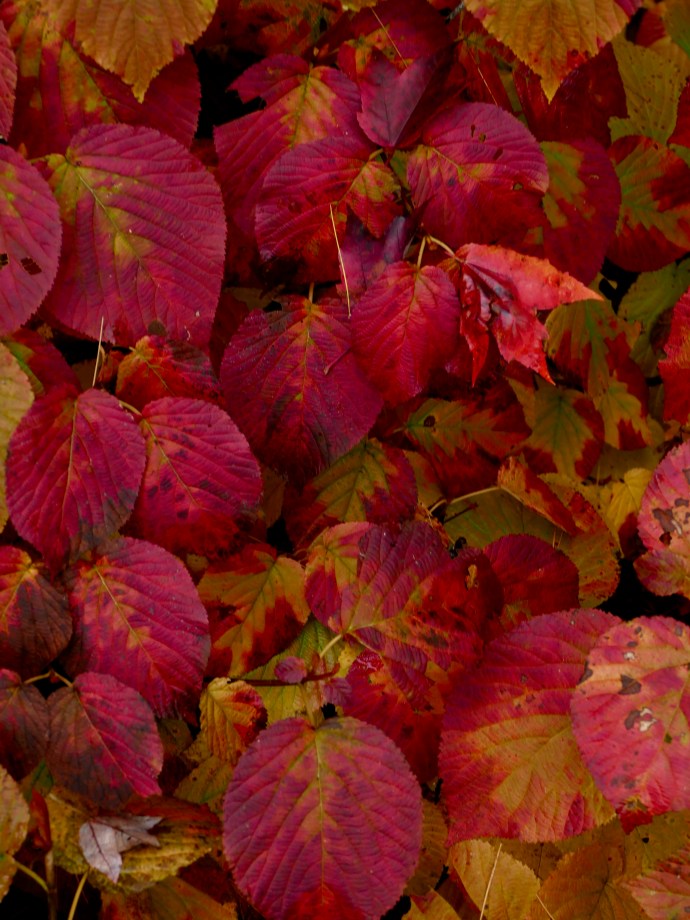
These days you may say the year is ripened like a fruit by frost, and puts on brilliant tints of maturity but not yet of decay. It is not sere and withered as in November.
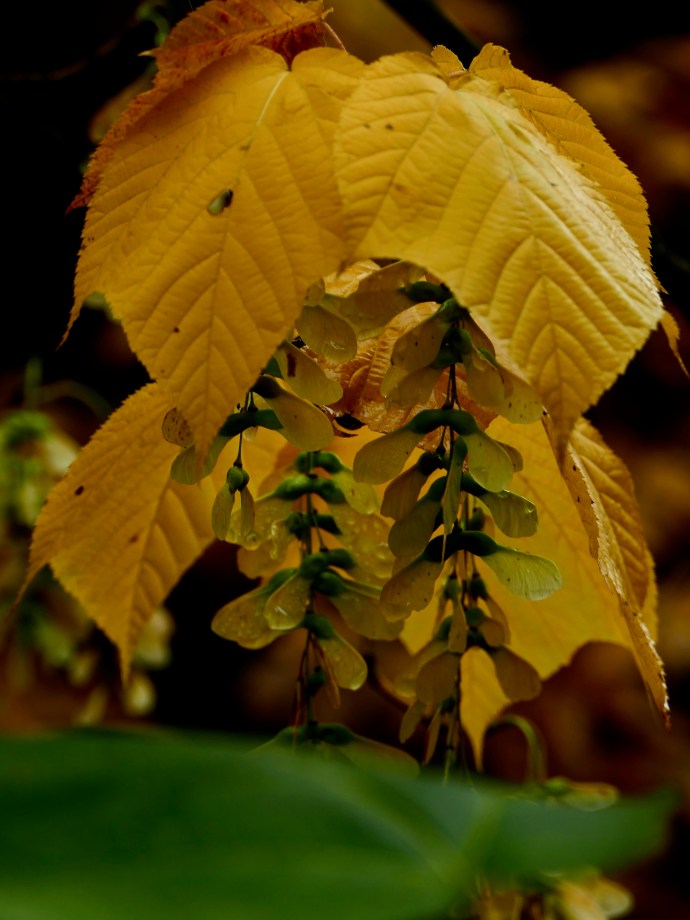
See the heaps of apples in the fields and at the cider-mill, of pumpkins in the fields, and the stacks of cornstalks and the standing corn. Such is the season.
in Thoreau’s Journal:
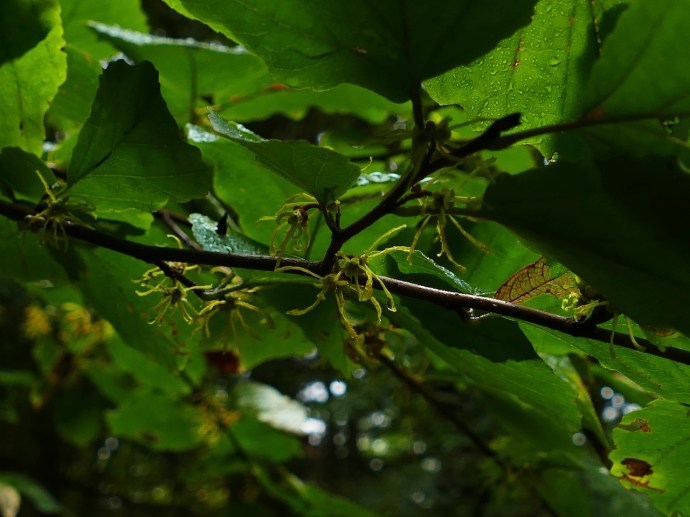
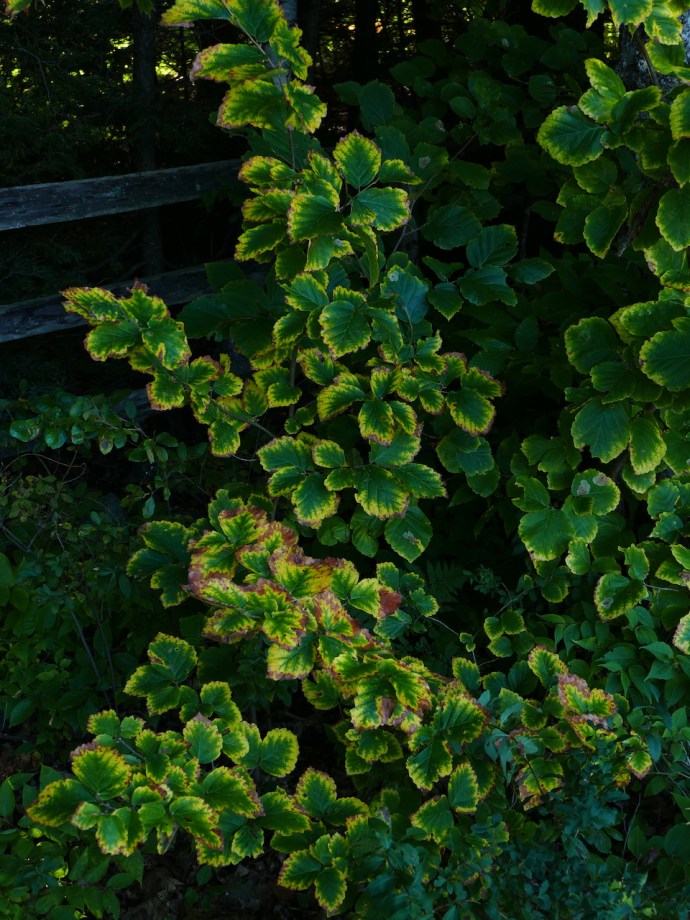
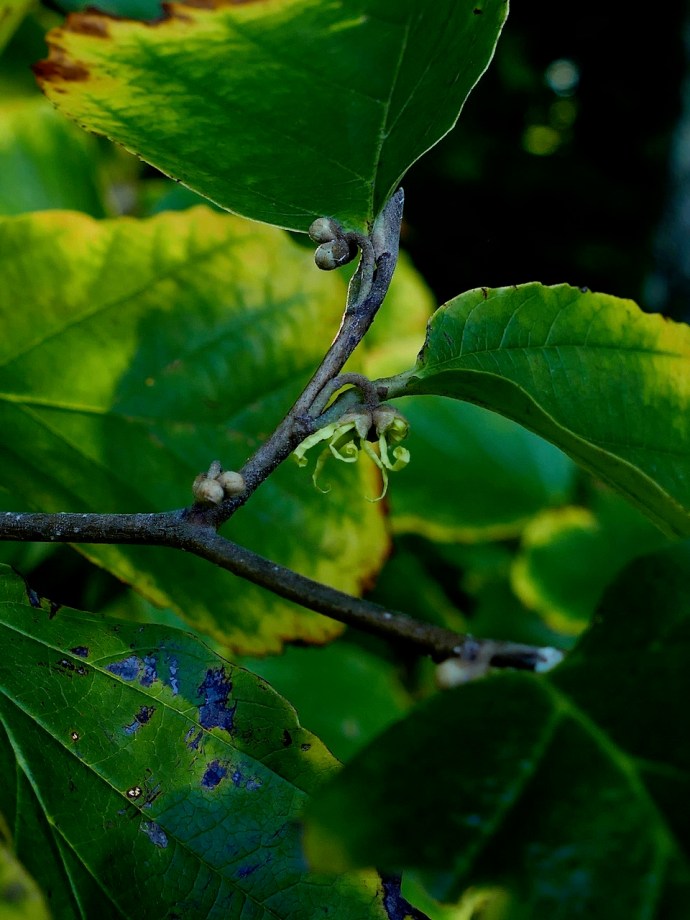
The witch hazel here is in full blossom on this magical hill-side—while its broad yellow leaves are falling—some bushes are completely bare of leaves, and leather-colored they strew the ground. It is an extremely interesting plant—October & November’s child—and yet reminds me of the very earliest spring— Its blossoms smell like the spring—like the willow catkins—by their color as well as fragrance they belong to the saffron dawn of the year.— Suggesting amid all these signs of Autumn—falling leaves & frost—that the life of nature—by which she eternally flourishes, is untouched. It stands here in the shadow on the side of the hill while the sunlight from over the top of the hill lights up its topmost sprays & yellow blossoms. Its spray so jointed and angular is not to be mistaken for any other. I lie on my back with joy under its boughs. While its leaves fall—its blossoms spring. The autumn then is indeed a spring. All the year is a spring. I see two blackbirds high over head going south, but I am going north in my thoughts with these hazel blossoms.
It is a faery place. This is a part of the immortality of the soul. When I was thinking that it bloomed too late for bees or other insects to extract honey from its flowers—that perchance they contained no honey—I saw a bee upon it. How important then to the bees this late blossoming plant.

in Thoreau’s Journal:
The autumnal tints about the pond are now perfect—nothing can exceed the brilliancy of some of the maples which stand by the shore & extend their red banners over the water—why should so many be yellow?
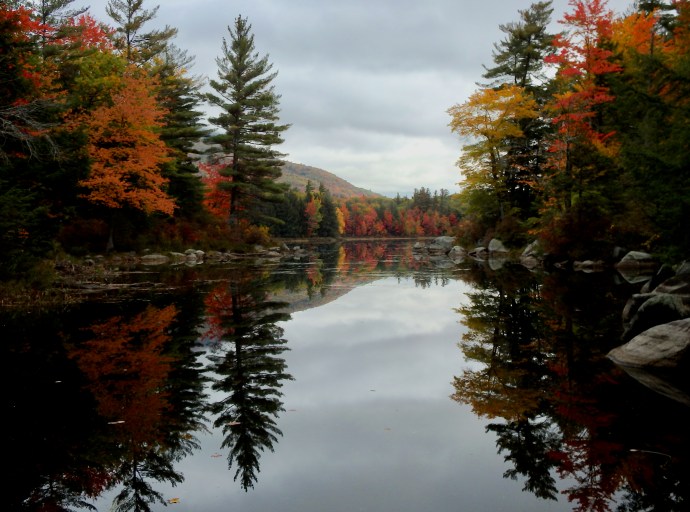
I see the browner yellow of the chestnuts on Pine Hill— The maples & hickories are a clearer yellow. Some white oaks are red— The shrub oaks are bloody enough for a ground— The red & black oaks are yet green.
in Thoreau’s Journal:
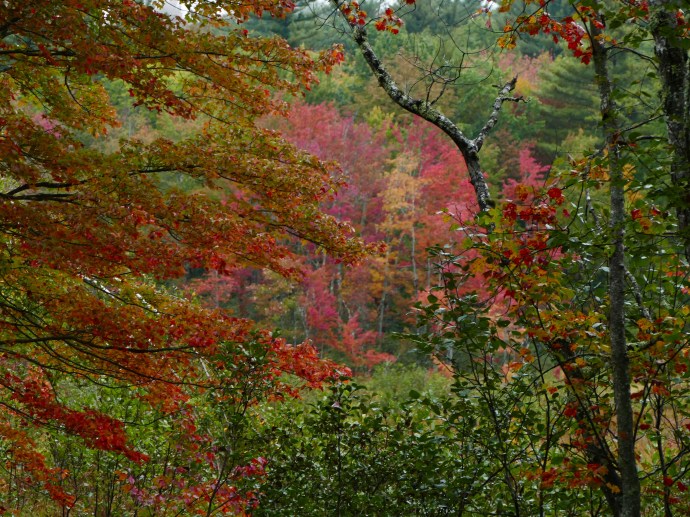
Perhaps the autumnal tints are as bright & interesting now as they will be—now is the time to behold the maple swamps—one mass of red & yellow—all on fire as it were. These and the blood red huckleberries are the most conspicuous—and then in the village the warm brownish yellow elms—& there and elsewhere the dark red ashes. The green pines springing out of huckleberries on the hillsides look as if surrounded by red or vermillion paint….
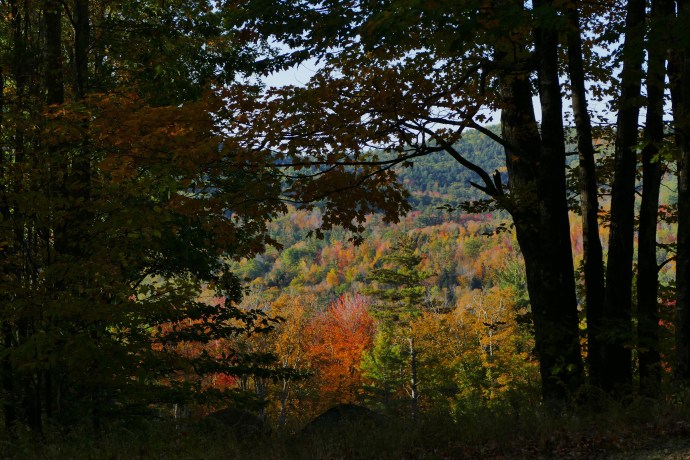
I sit on Poplar Hill. It is a warm Indian summerish afternoon. The sun comes out of clouds & lights up & warms the whole scene— It is perfect autumn….It is the mellowing year. The sunshine harmonizes with the imbrowned & fiery foliage.

in Thoreau’s Journal:
There is not now that profusion, and consequent confusion, of events which belongs to a summer walk.
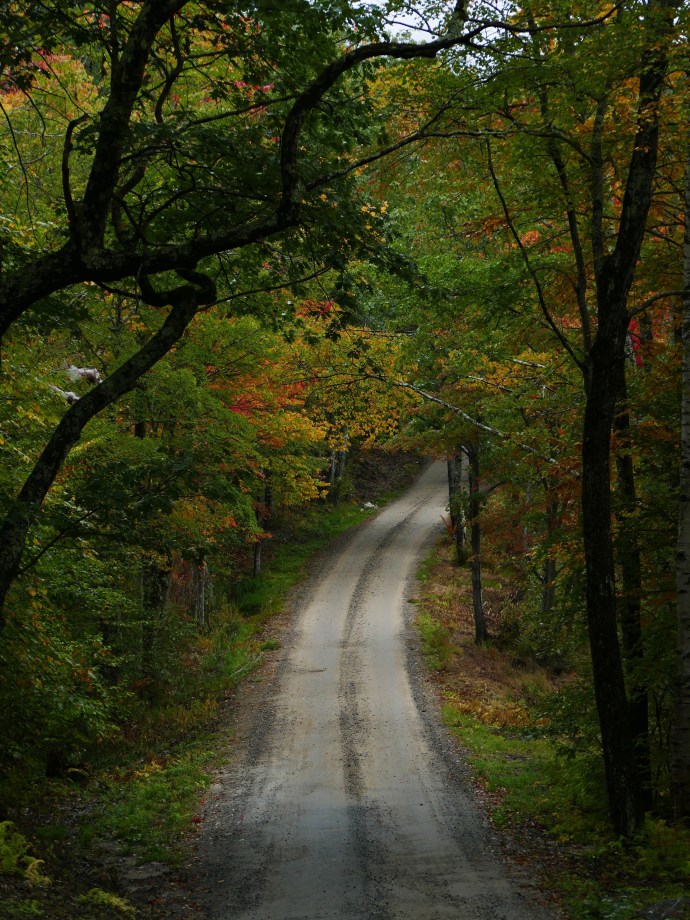
There are few flowers, birds, insects, or fruits now, and hence what does occur affects us as more simple and significant, as the cawing of a crow or the scream of a jay. The latter seems to scream more fitly and with more freedom through the vacancies occasioned by fallen maple leaves.


You must be logged in to post a comment.