in Thoreau’s Journal:

This morning the first frost—
in Thoreau’s Journal:
This morning the first frost—
September 13, 1852 in Thoreau’s Journal:
Asters various shades of blue and especially the smaller kinds of dense flowering white ones are more than ever—by the roadsides….The golden glow of autumn concentrated—more golden than the sun….The earth wears different colors or liveries at different seasons.

If I come by at this season a golden blaze will salute me here from a thousand suns. How earnestly & rapidly each creature—each flower is fulfilling its part while its day lasts! Nature never lost a day—nor a moment — As the planet in its orbit & around its axis—so do the seasons— —so does time revolve with a rapidity inconceivable.
September 13, 1859

I remember my earliest going a-graping. (It was a wonder we ever hit upon the ripe season.)
in Thoreau’s Journal:

Round-leaved cornel berries nearly all fallen.
September 12, 1851
A man should feed his sense with the best that the land affords.
in Thoreau’s Journal:
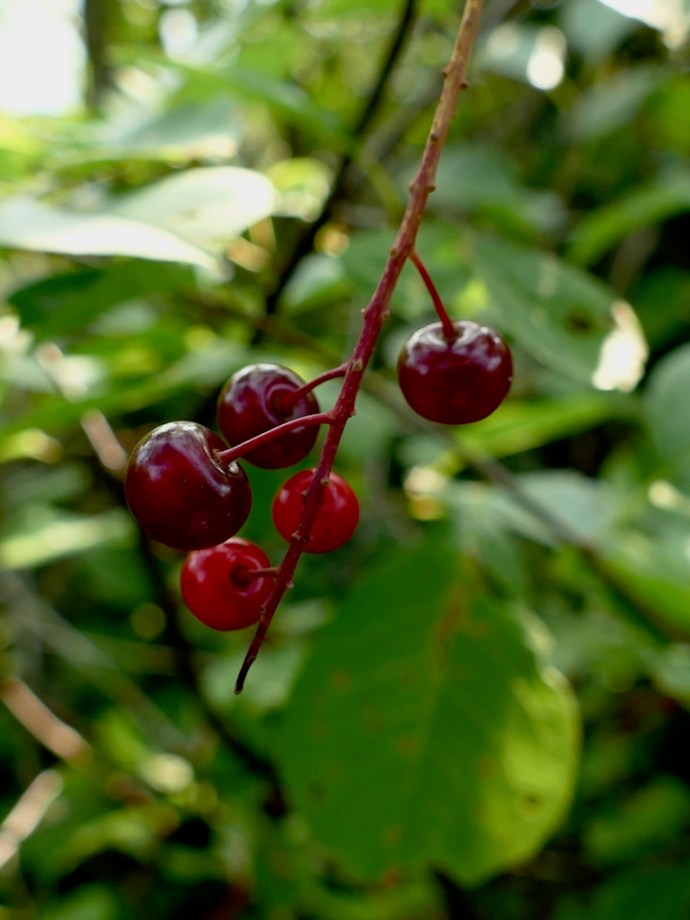
Red choke-berry ripe; how long?
in Thoreau’s Journal:
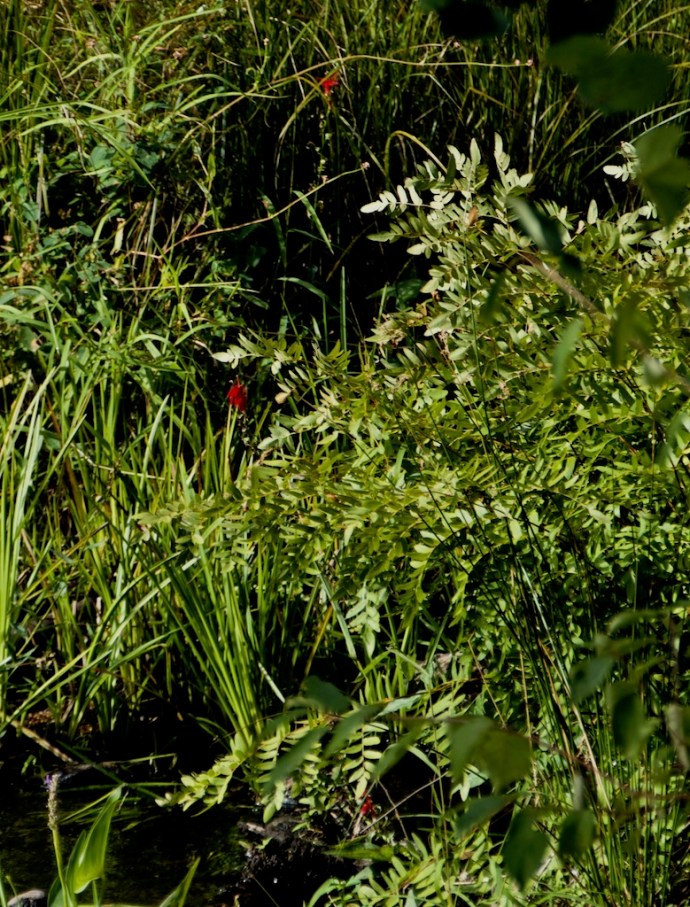
Cardinal-flower, nearly done.
September 9, 2018: Photo
in Thoreau’s Journal:
Going into the low sprout-land north of the Sam Wheeler orchard, where is a potato-field in new ground, I see the effects of the frost of the last two or three nights. The ferns and tall erechthites showing its pappus are dropping and blackened or imbrowned on all sides, also Eupatorium pubescens, tender young Rhus glabra, etc., and the air is full of the rank, sour smell of freshly withering vegetation. It is a great change produced in one frosty night. What a sudden period put to the reign of summer!
in Thoreau’s Journal:
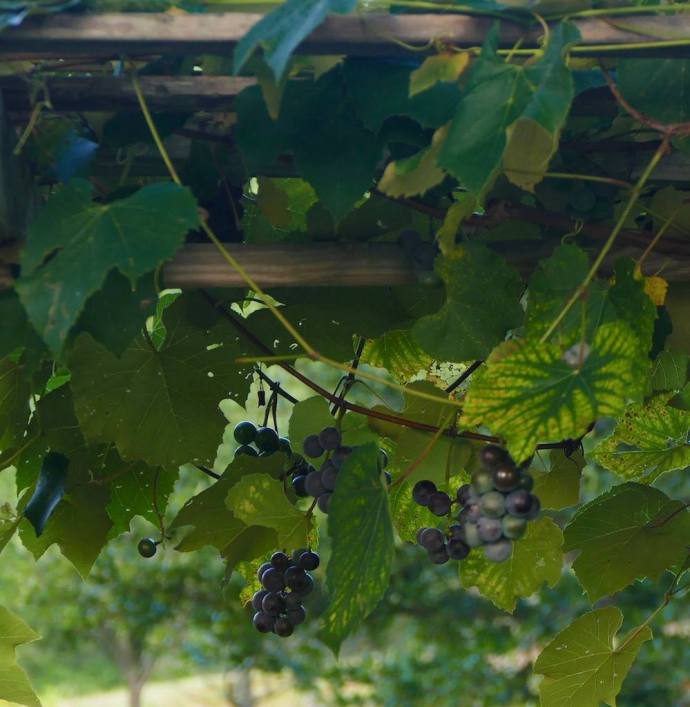
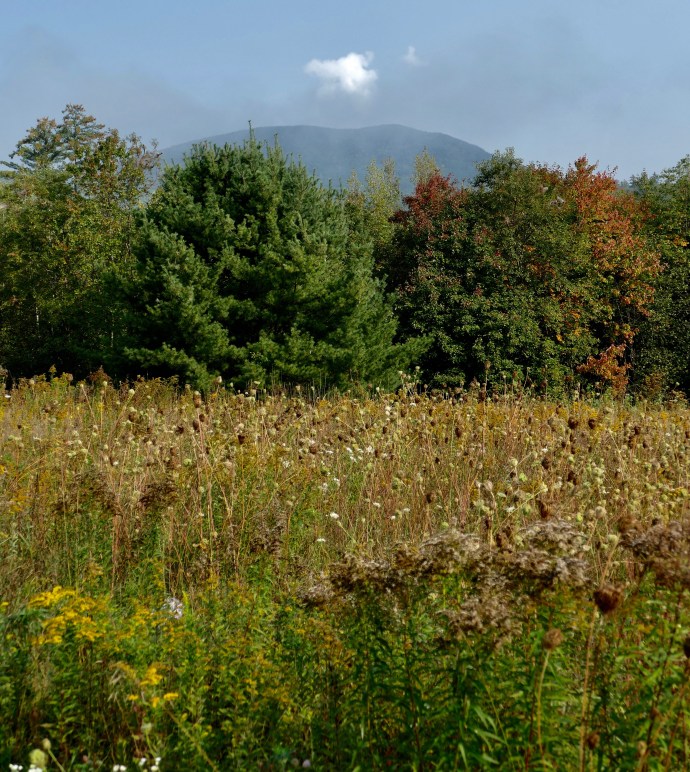
Grapes ripe….for some days….
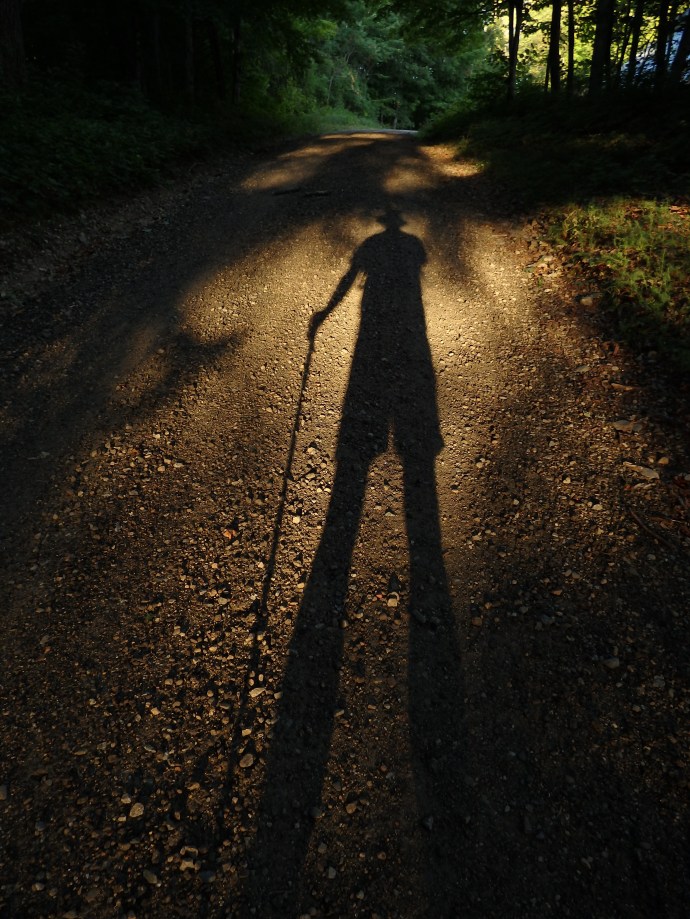
Do I perceive the shadows lengthen already?
in Thoreau’s Journal:
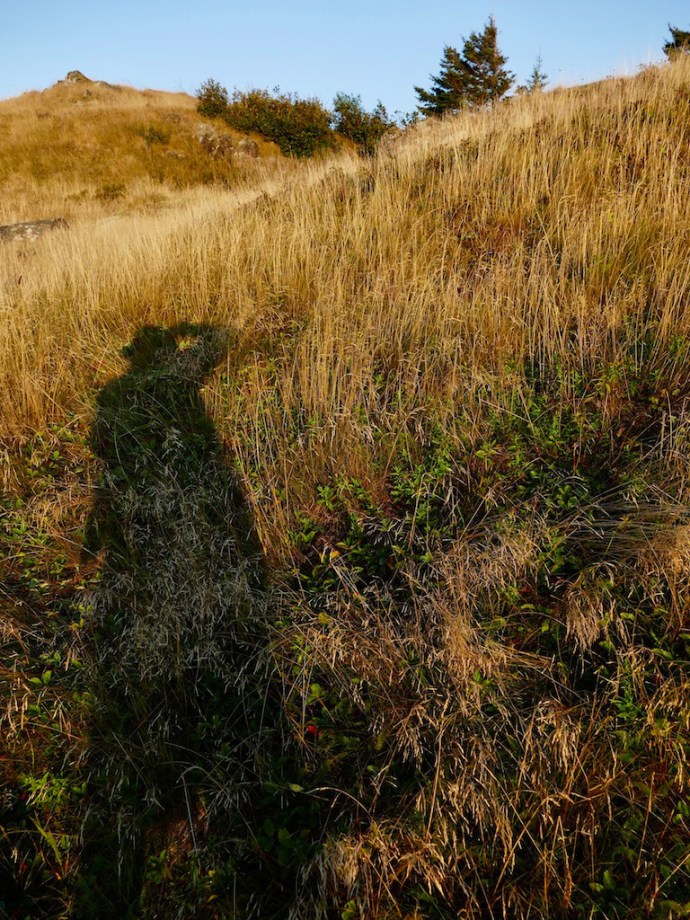
Some hours seem not to be occasion for anything, unless for great resolves to draw breath and repose in, so religiously do we postpone all action therein. We do not straight go about to execute our thrilling purpose, but shut our doors behind us, and saunter with prepared mind, as if the half were already done.
September 7, 1852 in Thoreau’s Journal:
[on Mt. Monadnock, NH]
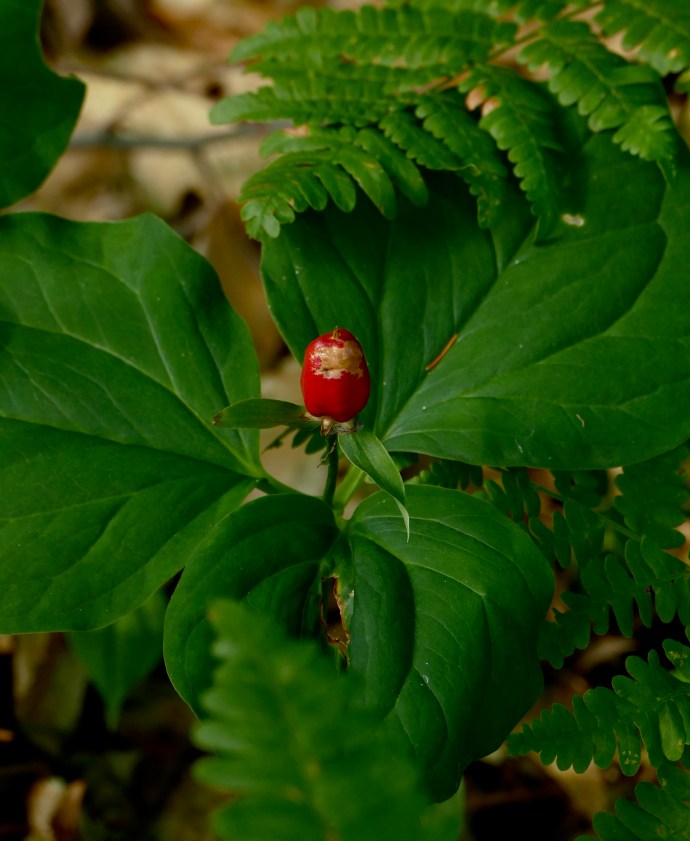
Though this vegetation was humble—yet it was very productive of fruit. In one little hollow between the rocks grew—blue berries—chokeberries—bunch berries— —red cherries—wild currents (ribes prostratum with the berry the odor of skunk cabbage—but a not quite disagreeable wild flavor) a few raspberries still—holly-berries—mt cranberries (Vaccinium vitis idaea) all close together. The little soil on the summit between the rocks was covered with the Potentilla tridentata now out of bloom—the prevailing plant at the extreme summit. Mt ash berries also. Descending toward Troy a little after 1 Pm plucked the Trillium Erythrocarpum with the large red berry (painted Trillium).
in Thoreau’s Journal:

The country begins to have a dry and flavid look, —corn fields & grass fields &c—& when winds blow a slight rustling is heard.
in Thoreau’s Journal:
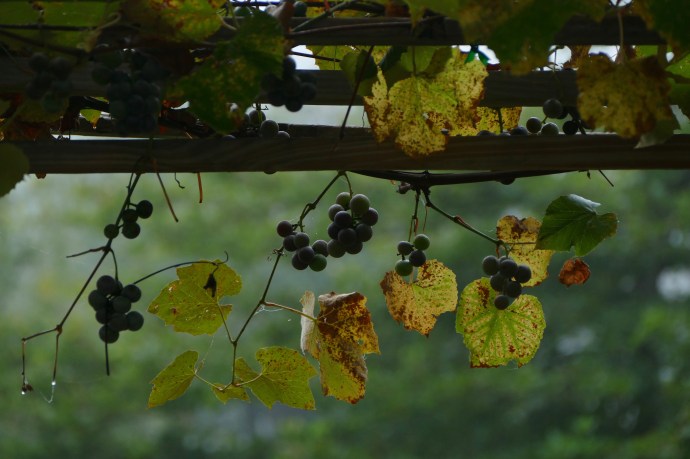
The fragrance of a grape-vine branch, with ripe grapes on it, which I have brought home, fills the whole house. This fragrance is exceedingly rich, surpassing the flavor of any grape.
in Thoreau’s Journal:
1 AM. Moon waning. To Conantum— A warm night. A thin coat sufficient. I hear an apple fall. Meet a man going to market thus early. There are no mists to diversity the night—its features are very simple. I hear no whippoorwill or other bird— See no fire flies— Saw a whippoorwill? flutter across the road. Hear the dumping sound of frogs on the river meadow, and occasionally a kind of croak as from a bittern there. It is very dewy & I bring home much mud on my shoes. This is a peculiarity of night—its dews—water resuming its reign. Return before dawn— Morning & evening are more attractive than midnight.
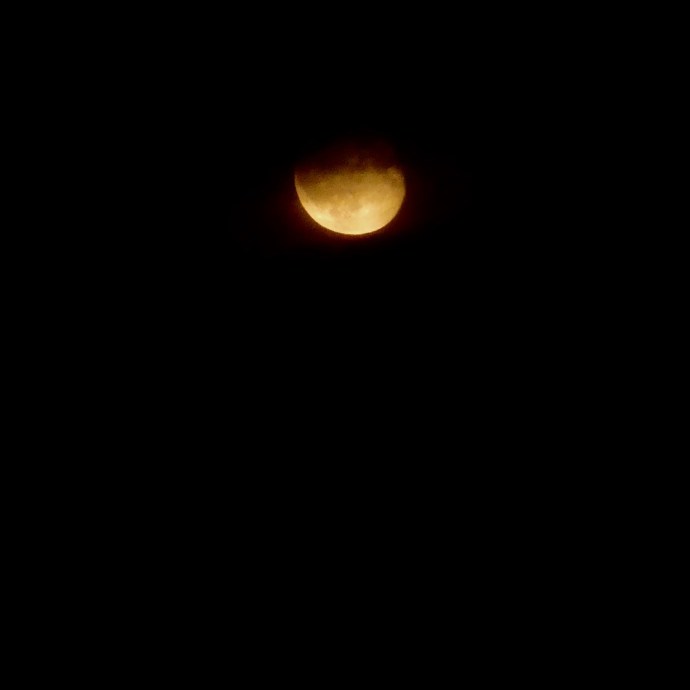
I will endeavor to separate the tide in my thoughts, or what is due to the influence of the moon, from the current distractions & fluctuations. The winds which the sun has aroused go down at evening, and the lunar influence may then perchance be detected.
Of late I have not heard the wood-thrush.
in Thoreau’s Journal:
The scenery of this small pond is humble though very beautiful & does not approach to grandeur, nor can it much concern one who has not long frequented it….
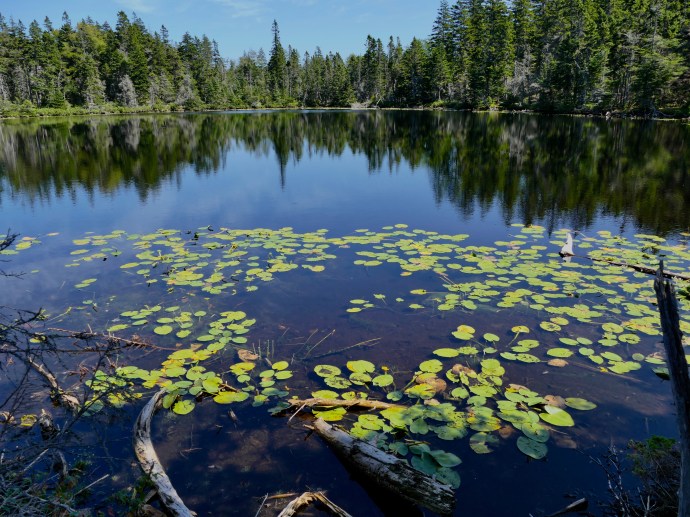
September 1, 2018, Grand Manan, NB, Canada
in Thoreau’s Journal:
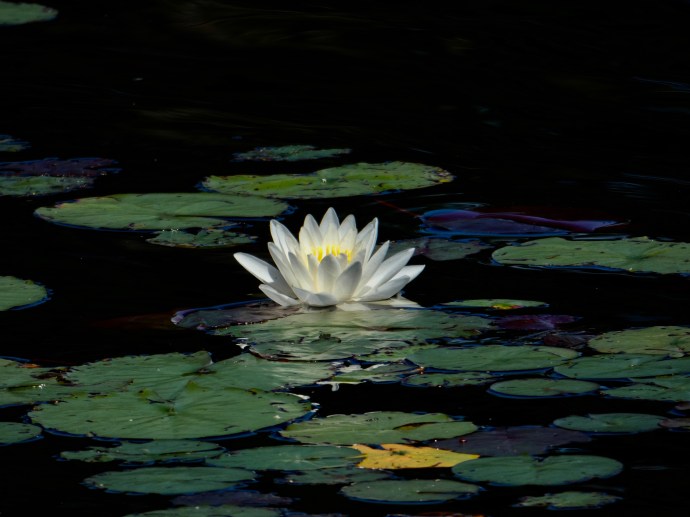
I see white lilies wide open at 2: 30 P. M. They are half open even at 5 P. M. in many places this moist cloudy day and thus late in their season.
Photo: August 31, 2018
in Thoreau’s Journal:

The reflections are perfect.
in Thoreau’s Journal:
I have come out this afternoon a-cranberrying, chiefly to gather some of the small cranberry, Vaccinium Oxycoccus, which Emerson says is the common cranberry of the north of Europe. This was a small object, yet not to be postponed, on account of imminent frosts, i.e., if I would know this year the flavor of the European cranberry as compared with our larger kind. I thought I should like to have a dish of this sauce on the table at Thankgiving of my own gathering.
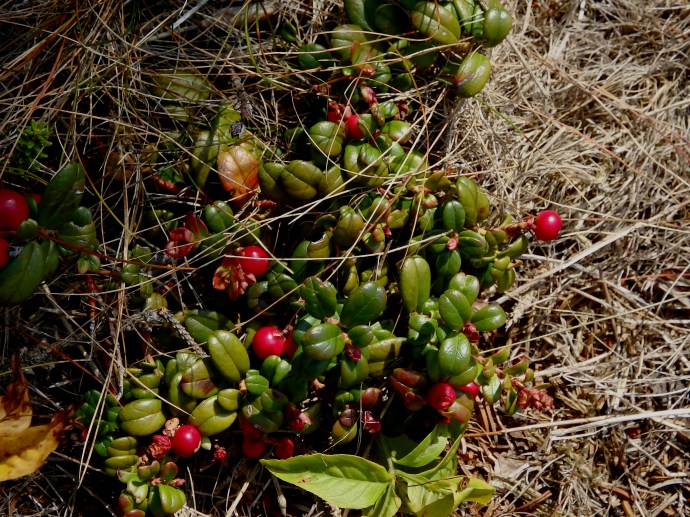
I could hardly make up my mind to come this way, it seemed so poor an object to spend the afternoon on. I kept foreseeing a lame conclusion—how I should cross the Great Fields, look into Beck Stow’s, and then retrace my steps no richer than before. In fact, I expected little of this walk, yet it did pass through the side of my mind that somehow, on this very account (my small expectation), it would turn out well, as also the advantage of having some purpose, however small, to be accomplished, —of letting your deliberate wisdom and foresight in the house to some extent direct and control your steps. If you would really take a position outside the street and daily life of men, you must have deliberately planned your course, you must have business which is not your neighbors’ business, which they cannot understand. For only absorbing employment prevails, succeeds, takes up space, occupies territory, determines the future of individuals and states, drives Kansas out of your head, and actually and permanently occupies the only desirable and free Kansas against all border ruffians. The attitude of resistance is one of weakness, inasmuch as it only faces an enemy; it has its back to all that is truly attractive. You shall have your affairs, I will have mine. You will spend this afternoon in setting up your neighbor’s stove, and be paid for it; I will spend it in gathering the few berries of the Vaccinium Oxycoccus which Nature produces here, before it is too late, and be paid for it also after another fashion. I have always related unexpected and incalculable advantages from carrying out at last, however tardily, any little enterprise which my genius suggested to me long ago as a thing to be done, —some step to be taken, however slight, out of the usual course.
How many schools I have thought of which I might go to but did not go to! Expecting foolishly that some greater advantage or schooling would come to me! It is these comparatively cheap and private expeditions that substantiate our existence and batten our lives, as, where a vine touches the earth in its undulating course, it puts forth roots and thickens its stock. Our employment generally is tinkering, mending the old worn-out teapot of society. Our stock in trade is solder. Better for me, says my genius, to go cranberrying this afternoon for the Vaccinium Oxycoccus in Gowing’s Swamp, to get but a pocketful and learn its peculiar flavor, aye, and the flavor of Gowing’s Swamp and of life in New England, than to go consul to Liverpool and get I don’t know how many thousand dollars for it, with no such flavor. Many of our days should be spent, not in vain expectations and lying on our oars, but in carrying out deliberately and faithfully the hundred little purposes which every man’s genius must have suggested to him. Let not your life be wholly without an object, though it be only to ascertain the flavor of a cranberry, for it will not be only the quality of an insignificant berry that you will have tasted, but the flavor of your life to that extent, and it will be such a sauce as no wealth can buy.
Both a conscious and an unconscious life are good. Neither is good exclusively, for both have the same source. The wisely conscious life springs out of an unconscious suggestion. I have found my account in traveling in having prepared beforehand a list of questions which I would get answered, not trusting to my interest at the moment, and can then travel with the most profit. Indeed, it is by obeying the suggestions of a higher light within you that you escape from yourself and, in the transit, as it were see with the unworn sides of your eye, travel totally new paths. What is that pretended life that does not take up a claim, that does not occupy ground, that cannot build a causeway to its objects, that sits on a bank looking over a bog, singing its desires?
However it was not with such blasting expectations as these that I entered the swamp….
I enjoyed this cranberrying very much, notwithstanding the wet and cold, and the swamp seems to be yielding its crop to me alone, for there are none else to pluck it or value it….I have no doubt I felt richer wading there with my two pockets full, treading on wonders at every step, than any farmer going to market with a hundred bushels which he has raked, or hired to be raked….I would gladly share my gains, take one, or twenty, into partnership and get this swamp with them, but I do not know an individual whom this berry cheers and nourishes as it does me….
I seem to have reached a new road, so wild a place that the very huckleberries are hairy and were inedible….What’s the need of visiting far-off mountains and bogs, if a half-hour’s walk will carry me into such wildness and novelty?
It is in vain to dream of a wildness distant from ourselves. There is none such….
A cold white horizon sky in the north, forerunner of the fall of the year. I go to bed and dream of cranberry-pickers far in the cold north. With windows partly closed, with continent concentrated thoughts, I dream. I get my new experiences still, not at the opera listening to the Swedish Nightingale, but at Beck Stow’s Swamp listening to the native wood thrush.
Wading in the cold swamp braces me. I was invigorated, though I tasted not a berry. The frost will soon come and smite them on the surface of the sphagnum….
Better it is to go a-cranberrying than to go a-huckleberrying. For it is cold and bracing, leading your thoughts beyond the earth, and you do not surfeit on crude or terrine berries. It feeds your spirit, now in the season of white twilights, when frosts are apprehended, when edible berries are mostly gone….
I would fain improve every opportunity to wonder and worship, as a sunflower welcomes the light.
August 29, 1854 in Thoreau’s Journal:
Early for several mornings I have heard the sound of a flail — It leads me to ask if I have spent as industrious a spring & summer as the farmer—& gathered so rich a crop of experience—
August 29, 1858 in Thoreau’s Journal:
All these high colors in the stems and leaves and other portions of plants answer to some maturity in us. I presume if I am the wiser for having lived this season through, such plants will emblazon the truth of my experience over the face of nature, and I shall be aware of a beauty and sweetness there.
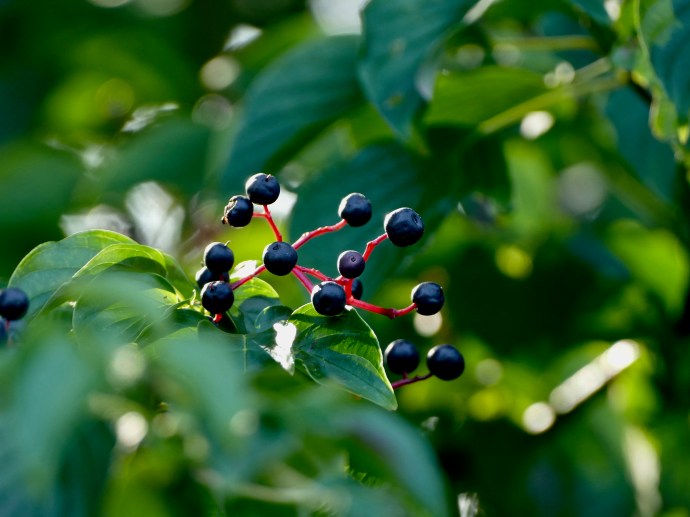
Now the red osier berries are very handsome along the river—over hanging the water—for the most part pale blue mixed with whitish—part of the pendent jewelry of the season. The berries of the alternate leaved Cornel have dropped off mostly. The white berried & red osier are in their prime. The other 3 kinds I have not seen– The viburnums dent. & nudum are in the prime—The sweet Viburnum not yet purple & the maple leaved still yellowish. Hemp still in blossom.


in Thoreau’s Journal

The leaves of some young maples in the water about the pond are now quite scarlet—running into dark purple red.
[August 25, 1852 in Thoreau’s Journal: At length, before sundown, it begins to rain. You can hardly say when it began, and now, after dark, the sound of it dripping and pattering without is quite cheering. It is long since I heard it. One of those serious and normal storms, not a shower which you can see through, something regular, a fall (?) rain, coincident with a different mood or season of the mind, not a transient cloud that drops rain. Methinks the truly weather-wise will know themselves and find the signs of rain in their own moods, the aspect of their own skies or thoughts, and not consult swallows and spiders. I incline always [to] questions about the weather without thinking. Does a mind in sympathy with nature need a hygrometer?]

August 26, 1852 in Thoreau’s Journal:
Rain Rain.


You must be logged in to post a comment.